Villa vs Apartment in Hyderabad: Cost of Ownership, Appreciation and Lifestyle
Villa or apartment? With the same ₹2 crore over ten years, the two can finish surprisingly close. This guide compares land share, running costs, rental yield, resale liquidity and lifestyle with real Hyderabad numbers.

- In the same micro-market, a row villa typically costs 1.5–2 times a new 3 BHK flat, and an independent gated villa 2–3 times
- A high-rise 3 BHK often carries only 30–50 sq yd of UDS; a row villa sits on 150–250 sq yd of land
- In our illustrative 10-year example, a ₹2.1 Cr flat and villa each end with a net gain of roughly ₹1.1–1.7 Cr
- Gross rental yields cluster around 3–4% for both; flats let faster to a deeper tenant pool
- Villa running costs over a decade are usually 40–70% higher, mainly external repairs and waterproofing
| What | Indicative range | Note |
|---|---|---|
| Tellapur new 3 BHK apartment | ₹1.25 Cr – ₹2.2 Cr | indicative, Oct 2026 |
| Tellapur row or twin villa, 150–250 sq yd | ₹2.2 Cr – ₹4 Cr | indicative, Oct 2026 |
| Kompally first-generation gated villa resale, 167–300 sq yd | ₹1.6 Cr – ₹2.8 Cr | indicative, Oct 2026 |
| Gated high-rise association maintenance | ₹3 – ₹5 per sq ft per month | typical; varies by project |
| Villa community dues, excluding own upkeep | ₹4,000 – ₹15,000 per month | typical; varies by community |
| Stamp duty, transfer duty and registration fee | About 7.5% of registered value | as of Oct 2026, verify at SRO |
Ranges reflect recent transactions and advisor observation as of 2026-10. Always verify against the sub-registrar market value and the specific parcel.
Villa vs apartment in Hyderabad is the question we hear most often from families moving up from their first flat, and from NRIs planning a return. The emotional answer is usually "villa": your own land, your own terrace, no lift queues. The financial answer is more nuanced. Over ten years, a well-chosen apartment and a well-chosen villa bought with the same money can end up remarkably close in total return; the real differences are in land share, running costs, rental demand, resale speed and how you want to live. This guide puts real Hyderabad numbers on each of those, using the same indicative bands as our area pages, and finishes with a worked ten-year comparison.
Who this guide is for
It is for Hyderabad buyers with a budget roughly between ₹1 Cr and ₹5 Cr who could afford either a large flat or a villa, for investors deciding which earns better over a decade, and for NRIs who want a home to return to. NRIs and OCIs can buy both villas and apartments freely under FEMA.
What you are actually comparing
A villa and an apartment are both "a home", but as assets they are built from different ingredients.
- Land share. A villa on a 200 sq yd plot gives you 200 sq yd of land. A 1,900 sq ft flat in a high-rise gives you an undivided share of the project land (UDS), often only 30–50 sq yd and sometimes less in tall towers. Land appreciates; buildings age.
- The structure. In both cases the building depreciates physically. In a flat, the structure is a much larger part of what you paid for. In a villa, the structure is a smaller share of the price, especially in the western suburbs where land is expensive.
- The community. Gated apartment complexes spread the cost of security, clubhouse, lifts, power backup and sewage treatment across hundreds of homes. Villa communities spread them across far fewer, so per-home costs and personal upkeep are higher.
- Control. A villa owner can extend, rebuild or redevelop (subject to permissions and community rules). A flat owner's future is tied to the association and, eventually, to a collective redevelopment decision decades out.
How ownership and approvals work for each
Apartments
A new apartment project is approved by GHMC or HMDA (or a municipality or DTCP outside them) and, if it exceeds 500 sq m of land or eight units, must be registered with TS RERA before sale. Your key documents are the RERA registration, building permission, the agreement of sale and later the sale deed specifying UDS, the occupancy certificate (OC) and the parking allotment. Check registration and project disclosures on the TS RERA portal. Our TS RERA apartment buyer's guide and OC, UDS and car parking guide cover these in detail.
Villas
Gated villa projects follow the same RERA and building-permission rules as apartments. Independent houses built on individual plots depend on the plot's layout approval (HMDA, DTCP or a regularised GP layout) and an individual building permission. For a villa, you are checking both the land title and the building: layout approval and plot release, title chain and encumbrance certificate, building permission, OC or completion, and the community's association rules and dues.
Registration and taxes for both
Both register at the jurisdictional Sub-Registrar Office, with stamp duty, transfer duty and registration fee together at roughly 7.5% of the registered value as of October 2026; verify current rates on the IGRS Telangana portal. Under-construction homes attract GST, typically 5% without input tax credit for non-affordable housing; homes sold after the OC do not. On purchases above ₹50 lakh from a resident seller, the buyer deducts 1% TDS under Section 194-IA.
Villa vs apartment in Hyderabad: prices in the same micro-market
The fairest comparison is within a micro-market, because the same commute, schools and hospitals apply. The table uses indicative bands from our area pages as of October 2026, drawn from recent transactions and advisor observation.
| Micro-market | New 3 BHK apartment | Row or twin villa | Independent gated villa |
|---|---|---|---|
| Kokapet | ₹2.2 Cr – ₹4.3 Cr | ₹4.5 Cr – ₹7 Cr | ₹6.5 Cr – ₹11 Cr (smaller clusters) |
| Narsingi | ₹1.5 Cr – ₹2.8 Cr | ₹3 Cr – ₹5 Cr | ₹4.2 Cr – ₹7 Cr |
| Tellapur | ₹1.25 Cr – ₹2.2 Cr | ₹2.2 Cr – ₹4 Cr | ₹3.2 Cr – ₹5.5 Cr |
| Gopanpally | ₹1.5 Cr – ₹2.9 Cr | ₹2.8 Cr – ₹4.5 Cr | ₹3.8 Cr – ₹6 Cr |
| Kompally | About ₹85 L – ₹1.25 Cr (1,600 sq ft at ₹5,300 – ₹7,800 per sq ft) | ₹1.3 Cr – ₹2.1 Cr | ₹1.6 Cr – ₹2.8 Cr (first-generation resale) |
| Shamshabad | About ₹72 L – ₹1.08 Cr (1,500 sq ft at ₹4,800 – ₹7,200 per sq ft) | ₹95 L – ₹1.6 Cr | ₹1.4 Cr – ₹2.6 Cr |
| Pocharam | About ₹72 L – ₹99 L (1,500 sq ft at ₹4,800 – ₹6,600 per sq ft) | ₹85 L – ₹1.35 Cr | ₹1.15 Cr – ₹2.1 Cr |
The pattern is consistent: in the same micro-market, a row villa costs roughly 1.5 to 2 times a new 3 BHK flat, and an independent gated villa two to three times. That is why most families who "want a villa" end up making a location trade-off: a flat in Tellapur or Gopanpally, or a villa in Kompally, Shamshabad or Pocharam for similar money. Detailed bands are on our pages for villas in Tellapur, apartments in Tellapur, villas in Kompally and apartments in Gopanpally.
Land share in numbers: why UDS matters
Land share is the quiet difference between the two. Take a high-rise of 400 flats on a five-acre site. Five acres is about 24,200 sq yd. Divided across 400 flats of varying sizes, the average UDS is around 60 sq yd, and in taller towers with more units per acre it can fall to 30–40 sq yd for a 3 BHK. Now compare a row villa on 200 sq yd in the same suburb. The villa owner holds three to six times as much land.
Why does that matter? Because in Hyderabad, land has historically carried most of the long-term appreciation, while buildings lose value as they age. In Tellapur, HMDA layout plots trade at ₹45,000 – ₹65,000 per sq yd. A 40 sq yd UDS at those rates is worth roughly ₹18 L – ₹26 L, a small fraction of a ₹1.6 Cr flat. A 200 sq yd villa plot in the same area is worth ₹90 L – ₹1.3 Cr on its own, which is a far larger share of a ₹3 Cr villa. When the building is thirty years old, the flat owner's value rests mainly on the building and the prospect of redevelopment; the villa owner still has the land.
This is not an argument that flats are poor assets. Over a ten-year window, flats in strong micro-markets have appreciated well, and the convenience premium is real. It is an argument for checking UDS before you buy and for being sceptical of any claim that a flat in a 50-storey tower is a "land investment".
Financing: loans work differently
Banks lend comfortably on both, but the mechanics differ. For a flat or a completed villa, a home loan typically covers up to 75–80% of the property value for larger tickets, subject to your income and the bank's valuation, and disbursement follows the builder's construction stages for under-construction projects. Interest on a home loan for a self-occupied home carries tax benefits under the old regime, within limits; take advice on what applies to you.
If your "villa" is really a plot plus construction, the financing is two-step: a plot loan, usually at a lower loan-to-value ratio and sometimes a higher rate, followed by a construction loan once you have building permission. Our plot loan vs home loan guide explains the trade-offs. Gated villa projects sold by a developer are financed like apartments, with stage-wise disbursement tied to RERA milestones.
Step by step: buying either, with timelines and costs
| Step | Apartment | Villa | Typical time |
|---|---|---|---|
| 1. Shortlist | Two or three projects in one micro-market | Two or three communities, or plots plus builders | 2–4 weeks |
| 2. Approvals | RERA number, building permission, OC if ready | RERA number for projects; layout approval and building permission for independent houses | 3–7 days |
| 3. Title search | Developer's land title, JDA, EC | Plot title chain, EC for 30 years, release letter | 1–2 weeks; advocate fee ₹20,000 – ₹60,000 |
| 4. Inspection | Unit, floor, parking slot, common areas | Structure, waterproofing, drainage, plot boundaries | 1–3 days; engineer ₹10,000 – ₹30,000 for a villa |
| 5. Agreement and loan | Agreement of sale; stage-wise loan | Agreement of sale; loan on valuation | 2–6 weeks |
| 6. Registration | SRO; roughly 7.5% of registered value; 1% TDS above ₹50 L | Same | 1 day once booked |
| 7. Handover | Association membership, parking, meters | Association membership, borewell and meters, property tax mutation | 2–6 weeks |
The real cost of ownership
One-time costs
| Cost | Apartment | Villa |
|---|---|---|
| Stamp duty, transfer duty, registration | Roughly 7.5% of registered value | Roughly 7.5% of registered value |
| GST if under construction | Typically 5% (no GST after OC) | Typically 5% (no GST on resale or after OC) |
| Interiors and fit-out | ₹10 L – ₹20 L for a 3 BHK | ₹15 L – ₹35 L, more floors and outdoor areas |
| Corpus fund and advance maintenance | ₹1.5 L – ₹4 L typical | Varies widely by community |
| Car parking | Allotted per RERA disclosures | Usually within your own plot |
Recurring costs
| Cost | Apartment | Villa |
|---|---|---|
| Association maintenance | Often ₹3 – ₹5 per sq ft per month in gated high-rises | Community dues often ₹4,000 – ₹15,000 a month, plus your own upkeep |
| Property tax | Lower, roughly in the ₹15,000 – ₹30,000 a year range for a large flat | Higher, as built-up area and plot are larger |
| Repairs and repainting | Internal only; external and common areas shared | External painting, waterproofing, plumbing and garden are yours |
| Power backup and water | Shared DG and STP; tanker costs shared | Own inverter or share of community DG; borewell or tanker on your account |
Over a decade, villa running costs are usually 40–70% higher than for a flat of similar value, mainly because external repairs and waterproofing are not shared.
Worked example: ₹2.1 crore for ten years
A family with about ₹2.1 Cr all-in compares two homes. These are illustrative assumptions to show how the arithmetic works, not forecasts of what will happen.
- Option A, apartment: a new 3 BHK of 1,900 sq ft in Nallagandla at ₹9,500 per sq ft in a tower that has received its OC, so no GST. Price ₹1.805 Cr.
- Option B, villa: a first-generation gated villa in Kompally, resale, 200 sq yd plot and about 2,800 sq ft built-up. Price ₹1.9 Cr. Land valued at about ₹50,000 per sq yd (₹1 Cr) and structure at ₹90 L.
| Item | Option A: Nallagandla flat | Option B: Kompally villa |
|---|---|---|
| Purchase price | ₹1.805 Cr | ₹1.9 Cr |
| Registration and duties at roughly 7.5% | About ₹13.5 L | About ₹14.2 L |
| Interiors or refurbishment, corpus | About ₹18 L | About ₹10 L |
| Total outlay, year 0 | About ₹2.09 Cr | About ₹2.11 Cr |
| Ten-year maintenance (₹7,600 a month flat; ₹6,000 a month villa dues; 5% yearly increase) | About ₹11.5 L | About ₹9.1 L |
| Ten-year property tax | About ₹2 L | About ₹3 L |
| Ten-year repairs and repainting | About ₹4 L | About ₹14 L |
| Ten-year running costs | About ₹17.5 L | About ₹26.1 L |
| Starting rent if let (5% yearly increase) | ₹50,000 a month | ₹60,000 a month |
| Ten-year gross rent after vacancy (4% flat, 8% villa) | About ₹72.5 L | About ₹83.3 L |
| Ten-year rent net of running costs | About ₹54.9 L | About ₹57.2 L |
| Illustrative value in year 10, steady scenario (flat +4% a year; villa land +6% a year, structure flat in nominal terms) | About ₹2.67 Cr | About ₹2.69 Cr |
| Illustrative value in year 10, strong scenario (flat +6%; villa land +8%) | About ₹3.23 Cr | About ₹3.06 Cr |
| Net position, steady scenario (value + net rent − outlay) | About ₹1.13 Cr | About ₹1.15 Cr |
| Net position, strong scenario | About ₹1.69 Cr | About ₹1.52 Cr |
What this shows: over ten years, with the same money, the two options finish close together. The flat wins if the western apartment market keeps compounding strongly; the villa wins if land in the northern suburbs outpaces flats. The example ignores selling costs, capital-gains tax, loan interest and the opportunity cost of money, all of which apply to both. Change any assumption and the order can flip, which is the point: the financial case alone rarely decides villa versus apartment over a decade.
Over twenty years or more, the picture tilts toward the villa. A high-rise flat's structure keeps ageing while its land share is small, so its value depends increasingly on the building's condition and on a future redevelopment that requires collective agreement. A villa's land keeps its value and you can rebuild on it.
Rental yield: closer than most people think
Using mid-points of the price and rent bands from our area pages, gross yields as of October 2026 look like this. Rent bands for villas cover 3–4 BHK homes, so treat the comparison as a rough guide.
| Home | Price band | Monthly rent band | Rough gross yield at mid-points |
|---|---|---|---|
| Nallagandla new 3 BHK flat | ₹1.5 Cr – ₹2.9 Cr | ₹38,000 – ₹65,000 | About 2.8% |
| Gopanpally new 3 BHK flat | ₹1.5 Cr – ₹2.9 Cr | ₹40,000 – ₹70,000 | About 3% |
| Nallagandla gated villa resale | ₹3.5 Cr – ₹7 Cr | ₹1 L – ₹2.2 L (4 BHK) | About 3.7% |
| Kompally gated villa resale | ₹1.6 Cr – ₹2.8 Cr | ₹45,000 – ₹1.1 L | About 4% |
| Pocharam gated villa | ₹1.15 Cr – ₹2.1 Cr | ₹25,000 – ₹55,000 | About 2.9% |
The practical difference is not the yield but the tenant pool. Flats near IT hubs let quickly to salaried professionals. Villas let to a smaller pool of senior executives and expatriate families, so vacancies are longer and negotiations harder. If rent matters, a flat near a campus is the lower-risk choice. See our pages on apartments in Nallagandla and villas in Pocharam for the local detail.
Resale liquidity
Flats are standardised: buyers compare per sq ft rates, floors and facing, and banks lend easily. A well-located 3 BHK in a large gated community can typically sell within a few months at a fair price. Villas are individual. Each has its own plot shape, design, condition and community, and the buyer pool at ₹3 Cr and above is thin. Expect villas to take longer to sell and to need more negotiation, especially in communities where many owners are listing at once. Independent houses on individual plots in established colonies are the exception: they sell steadily because buyers value the land and the option to rebuild.
Gated villa or independent house?
"Villa" covers two quite different products in Hyderabad, and the choice between them matters almost as much as villa versus flat.
A gated community villa comes with a compound wall, security, a clubhouse, internal roads and an association. Designs are uniform, rules govern extensions and exterior changes, and dues are higher. In return you get a managed environment that is easier to leave unattended and easier for tenants to accept. Most new villa supply in Tellapur, Kollur, Mokila, Kompally and Shamshabad is of this kind.
An independent house on an individual plot in an approved colony gives you full control over design and future rebuilding, lower recurring costs and often a better land-to-price ratio. The trade-offs are security, which is your own responsibility, colony roads and drainage that depend on the municipality, and more variable neighbours. In older suburbs such as Sainikpuri, Alwal and Manikonda, independent houses still sell steadily because buyers value the land.
For long-term owner-occupiers who want to rebuild one day, the independent house often wins. For NRIs and frequent travellers, the gated villa usually does.
Lifestyle: the deciding factor for most families
| Factor | Apartment | Villa |
|---|---|---|
| Commute | Usually closer to IT hubs and metro | Often further out for the same budget |
| Space and privacy | Fixed carpet area; shared walls | Multiple floors, terrace, garden, no shared walls |
| Security and lock-and-leave | Strong; easy to leave for months | Good in gated communities; empty villas need watching |
| Amenities | Large clubhouses, pools, sports at low per-home cost | Smaller clubhouses; private outdoor space |
| Elderly parents | Lifts and single-level living | Stairs in duplex and triplex designs; ground-floor bedroom matters |
| Pets and children | Shared spaces, rules | Own garden and terrace |
| Future flexibility | Limited to interiors | Extend or rebuild, subject to permissions |
Which should you buy?
- Choose an apartment if commute time matters most, you travel often or live abroad and want lock-and-leave security, you may sell within seven years, or you want steady rent.
- Choose a villa if you plan to live there for fifteen years or more, value land ownership and space over location, have elderly parents who want a garden (with a ground-floor bedroom), or want to rebuild or extend later.
- Consider a plot first if you want a villa but cannot afford one in your preferred suburb: buying an approved plot now and building in five years can work, as our guide on Kokapet vs Tellapur vs Mokila villas discusses.
NRI buyers: villa or apartment?
NRIs can buy either. For NRIs who will live abroad for several more years, flats are usually easier to manage remotely: maintenance is handled by the association and tenants are easier to find. Villas need a trusted local person for repairs and tenant issues. When an NRI sells, the buyer must deduct TDS under Section 195 at the applicable capital-gains rate plus surcharge and cess; long-term capital gains are taxed at 12.5% without indexation since 2024. A lower-deduction certificate can be sought, and sale proceeds of up to two residential properties can be repatriated subject to RBI rules. Our NRI guide to buying villas and apartments covers this; consult a CA for your own position.
Mistakes we see in practice, and the fix
- Comparing a villa far out with a flat close in on price alone. Fix: price the commute; an extra hour a day for ten years is a real cost.
- Ignoring UDS in a flat. Fix: ask for the UDS in sq yd in the sale deed and compare it across projects.
- Underbudgeting villa upkeep. Fix: reserve roughly ₹1 L – ₹2 L a year for external repairs and waterproofing on a mid-sized villa.
- Buying a triplex villa for elderly parents. Fix: insist on a ground-floor bedroom with an attached bath, or plan for a home lift.
- Assuming villas always appreciate faster. Fix: separate land value from structure value, as in the worked example.
- Skipping the association review. Fix: read the bye-laws, dues history and pending disputes for both flats and villa communities.
How NRR Estates helps you decide
We start with how you live, how long you will stay and what you can spend, then build a side-by-side shortlist: typically two apartments and two villas within your budget, in micro-markets that fit your commute. We run the same numbers as the worked example on your actual options, check RERA, OC, UDS, title and association records, and negotiate on your behalf. For NRIs, our desk handles power of attorney, remote visits by video and registration. Our fees are disclosed before you commit.
Villa or apartment: frequently asked questions
Is a villa a better investment than an apartment in Hyderabad?
Not automatically. In our illustrative ten-year example, a ₹2.1 Cr flat in Nallagandla and a ₹2.1 Cr villa in Kompally ended the decade with similar net gains of roughly ₹1.1 Cr to ₹1.7 Cr each, and which one came out ahead depended on whether flats or northern-suburb land appreciated faster. Over twenty years or more, villas tend to have an edge because their land share is far larger and the structure is a smaller part of the value. Over shorter periods, flats often win on liquidity and rental demand. Your holding period and location matter more than the format.
What is UDS and why does it matter when buying a flat?
UDS stands for undivided share of land: the portion of the project's land that legally belongs to each flat owner. It is stated in the sale deed, usually in sq yd. In tall towers, a 3 BHK may carry only 30 to 50 sq yd. UDS matters because land holds value as buildings age, and because it determines your share in any future redevelopment or compulsory acquisition. Compare UDS across projects alongside price per sq ft, and make sure it is clearly recorded in your registered documents.
How much does villa maintenance cost in Hyderabad?
Gated villa communities commonly charge dues of around ₹4,000 to ₹15,000 a month, depending on amenities and size. On top of that, villa owners bear their own external painting, waterproofing, plumbing, garden and sometimes borewell costs, which can average ₹1 lakh to ₹2 lakh a year for a mid-sized villa over a decade. Apartment owners in gated high-rises typically pay ₹3 to ₹5 per sq ft per month, with external repairs shared. Overall, villa running costs are usually 40–70% higher than for a flat of similar value.
Which gives better rental yield in Hyderabad, a villa or an apartment?
Gross yields are closer than many people expect. Using mid-points of our area bands as of October 2026, new 3 BHK flats in Nallagandla and Gopanpally yield roughly 2.8–3%, while gated villas in Kompally and Nallagandla can show 3.5–4%. The bigger difference is vacancy: flats near IT hubs let quickly to a large pool of professionals, while villas rely on a smaller pool of senior executives and expatriate families and can sit empty longer. If steady rental income is the goal, a flat near a campus is usually the lower-risk choice.
Is it easier to sell a villa or an apartment?
Apartments are generally easier and faster to sell. They are standardised, buyers compare them on per sq ft rates, floors and facing, and banks lend readily on them. Villas are individual products with different plots, designs and conditions, and the pool of buyers above ₹3 crore is thin, so sales often take longer and involve more negotiation. Independent houses in established colonies are an exception and sell steadily because buyers value the land. If you may need to sell within five to seven years, liquidity favours a flat.
Should I buy a villa far out or an apartment close to work?
Price the commute honestly. An extra hour of driving a day adds up to hundreds of hours a year, and that time cost often outweighs the extra space of a villa. Many families solve this by buying a flat close to work now and a plot in a growing suburb to build on later. Others choose a villa in Kompally, Shamshabad or Pocharam because one partner works nearby or works from home. Do the drive at peak hours on a weekday before deciding, not on a Sunday morning.
Can NRIs buy villas and apartments in Hyderabad?
Yes. NRIs and OCI cardholders can buy residential property, including villas and apartments, without RBI approval, paying through NRE, NRO or FCNR accounts or inward remittance. Registration can be done through a power of attorney. When an NRI later sells, the buyer must deduct TDS under Section 195 at the applicable capital-gains rate plus surcharge and cess, and long-term gains are taxed at 12.5% without indexation since 2024. Sale proceeds of up to two residential properties can be repatriated under RBI rules. Consult a CA on your specific situation.
Do I pay GST on a villa or apartment in Hyderabad?
GST applies to under-construction homes bought from a developer, typically 5% without input tax credit for non-affordable housing. It does not apply to completed homes sold after the occupancy certificate has been issued, or to resale homes bought from an individual owner. Stamp duty, transfer duty and registration fee, roughly 7.5% of the registered value as of October 2026, apply in all cases. On purchases above ₹50 lakh from a resident seller you must also deduct 1% TDS. Verify current rates before signing, as they change.
Related guides
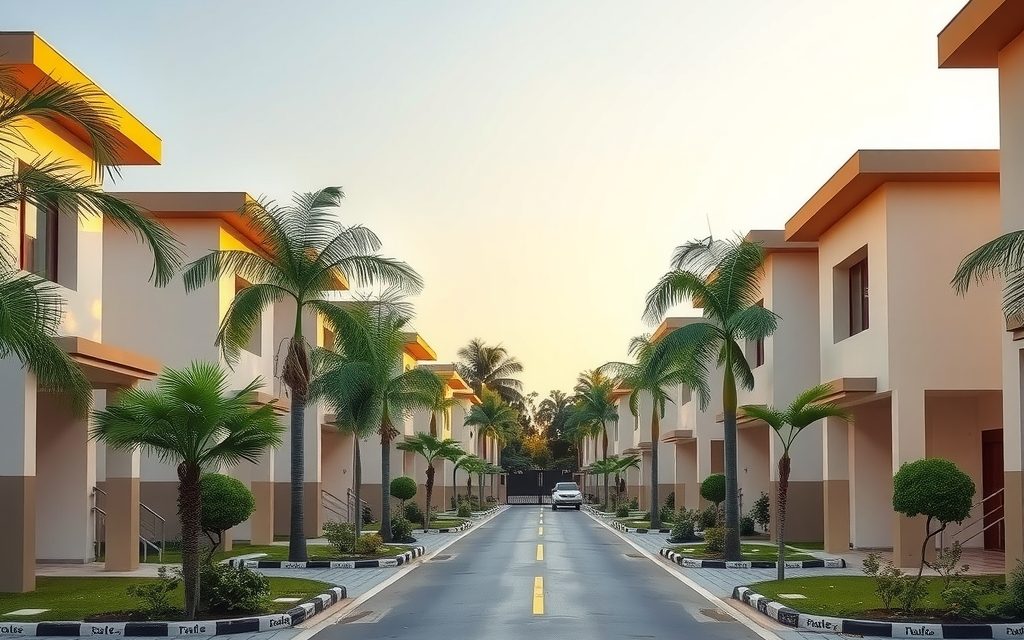
Tellapur is west Hyderabad's busiest villa belt: township-scale gated communities, row and independent villas from about ₹2.2 crore, Meru International School nearby and a 25–40 minute run to Gachibowli.
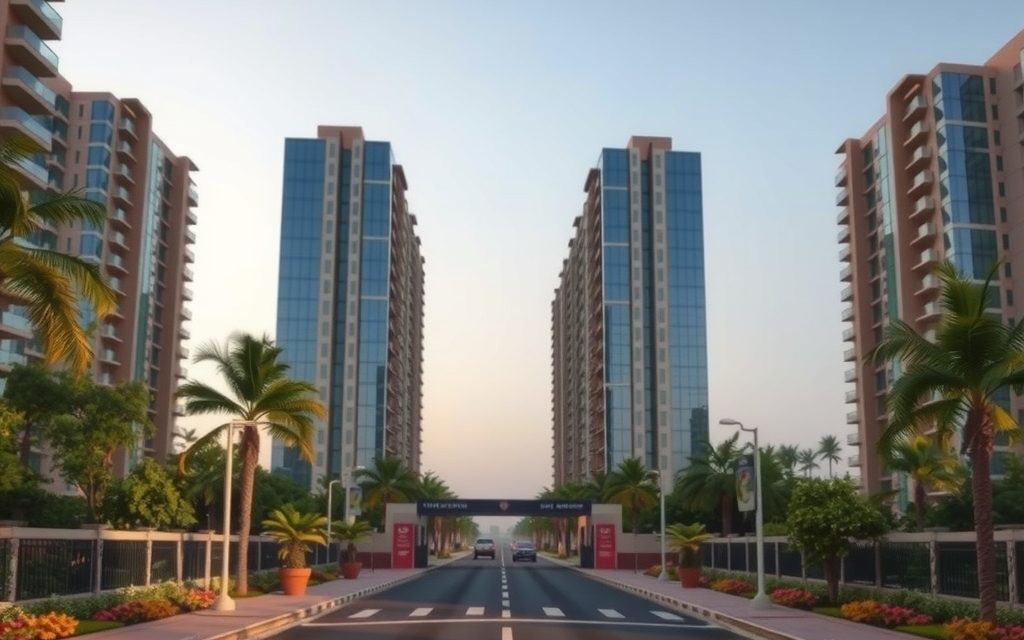
Tellapur is west Hyderabad's busiest apartment belt: townships and high-rises on the ORR at 25–40% below Gachibowli. Indicative per-sq-ft bands, BHK budgets, phase tips, RERA checks and rents.
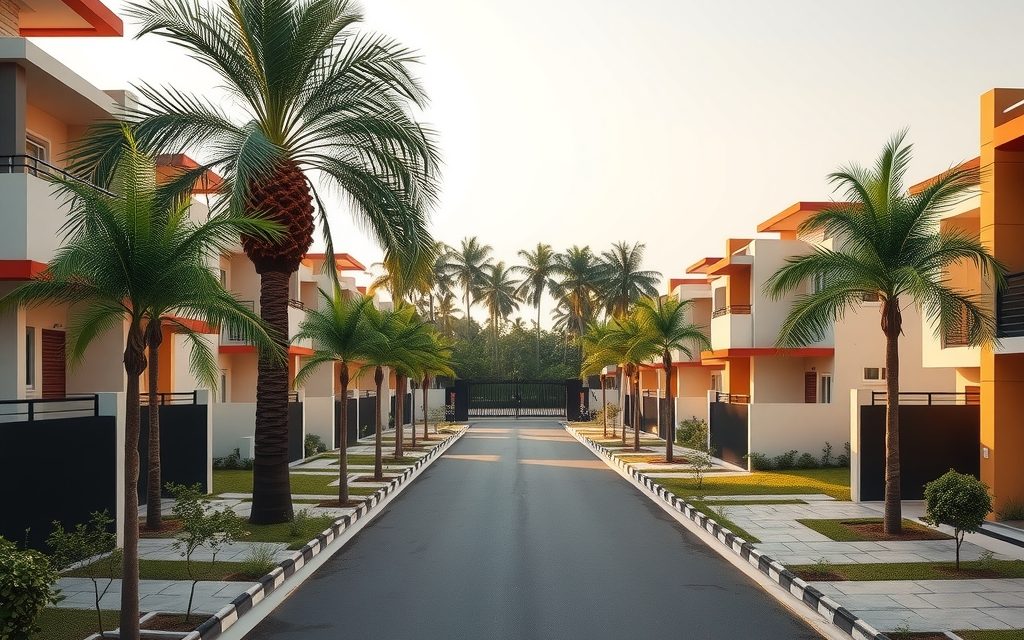
Kompally is north Hyderabad's established villa belt on NH-44, with gated communities from 2005 onward, strong schools and Secunderabad links. See price ranges by villa generation, commute realities and the checks we run.
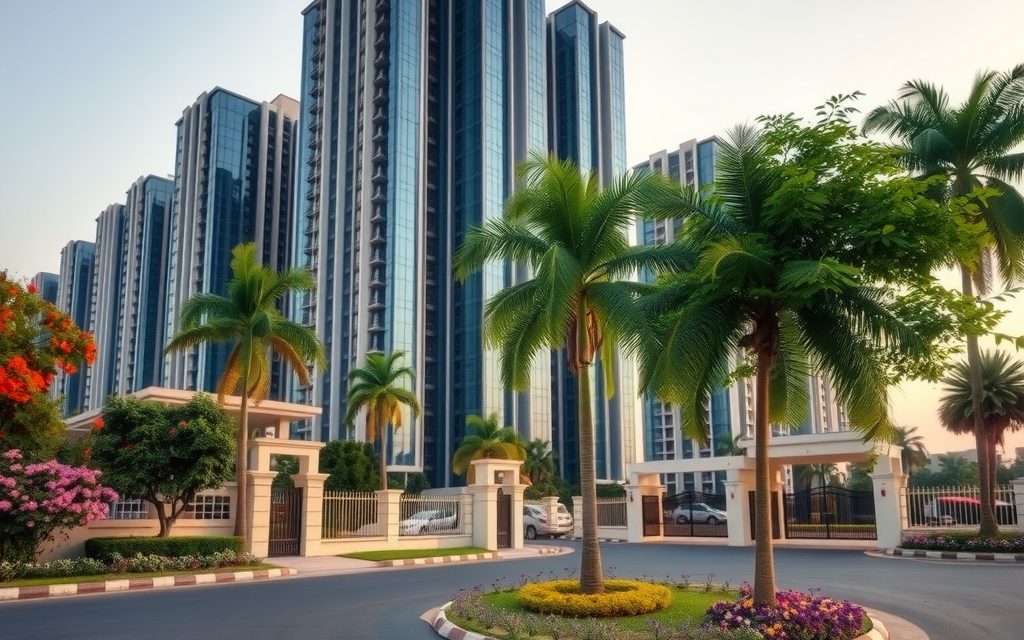
Township-scale gated communities beside the University of Hyderabad, close to schools and Lingampally station. Indicative per-sq-ft bands, BHK tickets, resale checks and rental yields for families and investors.

Kokapet, Tellapur and Mokila sit on the same western growth line but sell very different villas. We compare indicative rates, tickets, commute, supply, approvals and rents as of October 2026, and who each belt suits.

What TS RERA registration actually protects when you buy an under-construction flat or villa in Telangana: how to verify a project, carpet area and advance rules, delay interest or refund, defect liability and the complaint process.

Which Hyderabad micro-markets suit NRIs, what each budget buys, new versus resale, RERA and OC checks, GST, TDS for resident and NRI sellers, rental yields, management and repatriation of sale proceeds.

A villa is usually a family's largest cheque. The full process in Hyderabad: gated, plotted or resale, TS RERA and builder checks, the agreement for sale, payment plans with GST and TDS, registration, the OC and a handover snag list.