Plot Loans vs Home Loans in Telangana: Eligibility, LTV and Tax Treatment
Plot loans finance less, cost more, run shorter and give no tax relief on their own. Which Telangana plots banks will finance, how LTV and construction deadlines work, and when a composite loan is the smarter route.

- Banks finance plots only in HMDA, DTCP or municipal approved residential layouts, not GP, unapproved or farm plots
- Plot loans typically fund 60–75% of value; home loans go up to RBI caps of 75–90% by ticket size
- Most plot loans require construction to start within roughly 2–5 years, composite loans often within 12–24 months
- A pure plot loan gives no Section 80C or 24(b) deduction; benefits start only once a house is completed
- Self-occupied interest limit falls from ₹2 lakh to ₹30,000 if construction is not completed within five years
| What | Indicative range | Note |
|---|---|---|
| Home loan interest rate, salaried, good credit | ≈ 7.5% – 9.5% p.a. | indicative, Oct 2026, verify with lender |
| Plot loan rate premium over home loan | +0.25 to +1.5 percentage points | indicative, varies by lender |
| Plot loan loan-to-value | 60% – 75% (occasionally 80%) | of lower of price and bank valuation |
| Plot loan maximum tenure | 10 – 15 years | home loans up to 30 years |
| Stamp duty + transfer duty + registration fee | ≈ 7.5% of market value | approximate, verify current rates at the SRO |
| Processing fee | 0.25% – 1% of loan, plus GST | often capped or waived in offers |
Ranges reflect recent transactions and advisor observation as of 2026-10. Always verify against the sub-registrar market value and the specific parcel.
A plot loan vs home loan decision usually lands on the table at an awkward moment. You have found a 200 sq yd plot in an HMDA-approved layout near Shankarpally or Kollur, the seller wants the balance in six weeks, and the bank officer says "plot loan" in a tone that suggests it is a lesser product. It is. A plot loan in Telangana finances less of the price, charges a slightly higher rate, runs for fewer years, gives you no tax deduction on its own, and comes with a clock that starts ticking for construction. A home loan, by contrast, is the most generously priced retail credit in India. Knowing exactly where one product ends and the other begins, and how a composite loan bridges the two, can save a Hyderabad buyer several lakh rupees and a lot of anxiety.
This guide explains which plots banks will finance and which they will not, how loan-to-value really works on land, how the construction deadline operates, what the Income Tax Act gives and withholds, and how the numbers compare on a real Telangana purchase. Rates and limits are stated as of October 2026 and change often; verify with your lender before you sign anything.
Who this guide is for
It is written for salaried and self-employed buyers in Hyderabad and Telangana's district towns who want to buy an open plot now and build later, for families weighing a plot against a ready villa or apartment, and for NRIs funding a residential plot from abroad. If you are buying agricultural land, read the section on farm land below first, because the answer there is short: retail plot loans do not cover it.
What a plot loan is, and why it differs from a home loan
A plot loan, which some banks call a land purchase loan or a realty loan, finances the purchase of a residential site on which you intend to build a house. The security is the land alone. There is no building, no rental value and no completed asset the bank can easily sell if you stop paying. That single fact drives every difference that follows.
A home loan finances a completed house, flat or villa, or an under-construction unit in a project the bank has approved, or the construction of a house on land you already own. The security is a dwelling. The Reserve Bank of India treats housing loans as a priority segment with defined loan-to-value ceilings, and lenders compete hard for them. Plot loans sit outside that housing category unless they are part of a composite plot-plus-construction loan, so each lender sets its own rules.
Where a composite loan fits
A composite loan, sometimes called a plot-plus-construction loan, is a single sanction that funds the plot first and the construction afterwards, in stages. Because the end result is a house, many lenders price it close to a home loan and allow a longer tenure. In exchange, they expect you to start building within a defined window, often 12 to 24 months from the plot disbursement, and to finish within the period in the sanction letter. For buyers who genuinely plan to build within two years, a composite loan is usually the better product. For buyers who want to hold land for five years and see how the corridor develops, a pure plot loan or self-funding is more honest.
Which plots banks will finance in Telangana
Lenders are conservative about land because land titles in Telangana have historically been messy. Their technical and legal panels look for the following before they sanction a plot loan.
- An approved layout. Plots in HMDA-approved layouts within the Hyderabad Metropolitan Region, DTCP-approved layouts outside it, and layouts approved by a municipal corporation or municipality are financeable. Our guide to HMDA, DTCP and gram panchayat layouts explains the differences in detail.
- A layout permit number and final release. The plot should appear in the final approved layout plan and should not be among the plots the developer mortgaged to the authority as a performance guarantee, unless those have been released.
- Residential land use. The plot must fall in a residential zone of the applicable master plan, with the underlying land converted from agricultural use.
- A clean title chain. Lenders usually ask for 13 to 30 years of link documents and an encumbrance certificate for the same period, plus the seller's identity and tax details.
- Physical access. A layout road of the approved width connecting to a public road. Landlocked plots and plots reached through private passages are typically refused.
Plots lenders usually decline
Plots in gram panchayat layouts without HMDA or DTCP technical approval, plots in unapproved layouts where the Layout Regularisation Scheme application is still pending, farm plots sold in guntas within gated farm ventures, plots carved out of agricultural land that has never been converted under the NALA Act, and plots in conservation, recreational or industrial zones are generally not financed. Some lenders will consider a plot whose LRS proceedings have been issued, provided building permission can be obtained; our LRS guide covers what those proceedings mean. A refusal by a bank's legal panel is useful information. If the bank will not lend against a plot, think carefully about whether you should own it.
What about agricultural land?
Retail plot loans and home loans do not finance agricultural land. Some public sector banks run land purchase schemes for small and marginal farmers, with eligibility tied to existing agricultural holdings and cultivation, but these are not available to a salaried Hyderabad buyer wanting a weekend farm. If you are buying farm land near Chevella or Moinabad, plan to fund it from savings, or from a loan against other property, and read our step-by-step guide to buying agricultural land.
How plot loans and home loans work in practice
The mechanics are similar for both products, but the details diverge at almost every step.
Loan-to-value
For housing loans, RBI caps loan-to-value at 90% for loans up to ₹30 lakh, 80% for ₹30 lakh to ₹75 lakh and 75% above ₹75 lakh. Most banks lend close to these ceilings for approved projects. For plot loans there is no RBI ceiling, and lenders typically finance 60% to 75% of the plot's value, sometimes up to 80% for small tickets and strong borrowers. "Value" means the lower of the agreement price and the bank's valuation, and the valuer will often come in below the price you negotiated in a hot corridor. Stamp duty and registration charges are excluded from the cost on which LTV is calculated, except for very low-value houses, so they come out of your pocket.
Interest rate
As of October 2026, salaried borrowers with good credit scores are seeing home loan rates in a broad band of roughly 7.5% to 9.5% from banks, linked to an external benchmark such as the repo rate. Plot loans are typically priced 0.25 to 1.5 percentage points higher than the same lender's home loan. Composite loans usually sit between the two, often at the home loan rate once construction starts. Housing finance companies may be more flexible on documentation and slightly more expensive.
Tenure
Home loans run up to 30 years at many lenders, capped by your retirement age. Plot loans are commonly limited to 10 to 15 years. A shorter tenure on a smaller loan can still mean a higher EMI than a larger home loan, which affects your eligibility for the construction loan later.
Disbursement
A plot loan is disbursed in one go at registration, usually by demand draft or RTGS to the seller, against the original sale deed being deposited with the bank. A home loan for a ready property works the same way. A home loan for an under-construction villa or apartment, and the construction leg of a composite loan, is disbursed in stages linked to progress, certified by the lender's engineer or the builder's demand letters.
The construction clause
This is where plot loans bite. Most lenders require that construction of a residential house begins within a fixed period from the plot loan disbursement, commonly between two and five years depending on the lender and scheme. If you do not build, the lender may increase the interest rate, convert the facility into a higher-priced loan against property, or in rare cases recall it. Read this clause before you sign, and ask the branch to put any relaxation in writing. Building in Telangana also needs permission through the TG-bPASS system; our guide to building permission under TG-bPASS, GHMC and HMDA explains what you will need when that time comes.
Security and the mortgage document
Both products are usually secured by an equitable mortgage, created by depositing the original title deeds with the bank and executing a memorandum of deposit. The lender registers its charge with CERSAI, the central registry. A small stamp duty is payable on the mortgage document, which the lender's lawyer quantifies. When you close the loan, collect every original document, a no-dues letter and confirmation that the CERSAI charge has been satisfied.
Plot loan vs home loan vs composite loan at a glance
| Feature | Plot loan | Composite loan | Home loan |
|---|---|---|---|
| What it finances | Residential plot only | Plot, then construction of a house | Ready or under-construction house, flat, villa, or construction on owned land |
| Typical LTV (Oct 2026, indicative) | 60%–75%, occasionally 80% | 60%–75% on plot; up to RBI caps on construction | Up to 75%–90% by ticket size |
| Typical rate vs home loan | 0.25–1.5 points higher | Close to home loan | Benchmark-linked base |
| Typical maximum tenure | 10–15 years | 15–30 years | Up to 30 years |
| Construction deadline | Often 2–5 years | Start often within 12–24 months | Not applicable |
| Tax deduction on its own | None | Available after construction completes | Available (old regime) |
| Eligible land | Approved residential layouts | Approved residential layouts | Approved projects and houses with permission |
Tax treatment: what you get and when
This is the area where buyers most often receive confident but wrong advice. The broad position as of October 2026 is set out below; your chartered accountant should confirm it for your circumstances, particularly if you have more than one property or income abroad.
A pure plot loan gives no deduction
Interest on a loan to buy land, with no house on it, is not deductible under Section 24(b) because there is no income from house property. Principal repayment on a plot loan does not qualify under Section 80C either, which covers purchase or construction of a residential house. If you buy a plot with a loan and leave it vacant for six years, you get no tax relief for those six years.
Once a house is built
If you take a composite loan, or a plot loan followed by a construction loan, and complete a residential house, the position changes. Under the old tax regime, interest on a self-occupied house can be deducted up to ₹2 lakh a year. Interest paid before the year in which construction is completed is not lost; it is deductible in five equal instalments starting from the year of completion, within the same overall ₹2 lakh limit for a self-occupied house. Whether the interest attributable to the land component qualifies is a point on which practitioners take different views, so get a written opinion from your CA.
The ₹2 lakh limit applies only if construction is completed within five years from the end of the financial year in which the loan was taken. Miss that and the limit for a self-occupied house drops to ₹30,000. This is a real risk for plot owners who drift on construction.
Principal repayment on the housing loan, once the house is complete, can qualify under Section 80C within the overall ₹1.5 lakh limit under the old regime. Stamp duty and registration charges on the house can also qualify in the year paid.
The new tax regime
The new regime is the default. Under it, Section 80C and the Section 24(b) deduction for a self-occupied house are not available. For a let-out house, interest remains deductible against that property's rental income, but the resulting loss cannot be set off against salary. Many Hyderabad IT professionals are on the new regime, which removes much of the tax argument for a plot loan altogether. Run both calculations before choosing.
Capital gains on sale
If you sell the plot after more than 24 months, the gain is long-term. Since the 2024 changes, long-term gains on land and buildings are taxed at 12.5% without indexation, with transitional relief for resident individuals on property acquired before 23 July 2024. Interest on a plot loan that you could not claim during the holding period may be relevant to the cost calculation; ask your CA.
Step-by-step: financing a plot in Telangana, with timelines and costs
Here is the sequence we follow with clients, with typical timings and charges. These are indicative as of October 2026; lenders and the Registration Department revise them.
- Get an in-principle eligibility check (day 1–3). Before you pay any advance, ask two or three lenders what they will lend against a plot of your budget and what the construction clause says. Your eligibility depends on income, existing EMIs, age and credit score.
- Shortlist plots the bank will accept (week 1–3). Ask each lender whether the layout is on its approved list. Many banks maintain lists of HMDA and DTCP layouts they have already vetted, which saves time.
- Pay a token advance under a short agreement (week 2–4). Keep the advance modest and make it refundable if the bank's legal opinion is negative.
- Submit documents for legal and technical verification (week 3–5). The bank's empanelled advocate reviews the title chain, EC and layout approval; the valuer visits the plot.
- Receive the sanction letter (week 4–6). Read the LTV, rate type, tenure, construction clause, prepayment terms and charges.
- Arrange your margin money and registration costs (week 5–7). This is the 25% to 40% of plot value plus stamp duty and registration fees.
- Register the sale deed at the SRO (week 6–8). The bank issues the disbursement draft at or just before registration, and the original deed goes to the bank afterwards.
- Get building permission and draw the construction loan (when you build). Under a composite loan, construction disbursements follow approved stages.
Typical charges
| Item | Indicative range | Note |
|---|---|---|
| Processing fee | 0.25%–1% of loan, often capped; frequently waived in offers | Plus GST |
| Legal and valuation fees | ₹5,000–₹15,000 | Charged by some lenders separately |
| Stamp duty, transfer duty and registration fee on sale deed | About 7.5% of market value or consideration, whichever is higher | Approximate; verify current rates at the SRO |
| Stamp duty on mortgage document | Small, quantified by lender's lawyer | Varies by loan amount |
| Prepayment charges | Nil on floating-rate loans to individuals for non-business purposes | Fixed-rate loans may carry a charge |
| TDS under Section 194-IA | 1% of consideration if ₹50 lakh or more | Paid by buyer via Form 26QB; higher if seller is an NRI |
For the detail on duty and fee components, see our stamp duty and registration charges guide. Market values used for duty calculation can be looked up on the Registration and Stamps Department portal at registration.telangana.gov.in.
A worked example with Telangana numbers
Take a salaried couple in Gachibowli with a combined take-home of ₹2.6 lakh a month and no other loans. They like a 200 sq yd east-facing plot in an HMDA-approved layout in the outer Shankarpally belt at ₹25,000 per sq yd, so the plot costs ₹50 lakh. They expect to build a 2,000 sq ft G+1 house in about two years at a construction cost of roughly ₹2,400 per sq ft, around ₹48 lakh including approvals and utilities.
Option A: plot loan now, home construction loan later
The bank's valuer agrees with the price. At 70% LTV, the plot loan is ₹35 lakh. The couple pays ₹15 lakh margin plus about ₹3 lakh in duty and fees, and deducts 1% TDS of ₹50,000 from the payment to the seller and deposits it. At an indicative 9.25% over 15 years, the EMI is about ₹36,000 a month. For two years, they pay roughly ₹8.6 lakh in EMIs, most of it interest, with no tax deduction. When they build, they apply for a separate construction loan, which is assessed afresh against their reduced eligibility because the plot EMI is already running.
Option B: composite loan
The same lender sanctions a composite loan of, say, ₹70 lakh: ₹35 lakh for the plot now and up to ₹35 lakh for construction in stages, with the construction start required within 18 months. The plot leg is priced at, say, 8.75%, and the whole facility runs over 20 years. Until construction starts, they pay interest on ₹35 lakh only, or a full EMI if the lender insists. Once the house is complete, the old-regime deductions become available, including the pre-construction interest in five instalments. The trade-off is discipline: if they decide not to build within the window, the lender reprices.
Option C: buy a ready villa instead
For comparison, a ready villa of similar size in a gated community in the Tellapur or Kollur belt might cost ₹1.6 crore or more. A home loan of 75% would be ₹1.2 crore, with an EMI of roughly ₹1.04 lakh at 8.5% over 20 years. That is beyond this couple's comfortable limit, which is exactly why many Hyderabad families go the plot route. If a villa is in reach, our guide to buying a villa in Hyderabad step by step covers that path.
The example shows the real decision: not "which loan is cheaper", but "do we have the discipline and cash flow to build within the window". If yes, a composite loan is usually the more efficient route. If no, a smaller plot loan with a larger down payment, or waiting a year to save, often beats stretching.
Plot loans for NRIs
NRIs and OCI cardholders can buy residential plots in approved layouts in Telangana and can take plot loans and composite loans from Indian banks and housing finance companies. EMIs must be paid from an NRE, NRO or FCNR account, or by inward remittance; payment from foreign accounts directly is not permitted. Lenders usually require a resident co-applicant or a local contact and a registered power of attorney if the NRI cannot attend registration in person. NRIs cannot buy agricultural land or farm plots, so the "farm plot loan" pitches circulating in Gulf WhatsApp groups are a non-starter on two counts. If you are planning from abroad, read our NRI home loan guide alongside this one.
Mistakes we see in practice, and the fix
- Paying a large advance before a bank looks at the plot. A seller's demand for 20% upfront, non-refundable, followed by a bank refusal, is the most common way buyers lose money. Fix: make the advance small and refundable on a negative legal opinion, in writing.
- Assuming the bank valuation will match the price. In fast-moving corridors such as Kollur and Kokapet's outskirts, valuers often come in 10% to 20% below the negotiated price, which raises your margin. Fix: ask for a preliminary valuation before you commit, or budget extra margin.
- Treating a bank's legal clearance as a full title check. Bank panels verify enough to protect the bank's security, not your entire risk. Fix: run your own checks; our 21-point plot verification checklist goes further than most bank reports.
- Ignoring the construction clause. Buyers who planned to build "eventually" discover a rate step-up or a reclassification after three years. Fix: read the clause, choose a lender whose window fits your plan, or self-fund.
- Counting on tax deductions that do not exist. Pure plot loans give no 80C or 24(b) benefit, and the new regime removes them for self-occupied homes in any case. Fix: model the loan without tax benefits first.
- Missing the five-year completion limit. Construction that drags past five years from the end of the loan year shrinks the self-occupied interest limit to ₹30,000. Fix: plan approvals and contractor timelines early.
- Forgetting TDS. On a plot of ₹50 lakh or more, the buyer must deduct 1% and file Form 26QB. Fix: build it into the payment schedule; if the seller is an NRI, TDS under Section 195 is far higher and needs a CA.
- Borrowing to buy a gram panchayat or unapproved plot through a personal loan. When the bank refuses, some buyers borrow at 13% to 16% unsecured to close anyway. Fix: treat the refusal as the warning it is.
How NRR Estates handles financing for clients
We are property advisors, not lenders or loan agents, and we do not earn commissions from banks. What we do is make sure the plot you choose is one a mainstream lender will finance and one you will be able to build on. Before you pay a token, we check the layout approval, the release status of the plot, the master plan zoning, lake and nala buffers, and the title chain, so that the bank's legal panel finds nothing it has not already seen. We share our findings with your chosen lender if you wish, coordinate the valuer's visit, and build a payment schedule that lines up margin money, TDS, duty and the bank draft on registration day.
For clients who plan to build, we discuss realistic construction timelines and the building permission route at the shortlisting stage, because a plot with an awkward shape, narrow road or height restriction can make a composite loan harder to use. For plots in our core western corridor, see our pages on open plots in Shankarpally and nearby belts. Our fees are disclosed before any commitment.
Plot loan and home loan questions we are asked
What is the difference between a plot loan and a home loan?
A plot loan finances the purchase of a residential site only, so the bank's security is bare land. A home loan finances a house, flat or villa, or the construction of a house. Because land is harder to sell on default, plot loans usually fund 60% to 75% of value against up to 90% for small home loans, carry a slightly higher rate, run for 10 to 15 years rather than up to 30, and give no tax deduction until a house is built. Most plot loans also require you to start construction within a set period.
Can I get a plot loan for a gram panchayat layout plot in Telangana?
Generally no. Mainstream banks and housing finance companies lend against plots in HMDA, DTCP or municipal approved residential layouts with a layout permit number and a clean title chain. Gram panchayat layouts without HMDA or DTCP technical approval, unapproved layouts with LRS applications pending, and farm plots in gated farm ventures are usually declined. Some lenders consider plots with issued LRS proceedings if building permission can be obtained. A bank refusal is a useful warning sign about the plot itself.
How much of the plot price will the bank finance?
Typically 60% to 75%, occasionally up to 80% for smaller loans and strong borrowers, as of October 2026. The percentage applies to the lower of the agreement price and the bank's own valuation, and in fast-rising corridors the valuation can come in 10% to 20% below the price you agreed. Stamp duty, transfer duty and registration fees are not financed, so budget roughly 7.5% of market value for those, plus your margin money and any legal or processing fees.
Do I get a tax deduction on a plot loan?
Not on a pure plot loan. Interest on a loan for vacant land is not deductible under Section 24(b), and principal repayment does not qualify under Section 80C. Once you build and complete a residential house, the old regime allows interest up to ₹2 lakh a year on a self-occupied home, with pre-construction interest spread over five years from completion. Whether the land component qualifies is debated, and the new default regime removes these deductions for self-occupied homes. Ask your CA.
How long do I have to start construction after taking a plot loan?
It depends on the lender and the scheme. Pure plot loans commonly allow two to five years for construction to begin; composite plot-plus-construction loans usually expect a start within 12 to 24 months of the plot disbursement. If you miss the deadline, the lender may raise the rate or convert the loan into a costlier product. Separately, for tax purposes, completing construction more than five years after the end of the loan year reduces the self-occupied interest limit to ₹30,000.
Is a composite loan better than a plot loan?
If you genuinely plan to build within about two years, usually yes. A composite loan funds the plot first and construction in stages under one sanction, is often priced close to a home loan, runs for a longer tenure and leads to tax benefits once the house is completed. The cost is discipline: you must start and finish construction within the windows in the sanction letter. If you want to hold land for five years or more before deciding, a plot loan or self-funding is more realistic.
Can NRIs take a plot loan in Telangana?
Yes, for residential plots in approved layouts. NRIs and OCIs can buy such plots and can borrow from Indian banks and housing finance companies, with EMIs paid from NRE, NRO or FCNR accounts or by inward remittance. Lenders often ask for a resident co-applicant or contact and a registered power of attorney for registration. NRIs and OCIs cannot buy agricultural land or farm plots, so no lender will finance those for them, and attempts to buy through relatives raise serious legal risks.
Can I get a loan to buy agricultural land near Hyderabad?
Not through a retail plot loan or home loan. Banks do not treat agricultural land as housing security. Some public sector banks run land purchase schemes for small and marginal farmers, but eligibility is tied to existing farming and is not meant for salaried city buyers. Most buyers of farm land near Chevella, Moinabad or Shankarpally fund it from savings or a loan against an existing property. Factor that into your budget, and verify the land's records on Bhu Bharati before you pay any advance.
Related guides

Twenty-one checks we run on every open plot in Telangana, in the order that kills bad deals fastest: seller and title, approvals, land character and zoning, then survey, access and dues, with where to check each and what failure means.

TG-bPASS can approve a house plan in Hyderabad the same day on your own declaration, but a false declaration invites demolition. Categories, setbacks, height and airport limits, NOCs, costs and the mistakes we see.
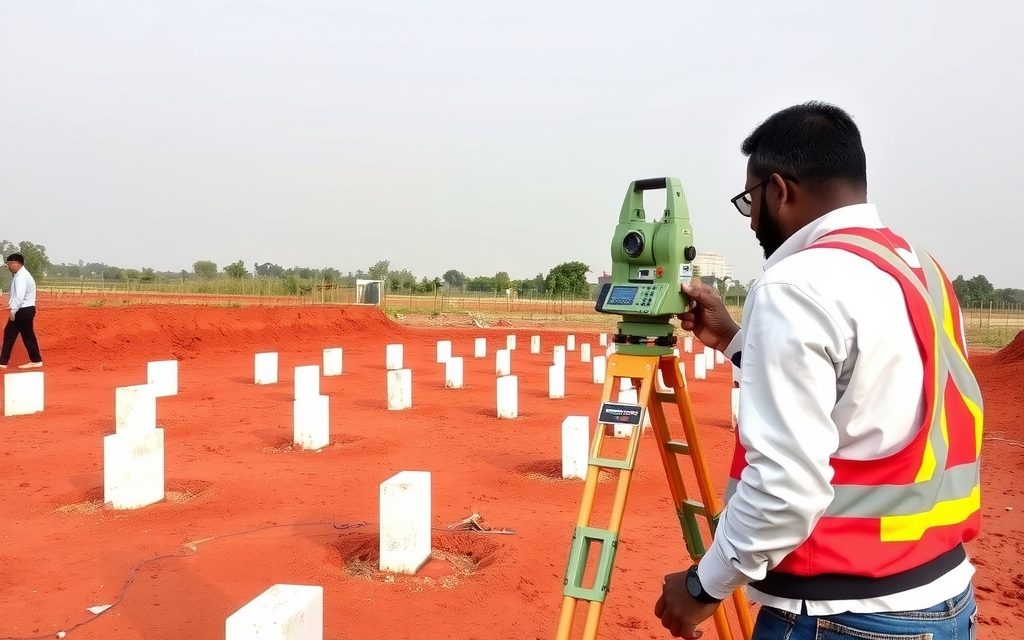
What HMDA, DTCP and so-called panchayat layout approvals really mean in Telangana: jurisdictions, LP numbers, mortgaged plots and release letters, LRS, bank loan eligibility, online verification and red flags.

How Telangana's stamp duty, transfer duty and registration fee are calculated on the higher of market value or price, how to pay through IGRS, where to register, and worked examples for a plot, a flat and farm land.

How NRIs and OCIs get a home loan for a Hyderabad flat or villa: eligibility, documents by country, RBI loan-to-value caps, rates and tenure, NRE/NRO repayment and repatriation, co-applicants, bank-format POA and builder tie-ups.

Shankarpally offers HMDA-approved plots at a fraction of Tellapur prices, 18 km west of the ORR on the Mokila road. Rates by approval and road, the farm-plot trap, legal checks and a realistic holding view.

Kollur has its own ORR interchange and sits between Tellapur, Mokila and Velimela, with HMDA plots usually 15–25% below Tellapur. Indicative rates, approval checks, pricing traps and the investment case.
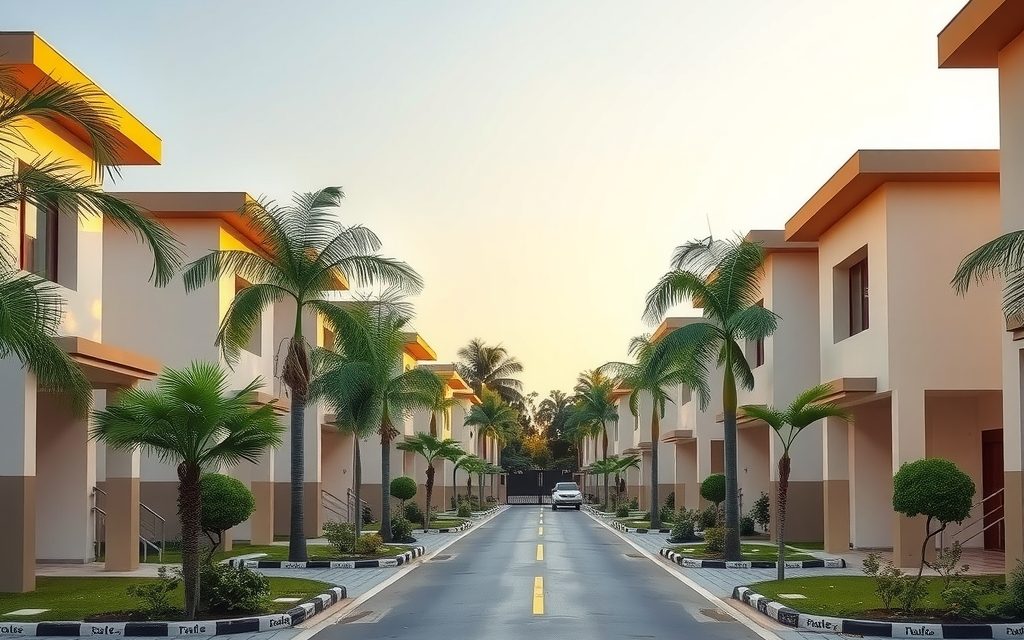
Tellapur is west Hyderabad's busiest villa belt: township-scale gated communities, row and independent villas from about ₹2.2 crore, Meru International School nearby and a 25–40 minute run to Gachibowli.