Dharani and Bhu Bharati: How Telangana Land Records Work
Telangana's record of rights explained: 1B, pahani, pattadar passbooks and mutation, how Dharani gave way to Bhu Bharati in 2025, how to read and verify a record before buying, and how errors get corrected.

- The record of rights is strong evidence of ownership but not a title deed; it must agree with the registered title chain
- Dharani (2020–2025) fused agricultural land registration and mutation at the Tahsildar office; Bhu Bharati replaced it in 2025
- Bhu Bharati adds a formal correction route, an appeal ladder up to land tribunals and survey-linked registration in phases
- Always check the live record for the exact sub-division on the day of advance and registration, not a printout or old passbook
- Sales after November 2020 sit in the land records system and may not appear in the SRO encumbrance certificate
| What | Indicative range | Note |
|---|---|---|
| Public land record search | Free | online, as of Oct 2026 |
| Certified copy of record or pahani | Nominal fee per document | verify at Mee Seva or Tahsildar office |
| Licensed survey and sketch | ₹10,000 – ₹50,000 | indicative, depends on extent |
| Succession mutation | 1–3 months | longer if contested |
| Correction of record error | 2–6 months; advocate ₹15,000 – ₹75,000 if complex | indicative, Oct 2026 |
Ranges reflect recent transactions and advisor observation as of 2026-10. Always verify against the sub-registrar market value and the specific parcel.
Every acre of agricultural land in Telangana has a digital record, and before you pay an advance on farm land you need to be able to read it. Dharani and Bhu Bharati land records are the state's record of rights: the official entry that says who the pattadar is, how much land they hold in which survey number, what kind of land it is, and whether anything stops it being sold. Dharani ran from 2020 to 2025; Bhu Bharati replaced it in 2025 with a new law, a new portal and new correction and appeal routes. Most farm-land disputes we see around Hyderabad start with a record that nobody checked properly, or with a buyer who trusted a printout instead of the live entry. This guide explains what the record contains, how the system evolved, what changed with Bhu Bharati, how to read and verify a record before buying, and how the common errors get corrected.
Procedures and fees in this guide are stated as of October 2026. The Bhu Bharati system was still adding features through 2025 and 2026, so verify the current procedure with the mandal Tahsildar office or the portal before acting.
Who this guide is for
This guide is for anyone buying, inheriting or holding agricultural land in Telangana: Hyderabad families buying farm land in Rangareddy or Vikarabad, district buyers in Siddipet, Nalgonda or Warangal, landowners preparing to sell or convert, and NRIs who have inherited family land and want to protect it from abroad. It is also useful for plot buyers, because every approved layout started life as agricultural land with a record like this.
What a land record is, and what it is not
A land record in Telangana is a revenue document. It records rights in land for the purposes of land revenue, agricultural schemes and registration. It is strong evidence of ownership, but it is not a title deed, and it is not conclusive proof of title on its own. Title rests on the chain of registered documents, inheritance and court decrees; the record of rights is supposed to reflect that chain. When the two disagree, you have a problem that must be solved before you buy.
The terms you will meet
- Record of rights (ROR), often called 1B. The register that lists, for each pattadar (registered landholder), the survey numbers held, the extent in each and the nature of the land. The 1B is the closest thing to an ownership register in the revenue system.
- Pahani (adangal). The village account traditionally maintained survey number by survey number, showing the extent, classification, pattadar and, historically, the person cultivating and the crop grown. Old pahanis from the 1950s onwards are often the earliest evidence of a family's holding.
- Pattadar passbook. The passbook issued to the landholder, listing their holdings. Telangana issued new passbooks in 2017–18 and then digital-era passbooks through Dharani. The passbook is a copy of the record, not a substitute for checking the live record.
- Survey number and sub-division. The parcel identifier from the original land survey, often sub-divided over time (for example 145, 145/A, 145/AA or 145/2). Getting the sub-division exactly right matters.
- Khata number. An account number that groups a pattadar's holdings in a village.
- Extent in acres and guntas. One acre is 40 guntas, and one gunta is 121 square yards. "4.20" in a record means four acres and twenty guntas, not 4.2 acres.
- Classification. Patta land (private), assigned land, government land, inam, endowment, wakf, forest and others. Only clean patta land is normally saleable without restrictions.
From manual pahanis to Dharani to Bhu Bharati
Telangana's land records have gone through three distinct eras in a decade. Knowing which era a document belongs to tells you how much weight to give it.
| Period | System | What it meant for buyers |
|---|---|---|
| Before 2017 | Manual pahanis and 1B registers kept by the village revenue officer; sale deeds registered at SROs | Records often lagged behind sales; mutation was a separate, slow application; local knowledge mattered |
| 2017–2018 | Land Records Updation Programme and new pattadar passbooks | Village-by-village verification; many records corrected, some new errors introduced |
| Nov 2020 – 2025 | Dharani portal under the Telangana Rights in Land and Pattadar Pass Books Act, 2020 | Agricultural land registration moved to Tahsildars with instant mutation; records became searchable online; correction routes were narrow |
| 2025 onwards | Bhu Bharati under the Telangana Bhu Bharati (Record of Rights in Land) Act, 2025 | New portal, revised mutation and correction procedures, a formal appeal ladder and plans for survey-linked parcels |
What Dharani did well, and where it struggled
Dharani made one major improvement: it fused registration and mutation for agricultural land. Before 2020, a buyer registered a sale at the SRO and then separately applied for mutation, which could take months and sometimes never happened. Under Dharani, the Tahsildar registered the sale and updated the record in the same sitting. Records became searchable online by survey number, and fraudulent double sales became harder.
The problems came from the data. The digitisation inherited every error in the manual records and added some of its own: extents entered wrongly, survey numbers missing, names misspelled, private land placed on the prohibited list, and a large category of land parked in "Part B" because of disputes or doubts. The grievance system worked through fixed modules, and many genuine problems did not fit a module. Unregistered "sada bainama" sales from earlier decades were left in limbo. Landowners spent years chasing corrections, and buyers inherited the uncertainty.
What changed with Bhu Bharati
The Bhu Bharati Act, 2025 replaced the 2020 law, and the Bhu Bharati portal replaced Dharani in 2025 after a pilot in selected mandals and a statewide rollout. The main changes, as they stand in October 2026, are:
- A formal correction route. Landholders can apply to correct errors in the record, with decisions assigned to specified revenue officers and time limits for disposal, rather than relying on fixed grievance modules.
- An appeal ladder. Orders on mutation and correction can be appealed, first within the revenue hierarchy (typically the Revenue Divisional Officer and then the Collector) and then to a land tribunal, instead of going straight to the High Court.
- Survey-linked registration and mutation. The Act provides for a survey sketch of the parcel to be part of the registration and mutation process, introduced in phases. This is meant to end sales of land that exists on paper but not on the ground.
- A unique parcel identity. The Act provides for a unique identification number for each land parcel, often referred to as Bhu Aadhaar, to be rolled out with resurvey.
- Succession and inheritance mutation with inquiry. Mutation on succession involves notice and inquiry rather than a purely mechanical update, which protects heirs who were left out.
- A route for older pending cases. The Act provides a mechanism for certain pending regularisation applications from before Dharani, subject to conditions. Whether a particular case qualifies needs legal advice.
- Village-level revenue staff restored. The state reintroduced village-level revenue officials, which matters for field inquiries during correction and mutation.
Old Dharani records carried over into Bhu Bharati. You will still see "Dharani" on passbooks, deeds and in searches, and the old address at dharani.telangana.gov.in continues to appear in many documents. When we verify land, we always rely on the live Bhu Bharati entry on the day, not a downloaded printout.
How the system works today
For a buyer, the Bhu Bharati system touches four moments in a transaction.
- Search. Anyone can view basic land details for a survey number or khata in a given village through the public search on the land records portal. This shows the pattadar, extent, classification and status.
- Registration. The sale of unconverted agricultural land is booked through the portal, the stamp duty and fees are paid online, and the deed is executed before the mandal Tahsildar acting as joint sub-registrar. Our guide to stamp duty and registration charges in Telangana covers the costs.
- Mutation. The record is updated into the buyer's name as part of the registration process. The new passbook follows.
- Corrections and appeals. If the record is wrong, the landholder applies through the portal or the Tahsildar office, and the revenue hierarchy decides within the prescribed timelines.
NALA-converted land leaves this system for registration purposes. Once agricultural land is converted for non-agricultural use and laid out as plots, sales register at the Sub-Registrar Office through the Registration and Stamps Department. See our NALA conversion guide for how that transition works.
A sample record, field by field
The layout of the portal changes from time to time, but the substance of a record is consistent. Here is how we read an illustrative entry for a parcel in Rangareddy district. The names and numbers are invented for the example.
| Field | Illustrative entry | What to check |
|---|---|---|
| District / mandal / village | Rangareddy / Chevella / a revenue village | Revenue village, not the hamlet name used locally; the two often differ |
| Survey number | 211/A/2 | Exact sub-division, matching the deed schedule |
| Khata number | A four-digit account number | Same khata across all the seller's parcels in the deal |
| Pattadar and father's name | The seller, son of the previous holder | Matches identity documents; explains any spelling variation |
| Extent | 2.15 (two acres, fifteen guntas) | Agrees with deeds and the ground survey |
| Land classification | Patta | Not assigned, government, inam, endowment, wakf or forest |
| Land type | Dry land | Wet or dry classification affects valuation and sometimes ceiling calculations |
| Status | No prohibition, no dispute shown | Recheck on the day of registration |
| Passbook number | Issued in the seller's name | Matches the physical passbook |
What the record will not tell you
The record does not show unregistered agreements of sale, informal tenancies, family arrangements, pending civil suits unless an order has been entered, access rights over neighbouring land, or whether the land falls in a lake buffer, a master plan conservation zone or a road widening line. Those come from the title search, the court search, the master plan and the site itself. A clean record is necessary; it is not sufficient.
How to verify a record before you buy
Here is the sequence our advisors follow on every agricultural land enquiry. It takes a few days, and it is the cheapest insurance you will ever buy.
- Get the exact survey number, sub-division, village and mandal from the seller. Not "around survey 200". The exact sub-division, as written in the seller's passbook.
- Search the live record. Check the pattadar name, father's name, extent, classification and status. The pattadar must match the person signing the sale deed, or the seller must show how they derive title from the pattadar.
- Check the classification is patta. Assigned, government, inam, endowment, wakf or forest classifications are red flags. Assigned land given to landless families under Telangana's assignment policy cannot be sold. See our guide to assigned land and the 22-A prohibited list.
- Check prohibited and dispute status. Land on the Section 22-A prohibited properties list cannot be registered. Land under dispute or pending inquiry is a no-go until resolved.
- Compare the record with the passbook and the deeds. Extent, survey number and name should agree across the live record, the passbook and the registered sale deeds in the title chain. Any mismatch needs an explanation in writing.
- Read the mutation history. How the current pattadar acquired the land, when and from whom. A recent mutation following a disputed succession, or a sale by a power of attorney holder, deserves a closer look.
- Pull pre-2020 history from the SRO. Sales before November 2020 were registered at SROs; pull the encumbrance certificate for at least 30 years. Sales after that date were registered at the Tahsildar office and may not appear in the SRO encumbrance search. Our guide to checking an encumbrance certificate explains the gap.
- Measure the land on the ground. A licensed surveyor measures the parcel against the village map and survey sketch. The record extent and the ground extent must agree, and the boundaries must match. See our guide to survey numbers, FMB and boundaries.
- Talk to neighbours and the village. Who has cultivated the land, whether there are tenants, family disputes or access issues. The record does not tell you everything.
Timelines and costs at a glance
| Task | Where | Typical time | Indicative cost (Oct 2026) |
|---|---|---|---|
| Public land record search | Land records portal | Minutes | Free |
| Certified copy of record or pahani | Tahsildar office or Mee Seva centre | 1–7 days | Nominal fee per document |
| Old pahanis and 1B from village records | Tahsildar office archives | 1–4 weeks | Nominal fees plus legwork |
| Licensed survey and sketch | Licensed surveyor or survey department | 1–4 weeks | ₹10,000 – ₹50,000 depending on extent |
| Registration with mutation | Mandal Tahsildar office | Same day, after slot | ~7.5% of chargeable value plus mutation fee, verify |
| Pattadar passbook after mutation | Issued through the system | A few weeks | Nominal, verify |
| Succession mutation | Application to Tahsildar | 1–3 months, longer if contested | Nominal fees plus legal costs |
| Correction of an error in the record | Application through the portal | 2–6 months typically | Nominal fees; advocate ₹15,000 – ₹75,000 if complex |
| Appeal against an order | RDO, Collector, then land tribunal | 3–12 months | Legal fees vary |
Time and cost ranges come from recent client files and advisor observation and are indicative. Statutory timelines exist for several of these steps; actual timelines depend on the office's workload.
Worked example: the half-acre that was not there
A Hyderabad family shortlisted farm land in a village in Moinabad mandal. The seller's sale deed from 2009 described 4 acres 20 guntas in a sub-divided survey number, and the asking price was ₹1.2 crore per acre, roughly ₹5.4 crore in total. The seller produced a passbook that matched the deed.
The live record told a different story. It showed 3 acres 30 guntas against the seller's name in that sub-division. The mutation history revealed that in 2014 the seller's late father had sold 30 guntas to a neighbour by a registered deed, which the family had forgotten. The passbook in hand was older than that sale. The ground survey confirmed it: the fence line the seller showed included the neighbour's 30 guntas.
| Item | Seller's version | Verified position |
|---|---|---|
| Extent | 4 acres 20 guntas | 3 acres 30 guntas |
| Price at ₹1.2 crore per acre | ₹5.40 crore | ₹4.50 crore |
| Overpayment avoided | ≈ ₹90 lakh, plus ~₹6.75 lakh duty on the excess value | |
The deal went ahead at the verified extent and price, with a fresh survey and boundary fixed before registration. Without the live record and the survey, the family would have paid for land they could never have taken possession of. For local context, see our pages on agriculture land in Moinabad and agriculture land in Shankarpally.
A second example: NRI heirs and succession
Three siblings, two living in the United States and one in Hyderabad, inherited 6 acres in a Siddipet district village after their father died without a will. The record still showed the father as pattadar four years later. A relative had meanwhile started cultivating the land. The fix was a succession mutation application with the death certificate, a family member certificate and consent of all legal heirs, with the two US-based siblings acting through a power of attorney. After notice and inquiry, the land was mutated into all three names. NRIs can inherit and hold agricultural land, but they can sell it only to a resident Indian; our page on NRI agricultural land rules explains what follows from that.
Common errors in the record, and how they are corrected
| Error | Typical cause | Correction route |
|---|---|---|
| Wrong extent | Data-entry mistakes, unrecorded sales or sub-divisions | Correction application with deeds, old pahanis and survey report |
| Missing survey number | Left out during digitisation | Correction application with passbook, deeds and village records |
| Name or father's name misspelt | Transliteration from Telugu, clerical errors | Correction application with identity documents and deeds |
| Private land shown on the prohibited list | Wrong classification as government or assigned land | Application for deletion from the 22-A list with title evidence; often needs legal support |
| Land in dispute or pending status | Competing claims or incomplete verification | Inquiry and order by the revenue officer; appeal if needed |
| Deceased pattadar still recorded | Succession mutation never applied for | Succession mutation with all heirs' consent |
| Old unregistered sale never recorded | Sada bainama sale before digitisation | Regularisation route under the current law, if eligible; legal advice essential |
A buyer should not take on a correction as part of the deal. The seller corrects the record before registration, and the agreement of sale makes that a condition. Our guide to pattadar passbooks and mutation covers the post-purchase side.
Mistakes we see in practice, and the fix
- Trusting the passbook in hand. A passbook is a snapshot. Sales, sub-divisions and orders after it was printed do not show. Fix: check the live record on the day of the advance and again on the day of registration.
- Checking the survey number, not the sub-division. Survey 112 may have eight sub-divisions with eight owners. Fix: verify the exact sub-division and its extent.
- Reading 4.20 as 4.2 acres. 4.20 is four acres and twenty guntas, which is 4.5 acres. Fix: convert guntas carefully; 40 guntas make an acre.
- Relying only on the SRO encumbrance certificate. Sales since November 2020 happened at the Tahsildar office. Fix: combine the SRO EC for the earlier period with the land records transaction history for the later period.
- Accepting "we will correct it after registration". Once you pay, the seller has no incentive. Fix: make the correction a condition precedent in the agreement of sale, with the balance released only after the record is fixed.
- Skipping the ground survey. The record can be right while the fence is wrong. Fix: a licensed survey before registration, with boundaries marked.
- Ignoring family members who are not on the record. Daughters and other heirs have rights under succession law even if the record shows only one name. Fix: check the family tree and obtain consents or releases where needed.
How NRR Estates handles land records for clients
- Record pull and reading. We pull the live record, mutation history and status for every survey number in a deal and explain it to the client in plain language.
- Cross-checking. Our advocate reconciles the record with the passbook, the registered deeds, the SRO encumbrance search and old pahanis.
- Field verification. A licensed surveyor measures the land, and our advisors walk the boundaries and talk to neighbours.
- Corrections before money moves. Where the record needs correcting, we write that into the agreement and track the seller's application through to the order.
- Registration and mutation. We book the Tahsildar slot, coordinate execution and follow through until the passbook is in the buyer's hands.
- NRI landholders. For NRIs holding inherited land, we run periodic record checks so errors and encroachments are caught early.
Our fees are disclosed in writing before you commit. We are property advisors, not lawyers; contested corrections and appeals are handled by our panel advocates.
Dharani and Bhu Bharati: frequently asked questions
What is the difference between Dharani and Bhu Bharati?
Dharani was Telangana's land records portal under the Rights in Land and Pattadar Pass Books Act, 2020. It digitised the record of rights and moved agricultural land registration and mutation to mandal Tahsildar offices. Bhu Bharati replaced it in 2025 under the Telangana Bhu Bharati (Record of Rights in Land) Act, 2025, with a new portal, a formal process for correcting errors, an appeal ladder up to land tribunals, succession mutation with inquiry and survey-linked registration introduced in phases. Dharani records carried over into Bhu Bharati.
How do I check land records online in Telangana?
Use the public land details search on the Bhu Bharati land records portal. Select the district, mandal and revenue village, then search by survey number, khata number or pattadar name. The result shows the pattadar, extent, classification and status. Use the exact sub-division from the seller's passbook, and note that the revenue village name may differ from the local hamlet name. For a purchase, also obtain certified copies through the Tahsildar office or a Mee Seva centre and have an advocate read them alongside the deeds.
Is a pattadar passbook proof of ownership?
It is strong evidence, but not conclusive proof on its own. The passbook is a copy of the record of rights at the time it was printed. Ownership rests on the chain of registered deeds, inheritance and court decrees, which the record is meant to reflect. A passbook can be outdated if land was sold or sub-divided after it was printed. Always check the live record and the title chain together. If they disagree, the seller must resolve the discrepancy before you pay anything beyond a small, refundable advance.
What do 1B and pahani mean?
The 1B is the record of rights register, listing each pattadar's survey numbers, extents and nature of land. It is the closest thing to an ownership register in the revenue system. The pahani, also called adangal, is the village account maintained survey number by survey number, historically showing the extent, classification, pattadar, cultivator and crop. Old pahanis going back decades are valuable evidence when tracing how a family came to hold land, and advocates routinely ask for them in a title search.
How long does mutation take after buying agricultural land?
For unconverted agricultural land registered at the Tahsildar office, mutation happens as part of the registration process, and the record updates into the buyer's name the same day or shortly after. The new pattadar passbook follows within a few weeks. Succession mutation after a death is a separate application involving notice and inquiry, typically taking one to three months, longer if any heir objects. Check the live record a few days after registration to confirm the update has gone through correctly.
How do I correct a mistake in my land record?
Under Bhu Bharati, the landholder applies for correction through the portal or the mandal Tahsildar office, attaching evidence such as registered deeds, old pahanis, the passbook and a survey report. The application is decided by the designated revenue officer within prescribed timelines, typically after a field inquiry. If you disagree with the order, you can appeal within the revenue hierarchy and then to a land tribunal. Complex cases, such as removing private land from the prohibited list, usually need an advocate.
Can an NRI check and manage land records from abroad?
Yes. The public search works from anywhere, and many NRI landholders check their records periodically for errors and encroachment. Applications for succession mutation or correction may need Aadhaar-linked or passport-based identification and an appearance or attorney, so confirm the current procedure first. NRIs and OCIs can inherit and hold agricultural land in Telangana but cannot buy it or receive it as a gift, and can sell inherited farm land only to a resident Indian. A trusted local attorney under a specific POA helps.
Why is land shown as prohibited when it is private patta land?
During digitisation, some private land was wrongly classified as government, assigned, endowment or wakf land and placed on the Section 22-A prohibited properties list, which blocks registration. The owner must apply for deletion with title evidence such as old pahanis, registered deeds and court orders, and the revenue authorities decide after inquiry. Until the entry is removed, the land cannot be sold. A buyer should never accept a promise to fix it after registration; the correction must come first.
Related guides
Agricultural land in Telangana mutates at the Tahsildar office in the same step as registration. What to do when it fails, how heirs get inherited land recorded, how corrections work, and why the passbook is not your title.
Assigned land, Bhoodan, endowment, wakf and government land cannot be sold to private buyers. How the POT Act and Section 22-A work, how to search a survey number, and what happens if you buy by mistake.
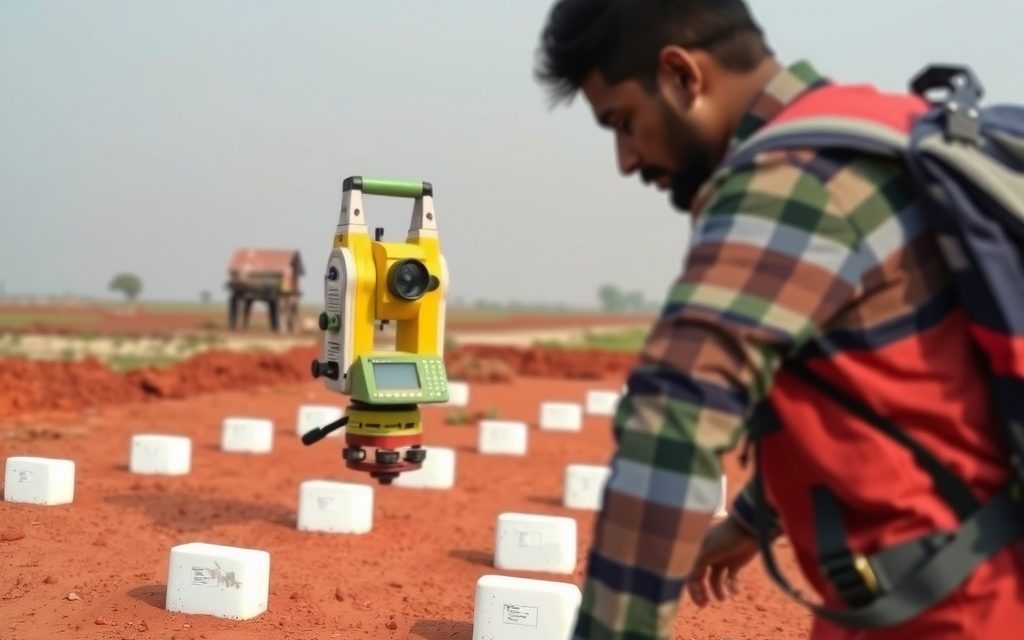
The documents say what you are buying; the survey says where it is. How survey numbers, sub-divisions and the tippan or FMB sketch work in Telangana, how surveys are done, and how to deal with shortfalls and encroachment.

What a Telangana encumbrance certificate shows and what it misses, why advocates search 30 years, how to run an EC search online through IGRS, how to read each entry, and the nil EC traps that catch buyers.
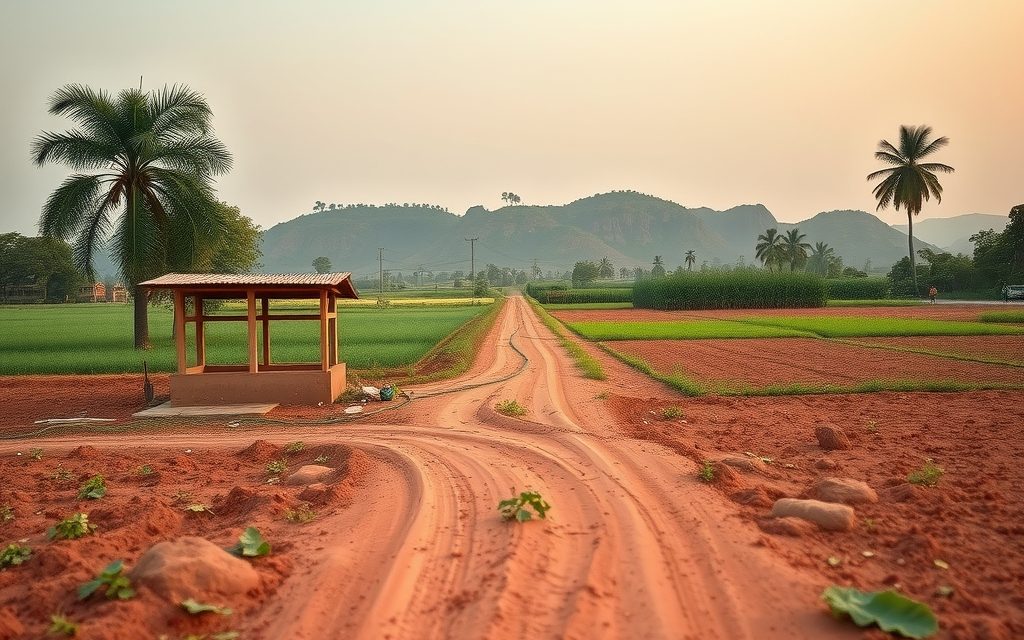
Hyderabad's closest established farmhouse belt, 10 minutes past the ORR at Himayat Sagar. Orchards, managed farm plots and estates, with the former GO 111 catchment rules explained.
Mandal-town farm land 18 km past the ORR with a railway station, red soil and village tanks. More acres per rupee than Mokila, still within an hour of Gachibowli.

NRIs and OCIs cannot buy or receive gifts of agricultural land, plantations or farmhouses; inheritance is the only route. What inherited land allows, why benami workarounds are dangerous, and the lawful alternatives near Hyderabad.
How Telangana's stamp duty, transfer duty and registration fee are calculated on the higher of market value or price, how to pay through IGRS, where to register, and worked examples for a plot, a flat and farm land.