Future City (ex-Pharma City) South of Hyderabad: Land Buyer's Reality Check
What Future City (ex-Pharma City) really is in October 2026, which authority governs which village, how acquisition and road alignments affect private land, and how to price land in Kandukur, Maheshwaram and Tukkuguda.

- Future City replaces the old Pharma City plan with a mixed-use new urban region and its own development authority
- Land acquired for the old pharma project is government land and cannot be bought privately
- Indicative farm land: ₹3–6 Cr per acre on the Srisailam highway near Kandukur, ₹70 L–1.6 Cr in interior villages
- Price what exists (highway, ORR, skills university); cap the premium for plans at 20–30%
- NRIs and OCIs cannot buy agricultural land here; approved non-agricultural plots and homes are allowed
| What | Indicative range | Note |
|---|---|---|
| HMDA villa plots within 3 km of the Tukkuguda ORR exit | ₹35,000 – ₹55,000 per sq yd | indicative, Oct 2026 |
| Farm land near Tukkuguda ORR belt and Fab City (Maheshwaram) | ₹3 Cr – ₹7 Cr per acre | indicative, Oct 2026 |
| Srisailam highway frontage near Kandukur | ₹3 Cr – ₹6 Cr per acre | indicative, Oct 2026 |
| Villages near notified Future City sites | ₹1.2 Cr – ₹3 Cr per acre | indicative, Oct 2026; volatile |
| Interior villages 3–8 km off the highway | ₹70 L – ₹1.6 Cr per acre | indicative, Oct 2026 |
| Government charges at registration | About 7.5% of market value | stamp duty ~5.5%, transfer duty ~1.5%, fee ~0.5%; verify at SRO |
Ranges reflect recent transactions and advisor observation as of 2026-10. Always verify against the sub-registrar market value and the specific parcel.
Future City is the name the Telangana government now uses for the large planned region south of Hyderabad that was earlier earmarked as Hyderabad Pharma City. If you are weighing Future City Hyderabad land, whether an acre of farm land near Kandukur, a plot off the Srisailam highway at Tukkuguda or a villa plot in Maheshwaram, this reality check is written for you. It separates what has been announced from what physically exists as of October 2026, explains which authority governs which village, shows how acquisition zones and land-use plans affect a private parcel, and gives you a method for pricing the speculation instead of paying whatever the brochure says.
Who this guide is for
This guide is for Hyderabad families, investors and NRIs who keep hearing "Future City" in sales pitches for land and plots south of the Outer Ring Road and want an advisor's view before paying an advance. It is also for owners of ancestral land in Kandukur, Yacharam, Kadthal, Maheshwaram or Amangal who are being approached by agents and want to understand what their land is realistically worth.
We are not telling you to buy or to stay away. We are telling you how to tell the difference between a parcel that benefits from the plan and one that is merely being marketed with its name.
From Pharma City to Future City: what actually changed
Under the previous state government, a large pharmaceutical manufacturing cluster was planned across villages in the Kandukur, Yacharam and Kadthal mandals of Rangareddy district, roughly 35 to 50 km south of the city. The idea was a single, large industrial zone for bulk drug and formulation units, with the state's industrial infrastructure corporation acquiring and pooling land from farmers. A significant extent was acquired; some acquisitions were contested by landowners and parts of the process went before the courts.
After the change of government at the end of 2023, the concept was reworked. Rather than one large pharma cluster, the state announced a planned new urban region, branded Future City (and in some official communication Bharat Future City), with a mix of education, skills, technology, health, sports, residential and cleaner industrial uses. Pharma manufacturing was to be dispersed into smaller clusters elsewhere. A dedicated development authority was constituted to plan and regulate the area, covering several dozen villages across Kandukur, Yacharam, Kadthal, Maheshwaram, Amangal, Ibrahimpatnam and Manchal mandals, with the exact village list set out in the government notification.
Three practical consequences follow for a land buyer:
- The governing authority may not be HMDA. Villages that fall inside the Future City Development Authority's notified area are planned and regulated by that authority, while neighbouring villages remain with HMDA or DTCP. Layout approvals, building permissions and land-use zoning come from whichever body has jurisdiction over that specific village.
- Land already acquired is not on the market. Land that the state acquired for the original pharma project is government land. Anyone offering you "Pharma City land" from an acquired survey number is either mistaken or misleading you.
- A master plan decides value. Until the detailed master plan and zoning for the region are final and published, the same acre can end up in a residential, industrial, green-buffer or road zone. That uncertainty is exactly what you are pricing.
What is announced versus what exists on the ground (October 2026)
Every pitch for Future City land quotes the same list of projects. Here is how we classify them for clients after visiting the belt repeatedly. Treat this as a snapshot as of October 2026; status changes, and we verify again before each transaction.
| Item | Status as we observe it | What it means for land value |
|---|---|---|
| Young India Skills University campus at Meerkhanpet (Kandukur mandal) | Campus has come up and is functioning in phases | Real anchor; supports demand in nearby villages for staff housing and services |
| Future City Development Authority | Constituted, with notified jurisdiction | Determines approvals and zoning inside its villages |
| Detailed master plan and zoning | In preparation; drafts and concepts discussed publicly | Single biggest unknown; zoning can make or break a parcel |
| Greenfield radial road from the ORR toward the Regional Ring Road | Announced; alignment communicated; land acquisition and works at different stages along its length | Frontage on a built road is valuable; frontage on a drawn line is a bet |
| Metro extension from the airport toward Future City | Proposed as part of the next metro phase; approvals and funding pending | Do not price it in for at least a decade |
| AI city, sports, health and data-centre campuses | Announced; some land allotments and MoUs; construction varies by project | Wait for boundary walls and construction, not MoUs |
| Srisailam highway (NH 765) widening | Existing highway; improvements ongoing | The real, usable spine of the belt today |
| Regional Ring Road southern arm | Alignment studies and approvals stage | Long-term; see our Regional Ring Road land guide |
The pattern is common to every new-city story in India: institutions and roads that exist create value now; plans create expectations that are priced in long before they are built. The buyers who do well in such belts pay for what exists and get the plans as a free option, not the other way round.
The geography: four belts with very different risk
The "south of Hyderabad" region is not one market. We break it into four belts when advising, because price, approvals and risk differ sharply.
Belt 1: Tukkuguda, Raviryal and the ORR edge
This is the urban edge, 0 to 5 km from the ORR Tukkuguda interchange on the Srisailam highway, with Fab City, the electronics and hardware parks and the airport within a short drive. It is mostly within HMDA's planning area and already trades like a suburb. HMDA villa-plot ventures here indicatively sit around ₹35,000 to ₹55,000 per sq yd, with highway commercial frontage far higher. Future City is a tailwind here, not the main reason to buy. Our page on open plots in Tukkuguda covers this belt in detail.
Belt 2: Maheshwaram and the Kandukur road
Ten to 20 km from the airport, Maheshwaram combines HMDA layouts, farm land and gated farm ventures. Its southern villages touch the Future City region. Agricultural land near the ORR side and Fab City trades indicatively at ₹3 crore to ₹7 crore per acre; interior villages at roughly ₹90 lakh to ₹2 crore. See agriculture and farm land in Maheshwaram and open plots in Maheshwaram.
Belt 3: Kandukur, Meerkhanpet and the Future City core
Kandukur X Roads sits about 12 km south of the Tukkuguda exit on the Srisailam highway, with the core Future City villages, the skills university and much of the old pharma acquisition footprint to its east and south. This is where speculation is most intense and prices move with every announcement. Highway-frontage farm land is indicatively ₹3 crore to ₹6 crore per acre, villages near notified sites roughly ₹1.2 crore to ₹3 crore, and interior villages 3 to 8 km off the highway ₹70 lakh to ₹1.6 crore. Read our page on agriculture land in Kandukur and open plots in Kandukur.
Belt 4: Yacharam, Kadthal and Amangal fringe
Further out, toward the Nagarjuna Sagar highway on one side and Amangal on the Srisailam highway on the other, land is cheaper, typically ₹50 lakh to ₹1 crore per acre, water is more variable and timelines are longest. This is land-bank territory: buy only what you can hold for 10 to 15 years without needing the money.
To the north-east of these belts, Adibatla and Kongara Kalan along the ORR Bongulur exit are the most established employment pocket of the south-east, with the aerospace SEZ and technology campuses operating. They are often bundled into Future City marketing, but they stand on their own fundamentals and are priced accordingly.
How it works: authorities, records and portals you will deal with
Buying land in this region touches more institutions than a normal city purchase. Knowing which one decides what saves weeks.
- Future City Development Authority (FCDA). Planning and development control for notified villages: master plan, zoning, layout permissions and building permissions within its area. Ask which authority covers the village before anything else.
- HMDA and DTCP. HMDA covers most of Maheshwaram and Tukkuguda and parts of the surrounding mandals; DTCP covers areas outside metropolitan planning. A layout approved by the wrong authority, or by a gram panchayat in a notified area, is a serious red flag.
- Dharani / Bhu Bharati. The state's record of rights for agricultural land. It shows the pattadar, extent, land type and any prohibitions. Our guide to Dharani and Bhu Bharati land records explains how to read the entries.
- Section 22-A prohibited properties list. Government, assigned, endowment and other restricted lands are listed survey-number-wise. Acquired pharma land may also show as government land. Always check.
- IGRS Telangana. The registration department portal on registration.telangana.gov.in gives encumbrance details, market values by survey number or locality, and slot booking for non-agricultural registrations.
- Tahsildar office and SRO. Unconverted agricultural land registers at the mandal Tahsildar, who acts as joint sub-registrar and completes mutation in the same step. NALA-converted land, plots and villas register at the jurisdictional Sub-Registrar Office, which we confirm from the survey number.
- TG-bPASS and the authority's building permission system. Relevant once you want to build; the permission route depends on whether your village is under FCDA, HMDA or DTCP.
The single most useful document in this belt is a land-use certificate or zoning information for the specific survey number from the competent planning authority. Where a final master plan is not yet published, ask the seller and the authority what interim controls apply and get it in writing.
Acquisition zones and why they matter for private land
Large new-city projects need land for roads, institutions and industrial parks. The state gets it in three ways: land it already holds (including acquired pharma land and assigned land resumed under policy), compulsory acquisition with compensation under the 2013 land acquisition law and state rules, and pooling or negotiated purchase. Each affects private buyers differently.
- Acquired or notified land. If a survey number has been notified for acquisition, any private sale is legally fragile and, once acquisition completes, the buyer is left chasing compensation that is paid to the recorded owner. Check for preliminary notifications, gazette entries and mandal-level records. Ask the Tahsildar's office directly.
- Road alignments. A parcel that sits on the alignment of the proposed radial road or a master plan road may lose part or all of its extent. A parcel that sits beside it gains. Get the alignment overlaid on the survey map (FMB) before pricing frontage. Our guide to land survey and FMB boundaries explains how.
- Assigned land. Many villages in this belt have large extents of assigned land given to landless families. Such land cannot be sold under the prohibition of transfers law except as permitted by government. Sellers sometimes offer it through "agreements" and GPAs. Do not buy it. See our guide on assigned land and 22-A prohibited properties.
- Pooling and compensation expectations. Farmers whose land is pooled may receive developed plots. Those plots can later come to market and are legitimate when allotted and documented, but you need the allotment order, the developed-plot layout and a clear chain from the authority.
Step-by-step: buying Future City Hyderabad land, with timelines and costs
This is the sequence we follow for clients. Timelines assume a clean title and a cooperative seller; complications add weeks.
| Step | What happens | Typical time | Indicative cost (verify) |
|---|---|---|---|
| 1. Belt and budget | Decide holding period, use (farmhouse, land bank, plot to build) and belt | 1–2 weeks | Nil |
| 2. Site visits | Visit 4–8 parcels; check approach road, water, neighbours, boundary stones | 1–3 weeks | Travel only |
| 3. Jurisdiction and zoning check | Confirm FCDA, HMDA or DTCP; obtain zoning information; overlay road alignments | 1–3 weeks | Official fees plus advisor time |
| 4. Title and record verification | Dharani/Bhu Bharati entry, pahani history, 22-A check, EC for 30 years, link documents, acquisition notifications | 2–3 weeks | ₹25,000 – ₹75,000 for advocate opinion |
| 5. Survey | Licensed surveyor measures and fixes boundaries against FMB | 1–2 weeks | ₹15,000 – ₹50,000 by extent |
| 6. Negotiation and advance | Agreement of sale with conditions precedent tied to verification | 1 week | Advance usually 5–10% held against clean title |
| 7. Registration | Tahsildar (agricultural) or SRO (converted/plots); stamp duty, transfer duty, registration fee | 1 day after slot | About 7.5% of market value in total; verify current rates |
| 8. Mutation and passbook | Automatic with Tahsildar registration; separate application for SRO registrations | Same day to 4 weeks | Nominal |
| 9. Fencing and caretaking | Boundary wall or fence, signage, periodic inspections | 2–6 weeks | ₹3 lakh – ₹10 lakh per acre for fencing, depending on type |
Two notes on costs. First, total government charges at registration are approximately 7.5 per cent of the market value, made up of roughly 5.5 per cent stamp duty, 1.5 percent transfer duty and 0.5 percent registration fee; rates change and we verify them on the day. Second, the 1 percent TDS under Section 194-IA on purchases above ₹50 lakh does not apply to rural agricultural land, but does apply to NALA-converted land and plots. The full breakdown is in our guide to stamp duty and registration charges in Telangana.
Pricing the speculation: a method, not a guess
Most overpayment in this belt comes from paying for the plan twice: once in the seller's asking price and again in the buyer's imagination. We use a simple three-layer method.
Layer 1: what the land is worth today, as land
Start with what comparable parcels with the same access, water and title quality have actually registered for in the last 6 to 12 months, and with the government market value for the survey number. In interior Kandukur, that might be ₹70 lakh to ₹1.2 crore per acre for good, watered land on a usable village road, independent of any new-city story.
Layer 2: what existing infrastructure adds
Add a premium only for things that exist: highway frontage, distance to the ORR, an operating institution within 5 km, a functioning tar road. Highway frontage near Kandukur X Roads can justify ₹3 crore to ₹6 crore per acre because it is usable today for commercial and roadside uses.
Layer 3: the option value of the plan
Finally, ask how much extra you are willing to pay for the chance that zoning and roads go your way. We suggest capping this at 20 to 30 percent over the Layer 2 value, and only for parcels whose zoning risk you have checked. If the seller is asking double the Layer 2 value because "Future City is coming", you are being asked to pay for a decade of execution risk upfront.
Also price the downside. If the parcel ends up in a green buffer or agricultural zone, what is it worth as a farm? If that number would hurt, buy less land or buy closer to the ORR.
Worked example: two parcels, same budget
A Hyderabad couple with ₹1.8 crore to invest for 12 years asked us to compare two options in October 2026. The figures are illustrative and rounded.
| Item | Parcel A: 2 acres, interior village near Meerkhanpet | Parcel B: 600 sq yd HMDA villa plot near Tukkuguda |
|---|---|---|
| Asking price | ₹2.4 crore (₹1.2 crore per acre) | ₹2.7 crore (₹45,000 per sq yd) |
| Negotiated price | ₹1.6 crore (₹80 lakh per acre) | ₹2.52 crore (₹42,000 per sq yd) |
| Recent comparable registrations | ₹65 lakh – ₹1 crore per acre | ₹38,000 – ₹46,000 per sq yd |
| Government charges (about 7.5%) | About ₹12 lakh (on market value) | About ₹18.9 lakh |
| TDS under 194-IA | Not applicable (rural agricultural land) | 1% of price, about ₹2.5 lakh, deducted and paid by buyer |
| Zoning risk | High; draft plan not final; one corner near a proposed road line | Low; approved HMDA layout with LP number |
| Holding costs | Fencing ₹6 lakh, caretaker | Minimal; venture maintenance |
| Liquidity | Low; buyers are investors only | Moderate; end-user demand exists |
Parcel B was over budget. Parcel A was within budget after negotiation, but the corner near a proposed road line meant up to a fifth of the extent could be affected. We advised the couple to buy Parcel A only if the seller agreed to carve out that corner and reduce the price, or to look at a smaller, lower-risk parcel. They eventually bought 1.6 acres excluding the affected portion at a price close to ₹80 lakh per acre, after a 30-year EC, a clean 22-A check and a fresh survey. Nobody can promise that parcel will triple; what we could promise them was that they were paying a land price, not a brochure price.
Mistakes we see in practice (and the fix)
- Buying "Pharma City land" from an acquired survey number. Fix: check the 22-A list, Dharani/Bhu Bharati entry and acquisition records; if the state acquired it, walk away regardless of the paperwork shown.
- Trusting a layout plan with no authority's number. Fix: insist on the LP number and verify it with FCDA, HMDA or DTCP as applicable. A gram panchayat layout in a notified planning area is not a substitute.
- Paying for road frontage on a road that is a line on a map. Fix: overlay the published alignment on the FMB; pay a frontage premium only once acquisition and works are visibly underway.
- Buying assigned land through GPA and agreement. Fix: never buy land with an assignment history unless government permission to alienate is on record. A GPA does not convey title.
- Ignoring water. Fix: test bore yields and ask neighbours; parts of the Yacharam and Kadthal fringe are rainfed.
- Overstretching on a 3-year horizon. Fix: assume a 10 to 15 year hold for the core and fringe belts. If you may need the money sooner, buy in Belt 1 or 2.
- NRIs buying farm land. Fix: NRIs and OCIs cannot buy or receive as a gift agricultural land, plantation property or farmhouses under FEMA. They can buy approved non-agricultural plots and homes. See NRI agricultural land rules in Telangana.
- Skipping a professional survey. Fix: get boundaries measured against the FMB before you pay more than a token advance. Encroachments on farm land are common in fast-moving belts.
NRI buyers and the Future City story
NRIs are heavily targeted by Future City marketing, often with farm plots or "managed farmland" products. The rules are clear. Under FEMA, an NRI or OCI cardholder can buy residential and commercial property, including an approved non-agricultural plot, but not agricultural land, plantation property or a farmhouse. Inherited agricultural land is allowed, and it can be sold only to a resident Indian.
For NRIs who want exposure to this region, the realistic routes are an approved plot in an HMDA or FCDA-permitted layout, a villa in an established southern suburb such as Adibatla or Shamshabad, or an apartment closer to the ORR. Our NRI investment guide for Telangana covers funding from NRE and NRO accounts, and our power of attorney guide explains how to complete registration without flying in. When you eventually sell, the rules on repatriating sale proceeds apply.
Who should buy here, and who should not
The belt suits buyers with patience and spare capital: land bankers with a 10-plus year view, families who want a weekend farm within an hour of the airport, and plot buyers in Tukkuguda or Maheshwaram who plan to build within five years. It also suits local owners who want to consolidate holdings near institutions that already exist.
It does not suit buyers who need rental income, buyers using borrowed money with a short horizon, anyone who cannot visit or appoint someone to visit the land regularly, or anyone who would be hurt if the master plan zones their parcel for agriculture or green buffer. If that describes you, look at established markets first; our ORR growth corridors guide compares them.
How NRR Estates handles Future City land for clients
We work on this belt as advisors with fees disclosed before any commitment. For each client mandate, we:
- Shortlist parcels by belt, budget and holding period, and tell you plainly where the pitch outruns the facts.
- Confirm the planning authority for the village and obtain whatever zoning and land-use information is available for the survey number.
- Run title verification through an empanelled advocate: Dharani/Bhu Bharati record, pahani history, 30-year EC, link documents, 22-A list, assigned-land history and acquisition notifications.
- Commission a licensed survey against the FMB and overlay known road alignments.
- Benchmark price against recent registrations and the government market value, then negotiate with conditions tied to verification.
- Manage registration at the Tahsildar office or SRO, mutation, and handover with fencing and periodic inspection if you need it.
If a parcel fails verification, we say so and stop. Our fee is not linked to whether you buy a particular parcel.
Future City land: questions buyers ask us
Is Future City the same as the old Hyderabad Pharma City?
Largely the same geography, but a different plan. The previous government planned a single large pharmaceutical manufacturing cluster across villages in Kandukur, Yacharam and Kadthal mandals. The current government reworked it into Future City, a planned urban region with education, skills, technology, health, residential and cleaner industrial uses, governed by a dedicated development authority. Pharma manufacturing is to be dispersed into smaller clusters. Land the state acquired for the original project remains government land, and the detailed master plan for the region is still being finalised as of October 2026.
Which authority approves layouts and buildings in Future City villages?
It depends on the village. Villages inside the notified area of the Future City Development Authority fall under that authority for master planning, zoning, layout permission and building permission. Neighbouring villages remain with HMDA, which covers most of Maheshwaram and Tukkuguda, or with DTCP outside the metropolitan area. Before paying any advance, confirm which authority covers the specific village and survey number and verify the layout permission number with that authority. A gram panchayat layout in a notified planning area is a serious red flag.
Can I buy land that was acquired for Pharma City?
No. Land the state acquired for the original pharma project vests in the government and is not available for private sale. Some sellers offer such land through agreements, GPAs or claims that compensation is pending. Do not buy it. Check the Dharani or Bhu Bharati record, the Section 22-A prohibited properties list and acquisition notifications at the Tahsildar's office. If a survey number appears as acquired, notified or government land, walk away, however convincing the documents shown to you appear.
What does farm land cost near Kandukur and Future City in October 2026?
Indicatively, farm land with Srisailam highway frontage near Kandukur trades around ₹3 crore to ₹6 crore per acre. Villages close to notified Future City sites such as Meerkhanpet sit roughly at ₹1.2 crore to ₹3 crore per acre and move with announcements. Interior villages 3 to 8 km off the highway are about ₹70 lakh to ₹1.6 crore, and the Yacharam and Kadthal fringe ₹50 lakh to ₹1 crore. These ranges come from recent transactions and advisor observation; every parcel needs its own valuation.
How do I avoid buying land on a future road alignment?
Obtain the published alignment of the proposed radial road, master plan roads and other notified corridors and have a licensed surveyor overlay them on the FMB sketch of your survey number. If any part of the parcel falls on the alignment, either exclude it from the sale and reduce the price, or walk away. Also check for acquisition notifications at the mandal level. Land beside a built road gains value; land on a planned road can lose extent, with compensation going to the recorded owner.
Can NRIs invest in Future City land?
NRIs and OCI cardholders cannot buy agricultural land, plantation property or farmhouses under FEMA, and cannot receive them as gifts. That rules out farm land and most managed farmland products in this belt. NRIs can buy approved non-agricultural plots in properly permitted layouts, villas and apartments, paying through NRE, NRO or FCNR accounts or inward remittance. They can inherit agricultural land and sell it only to a resident Indian. A registered power of attorney lets a relative complete the purchase locally.
Is the metro to Future City confirmed?
As of October 2026, a metro extension from the airport toward Future City has been proposed as part of the next phase of Hyderabad's metro network, but approvals and funding are still pending and no construction has begun. Metro projects in India commonly take a decade or more from proposal to opening. We advise clients not to pay any premium for metro connectivity in this belt. Price land on the Srisailam highway, the ORR and institutions that are already functioning, and treat the metro as a long-term possibility.
How long should I plan to hold land in the Future City region?
For the Tukkuguda and Maheshwaram belts closer to the ORR, a 5 to 8 year hold is reasonable because end-user demand already exists. For the Kandukur core and the Yacharam, Kadthal and Amangal fringe, plan for 10 to 15 years, because value depends on the master plan, road construction and institutions arriving. Use only capital you will not need in the meantime, avoid short-term borrowing, and budget for fencing and periodic inspections. If you might need the money within three years, buy closer to the ORR.
Related guides
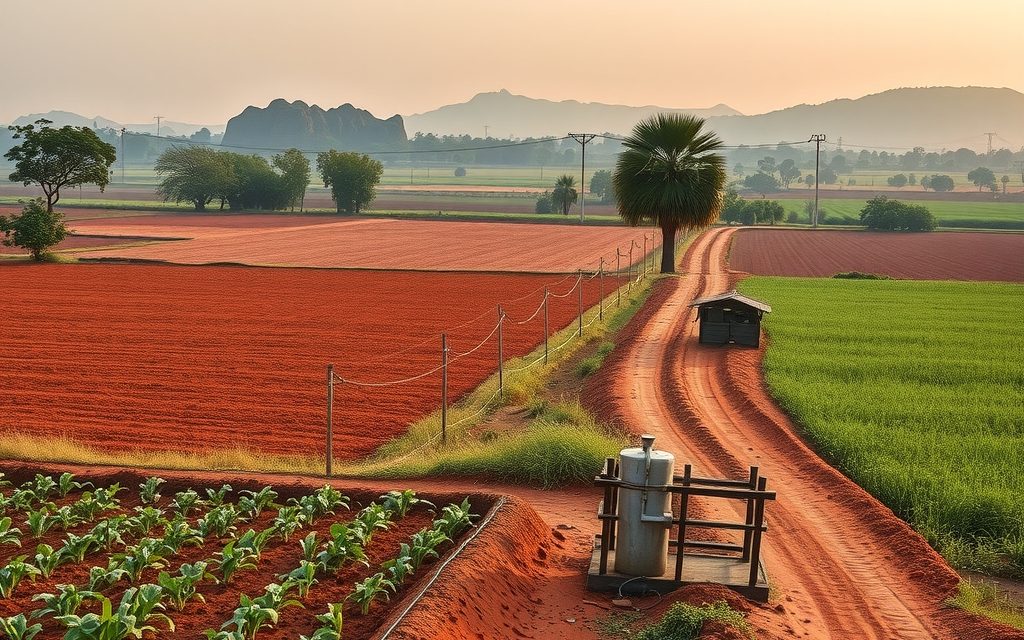
Red-soil farm land on the Srisailam highway, 15 km south of the Tukkuguda ORR exit and next to the Future City area. Good access and low interior prices, with acquisition and zoning checks essential.
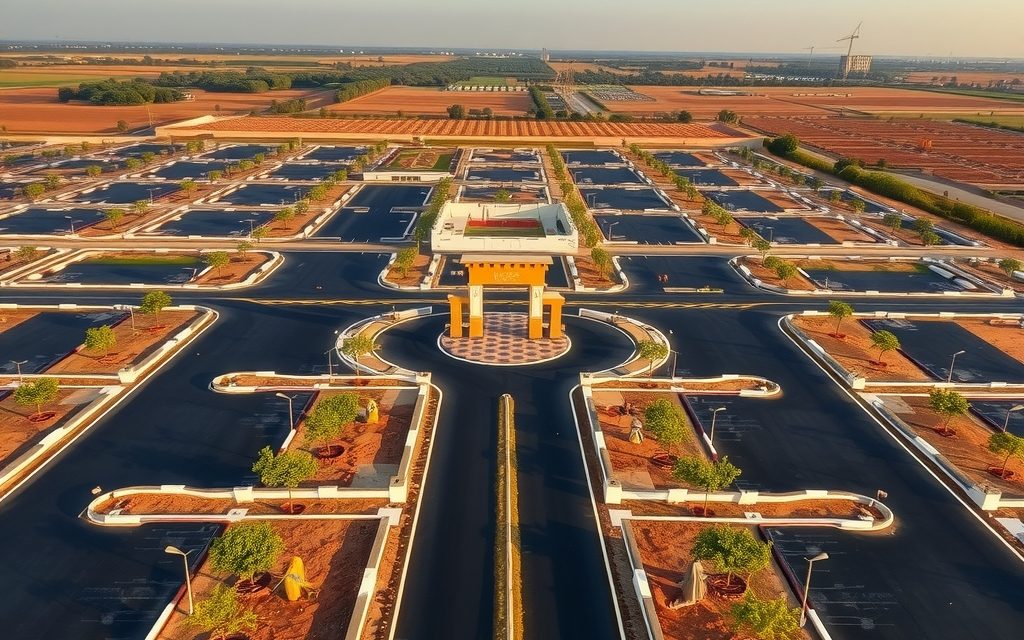
Kandukur offers the cheapest approved plots on the Srisailam highway near the airport, on land once planned as Pharma City and now Future City. Prices, approvals, acquisition risks and how to buy safely.
Red-soil farm land 15 km from the airport and 10 km from the Tukkuguda ORR exit, beside Fab City. Interior villages still farm vegetables, flowers and mango; ORR-facing land trades as future plot land.
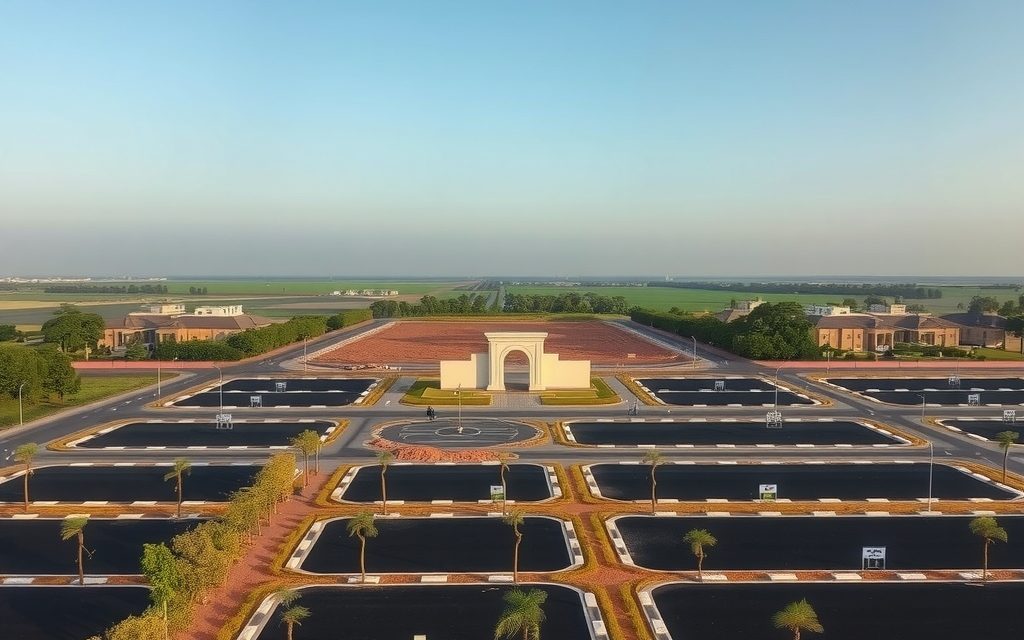
HMDA villa-plot ventures on the Srisailam highway, 3 km from the ORR Tukkuguda exit between the airport and Adibatla: pockets, indicative prices, airport height limits and an honest view on Future City.
HMDA plots 4 km from the ORR beside TCS and the Aerospace SEZ: Adibatla, Bongulur, Kongara Kalan and Mangalpally pockets, indicative per-sq-yd prices and an honest take on Future City and Pharma City.
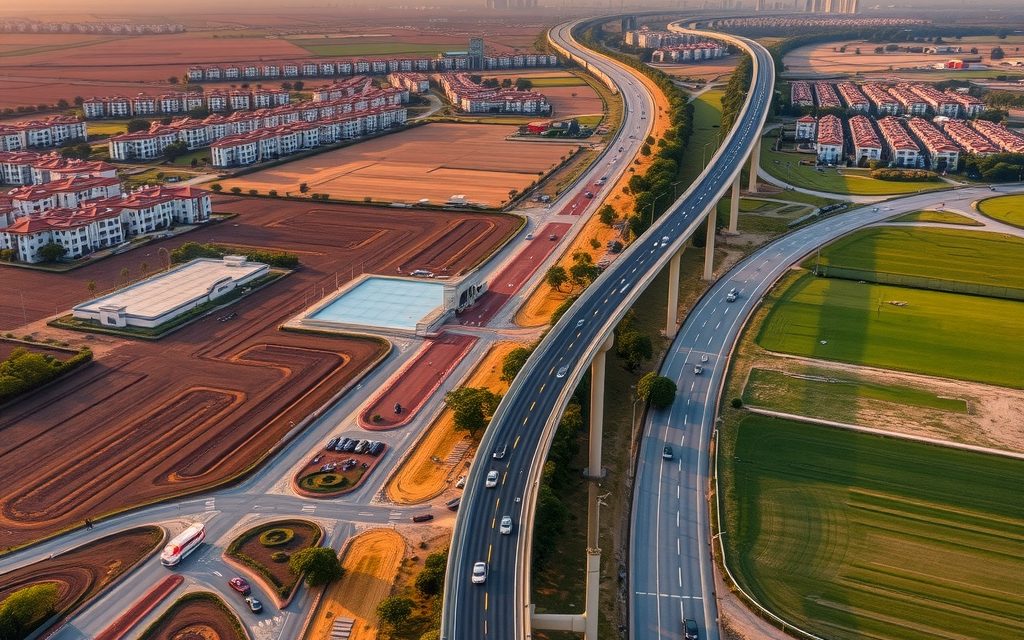
The RRR is the biggest land story around Hyderabad and the most misunderstood. This guide separates the northern and southern arms, explains acquisition and compensation, and shows how far from the alignment buyers should actually be.

NRIs and OCIs cannot buy or receive gifts of agricultural land, plantations or farmhouses; inheritance is the only route. What inherited land allows, why benami workarounds are dangerous, and the lawful alternatives near Hyderabad.

What NRIs and OCIs can and cannot buy under FEMA, how to fund and register a purchase from abroad, TDS and repatriation basics, and where the opportunities are across Hyderabad and the Telangana districts.