Gated Community Villas in Hyderabad: A Buyer's Guide
A gated community villa is several legal layers, not one product: site approval, building permission, TS RERA registration and common areas handed to an association. This guide explains each layer, running costs, disputes and corridors by budget.

- 'Gated community' is not a statutory category; check site approval, building permission, RERA and common-area handover separately
- Maintenance typically runs about ₹3–6 per sq ft of built-up area per month; 18% GST may apply above ₹7,500 a month
- Gated villas range from ₹68–95 L row villas in Adibatla to ₹6.5–11 Cr in Kokapet, indicative October 2026
- Under RERA, listed common areas such as the clubhouse must pass to the association of allottees
- NRIs can buy gated villas, but not 'farm villas' on unconverted agricultural land
| What | Indicative range | Note |
|---|---|---|
| Row villa, HMDA layout, Adibatla (120–150 sq yd) | ₹68 L – ₹95 L | indicative, Oct 2026 |
| First-generation gated villa resale, Kompally (167–300 sq yd) | ₹1.6 Cr – ₹2.8 Cr | indicative, Oct 2026 |
| Independent villa, mid-sized community, Kollur (250–300 sq yd) | ₹2.4 Cr – ₹3.9 Cr | indicative, Oct 2026 |
| Independent villa, mid-sized community, Tellapur (250–350 sq yd) | ₹3.2 Cr – ₹5.5 Cr | indicative, Oct 2026 |
| Independent villa, smaller gated cluster, Kokapet (300–400 sq yd) | ₹6.5 Cr – ₹11 Cr | indicative, Oct 2026 |
| Monthly maintenance, gated villa communities | ₹3 – ₹6 per sq ft built-up | typical, verify per project |
Ranges reflect recent transactions and advisor observation as of 2026-10. Always verify against the sub-registrar market value and the specific parcel.
Gated community villas in Hyderabad range from ₹70 lakh row villas near Adibatla to ₹20 crore estates in Kokapet, but they share a legal anatomy that most buyers never see: an approved site, a building permission for each villa, a TS RERA registration, and a set of common areas that must eventually pass to an owners' association. When any one of those layers is weak, the "gated community" label means little. This guide explains what the term actually covers in Telangana, the villa formats you will be offered, how maintenance, corpus and clubhouse rights work, how to read a villa plan and the undivided share, which corridors match which budget, and the due-diligence checklist we run before any client pays an advance. Price bands are indicative, as of October 2026, and match our area pages.
Who this guide is for
It is for families moving into their first villa, apartment owners trading up to a house with a garden, and NRIs buying a home in Hyderabad for themselves or their parents. It is equally useful if you already own in a gated community and want to understand your rights over the clubhouse, roads and corpus fund.
What "gated community" means legally
There is no single statutory product called a "gated community villa" in Telangana. The phrase is a marketing description of a project that combines several distinct legal elements. A sound project has all of them; a weak one is missing one or more, often without the buyer realising.
1. An approved site
The land must be approved for residential development. That happens in one of two broad ways. In a plotted layout, HMDA, DTCP or the local authority approves a layout with plots, roads and open spaces, and villas are then built on individual plots. In a group or integrated development, the authority approves the whole site with its buildings, internal roads and amenities as one scheme. The building rules and the permit itself set conditions such as minimum road widths, open-space percentage and setbacks; we read the permit rather than rely on the brochure.
2. Building permission for the villas
Each villa, or the project as a whole, needs building permission through TG-bPASS, HMDA or the municipal system, matching the number, size and height of villas being sold. Our building permission guide explains how to check.
3. TS RERA registration
Projects on more than 500 sq m of land or with more than eight units must be registered with TS RERA before marketing. The registration discloses the promoter, approved plans, the list of common areas and amenities, the completion timeline and quarterly progress. Verify it on the TS RERA portal.
4. Common areas and the association
Internal roads, parks, the clubhouse, the sewage treatment plant, water systems and the boundary wall are common areas. Under RERA, the promoter must hand common areas over to the association of allottees once it is formed, and the agreement for sale must describe them. The association, usually registered as a society or an owners' association, then runs maintenance, security and the clubhouse.
5. The gate itself
Here is a nuance few buyers know. In a conventional plotted layout, roads and open spaces are typically handed over to the local body as a condition of layout approval. In that model the roads are public in law, and a gate that restricts public access may not be lawfully enforceable. In a group development, the internal roads remain private common areas and gating is part of the scheme. Ask which model your project follows, and read the permit conditions.
Villa formats inside gated communities
| Format | Typical plot size | What you get | Watch for |
|---|---|---|---|
| Row villa / triplex | 100–180 sq yd | Shared side walls, three floors, small front and back yards | Light and ventilation on shared walls, stairs on every level |
| Twin / semi-detached villa | 150–250 sq yd | One shared wall, side setback on the other | Neighbour's extensions affecting your wall |
| Independent (detached) villa | 200–600 sq yd | Setbacks on all sides, garden, privacy | Higher maintenance per villa, larger corpus |
| Villa plot with design guidelines | 200–500 sq yd | You build your own house within community rules | Construction timelines, design approvals, unfinished neighbours |
| Older independent house in a plotted colony | 150–400 sq yd | Land value plus structure; not truly gated | Priced mainly on land and road width; no clubhouse |
Our villa vs apartment guide covers whether a villa suits you at all; this guide assumes it does.
How the approvals and portals fit together
Before you visit a model villa, you can verify a surprising amount online. This is the sequence we follow.
- TS RERA: confirm the registration, promoter name, approved plans, villa count and completion date. Read the quarterly progress filings and any complaints.
- HMDA or DTCP: confirm the layout or site approval and master-plan land use. HMDA permits and land use can be checked through HMDA's official site.
- Building permission: match the permit to the villa count and floors on sale.
- IGRS Telangana: check the encumbrance certificate for the project land and market value for the locality.
- Land records: for land recently converted from agriculture, check the conversion order and the earlier record of rights.
Reading the villa plan, the deed schedule and the UDS
A villa brochure shows a floor plan. The legal documents describe something more precise, and the two must agree.
Plot area, built-up area and saleable area
Your villa sits on a plot with a defined area in square yards. The built-up area is the total floor area of the house across all levels. Some projects also quote a saleable or super built-up area that loads a share of the clubhouse and common areas. Prices in our area tables are given per sq ft of built-up area, with ticket sizes for typical plot ranges. Always confirm which area a quote uses before comparing projects.
The schedule of property
The sale deed's schedule describes your villa plot by number, area, survey number, village and four boundaries, and the house by its built-up area. Check that the plot number and boundaries match the approved layout, that the area matches what you were sold, and that any exclusive areas, such as a private garden or driveway, are described.
Undivided share in common areas
In plotted gated communities, you own your plot outright. In group developments, the deed may convey an undivided share of the common land, including roads, parks and the clubhouse site, in addition to your exclusive area. That undivided share matters if the community is ever redeveloped, if land is acquired for a road, or if the clubhouse is sold. Our OC and UDS guide explains how UDS works for apartments; the principle is the same.
Deed structure during construction
Some builders register a sale deed for the villa plot early and sign a separate construction agreement; others register an agreement for sale during construction and a sale deed at completion. Duty and GST treatment differ between these routes, so ask for the deed format before booking.
Maintenance, corpus and the running cost of a gated villa
Monthly maintenance in Hyderabad villa communities typically runs about ₹3 to ₹6 per sq ft of built-up area, or an equivalent per sq yd charge on plot area, according to our Tellapur and other villa pages. Builders usually collect 12 to 24 months of maintenance in advance, plus a one-time corpus fund that transfers to the association.
GST matters here too. As of October 2026, GST at 18% generally applies to maintenance where an owner's monthly contribution exceeds ₹7,500 and the association's annual turnover exceeds ₹20 lakh; check current rules with the association's accountant. A 3,000 sq ft villa at ₹4 per sq ft pays ₹12,000 a month, which crosses the threshold, so GST of about ₹2,160 brings the bill to about ₹14,160.
Ask three questions about running costs before you buy:
- Who pays for unsold villas? The builder should pay maintenance on unsold units. If it does not, early owners subsidise the whole community.
- What is the water source? Borewells, tankers and municipal connections have very different costs in summer.
- Is there a sinking fund? Roads, pumps, STPs and clubhouse equipment need replacing. Without a sinking fund, every major repair becomes a special levy.
Clubhouse and amenity disputes, and how to avoid them
Most of the friction we see in gated villa communities comes from the clubhouse and amenities rather than the villas themselves.
- Clubhouse ownership retained by the builder. Some projects market the clubhouse as an amenity but keep it as the developer's commercial asset. Under RERA, common areas listed in the registration belong to the allottees. Fix: confirm the clubhouse is a listed common area and that the agreement does not carve it out.
- Outsider memberships. A clubhouse sold to outside members strains facilities and security. Fix: read the clubhouse rules in the agreement.
- Phased projects sharing amenities. Phase one buyers sometimes find the clubhouse shared with later phases, or delayed until the final phase. Fix: check the RERA registration for which phase includes the clubhouse and its completion date.
- Delayed association handover. Builders occasionally delay forming the association to keep control of maintenance funds. Fix: insist on a written handover timeline and corpus transfer terms.
- Amenities promised but not approved. A swimming pool or sports court in the brochure but not in the approved plan may never be built. Fix: compare the brochure to the RERA-registered plan.
- STP and water systems handed over in poor condition. Fix: get an independent technical inspection before the association accepts handover.
Living with community rules: renovations, rentals and pets
Buying into a gated community means accepting a rulebook. Most associations adopt bye-laws that cover far more than maintenance, and buyers who skip them sometimes discover a conflict only after moving in.
Renovations and extensions
Communities usually control the external look of villas: facade colours, compound walls, terrace structures, sheds and extensions. Some prohibit adding floors or covering setbacks altogether, and any extension must in any case stay within the building permission. If you plan to add a room above the garage or enclose a terrace, check both the bye-laws and the approved plan before you buy, not after.
Renting out your villa
Most communities allow letting but require tenant registration with security, a move-in fee or a deposit, and sometimes a minimum lease term. Short-stay letting is restricted in many communities. If rental income is part of your plan, read the rules on tenants and on clubhouse access for tenants.
Pets, vehicles and domestic staff
Rules on pets in common areas, the number of vehicles per villa, visitor parking and the registration of domestic staff vary widely. None of these should decide a purchase on its own, but a community whose rules you dislike will feel smaller every year.
Association elections and your vote
Once the association takes over, residents elect a managing committee that sets maintenance, approves budgets and enforces rules. A well-run association is the single biggest predictor of how a gated villa ages and resells. When buying a resale, attend a general body meeting or read recent minutes if you can; they reveal more about the community than any brochure.
For buyers comparing specific western communities, our Kokapet, Tellapur and Mokila comparison looks at how community scale and upkeep differ across that belt.
Corridors by budget for gated villas
The bands below come from our area pages and reflect recent transactions and advisor observation. They are indicative, as of October 2026, and exclude GST, duty and add-ons.
| Budget band | Corridor and format | Indicative band |
|---|---|---|
| Under ₹1.5 Cr | Adibatla, row villa in HMDA layout, 120–150 sq yd | ₹68 L – ₹95 L |
| Under ₹1.5 Cr | Isnapur, row villa, 120–167 sq yd | ₹72 L – ₹1.05 Cr |
| Under ₹1.5 Cr | Medchal, new gated row villa / triplex, 120–160 sq yd | ₹80 L – ₹1.3 Cr |
| Under ₹1.5 Cr | Pocharam, row villa in new gated township, 120–160 sq yd | ₹85 L – ₹1.35 Cr |
| Under ₹1.5 Cr | Dundigal, row villa / triplex, 120–167 sq yd | ₹85 L – ₹1.4 Cr |
| ₹1.5 Cr – ₹3 Cr | Kompally, first-generation gated villa resale, 167–300 sq yd | ₹1.6 Cr – ₹2.8 Cr |
| ₹1.5 Cr – ₹3 Cr | Ameenpur, gated community villa, 200–300 sq yd | ₹1.7 Cr – ₹2.8 Cr |
| ₹1.5 Cr – ₹3 Cr | Shamirpet, gated villa on Rajiv Rahadari frontage, 200–300 sq yd | ₹1.5 Cr – ₹2.6 Cr |
| ₹1.5 Cr – ₹3 Cr | Kollur, row or twin villa, 150–220 sq yd | ₹1.6 Cr – ₹2.6 Cr |
| ₹1.5 Cr – ₹3 Cr | Mokila, row or twin villa, 150–250 sq yd | ₹1.7 Cr – ₹3 Cr |
| ₹3 Cr – ₹6 Cr | Kollur, independent villa in a mid-sized community, 250–300 sq yd | ₹2.4 Cr – ₹3.9 Cr |
| ₹3 Cr – ₹6 Cr | Tellapur, independent villa in a mid-sized community, 250–350 sq yd | ₹3.2 Cr – ₹5.5 Cr |
| ₹3 Cr – ₹6 Cr | Kismatpur, independent villa in a new gated community, 200–350 sq yd | ₹2.6 Cr – ₹5 Cr |
| ₹3 Cr – ₹6 Cr | Gopanpally, mid-size gated villa, 200–300 sq yd | ₹3.8 Cr – ₹6 Cr |
| ₹6 Cr and above | Narsingi, independent villa in a well-run community, 350–500 sq yd | ₹6 Cr – ₹12 Cr |
| ₹6 Cr and above | Kokapet, independent villa in a smaller gated cluster, 300–400 sq yd | ₹6.5 Cr – ₹11 Cr |
| ₹6 Cr and above | Financial District, resale gated villa, 300–500 sq yd | ₹7 Cr – ₹15 Cr |
For the detail behind each band, see our pages on villas in Pocharam, villas in Kompally, villas in Ameenpur, villas in Kollur, villas in Tellapur and villas in Kokapet. If you are working to a ceiling, our guide to villas under ₹2 crore goes deeper on the lower bands.
Due-diligence checklist, step by step
| Step | What we check | Typical time | Cost to budget |
|---|---|---|---|
| 1. RERA and promoter review | Registration, plans, villa count, timeline, progress filings, complaints, promoter's past projects | 2–3 days | Nil |
| 2. Site and layout approval | HMDA, DTCP or municipal approval, master-plan land use, road and open-space model | 3–7 days | Nominal |
| 3. Title and EC | 30-year title chain, EC, conversion history, any development agreement with landowners | 1–2 weeks | Advocate fees (vary) |
| 4. Environmental and boundary checks | Lake FTL and buffer, nala, high-tension lines, airport height limits where relevant | 2–5 days | Surveyor fee (varies) |
| 5. Agreement review | Common areas, clubhouse, specifications, delay penalties, deed structure, association handover | 1 week | Advocate fees |
| 6. Cost sheet and loan | Base price, GST, duty, corpus, maintenance, connection charges; lender approval of project | 1–3 weeks | Processing fee |
| 7. Registration | Challan, slot, execution at the jurisdictional SRO | 1 day plus slot wait | About 7.5% charges |
| 8. Handover and snagging | OC, snag inspection, utility transfer, association membership | 2–6 weeks | Snag inspector (optional) |
Stamp duty of about 5.5%, transfer duty of about 1.5% and registration fee of about 0.5% add up to roughly 7.5% of the higher of market value and consideration, as of October 2026. Verify rates at the SRO before paying. Every gated villa in this guide costs more than ₹50 lakh, so the buyer deducts 1% TDS under Section 194-IA from payments to a resident seller and files Form 26QB.
Worked examples with all-in costs
Example 1: a new gated villa off the Rajiv Rahadari
A family books a new 250 sq yd gated villa near Shamirpet, where gated villas on the highway frontage run ₹1.5 crore to ₹2.6 crore. The agreed price is ₹2.2 crore, under construction.
| Item | Amount |
|---|---|
| Agreed price | ₹2,20,00,000 |
| GST at 5% | ₹11,00,000 |
| Stamp duty, transfer duty and registration at about 7.5% (assumed on the full price) | ₹16,50,000 |
| Corpus, advance maintenance, clubhouse and connections (illustrative) | ₹6,00,000 |
| Advocate and documentation (illustrative) | ₹75,000 |
| TDS at 1% (deducted from payments, not extra) | ₹2,20,000 deposited |
| All-in cost | ₹2,54,25,000 |
If the villa has 3,200 sq ft built-up and maintenance is ₹4 per sq ft, the monthly bill is ₹12,800 plus GST at 18%, about ₹15,100 a month or roughly ₹1.8 lakh a year.
Example 2: a resale independent villa in Kollur
A couple buys a seven-year-old independent villa on 270 sq yd in a mid-sized Kollur community, where such villas run ₹2.4 crore to ₹3.9 crore. The agreed price with a resident seller is ₹3.2 crore.
| Item | Amount |
|---|---|
| Agreed price | ₹3,20,00,000 |
| GST | Nil (completed, OC in place) |
| Charges at about 7.5% | ₹24,00,000 |
| Association transfer, dues settlement and refresh works (illustrative) | ₹2,00,000 |
| Advocate and documentation (illustrative) | ₹1,00,000 |
| TDS at 1%, filed via Form 26QB | ₹3,20,000 deposited |
| All-in cost | ₹3,47,00,000 |
The resale buyer pays no GST and can inspect a working community: the clubhouse, the association's accounts, the water supply in May. That visibility is worth a lot.
Mistakes we see in practice
- Treating "gated" as a legal status. Fix: verify each layer, site approval, building permission, RERA and common-area handover.
- Not reading the common-area list. Fix: confirm the clubhouse, parks and STP are listed common areas in the RERA registration and the agreement.
- Ignoring the association's finances in a resale. Fix: ask for the last two years of accounts, the corpus balance and any pending special levies.
- Buying in phase one without checking phase-two plans. Fix: read the master plan and the RERA filings for every phase.
- Skipping the lake buffer check. Fix: confirm FTL and buffer clearance; our lake buffer guide explains how.
- Overlooking the title of the original land. Fix: get a 30-year title chain and EC for the project land, not just the builder's documents. See our link documents guide.
- Comparing per sq ft prices across different area definitions. Fix: compare built-up area and plot area separately.
- Underestimating running costs. Fix: budget maintenance, GST on maintenance and water costs for the first three years.
NRI buyers and gated villas
NRIs and OCI cardholders can buy gated community villas in Hyderabad without RBI approval. Funds should come from NRE, NRO or FCNR accounts or inward remittance, and registration can be done through a power of attorney executed abroad and adjudicated in India. Our NRI villa and apartment guide covers the process step by step.
One caution: "farm villas" in gated farm communities on unconverted agricultural land are a different product. NRIs and OCIs cannot buy agricultural land, plantations or farmhouses, and cannot receive them as gifts; they can only inherit them. Confirm that any villa you buy sits on converted, residentially approved land.
On a later sale, the buyer deducts TDS under Section 195 at the applicable capital-gains rate plus surcharge and cess; long-term gains are taxed at 12.5% without indexation since 2024, and a lower-deduction certificate is possible. Sale proceeds of up to two residential properties can generally be repatriated, and NRO balances can be remitted within the RBI's USD 1 million per financial year facility, subject to tax and documentation. Our repatriation guide explains the conditions. Consult a CA on your own case.
How NRR Estates handles a gated villa purchase
We start with your budget, the job cluster you are tied to and the villa format you need, then shortlist communities in the matching corridor. For each, we verify the RERA registration, site and building approvals, title chain, lake buffer and common-area structure, read the agreement clause by clause, and compare full cost sheets including maintenance and corpus. For resales, we review the association's accounts and the community's condition. We negotiate on recent registrations, coordinate loans and TDS filings, attend registration and support you through handover and snagging. Our fees are disclosed before you commit.
Gated community villas: frequently asked questions
What does 'gated community' mean legally in Telangana?
It is a marketing description rather than a legal category. A sound gated villa project combines an approved site, either a plotted layout or a group development, building permission for the villas, TS RERA registration where the project crosses the threshold, and common areas such as roads, parks and the clubhouse that pass to an owners' association. If any one of these is missing or weak, the gate means little. Verify each layer separately using the permit, the RERA filing and the agreement for sale.
Can a plotted layout legally have a gate?
It depends on the approval model. In a conventional plotted layout, roads and open spaces are typically handed over to the local body as a condition of approval, which makes them public in law, so restricting public access may not be enforceable. In a group development, internal roads remain private common areas and gating is part of the approved scheme. Ask the developer which model applies, and read the permit conditions. The answer affects security, maintenance responsibility and how disputes with outsiders are handled.
How much is maintenance in a Hyderabad gated villa community?
Our villa pages put monthly maintenance at about ₹3 to ₹6 per sq ft of built-up area, or an equivalent per sq yd charge on plot area, varying with amenities, staffing and water costs. Builders usually collect 12 to 24 months in advance plus a one-time corpus fund. As of October 2026, 18% GST generally applies where a member's monthly contribution exceeds ₹7,500 and the association's annual turnover exceeds ₹20 lakh. A 3,000 sq ft villa at ₹4 per sq ft would pay about ₹14,160 a month including GST.
Who owns the clubhouse in a gated villa project?
Under RERA, common areas listed in the project registration belong to the allottees and must be handed to their association once formed. Disputes arise when a builder keeps the clubhouse as a commercial asset, sells outside memberships, or shares it with later phases. Before booking, check that the clubhouse appears as a common area in the RERA registration and the agreement for sale, which phase it belongs to and when it will be completed. Get the association handover and corpus transfer terms in writing.
What is UDS in a villa purchase?
In a plotted gated community you usually own your villa plot outright, described by number, area and boundaries in the deed. In a group development, the deed may also convey an undivided share of the common land, such as roads, parks and the clubhouse site. That share matters if land is acquired for a road, if the clubhouse is ever sold, or if the community is redeveloped decades later. Check the deed schedule against the approved layout and confirm which model your project uses.
Which areas suit which budget for gated villas?
As of October 2026, under ₹1.5 crore you are mostly looking at row villas in Adibatla, Isnapur, Medchal, Pocharam and Dundigal. Between ₹1.5 crore and ₹3 crore, Kompally resales, Ameenpur and Shamirpet gated villas and row villas in Kollur and Mokila come into range. From ₹3 crore to ₹6 crore, independent villas in Kollur, Tellapur, Kismatpur and Gopanpally fit. Above ₹6 crore, Narsingi, Kokapet and the Financial District dominate. All figures are indicative bands from our area pages.
Is a resale gated villa safer than a new one?
A resale villa lets you see what you are buying: the finished house, the clubhouse in use, the association's accounts, the water supply in summer and how neighbours have extended their homes. There is no GST and no delivery risk. A new villa may cost less per sq ft at launch and offers a choice of plot, but carries construction and handover risk. For resales, ask for two years of association accounts, the corpus balance, a no-dues letter and any pending special levies before you agree a price.
Can NRIs buy gated community villas in Hyderabad?
Yes. NRIs and OCI cardholders can buy villas without RBI approval, paying from NRE, NRO or FCNR accounts or by inward remittance, and registering through a power of attorney if needed. The exception is 'farm villas' in gated farm communities on unconverted agricultural land: NRIs cannot buy agricultural land or farmhouses, or receive them as gifts. On resale, the buyer deducts TDS under Section 195; repatriation of proceeds from up to two residential properties is generally allowed, subject to conditions. Consult a CA.
Related guides
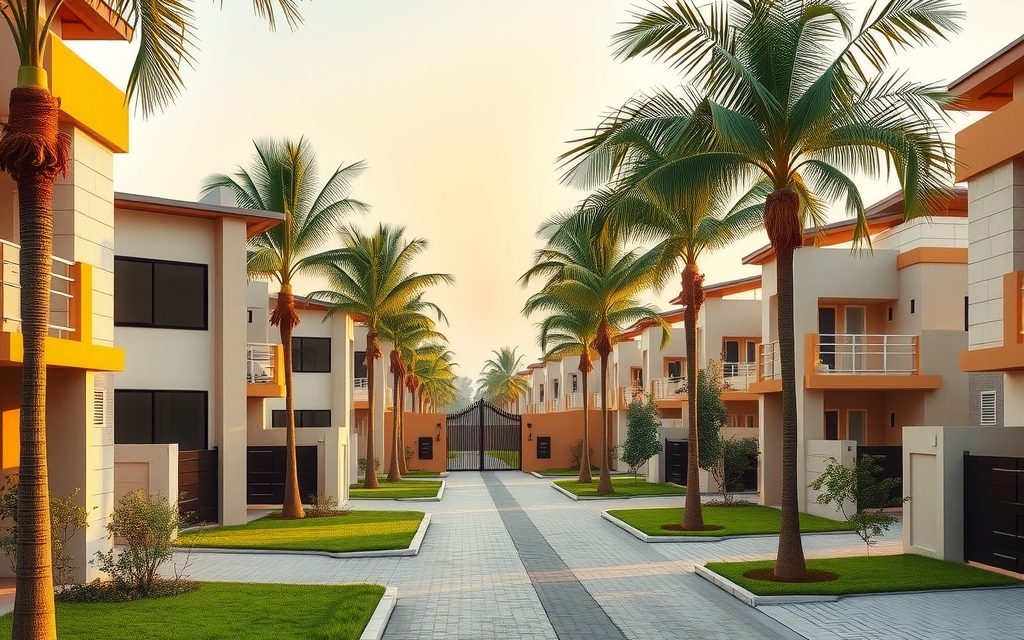
Kollur offers Tellapur-style gated villas at lower tickets, with its own ORR interchange. Most supply is under construction, so developer record, approvals and a realistic commute test matter more than usual.
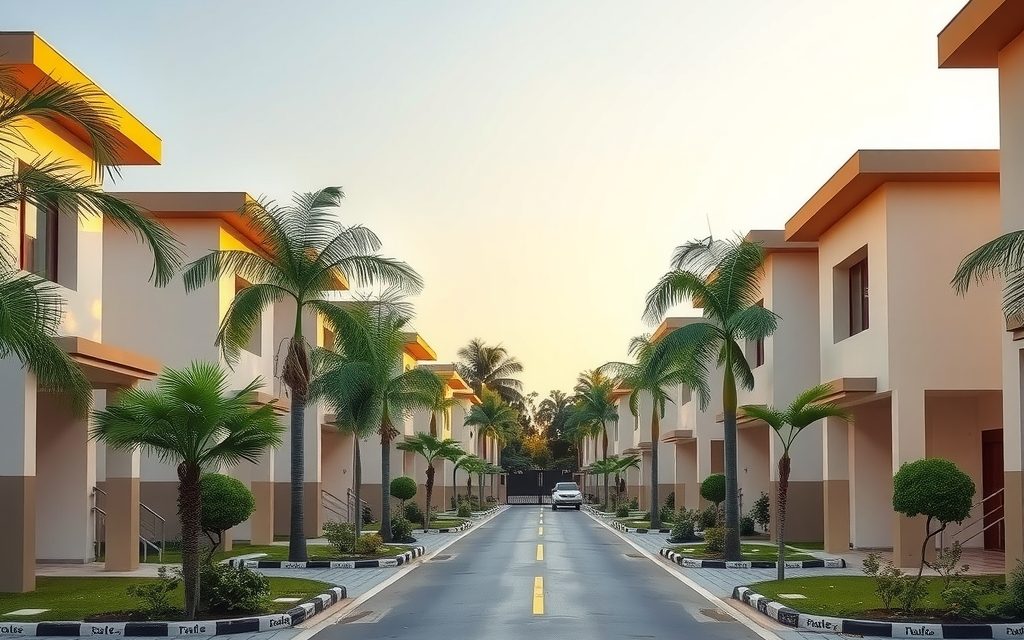
Tellapur is west Hyderabad's busiest villa belt: township-scale gated communities, row and independent villas from about ₹2.2 crore, Meru International School nearby and a 25–40 minute run to Gachibowli.
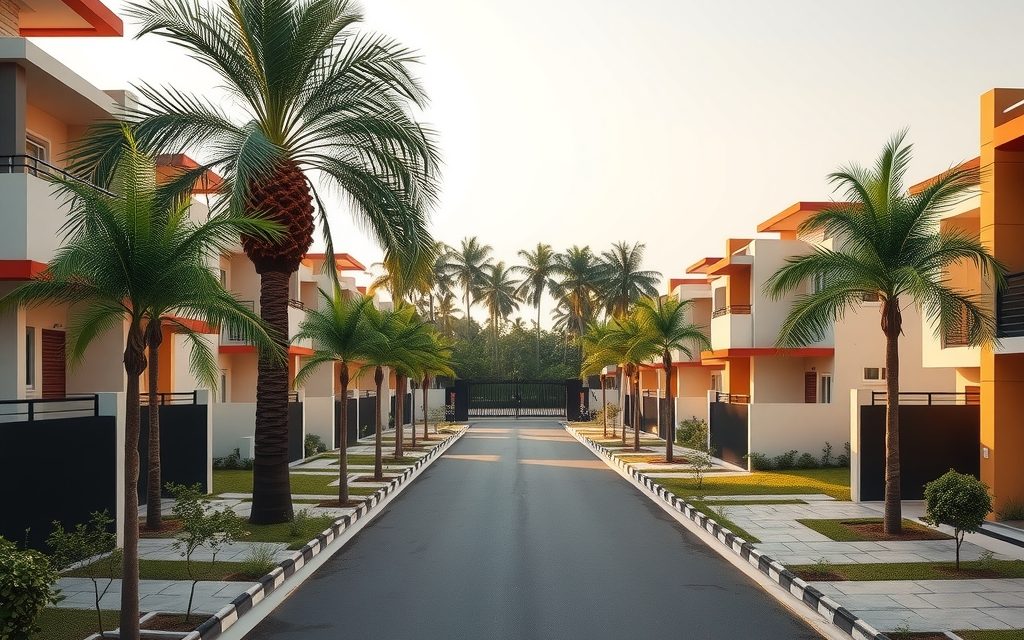
Kompally is north Hyderabad's established villa belt on NH-44, with gated communities from 2005 onward, strong schools and Secunderabad links. See price ranges by villa generation, commute realities and the checks we run.

Kokapet, Tellapur and Mokila sit on the same western growth line but sell very different villas. We compare indicative rates, tickets, commute, supply, approvals and rents as of October 2026, and who each belt suits.

Under ₹2 crore, Hyderabad still offers row villas, HMDA-colony duplexes and some gated villas, mainly in the north, north-west, east and south. This guide maps where each format fits, what size you get and the true all-in cost.
A villa is usually a family's largest cheque. The full process in Hyderabad: gated, plotted or resale, TS RERA and builder checks, the agreement for sale, payment plans with GST and TDS, registration, the OC and a handover snag list.

The three apartment checks most Hyderabad buyers skip: the occupancy certificate from GHMC or HMDA, the undivided share of land in your deed, and a properly allotted parking slot, plus corpus and maintenance terms.

Which Hyderabad micro-markets suit NRIs, what each budget buys, new versus resale, RERA and OC checks, GST, TDS for resident and NRI sellers, rental yields, management and repatriation of sale proceeds.