Link Documents and the Title Chain: How Far Back to Check
A sale deed is only as good as the deeds behind it. Why lawyers trace at least 30 years to a root of title, how partitions, GPA sales, wills and decrees fit in, and what a title opinion actually checks.
- Trace the chain at least 30 years and back to a root of title; for farm land, start from the 1954-55 khasra pahani
- Post-2020 agricultural sales sit in the Bhu Bharati transaction history and may not appear in an SRO encumbrance search
- SA, GPA and will transfers do not convey title; a GPA ends on the principal's death
- Unregistered partitions, missing heirs and minors' shares sold without court permission are the commonest defects
- Make curing title defects the seller's obligation and cost, as a condition before the balance is paid
| What | Indicative range | Note |
|---|---|---|
| Encumbrance search, 30+ years | ₹1,000 – ₹5,000 including retrieval | official fees nominal; as of Oct 2026, verify |
| Certified copy of each registered deed | ₹500 – ₹2,000 per document | indicative, Oct 2026 |
| Revenue records including khasra pahani and transaction history | ₹2,000 – ₹8,000 | indicative, Oct 2026 |
| Litigation and court record search | ₹3,000 – ₹15,000 | indicative, Oct 2026 |
| Advocate's written title opinion | ₹15,000 – ₹60,000 | indicative, Oct 2026; depends on chain length |
| Time to assemble and verify a full chain | 3 – 8 weeks | longer if curative deeds are needed |
Ranges reflect recent transactions and advisor observation as of 2026-10. Always verify against the sub-registrar market value and the specific parcel.
A sale deed is only as good as the deeds behind it. When an advocate asks for the link documents, they are asking for every registered document, decree and revenue order that connects the current seller back to a safe starting point, the "mother deed" or root of title. In Telangana, checking the link documents and title chain properly is the single most important piece of due diligence on land and plots, and it is the step most often shortened under pressure from a seller or an intermediary. This guide explains why practitioners go back at least 30 years, what counts as a link document, how partition deeds, GPA sales, wills and court decrees fit into the chain, where to get certified copies, and what a property lawyer actually reads when they open your file. It reflects practice around Hyderabad and in Telangana's districts as of October 2026.
We are property advisors, not advocates. This guide tells you what to collect and what questions to ask; the title opinion itself should come from a property lawyer who has read every page.
Who this guide is for
This guide is for anyone buying agricultural land, a farm plot, an open plot, an independent house or a resale villa in Telangana, where the title has to be traced through individual transfers rather than a builder's project file. It is also useful for families organising old papers before selling inherited land, because the gaps a buyer's lawyer will find are much easier to fix before the land goes to market.
What link documents are, and why the chain matters
Ownership of land in India is proved by a sequence of transfers, not by a single certificate. If you are buying from Ravi, you need to know how Ravi got the land, how the person before him got it, and so on, until you reach a point at which ownership is not in doubt. Every document in that sequence is a link document, and the sequence is the chain of title.
A typical chain for agricultural land near Hyderabad might include a patta grant or an old sale recorded in the 1950s revenue records, a partition among brothers in the 1970s, a sale to an outsider in the 1990s, a gift from that buyer to his son, and finally the son's offer to sell to you. For an open plot, the chain usually runs from the farmer who owned the land, to the developer who bought it or entered a development agreement, through the layout approval, to the first plot buyer and any later resale buyers.
The chain matters because a defect anywhere in it travels forward. If the 1990s sale was signed by only two of three co-owning brothers, the third brother's heirs may still own a third of the land today, no matter how many clean sales have happened since. Registration does not cure a defect in the seller's own title; it only records the transfer of whatever the seller had.
Why 30 years, and when to go further
There is no statute that says "check 30 years". The figure comes from the law of limitation and long practice:
- A private person's suit for possession based on title generally has to be brought within 12 years from when the defendant's possession became adverse, and adverse possession claims run on the same 12-year period.
- Suits by the government have a longer limitation period of 30 years.
- Banks and lenders have long asked for title tracing and an encumbrance certificate covering 30 years, and many lawyers will not give a clean opinion on less.
So 30 years is the minimum, not the target. The real rule is that the chain should go back to a root of title, a document or record that by itself establishes ownership without depending on anything earlier: a government grant on full patta, a court decree that finally determined title, or a sale or partition old enough and clear enough that no challenge could realistically survive.
For agricultural land in Telangana, lawyers nearly always go further than 30 years in the revenue records. The 1954-55 khasra pahani is the base record for most of the former Hyderabad State and shows the original classification of a survey number, whether patta, government, inam or something else. If the khasra pahani shows the land as government land, it does not matter how clean the last 30 years of deeds look; you need the grant that turned it into private land. Our guide to assigned land and the 22-A prohibited list explains why this matters so much around Hyderabad.
Where the documents come from
The registration department
Every registered document is recorded at the Sub-Registrar Office where it was registered. You can search the encumbrance certificate online through the registration department's portal at registration.telangana.gov.in for the period covered by computerised records, generally from the early 1980s onwards, and apply for a manual search for older periods. The EC lists the documents registered against a property; it does not give you the documents themselves. Certified copies of each deed are obtained from the SRO or through the portal on payment of a fee. Our guide on how to check an encumbrance certificate in Telangana explains how to read the result.
The land records system
Since November 2020, sales of unconverted agricultural land have been registered by mandal Tahsildars as joint sub-registrars, first under Dharani and now under Bhu Bharati. These transactions sit in the land records system's transaction history, and may not appear in an EC drawn only from the SRO records. For any agricultural chain that includes a post-2020 transfer, the lawyer needs both the SRO encumbrance search for the earlier period and the land records transaction history for the later one.
Revenue records
Pahanis or adangals for each year, the khasra pahani, the sethwar or settlement register, the record of rights entries, mutation orders and, where relevant, the assignment register, come from the mandal revenue office and the land records department. These do not prove title on their own, but they corroborate the chain and reveal gaps: a sale with no matching change in the cultivator column, or a change in the record with no deed to explain it. Our guide to pattadar passbooks and mutation explains how the record of rights relates to title.
Courts and other offices
Certified copies of decrees and judgments come from the court that passed them. Layout approvals, NALA conversion orders, LRS proceedings and building permissions come from HMDA, DTCP, the municipality or the revenue department.
The documents you will meet in a Telangana title chain
Mother deed or root document
The earliest document in the chain that establishes clear ownership. For agricultural land this may be a patta grant, an old registered sale, or an inheritance recorded in the khasra pahani. For plots in a layout, the "mother deed" is usually the document by which the landowner or developer acquired the entire layout land. Ask for it first; if the seller cannot produce it, ask why.
Sale deeds
The workhorse of the chain. Each must be registered, properly stamped, executed by everyone who owned the land at the time, and describe the same survey number, sub-division, extent and boundaries as the documents before and after it.
Gift and settlement deeds
Common within families. A gift of immovable property must be registered to be valid. Check that the donor owned what was gifted, that the gift was accepted, and whether there is any condition or revocation clause.
Partition deeds and family arrangements
Partitions among co-owners are the most frequent weak point we see. A partition deed that divides property among co-owners must be registered to be relied on as a document of title. Many Telangana families divided land by oral arrangement decades ago and recorded it later in an unregistered memorandum. The courts have accepted that a memorandum that merely records a family arrangement already made may not need registration, but whether a particular paper falls on the right side of that line is a question for the lawyer. Where the partition is doubtful, buyers often ask all branches of the family to join the sale deed or execute registered release or confirmation deeds.
Wills and succession
Where land passed by will, the lawyer reads the will, checks whether it was registered, whether any heir has challenged it, and whether probate was obtained. Probate is not compulsory for most wills in Telangana, but a will that has not been proved or accepted by all heirs is a weaker link than a registered partition or release. Where land passed without a will, the chain is completed by succession documents and the revenue mutation, and every legal heir must be accounted for, including daughters, whose equal rights are now settled law.
GPA sales and agreement-cum-GPA transfers
For decades, land and plots around Hyderabad changed hands through a general power of attorney given by the owner to the buyer, sometimes with an unregistered agreement of sale and a will, without a registered sale deed. In 2011 the Supreme Court held that such sale agreement, GPA and will transactions do not transfer title. A GPA holder can execute a sale deed on the owner's behalf while the power subsists, but the power ends on the principal's death, and a sale deed signed after that is invalid. If your chain has a GPA link, the lawyer will check who signed, when, whether the principal was alive, whether the power was registered and covered sale, and whether stamp duty was paid. Where it was not done properly, the fix is usually a confirmation or ratification deed from the original owner or their heirs.
Court decrees
A decree can be the strongest link in a chain or the most dangerous. A decree after a contested trial that finally determined title is a good root. A compromise decree in a suit between family members or friends, used to transfer land without paying stamp duty or to defeat other heirs, is a known risk; collusive decrees can be challenged by those they prejudice. Compromise decrees that deal with property outside the subject matter of the suit require registration. The lawyer will want the plaint, the decree, any appeal and proof that the decree became final.
Sada bainamas
Unregistered sales on plain or stamp paper, common in rural Telangana, do not transfer title. Some were regularised through revenue procedures, and Bhu Bharati provides for pending regularisation applications to be decided. A sada bainama in the chain is acceptable only if it was later regularised by a revenue order or followed by a registered conveyance.
Protected tenancy and 38-E certificates
Under the Telangana tenancy law dating from 1950, protected tenants acquired rights in the land they cultivated, and many received ownership certificates. Land with a protected-tenant history needs care in both directions: the landowner's descendants may not own what they think they own, and a tenant's certificate must be genuine and properly recorded.
What a lawyer actually reads
A good title opinion is not a list of documents. It is the result of reading each document against the others. On every link, the lawyer is checking:
- Identity of the property. Survey number, sub-division, extent, village, mandal and boundaries match from document to document. A boundary that says "east: land of Venkat Reddy" in 1995 and "east: village road" in 2015 needs an explanation.
- Extent arithmetic. If the 1978 partition gave the seller's father 6 acres and he sold 2 acres in 1991 and 2 acres in 2004, there are only 2 acres left for the seller to sell to you, not 3.
- Capacity of the executants. Every owner signed. Minors' shares were sold only with the court's permission required under the guardianship law; without it, the sale can be set aside at the minor's instance after attaining majority. Persons of unsound mind, companies, trusts and societies signed through properly authorised representatives.
- Recitals. Each deed should explain how the executant acquired the land. Recitals that do not match the previous document are a red flag.
- Stamping and registration. Under-stamped or unregistered documents that required registration cannot be relied on as evidence of title.
- Encumbrances. Mortgages, charges, attachments, leases, maintenance rights and pending suits. A sale during a pending suit about the property is subject to the result of that suit.
- Revenue correspondence. Whether the revenue record moved with each deed. Gaps are not fatal, but each needs an explanation.
- Statutory status. Assigned land, ceiling surplus, endowment, wakf, forest, acquisition, lake full tank level, master plan zoning and conversion status for non-agricultural use.
Step-by-step: assembling and verifying the chain
| Step | Action | Typical time | Indicative cost (as of October 2026, verify) |
|---|---|---|---|
| 1 | Seller provides copies of all deeds in their possession and the passbook or tax receipts | 2–7 days | Nil |
| 2 | Encumbrance search for 30+ years, online for the computerised period and manual for older periods | 1–10 days | Nominal official fees; ₹1,000 – ₹5,000 with retrieval |
| 3 | Certified copies of every registered deed in the chain | 3–15 days | ₹500 – ₹2,000 per document |
| 4 | Land records transaction history for post-2020 agricultural transfers; revenue records including khasra pahani | 3–15 days | ₹2,000 – ₹8,000 |
| 5 | Court records for any decree; litigation search at local courts | 1–3 weeks | ₹3,000 – ₹15,000 |
| 6 | Survey report to match the chain to the land on the ground | 1–2 weeks | ₹15,000 – ₹45,000 |
| 7 | Written title opinion and list of requisitions | 1–2 weeks | ₹15,000 – ₹60,000 |
| 8 | Curing defects: confirmation, release or rectification deeds | 2–12 weeks | Stamp duty and fees on curative deeds, usually borne by the seller |
Worked example: a Shankarpally farm parcel with a GPA link
A resident client was offered 4 acres of interior patta land in a village in Shankarpally mandal at ₹1.4 crore per acre, within the indicative band of roughly ₹1.1 crore to ₹2 crore per acre for interior land there as of October 2026. The seller held a registered sale deed from 2014 and a clean passbook.
The chain, once assembled, looked like this:
- 1954-55 khasra pahani: survey number recorded as patta land in the name of the seller's predecessor family, 11 acres.
- 1979: unregistered partition memorandum among three brothers, each taking about 3 acres 26 guntas, with 4 acres in one block later going to the eldest brother through an adjustment of other land.
- 1996: registered sale of the 4 acres by the eldest brother to a city buyer.
- 2007: the city buyer executed an agreement and a GPA in favour of a second buyer, without a sale deed.
- 2014: the GPA holder executed a registered sale deed in favour of the current seller, acting on the 2007 GPA.
Two problems emerged. First, the 1979 partition was unregistered, and the revenue records showed the 4-acre adjustment only from 1986. The lawyer's view was that the memorandum recorded an arrangement already acted on, supported by decades of separate cultivation and revenue entries, but the cleaner course was confirmation. Second, the city buyer who gave the 2007 GPA had died in 2012, two years before the GPA holder signed the 2014 sale deed. A power of attorney ends on the principal's death, so the 2014 deed was open to challenge by the city buyer's heirs.
The cure took nine weeks. The heirs of the two younger brothers executed registered confirmation deeds recognising the 1979 partition. The city buyer's widow and two children executed a registered sale deed in favour of the current seller, for a modest consideration agreed between them, curing the 2014 defect. The seller bore the stamp duty on the curative deeds, about ₹6.5 lakh in total, and our client's price was unchanged. Registration then went ahead at the Shankarpally Tahsildar office. For the area, see our page on agriculture land in Shankarpally.
Worked example: an open plot resale in an old layout
A plot of 300 square yards in a layout approved in the early 2000s on the western fringe was offered at a resale price of about ₹45,000 per square yard, ₹1.35 crore. The seller had bought it in 2012 from the first allottee. The lawyer asked for the developer's acquisition deeds for the whole layout land, the layout approval with its LP number and the release of the mortgaged plots, the first allottee's sale deed from the developer, and the 2012 resale deed.
The weakness was at the top. Part of the layout land had been bought by the developer from a family in which one sister had not signed. The plot in question fell, on the layout plan overlaid on the survey sketch, in the portion bought from the other siblings, so it was not affected, and the opinion was clean subject to that finding being recorded. Without the survey overlay, the buyer would never have known whether the plot sat on the disputed sister's share. Because the property was urban and above ₹50 lakh, the buyer deducted 1% TDS under Section 194-IA from the resident seller. See our guide on how to verify a plot before buying in Telangana for the plot-specific checks.
Mistakes we see in practice, and the fix for each
- Stopping at the seller's own deed. One registered sale deed tells you nothing about the previous 29 years. Fix: build the full chain to a root of title before paying more than a token advance.
- Relying on the EC as a substitute for the deeds. An EC lists documents; it does not show who signed them or what they say, and may not capture post-2020 agricultural transfers. Fix: obtain certified copies of every document and the land records transaction history.
- Accepting photocopies of old deeds. Fix: certified copies from the SRO for every link. Forged or altered photocopies are a known fraud pattern.
- Ignoring missing heirs. Daughters, heirs abroad and children from a second marriage are the usual gaps. Fix: insist on a family tree with a legal heir certificate, and registered releases or joinder where needed.
- Treating a GPA link as normal. Fix: check whether the principal was alive on the date of the sale deed, whether the power covered sale, and whether the transaction was properly stamped; cure with a confirmation deed if not.
- Not matching the chain to the ground. Every deed can be perfect for land you are not standing on. Fix: a survey report that places the parcel on the village map; see our guide on survey numbers, FMB and boundaries.
- Letting the seller choose the lawyer. Fix: appoint your own advocate, and give them time.
- Paying for curative deeds yourself without adjusting the price. Fix: make curing of title defects the seller's obligation, at the seller's cost, in the agreement.
How NRR Estates handles the title chain for clients
Before we recommend a parcel, we ask the seller for the full chain and the revenue records and do a first reading ourselves. Where the chain has obvious gaps, we tell the client before a visit is wasted. When the client wants to proceed, we coordinate the encumbrance search, certified copies, land records history, court searches and survey, and put the complete file in front of the client's advocate in order, with a summary of each link. We then turn the advocate's requisitions into concrete curative steps for the seller and write them into the agreement as conditions before the balance is paid. Our fees are disclosed before any commitment.
For families preparing to sell inherited land, we help assemble the chain, identify missing heirs and curative deeds early, and complete succession mutation, so that a buyer's lawyer finds a clean file. For NRIs who have inherited farm land, we explain the FEMA constraints set out in our guide on NRI agriculture land rules in Telangana, including that inherited agricultural land can be sold only to a resident Indian.
Link documents and title chain: frequently asked questions
How many years of title should I check before buying land in Telangana?
At least 30 years, and back to a root of title, meaning a document or record that establishes ownership by itself, such as a full patta grant, a final court decree or an old, clear registered sale. The 30-year figure reflects limitation periods, including the longer period for government claims, and long lending practice. For agricultural land, lawyers also read the 1954-55 khasra pahani to see the original classification of the survey number, because government or assigned origins can make even a clean recent chain worthless.
What is a mother deed?
The mother deed is the earliest document in the chain that establishes clear ownership, from which all later transfers flow. For agricultural land it may be a patta grant, an old registered sale or an inheritance shown in the khasra pahani. For a plot in a layout, it is usually the document by which the landowner or developer acquired the whole layout land. If a seller cannot produce the mother deed or explain how the first owner acquired the land, treat it as a serious gap and ask your lawyer before paying.
Is a GPA sale valid in Telangana?
A transaction made only through a sale agreement, general power of attorney and will does not transfer ownership; the Supreme Court said so clearly in 2011. A GPA holder can sign a registered sale deed on the owner's behalf while the power is valid, but the power ends when the principal dies, so a sale deed signed afterwards is open to challenge. If your chain has a GPA link, check the dates, the scope of the power and stamping. The usual cure is a confirmation deed from the owner or their heirs.
Is an unregistered partition deed acceptable in a title chain?
A partition deed that divides property among co-owners must be registered to be relied on as a document of title. Courts have accepted that a memorandum merely recording a family arrangement already made may not need registration, but whether a specific paper qualifies is a legal judgment. Separate cultivation and revenue entries over decades help. Where there is doubt, buyers usually ask every branch of the family to join the sale or execute registered confirmation or release deeds, at the seller's cost.
Does an encumbrance certificate show all the link documents?
No. An EC lists documents registered against the property at the Sub-Registrar office for the period searched, but it does not show their contents or signatories, and older periods may need a manual search. Sales of unconverted agricultural land registered by Tahsildars since November 2020 sit in the land records transaction history and may not appear in an SRO search. You need the EC, certified copies of each deed, the land records history and the revenue records together to read a chain properly.
What if a minor's share was sold in the past?
Under Hindu guardianship law, a natural guardian needs the court's permission to sell a minor's immovable property. A sale without it can be set aside at the minor's instance, generally within three years of attaining majority. If your chain shows a sale in which a minor's share was sold by a parent, the lawyer will check for the court order. If there is none, the cure is usually a registered confirmation deed from the person who was the minor, now an adult, before you buy.
Can a court decree be used as a link document?
Yes, and a decree after a contested trial that finally determined title can be a strong root. Compromise decrees need more care, because collusive decrees between relatives or friends have been used to avoid stamp duty or to defeat other heirs, and they can be challenged by people they prejudice. A compromise decree covering property outside the subject matter of the suit needs registration. Your lawyer will want certified copies of the plaint, decree and any appeal, and proof the decree became final.
Who pays to fix defects in the title chain?
In a fair agreement, the seller. Defects such as a missing heir, a GPA signed after the principal's death or an unregistered partition are problems with the seller's title, so curative deeds, their stamp duty and any revenue applications should be the seller's obligation at the seller's cost. Write the specific steps into the agreement as conditions that must be met before the balance is paid, and keep the advance modest and refundable until the advocate confirms that the defects are cured.
Related guides
What a Telangana encumbrance certificate shows and what it misses, why advocates search 30 years, how to run an EC search online through IGRS, how to read each entry, and the nil EC traps that catch buyers.
Agricultural land in Telangana mutates at the Tahsildar office in the same step as registration. What to do when it fails, how heirs get inherited land recorded, how corrections work, and why the passbook is not your title.
Assigned land, Bhoodan, endowment, wakf and government land cannot be sold to private buyers. How the POT Act and Section 22-A work, how to search a survey number, and what happens if you buy by mistake.

Twenty-one checks we run on every open plot in Telangana, in the order that kills bad deals fastest: seller and title, approvals, land character and zoning, then survey, access and dues, with where to check each and what failure means.

Mandal-town farm land 18 km past the ORR with a railway station, red soil and village tanks. More acres per rupee than Mokila, still within an hour of Gachibowli.

Red-soil patta land and orchards 8 km past the Kollur ORR exit, priced as a land bank on Hyderabad's western IT corridor. Indicative per-acre bands, water, zoning and the full legal checklist.
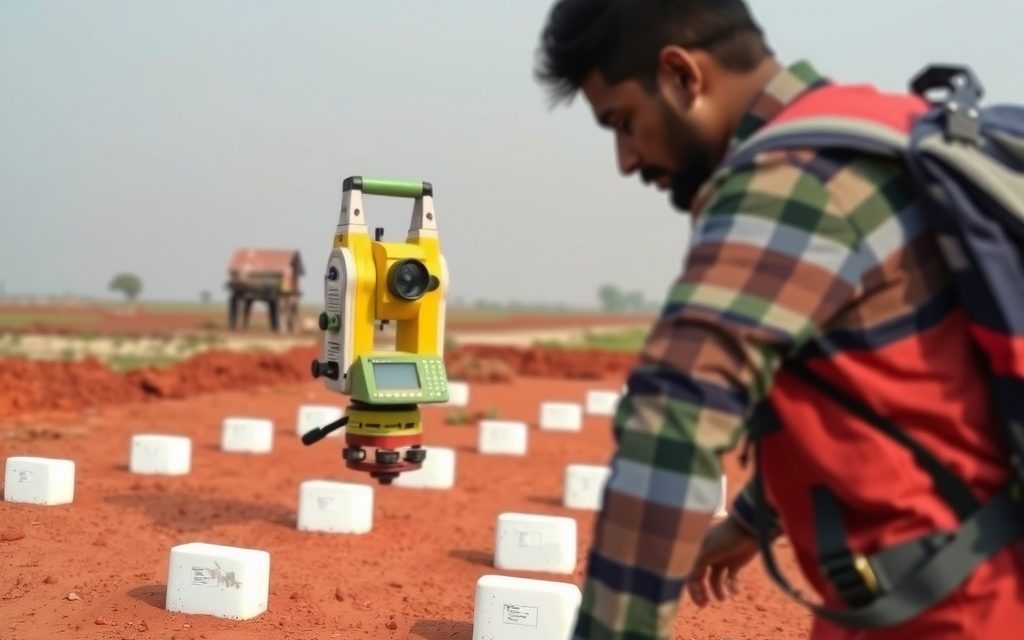
The documents say what you are buying; the survey says where it is. How survey numbers, sub-divisions and the tippan or FMB sketch work in Telangana, how surveys are done, and how to deal with shortfalls and encroachment.

NRIs and OCIs cannot buy or receive gifts of agricultural land, plantations or farmhouses; inheritance is the only route. What inherited land allows, why benami workarounds are dangerous, and the lawful alternatives near Hyderabad.