Lake FTL and Buffer Zones in Hyderabad: What HYDRAA Means for Buyers
What lake full tank levels and buffer zones mean for plot, villa and flat buyers in Hyderabad: buffer distances, who draws the FTL, how HYDRAA enforces, how to check a property against lake maps, and why clean title is not enough.
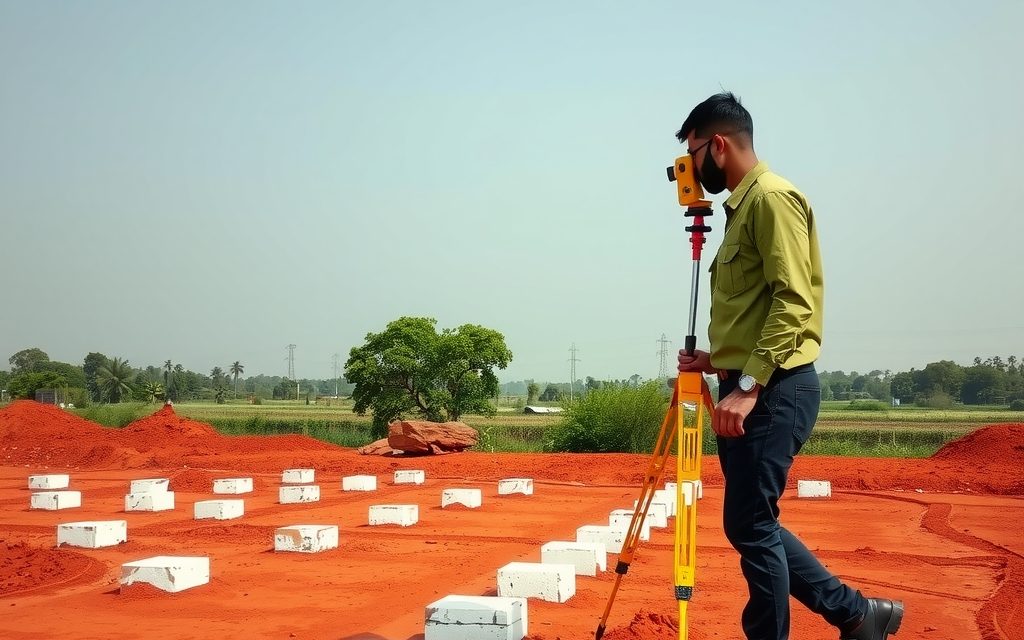
- Nothing can be built inside a lake's FTL; buffers as commonly applied are 30 m for lakes of 10 ha or more and 9 m for smaller lakes and kuntas
- Shikam patta land can be owned and farmed but lies inside the FTL and cannot be built on
- HYDRAA, formed in July 2024 and given statutory powers by ordinance in October 2024, acts against FTL, buffer and nala encroachments
- An unnotified lake still has an FTL; a preliminary line can move, so buy with a margin
- A clean EC, registration or bank loan says nothing about location; get a licensed surveyor's overlay
| What | Indicative range | Note |
|---|---|---|
| Buffer, lakes and tanks of 10 ha or more | 30 m from FTL | as commonly applied, verify |
| Buffer, lakes and kuntas under 10 ha, shikam lands | 9 m from FTL | as commonly applied, verify |
| Buffer, nalas and canals wider than 10 m / up to 10 m | 9 m / 2 m | as commonly applied, verify |
| Licensed surveyor overlay with FTL distances | ₹10,000 – ₹35,000 per plot | indicative, Oct 2026 |
| Legal review covering title and location | ₹15,000 – ₹50,000 | indicative, Oct 2026 |
Ranges reflect recent transactions and advisor observation as of 2026-10. Always verify against the sub-registrar market value and the specific parcel.
Hyderabad was built around its lakes, which is why checking lake FTL in Hyderabad is now part of every serious property purchase. The Qutb Shahi and Asaf Jahi rulers, and the farming villages before them, linked hundreds of cheruvus and kuntas into chains that caught the Deccan monsoon and fed the next tank downstream. Over the last four decades many of those lakes shrank as layouts, colonies and apartment blocks crept into their beds. Since 2024 that history has become a live buyer's risk. HYDRAA, the city's disaster response and asset protection agency, has demolished structures found inside lake full tank levels and buffer zones, and the courts have generally backed lake protection while insisting on due process. If you are buying a plot, villa or flat anywhere near water, the lake line is now a first-order check, not a footnote in the lawyer's report. This guide explains what FTL and buffer zones are, who decides them, how HYDRAA works, how to check a property against lake and nala maps, how to think about demolition risk, and why a clean title says nothing about location.
We are property advisors, not lawyers or surveyors. Lake boundaries, notification status and enforcement policy are evolving. Treat this as the position as of October 2026, and rely on a licensed surveyor's plotting and an advocate's opinion for any specific property.
Who this guide is for
This guide is for anyone buying land or a home within sight of a lake, tank, kunta or nala in and around Hyderabad: plot buyers in the north-western and southern growth corridors, villa buyers in gated communities that advertise "lake view", flat buyers in older neighbourhoods built on former tank beds, and NRIs who own plots bought years ago and now want to know whether they are safe to build on or sell.
Lake FTL in Hyderabad and buffer zones explained
Full tank level
The full tank level, or FTL, is the level of water in a lake when it is full to the crest of its outlet or surplus weir. On the ground, it is the contour line marking the lake's maximum regular water spread. Everything inside that line is the lake bed, even if it is dry for years at a time. Land inside the FTL cannot be built on.
Part of the lake bed is sometimes held as private land under revenue records, called shikam or shikam patta land, which owners could cultivate when the water receded. Shikam patta land can be owned and farmed, but it is inside the FTL and not available for construction. Plots carved out of shikam land and sold as house sites are the classic Hyderabad lake trap.
Buffer zones
Around the FTL, Telangana's building rules prescribe a buffer zone in which no building or development is allowed. It may be used for greenery, walkways or cultivation, but not construction. The distances most commonly applied under the 2012 building rules are:
| Water body | Buffer from FTL or boundary, as commonly applied |
|---|---|
| Lakes and tanks of 10 hectares or more | 30 metres |
| Lakes, kuntas and tanks below 10 hectares, and shikam lands | 9 metres |
| Canals, vagus and nalas wider than 10 metres | 9 metres |
| Canals, vagus and nalas up to 10 metres wide | 2 metres |
| Rivers, within municipal limits | 30 metres |
| Rivers, outside municipal limits | 50 metres |
These are the figures as we understand them from the rules; specific notifications, master plan provisions and court orders can impose wider restrictions in particular places. Verify the applicable buffer for the specific water body before relying on these numbers.
Why lake buffers matter more since 2024
The floods
The heavy rains of October 2020 flooded colonies across the city, breached tanks and left whole neighbourhoods under water for days. The pattern was clear: the worst-hit colonies sat in or near lake beds and on blocked nalas. Flooding is the practical reason lake rules exist. A house inside an FTL is not just unlawful, it is in the path of water.
HYDRAA
In July 2024 the state government set up the Hyderabad Disaster Response and Asset Protection Agency, HYDRAA, by government order, with a mandate covering disaster response and the protection of lakes, nalas, parks and government land, broadly within the area up to the Outer Ring Road. In October 2024, an ordinance inserted a new section into the GHMC Act to give the agency statutory powers to act on encroachments, issue notices and remove unauthorised structures.
HYDRAA's best-known early action was the demolition of the N Convention centre in Madhapur in August 2024, alleged to stand partly on the FTL and buffer of Thammidikunta lake. Dozens of other structures in lake beds and buffers followed, including some that had building permissions later questioned. The High Court has repeatedly examined HYDRAA's actions, insisting on notice, due process and standard procedures, and at times restraining specific demolitions. The agency has said that occupied houses built with valid permissions are generally not its target, while commercial structures and new or unoccupied construction in FTL and buffer zones are. Reports and practice have not always matched that statement.
For buyers, the lesson is not about one agency. Whatever HYDRAA's future shape, lake protection in Hyderabad has moved from paper to enforcement, and the courts support the principle. Properties inside FTL and buffer lines carry real risk.
Who decides where the FTL is
This is where it gets difficult. Several bodies hold relevant records, and they do not always agree:
- Irrigation department. Maintains tank records, including FTL levels and the tank's ayacut. FTL certificates and NOCs for nearby development are sought from it.
- Revenue department. Village maps and survey records show the tank survey number and any shikam lands. The tank's survey number boundary and the FTL contour are not always the same line.
- HMDA. Under a High Court direction, HMDA has run a lake protection exercise to identify water bodies in its area, determine their FTL and notify boundaries. Its inventory covers thousands of lakes; many have preliminary notifications, a smaller number final ones. Maps and notifications are published on the HMDA website.
- GHMC and HYDRAA. Use these records, satellite imagery and field surveys for enforcement, and have been mapping lakes within their jurisdiction.
A preliminary notification can be revised after objections. A lake with no notification still has an FTL; it simply has not been formally drawn. Do not read "not notified" as "not a lake".
How to check a property against lake and nala maps
- Identify the survey numbers and village. From the link documents and the revenue record, not the brochure.
- Read the village map. Look for tank survey numbers, kuntas and shikam lands adjacent to or inside your survey numbers. Our guide to survey numbers, FMB and boundaries explains how to read these maps.
- Check HMDA lake notifications. Find the nearest lakes in the inventory and check for preliminary or final FTL maps.
- Get a licensed surveyor to plot it. A DGPS or total-station survey overlays your plot on the FTL contour and gives you distances in metres. This is the single most useful check.
- Look at historical imagery. Satellite imagery from wet years, especially 2020 and 2022, shows how far the water actually spread. If your plot was under water, take that seriously whatever the maps say.
- Check nalas. Master plan maps and municipal drainage plans show major nalas. A stream bed crossing a layout is a red flag.
- Read the approvals. Layout and building permissions near water usually carry conditions or irrigation NOCs. Their absence where you would expect them is a warning.
- Check enforcement history. Ask whether the authority has issued notices to the colony, and search news for HYDRAA or GHMC action on the lake.
Step by step: timelines and costs of a lake check
| Step | Who does it | Typical time | Indicative cost |
|---|---|---|---|
| Document and revenue record review | Advisor and advocate | 2 to 5 days | Part of legal review, ₹15,000 – ₹50,000 |
| Village map and FMB copies | Mandal or survey office, certified copies | 3 days to 3 weeks | Nominal fees |
| HMDA lake notification check | Advisor or surveyor | 1 to 3 days | Nil |
| Licensed surveyor overlay with distances | Licensed surveyor | 3 to 10 days | ₹10,000 – ₹35,000 per plot, more for large parcels |
| Historical imagery review | Advisor or surveyor | 1 day | Nil |
| Irrigation NOC or FTL certificate, if needed | Owner or developer applies | Weeks to months | Official fees, verify |
| Written opinion | Advocate, using surveyor's report | 2 to 5 days | Included in legal review |
Demolition risk: a practical scale
Risk is not binary. The way we explain it to clients, from highest to lowest:
- Inside the lake bed or FTL. Highest risk. No permission makes construction here lawful, and enforcement is most likely.
- Inside the buffer. High risk. Construction is prohibited; permissions granted in error can be cancelled.
- Inside a nala or its buffer. High risk, and often overlooked because nalas are less visible than lakes.
- Near the buffer, FTL only preliminarily notified. Moderate. The line could move after objections or survey. Buy with margin, not at the edge.
- Outside the buffer with a final FTL and clean approvals. Low risk from lake rules, though flooding from upstream is a separate question.
Occupancy and permissions affect how authorities act in practice, but they do not change the law. An occupied house with permission inside an FTL is safer from immediate demolition than an empty shell, not safe in principle.
Title versus location: why a clean EC is not enough
Buyers often assume that if the title is clean, the property is safe. Title and location are different questions:
- The encumbrance certificate shows registered transactions on a property. It says nothing about where the property sits relative to a lake.
- Registration records a transfer between two parties. The sub-registrar does not certify that the land is buildable.
- A bank loan means the bank's lawyer and valuer were satisfied for lending purposes. It is not a location guarantee.
- Title insurance, where it is available in India, covers defects in title. It typically does not cover loss from regulatory action such as demolition for a lake encroachment. Read the exclusions.
- LRS and building permission granted on a plot later found to be in an FTL or buffer can be questioned. Our guide to LRS in Telangana explains why lake plots are excluded from regularisation.
Location is checked with maps, surveyors and imagery, not with title documents.
Worked example: a plot near Ameenpur lake
Ameenpur lake, on the north-western edge of the city in Sangareddy district, is a large water body and was declared a biodiversity heritage site in 2016. Its surroundings have seen both strong residential growth and repeated encroachment disputes, which makes it a good teaching case.
A client was offered a 200 sq yd plot in an older layout near the lake at ₹35,000 per sq yd, ₹70 lakh, below the asking prices of approved layouts a few kilometres away. The seller had a registered sale deed, a 30-year EC with no encumbrances, and an LRS 2020 application.
- Village map: the layout's survey number adjoined the tank's survey number.
- HMDA notification: the lake's FTL was notified.
- Surveyor overlay: the plot's far boundary was about 22 metres from the FTL line. For a lake of this size, the buffer as commonly applied is 30 metres, so roughly a third of the plot fell inside it.
- LRS status: the application showed objections at the technical verification stage.
The title was clean. The location was not. A house on that plot could not lawfully be built as designed, and the LRS application was unlikely to succeed. The "discount" was the market pricing in a problem the seller had not mentioned. The client walked away, and we found a plot in an approved layout further from the water at a higher price per sq yd but with a buildable footprint. For approved alternatives in this belt, see our guides to villas in Ameenpur and open plots in Ameenpur.
A second case: a resale flat near a lake
An NRI client was buying a resale 2 BHK in a 2009 building near a lake in the Kukatpally area at about ₹85 lakh. The building had permission and an OC, the flats were occupied, and the society had no notices. The surveyor's overlay put the building about 45 metres from the FTL, outside the 30-metre buffer. We checked historical imagery and saw the road in front flooding in 2020 but not the building plot itself. Risk from lake rules was low; flooding risk was moderate, which mattered for the ground-floor flat but not for the fourth-floor unit being bought. The client proceeded.
Where lake risk concentrates around Hyderabad
Every corridor has water bodies, but the type of risk differs. A broad, generalised picture from our site work, not a substitute for a parcel-level check:
- North-west (Ameenpur, Bachupally, Nizampet, Pragathi Nagar). Fast growth on land studded with tanks and kuntas, many in linked chains. Older layouts sometimes reach into tank beds, and several lakes have seen enforcement. Plot buyers here need surveyor overlays as standard.
- Western IT corridor (Madhapur, Gachibowli, Kondapur). The big lakes, such as Durgam Cheruvu, are well known and mostly protected, but smaller kuntas between developments were filled long ago. Check older commercial and residential buildings, and remember that the N Convention action happened here. Our guide to apartments in Madhapur covers the local market.
- West and south-west (Gandipet, Manikonda, Puppalaguda, Narsingi). Slopes draining toward Osman Sagar and the Musi, with kuntas and seasonal nalas between gated projects. Villa buyers should check both lake buffers and nala alignments; see our guide to villas in Gandipet.
- South (Shamshabad, Jalpally, Badangpet). Large tanks with long histories of encroachment in their beds, and layouts that predate any lake notification.
- East (Uppal, Nagole, LB Nagar). Dense older colonies near tanks and the Musi, where flooding history matters as much as buffer lines.
Within any corridor, the risk varies street by street. A colony 200 metres from a lake can be entirely safe while the row of plots nearest the water is not.
If you already own property inside a buffer
Discovering that a plot or house you own sits inside an FTL or buffer is distressing, and the right response depends on the facts. Some practical steps:
- Get the facts on paper. A licensed surveyor's overlay and copies of the lake notification, so you know exactly how much of the property is affected and by which line.
- Check whether the line is final. If the FTL is only preliminarily notified, an objection supported by survey evidence may be possible within the permitted process.
- Do not build further. New construction on an affected plot increases both legal exposure and the loss if action follows.
- Review your purchase documents. Your advocate can advise on any remedies against the seller or developer, which depend on the documents and what was disclosed.
- Respond to any notice promptly and through counsel. The High Court has emphasised notice and due process, which protects owners who engage with it.
- Be honest when selling. Concealing a known lake issue from a buyer creates further liability and rarely survives the buyer's own survey.
Mistakes we see in practice, and the fix
- Trusting "lake view" marketing without a survey. Fix: get a licensed surveyor's overlay with distances in metres before advance.
- Reading "not notified" as safe. Fix: treat unnotified water bodies as lakes with an undrawn line, and buy with a margin.
- Relying on the EC and title opinion alone. Fix: add a separate location check to every purchase near water.
- Ignoring kuntas and nalas. Small kuntas and seasonal streams get overlooked. Fix: read the village map for every water feature, not just named lakes.
- Buying shikam land as house sites. Fix: check the revenue classification; shikam land is inside the FTL.
- Assuming permission means protection. Fix: check that permissions near water carry irrigation clearance and match the surveyor's distances.
- Using a discount as the reason to buy. Fix: when a plot near water is cheap, find out why before negotiating.
- Not checking flooding separately. Fix: look at imagery from wet years and talk to residents; outside the buffer is not the same as dry.
Questions to ask the seller or developer
Before a site visit turns into a token payment, put these questions in writing. A seller with nothing to hide will answer them, and the answers give your surveyor and advocate a head start.
- What is the nearest lake, tank or kunta, and how far is the property's nearest boundary from its FTL, in metres?
- Is that FTL finally notified, preliminarily notified or not notified?
- Does any nala, vagu or storm-water drain cross or border the layout? Where is it on the approved plan?
- Did the layout or building permission require an irrigation department NOC? Can I see it?
- Has the colony or project received any notice from HYDRAA, GHMC, HMDA, the irrigation department or the revenue department?
- Has the property, or the road in front of it, flooded in the last six monsoons?
- For a gated project: are the lake-facing amenities, such as walkways and parks, inside the buffer, and who maintains them?
Vague answers, such as "everyone has built here" or "the lake is dry now", are themselves useful information. A dry lake is still a lake in law, and the October 2020 floods showed how quickly dry beds fill.
NRIs holding plots near lakes
Many NRI families bought plots around Hyderabad in the 2000s through relatives, often in layouts on the edges of tanks. If you hold one, have it surveyed against the nearest FTL now, before you plan construction or a sale. A plot found inside a buffer is better understood today than discovered by a buyer's surveyor at the last minute. Residential plots are permitted property for NRIs under FEMA, and our NRI investment guide for Telangana explains selling and repatriation basics; take a CA's advice on tax.
How NRR Estates handles lake and buffer checks for clients
- Screening at shortlist stage. For every property near water, we check the village map, HMDA notifications and historical imagery before you visit.
- Surveyor overlay before advance. We commission a licensed surveyor to plot the property against FTL and buffer lines and give distances in writing.
- Legal opinion that covers location. Our empanelled advocate's opinion addresses title and location together, including approvals and any enforcement history.
- Frank advice. If a property sits inside an FTL, buffer or nala, we tell you not to buy it, whatever the price. If it sits near a preliminary line, we explain the risk and price it.
Lake rules also shape the former reservoir catchment south-west of the city; see our guide to GO 111 and its repeal. Our fees are disclosed before we start.
Frequently asked questions about lake FTL, buffers and HYDRAA
What is FTL in Hyderabad property terms?
FTL means full tank level, the water level of a lake when it is full to the crest of its outlet or surplus weir. On the ground it is the contour marking the lake's maximum regular water spread. Everything inside that line is lake bed, even if it has been dry for years, and construction there is not permitted. Around the FTL, Telangana's building rules prescribe a buffer zone where no building is allowed. Check both lines before buying any property near water.
How wide is the buffer zone around a lake in Hyderabad?
As commonly applied under Telangana's 2012 building rules, the buffer is 30 metres from the FTL for lakes and tanks of 10 hectares or more, and 9 metres for smaller lakes, kuntas and shikam lands. For nalas and canals, it is 9 metres where they are wider than 10 metres and 2 metres where narrower. Rivers carry wider buffers. Specific notifications, master plan provisions and court orders can impose more, so verify the buffer for the particular water body.
What is HYDRAA and what can it do?
HYDRAA is the Hyderabad Disaster Response and Asset Protection Agency, set up by the Telangana government in July 2024 to handle disaster response and protect lakes, nalas, parks and government land, broadly within the Outer Ring Road area. An October 2024 ordinance amended the GHMC Act to give it statutory powers to act on encroachments, issue notices and remove unauthorised structures. The High Court has scrutinised its actions closely, insisting on notice and due process.
How do I check whether a plot is inside a lake FTL or buffer?
Start with the survey numbers from the link documents and the revenue record, then read the village map for tank survey numbers, kuntas and shikam lands. Check HMDA's lake notifications for the nearest water bodies. The most useful step is a licensed surveyor's overlay, which plots your boundaries against the FTL contour and gives distances in metres. Add historical satellite imagery from wet years such as 2020, and check whether approvals carried irrigation clearances.
Will HYDRAA demolish my house if it is near a lake?
Not if it is outside the FTL and buffer. If it is inside, the risk depends on facts. HYDRAA has said occupied houses built with valid permissions are generally not its target, focusing on commercial structures and new or unoccupied construction, but practice has not always matched those statements, and policy can change. The courts have backed lake protection while insisting on due process. If you believe your house is affected, get a survey, and respond to any notice through counsel.
What is shikam land and can I build on it?
Shikam land is land inside a lake's bed, below the FTL, that is sometimes recorded in private names in revenue records because owners cultivated it when the water receded. Shikam patta land can be owned and farmed, but it is inside the FTL and cannot be used for construction. Plots carved out of shikam land and sold as house sites are a classic Hyderabad trap. Check the revenue classification of the survey number before buying any plot near a tank.
Does a clean EC or a bank loan mean the plot is not in a buffer?
No. An encumbrance certificate shows registered transactions, not location. Registration records a transfer, and the sub-registrar does not certify that land is buildable. A bank loan reflects the lender's own checks for lending purposes, not a guarantee about lake boundaries. Title insurance, where available, generally covers title defects rather than regulatory demolition. Location is a separate check, done with village maps, lake notifications, a surveyor's overlay and imagery.
Can LRS regularise a plot inside a lake buffer?
No. Plots in a lake's FTL or buffer, and on nalas and their buffers, are excluded from Telangana's Layout Regularisation Scheme, and applications for such plots are rejected at the technical verification stage. Paying the fee or appealing does not change the location problem. If a seller offers a plot near water with only an LRS application receipt, check the application status and remarks and have the plot surveyed against the FTL before discussing price.
Related guides
Ameenpur is a mid-segment gated-villa suburb between Miyapur and Patancheru, built around a protected biodiversity heritage lake. See pocket-wise price ranges, commute times, and the lake FTL, buffer and municipal-boundary checks every buyer needs.
Ameenpur, between Miyapur and Patancheru, still offers HMDA and LRS plots in a lake-side suburb. Indicative rates by pocket, what the biodiversity heritage site and lake buffers mean for buyers, and the legal checks that matter.
Kukatpally is one of Hyderabad's densest, most liquid flat markets: four metro stations, the KPHB phases and a deep resale pool beside new high-rise launches. Here is how to choose between them and what each costs.

Gandipet, on the Osman Sagar lake belt west of Narsingi, offers gated villas, villa plots and farm-villas. Since the 2022 GO 111 repeal, prices have risen, but zoning, FTL and land-use checks remain essential.

GO 111 protected the Osman Sagar and Himayat Sagar catchment across 84 villages from 1996 until GO 69 withdrew it in 2022. What changed, what is still restricted, how the repeal moved prices, and how to verify a parcel.

How Telangana's Layout Regularisation Scheme works, from LRS 2015 and 2020 to the 2026 rebate window: eligibility, fee slabs, processing stages, exclusions, and how to price and verify an LRS-pending plot before you pay.

Twenty-one checks we run on every open plot in Telangana, in the order that kills bad deals fastest: seller and title, approvals, land character and zoning, then survey, access and dues, with where to check each and what failure means.

What NRIs and OCIs can and cannot buy under FEMA, how to fund and register a purchase from abroad, TDS and repatriation basics, and where the opportunities are across Hyderabad and the Telangana districts.