Stamp Duty and Registration Charges in Telangana (2026 Guide)
How Telangana's stamp duty, transfer duty and registration fee are calculated on the higher of market value or price, how to pay through IGRS, where to register, and worked examples for a plot, a flat and farm land.
- Sale deeds attract about 7.5% in total as of October 2026: stamp duty ~5.5%, transfer duty ~1.5%, registration fee ~0.5%; verify on the day
- Duty is charged on the higher of the government market value and the consideration written in the deed
- Plots, flats, villas and NALA-converted land register at the jurisdictional SRO; unconverted farm land at the mandal Tahsildar office
- 1% TDS under Section 194-IA applies above ₹50 lakh from a resident seller, not on rural agricultural land; NRI sellers fall under Section 195
- Understating the price invites a Section 47-A referral and deficit duty; register at the true value
| What | Indicative range | Note |
|---|---|---|
| Stamp duty on sale deed | ~5.5% of chargeable value | as of Oct 2026, verify |
| Transfer duty on sale deed | ~1.5% of chargeable value | as of Oct 2026, verify |
| Registration fee on sale deed | ~0.5% of chargeable value | as of Oct 2026, verify |
| Total levy, ₹40 L plot (example) | ≈ ₹3,00,000 | illustrative |
| Total levy, ₹1.2 Cr flat (example) | ≈ ₹9,00,000 | illustrative |
| Advocate, drafting and incidentals | ₹15,000 – ₹65,000 | indicative, Oct 2026 |
Ranges reflect recent transactions and advisor observation as of 2026-10. Always verify against the sub-registrar market value and the specific parcel.
Stamp duty and registration charges in Telangana are the single largest cost most buyers forget to budget for properly. On a ₹1 crore flat in Kondapur, a ₹40 lakh plot in Shankarpally or ten acres of farm land near Chevella, the state's levies add several lakh rupees on top of the price, and they are payable in full before the document is registered. The total is not a fixed percentage of whatever price you negotiate. It is calculated on the higher of the government market value and the consideration written in the deed, it is split into three separate heads, and it is paid through a specific online process before a slot is booked at the Sub-Registrar Office (SRO) or, for unconverted agricultural land, the mandal Tahsildar office. This guide explains how each component is computed, where and how you pay, the documents you need on the day, and what the numbers look like on three real Telangana transactions.
All rates in this guide are stated as of October 2026. Telangana revised its rates in 2021 and has revised market values more than once since, so treat every figure here as indicative and verify the current position on the day of registration. NRR Estates does exactly that for every client before a challan is generated.
Who this guide is for
This guide is for anyone about to sign a sale deed in Telangana: first-time flat buyers in the Hyderabad IT corridor, plot buyers in HMDA and DTCP layouts on the city's edges, families buying farm land in Rangareddy, Vikarabad or Siddipet, and NRIs registering through a power of attorney. If you are still at the shortlisting stage, read it anyway. Knowing the true all-in cost changes which property you can afford and how you structure the deal.
What you actually pay: the three components
When people say "registration charges" in Telangana they usually mean the combined levy collected at registration. Legally it has three parts, each with its own purpose.
Stamp duty
Stamp duty is a state tax on the instrument, the sale deed itself, levied under the Indian Stamp Act as it applies in Telangana. It is the largest of the three heads. For a conveyance (sale deed) it is approximately 5.5% of the chargeable value as of October 2026.
Transfer duty
Transfer duty is collected along with stamp duty and passed on to the local body, whether that is the Greater Hyderabad Municipal Corporation, a municipality or a gram panchayat. For a sale deed it is approximately 1.5% of the chargeable value. Buyers rarely see it separately, but it appears as its own line in the challan breakup.
Registration fee
The registration fee is collected by the Registration and Stamps Department for registering the document under the Registration Act, 1908. For a sale deed it is approximately 0.5% of the chargeable value.
Together these come to approximately 7.5% of the chargeable value for a sale deed as of October 2026. You will still see "6%" quoted on many websites and even by some intermediaries; that was the total before Telangana raised the levy in July 2021. Budget on the current figure and verify it at the SRO before you pay. Small user charges for scanning and computerisation are added on top, typically a few hundred rupees.
| Component | Sale deed rate (approx., Oct 2026) | Goes to |
|---|---|---|
| Stamp duty | ~5.5% | State government |
| Transfer duty | ~1.5% | Local body (GHMC, municipality or panchayat) |
| Registration fee | ~0.5% | Registration and Stamps Department |
| Total | ~7.5% of the higher of market value or consideration | Verify current rates at the SRO |
Telangana does not currently offer a lower stamp duty rate for women buyers, unlike some other states. If anyone promises you a "ladies concession" on a Telangana sale deed, ask them to show you the notification.
Market value versus consideration: the base that decides the bill
The most common misunderstanding about stamp duty in Telangana is the base on which it is charged. The rule is simple: duty is charged on the higher of the market value fixed by the government and the consideration (price) stated in the deed.
What "market value" means here
The Registration and Stamps Department publishes market values, often called guideline values or basic values, for every village, locality and in many cases every street or survey number in the state. Open land in urban and peri-urban areas is valued per square yard, agricultural land per acre, and flats per square foot of plinth area with a composite value covering the land share and construction. Values vary by road, by whether the land abuts a highway and by the type of property. You can look up the current value for a specific village or locality on the department's portal at registration.telangana.gov.in under the market value search.
Why the deed price usually wins in Hyderabad
In the western corridor, around Kokapet, Narsingi, Tellapur and the Financial District, transaction prices have run well ahead of government values for years. A plot changing hands at ₹1.5 lakh per square yard may carry a market value of a fraction of that. In these cases duty is charged on the deed price, because it is higher. In some district towns and slower rural pockets the opposite can happen: the government value is higher than what buyers are actually paying, and duty is charged on the market value even though the deed shows a lower figure.
Undervaluation and Section 47-A
If the registering officer believes the declared value is below the true market value, the document can be referred to the District Registrar for determination of value under the stamp law, and the deficit duty demanded. Writing a lower price in the deed to save duty is not a saving at all. It exposes you to a deficit demand and penalty, creates an income tax problem for the seller under Section 50C (where the stamp value exceeds the consideration), and leaves you with a deed that understates what you paid, which hurts you when you sell, borrow or claim compensation. We do not structure transactions that way.
How it works: the official process, step by step
Telangana runs registration through two parallel systems, and which one you use depends on what you are buying.
SRO route: plots, flats, villas and converted land
Residential plots, flats, villas, commercial property and land already converted under the NALA Act register at the jurisdictional Sub-Registrar Office through the Registration and Stamps Department's online system, commonly called IGRS. The jurisdiction is decided by where the property lies, not where you live, and SRO boundaries have been redrawn several times as Hyderabad has grown. We confirm the correct SRO from the survey number or plot details before anything else, because a deed presented at the wrong office is simply refused.
The steps are:
- Draft the deed. An advocate or licensed document writer drafts the sale deed with full schedule details: survey number, plot number, layout permit number, extent, boundaries, and the link documents that establish the seller's title.
- Public data entry. The party details, property details and consideration are entered on the IGRS portal. The system computes the market value from its database and shows the chargeable value and duty.
- Pay the challan. Stamp duty, transfer duty and registration fee are paid online through the department's payment gateway or a bank challan. Keep the challan reference; the SRO verifies it against the entry.
- Book a slot. Most SROs work on slot booking. In busy offices around Hyderabad, slots on auspicious dates and month-ends fill up days in advance.
- Appear and execute. The seller and buyer (or their attorneys) and two witnesses appear with original identity proofs. Photographs and thumb impressions are captured, Aadhaar-based authentication is commonly used, and the sub-registrar verifies the document and the payment.
- Scanning and return. The document is scanned and the registered deed is returned, often the same day and sometimes after a short delay. A certified copy can be obtained later.
Tahsildar route: unconverted agricultural land
Since November 2020, sale of agricultural land that has not been converted to non-agricultural use is registered at the mandal Tahsildar office, where the Tahsildar acts as joint sub-registrar. The system began as Dharani and was replaced in 2025 by Bhu Bharati, the state's record-of-rights platform; the older portal at dharani.telangana.gov.in still appears in many documents and searches. On this route, the slot is booked and the levy paid online through the land records system, the transaction is executed before the Tahsildar, and mutation into the buyer's name happens in the same process rather than as a separate application months later. The stamp duty, transfer duty and registration fee follow broadly the same structure, but verify the current rates and any mutation fee for the specific mandal before you book. Our guide to Dharani and Bhu Bharati land records explains the record side in detail.
Documents you will need
- Original identity proofs and PAN cards of buyer, seller and witnesses; Aadhaar for biometric authentication where used.
- Passport-size photographs as required by the office.
- The seller's title deed and link documents, with an encumbrance certificate. See our guide to checking an encumbrance certificate in Telangana.
- For plots: layout permit (LP) number and approved layout copy, and confirmation that the plot is not under mortgage to HMDA or DTCP.
- For flats and villas: TS RERA registration details, building permission and occupancy certificate where available, and the builder's authorisation for the signatory.
- For agricultural land: the seller's pattadar passbook and the current record on the land records portal.
- For NRIs acting through an attorney: the registered or adjudicated power of attorney and copies of the principal's passport.
- Proof of TDS payment (Form 26QB challan) where TDS applies.
Timelines and costs at a glance
| Step | Who handles it | Typical time | Indicative cost (Oct 2026) |
|---|---|---|---|
| Title verification and legal opinion | Advocate | 5–15 working days | ₹10,000 – ₹40,000 depending on chain length |
| Encumbrance certificate search | Advocate or buyer online | 1–7 days | Free online view; nominal fee for certified copy |
| Deed drafting | Advocate or document writer | 2–5 days | ₹5,000 – ₹25,000 |
| Public data entry and duty computation | Document writer | Same day | Included in drafting fee |
| Stamp duty, transfer duty, registration fee | Buyer, paid online | Same day | ~7.5% of chargeable value, verify |
| TDS under Section 194-IA (where applicable) | Buyer, Form 26QB | Before or at payment | 1% of consideration above the threshold |
| Slot booking and execution | Both parties, witnesses | 1–10 days wait, 1–3 hours on the day | User charges, typically a few hundred rupees |
| Mutation (agricultural land, Tahsildar route) | Automatic with registration | Same process; passbook later | Per-acre mutation fee, verify |
| Property tax and utility name transfer (urban) | Buyer | 2–8 weeks | Nominal municipal fees |
These ranges come from recent transactions and advisor observation. Professional fees vary with the complexity of the title, and government levies must always be verified on the day.
Worked example 1: a 200 sq yd HMDA plot in the Shankarpally belt
A Hyderabad family buys a 200 square yard plot in an HMDA-approved layout in the outer villages around Shankarpally. The agreed price is ₹20,000 per square yard, so the consideration is ₹40 lakh. Suppose the government market value for that village is ₹9,000 per square yard, giving a market value of ₹18 lakh.
| Item | Calculation | Amount |
|---|---|---|
| Chargeable value | Higher of ₹40 lakh (deed) and ₹18 lakh (market value) | ₹40,00,000 |
| Stamp duty | ~5.5% of ₹40 lakh | ₹2,20,000 |
| Transfer duty | ~1.5% of ₹40 lakh | ₹60,000 |
| Registration fee | ~0.5% of ₹40 lakh | ₹20,000 |
| Government levy total | ~7.5% | ₹3,00,000 |
| TDS under Section 194-IA | Consideration below ₹50 lakh | Not applicable |
| Advocate, drafting and incidentals | Indicative | ₹20,000 – ₹45,000 |
All-in, the family should budget roughly ₹3.2 lakh to ₹3.5 lakh above the plot price. The plot registers at the jurisdictional SRO, and before booking the slot we confirm that the plot number is not among the plots mortgaged to HMDA under the layout permit. If you are shortlisting in this belt, our page on open plots in Shankarpally covers current price bands and approvals.
Worked example 2: a ready 3 BHK flat in Kondapur
A software professional buys a ready-to-move 1,650 sq ft 3 BHK resale flat in Kondapur for ₹1.20 crore, including one covered car park. The flat has an occupancy certificate, so there is no GST. The government composite value for the building works out lower than the deed price, so duty is charged on the consideration.
| Item | Calculation | Amount |
|---|---|---|
| Chargeable value | Deed price (higher than market value) | ₹1,20,00,000 |
| Stamp duty | ~5.5% | ₹6,60,000 |
| Transfer duty | ~1.5% | ₹1,80,000 |
| Registration fee | ~0.5% | ₹60,000 |
| Government levy total | ~7.5% | ₹9,00,000 |
| TDS under Section 194-IA (resident seller) | 1% of ₹1.20 crore, deposited via Form 26QB | ₹1,20,000 (deducted from price, not an extra cost) |
| Association transfer, corpus top-up, legal | Indicative | ₹40,000 – ₹1,50,000 |
Two points matter here. First, the TDS is not an additional cost; it is part of the price that you pay to the government on the seller's behalf instead of to the seller, and the seller claims credit for it. Second, the stamp duty base generally includes whatever the deed records as consideration for the flat, car park and amenities. Refundable deposits and maintenance corpus held by the association are usually outside the deed. If the seller were an NRI, TDS would be deducted under Section 195 at the applicable capital gains rate plus surcharge and cess, not 1%; read our guide on TDS when buying from an NRI seller. For current prices in the area, see new apartments in Kondapur.
What changes for an under-construction flat
On an under-construction flat bought from a builder, GST is charged on the price (currently 5% without input tax credit for non-affordable housing, as of October 2026, verify) and is separate from stamp duty. Builders in Hyderabad commonly structure the transaction as a sale deed for the undivided share of land, sometimes with a construction agreement, and the registration department assesses the instrument against its valuation rules. The structure affects the duty payable, so ask the builder for the exact deed format and the duty they expect you to pay before you sign the agreement of sale.
Worked example 3: three acres of farm land near Chevella
A resident Hyderabad family buys three acres of patta agricultural land in a village in Chevella mandal at ₹70 lakh per acre, a total of ₹2.10 crore. The land is unconverted, so it registers at the Chevella mandal Tahsildar office through Bhu Bharati, with mutation in the same process. Suppose the government value is ₹30 lakh per acre.
| Item | Calculation | Amount |
|---|---|---|
| Chargeable value | Higher of ₹2.10 crore and ₹90 lakh | ₹2,10,00,000 |
| Combined levy | ~7.5% (verify agricultural rates on the day) | ~₹15,75,000 |
| Mutation fee | Per acre, as notified | Verify; small relative to duty |
| TDS under Section 194-IA | Depends on whether the land is rural agricultural land | See note below |
| Survey, title search, legal | Indicative | ₹40,000 – ₹1,20,000 |
On TDS: Section 194-IA does not apply to rural agricultural land. Whether a parcel is "rural" depends on its distance from the limits of a municipality or cantonment and that town's population, as defined in Section 2(14) of the Income Tax Act. A parcel just outside a growing municipality may not qualify as rural and could attract TDS and capital gains tax. Confirm with a CA before payment. NRIs and OCIs cannot buy this land at all; see the NRI agricultural land rules. For local price bands, see agriculture land in Chevella.
Other instruments: gifts, partitions, development agreements
Sale deeds are only one kind of document. The duty on other instruments works differently, and the rates are revised from time to time, so treat this as orientation and verify every figure.
- Gift and settlement deeds within the family. Telangana charges concessional rates on gift settlements in favour of specified family members compared with gifts to non-family members. The exact rate depends on the relationship and the property. Remember that agricultural land cannot be gifted to an NRI or OCI.
- Partition deeds. Duty is generally charged on the value of the separated shares rather than the whole property, at a lower rate than a sale.
- Release deeds. A family member giving up their share in favour of a co-owner pays duty that is typically concessional within the family and higher outside it.
- Development agreements and agreement-cum-GPA. Landowners entering joint development with builders pay duty on the development agreement, which is commonly adjustable later. These are specialist documents; take legal advice.
- Agreement of sale. An unregistered agreement on stamp paper is common for the advance stage. An agreement of sale with delivery of possession can attract duty close to a conveyance. Do not hand over possession on an agreement without advice.
- Mortgage and loan documents. Home loan documentation attracts its own duty, usually small, and is handled by the bank.
Who pays, when, and what happens if registration fails
By custom in Telangana, the buyer pays stamp duty, transfer duty and registration fee, and this is normally written into the agreement of sale. Nothing in law stops parties agreeing otherwise, but make sure the agreement states it. Payment must be complete before the slot; the sub-registrar will not proceed on a part-paid challan.
If the registration does not go through after you have paid, for instance because the seller withdraws or a title problem surfaces, a refund of the unused stamp duty can be applied for to the registration department within the time limits in the stamp law, with deductions. The process is slow, which is the strongest argument for finishing title verification before generating a challan rather than after.
Mistakes we see in practice, and the fix
- Budgeting at 6%. Buyers who read old articles budget 6% and discover a 1.5 percentage point gap on the day. On a ₹1.5 crore villa that is ₹2.25 lakh. Fix: budget at the current total, approximately 7.5%, and confirm it with the SRO computation before paying.
- Writing a lower price in the deed. It invites a Section 47-A referral, a deficit demand, problems for the seller under Section 50C and a deed that understates your cost base for future capital gains. Fix: register at the true price, and pay the balance through banking channels that match the deed.
- Paying cash components. Cash portions are unrecoverable if the deal fails, cannot be shown in a home loan and create tax exposure on both sides. Fix: every rupee through banking channels, documented in the deed and receipts.
- Booking at the wrong office. Agricultural land taken to an SRO, or a converted plot taken to the Tahsildar, or the right type of office in the wrong jurisdiction. Fix: confirm NALA status and jurisdiction from the survey number first.
- Forgetting TDS. Buyers of property above ₹50 lakh who do not deduct and deposit TDS under Section 194-IA face interest and penalties, and the SRO may ask for the challan. Fix: file Form 26QB before or at the time of payment, and use Section 195 rates if the seller is an NRI.
- Not checking the market value early. In some district towns the government value exceeds the negotiated price and the buyer discovers the higher base only at data entry. Fix: look up the market value before finalising the price.
- Executing a power of attorney that the SRO will not accept. NRIs often send a POA drafted abroad that lacks the required schedule detail or authentication. Fix: have the POA drafted in India for the specific transaction and authenticated as required; see our guide for NRIs buying villas and apartments in Hyderabad.
- Generating the challan before title is cleared. Refunds are slow and partial. Fix: complete legal verification first.
How NRR Estates handles registration for clients
Registration day should be the most boring day of a property purchase. We make it so by doing the work beforehand.
- Cost sheet before the token advance. We give every client a written all-in cost estimate: price, government levy on the correct base, TDS, legal fees and incidentals, so the budget is right from the start.
- Jurisdiction and status check. We confirm from the survey number whether the property goes to an SRO or a Tahsildar, which office, and whether the market value database matches the property type.
- Title verification by an advocate. Encumbrance search, link documents and record checks are completed before any challan is generated. For agricultural land we also verify the record of rights and NALA status; see our NALA conversion guide.
- Drafting, data entry and slot booking. We coordinate the document writer, the public data entry, the payment and a slot that suits both parties.
- NRI execution. For NRI clients we coordinate the POA, the attorney's appearance and the TDS mechanics with their CA.
- After registration. We follow through on mutation, property tax name transfer, utility connections and, for agricultural land, the passbook.
Our fees are disclosed in writing before you commit. We are property advisors, not lawyers or chartered accountants; for tax questions specific to your situation we work alongside your CA.
Stamp duty and registration in Telangana: your questions answered
What are the stamp duty and registration charges in Telangana in 2026?
For a sale deed, the combined levy is approximately 7.5% of the chargeable value as of October 2026: stamp duty of about 5.5%, transfer duty of about 1.5% and a registration fee of about 0.5%, plus small user charges. The chargeable value is the higher of the government market value and the price stated in the deed. Many websites still quote 7.5%, which was the total before Telangana raised the levy in July 2021. Rates and market values are revised from time to time, so verify the current computation at the Sub-Registrar Office before paying.
Is stamp duty charged on the market value or on the price I pay?
On whichever is higher. The Registration and Stamps Department publishes market values for every village and locality, per square yard for open land, per acre for agricultural land and per square foot for flats. If your deed price is above that value, as it usually is in the Hyderabad IT corridor, duty is charged on the deed price. If the government value is higher than the price, which happens in some district towns, duty is charged on the market value. You can look up the value on the IGRS portal before negotiating.
How do I pay stamp duty in Telangana?
For property registering at a Sub-Registrar Office, the deed details are entered on the Registration and Stamps Department's online system, which computes the market value and duty. The stamp duty, transfer duty and registration fee are then paid online or by bank challan, and a slot is booked at the jurisdictional SRO. For unconverted agricultural land, the slot booking and payment are made through the Bhu Bharati land records system and the deed is executed at the mandal Tahsildar office. Keep the payment reference; it is verified against the entry on the day.
Do women get a stamp duty concession in Telangana?
No. As of October 2026, Telangana does not offer a lower stamp duty rate for women buyers, unlike some other states such as Delhi or Maharashtra. Registering in a woman's name may still have other benefits, for example some banks offer slightly lower home loan interest rates to women borrowers, but the stamp duty, transfer duty and registration fee are the same. Be cautious of anyone promising a concession on a Telangana sale deed without showing you the government notification.
Where do I register agricultural land in Telangana?
Agricultural land that has not been converted to non-agricultural use under the NALA Act is registered at the mandal Tahsildar office, where the Tahsildar acts as joint sub-registrar. This system started with Dharani in November 2020 and moved to Bhu Bharati in 2025. Mutation into the buyer's name happens in the same process, and the new pattadar passbook follows. Land that has been NALA-converted, along with plots, flats and villas, registers at the jurisdictional Sub-Registrar Office instead. We confirm the status from the survey number before booking.
Is TDS applicable when I buy property in Telangana?
If you buy property other than rural agricultural land for ₹50 lakh or more from a resident seller, you must deduct 1% TDS under Section 194-IA and deposit it using Form 26QB. The TDS is part of the price, not an extra cost. If the seller is an NRI, TDS is deducted under Section 195 at the applicable capital gains rate plus surcharge and cess, and you need a TAN. Rural agricultural land is outside 194-IA, but land close to a municipality may not count as rural. Confirm with a CA.
Can I get a refund of stamp duty if the registration does not happen?
Yes, in principle. If you have paid stamp duty but the document is not registered, for example because the seller withdraws or a title defect surfaces, you can apply to the registration department for a refund within the time limits set under the stamp law. Refunds involve a deduction and can take months. This is why NRR Estates completes title verification and the encumbrance search before any challan is generated, rather than paying first and checking afterwards.
What other costs should I budget for besides stamp duty?
Plan for advocate fees for title verification, typically ₹10,000 to ₹40,000 depending on how long the title chain is, deed drafting of ₹5,000 to ₹25,000, and small user charges at the SRO. Flats add association transfer fees and sometimes a corpus top-up. Agricultural land adds a mutation fee and often a survey by a licensed surveyor. Under-construction flats carry GST on the price, separate from stamp duty. Home loans add processing fees and the bank's own documentation charges. These figures are indicative as of October 2026.
Related guides

Telangana's record of rights explained: 1B, pahani, pattadar passbooks and mutation, how Dharani gave way to Bhu Bharati in 2025, how to read and verify a record before buying, and how errors get corrected.

What a Telangana encumbrance certificate shows and what it misses, why advocates search 30 years, how to run an EC search online through IGRS, how to read each entry, and the nil EC traps that catch buyers.

When Telangana farm land needs NALA conversion, how the fee is calculated on government basic value, the online process and timelines, the penalty for building first, and how layout and building approvals follow.
Buying from an NRI seller means TDS under Section 195 at capital gains rates, not 1%. Rates, the lower-deduction certificate, TAN and Form 27Q, deadlines, penalties, and the 1% Section 194-IA rules for resident sellers.

Shankarpally offers HMDA-approved plots at a fraction of Tellapur prices, 18 km west of the ORR on the Mokila road. Rates by approval and road, the farm-plot trap, legal checks and a realistic holding view.
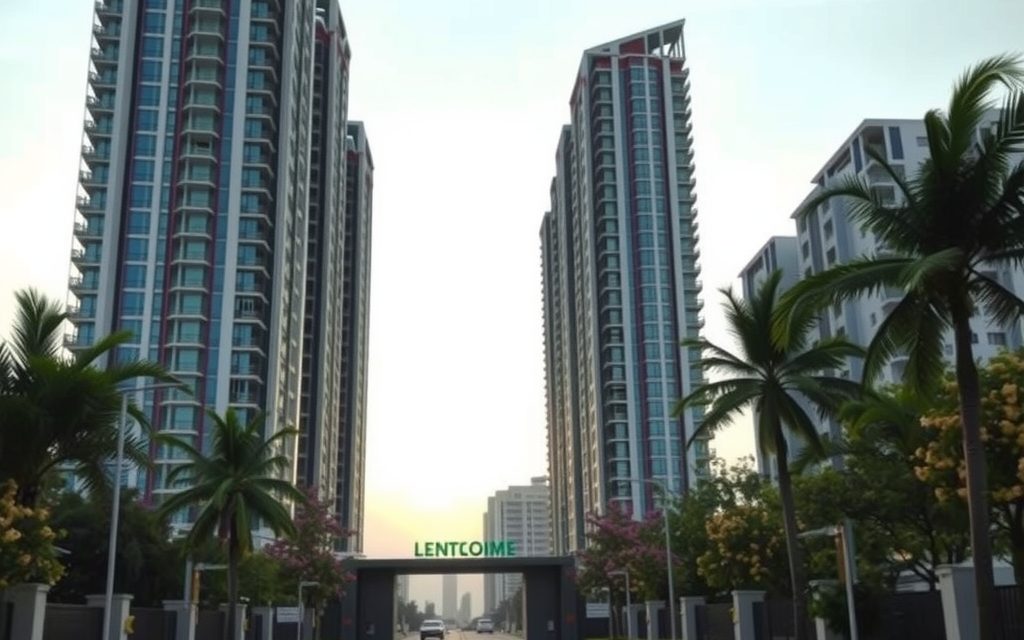
Kondapur sits right behind HITEC City, between the Botanical Garden and Hafeezpet. Indicative per-sq-ft bands, 2/3/4 BHK budgets, RERA and OC checks, rents and NRI steps for new flats here.
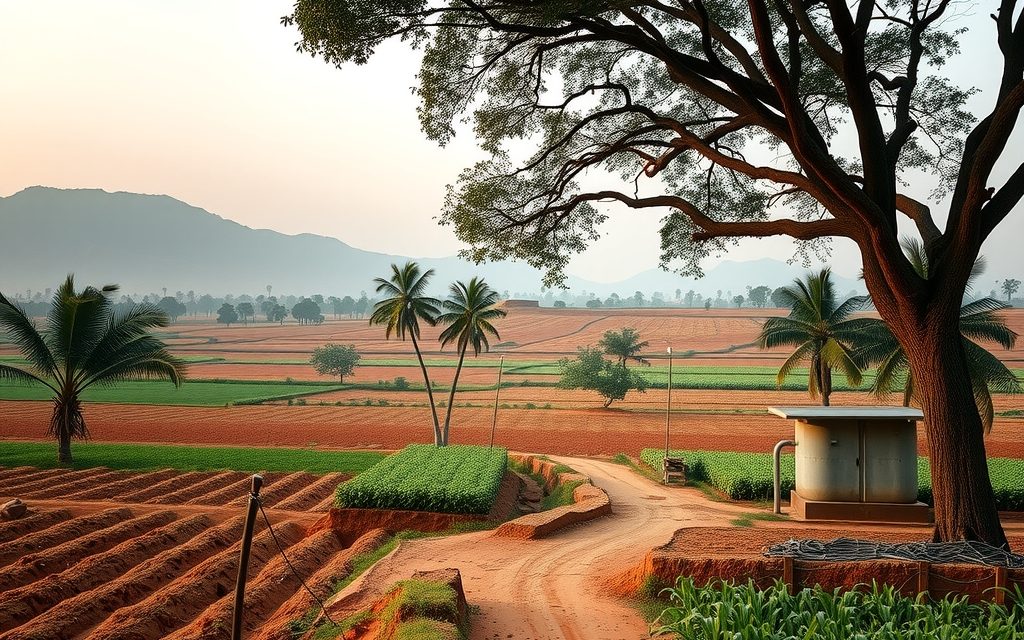
Hyderabad's long-standing weekend-farm belt on the Bijapur highway, about 40 km from Gachibowli. Red soil, mango and guava orchards and interior acreage still priced for real farming.

Which Hyderabad micro-markets suit NRIs, what each budget buys, new versus resale, RERA and OC checks, GST, TDS for resident and NRI sellers, rental yields, management and repatriation of sale proceeds.