HMDA vs DTCP vs Gram Panchayat Layouts: What the Approval Actually Means
What HMDA, DTCP and so-called panchayat layout approvals really mean in Telangana: jurisdictions, LP numbers, mortgaged plots and release letters, LRS, bank loan eligibility, online verification and red flags.
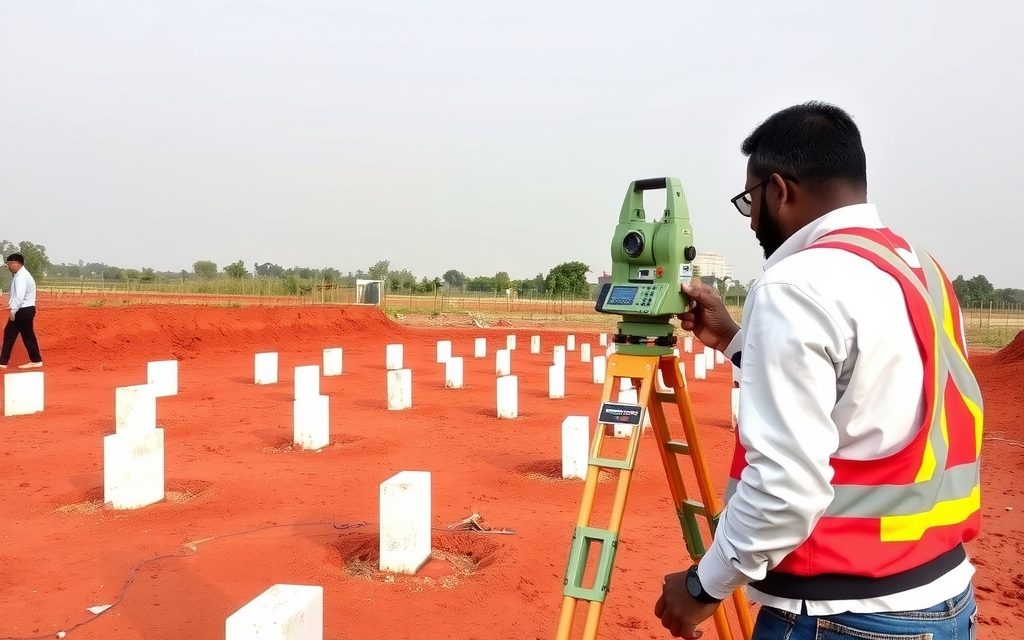
- HMDA and DTCP approvals are equally valid statutory layout permits; they differ by jurisdiction, not quality
- A gram panchayat cannot sanction a layout without the planning authority's technical approval; most GP layouts are unapproved
- Every approved layout has an LP number; your plot must appear on the stamped plan and be released from the authority's mortgage
- Banks lend on final approved layouts; LRS plots case by case; unapproved panchayat plots are generally declined
- Plotted projects above 500 sq m or eight plots need TS RERA registration before marketing
| What | Indicative range | Note |
|---|---|---|
| HMDA final layout, Maheshwaram–Kandukur belt | ₹18,000 – ₹32,000 per sq yd | indicative, Oct 2026 |
| LRS-regularised older layout, same belt | ₹13,000 – ₹24,000 per sq yd | indicative, Oct 2026 |
| Unapproved panchayat layout, same belt | ₹7,000 – ₹15,000 per sq yd | indicative, Oct 2026 |
| DTCP final layout near a district town | ₹5,000 – ₹25,000 per sq yd | indicative, Oct 2026 |
| Advocate verification of a plot | ₹10,000 – ₹30,000 | indicative, Oct 2026 |
Ranges reflect recent transactions and advisor observation as of 2026-10. Always verify against the sub-registrar market value and the specific parcel.
HMDA vs DTCP vs gram panchayat layouts is the first question every plot buyer around Hyderabad should ask, and the one most brochures answer misleadingly. "HMDA approved", "DTCP approved" and "panchayat approved" are not three grades of the same thing. HMDA and DTCP approvals are statutory layout permissions issued by planning authorities after technical scrutiny; a so-called gram panchayat layout is, in almost every case today, a layout without valid planning approval. The difference decides whether you can get building permission, whether a bank will lend, whether you will pay regularisation fees later, and what the plot will be worth when you sell. This guide explains who approves layouts where in Telangana, what a layout permit (LP) number is, how mortgaged plots and release letters work, where LRS fits, how to verify an approval online and the red flags we see every week.
Jurisdictions, rules and fees in this guide are stated as of October 2026. Authority boundaries have changed several times in recent years, so verify the position for the specific village and survey number before you pay an advance.
Who this guide is for
This guide is for buyers of residential plots on the edges of Hyderabad and in Telangana's district towns, landowners thinking about developing a layout, and NRIs buying plots from abroad who cannot walk every site themselves. If you already own a plot and are not sure what approval it has, the verification section will tell you how to find out.
What a layout approval is, and why it matters
A layout approval is permission from a planning authority to sub-divide land into plots, with roads, open spaces, drainage and other infrastructure laid out to approved standards. It confirms that the land use is permitted under the master plan, that the land has been converted from agricultural use, that roads connect to the planned network, that a share of land is reserved for open space and amenities, and that the developer has given security for completing the works.
For a buyer, an approved layout means three practical things. You can apply for building permission on your plot without first regularising it. Banks will consider a plot loan and later a construction loan. And when you sell, buyers and their lenders accept the plot without a discount for approval risk. An unapproved plot fails on all three.
Who approves layouts where in Telangana
| Authority | Where it approves layouts | Typical areas |
|---|---|---|
| HMDA (Hyderabad Metropolitan Development Authority) | The Hyderabad metropolitan region outside the core municipal corporation, across parts of several districts; limits have been expanded in stages | Kokapet, Tellapur, Shankarpally, Maheshwaram, Shamshabad, Ghatkesar, Medchal, Kompally and much of the ORR belt |
| Future City Development Authority | Areas carved out for the planned Future City south of Hyderabad in 2025 | Parts of the Kandukur, Maheshwaram and Ibrahimpatnam belt; verify village by village |
| Other urban development authorities | Notified regions around major district cities | Warangal (KUDA), Karimnagar (SUDA) and other district urban development authorities |
| DTCP (Directorate of Town and Country Planning) | Municipalities and gram panchayats outside development authority areas | Most district towns and their surrounding villages |
| Gram panchayat | No independent power to approve layouts; may issue local permissions only after technical approval by the competent planning authority | "Panchayat layouts" sold in villages across the state |
A rule of thumb: if a village is inside HMDA limits, the layout should carry an HMDA permit, not DTCP. A brochure offering a "DTCP approved" layout in a village that HMDA covers deserves a hard look; sometimes the approval predates a boundary change, and sometimes it does not exist. HMDA publishes information on its jurisdiction and approved layouts at hmda.gov.in.
HMDA
HMDA was constituted under the Hyderabad Metropolitan Development Authority Act, 2008 and prepares the master plans that govern land use across the metropolitan region. Its layout approvals involve scrutiny of title, conversion, master plan land use, road connectivity, open space (typically 10% of the layout), social infrastructure sites and road widths. The developer mortgages a share of the plots to HMDA as security for completing development works. HMDA layouts are generally the most bankable plots in the Hyderabad market.
DTCP
DTCP approves layouts in municipalities and gram panchayat areas that are not within a development authority. The principles are similar: conversion, zoning under the applicable master plan or general development rules, road widths, open space and mortgage of plots. DTCP approvals are fully valid and bankable; they are not a "lower" approval, simply a different jurisdiction.
Gram panchayat layouts
Before the planning law was tightened, panchayats in many villages passed resolutions "approving" layouts or issued permissions for plots. Under the current framework, including the Telangana Panchayat Raj Act, 2018, a gram panchayat cannot sanction a layout without technical approval from the competent planning authority. In practice, a "GP layout" today usually means a farm divided into plots with a panchayat resolution, a mud road and no planning approval. These were the main target of Telangana's Layout Regularisation Scheme (LRS).
How the approval process works
- Title and conversion. The landowner establishes clear title and obtains NALA conversion of the land. See our NALA conversion guide.
- Application. The developer applies online to the authority with the title documents, survey sketch, layout plan and fees.
- Scrutiny and site inspection. Planners check master plan land use, access, road widths, open space, lake and nala buffers, high-tension lines and other constraints.
- Draft or technical approval. The authority approves the layout plan and issues the layout permit number, with a share of plots (commonly 15% of the plotted area) mortgaged to the authority by registered deed.
- Development works. The developer lays roads, drains, water supply, electricity and develops the open space within the permitted period.
- Final approval and release. After inspection, the authority releases the mortgaged plots and the layout is treated as final.
- RERA registration. Plotted developments above 500 square metres or with more than eight plots must be registered with TS RERA before marketing. Check the registration on rera.telangana.gov.in.
The layout permit (LP) number
Every approved layout carries an LP number issued by the authority, with the file reference and year. It is the single most important identifier for a plot buyer. The sale deed should quote it, the approved layout plan should carry it and the authority's records should show it against the same survey numbers and village.
Mortgaged plots and release letters
The mortgaged plots are listed by number in the mortgage deed, and the Sub-Registrar Office is informed so that those plots are not registered to buyers until released. Once works are complete, the authority issues a release, after which those plots can be sold. Buying a mortgaged plot before release, on an agreement or by any workaround, leaves you with a plot you cannot register cleanly.
How to verify a layout approval online
- Get the LP number and the approved plan. A copy of the plan with the authority's stamp, plus the permit letter.
- Check the authority's records. HMDA and DTCP publish approved layout information online. Search by LP number, village or survey number and compare the village, survey numbers, layout area and number of plots.
- Find your plot on the plan. Your plot number, dimensions, area and facing should match the approved plan exactly. Plots that appear on the brochure but not on the approved plan are often carved out of open space or road area.
- Check mortgage status. Ask for the mortgage deed listing the mortgaged plots and the release letter if issued.
- Check TS RERA registration. Search the project on the RERA portal and compare promoter name, survey numbers and plot count.
- Check the conversion order and the record. The survey numbers should show as converted on the land records system, with no prohibited or dispute status.
- Walk the site. Road widths, open space and plot pegs should correspond to the approved plan. Compare with the master plan for lake buffers and road-widening lines.
Our checklist for verifying a plot before buying in Telangana covers title checks around this approval verification.
Timelines and costs at a glance
| Stage | Who | Typical time | Indicative cost (Oct 2026) |
|---|---|---|---|
| Buyer's approval verification (LP, plan, mortgage, RERA) | Buyer or advisor | 2–5 days | Free online; advocate ₹10,000 – ₹30,000 with title |
| Title search and EC for the layout land | Advocate | 1–2 weeks | Included above for most plots |
| Developer: NALA conversion | Landowner | 1–3 months | About 2–3% of basic value, verify |
| Developer: layout application to permit | Developer | 3–9 months | Authority fees and development charges per schedule |
| Developer: works and mortgage release | Developer | 1–3 years | Cost of roads, drains, utilities |
| Buyer: registration of a released plot | Buyer | 1–10 days for a slot | ~7.5% of the higher of market value or price, verify |
| Buyer: building permission | Buyer | Days to weeks via TG-bPASS | Permit fees per built-up area |
Ranges come from recent files and advisor observation and are indicative only.
What an approval does not cover
An LP number is necessary, but it is not a certificate that everything is fine. It does not guarantee the seller's title to your specific plot; title still has to be checked through the chain of deeds and the encumbrance certificate. It does not protect you if the developer sold the same plot twice. It does not mean the infrastructure shown on the brochure, such as clubhouses, landscaped avenues or underground cabling, is part of the approved works. And it does not freeze the surroundings: master plan road widening, lake buffer enforcement or a high-tension line can still affect a plot at the edge of the layout. We treat the approval as one of five checks, alongside title, conversion and record status, RERA and the site itself.
Bank loan eligibility, explained
Lenders in Hyderabad follow a broadly common approach to plots. They lend against plots in approved layouts, in the buyer's name, that are registrable at the SRO and free of the authority's mortgage. They ask for the LP number, the approved plan, the link documents for at least 13 to 30 years depending on the lender, an encumbrance certificate and a legal and technical report from their empanelled advocate and valuer. Plot loans are typically sanctioned at 60–75% of the value with the condition, in many cases, that construction begins within a set period.
Plots in LRS-regularised layouts are assessed case by case; some lenders accept final regularisation proceedings, others do not. Unapproved panchayat plots are almost always declined. If you are relying on a loan, ask the lender for an in-principle view on the specific layout before paying more than a token advance. Our guide comparing plot loans and home loans in Telangana covers the finance side.
Where LRS fits
Telangana's Layout Regularisation Scheme was designed for plots in unauthorised layouts, mostly panchayat layouts sold before a cut-off date. The 2020 scheme drew a very large number of applications and was held up for years by litigation; the state later reopened processing and offered concessions on fees for prompt payment. Regularisation charges depend on the plot area, the government value and whether the layout gave up the required open space; where it did not, an additional open-space charge applies. A regularised plot is far better than an unapproved one, but it rarely matches a planned layout for road widths and infrastructure, and its value usually sits between the two. Never buy an unapproved plot on the assumption that a future scheme will be open on favourable terms.
Comparing the three types side by side
| Factor | HMDA layout (final) | DTCP layout (final) | Gram panchayat / unapproved |
|---|---|---|---|
| Planning approval | Yes, LP number | Yes, LP number | No valid layout permit |
| Building permission | Direct application via TG-bPASS or the authority | Direct application via TG-bPASS or the local body | Usually only after regularisation |
| Bank plot and construction loans | Widely available | Widely available | Generally not available |
| Registration | SRO, quoting LP number | SRO, quoting LP number | Often registered, but registration does not cure the lack of approval |
| Infrastructure | Roads, drains, open space per plan | Roads, drains, open space per plan | Variable, often minimal |
| Regularisation cost | None | None | LRS or similar fees if a scheme is open, plus open-space charges |
| NRI suitability | Suitable | Suitable | High risk; often agricultural land on record |
Indicative price differences
| Plot type in the same village belt | Indicative range (Oct 2026) | Note |
|---|---|---|
| HMDA final layout, 40 ft road, Maheshwaram–Kandukur belt | ₹18,000 – ₹32,000 per sq yd | Bankable, ready for building permission |
| HMDA layout with plot still under mortgage | Not registrable until released | Do not pay full price before release |
| LRS-regularised older layout, same belt | ₹13,000 – ₹24,000 per sq yd | Depends on road width and regularisation proceedings |
| Unapproved panchayat layout, same belt | ₹7,000 – ₹15,000 per sq yd | Discount reflects approval and loan risk |
| DTCP final layout near a district town | ₹5,000 – ₹25,000 per sq yd | Town and road dependent |
These ranges come from recent transactions and advisor observation and are indicative only. See our pages on open plots in Maheshwaram and open plots in Kandukur for area-level bands.
Worked example: three 200 sq yd plots in the same belt
A buyer with a ₹45 lakh budget compares three 200 square yard plots within five kilometres of each other south of the ORR.
| Item | Plot A: HMDA final | Plot B: LRS-regularised | Plot C: panchayat, unapproved |
|---|---|---|---|
| Price per sq yd | ₹22,000 | ₹17,000 | ₹10,000 |
| Plot price | ₹44,00,000 | ₹34,00,000 | ₹20,00,000 |
| Stamp duty and registration (~7.5%) | ₹3,30,000 | ₹2,55,000 | ₹1,50,000 or on market value if higher |
| Regularisation cost still to pay | Nil | Nil if proceedings are final | Uncertain; depends on a scheme being open |
| Plot loan | Available, typically 60–70% of value | Some lenders | Generally not available |
| Building permission | Apply directly | Apply with regularisation proceedings | Blocked until regularised |
| Resale buyer pool | Wide, including NRIs | Moderate | Narrow, cash buyers at a discount |
Plot C looks ₹24 lakh cheaper, but that saving buys a plot that cannot be built on, cannot be financed and may need regularisation fees that are not yet known. Plot A is the only one we would recommend to a buyer who intends to build within five years or who may need to sell quickly. Plot B can work for patient buyers at the right price, provided the regularisation proceedings are final and cover the exact plot. Our guide to LRS in Telangana explains how regularisation proceedings work.
Red flags and mistakes we see in practice
- "HMDA approval applied for". An application is not an approval. Fix: buy only after the LP number issues, or pay a small refundable advance tied to approval.
- "DTCP approved" inside HMDA limits. Sometimes legitimate for older approvals, often not. Fix: confirm jurisdiction for the village and the date of approval.
- "Panchayat approved" or "gram kantham" plots sold as approved. Fix: ask for the planning authority's LP number; a panchayat resolution is not a layout approval.
- Plot not on the approved plan. Extra plots carved out of open space or roads. Fix: match plot number, size and position on the stamped plan.
- Buying a mortgaged plot. Fix: check the mortgage list and insist on the release letter for your plot.
- LP number for a different survey number. A genuine permit reused on adjacent unapproved land. Fix: compare survey numbers in the permit, the deed and the land record.
- Ignoring TS RERA. A layout above the RERA threshold sold without registration. Fix: check the registration and buy only registered projects.
- Trusting registration as proof of approval. SROs register many unapproved plots. Fix: registration proves a transfer, not planning permission.
A district-town example: Warangal
Outside Hyderabad the same logic applies with different names. Around Warangal and Hanamkonda, layouts in the Kakatiya Urban Development Authority region carry KUDA approval; villages beyond it fall to DTCP. A buyer comparing a KUDA-approved plot on a 40 ft road near the ring road with a cheaper panchayat plot two kilometres further out faces exactly the trade-off in the worked example above, at lower absolute prices. The approved plot is bankable and buildable; the panchayat plot is a cash purchase with regularisation risk. For local bands, see our page on open plots in Warangal.
For landowners: what developing an approved layout involves
Landowners near growth corridors are often approached by developers offering to "make a venture" quickly. An approved layout is slower and costlier than a panchayat layout, but it is the only kind that holds value. Expect to give up roughly 35–40% of the gross land to roads, open space and amenity sites; to pay conversion fees, development charges and permit fees; to mortgage a share of plots until works are complete; and to register the project with TS RERA if it crosses the threshold. In return, plots sell at a substantial premium, buyers can finance them and the developer avoids regularisation liabilities that otherwise follow every plot sold. If you are entering a joint development with a builder, make sure the development agreement makes the builder responsible for obtaining HMDA or DTCP approval before plots are marketed, and that your share of plots is identified on the approved plan rather than a sketch.
Check the master plan before signing anything. Land zoned for conservation, inside a lake full tank level or buffer, or under a planned road alignment cannot be laid out regardless of how much effort goes into the application.
A note for NRI plot buyers
NRIs and OCIs can buy residential plots in approved, converted layouts. Unapproved panchayat layouts are a poor fit: the land may still be agricultural on record, which NRIs cannot buy, and the plot cannot be financed or built on. Stick to HMDA, DTCP or development authority final layouts, registered at the SRO, with your plot released from mortgage. Our NRI investment guide covers funding and repatriation.
How NRR Estates handles layout verification for clients
- Jurisdiction check. We confirm which authority covers the village today and when the approval was issued.
- Permit and plan verification. We verify the LP number against the authority's records, match the plot on the stamped plan and check the mortgage and release.
- Record and RERA. We check conversion, land record status and TS RERA registration.
- Site walk. Advisors measure road widths, locate the open space and check the plot pegs.
- Negotiation and registration. We negotiate on verified facts and manage registration at the SRO.
Our fees are disclosed in writing before you commit. We are property advisors, not lawyers; title opinions come from our panel advocates.
HMDA, DTCP and panchayat layouts: frequently asked questions
Is an HMDA approved plot better than a DTCP approved plot?
Not inherently. HMDA and DTCP approvals are both statutory layout permissions issued after technical scrutiny, and both are accepted by banks and buyers. The difference is jurisdiction: HMDA approves layouts within the Hyderabad metropolitan region, while DTCP covers municipalities and villages outside development authority areas. What matters is that the approval comes from the authority that actually covers the village on the date of approval, that it is final, and that your specific plot appears on the approved plan and is released from mortgage.
Are gram panchayat layout plots legal?
Buying and registering them is not illegal, but they usually lack valid planning approval. Under the current framework, a gram panchayat cannot sanction a layout without technical approval from HMDA, DTCP or the relevant development authority. A panchayat resolution does not make a layout approved. Such plots generally cannot get building permission without regularisation, are rarely financed by banks and sell at a discount. They may also sit on land that is still agricultural on record, which rules out NRI buyers entirely.
How do I check an HMDA LP number?
Ask the developer for the layout permit letter and the stamped approved plan. Then search HMDA's published approved layout information by LP number, village or survey number, and compare the village, survey numbers, layout area and number of plots with the documents. Confirm your plot number, size and position on the plan, check the mortgage deed and release letter, and verify the TS RERA registration where applicable. An advocate or advisor can cross-check the permit against the land record and title chain.
What is a mortgaged plot in an HMDA or DTCP layout?
When a layout is approved, the developer mortgages a share of the plots, commonly 15% of the plotted area, to the authority as security for completing roads, drains and other works. Those plot numbers are listed in a registered mortgage deed, and the Sub-Registrar Office is informed so they are not registered to buyers. Once works are inspected and accepted, the authority issues a release. Never pay full price for a mortgaged plot before the release covering that plot is issued.
Can I get a bank loan for a DTCP or HMDA plot?
Yes, for plots in final approved layouts that are released from mortgage and registrable at the SRO. Lenders typically sanction 60–75% of the value after their own legal and technical verification, and many require construction to start within a set period. LRS-regularised plots are assessed case by case, and unapproved panchayat plots are generally declined. Ask the lender for an in-principle view on the specific layout before paying more than a token, refundable advance.
What does 'HMDA approval applied for' mean?
It means the developer has submitted an application but the layout has not been approved. There is no LP number, no approved plan and no certainty about the final plot sizes, road widths or even whether approval will be granted. Plots sold at this stage can change number, size or position, or fail approval altogether. If you want to take a position early, pay only a small advance under a written agreement that refunds it if the LP number does not issue within a stated period.
Is a plot registered at the SRO automatically approved?
No. Sub-Registrar Offices register transfers of many plots that have no planning approval. Registration proves that ownership passed from seller to buyer; it says nothing about whether the layout was sanctioned or whether you can build. Approval is proved by the LP number, the stamped plan and the authority's records. Some unapproved plots are blocked from registration under rules on unauthorised layouts, but the absence of a block is not evidence of approval.
Can NRIs buy plots in HMDA or DTCP layouts?
Yes. NRIs and OCIs can buy residential plots in approved layouts on land converted to non-agricultural use, without RBI permission. They should avoid unapproved panchayat layouts, which are often still agricultural land on record and therefore barred under FEMA, as well as being hard to finance or build on. NRI buyers can execute the purchase through a resident attorney under a specific power of attorney, paying from NRE or NRO accounts through banking channels.
Related guides

When Telangana farm land needs NALA conversion, how the fee is calculated on government basic value, the online process and timelines, the penalty for building first, and how layout and building approvals follow.

How Telangana's Layout Regularisation Scheme works, from LRS 2015 and 2020 to the 2026 rebate window: eligibility, fee slabs, processing stages, exclusions, and how to price and verify an LRS-pending plot before you pay.
Twenty-one checks we run on every open plot in Telangana, in the order that kills bad deals fastest: seller and title, approvals, land character and zoning, then survey, access and dues, with where to check each and what failure means.

Approved open plots in Maheshwaram sit between the airport, the Raviryal electronics cluster and the Srisailam highway. Indicative October 2026 prices, approvals, legal checks and the lessons of the Fab City years.

Kandukur offers the cheapest approved plots on the Srisailam highway near the airport, on land once planned as Pharma City and now Future City. Prices, approvals, acquisition risks and how to buy safely.

Warangal's tri-city plot market runs on KUDA approvals, not HMDA. Indicative October 2026 prices across Hanamkonda, Kazipet and the growth roads, plus flood, monument and title checks every buyer needs.

Plot loans finance less, cost more, run shorter and give no tax relief on their own. Which Telangana plots banks will finance, how LTV and construction deadlines work, and when a composite loan is the smarter route.

What NRIs and OCIs can and cannot buy under FEMA, how to fund and register a purchase from abroad, TDS and repatriation basics, and where the opportunities are across Hyderabad and the Telangana districts.