How to Buy Agricultural Land in Telangana: Step by Step
Farm land in Telangana registers at the Tahsildar office, with mutation in the same sitting, and title lives in the Bhu Bharati record of rights. Eligibility, ceiling limits, revenue checks, survey, costs and the passbook, step by step.

- Any resident Indian can buy agricultural land in Telangana; being an existing farmer is not required
- NRIs and OCIs cannot buy or receive farm land as a gift under FEMA; they can only inherit it
- Unconverted agricultural land registers at the mandal Tahsildar office, which also effects mutation the same day
- Check 30 years of pahanis and transactions for assignment, 22-A, ceiling, tenancy and heir issues
- Section 194-IA TDS does not apply to rural agricultural land; duty is roughly 6% of value, verify on the day
| What | Indicative range | Note |
|---|---|---|
| Stamp duty + transfer duty + registration fee | ≈ 7.5% of market value or consideration | approximate, verify current agricultural land rates |
| Advocate's title opinion, agricultural parcel | ₹25,000 – ₹60,000 | indicative, Oct 2026 |
| Licensed survey and demarcation | ₹15,000 – ₹40,000 | depends on extent |
| Patta farm land, interior village road, Chevella belt | ₹55 L – ₹1 Cr per acre | indicative, Oct 2026 |
| Chain-link fencing, 2-acre parcel | ₹3 L – ₹4.5 L | advisor observation |
Ranges reflect recent transactions and advisor observation as of 2026-10. Always verify against the sub-registrar market value and the specific parcel.
Learning how to buy agricultural land in Telangana starts with unlearning how plots and flats are bought. Farm land does not register at the sub-registrar office; it registers at the mandal Tahsildar office, where the Tahsildar acts as joint sub-registrar and the mutation into your name happens in the same sitting. The title is not a builder's sale deed with a layout plan; it is a line in the state's record of rights, now maintained under Bhu Bharati after Dharani, backed by a pattadar passbook. And the risks are different: assigned land, ceiling surplus, protected tenancies, Section 22-A prohibited entries, survey numbers whose extents on paper never matched the ground. This guide walks through the full journey, from deciding whether you are eligible to buy, through shortlisting and checks, to registration at the Tahsildar office and the new passbook in your hand, with costs, timelines and the mistakes we see most often.
We are property advisors, not advocates or chartered accountants. Rules and rates below are stated as of October 2026; the Bhu Bharati framework in particular is still settling, so verify each step on the day.
Who this guide is for
It is for resident Indians buying farm land in Telangana: Hyderabad families looking for a weekend farm within 60 to 90 km, investors building a long-term land bank along the Regional Ring Road belts, returning NRIs who plan to farm, and district buyers adding to existing holdings. If you are currently an NRI or OCI, read the eligibility section first, because the answer may stop you there.
Who can buy agricultural land in Telangana
Resident Indians
Telangana does not require a buyer of agricultural land to be an existing farmer or agriculturist, unlike some other states historically. Any Indian citizen resident in India can buy, subject to the ceiling law and the title checks described below. There is no income threshold or requirement to prove farming experience.
The ceiling limit
The land ceiling law inherited from the united state, the Andhra Pradesh Land Reforms (Ceiling on Agricultural Holdings) Act, 1973, as applicable in Telangana, caps the total agricultural land a family unit can hold. The ceiling is expressed in "standard holdings" and varies with land class and irrigation, broadly from about 10 to 27 acres of wet land, or about 35 to 54 acres of dry land, for a family unit of up to five members. Most buyers are nowhere near this, but investors aggregating land across mandals should total family holdings, including land in the spouse's and minor children's names, before buying more.
NRIs and OCIs
Under FEMA, NRIs and OCI cardholders cannot purchase agricultural land, plantation property or farmhouses in India, and cannot receive them as gifts, even from resident parents. They can inherit such land, and may sell inherited farm land only to a resident Indian citizen. Buying in a resident relative's name with your money exposes you to benami and FEMA consequences. Our guide on NRI agricultural land rules in Telangana explains the position and the lawful alternatives in detail.
How agricultural land transactions work: the system
Bhu Bharati, the record of rights
Telangana digitised its land records through the Dharani portal in 2020, which merged registration and mutation of agricultural land into a single step at the Tahsildar office. In 2025, the state replaced the Dharani framework with the Telangana Bhu Bharati (Record of Rights in Land) Act and a new portal, reorganising records, introducing a revised mutation and appeal structure and placing greater emphasis on survey maps for each parcel. The record of rights shows, for each survey number and sub-division, the pattadar's name, extent, land classification and any restrictions. The legacy Dharani address at dharani.telangana.gov.in and the Bhu Bharati portal are where you look up land status and book registration slots. Our guide to Dharani and Bhu Bharati land records explains how to read the screens.
The pattadar passbook
The pattadar passbook is the owner's document of title for agricultural land. After registration, the record is updated and a new passbook issues in the buyer's name, with a digital version available sooner and the physical book following by post. See our guide to pattadar passbooks and mutation for what each entry means.
The Tahsildar as joint sub-registrar
Unconverted agricultural land registers at the Tahsildar office of the mandal where the land lies. The Tahsildar, acting as joint sub-registrar, verifies the parties, registers the sale and effects mutation in the same process. Land that has been converted to non-agricultural use under the NALA Act, along with plots, villas and apartments, registers at the jurisdictional Sub-Registrar Office instead.
When the record is wrong
Errors in the record of rights are common: a wrong extent, a missing survey number, a name misspelt, land wrongly shown as government or prohibited, or an old sale never reflected. Bhu Bharati provides routes to apply for corrections and to appeal decisions through the revenue hierarchy, from the Tahsildar to the Revenue Divisional Officer and the Collector, with timelines that are still being tested in practice. The rule for buyers is simple: the seller corrects the record before you register, not after. A promise to "fix it once the sale is done" leaves you holding land whose record does not show what you paid for, and the seller no longer has any reason to help. If a correction is under way, build the expected completion date into your agreement and keep the advance refundable until the corrected record appears on the portal.
Older registration records
Transactions before the integrated system went live in late 2020 were registered at SROs, so a full title history needs both the SRO encumbrance records, available through registration.telangana.gov.in, and the transaction history in the land records system after that date.
Step-by-step: from shortlist to passbook
- Define your purpose and radius (week 0). A weekend farm, an orchard, active farming and a pure land bank each point to different belts, parcel sizes and water needs. Decide your maximum drive time from home before you look.
- Shortlist parcels and pull the record of rights (week 1–3). For each candidate, note the survey number, sub-division and village, then look up the pattadar name, extent, classification and any prohibited or disputed flags on the land records portal. Reject anything where the seller's name, extent or classification does not match what you are told.
- Walk the land with water in mind (week 1–3). Check borewell yield and depth, power connection, soil, approach road, neighbours and any electricity towers or canals crossing the land. Visit in the dry season if you can.
- Pay a small refundable token under a short agreement (week 3–4). Fix the price per acre, the extent to be measured, the conditions for refund and a target registration date.
- Run the legal and revenue checks (week 4–7). These are set out in the checklist below. Commission an advocate with revenue experience.
- Survey and demarcate (week 4–7). Have a licensed surveyor measure the parcel against the survey map, the FMB or tippon and the village map, and fix boundary stones with neighbours present. Where only part of a survey number is being sold, the sub-division must be surveyed and recorded.
- Book the slot and pay duty online (week 7–8). The seller, or the buyer depending on the portal's current flow, applies for the registration slot, enters party and property details and pays stamp duty, transfer duty, registration fee and mutation charges online.
- Register at the Tahsildar office (registration day). Buyer, seller and witnesses attend with original identity documents. Biometric and photo capture, verification and signing take place, and the Tahsildar registers the document and effects mutation.
- Receive the e-passbook and physical passbook (days to weeks). Download the updated record and keep the registered document safe; the physical passbook follows.
- Complete post-registration formalities (month 1–3). Update details with the agriculture extension officer for any farmer schemes you are eligible for, transfer the farm power connection, fence the land and record the boundaries with photographs.
Reading the land: water, soil, access and neighbours
Paper checks decide whether you can own a parcel safely. Ground checks decide whether you will enjoy owning it. These are the things we look at on every site visit before a client spends money on lawyers.
Water first
Around Hyderabad, most farm land outside canal command areas depends on borewells, and depths vary sharply over short distances. In parts of the Chevella and Shankarpally belts, working bores at 400 to 800 feet are common; in drier pockets towards Vikarabad's interior or the Ibrahimpatnam side, failures are more frequent. Ask for the bore's depth, the year it was drilled, its summer yield and whether neighbours' bores have failed. A tank or canal nearby helps recharge but also brings FTL and buffer questions.
Soil and slope
Red loamy soils dominate the western belts and suit mango, guava and vegetables; black cotton soils elsewhere hold water but crack and complicate construction. Rocky sheet outcrops look dramatic in photographs and reduce usable area. Note the slope, because it decides drainage and where any farmhouse can sit.
Access and power
A BT or panchayat road to the gate is worth a substantial premium over a cart track shared with five neighbours. Check whether the farm has a sanctioned agricultural power connection, the transformer's location and how many farms share it. High-tension lines crossing the parcel restrict what you can plant and build beneath them.
Neighbours and the village
Talk to neighbours and the village elders. They know about family disputes, old boundary fights, encroachments on cart tracks and whether the seller actually cultivates the land. Twenty minutes of conversation over tea has saved our clients more than any single document.
The legal and revenue checklist
These are the checks we insist on for every agricultural parcel. Each one has a place to verify it and a consequence if it fails.
- Record of rights matches the seller. Where to check: the land records portal and the seller's passbook. What failure means: the seller cannot pass title until the record is corrected.
- Extent on record matches the ground. Where to check: licensed survey against the survey map. What failure means: you may pay for acres that do not exist, or buy into a boundary dispute.
- Pahani and 1B history for 30 years or more. Where to check: old revenue records from the Tahsildar office. What failure means: gaps can hide assignment, tenancy or government ownership.
- Link documents and encumbrance history. Where to check: SRO records before late 2020 and land records transactions after. Our encumbrance certificate guide covers the search. What failure means: a prior sale, mortgage or agreement may bind the land.
- Not assigned land. Where to check: revenue records for D-form patta or assignment entries. What failure means: assigned land cannot be lawfully sold under the POT Act and can be resumed by the government.
- Not on the Section 22-A prohibited list. Where to check: the prohibited properties list and the land record flags; see our guide to assigned land and 22-A prohibited properties. What failure means: registration may be refused or later cancelled.
- Not ceiling surplus, forest, endowment, wakf or Bhoodan land. Where to check: revenue and forest records, endowment and wakf gazettes. What failure means: the land can be claimed by the state or institution.
- No protected tenant or occupant. Where to check: tenancy entries in old records and the village itself. What failure means: a protected tenant's statutory rights survive the sale.
- Not under acquisition or road alignment. Where to check: acquisition notifications, highway and Regional Ring Road alignment plans. What failure means: compensation may be far below your price, or development frozen.
- Clear access. Where to check: village map for cart tracks and roads, and the ground. What failure means: landlocked land loses value and use.
- Lake, canal and forest boundaries respected. Where to check: irrigation and forest records. What failure means: encroached portions can be reclaimed.
- All co-owners and heirs joining. Where to check: family member certificate and succession records. What failure means: a non-joining heir can challenge the sale.
Costs and timelines
| Item | Indicative cost | Typical time |
|---|---|---|
| Stamp duty, transfer duty and registration fee | About 7.5% of market value or consideration, whichever is higher; verify current rates for agricultural land | Paid online at slot booking |
| Mutation and passbook charges | Nominal, collected with registration | Same day mutation; passbook within weeks |
| Advocate's title opinion | ₹25,000 – ₹60,000 | 1–3 weeks |
| Licensed survey and demarcation | ₹15,000 – ₹40,000 depending on extent | 1–2 weeks |
| Old revenue record copies | A few thousand rupees | 1–3 weeks |
| TDS under Section 194-IA | Not applicable to rural agricultural land | Applies if the land is urban or converted and price is ₹50 lakh or more |
For how duty components are calculated, see our stamp duty and registration charges guide.
A worked example near Chevella
A Hyderabad couple wants a weekend farm within 75 minutes of Gachibowli. They shortlist a 2-acre parcel in a village about 7 km off the Chevella highway, with a working borewell, a three-phase farm connection and a panchayat road. The asking price is ₹62 lakh per acre; they agree ₹56 lakh per acre, or ₹1.12 crore.
The record of rights shows the seller as pattadar of 3.2 acres in the survey number, so the sale is of part of a holding and needs a sub-division survey. The old pahanis show the land was inherited from the seller's father, and a family member certificate lists two sisters, both of whom have to join or execute release deeds. Revenue records show no assignment entries, and the survey number is not on the prohibited list. The surveyor finds the 2 acres demarcated on the ground actually measure 1.94 acres; the boundary is adjusted with the neighbour's agreement before registration rather than the price being reduced, because the couple want the full extent.
Costs: duty and fees at about 7.5% of ₹1.12 crore, roughly ₹8.4 lakh, verified on the day against the market value. No TDS, because this is rural agricultural land. Advocate and survey come to about ₹70,000. They budget ₹3 to ₹4.5 lakh for chain-link fencing of the roughly 360 m perimeter and keep ₹2 lakh aside for borewell servicing. From token to passbook takes nine weeks, three of which are spent getting the sisters' release deeds registered. For prices and belts in this corridor, see our page on agriculture and farm land in Chevella.
After you own it: farmhouses and conversion
Many buyers plan a small farmhouse. A modest structure for agricultural use on farm land typically needs panchayat permission, and anything that changes the land to non-agricultural use, such as a resort, a residential layout or a commercial building, requires conversion under the NALA Act first. Conversion fees are a percentage of market value and the process takes time; see our NALA conversion guide. Borewells in some areas need permission under the state's water, land and trees law, and fresh farm power connections come through the electricity distribution company with its own queue. Plan these before you buy, not after.
Tax basics: rural and urban agricultural land
Income tax law treats agricultural land differently depending on where it is. Rural agricultural land, broadly land outside municipal limits and beyond specified distances from municipalities, ranging from 2 km to 8 km depending on the town's population, is not a capital asset. Gains on its sale are not taxed as capital gains, and the 1% TDS under Section 194-IA does not apply to its purchase. Agricultural land inside or close to municipal limits is urban agricultural land: it is a capital asset, long-term gains are taxed at 12.5% without indexation since 2024, and TDS applies when the price is ₹50 lakh or more. With Hyderabad's municipal boundaries expanding, land that was rural when bought can be urban when sold, so check the classification at both ends. Agricultural income itself is exempt from income tax, though it can affect the rate on your other income. These are basics only; take a CA's advice on your own position, especially before a sale.
Who should buy, and who should think twice
Agricultural land rewards buyers with patience, a clear use and some tolerance for paperwork. It suits families who will visit regularly and want a farm or orchard, investors with a ten-year horizon along genuine infrastructure corridors, and returning NRIs who plan to settle near Hyderabad. It suits less well those who need liquidity in two or three years, because farm land sells slowly and buyers negotiate hard; those who want rental income, because farm leases yield little; and anyone who cannot visit or supervise, because unattended land attracts encroachment. If your real goal is a green weekend home without the revenue-record complexity, a villa plot in an approved gated layout may serve you better.
Mistakes we see in practice, and the fix
- Buying on the passbook alone. A passbook is evidence, not proof of a clean history. Fix: run the 30-year pahani and transaction history.
- Not surveying part-sales. Buying "2 acres out of survey number 145" without a surveyed sub-division leads to boundary fights and mutation delays. Fix: survey and record the sub-division before registration.
- Ignoring family members. Daughters and other heirs have equal rights in inherited land. Fix: obtain a family member certificate and get every heir to join or release.
- Trusting a record that changed suddenly. Digitisation produced errors, and some records were altered later. Fix: compare current entries with older pahanis and ask why anything changed.
- Buying farm plots in guntas as if they were plots. Gated farm ventures remain agricultural land on record unless converted. Fix: understand you are buying agricultural land with all its rules, and never as an NRI.
- Paying most of the price before registration. Fix: keep advances small and pay the balance at the Tahsildar office against registration.
- Using a relative's name. Benami purchases for NRIs or to dodge the ceiling are risky. Fix: buy in your own name, or not at all.
- Skipping the water test. A dry borewell halves a farm's value. Fix: test yield in summer and ask neighbours about depths.
How NRR Estates handles agricultural land purchases
We start with your purpose and drive time, then shortlist parcels we have walked ourselves in belts that fit. Before you pay a token, we pull the record of rights and flag anything that does not match. We then run the full revenue and legal checklist with an advocate who practises before revenue authorities, arrange a licensed survey with neighbours present, help resolve curable issues such as missing heir releases, and manage the slot booking and registration at the Tahsildar office through to the new passbook. After registration, we help with fencing contractors, borewell servicing and the farm power transfer if you want us to. We do not facilitate benami arrangements or purchases by NRIs. Our fees are disclosed before any commitment.
Questions about buying agricultural land in Telangana
Who can buy agricultural land in Telangana?
Any Indian citizen resident in India can buy agricultural land in Telangana. Unlike some other states historically, Telangana does not require the buyer to be an existing farmer or agriculturist, and there is no income limit. Purchases are subject to the land ceiling law, which caps total family holdings, and to the usual title and revenue checks. NRIs and OCI cardholders cannot buy agricultural land, plantation property or farmhouses under FEMA, and cannot receive them as gifts; they can only inherit.
Where is agricultural land registered in Telangana?
Unconverted agricultural land is registered at the Tahsildar office of the mandal where the land lies. The Tahsildar acts as joint sub-registrar, registering the sale and effecting mutation in the same process under the Bhu Bharati system that replaced Dharani in 2025. Slots are booked and duty paid online before the visit. Land converted to non-agricultural use under the NALA Act, and plots, villas and apartments, register at the jurisdictional Sub-Registrar Office instead.
What is the agricultural land ceiling in Telangana?
The ceiling law inherited from the united state, the Andhra Pradesh Land Reforms (Ceiling on Agricultural Holdings) Act, 1973 as applicable in Telangana, limits land held by a family unit. The limit depends on land class and irrigation, broadly about 10 to 27 acres of wet land or about 35 to 54 acres of dry land for a family of up to five members. Count land held by your spouse and minor children too. Most buyers are well below it, but large aggregators should take legal advice.
What documents should I check before buying farm land?
The current record of rights on the land records portal, the seller's pattadar passbook, pahanis and 1B records going back 30 years or more, link documents and SRO encumbrance records for transactions before late 2020, the survey map and FMB or tippon, the village map for access, and a family member certificate if the land was inherited. Check for assignment entries, Section 22-A prohibited flags, ceiling surplus, forest, endowment or wakf claims, protected tenancies and acquisition notifications.
Is TDS applicable when buying agricultural land?
Not on rural agricultural land. Section 194-IA, which requires the buyer to deduct 1% TDS on property purchases of ₹50 lakh or more, excludes rural agricultural land. It does apply to urban agricultural land, which lies within municipal limits or within specified distances of a municipality, and to converted land and plots. Because Hyderabad's municipal boundaries keep expanding, check how the land is classified on the date of purchase, and ask a CA if you are unsure.
How long does it take to buy agricultural land in Telangana?
For a clean parcel, six to ten weeks from token to passbook is realistic: two to four weeks for shortlisting and site visits, three to four weeks for revenue and legal checks and a licensed survey, and a week or so for slot booking and registration. Mutation happens on the registration day; the digital record updates soon after and the physical passbook follows by post. Missing heir releases, part-sales needing sub-division and record corrections are the usual causes of delay.
Can I buy part of a survey number?
Yes, but the portion must be clearly identified. The part being sold should be surveyed by a licensed surveyor, demarcated on the ground with neighbours present and recorded as a sub-division so the record of rights and passbook show your extent separately. Buying an unsurveyed share described only as acres out of a survey number invites boundary disputes and mutation problems. Bhu Bharati places more emphasis on survey sketches, so confirm the current requirement with the Tahsildar office.
Can I build a farmhouse on agricultural land I buy?
A modest structure for agricultural use typically needs gram panchayat permission. Using land for residential layouts, resorts or commercial buildings requires conversion under the NALA Act first, with conversion fees linked to market value. Borewells may need permission in some areas, and new farm power connections come through the distribution company. NRIs and OCIs cannot buy or receive farmhouses. If a weekend home is your main goal, a villa plot in an approved gated layout may be simpler to own.
Related guides

Telangana's record of rights explained: 1B, pahani, pattadar passbooks and mutation, how Dharani gave way to Bhu Bharati in 2025, how to read and verify a record before buying, and how errors get corrected.
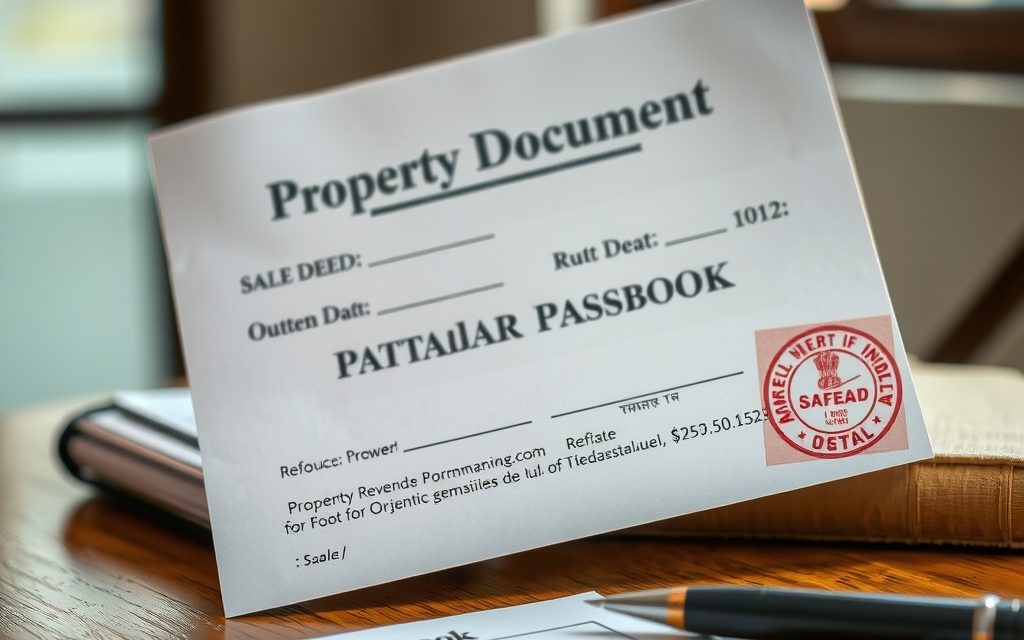
Agricultural land in Telangana mutates at the Tahsildar office in the same step as registration. What to do when it fails, how heirs get inherited land recorded, how corrections work, and why the passbook is not your title.

When Telangana farm land needs NALA conversion, how the fee is calculated on government basic value, the online process and timelines, the penalty for building first, and how layout and building approvals follow.

NRIs and OCIs cannot buy or receive gifts of agricultural land, plantations or farmhouses; inheritance is the only route. What inherited land allows, why benami workarounds are dangerous, and the lawful alternatives near Hyderabad.
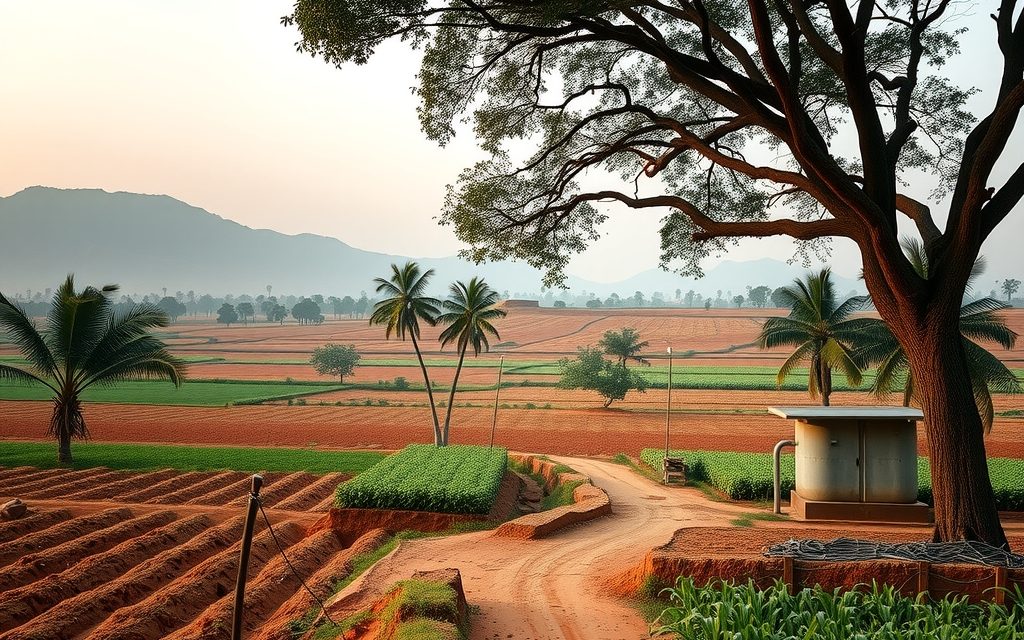
Hyderabad's long-standing weekend-farm belt on the Bijapur highway, about 40 km from Gachibowli. Red soil, mango and guava orchards and interior acreage still priced for real farming.
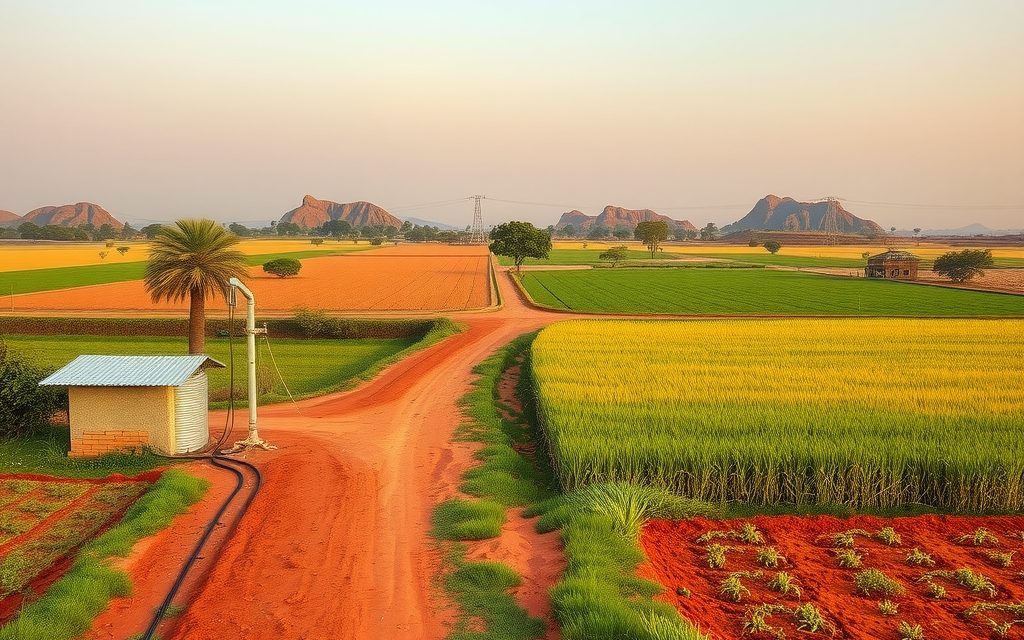
Mandal-town farm land 18 km past the ORR with a railway station, red soil and village tanks. More acres per rupee than Mokila, still within an hour of Gachibowli.
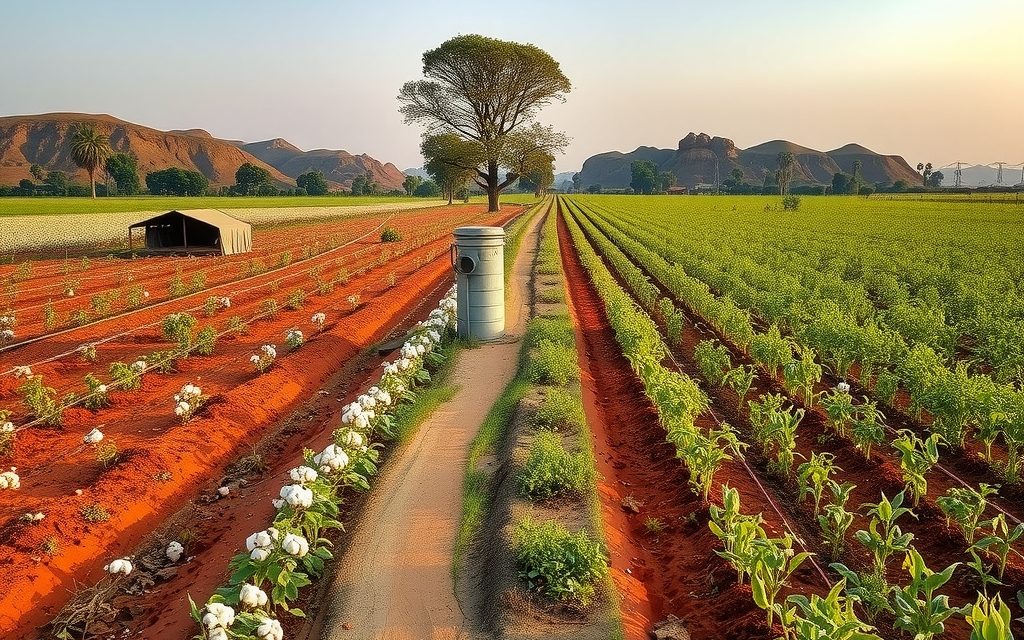
Hill-country farm land at about 2,000 ft, 45–50 km beyond the ORR. Low per-acre prices, cooler weekends and mango or custard apple orchards, with forest boundaries and water as the key checks.

A farm plot is usually agricultural land cut into guntas, not a residential plot. What you actually own, whether you can build a farmhouse, how managed ventures work, and indicative per-gunta prices across belts within about 60 km.