Agriculture & Farm Land in Sadasivpet, Sangareddy
Highway farm land on NH-65 between Sangareddy and Zaheerabad, about 45 km past the ORR. Black and red soils, sugarcane and turmeric on bores, and per-acre prices well below the ORR belt.
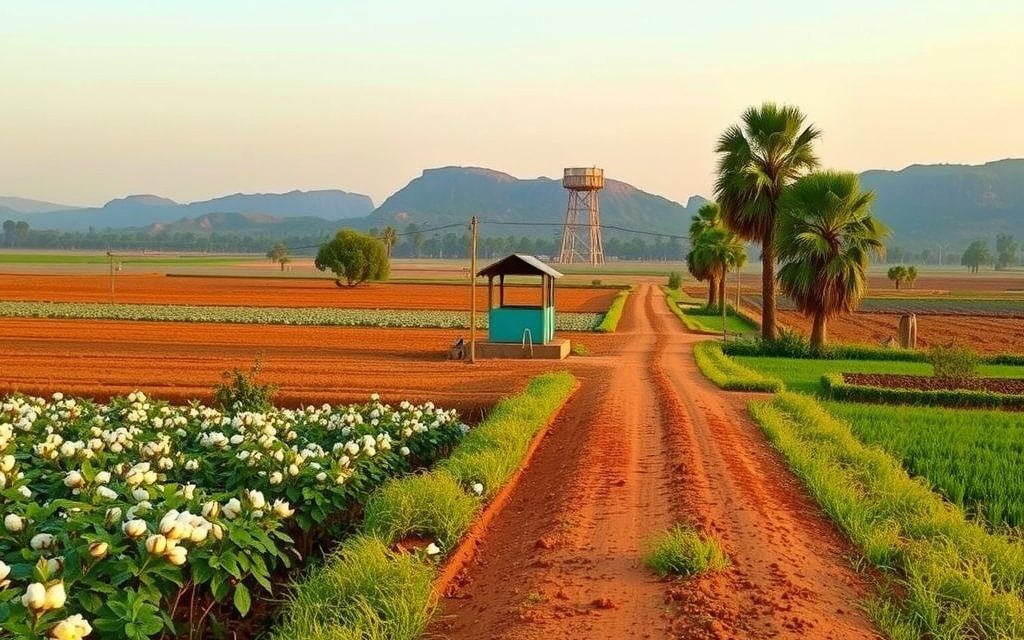
- About 45 km from the ORR Patancheru exit and 70–75 km from Gachibowli on NH-65; Zaheerabad 30 km west
- Agricultural land registers at the Sadasivpet Tahsildar office; converted land at the jurisdictional SRO
- Borewells irrigate a little over half the land (typically 300–600 ft); about a quarter is rainfed
- Black cotton soil on the flats, red loam on uplands; sugarcane, cotton, maize, turmeric and ginger
- Typical parcels 2–15 acres; gated farm plots sold by the gunta near the highway
| What | Indicative range | Note |
|---|---|---|
| NH-65 frontage near Sadasivpet town | ₹1.2 Cr – ₹3 Cr per acre | indicative, Oct 2026; check widening line |
| Town fringe within about 5 km, BT road access | ₹60 L – ₹1.4 Cr per acre | indicative, Oct 2026 |
| Interior villages with borewell, red or black soil | ₹25 L – ₹55 L per acre | indicative, Oct 2026 |
| Rainfed black-soil land, cart-track approach | ₹18 L – ₹35 L per acre | indicative, Oct 2026 |
| Farm plots in gated farm ventures near the highway | ₹2 L – ₹4.5 L per gunta | indicative, Oct 2026; check title structure |
Ranges reflect recent transactions and advisor observation as of 2026-10. Always verify against the sub-registrar market value and the specific parcel.
Agriculture land in Sadasivpet is what buyers find when they keep driving west on the Mumbai highway after Sangareddy and the prices finally start to make sense again. Sadasivpet is a mandal and municipal town in Sangareddy district, Telangana, roughly 25 km beyond Sangareddy town and about 45 km from the Patancheru interchange on the Outer Ring Road. It sits on NH-65 between the district headquarters and Zaheerabad, the town that gave its name to the National Investment and Manufacturing Zone. The fields here are a mix of red loam on the higher ground and heavy black cotton soil in the flatter tracts, growing sugarcane, cotton, maize, turmeric and ginger. This guide explains how the land behaves, what it costs per acre and per gunta as of October 2026, how the highway and the NIMZ story affect values, and which checks you must complete before an advance changes hands.
All prices on this page are indicative ranges drawn from recent transactions and advisor observation. They are not quotations, and a field two kilometres off the highway can be worth half of one that fronts it. We explain why below.
Why Sadasivpet is on the farm-land shortlist
Most farm-land buyers from Hyderabad start their search in the west and north-west, in Shankarpally, Chevella or around Sangareddy, and then discover that those belts have repriced sharply. Sadasivpet becomes interesting at that point for four reasons.
- It is still a highway mandal. NH-65 is a four-lane national highway with steady truck and bus traffic. Land with a short, metalled approach from the highway is easy to reach year-round, which is not true of many cheaper belts.
- It is the gap between two growth nodes. To the east lie Sangareddy, IIT Hyderabad at Kandi and the starting point of the Regional Ring Road's northern arm. To the west lies Zaheerabad, with the Mahindra tractor plant and the NIMZ lands in the neighbouring Nyalkal and Jharasangam mandals. Sadasivpet is the corridor that connects them.
- The soil can actually farm. Black cotton soil holds moisture far longer than the gravelly red soils of Vikarabad, and with a working borewell it supports sugarcane, turmeric and vegetables, not just one rainfed kharif crop.
- Per-acre prices are a fraction of the ORR belt. A family that can afford one acre near Shankarpally can often buy four or five here, which changes what is possible for a farming or orchard plan.
The honest counterweight is that Sadasivpet is not a weekend-farmhouse belt in the way Moinabad or Chevella is. It is a working agricultural mandal with a small industrial edge along the highway, and its appreciation has tracked the highway and the industrial story rather than lifestyle demand. Buy here for land banking, farming or a long-term industrial or warehousing bet on highway frontage, not for a quick flip.
Location and connectivity on the Mumbai highway
From the IT corridor the drive is simple: take the ORR to the Patancheru exit, join NH-65 through Isnapur and Kandi, pass Sangareddy and continue west. Outside peak hours, the run from Gachibowli takes about 80 to 95 minutes. The highway carries on to Zaheerabad and the Karnataka border, then to Humnabad, Solapur and Pune.
| Destination | Approximate distance from Sadasivpet town |
|---|---|
| Sangareddy town (district HQ) | About 25 km east |
| IIT Hyderabad, Kandi | About 30 km east |
| ORR Patancheru interchange | About 45 km |
| Gachibowli / Hitech City | About 70–75 km |
| Zaheerabad town | About 30 km west |
| Rajiv Gandhi International Airport | About 105–115 km via the ORR |
The Regional Ring Road: what it does and does not mean here
The planned Regional Ring Road's northern arm begins on the Sangareddy side and runs east through Narsapur, Toopran and Gajwel toward Bhongir and Choutuppal. Its southern arm, as discussed so far, loops back to the Sangareddy area from the Chevella and Shankarpally side. Either way, the ring meets NH-65 well east of Sadasivpet. That means Sadasivpet lies outside the RRR, not on it.
Being outside the ring is not a negative. Once the RRR is built, freight and travellers heading from the eastern and southern districts toward Mumbai will be able to reach NH-65 near Sangareddy without crossing Hyderabad, and the first long highway stretch beyond that junction runs through Sadasivpet. That is a genuine logistics argument for highway frontage. It is not a reason to pay RRR-village premiums for interior land 10 km off the road. Our guide to the Regional Ring Road and land explains how to separate the notified alignment from brochure maps.
Nearby employers and institutions
The highway belt around Sadasivpet has a scatter of manufacturing units, including a large tyre plant, plus warehousing sheds, dhabas and fuel stations. Woxsen University sits at Kamkole in Sadasivpet mandal. Further west, the Zaheerabad industrial cluster and the NIMZ project are the long-term employment story. None of these turn interior farm villages into suburbs, but they do keep a floor under land prices near the highway and create demand for staff housing and small commercial plots on converted land close to town.
Soil, water and crops: the black-soil difference
Two soils in one mandal
Drive a few kilometres off the highway and you will notice the colour change. Higher, rolling ground tends to carry red loam and gravelly red soil over granite, which drains quickly and suits mango, guava and sapota orchards on drip. The flatter, lower tracts carry deep black cotton soil, the regur that dominates the Zaheerabad side. Black soil swells when wet and cracks when dry; it holds water well, grows excellent cotton, sugarcane, turmeric and ginger, and is heavy work for anyone who wants to build on it.
For a buyer, the practical consequences are these. On black soil, foundations for a farmhouse, compound wall or shed cost more because of swelling and shrinking, and approach roads turn to sticky mud in the monsoon unless they are metalled. On red soil, building is easier but water management matters more. Many Sadasivpet parcels have both soils within the same survey number, so look at the land in different corners rather than assuming.
Water sources
Borewells irrigate a little over half the farmed land in the mandal, open wells a smaller share, and about a quarter of land is rainfed. Some villages toward the Manjira side draw on tanks and small lift systems, but there is no large canal command you can count on for a random parcel. Bore depths of roughly 300 to 600 feet are typical, and yields vary sharply between a low field below a tank and a ridge a few hundred metres away.
Ask the seller for the bore's summer yield, its depth and when it was last deepened. If possible, visit in April or May, when weak bores give themselves away. Electricity matters too: confirm the agricultural power connection is in the seller's name and will be transferred, and that the transformer serving the field is not overloaded by neighbours.
What grows around Sadasivpet
- Sugarcane: grown where water is reliable, supplying sugar mills in the wider district. Cane needs heavy irrigation, so a cane field is a strong signal of good water.
- Cotton and maize: the main kharif crops on black and red soils respectively, often rainfed.
- Turmeric and ginger: high-value crops on irrigated black soil, more common toward Kohir and Zaheerabad.
- Pulses and jowar: red gram, Bengal gram and jowar on drier land, particularly in rabi on residual moisture.
- Orchards: mango, sapota and guava on the red-loam uplands, usually as boundary rows or small blocks rather than large estates.
Agriculture land in Sadasivpet: indicative price bands
The single biggest price factor here is distance from NH-65 and the quality of the approach road; water comes second; soil type third. These ranges reflect recent transactions and advisor observation as of October 2026.
| Parcel type | Indicative range | Key variable |
|---|---|---|
| NH-65 frontage near Sadasivpet town | ₹1.2 Cr – ₹3 Cr per acre | Frontage width, service road, widening line |
| Town fringe within about 5 km, BT road access | ₹60 L – ₹1.4 Cr per acre | Municipal limits, conversion potential |
| Interior villages with borewell, red or black soil | ₹25 L – ₹55 L per acre | Bore yield, all-weather road |
| Rainfed black-soil land, cart-track approach | ₹18 L – ₹35 L per acre | Access in monsoon, title chain length |
| Farm plots in gated farm ventures near the highway | ₹2 L – ₹4.5 L per gunta | Parent title, layout approval status |
Compare these with the bands on our pages for farm land around Sangareddy, which is closer to the ORR and higher priced, and for agriculture land near Zaheerabad, which is further out and generally cheaper away from the NIMZ periphery. Sadasivpet sits between them, as you would expect.
Reading a highway-frontage quote
Highway frontage is where the most money changes hands and the most mistakes are made. Three points to test before you accept a frontage price. First, how much of the parcel actually fronts the highway; a narrow 30-metre strip with a deep parcel behind it is not worth frontage rates across every acre. Second, whether the road authority's right-of-way line or a future widening takes a slice of the front. Third, whether a service road or an access permission is needed to get a vehicle in, because direct access to a national highway is regulated. Frontage land priced for a petrol bunk or warehouse only earns that premium if the conversion and access permissions are achievable.
Farm plots versus raw acreage
A gunta is one-fortieth of an acre, about 121 square yards. At ₹3.5 lakh per gunta a farm-venture plot works out to ₹1.4 crore per acre equivalent, perhaps three to five times the price of interior patta land a few kilometres away. That premium buys fencing, a gate, internal roads, planting and someone else's management. It is reasonable if the venture's title and structure are clean; it is expensive if you are buying an undivided share of agricultural land described as a "plot".
Types of parcels sold around Sadasivpet
Family patta holdings
The bulk of the market consists of two to fifteen acre holdings owned by farming families, often recorded in the name of an elderly parent with several adult children who all need to sign. These offer the best value per acre but need careful succession and partition checks.
Highway-adjacent parcels with conversion potential
Land on or just behind NH-65 is often bought by people planning warehousing, a dhaba, a fuel station or a small industrial shed. Treat these as two transactions: buying agricultural land, and then converting it under NALA and obtaining the relevant permissions. Price the second step into the first.
Gated farm ventures
Several ventures along the highway sell fenced farm plots with plantations. Before buying, find out whether you are getting a registered, separately demarcated parcel with its own survey sub-division and passbook, or a share in a larger agricultural survey number. The first is a real asset; the second can be hard to mutate, sell or borrow against.
Orchard blocks
Small mango and sapota blocks on red-loam uplands come up occasionally. A bearing orchard with a reliable bore earns a premium over bare land, but only if the trees are healthy and of a marketable variety. Ask how much the last three seasons' crop sold for.
Legal checklist for Sadasivpet agriculture land
Title work in Sadasivpet is mostly routine, but the mandal has its own traps: long informal family partitions, land once proposed for industrial acquisition, and parcels near tanks and streams. Work through this list for every survey number.
- Pattadar passbook and Bhu Bharati record. The seller's name, extent and survey number should match the passbook and the online record of rights. Discrepancies in extent are common and must be resolved before registration, not after. Our guide to Dharani and Bhu Bharati land records explains how to read the entries.
- Pahani and 1B history. Pull the pahani (adangal) entries for as many years as are available, checking who was recorded as cultivator and whether the land's classification changed.
- Encumbrance certificate for 30 years. The EC shows registered transactions; it does not show unregistered family arrangements or court cases, so do not treat a clean EC as the whole story.
- Link documents. Every sale deed, partition deed, gift settlement and succession record back to at least 30 years, ideally to the original pattadar.
- Survey number and FMB. Get the field measurement book sketch and a licensed surveyor's measurement on the ground. Black-soil fields lose boundary stones easily as the soil moves.
- Section 22-A prohibited list. Confirm the survey number is not on the prohibited properties list, which covers government, endowment, wakf and certain other categories.
- Assigned land. Land assigned to landless families under government schemes cannot be bought; look for "assigned" or similar entries in the record and in old pahanis.
- Industrial acquisition history. Check whether the village was ever notified for acquisition for industrial or infrastructure purposes, including the highway widening and any industrial-park proposals. Notified but unacquired land can carry restrictions.
- Tanks, streams and buffer. Fields below or beside village tanks may include parts of the tank bed or full tank level. Those portions are not saleable.
- NALA status and land use. If the land is already converted, see the NALA order. If you plan non-agricultural use later, check whether the area falls under any planning authority's master plan and what the land-use zone is.
- Ceiling, forest and 58/59 regularisation. Confirm the land is not surplus under ceiling, not forest land, and not a regularised government plot with resale restrictions.
A Sadasivpet-specific warning about partitions
In many families here, brothers divided land decades ago by mutual understanding, each farming his share, while the record still shows the father or one brother as pattadar. When the family sells, every legal heir, including married daughters, has a claim unless there is a registered partition or release. We insist on either a registered partition or every heir joining the sale deed. Shortcuts here are the most common source of later disputes in this mandal.
Registration and charges in Sadasivpet
Unconverted agricultural land registers at the Sadasivpet mandal Tahsildar office, where the Tahsildar acts as joint sub-registrar under Bhu Bharati and the mutation is processed in the same step. Land that has already been converted under NALA, along with plots and buildings, registers at the jurisdictional sub-registrar office; we confirm from the survey number whether that is the Sadasivpet or Sangareddy office. Slots are booked online through the state portal, and the Telangana registration department site publishes market values and fee schedules.
| Charge | Approximate rate | Notes |
|---|---|---|
| Stamp duty | ~5.5% | On the higher of the agreed price and the government market value |
| Transfer duty | ~1.5% | Applies in municipal areas; not charged in gram panchayat areas |
| Registration fee | ~0.5% | About 2% in gram panchayat areas, so the total stays near 7.5% |
| Mutation and passbook | Nominal | Processed through the record of rights |
Budget roughly 7.5% of value for duty and fees, and expect us to verify the current rates on the day of registration, because they can change. The 1% TDS under Section 194-IA does not apply to rural agricultural land. Be careful near the town, though: land within a certain distance of a municipality can count as urban agricultural land for income-tax purposes, and then TDS rules can apply on large transactions. Sadasivpet is a municipality, so confirm the position for town-fringe parcels with a chartered accountant.
Who should buy in Sadasivpet, and who should not
A good fit
- Working farmers and agri-entrepreneurs who want irrigated black soil for sugarcane, turmeric, ginger or vegetables at a fraction of ORR-belt prices.
- Long-term land bankers who want acreage on a national highway between Sangareddy and Zaheerabad and can hold for ten years or more.
- Logistics and warehousing investors who understand conversion and access permissions and want highway frontage ahead of the RRR's completion.
- Families from the district consolidating holdings near their home villages.
Probably not a fit
- Weekend-farmhouse seekers who want a 45-minute drive from Gachibowli; Sadasivpet is closer to 90.
- Buyers expecting RRR-style jumps on interior land. The ring passes well to the east.
- Anyone who cannot visit or supervise. Large unwatched holdings attract boundary creep and informal grazing.
- Buyers relying on a "NIMZ is coming" pitch for land 40 km from the NIMZ boundary.
Comparing Sadasivpet with its neighbours
Most buyers weigh Sadasivpet against three alternatives. Closer to Hyderabad, farm land around Kandi sits next to IIT Hyderabad and the RRR's starting point, with prices to match. Sangareddy offers district-headquarters services and higher values. Further west, Zaheerabad is cheaper and closer to the NIMZ lands, but adds another 30 km of driving and a dryer, more black-soil landscape.
| Belt | Drive from Gachibowli | Character | Relative price |
|---|---|---|---|
| Kandi | About 60 min | IIT and RRR node, peri-urban | Highest of the four |
| Sangareddy | About 65–75 min | District HQ, mixed soils | High |
| Sadasivpet | About 80–95 min | Highway mandal, black and red soil | Moderate |
| Zaheerabad | About 2 hours | NIMZ periphery, black soil | Lowest away from the highway |
If you are leaning toward a small weekend house rather than farming, approved plots are a better instrument than agricultural land. Our page on open plots in Sadasivpet covers layouts near the town.
Running a farm in Sadasivpet: costs people forget
The purchase price is only the start. A realistic first-year budget for an irrigated five-acre block here includes a new or deepened bore, a borewell motor and starter, drip lines for orchard sections, fencing or at least a strong boundary of live hedge and stone pillars, and a caretaker's room. On black soil, internal approach paths need gravel or metal if you want to drive in after rain. Labour is available locally for sugarcane and cotton work, but harvest seasons tighten it.
Leasing is a practical option if you will not farm yourself. Many owners lease to neighbouring farmers on an annual rent per acre, which keeps the land cultivated, shows active agricultural use and deters encroachment. Put the lease in writing, keep it short, and make sure the lessee understands you will not be granting any tenancy rights.
NRI note for Sadasivpet
Under FEMA, NRIs and OCIs cannot buy agricultural land, plantation property or a farmhouse in India, and they cannot receive such land as a gift either. The only route is inheritance. An NRI who inherits land in Sadasivpet can hold it, lease it and, within the rules, sell it to a resident Indian.
We regularly help families abroad with inherited holdings here: getting the succession recorded in Bhu Bharati, surveying and fencing, arranging leases and, when they decide, selling. NRIs who want to invest fresh money near this corridor usually look at approved open plots or villas instead. Our guide to NRI agriculture land rules in Telangana sets out the options, and a chartered accountant should advise on tax and repatriation.
How NRR Estates handles a Sadasivpet purchase
- Brief: farming, land bank, frontage investment or orchard. Each leads to different villages and parcel sizes.
- Shortlist and site visits: we visit with you, drive the approach road, see the bore run and talk to neighbouring farmers about boundaries and water.
- Document verification: passbook, Bhu Bharati record, pahani history, 30-year EC, link documents, prohibited and assigned land checks, acquisition history and a licensed survey.
- Negotiation: anchored in registered transactions and market values for nearby survey numbers, not neighbours' asking prices, with payments tied to document milestones.
- Registration and mutation: slot booking, deed drafting, attendance at the Tahsildar or SRO and follow-up until the passbook is in your name.
- After purchase: introductions for fencing, bore work, plantation and leasing.
Our advisory fee is disclosed in writing before you commit to anything.
Sadasivpet farm land: frequently asked questions
What is the price of agriculture land in Sadasivpet per acre?
As of October 2026, indicative ranges run from about ₹18 lakh to ₹35 lakh per acre for rainfed black-soil land on a cart track, ₹25 lakh to ₹55 lakh for interior land with a borewell, and ₹60 lakh to ₹1.4 crore for town-fringe parcels on a BT road. NH-65 frontage near the town trades around ₹1.2 crore to ₹3 crore per acre depending on frontage width and access. These ranges come from recent transactions and advisor observation, not quotations.
How far is Sadasivpet from Hyderabad?
Sadasivpet town is about 45 km from the Patancheru interchange on the Outer Ring Road and roughly 70 to 75 km from Gachibowli and Hitech City. The route is straightforward: ORR to Patancheru, then NH-65 through Isnapur, Kandi and Sangareddy. Outside peak hours the drive takes around 80 to 95 minutes. Sangareddy is about 25 km east and Zaheerabad about 30 km west on the same highway.
Is Sadasivpet on the Regional Ring Road?
No. As planned, the RRR's northern arm starts on the Sangareddy side and runs east, and the southern arm loops back to the Sangareddy area from the Chevella side, so the ring meets NH-65 well east of Sadasivpet. Sadasivpet lies outside the ring. The likely benefit is indirect: once the RRR is built, traffic heading to Mumbai can reach NH-65 near Sangareddy without crossing Hyderabad, which supports highway frontage more than interior farm land.
Is the soil in Sadasivpet good for farming?
It can be very good with water. The flatter tracts carry deep black cotton soil that holds moisture and grows cotton, sugarcane, turmeric and ginger, while the uplands carry red loam suited to mango, sapota and guava on drip. Black soil is harder to build on because it swells and cracks, and approach roads turn muddy in the monsoon unless metalled. Many survey numbers contain both soils, so inspect every corner of a parcel before deciding.
Where is agricultural land registered in Sadasivpet?
Unconverted agricultural land registers at the Sadasivpet mandal Tahsildar office, where the Tahsildar acts as joint sub-registrar under Bhu Bharati and processes the mutation in the same step. Land already converted under NALA, and plots or buildings, register at the jurisdictional sub-registrar office, which we confirm from the survey number. Budget roughly 7.5% of value for stamp duty, transfer duty and registration fee, and verify the current rates on the day.
Does the NIMZ at Zaheerabad affect Sadasivpet land prices?
Only modestly. The NIMZ lands lie in the Nyalkal and Jharasangam mandals beyond Zaheerabad, roughly 40 km or more from Sadasivpet. The project supports a general industrial story along NH-65 and some demand for highway frontage and staff housing near towns, but it does not turn interior Sadasivpet villages into an industrial belt. Be wary of any pitch that prices ordinary farm land as if it adjoins the NIMZ boundary.
Can NRIs buy farm land in Sadasivpet?
No. Under FEMA, NRIs and OCIs cannot purchase agricultural land, plantation property or a farmhouse anywhere in India, and they cannot receive such land as a gift. They can inherit it, hold and lease it, and sell it to a resident Indian within the rules. NRIs who want exposure to this corridor usually consider approved open plots or villas instead. A chartered accountant should advise on tax and repatriation for inherited land.
Are gated farm plots near Sadasivpet a safe purchase?
They can be, if the structure is right. Check whether you are buying a separately sub-divided parcel with its own survey sub-division number, passbook entry and FMB sketch, or an undivided share in a larger agricultural survey number. Verify the parent title back 30 years, see the venture's agreement terms for maintenance and plantation, and confirm there is no misleading claim of layout approval on agricultural land. At ₹2 lakh to ₹4.5 lakh per gunta you are paying a premium for management.
Related guides
Low-ticket DTCP plots on the Mumbai highway between Sangareddy and Zaheerabad. Indicative per sq yd prices, NIMZ and corridor drivers, the red flags in cheap ventures, legal checks and registration.
District-headquarters farm land on the Mumbai highway, 25 km past the Patancheru ORR exit. Red loam and black soil, cotton and maize country, larger blocks at a fraction of inner-ring prices.
Black and red soil farmland on the Mumbai highway near the Karnataka border, about 110 km from Hyderabad. Indicative per-acre prices from interior villages to NIMZ periphery, borewell realities and the checks that matter.
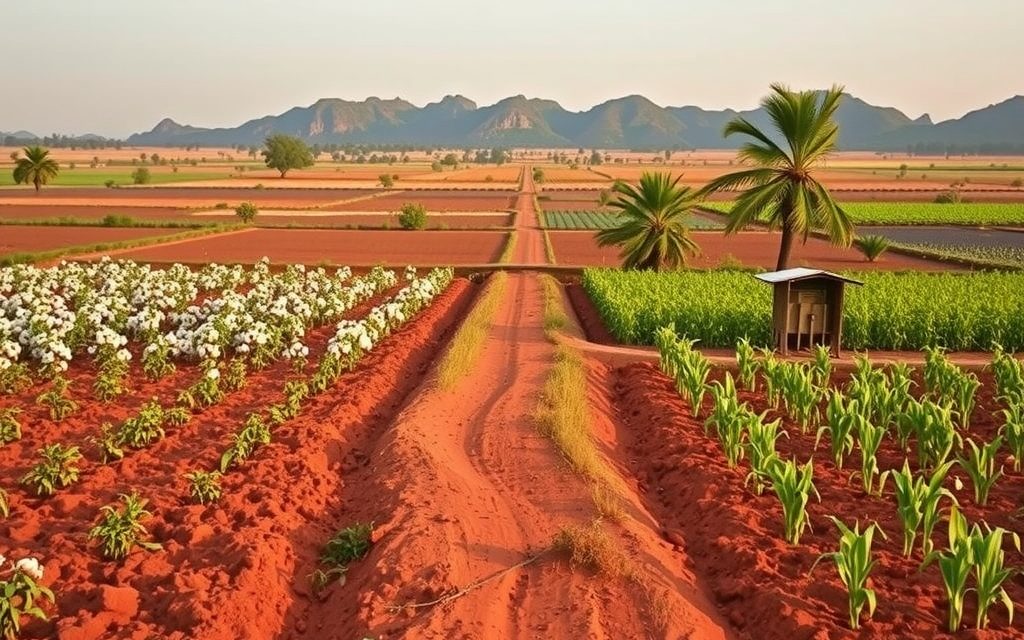
Working red-loam farmland around IIT Hyderabad on the Mumbai highway, 8 km from Sangareddy. Real 2–10 acre holdings, orchards and gated farm ventures at district prices, with a long-term NH-65 and RRR story.
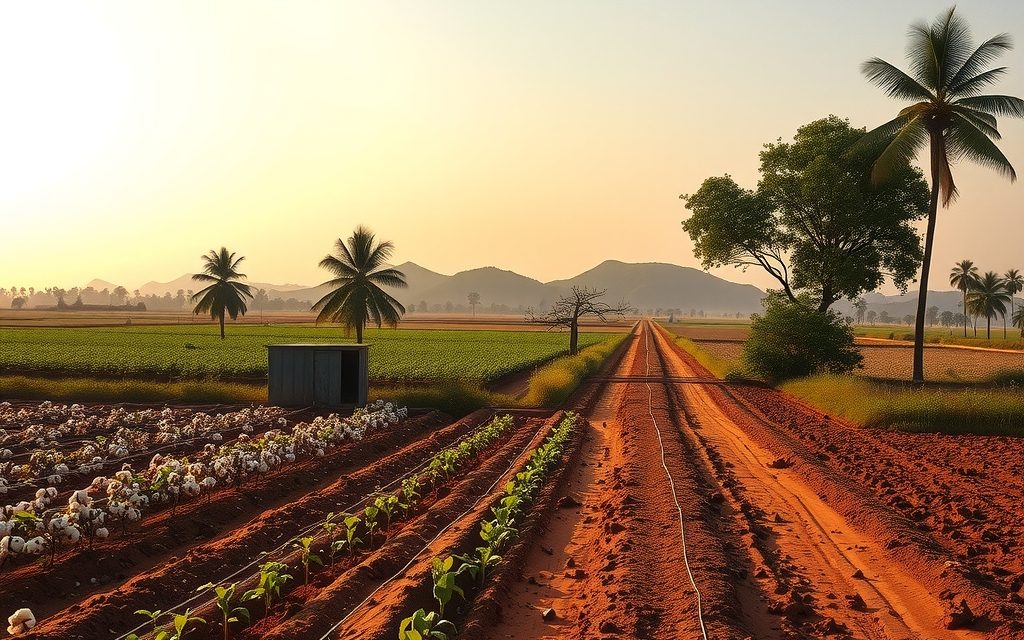
Farm land at the ORR's Patancheru exit, where an industrial belt meets mango orchards towards Rudraram and Isnapur. Groundwater and Nakkavagu checks come first; outer villages still trade at farm prices.
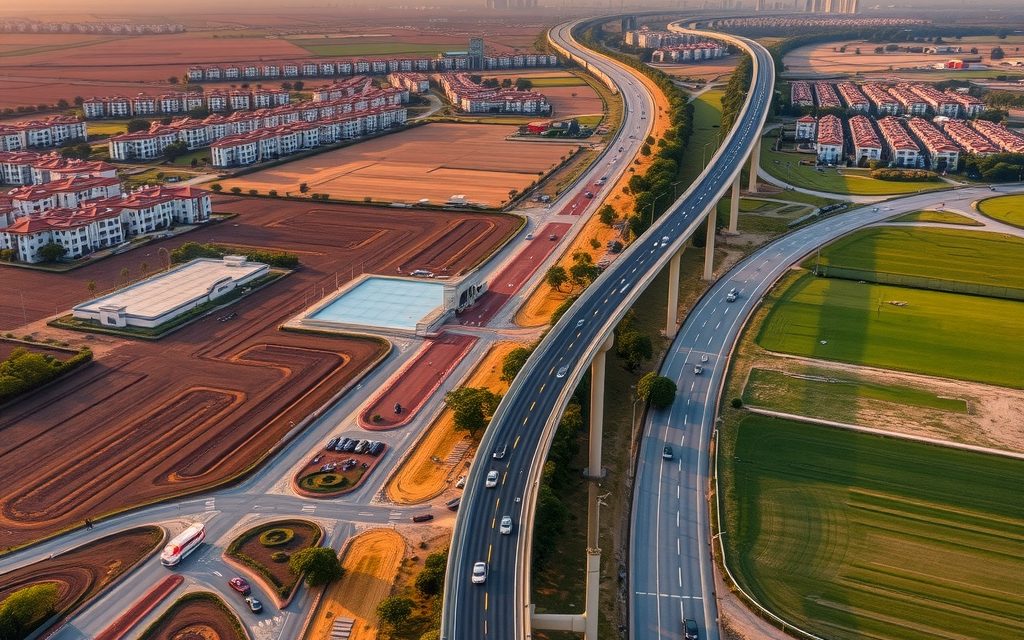
The RRR is the biggest land story around Hyderabad and the most misunderstood. This guide separates the northern and southern arms, explains acquisition and compensation, and shows how far from the alignment buyers should actually be.

NRIs and OCIs cannot buy or receive gifts of agricultural land, plantations or farmhouses; inheritance is the only route. What inherited land allows, why benami workarounds are dangerous, and the lawful alternatives near Hyderabad.
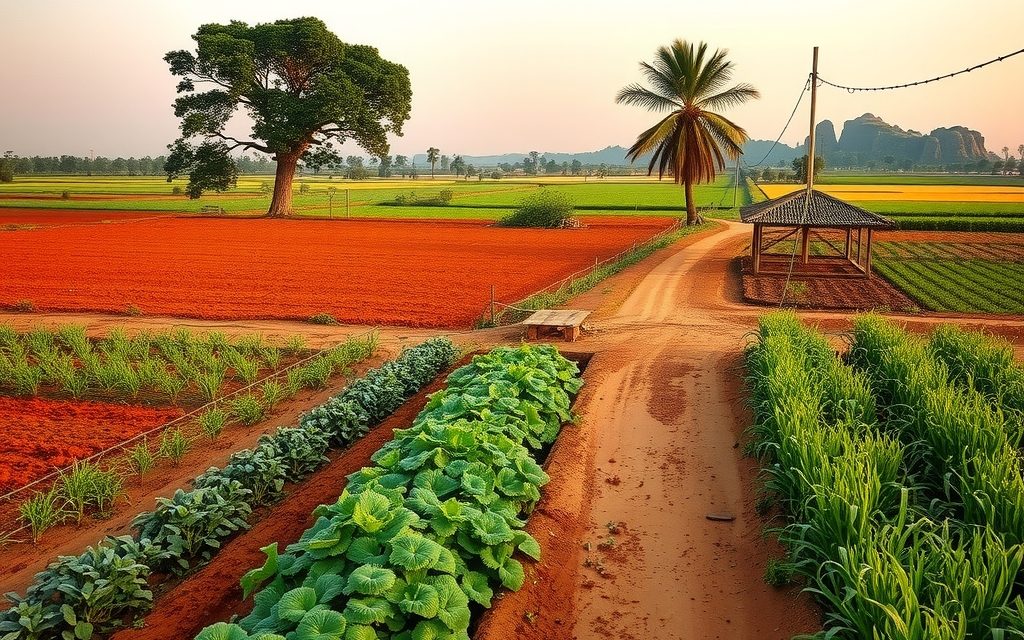
Red-soil farmland 4 km from the ORR beside the Aerospace SEZ and TCS campus. Interior villages still farm vegetables and mango; land near the SEZ is priced as future layout land and needs careful acquisition checks.