Agriculture & Farm Land in Kandi, Sangareddy
Working red-loam farmland around IIT Hyderabad on the Mumbai highway, 8 km from Sangareddy. Real 2–10 acre holdings, orchards and gated farm ventures at district prices, with a long-term NH-65 and RRR story.
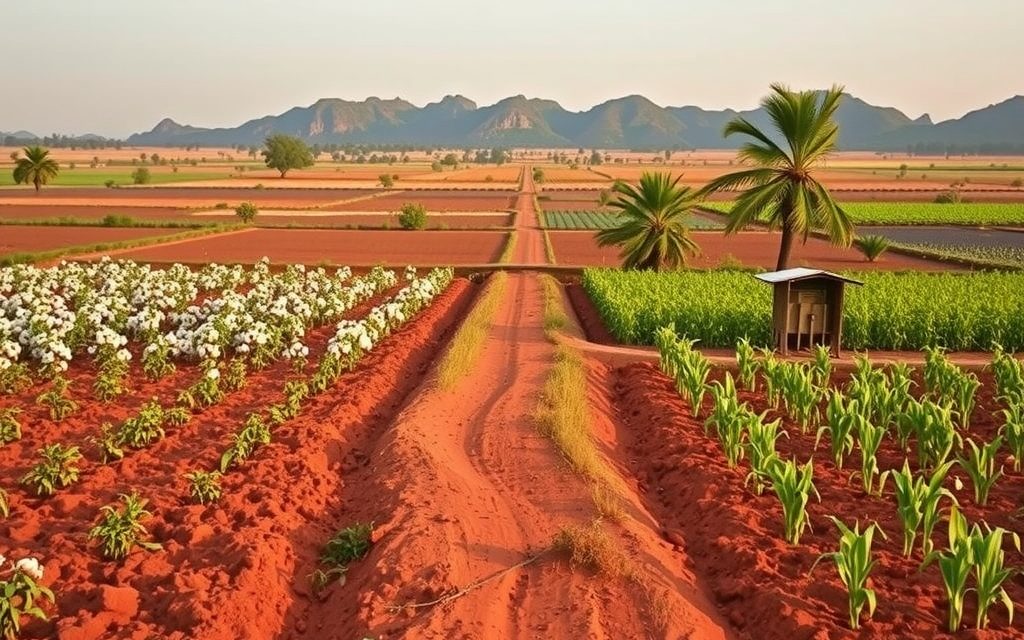
- On NH-65 about 18–22 km past the ORR Patancheru interchange; Sangareddy 7–9 km
- Agricultural land registers at the Kandi Tahsildar office; converted land at the jurisdictional SRO
- Borewells typically 300–700 ft; about a quarter of land rain-fed
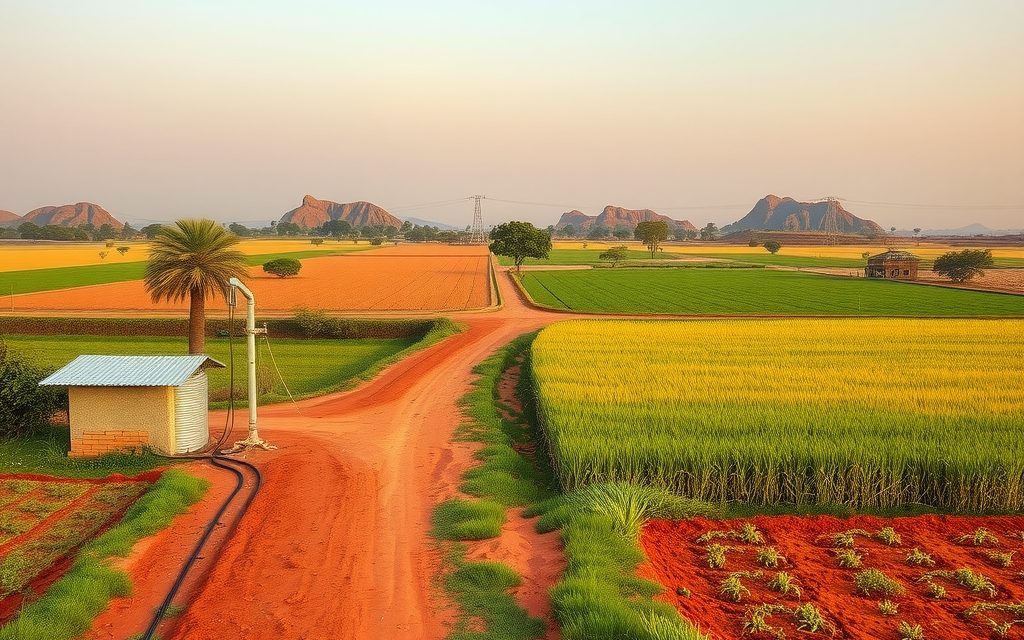
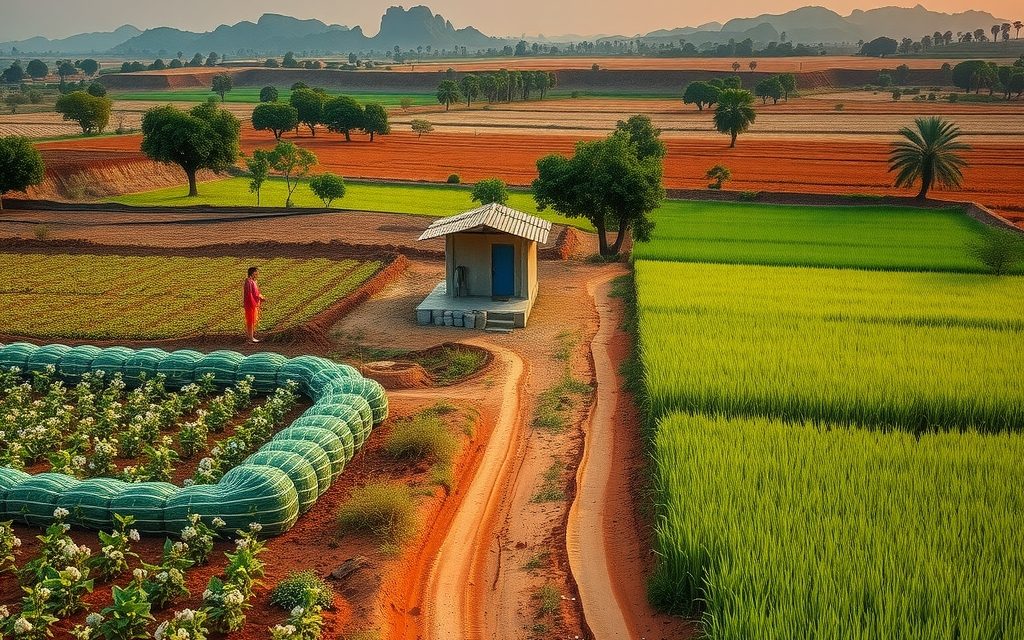
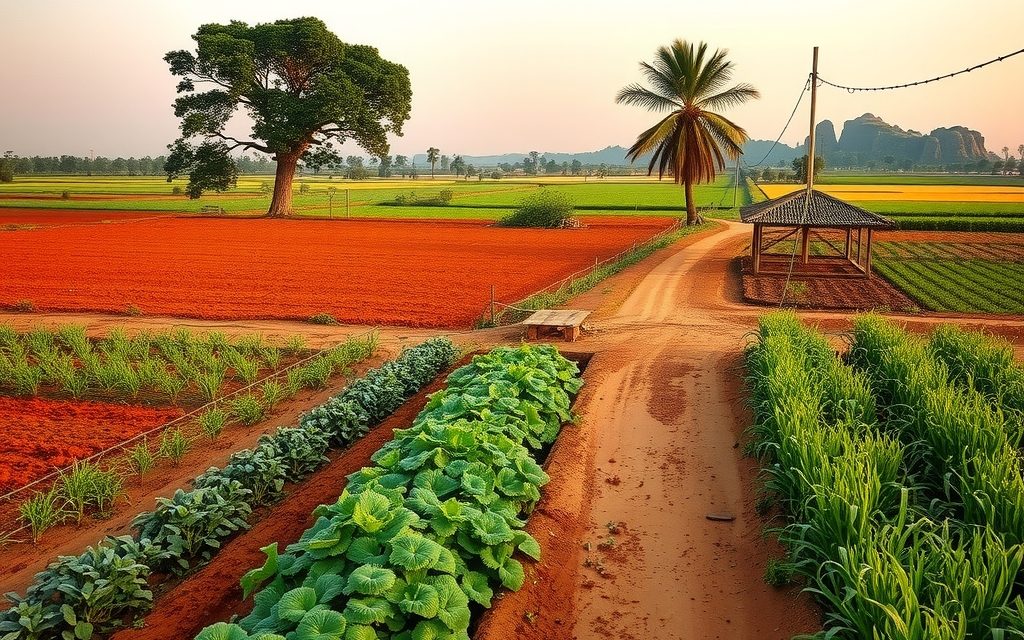
- Red loam with black-soil pockets; cotton, maize, paddy, mango, sapota and guava
- Typical holdings 2–10 acres; gated farm plots sold by the gunta
| What | Indicative range | Note |
|---|---|---|
| NH-65 frontage near the IIT campus and Kandi crossroads | ₹3 Cr – ₹6 Cr per acre | indicative, as of October 2026; verify zoning |
| Farm land within ~3 km of the campus, BT road | ₹1.2 Cr – ₹2.5 Cr per acre | indicative, as of October 2026 |
| Kandi–Shankarpally road frontage | ₹1.8 Cr – ₹3.5 Cr per acre | indicative, as of October 2026 |
| Interior villages 5–12 km from the highway | ₹55 L – ₹1.2 Cr per acre | indicative, as of October 2026 |
| Rain-fed black-soil land, western side | ₹35 L – ₹70 L per acre | indicative, as of October 2026 |
| Farm plots in gated farm ventures | ₹4 L – ₹8 L per gunta | indicative, as of October 2026; check title structure |
Ranges reflect recent transactions and advisor observation as of 2026-10. Always verify against the sub-registrar market value and the specific parcel.
Kandi is where the Mumbai highway stops feeling industrial and starts feeling academic. About 18 to 20 km past the Outer Ring Road's Patancheru interchange on NH-65, the long walls of the IIT Hyderabad campus appear on the roadside, and behind them stretch cotton, maize and red-loam fields that run south toward Shankarpally and west toward Sangareddy town. Buyers looking for agriculture land in Kandi are usually drawn by that combination: a national institute as an anchor, a district headquarters 8 km away, and land that still costs a fraction of what it does closer to the ring road. This guide sets out what the Kandi belt offers in October 2026, what an acre costs, how much weight the IIT, the Regional Ring Road and the NIMZ story really deserve, the documents you must see, and how registration works at the Kandi mandal Tahsildar office in Sangareddy district.
Unlike the city-edge villages, Kandi still has working farms and families who intend to keep farming. That makes it a better place for a buyer who actually wants land, and a place where reading the promotional story carefully matters more than usual.
Why Kandi appeals to farm-land buyers
Kandi's appeal rests on three pillars, each real, each easy to oversell.
The institute. IIT Hyderabad moved to its permanent campus at Kandi in the last decade and has grown into a large residential campus with research centres, incubation space and a steady population of faculty, staff and students. That population needs housing, services and shops nearby, and visitors and industry partners arrive every week. Land within easy reach of the campus gate has a demand base that most farm belts do not.
The district town. Sangareddy, the district headquarters, is about 8 km away, with the collectorate, courts, hospitals, schools, markets and the government offices a landowner needs. A farm near Kandi is never far from a functioning town.
The highway and the ring roads. NH-65, the Hyderabad–Mumbai highway, carries freight and industry west through Sangareddy, Sadasivpet and Zaheerabad. The proposed northern arm of the Regional Ring Road is planned to begin in the Sangareddy area. Together they give the belt a long-term growth narrative that buyers from the western suburbs find familiar.
What Kandi does not have yet is the dense urban spread you see at Patancheru or Isnapur. That is precisely why per-acre prices here remain within reach for buyers who could never afford the ORR fringe, and why the land still looks and works like farmland.
Kandi farm land market: where things stand in October 2026
- Supply is genuinely available. Holdings of 2 to 10 acres still come up in the villages south and west of Kandi, and family blocks above 10 acres are not unusual away from the highway.
- Two buyer types dominate. Hyderabad investors seeking a long-term land bank on the NH-65 corridor, and families wanting a weekend farm or orchard within about an hour of the western suburbs. A smaller group are local farmers expanding holdings.
- The highway premium is steep. Land with NH-65 frontage near the campus trades at several times the price of a similar acre 5 km inside a village road.
- Gated farm ventures are active. Developers sell gunta-sized farm plots with fencing, plantation and a clubhouse promise on the Kandi–Shankarpally side. Some are well run; some are not. The structure of what you are buying matters more than the brochure.
- Story-driven pricing is common. "IIT-facing" and "RRR-touching" appear in many listings for land that is neither. Distance on the ground is what counts.
Location and access: NH-65, Kandi crossroads and the road to Shankarpally
The Mumbai highway
NH-65 runs from the ORR at Patancheru through Isnapur, Rudraram and Kandi to Sangareddy, and on to Sadasivpet, Zaheerabad and the Karnataka border. It is a four-to-six-lane road for most of this stretch, with heavy truck traffic around the industrial towns. From Gachibowli or the Financial District, the usual route is the ORR to Patancheru and then the highway west; expect roughly 50 to 70 minutes off-peak depending on the industrial stretch at Isnapur.
Kandi crossroads and the southern link
At Kandi crossroads, the road south toward Shankarpally branches off the highway. It is the second spine of the belt, opening up villages between the institute and Shankarpally, and providing an alternative approach from the western IT corridor via Shankarpally and Mokila. Many of the farm ventures and the better interior parcels sit within a few kilometres of this road.
The Regional Ring Road
The northern arm of the RRR is planned to run from the Sangareddy area through Narsapur, Toopran and Gajwel toward the east. For Kandi, that means the RRR could eventually pass within reach of the mandal, though exact survey-number alignments, interchange locations and acquisition timelines must be confirmed from official notifications. Our Regional Ring Road land guide explains how to read alignment claims and what land acquisition means for owners.
| From Kandi crossroads to | Approx. distance | Typical drive, off-peak |
|---|---|---|
| Sangareddy town | 7–9 km | 12–18 min |
| ORR Patancheru interchange | 18–22 km | 25–35 min |
| Gachibowli via NH-65 and ORR | 42–48 km | 50–70 min |
| Shankarpally town | 18–24 km | 30–40 min |
| Sadasivpet | 25–30 km | 30–40 min |
| Zaheerabad | 65–75 km | 65–85 min |
The IIT Hyderabad effect: what it does and does not do for land
Every listing in this belt mentions the institute. It deserves a sober look.
What it does
- Creates a stable, educated population that rents housing, uses shops and services, and attracts visitors. That supports residential and commercial demand close to the campus.
- Draws research and industry partnerships that can, over time, bring offices, incubators and small technology firms to the surrounding area.
- Improves the area's profile, which helps resale for well-located, well-documented land.
What it does not do
- It does not make farmland 6 km away "IIT land". The effect falls off quickly with distance and poor approach roads.
- It does not change the zoning of your survey number. Agricultural land still needs NALA conversion and the right master-plan land use before any non-farm use.
- It does not guarantee timelines. Campus expansion and associated development follow their own schedules.
Our rule of thumb: pay an institute premium only for land within easy, legal reach of the campus and the highway, and value everything else as farmland with a good long-term story.
Reading the NIMZ and Mumbai-corridor narrative carefully
Brokers in the Kandi belt often talk about the National Investment and Manufacturing Zone (NIMZ) at Zaheerabad and the wider industrial corridor along NH-65. The NIMZ is a government-backed manufacturing zone planned in the Zaheerabad area, around 65 to 75 km west of Kandi, and the highway between Patancheru and Zaheerabad has long been promoted as an industrial growth corridor.
Two cautions apply. First, distance. A manufacturing zone 70 km away does not directly reprice farmland at Kandi; it may strengthen the corridor's logistics and freight role, which matters most to highway-frontage land. Second, pace. Large industrial zones in India typically develop in phases over many years, and progress depends on land acquisition, infrastructure funding and investor interest. Treat the NIMZ as background context for the corridor, not as a reason to pay more for a specific acre. Buyers who want to understand the Zaheerabad end directly can read our page on farm land around Zaheerabad.
Soil, water and crops in Kandi mandal
Red loam with black-soil pockets
Around Kandi and the campus, the dominant soil is red loam, moderately deep in the valleys and thinner on the low ridges. Toward the west and in some low-lying fields, heavier black cotton soil appears, sometimes within the same village. Red loam drains well and suits orchards, vegetables and maize; black soil holds moisture, suits cotton and pulses, but cracks in summer and needs careful foundations if you ever build.
Water sources
By our observation, a little over half of the farmed land in the Kandi and Sangareddy belt relies mainly on borewells, roughly a tenth on open wells, about a quarter is rain-fed, and around a tenth benefits from tanks and minor irrigation. Agricultural bores in the interior villages commonly run 300 to 700 ft, with yields that vary across fractured rock. Village tanks restored under state programmes recharge nearby bores after a good monsoon. As always, test the bore in April or May and ask neighbours how it held through the last dry season.
What grows here
- Cotton and maize as the main kharif crops on larger holdings.
- Paddy in tank-fed and bore-irrigated low fields.
- Sugarcane and turmeric on well-watered black-soil fields in parts of the district.
- Mango, sapota and guava orchards, increasingly planted by weekend owners with drip irrigation.
- Vegetables near the town and the highway for the Sangareddy and Patancheru markets.
For an orchard, mango on red loam with a dependable bore and drip is the common choice. Allow three to five years before meaningful fruit and longer before it covers costs.
Agriculture land in Kandi: indicative price per acre
The ranges below are indicative, drawn from recent transactions and advisor observation as of October 2026. They are not quotes. Frontage, approach road, water, soil and title move individual prices more than village names.
| Parcel type | Indicative range | What drives it |
|---|---|---|
| NH-65 frontage near the IIT campus and Kandi crossroads | ₹3 Cr – ₹6 Cr per acre | Commercial and institutional expectation; verify zoning and widening line |
| Farm land within about 3 km of the campus, BT road access | ₹1.2 Cr – ₹2.5 Cr per acre | Proximity, approach width, water |
| Frontage on the Kandi–Shankarpally road | ₹1.8 Cr – ₹3.5 Cr per acre | Frontage length, depth, venture activity nearby |
| Interior villages 5–12 km from the highway, panchayat road | ₹55 L – ₹1.2 Cr per acre | Soil, bore yield, legal access |
| Rain-fed black-soil land toward the western side | ₹35 L – ₹70 L per acre | Water and approach road |
| Farm plots in gated farm ventures | ₹4 L – ₹8 L per gunta | Fencing, plantation, management, title structure |
Two observations from recent deals. First, the jump from interior land to highway frontage is often four to six times, so buyers who do not need frontage should not pay for it. Second, farm-venture plots priced per gunta usually work out to well above the per-acre price of comparable raw land; you are paying for fencing, plantation, roads and management, and you should judge whether those are worth the premium.
Parcels you will find in the Kandi belt
Patta farm land, 2–10 acres
The core offer. Family holdings with a passbook, a bore or open well, and a village-road approach. Good for orchards, long-term land banking and weekend farms. Title chains are often simpler than on the city edge, but heirship and partition still need careful checking.
Highway and link-road frontage
Expensive and contested. Suitable for buyers with a commercial or institutional plan and the patience to work through zoning, conversion and highway setbacks.
Gated farm ventures
Developers buy a block of agricultural land, fence it, plant trees, lay internal tracks and sell portions measured in guntas. The legal structure varies: some register each portion as agricultural land in the buyer's name, others use co-ownership or management contracts. Building rights are usually limited. Read our guide on managed farmland schemes and what to check before signing anything.
Orchards
Established mango or sapota orchards come up occasionally. A bearing orchard with a reliable bore is worth a premium over bare land; a neglected orchard may cost more to revive than to replant.
Buyers who prefer approved residential land near the campus should compare open plots in Kandi.
Setting up a weekend farm near Kandi: the costs after the price
Many Kandi buyers want an orchard or a weekend farm rather than a pure land bank. The purchase price is only the start, and first-time buyers routinely underestimate the rest. These are the items we ask clients to budget for, with the caveat that costs vary with parcel size, terrain and contractor.
- Boundary survey and fencing. A licensed survey first, then chain-link or stone-post fencing with a gate. On a 2 to 3 acre parcel, fencing is often the largest early cost, and it is the single best defence against encroachment for an absentee owner.
- Water. If the existing bore is weak, a new bore is a gamble in hard rock; a hydrogeologist's survey improves the odds but never guarantees yield. Add the pump, cabling and, for orchards, a drip system with a filter and a small storage sump.
- Power. Transferring an existing agricultural connection into your name is far easier than applying for a new one. Confirm the connection, the meter and any dues during due diligence.
- Planting. Grafted mango or sapota saplings, pits, manure and the first year of watering and care. Losses in the first summer are normal; plan for replacements.
- A caretaker. Most absentee owners employ a local family to live nearby or on site. A small shelter for them, or for tools and the pump, raises the conversion and permission question, so discuss it with us before building anything.
- Annual running costs. Wages, electricity where charged, manure, pest control, repairs and land revenue. Even a well-run orchard rarely covers these in its first few years.
What we look for on a Kandi site visit
On the ground, we check the approach road in person, including whether any stretch crosses private land; walk the boundary stones against the FMB sketch; run the bore for at least half an hour; look at the colour and depth of the soil in a few spots; note any high-tension lines, nalas or quarry activity nearby; and talk to two or three neighbouring farmers about the land's history, water in the last summer and any disputes. Ten minutes with a neighbour often reveals more than an hour with the seller.
Legal checklist for Telangana agriculture land in Kandi
Rural land is not automatically simpler land. Kandi has its own history of assigned land, government land and fragmented family holdings. Our checklist:
- Pattadar passbook in the seller's name for the exact extent being sold.
- Record of rights on Bhu Bharati, which replaced Dharani, showing correct survey and sub-division numbers, patta classification, the seller as pattadar and no prohibition entry. You can view it on the Telangana land records portal.
- 1B and pahani extracts for as many years as available, to confirm possession and crops.
- Encumbrance certificate for at least 30 years, covering mortgages, crop loans charged on the land and earlier sales.
- Link documents for every transfer, including succession, partition and gift deeds within the family.
- Survey number and FMB sketch, followed by a licensed surveyor's physical survey; farm boundaries in this belt are often bunds and stone markers that have moved over the years.
- NALA status, if any portion has been converted.
- Section 22-A prohibited properties list, including government, endowment and wakf land.
- Assigned land caution. Land assigned to landless families cannot be sold under the Prohibition of Transfers Act. Several villages in the district have assigned survey numbers beside patta land.
- GO 58/59 regularisation orders, where relevant.
- Forest, ceiling and acquisition checks. Confirm the land is outside forest blocks and agricultural ceiling surplus, and check whether any acquisition notification for roads, the RRR or institutional use affects the survey number.
- HMDA land use, since the belt falls within HMDA's planning area, and tank FTL and buffer limits for any land near a village tank.
Registration in Kandi mandal: office, charges and TDS
Unconverted agricultural land in Kandi mandal registers at the Kandi Tahsildar office, where the Tahsildar acts as joint sub-registrar under Bhu Bharati and mutation is completed in the same step. NALA-converted land, approved plots and houses register at the jurisdictional Sub-Registrar Office, typically in Sangareddy, which we confirm from the survey number before booking a slot on the Telangana registration portal.
| Charge | Approximate rate | Note |
|---|---|---|
| Stamp duty | About 5.5% | On the higher of market value and consideration |
| Transfer duty | About 1.5% | Collected with stamp duty |
| Registration fee | About 0.5% | Approximately 7.5% in total |
| Mutation | Processed with the sale | New passbook issued after approval |
We verify current rates and the market value on the day of registration. The 1% TDS under Section 194-IA does not apply to rural agricultural land, which covers most interior Kandi parcels. Land close to Sangareddy town or another municipal boundary can count as urban agricultural land under income-tax rules, in which case TDS may apply above ₹50 lakh. A chartered accountant should confirm the position for your parcel.
Who Kandi suits, and who should look elsewhere
Kandi suits long-term land bankers who want NH-65 corridor exposure at district prices; families from Miyapur, Chandanagar, Lingampally and the western IT suburbs who want a weekend farm or orchard within about an hour; IIT-linked buyers and Sangareddy professionals wanting land near work; and farmers expanding holdings in a belt with good market access.
Kandi does not suit buyers expecting quick resale, buyers who will only accept land touching the highway at farmland prices, anyone who needs bank finance for agricultural land as a non-farmer, or buyers who want a farmhouse built immediately without conversion and permission. If you want a quieter, cheaper belt with a strong farming culture, compare farm land around Sadasivpet; for the district-town side, see agricultural land around Sangareddy; for the southern approach, see farm land in Shankarpally.
A note for NRIs interested in Kandi
NRIs and OCI cardholders cannot buy agricultural land, plantation property or farmhouses in India under FEMA, and they cannot receive such property as a gift. They may inherit agricultural land from a resident relative and may sell inherited land only to a resident Indian. Gated farm ventures are not an exception; if the underlying land is agricultural, the restriction applies. Returning NRIs who regain resident status can buy like any other resident.
NRIs wanting exposure to the Kandi corridor can lawfully buy approved residential plots or homes with NRE or NRO funds. Our guide to NRI agricultural land rules in Telangana explains the limits. Consult a chartered accountant for tax planning.
How NRR Estates supports a Kandi purchase
We work for the buyer, and our fee is disclosed in writing before you commit.
- Brief. Orchard, weekend farm, land bank or institutional site: the answer decides whether we look near the highway or deep inside the villages.
- Shortlist. We screen survey numbers for zoning, acquisition notifications, tank buffers and access before arranging visits.
- Site visits. A morning circuit of three or four parcels, with bore checks, soil observation and conversations with neighbouring farmers.
- Verification. Passbook, Bhu Bharati, 1B, pahani, 30-year EC, link documents, FMB, 22-A and assigned-land checks, reviewed by an independent advocate.
- Negotiation. Price argued from comparable recent deals, with a written agreement and staged payments.
- Registration and mutation. Preparation, attendance at the Kandi Tahsildar office or SRO, and follow-up until your passbook is issued.
If a parcel does not pass, we say so, and we keep looking.
Kandi agricultural land: frequently asked questions
What is the price of agriculture land in Kandi per acre?
As of October 2026, farm land within about 3 km of the IIT campus on a BT road typically trades between ₹1.2 crore and ₹2.5 crore per acre. NH-65 frontage near Kandi crossroads runs roughly ₹3 crore to ₹6 crore, Kandi–Shankarpally road frontage about ₹1.8 crore to ₹3.5 crore, and interior villages 5–12 km off the highway around ₹55 lakh to ₹1.2 crore. Rain-fed black-soil land further west can be lower. These are indicative ranges from recent transactions and advisor observation, not quotes.
Does being near IIT Hyderabad raise farm land value in Kandi?
Yes, but only close to the campus and the highway. The institute brings a stable population of faculty, staff and students, research partnerships and a better profile for the area, which supports demand for well-located land. The effect fades quickly with distance and poor roads, and it does not change the zoning of an agricultural survey number. Pay an institute premium only for land with easy, legal access near the campus; value interior land as farmland with a good long-term story.
Will the Regional Ring Road pass through Kandi?
The northern arm of the Regional Ring Road is planned to start in the Sangareddy area and run east through Narsapur, Toopran and Gajwel, so it may pass within reach of Kandi mandal. Exact survey-number alignments, interchange points and acquisition timelines must be confirmed from official notifications. Land under an alignment may be acquired at compensation rates rather than sold at market prices. We check the latest official position for every survey number and never price a parcel on a broker's sketch.
Should the NIMZ at Zaheerabad influence a Kandi purchase?
Only as background. The National Investment and Manufacturing Zone is planned in the Zaheerabad area, roughly 65 to 75 km west of Kandi on NH-65. It may strengthen the highway's role as a freight and industrial corridor over time, which matters most for frontage land, but it does not directly reprice farmland at Kandi. Large industrial zones develop in phases over many years. Make the purchase work on access, water, soil and title, and treat corridor growth as possible upside.
Where is agricultural land in Kandi registered?
Unconverted agricultural land registers at the Kandi mandal Tahsildar office, where the Tahsildar acts as joint sub-registrar under Bhu Bharati and mutation happens in the same step. NALA-converted land, plots and houses register at the jurisdictional Sub-Registrar Office, typically in Sangareddy, confirmed from the survey number. Government charges are approximately 5.5% stamp duty, 1.5% transfer duty and 0.5% registration fee, about 7.5% of the higher of market value and price. We verify the rates on the day.
Are gated farm ventures near Kandi a good option?
They can be, if the structure is sound. Developers fence a block, plant trees, lay tracks and sell portions measured in guntas, sometimes with management services. Check whether your portion is registered in your name as a defined survey sub-division, what the management contract obliges each side to do, who controls water and power, and what building, if any, is permitted. Per-gunta prices usually work out well above raw land per acre, so judge whether the services justify the premium.
Can NRIs buy farm land or farm plots in Kandi?
No. Under FEMA, NRIs and OCI cardholders cannot purchase agricultural land, plantation property or farmhouses in India, and cannot receive them as gifts. This applies equally to plots in gated farm ventures when the underlying land is agricultural. NRIs can inherit agricultural land from a resident relative and sell it later only to a resident Indian. To invest in the Kandi corridor, they can buy approved residential plots or homes using NRE or NRO funds.
Does TDS apply when buying agricultural land in Kandi?
The 1% TDS under Section 194-IA does not apply to rural agricultural land, which covers most interior parcels in Kandi mandal. Land close to Sangareddy town or another municipal boundary may be treated as urban agricultural land, a capital asset under income-tax law, and TDS may then apply where the price exceeds ₹50 lakh. Whether a parcel is rural or urban depends on its distance from municipal limits and population criteria, so have a chartered accountant confirm before registration.
Related guides
Approved plots around IIT Hyderabad on NH-65 and down the Kandi–Shankarpally road. Indicative per sq yd prices, how institute-led demand really works, HMDA versus DTCP approvals, RRR caveats and registration.
District-headquarters farm land on the Mumbai highway, 25 km past the Patancheru ORR exit. Red loam and black soil, cotton and maize country, larger blocks at a fraction of inner-ring prices.
Highway farm land on NH-65 between Sangareddy and Zaheerabad, about 45 km past the ORR. Black and red soils, sugarcane and turmeric on bores, and per-acre prices well below the ORR belt.
Mandal-town farm land 18 km past the ORR with a railway station, red soil and village tanks. More acres per rupee than Mokila, still within an hour of Gachibowli.
Black and red soil farmland on the Mumbai highway near the Karnataka border, about 110 km from Hyderabad. Indicative per-acre prices from interior villages to NIMZ periphery, borewell realities and the checks that matter.
The RRR is the biggest land story around Hyderabad and the most misunderstood. This guide separates the northern and southern arms, explains acquisition and compensation, and shows how far from the alignment buyers should actually be.

NRIs and OCIs cannot buy or receive gifts of agricultural land, plantations or farmhouses; inheritance is the only route. What inherited land allows, why benami workarounds are dangerous, and the lawful alternatives near Hyderabad.
Red-soil farmland 4 km from the ORR beside the Aerospace SEZ and TCS campus. Interior villages still farm vegetables and mango; land near the SEZ is priced as future layout land and needs careful acquisition checks.