Agriculture & Farm Land in Bhadrachalam, Bhadradri Kothagudem
Godavari farmland around the temple town lies in a notified Scheduled Area, where the 1/70 regulation makes land transfers to non-tribals void. Who can lawfully buy, the workarounds that fail, flood checks and indicative values.
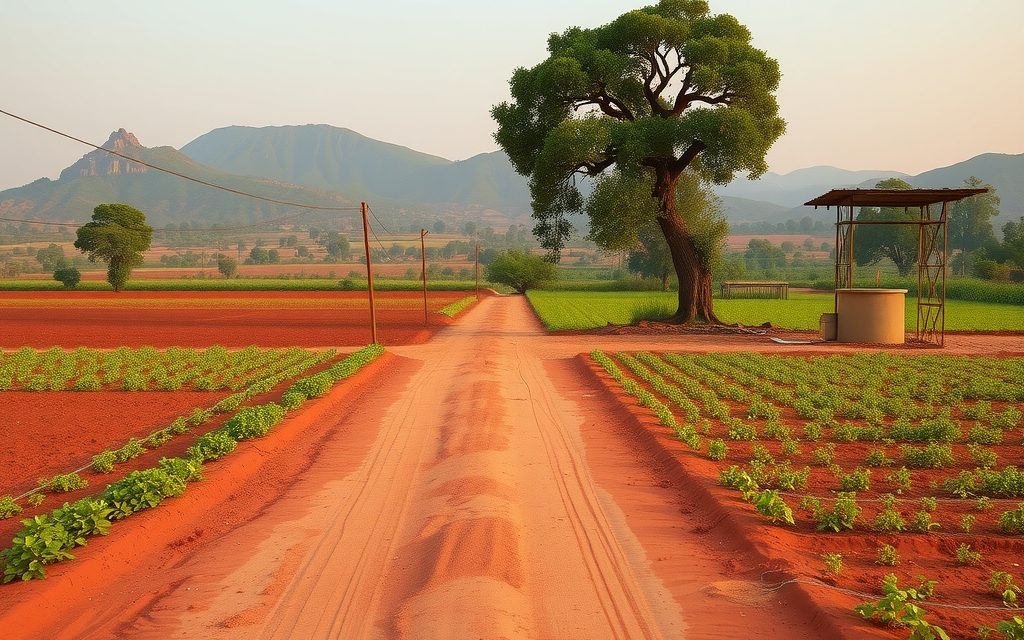
- Bhadrachalam and nearly all surrounding villages are in a Fifth Schedule area governed by the 1/70 land transfer regulation
- Transfers of land to non-tribals are void; benami, GPA and long-lease structures do not cure them
- About 310–340 km from Hyderabad; nearest railhead is Bhadrachalam Road at Kothagudem, about 40 km away
- Godavari alluvium for paddy and chilli; uplands with cotton, oil palm and paper-mill plantations; July 2022 flood crossed 70 ft
- Forest rights titles and temple endowment land cannot be sold to anyone; agricultural land registers at the Tahsildar office
| What | Indicative range | Note |
|---|---|---|
| Godavari alluvial paddy land with lift or bore | ₹18 L – ₹38 L per acre | indicative, Oct 2026; lawful transactions between eligible parties only |
| Project or tank-fed paddy land, Cherla and Dummugudem side | ₹15 L – ₹32 L per acre | indicative, Oct 2026; eligible parties only |
| Oil palm or established plantation land | ₹15 L – ₹40 L per acre | indicative, Oct 2026; eligible parties only |
| Upland cotton, chilli or maize land with a borewell | ₹10 L – ₹22 L per acre | indicative, Oct 2026; eligible parties only |
| Rainfed or forest-fringe upland | ₹6 L – ₹14 L per acre | indicative, Oct 2026; forest boundary checks essential |
| Roadside land near town, NH-30 or bridge approach | ₹50 L – ₹1.5 Cr per acre | indicative, Oct 2026; 1/70 still applies |
Ranges reflect recent transactions and advisor observation as of 2026-10. Always verify against the sub-registrar market value and the specific parcel.
Many of the enquiries we receive about Bhadrachalam begin the same way: a family that visits the Sri Sita Ramachandra Swamy temple every Sri Rama Navami wants a few acres on the Godavari, perhaps with a small farmhouse, near the town they love. The honest answer has to come before any price list. Bhadrachalam and almost all the villages around it lie in a notified Scheduled Area, and under the land transfer regulation known as 1/70, a transfer of land there to a non-tribal is void. So the first thing anyone researching agriculture land in Bhadrachalam needs to understand is who can lawfully buy, who cannot, and how people lose money trying to get around the rule. This guide puts that legal picture first, then describes the land, the Godavari, the crops and indicative values as of October 2026 for the transactions that are lawful.
This page covers Bhadrachalam town and the surrounding mandals of Bhadradri Kothagudem district: Bhadrachalam, Dummugudem, Cherla, Burgampadu, Aswapuram and the villages toward Manuguru and Palvancha. Until 2016 this was the Bhadrachalam revenue division of Khammam district, and older documents use that name.
Read this before anything else: Bhadrachalam is Scheduled Area land
The Fifth Schedule of the Constitution allows certain regions with large Scheduled Tribe populations to be notified as Scheduled Areas, with special protection for tribal land and self-governance. The Bhadrachalam belt, home to Koya and other tribal communities and long known as an agency area, is one of them. Within these areas, the Andhra Pradesh Scheduled Areas Land Transfer Regulation, 1959, as amended by Regulation 1 of 1970 and continued in Telangana, governs transfers of immovable property.
In plain terms, the regulation says that a transfer of immovable property in a Scheduled Area by any person to someone who is not a member of a Scheduled Tribe is void, unless it is to the government or a permitted tribal society. The 1970 amendment extended the protection to transfers by non-tribals as well, which is why the rule is universally called "1/70". It applies to immovable property generally, not only to farmland, which is why even town plots and houses in a scheduled village or town need an agency-area legal opinion before any money moves.
What "void" means for your money
A void transfer is not merely irregular or risky. In law it never conveyed title. A sale deed, a registered agreement, a passbook entry or years of peaceful possession do not cure it. Officers dealing with land transfer regulation cases can order the land restored to the tribal owner or their heirs, or to the government, and proceedings can be started long after the sale. The non-tribal buyer is left with a claim for money against whoever took it, which in practice is often unrecoverable.
The presumption that works against buyers
The regulation includes a presumption that land in a Scheduled Area which is in the possession of a non-tribal was acquired through a transfer from a tribal, unless the contrary is proved. That reverses the usual burden: in a dispute, the non-tribal holder has to show how they lawfully came to hold the land, often across several decades of documents. Missing or doubtful old records weigh against the buyer.
Town and village alike
People sometimes assume that the temple town is outside the rule because it looks like any other busy pilgrim town, with lodges, shops and houses. It is not safe to assume that. Bhadrachalam's location inside the Scheduled Area has shaped debates about its civic status for years, and we treat every survey number and house site here as subject to 1/70 until an advocate who practises agency-area law confirms otherwise from records.
Five workarounds you will be offered, and why each one fails
Because demand from outside is strong and lawful supply is tiny, the Bhadrachalam belt has a small industry of arrangements that claim to get around the regulation. Each of them leaves the buyer exposed.
- "Buy it in a tribal person's name." A benami purchase in the name of a tribal employee, driver or acquaintance gives you no title at all; the land belongs to the person named, and benami laws add their own penalties. Your only protection is that person's goodwill, and their heirs owe you nothing.
- "Take a GPA and a registered agreement." A general power of attorney with an agreement of sale is a transfer in substance. If the beneficiary is a non-tribal, the arrangement is caught by the same rule, and courts look at substance, not labels.
- "Take a long lease instead." Long leases, mortgages with possession and similar devices that hand control to a non-tribal are treated as transfers for this purpose. A ninety-nine-year lease is not a loophole.
- "The seller is not a tribal, so it does not apply." The 1970 amendment closed exactly this gap. A non-tribal who lawfully holds land in a Scheduled Area may keep it and pass it to heirs, but generally cannot sell it to another non-tribal.
- "This land has pre-1970 documents." Land lawfully held by non-tribals from before the regulation's cut-off dates has a different history, but these claims are exactly what land transfer regulation cases examine. Old documents must be genuine, continuous and accepted by the authorities; we have seen too many that were not.
If someone offers you a farm plot, a share in a "farm venture" or a riverside acre near Bhadrachalam as a non-tribal buyer, treat it as a red flag rather than an opportunity.
Who can lawfully buy and sell land around Bhadrachalam
- Members of Scheduled Tribes can buy land in the Scheduled Area from other tribals, subject to the ordinary title checks, and can usually sell to other tribal buyers.
- Tribal cooperative societies permitted under the regulation can hold land.
- The government can acquire or receive land.
- Heirs of a lawful holder, tribal or non-tribal, inherit by succession, which is not a transfer to an outsider; but what they can later do with the land is limited by the same rules.
- Non-tribal buyers generally cannot acquire land in the Scheduled Area by purchase, gift, lease or mortgage. Their lawful options for farmland are outside the scheduled villages.
In practice, almost all of our Bhadrachalam work is for tribal clients buying or selling within the community, for families resolving inheritance and partition, and for outside buyers whom we redirect to non-scheduled farmland elsewhere in the region.
Forest rights titles, podu land and temple endowment land
Three other categories of land are common around Bhadrachalam and are not available to private buyers of any background.
Forest rights titles. Under the Forest Rights Act, 2006, many tribal families who have cultivated forest land, often called podu land, have received titles to it. These rights are heritable but not alienable or transferable. Land under such a title cannot be sold, and buying it is not possible regardless of who the buyer is.
Reserved and protected forest. Large parts of the district are forest. Survey numbers on the forest fringe must be checked against forest records, because encroached forest land cannot become private property through a sale.
Temple endowment land. The Bhadrachalam temple and other religious institutions hold agricultural land. Endowment land is on the prohibited list under Section 22-A of the Registration Act and cannot be bought. Tenants or occupants of such land have no title to sell. Our guide to assigned land and prohibited properties explains how to check the list.
Why Bhadrachalam still draws land interest
The pull is easy to understand. The temple on the Godavari is one of the most important Rama shrines in south India, drawing large crowds for Sri Rama Navami and the Vaikunta Ekadasi festivals. Parnasala, associated with the Ramayana, lies upstream. The river, the Papikondalu gorge downstream and the forested hills make the region beautiful. Tribal families farm fertile alluvial land along the river and its tributaries.
There is also an industrial and service economy. A large paperboard mill at Sarapaka, just across the Godavari bridge in Burgampadu mandal, buys plantation wood from farmers across the region. Thermal power and Singareni mines around Manuguru and Kothagudem, and the Integrated Tribal Development Agency headquartered in Bhadrachalam, create salaried employment. All of this sustains a real local land market, mostly among tribal families and long-standing residents.
Location and connectivity
Bhadrachalam is roughly 310 to 340 km from central Hyderabad, usually reached via Suryapet and Khammam or via Warangal and the Kothagudem road, a drive of six to seven hours. It has no railway station of its own; the nearest railhead, named Bhadrachalam Road, is at Kothagudem, about 40 km away. NH-30 runs through the Kothagudem–Palvancha–Bhadrachalam corridor and continues across the river.
- Kothagudem: about 40 km south-west, via Palvancha.
- Khammam: about 115 to 125 km south-west, the nearest large city.
- Manuguru: about 50 km north-west, with mines and a thermal power station.
- Sarapaka and Burgampadu: just across the Godavari bridge.
- Andhra Pradesh: very close. Several mandals of the old Bhadrachalam division were transferred to Andhra Pradesh in 2014 because of the Polavaram project, so some villages a short drive from the temple are now in another state, with different land records and registration offices.
That last point catches buyers out. A village that a seller describes as "near Bhadrachalam" may fall under Andhra Pradesh records today. Always confirm the state, district and mandal from the survey number before anything else.
The Godavari flood belt: reading the 2022 waterline
The Godavari at Bhadrachalam is broad, powerful and prone to floods. The authorities issue graded warnings as the river rises at the Bhadrachalam gauge, and in July 2022 the level crossed 70 feet, close to the record set in 1986, flooding villages and fields across the river belt. A flood embankment protects parts of the town, but low-lying land outside it is exposed.
For anyone dealing in land here, flood history is a basic check. Ask neighbours where water reached in 2022 and in earlier big floods, look for silt lines on trees and walls, and check whether the parcel lies in an area discussed for backwater effects from downstream projects. Land that floods every few years can still be good paddy land, because floods bring silt, but it is not a site for a house or a farmhouse.
Soil, water and what grows around Bhadrachalam
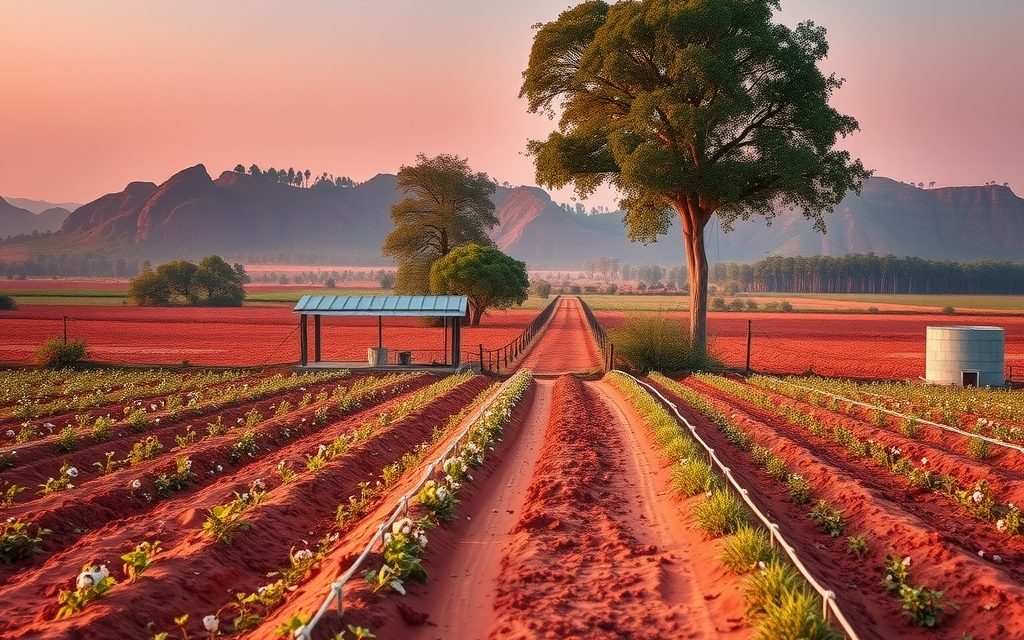
Along the Godavari and its tributaries, deep alluvial and black soils grow paddy, maize, chilli and vegetables, and sandy river islands are cultivated in the dry season. Away from the river, red and mixed soils on rolling uplands carry cotton, maize, red gram and, increasingly, plantations. The region gets a heavier monsoon than western Telangana, which helps rainfed crops.
Water comes from the river through lift schemes, from medium irrigation projects such as Taliperu in Cherla mandal, from tanks, and from borewells, which strike water at shallow depths near the river and deeper on the uplands. The Sitarama lift irrigation project, drawing on the Godavari upstream, is intended to expand irrigation in the district, but as with every scheme we price land on the water it reliably gets today.
Farm forestry is a distinctive feature. Many farmers grow eucalyptus, subabul and similar trees under buy-back arrangements with the paper industry, harvesting every few years. Oil palm has spread widely in the district, especially toward the south around Aswaraopet and Dammapeta, and mango gardens are common. For tribal landowners, these plantations offer income with lower labour needs than paddy.
Agriculture land in Bhadrachalam: indicative values for lawful transactions
The figures below reflect transactions between eligible parties (for example, between tribal buyers and sellers) and advisor observation as of October 2026. They are indicative only and do not mean that land is available to non-tribal buyers. Prices are per acre. We do not quote per-gunta farm-plot prices here, because farm-plot ventures aimed at outside buyers in scheduled villages are not a lawful product.
| Land type | Indicative range | What drives it |
|---|---|---|
| Godavari alluvial paddy land with lift or bore | ₹18 L – ₹38 L per acre | Flood exposure, water, access |
| Project or tank-fed paddy land, Cherla and Dummugudem side | ₹15 L – ₹32 L per acre | Reliability of supply, field channel |
| Oil palm or established plantation land | ₹15 L – ₹40 L per acre | Age of plantation, bore yield |
| Upland cotton, chilli or maize land with a borewell | ₹10 L – ₹22 L per acre | Soil depth, power, road |
| Rainfed or forest-fringe upland | ₹6 L – ₹14 L per acre | Access, forest boundary checks |
| Roadside land near town, NH-30 or bridge approach | ₹50 L – ₹1.5 Cr per acre | Commercial use; 1/70 still applies |
These sit slightly below the bands in our Kothagudem farm land guide for comparable land, reflecting distance and flood exposure.
Kinds of land you will come across
Tribal patta land. Land held by tribal families with passbooks and Bhu Bharati entries. Transferable between eligible parties with ordinary title checks.
Long-held non-tribal land. Land held by non-tribal families for generations. They may keep and inherit it, but sale to another non-tribal is generally barred, and the history may be examined in a land transfer regulation case.
Forest rights land. Heritable, not transferable. Not for sale.
Endowment and assigned land. Prohibited from sale.
River-island and riverbed cultivation. Seasonal cultivation on sandbanks does not create saleable title.
Legal checklist for agriculture land around Bhadrachalam
- Scheduled Area status of the village and the buyer's eligibility. This comes first; if the buyer is not eligible, stop.
- Land transfer regulation history. Confirm whether any case is pending or decided against the survey number.
- State, district and mandal. Confirm the village has not moved to Andhra Pradesh records.
- Pattadar passbook and Bhu Bharati record. Name, extent and classification on the state land records portal.
- Pahanis and 1B. Look for government, forest, assigned, inam or endowment classification.
- Encumbrance certificate for 30 years. Across Khammam-era and current jurisdictions.
- Link documents and succession. Every transfer and inheritance, with tribal status of each party where relevant.
- Survey and FMB. Boundaries against the village map, especially near forest and river.
- Forest rights, forest boundary and Section 22-A. Not forest, not under a forest rights title, not endowment or assigned land.
- Flood and project lines. Flood history and any project acquisition or submergence notifications.
Registration and charges
Unconverted agricultural land registers at the mandal Tahsildar office, where the Tahsildar acts as joint sub-registrar under Bhu Bharati and completes mutation in the same sitting. Other property registers at the jurisdictional Sub-Registrar Office, which we confirm from the survey number. In scheduled villages, registration of a transfer that falls foul of 1/70 should be refused; and if a void transfer is registered by mistake, registration does not make it valid.
For lawful transactions, duties are calculated on the higher of the agreed price and the government market value. The rates are approximate as of October 2026 and we verify them with the registration department on the day.
| Charge | Approximate rate | Notes |
|---|---|---|
| Stamp duty | About 5.5% | Higher of market value and price |
| Transfer duty | About 1.5% | Gram panchayat areas: none, registration fee 2% instead |
| Registration fee | About 0.5% | Total roughly 7.5% |
| Mutation | Nominal | Same Tahsildar transaction |
The 1 percent TDS under Section 194-IA does not apply to rural agricultural land; it applies to urban or converted property above ₹50 lakh.
Inheritance, partition and family land: the lawful work here
Because outside purchases are largely closed off, most real land work around Bhadrachalam involves families who already hold land. That work is lawful, important and often neglected.
Succession. When a landholder dies, the heirs need the record of rights updated through succession mutation at the Tahsildar office. Delays create problems later: unrecorded heirs, competing claims and land that cannot be pledged for crop loans. A family tree, death certificate and the existing passbook are the starting point.
Partition. Brothers and sisters farming one joint holding often divide it informally. A registered partition and corresponding sub-division in the records protects each share, makes boundaries clear and allows each heir to deal with their land independently within the law.
Sales within the community. A tribal family selling to another tribal buyer still needs the ordinary checks: clean passbook, correct extent, no pending case, no forest or endowment overlap. Eligible buyers should not skip them just because the regulation is on their side.
Non-tribal heirs. Families who inherited long-held land need to know where they stand: what they can keep, what they can pass on, and to whom they may lawfully sell. An agency-area advocate's opinion, based on the actual document history, is the only reliable answer.
Who should consider land here, and who should not
Suitable: tribal families and individuals buying from other tribal holders; heirs settling inherited land and partitions; and residents with a clear lawful title who want advice on what they can and cannot do with it.
Not suitable: non-tribal buyers from Hyderabad, Andhra Pradesh or anywhere else looking for farmland, a farmhouse or a pilgrimage retreat; investors; and anyone being offered a "safe" structure to get around 1/70.
Our rule of thumb in Bhadrachalam: if the deal needs a clever structure, it is not a deal. Lawful land here changes hands simply, between eligible parties, with ordinary paperwork.
If you want farmland in this region without the restriction
Families who love the Godavari region can still own farmland nearby lawfully, just not in the Scheduled Area. The non-scheduled mandals of Khammam district, with Nagarjuna Sagar canal paddy and chilli land, are the closest option, and our guide to agriculture land in Khammam covers them. The Nagarjuna Sagar canal belt around Kodad and Suryapet is another; see farm land in Kodad. In each case, we confirm the village is not scheduled before anything else, because some mandals elsewhere in the old Khammam district are scheduled too.
NRI note for the Bhadrachalam belt
Under FEMA, NRIs and OCI cardholders cannot purchase agricultural land, plantations or farmhouses anywhere in India and cannot receive them as a gift; they can inherit agricultural land from a resident Indian and may sell it later only to a resident Indian. Around Bhadrachalam, 1/70 adds a second layer: even residential property, which NRIs can normally buy, is subject to the regulation in scheduled villages and towns, so a non-tribal NRI generally cannot buy there either. Tribal NRIs inheriting land should take advice on both FEMA and 1/70. Our pages on NRI agriculture land rules and NRI investment in Telangana describe the options; consult a CA on tax.
How NRR Estates helps around Bhadrachalam
We are advisors, not a listing marketplace, and our fees are disclosed before any commitment. In this region our work usually involves:
- Eligibility and status first: confirming Scheduled Area status of the village and the parties' eligibility before any other step.
- Agency-area legal opinion: working with an advocate experienced in 1/70, land transfer regulation cases and forest rights.
- Title and record review: Bhu Bharati, pahanis, 30-year EC, link documents, 22-A, assignment and forest status.
- Survey and flood checks: boundaries against the village map and flood history.
- Registration and mutation for lawful transactions.
- Redirection: for non-tribal buyers, a shortlist of non-scheduled farmland that meets the same goals.
Bhadrachalam agriculture land: frequently asked questions
Can a non-tribal buy agriculture land in Bhadrachalam?
Generally, no. Bhadrachalam and almost all villages around it are in a notified Scheduled Area, where the Scheduled Areas Land Transfer Regulation, 1959, as amended by Regulation 1 of 1970, makes a transfer of immovable property to a non-tribal void unless it is to the government or a permitted tribal society. A void sale never conveys title, even if registered, and the land can be restored to the tribal owner or the government years later. Non-tribal buyers should look at non-scheduled farmland elsewhere.
What is 1/70 and why does it matter in Bhadrachalam?
1/70 is the common name for the 1970 amendment to the Scheduled Areas Land Transfer Regulation, which continues to apply in Telangana. It extended the ban on transfers to non-tribals to cover sales by non-tribal holders too, and introduced a presumption that land in a non-tribal's possession came from a tribal unless proved otherwise. In Bhadrachalam it is the single most important legal fact for any land deal, and it covers house sites as well as farmland.
Can I buy land near Bhadrachalam in a tribal person's name or through a GPA?
No. A benami purchase in a tribal person's name gives you no title; the land legally belongs to the person named, and benami laws add their own penalties. A general power of attorney with a sale agreement, a long lease or a mortgage with possession are treated as transfers in substance, so they are caught by the same rule. These structures are offered often because demand is high, and they leave buyers with an unrecoverable money claim rather than land.
What is the price of agriculture land around Bhadrachalam?
For lawful transactions between eligible parties, indicative ranges as of October 2026 are about ₹18 lakh to ₹38 lakh per acre for Godavari alluvial paddy land with water, ₹15 lakh to ₹32 lakh for project or tank-fed paddy land, ₹15 lakh to ₹40 lakh for plantation land, ₹10 lakh to ₹22 lakh for uplands with a bore and ₹6 lakh to ₹14 lakh for rainfed land. These are based on recent transactions and advisor observation and do not mean land is available to non-tribal buyers.
Can forest rights or podu land near Bhadrachalam be bought?
No. Titles granted under the Forest Rights Act, 2006, commonly for podu land cultivated by tribal families, are heritable but not alienable or transferable. They cannot be sold to anyone, tribal or non-tribal. Reserved and protected forest cannot become private property through a sale, and encroachments on it carry no title. Temple endowment land is also on the Section 22-A prohibited list. We check every survey number against forest and endowment records before any discussion of price.
How serious is Godavari flooding for land near Bhadrachalam?
Very. Authorities issue graded flood warnings as the river rises at the Bhadrachalam gauge, and in July 2022 the level crossed 70 feet, close to the 1986 record, flooding villages and fields across the river belt. Low-lying land outside the town's flood embankment is exposed. Flooded land can still be productive paddy land because floods bring silt, but it is unsuitable for houses or farmhouses. Ask neighbours where water reached in 2022 before valuing any parcel.
Where is agricultural land registered around Bhadrachalam?
Unconverted agricultural land registers at the mandal Tahsildar office, where the Tahsildar acts as joint sub-registrar under Bhu Bharati and completes mutation in the same sitting; other property registers at the jurisdictional SRO, confirmed from the survey number. For lawful transactions, charges total about 7.5 percent of the higher of market value and price. A transfer that falls foul of 1/70 should be refused, and registering it by mistake does not make it valid.
Can NRIs buy land or a house in Bhadrachalam?
NRIs and OCI cardholders cannot buy agricultural land, plantations or farmhouses anywhere in India under FEMA, or receive them as gifts, though they can inherit such land from a resident Indian and later sell it only to a resident Indian. In Bhadrachalam, 1/70 adds a second barrier: even residential property, which NRIs can normally buy, is covered in scheduled villages and towns, so a non-tribal NRI generally cannot buy there. Tribal NRIs should take advice on both rules; consult a CA on tax.
Related guides
Most of Bhadradri Kothagudem is a Scheduled Area where 1/70 voids land sales to non-tribals. Who can lawfully buy, Singareni coal-belt and forest checks, Godavari and Kinnerasani water, oil palm and indicative ranges for transferable land.
NSP left-canal chilli and paddy land, black-soil cotton and the Sathupalli oil palm and cashew belt, about 200 km from Hyderabad and 120 km from Vijayawada. Indicative per-acre prices, water and Khammam-specific legal checks.
Singareni's headquarters town, with Palvancha's industries next door. DTCP and municipal layouts, indicative per sq yd bands, and the subsidence, mine-zone, company-land and 1/70 checks that come before price.
Cotton, chilli and tank-fed paddy land between the Warangal and Khammam markets, about 190 km from Hyderabad. Where the 1/70 Scheduled Area line runs, indicative per-acre prices and the full Telangana title checklist.

Assigned land, Bhoodan, endowment, wakf and government land cannot be sold to private buyers. How the POT Act and Section 22-A work, how to search a survey number, and what happens if you buy by mistake.

NRIs and OCIs cannot buy or receive gifts of agricultural land, plantations or farmhouses; inheritance is the only route. What inherited land allows, why benami workarounds are dangerous, and the lawful alternatives near Hyderabad.

What NRIs and OCIs can and cannot buy under FEMA, how to fund and register a purchase from abroad, TDS and repatriation basics, and where the opportunities are across Hyderabad and the Telangana districts.
Red-soil farmland 4 km from the ORR beside the Aerospace SEZ and TCS campus. Interior villages still farm vegetables and mango; land near the SEZ is priced as future layout land and needs careful acquisition checks.