Property Registration Process in Telangana, Step by Step
A 12-step walk-through of property registration in Telangana: title checks, deed drafting, market value lookup, IGRS data entry and challan, slot booking, the day at the SRO or Tahsildar office, certified copies, mutation and NRI registration by POA.

- Flats, villas, plots and NALA-converted land register at the jurisdictional SRO via IGRS; unconverted farm land at the mandal Tahsildar via Bhu Bharati
- Complete title, EC and approval checks before paying the challan; refunds of unused duty are slow and partial
- The sale deed levy is about 7.5% of the higher of market value or price as of October 2026 (5.5% + 1.5% + 0.5%); verify on the day
- Buyer, seller (or attorneys) and two witnesses must appear with originals for photographs, fingerprints and admission of execution
- Mutation is automatic for farm land on the Tahsildar track; for urban property, track property tax, power and water transfers to completion
| What | Indicative range | Note |
|---|---|---|
| Title, EC and approvals check | ₹10,000 – ₹40,000 | indicative, Oct 2026 |
| Deed drafting and data entry | ₹5,000 – ₹25,000 | indicative, Oct 2026 |
| Stamp duty + transfer duty + registration fee (sale) | ~7.5% of chargeable value | as of Oct 2026, verify |
| TDS under Section 194-IA (≥ ₹50 L, resident seller) | 1% of consideration | part of price; not on rural agri land |
| User charges and certified copy | A few hundred rupees | verify at the office |
| Time from agreement to registered deed | 2–5 weeks typical | longer with loans or POAs |
Ranges reflect recent transactions and advisor observation as of 2026-10. Always verify against the sub-registrar market value and the specific parcel.
The property registration process in Telangana is the point at which a purchase stops being a promise and becomes ownership. Until a sale deed is registered, the buyer holds an agreement and a receipt; after it is registered, the buyer holds title that the state recognises, that a bank will lend against and that can be sold or inherited. The process is largely online now, but it still runs on two separate tracks, has a fixed order of steps, and fails in predictable ways when one of those steps is skipped or rushed. This guide walks through it end to end: drafting the deed, looking up the market value, paying the challan, booking a slot, what happens at the Sub-Registrar Office or the Tahsildar office on the day, collecting the registered document and completing mutation afterwards. It covers flats, villas, plots and agricultural land, and how NRIs complete the process from abroad.
Procedures, documents and fees are stated as of October 2026. The registration department and the land records system both update their portals and rules from time to time, so verify each step for your transaction before you rely on it.
Who this guide is for
This guide is for buyers and sellers who are about to sign a sale deed in Telangana and want to know what will happen, in what order and how long each step takes. It is written for resident first-time buyers in Hyderabad, plot and farm-land buyers in the districts, and NRIs completing a purchase or sale through an attorney. If your question is mainly about how much you will pay in duty, read our companion guide to stamp duty and registration charges in Telangana; this guide focuses on the process.
Why registration matters, and what the law requires
Under the Registration Act, 1908, any document that transfers ownership of immovable property worth more than ₹100 must be registered. In practice that means every sale deed, gift deed, settlement, partition, release and exchange deed for land, a plot, a flat or a villa. An unregistered sale deed does not transfer title, cannot be used as evidence of the transfer in most situations, and leaves the property legally in the seller's name.
A few rules from the Act shape the whole process:
- Time limit. A document must be presented for registration within four months of its execution (signing). In Telangana most deeds are executed and presented on the same day at the office, so this rarely bites, but it matters for documents signed elsewhere.
- Right office. The document must be presented at the office with jurisdiction over the property, not where the parties live.
- Photographs and fingerprints. The person presenting a document must have their photograph and fingerprints captured at the office, which is why both parties, or their attorneys, must appear in person.
- Admission of execution. The executant (the seller, in a sale) must admit before the registering officer that they signed the document. The buyer also appears and signs.
Registration proves that the transfer happened and puts it on public record. It does not certify that the seller had good title, that the layout was approved or that the building has an occupancy certificate. Those are separate checks you complete before you reach the office.
How it works: two tracks, one sequence
Telangana runs property registration through two parallel systems.
| Track | What registers here | Where you go | Online system |
|---|---|---|---|
| Sub-Registrar Office (SRO) | Flats, villas, independent houses, residential and commercial plots, and any land already converted under the NALA Act | The jurisdictional SRO for the property's location | Registration and Stamps Department portal (IGRS) |
| Tahsildar office | Agricultural land that has not been converted to non-agricultural use | The mandal Tahsildar office, where the Tahsildar acts as joint sub-registrar | Bhu Bharati land records system |
The sequence is the same on both tracks: verify, draft, enter the data, pay, book a slot, appear and execute, receive the document, then update the records. What differs is the portal, the office and how mutation happens afterwards. On the SRO track, mutation of the property tax record and utility connections is a separate set of steps. On the Tahsildar track, mutation of the record of rights happens as part of the registration itself.
The SRO track in detail
The Registration and Stamps Department's online system, at registration.telangana.gov.in, is where the deed details are entered, the market value is fetched, duty is computed and the slot is booked. The system is commonly called IGRS. You or your document writer enter the details; the system generates the computation and an application reference that ties the payment, the slot and the document together.
The Tahsildar track in detail
For unconverted agricultural land, the transaction is booked through the Bhu Bharati system. The seller's record of rights must show the land in their name, with no prohibition or dispute, before the system will accept the transaction. The slot is booked and the levy paid online, both parties appear before the Tahsildar with the passbook and identity documents, and the record is updated into the buyer's name in the same process. Our guide to Dharani and Bhu Bharati land records explains the record side, and our guide to pattadar passbooks and mutation covers what happens after.
Step by step: the property registration process in Telangana
Here is the full sequence for an SRO registration, with the Tahsildar differences noted. Timelines and costs are indicative as of October 2026, from recent transactions and advisor observation.
Step 1: Complete title and approval checks
Before anyone drafts a deed, your advocate verifies the seller's title through the link documents and an encumbrance search, checks approvals (layout permit for plots, building permission, occupancy certificate and TS RERA registration for flats and villas) and, for land, the record of rights. Our guide to checking an encumbrance certificate in Telangana explains the search. Nothing that follows can fix a title problem, so this comes first.
Step 2: Sign the agreement of sale
Most purchases start with an agreement of sale recording the price, advance, balance payment schedule, who pays registration costs, the date for registration and the seller's obligations, such as obtaining a mortgage release from their bank. It is usually printed on non-judicial stamp paper. An agreement that hands over possession can attract duty close to a sale deed, so take advice before agreeing to possession on an agreement.
Step 3: Draft the sale deed
An advocate or licensed document writer drafts the sale deed. The schedule of property must be precise: survey number and sub-division, plot or flat number, layout permit number for plots, extent in square yards or square feet (and undivided share of land for flats), boundaries on all four sides, and the chain of title recited from the link documents. The consideration, mode of payment and TDS deduction should match the actual payments. Both parties should read the draft before data entry; errors corrected after registration need a separate rectification deed.
Step 4: Look up the market value
Duty is charged on the higher of the government market value and the consideration in the deed. Look up the market value for the village or locality and property type on the registration portal before you finalise the price, so there are no surprises at data entry. In most of the Hyderabad IT corridor the deed price will be higher; in some district towns the government value can be higher than the agreed price.
Step 5: Public data entry
The party details (names, ages, addresses, PAN and identity numbers), property details and consideration are entered on the portal. The system matches the property to its market value database and computes stamp duty, transfer duty and registration fee. Check the computed figures and the property classification carefully: a flat entered as an open plot, or a village wrongly selected, produces a wrong computation and sometimes a refused document.
Step 6: Deduct and deposit TDS where applicable
If the consideration is ₹50 lakh or more and the seller is a resident, the buyer deducts 1% TDS under Section 194-IA and deposits it online using Form 26QB, keeping the challan. This does not apply to rural agricultural land. If the seller is an NRI, TDS is deducted under Section 195 at the applicable capital gains rate plus surcharge and cess, and the buyer needs a TAN; see our guide to TDS when buying from an NRI seller.
Step 7: Pay the challan
Stamp duty, transfer duty and registration fee are paid online through the department's payment gateway or by bank challan against the application reference. For a sale deed the total is approximately 7.5% of the chargeable value (stamp duty ~5.5%, transfer duty ~1.5%, registration fee ~0.5%), plus small user charges, as of October 2026; verify the computation on the day. Pay only after title is cleared, because refunds of unused duty are slow and come with deductions.
Step 8: Book a slot
Book a registration slot at the jurisdictional SRO through the portal. Slots on auspicious dates, month-ends and the end of the financial year fill quickly in busy Hyderabad offices, so book several days ahead. For agricultural land, the slot is booked at the mandal Tahsildar office through Bhu Bharati.
Step 9: Gather documents and witnesses
- Original identity proof and PAN card for each buyer and seller (Form 60 where a party has no PAN, subject to rules), and Aadhaar where biometric authentication is used.
- Two witnesses with original identity proof.
- Passport-size photographs if the office asks for them.
- The printed deed, the challan receipt and the slot confirmation.
- The seller's original title deed and link documents, and the bank's release letter if the property was mortgaged.
- Form 26QB challan where TDS applies.
- For plots: the layout permit and approved plan. For flats and villas: building permission, occupancy certificate where issued and TS RERA details.
- For agricultural land: the seller's pattadar passbook.
- For attorneys: the original power of attorney with its adjudication and registration details.
Step 10: Appear and execute at the office
On the slot date, buyer, seller and witnesses arrive at the office with originals. The sub-registrar's staff verify the data entry against the printed deed and the payment. Photographs and fingerprints are captured, identities are authenticated, the seller admits execution, and the parties and witnesses sign. The sub-registrar then registers the document. Plan for one to three hours on the day, longer in busy offices.
Step 11: Collect the registered document
The deed is scanned and the registered original is returned with the registration endorsement and document number, often the same day. Keep the original safe and make scanned copies. A certified copy can be obtained later from the office or online for a nominal fee, which is what banks and future buyers use for verification.
Step 12: Mutation and records update
On the Tahsildar track, the record of rights updates into the buyer's name as part of registration, and the new passbook follows. On the SRO track, update the property tax record with GHMC or the municipality, the electricity connection with the distribution company, the water connection and, for flats, the association register. In GHMC and many municipalities, registration data is shared with the local body for property tax mutation; if it does not reflect within a few weeks, apply with the registered deed on the local body's portal. Fees are nominal; verify the current procedure.
Timelines and costs at a glance
| Step | Who | Typical time | Indicative cost (Oct 2026) |
|---|---|---|---|
| Title, EC and approvals check | Advocate | 5–15 working days | ₹10,000 – ₹40,000 |
| Agreement of sale | Advocate, both parties | 1–3 days | Stamp paper and drafting, modest |
| Deed drafting and data entry | Advocate or document writer | 2–5 days | ₹5,000 – ₹25,000 |
| TDS deposit (Form 26QB) | Buyer | Same day | 1% of consideration where applicable (part of price) |
| Stamp duty, transfer duty, registration fee | Buyer | Same day | ~7.5% of chargeable value, verify |
| Slot wait | Both parties | 1–10 days | Nil |
| Execution at SRO or Tahsildar office | Both parties, two witnesses | 1–3 hours | User charges, a few hundred rupees |
| Registered document returned | Office | Same day to a few days | Nil |
| Certified copy | Buyer | 1–3 days | Nominal |
| Property tax, power, water mutation (urban) | Buyer | 2–8 weeks | Nominal fees |
| Passbook after agricultural mutation | Revenue system | A few weeks | Nominal, verify |
Worked example: a resale villa in Bachupally with a home loan
A resident couple agree to buy a resale 3 BHK villa in a gated community in Bachupally from a resident seller for ₹1.60 crore. They have ₹40 lakh of their own and a sanctioned home loan of ₹1.20 crore. The seller has an outstanding loan of ₹35 lakh with another bank. Here is how the registration ran, day by day, with figures that are illustrative but typical.
| Day | What happened | Money moved |
|---|---|---|
| Day 1 | Agreement of sale signed; advance paid by bank transfer | ₹10,00,000 advance |
| Days 2–12 | Buyers' advocate and the lending bank's advocate verified title, EC, building permission and occupancy certificate; the bank's valuer inspected | Advocate ₹25,000; bank charges per sanction |
| Day 13 | Seller's bank issued a foreclosure letter for ₹35 lakh | None |
| Day 15 | Deed drafted; data entry done; market value computed lower than the deed price, so duty charged on ₹1.60 crore | Drafting ₹12,000 |
| Day 16 | Buyers deducted 1% TDS and deposited it via Form 26QB; paid the challan; booked a slot | TDS ₹1,60,000; levy ~₹12,00,000 (7.5%, verify) |
| Day 20 | Registration at the jurisdictional SRO. The buyers' bank paid ₹35 lakh directly to the seller's bank and the balance to the seller; buyers paid their remaining contribution | Balance of price, net of advance and TDS |
| Day 20 | Registered deed collected and handed to the buyers' bank as security; seller's bank released the old title documents within days | None |
| Weeks 3–8 | Property tax, electricity and association records moved into the buyers' names | Nominal fees |
The two points that made this smooth were sequencing and payment routing. Title was cleared before the challan was paid, and the seller's loan was closed through a direct bank-to-bank payment on the registration day, so the buyers never paid a seller whose title documents were still with a lender. For current prices and community types in this belt, see our page on villas in Bachupally.
A second example: two acres of farm land near Kothur
A Hyderabad family buys two acres of unconverted patta land in a village in Kothur mandal for ₹1.1 crore. The advocate confirms on Bhu Bharati that the seller is the recorded pattadar for the exact sub-division, with patta classification and no prohibition. The slot is booked through Bhu Bharati at the Kothur Tahsildar office, and the levy, about 7.5% of the higher of market value and price (verify the agricultural computation on the day), is paid online. Both parties appear with identity documents and the seller's passbook. The Tahsildar registers the sale and the record updates into the buyers' names in the same sitting. No 194-IA TDS applies if the land qualifies as rural agricultural land, which the family's CA confirms from its distance to the nearest municipal limits. See our page on agriculture land in Kothur for that belt.
How NRIs complete registration from abroad
An NRI buyer or seller does not have to fly in. The usual route is a specific power of attorney in favour of a trusted resident, signed before an Indian consular officer or notarised and apostilled abroad, then adjudicated for stamp duty within three months of reaching India and, for a sale, registered at the SRO. The attorney then appears for data entry, biometrics and execution. NRIs can buy flats, villas and approved residential plots; they cannot buy agricultural land, which they can only inherit. Our guide to NRI power of attorney for property registration sets out the drafting, attestation and adjudication steps in detail.
After registration: checking that everything landed
A registered deed in your hand is not quite the end. Within a month of registration, run three quick checks so that any slip is caught while the seller is still easy to reach.
- Encumbrance search. Pull an encumbrance certificate for the property a few weeks after registration. Your deed should appear with the correct document number, date, parties and schedule. If it does not, ask the SRO why before anything else happens on the property.
- Certified copy against original. Compare the certified copy with your original page by page, including the schedule and the photographs and fingerprint page. Banks and future buyers will rely on the certified copy.
- Record of rights or tax record. For farm land, check the live Bhu Bharati record shows your name against the exact sub-division and extent. For urban property, check the property tax record and the next bill.
If an error has crept into the deed itself, such as a misspelt name, a wrong boundary or a wrong plot number, the fix is a rectification deed executed by both parties and registered at the same office. It is far easier to do in the first weeks than years later when the seller has moved, died or lost interest. Never try to correct a registered deed by hand or by an unregistered letter.
Mistakes we see in practice, and the fix
- Paying the challan before title is clear. A title defect found after payment leaves you chasing a slow, partial refund. Fix: complete the advocate's verification first.
- Errors in the schedule. A wrong survey sub-division, flat number or boundary carries into every future transaction. Fix: read the draft line by line against the link documents and the approved plan; correcting it later needs a rectification deed and both parties.
- Wrong office or wrong track. Agricultural land taken to an SRO, a converted plot taken to the Tahsildar, or the right office type in the wrong jurisdiction. Fix: confirm NALA status and jurisdiction from the survey number.
- Seller's loan not closed. The title deeds are with the seller's bank, and registration goes ahead without a release. Fix: get a foreclosure letter and route that amount directly to the seller's bank on the day.
- Witness or ID problems on the day. A witness without original ID, a name spelt differently on PAN and Aadhaar. Fix: check every original two days before.
- Power of attorney rejected. A POA drafted abroad without full property details, or not adjudicated in time. Fix: draft it in India for the specific transaction and follow the adjudication timeline.
- Forgetting mutation. The property tax and electricity stay in the seller's name for years, causing trouble at resale. Fix: track mutation to completion within two months.
- Cash components. Fix: every rupee through banking channels, matching the deed.
How NRR Estates handles registration for clients
- Title before money. Our panel advocates complete title, EC and approval checks before any challan is generated.
- Cost sheet. A written estimate of the levy on the correct base, TDS and professional fees before the advance.
- Drafting and data entry. We coordinate the document writer, check the schedule against the link documents and verify the computation.
- Payment routing. We sequence loan disbursal, seller loan closure and balance payments so they happen together at registration.
- Day-of coordination. Slot booking, document checklist, witnesses and an advisor at the office.
- After registration. Mutation, property tax, utilities and, for farm land, the passbook, followed through to completion.
Our fees are disclosed in writing before you commit. We are property advisors, not lawyers or chartered accountants; legal opinions come from our panel advocates and tax questions go to your CA.
Property registration in Telangana: frequently asked questions
What documents are required for property registration in Telangana?
Both buyer and seller need original identity proof and PAN cards (Form 60 where there is no PAN, subject to rules), with Aadhaar where biometric authentication is used, and two witnesses with original ID. Bring the printed deed, challan receipt and slot confirmation, the seller's title deed and link documents, any bank release letter, and the Form 26QB challan if TDS applies. Plots need the layout permit and plan; flats need building permission and OC details; farm land needs the pattadar passbook; attorneys need the adjudicated POA.
How long does property registration take in Telangana?
The registration itself takes one to three hours at the office on the slot date, and the registered deed is often returned the same day. The whole process from agreement of sale to registered deed typically takes two to five weeks, most of it spent on title verification, loan sanction and coordinating payments. Slot waits range from a day to over a week in busy Hyderabad offices. Urban mutation of property tax and utilities takes another two to eight weeks afterwards.
Where do I register agricultural land in Telangana?
Agricultural land that has not been converted to non-agricultural use registers at the mandal Tahsildar office, where the Tahsildar acts as joint sub-registrar. The slot is booked and the levy paid through the Bhu Bharati land records system, both parties appear with the seller's passbook and identity documents, and the record of rights updates into the buyer's name in the same process. NALA-converted land, plots, flats and villas go to the jurisdictional Sub-Registrar Office instead.
Can I book a registration slot online in Telangana?
Yes. For SRO registrations, the deed details are entered on the Registration and Stamps Department portal, the duty is computed and paid, and a slot is booked at the jurisdictional SRO against the application reference. For unconverted agricultural land, the slot is booked through Bhu Bharati at the mandal Tahsildar office. Book several days ahead for auspicious dates and month-ends. Procedures change from time to time, so confirm the current steps on the portal, as of October 2026.
Do both buyer and seller need to be present at the SRO?
Yes, either in person or through a properly authorised attorney. The law requires the person presenting the document to have their photograph and fingerprints captured, and the seller must admit execution before the registering officer. The buyer also appears and signs. Two witnesses with original identity proof must attend. NRIs usually act through a resident attorney holding a specific, adjudicated and registered power of attorney rather than travelling to India for the day.
Is mutation automatic after registration in Telangana?
For unconverted agricultural land registered at the Tahsildar office, mutation of the record of rights happens as part of registration, and the passbook follows. For urban property, registration data is shared with GHMC and many municipalities for property tax mutation, but it does not always reflect promptly, and electricity, water and association records need separate applications. Check the property tax record within a few weeks and apply with the registered deed if it has not changed.
What if there is a mistake in my registered sale deed?
A mistake in a registered deed, such as a misspelt name, wrong boundary or wrong plot number, is corrected by a rectification deed executed by both the original parties and registered at the same office, usually at nominal duty. You cannot correct it by hand or by an unregistered letter. It is far easier to fix in the first weeks, while the seller is reachable, so compare your certified copy and encumbrance entry with the original soon after registration.
How can an NRI register property in Telangana without travelling?
Through a specific power of attorney in favour of a trusted resident. The NRI signs it before an Indian consular officer, or before a notary followed by an apostille in a Hague Convention country. In India it is adjudicated for stamp duty within three months of receipt and, for a sale, registered at the SRO. The attorney then completes data entry, biometrics and execution. NRIs can buy flats, villas and approved plots, but cannot buy agricultural land.
Related guides

How Telangana's stamp duty, transfer duty and registration fee are calculated on the higher of market value or price, how to pay through IGRS, where to register, and worked examples for a plot, a flat and farm land.

What a Telangana encumbrance certificate shows and what it misses, why advocates search 30 years, how to run an EC search online through IGRS, how to read each entry, and the nil EC traps that catch buyers.
Agricultural land in Telangana mutates at the Tahsildar office in the same step as registration. What to do when it fails, how heirs get inherited land recorded, how corrections work, and why the passbook is not your title.

How NRIs and OCIs draft, sign, attest or apostille, stamp and register a power of attorney for buying, selling or taking a loan on Telangana property, what the SRO checks on the day, and how to revoke it safely.
Buying from an NRI seller means TDS under Section 195 at capital gains rates, not 1%. Rates, the lower-deduction certificate, TAN and Form 27Q, deadlines, penalties, and the 1% Section 194-IA rules for resident sellers.
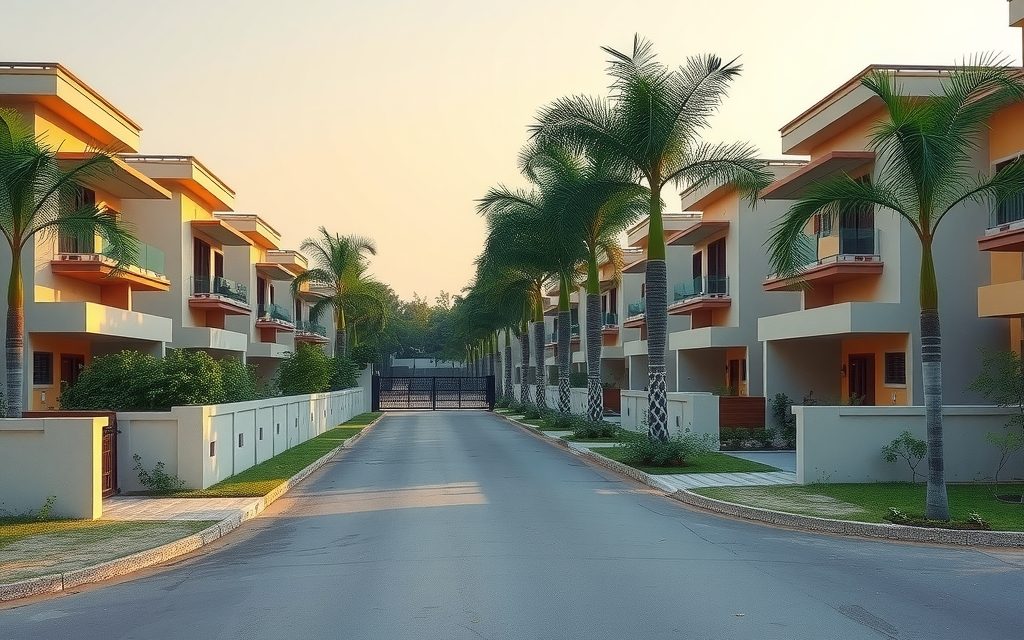
Bachupally offers mid-segment gated villas, row villas and independent houses near some of north-west Hyderabad's best-known schools. See October 2026 price ranges, how to choose around the school map and what to verify.

Red-soil farmland on NH-44 between Shamshabad and Shadnagar, where warehousing and industry press in from the highway while interior villages still farm maize, vegetables and mango.

Telangana's record of rights explained: 1B, pahani, pattadar passbooks and mutation, how Dharani gave way to Bhu Bharati in 2025, how to read and verify a record before buying, and how errors get corrected.