Pattadar Passbook and Mutation After Purchase in Telangana
Agricultural land in Telangana mutates at the Tahsildar office in the same step as registration. What to do when it fails, how heirs get inherited land recorded, how corrections work, and why the passbook is not your title.
- Unconverted agricultural land registers at the mandal Tahsildar office, with mutation in the same appearance
- The passbook reflects the record of rights; title rests on registered deeds, inheritance and court decrees
- Mutation fails mainly on extent mismatches, undivided shares, bank charges, flags and name mismatches
- Inherited land needs a separate succession mutation; NRI heirs can inherit and sell only to resident Indians
- Bhu Bharati provides tiered appeals against revenue orders, ending at a land tribunal
| What | Indicative range | Note |
|---|---|---|
| Stamp duty + transfer duty + registration fee on agricultural land | ≈ 7.5% of the higher of consideration or market value | approx. 5.5% + 1.5% + 0.5%, as of Oct 2026; verify on the day |
| Mutation fee at registration | Historically ₹2,500 per acre under Dharani | check the current Bhu Bharati schedule |
| Physical passbook delivery after registration | 2 – 6 weeks | typical; digitally signed record available the same day |
| Succession mutation for heirs | 1 – 3 months | typical, depends on notice period and objections |
| Record correction (name, extent, classification) | 1 – 6 months | typical; faster with clean chain and survey report |
| Licensed surveyor sketch for part-sale of a survey number | ₹15,000 – ₹40,000 | indicative, Oct 2026 |
Ranges reflect recent transactions and advisor observation as of 2026-10. Always verify against the sub-registrar market value and the specific parcel.
When you buy agricultural land in Telangana, the sale deed makes you the owner, but it is the mutation in the record of rights and the new pattadar passbook in your name that make the rest of the system recognise you. Without a completed pattadar passbook mutation in Telangana, you cannot take a crop loan against the land, you will not receive state farm support payments, compensation in a land acquisition goes to the name on the record, and selling the land later becomes harder. Since 2020, mutation of agricultural land has been built into the registration itself, so most buyers walk out of the Tahsildar office with mutation done. But a meaningful minority of transactions do not mutate cleanly, inherited land must be mutated through a separate succession process, and records carry errors from the digitisation years that need correcting. This guide explains how the passbook and mutation system works under Bhu Bharati as of October 2026, what to do when it fails, and how the passbook relates to your actual title.
We are property advisors, not advocates. Procedures and fees are revised from time to time, so treat the figures below as indicative and verify them before you act.
Who this guide is for
This guide is for resident buyers who have just bought or are about to buy farm land, for families who need to transfer land into the names of heirs after a death, and for NRIs who have inherited agricultural land and need the record updated. It is also for anyone who has opened the land records portal and found a wrong name, a wrong extent or a missing survey number against land they own.
What a pattadar passbook is, and what it is not
A pattadar is the person recorded as the holder of agricultural land in the revenue records. The pattadar passbook is the booklet, now backed by a digital record, that reproduces the entries in the record of rights for that person: each survey number and sub-division, its extent, land classification and the nature of the holding. Telangana's record-of-rights law has moved through three phases:
- The Record of Rights in Land and Pattadar Pass Books Act, 1971, under which mutation was a separate application to the Tahsildar after registration at the Sub-Registrar office, often taking months.
- The Telangana Rights in Land and Pattadar Pass Books Act, 2020, which launched the Dharani portal, moved agricultural land registration to the mandal Tahsildar acting as joint sub-registrar, and made mutation simultaneous with registration.
- The Telangana Bhu Bharati (Record of Rights in Land) Act, 2025, which replaced Dharani with the Bhu Bharati portal, kept registration at the Tahsildar office, introduced a structured appeal system against revenue orders, a unique land parcel identifier, and provision for survey sketches to accompany land transactions, which is being phased in.
Passbooks issued in the Dharani era were labelled as passbooks-cum-title deeds, and many owners believe the passbook is the title. It is not, in the legal sense. Entries in the record of rights carry a presumption of correctness, which matters a great deal in practice, but that presumption can be rebutted. Ownership itself flows from registered conveyances, inheritance and court decrees, and disputes about title are decided by civil courts, not by the revenue record. Courts have repeatedly said that revenue entries are maintained for fiscal and administrative purposes and do not by themselves create or extinguish title.
The practical consequence is a two-part test for any purchase. The seller's passbook and the online record must show the seller as pattadar of the exact extent being sold, and the registered chain of documents behind that entry must also hold up. A clean passbook with a broken chain is a problem, and so is a perfect chain with a record in someone else's name. Our guide to link documents and the title chain covers the second half.
Why mutation matters after you buy
Mutation is the change of the pattadar entry from the seller to the buyer. It matters for reasons that go beyond paperwork:
- Farm support and insurance. State investment support for farmers, the central PM-Kisan scheme for eligible holders and crop insurance are paid against the pattadar record.
- Crop loans and land-backed borrowing. Banks rely on the record of rights and charge entries before lending.
- Compensation. When land is acquired for a road, a reservoir or a ring road such as the planned Regional Ring Road, the award is paid to the person on the record. A buyer who has not mutated has to prove the claim separately and may wait years.
- Resale and conversion. A future buyer, or the authority processing a NALA conversion, will expect you to be the recorded pattadar.
- Protection. An unmutated record leaves the seller's name on the land, which is an open invitation to a second sale or a fraudulent loan.
How mutation works at registration
For unconverted agricultural land, the process now looks like this:
- Pre-check. The buyer's advisor checks the seller's record on the land records portal, which you can reach at dharani.telangana.gov.in (it redirects to Bhu Bharati), for the exact survey number, sub-division, extent, land type and any prohibited, litigation or charge flag.
- Slot booking. The seller or buyer books a registration slot for the mandal Tahsildar office through the portal, entering party details, survey numbers and extent, and paying stamp duty, transfer duty, registration fee and mutation fee online.
- Appearance and biometrics. On the slot date, seller, buyer and witnesses appear before the Tahsildar with identity documents. Aadhaar-based authentication and photographs are taken. The Tahsildar, acting as joint sub-registrar, registers the sale deed.
- Mutation in the same step. The record of rights is updated as part of the same transaction: the extent sold is removed from the seller's holding and added to the buyer's. Where the sale is part of a larger survey number, the sub-division is reflected in the record.
- Passbook. A digitally signed copy of the updated record is available almost immediately, and the physical passbook is printed and sent to the buyer's address, typically within a few weeks.
For land that has been converted under the NALA Act, for plots in approved layouts, and for villas and apartments, there is no pattadar passbook. These properties register at the jurisdictional Sub-Registrar Office, and the equivalent of mutation is the transfer of the property tax assessment with the municipality, GHMC or gram panchayat, which is a separate application after registration. Once land is converted, it should be deleted from the agricultural record of rights; see our NALA conversion guide for how that works.
Step-by-step: from purchase to passbook, with timelines and costs
| Stage | What happens | Typical time | Indicative cost (as of October 2026, verify) |
|---|---|---|---|
| Record pre-check | Seller's record, flags and extent verified on the portal; seller's passbook compared with the online record | 1–2 days | Nil to ₹5,000 if certified copies are needed |
| Charge clearance | Any crop loan or bank charge on the seller's land closed and released | 1–4 weeks | Seller's loan dues; bank release letter |
| Slot booking and payment | Slot at the Tahsildar office; duties and fees paid online | 1–7 days for a slot | Stamp duty ~5.5%, transfer duty ~1.5%, registration fee ~0.5% of the applicable value |
| Mutation fee | Paid with the slot booking | Same step | Historically ₹2,500 per acre under Dharani; check the current schedule |
| Registration and mutation | Deed registered and record updated at the same appearance | 1–3 hours on the day | Included above |
| Passbook delivery | Physical passbook printed and posted | 2–6 weeks | Small passbook fee, verify |
| Scheme and bank updates | Farm support, crop insurance and bank records pick up the new pattadar | Next crop season | Nil; apply at the agriculture office if missed |
Stamp duty is charged on the higher of the agreed consideration and the government's market value for the land. For the detailed rate structure, see our guide to stamp duty and registration charges in Telangana. TDS under Section 194-IA does not apply to rural agricultural land, but land within the notified distance of a municipality can be a capital asset for income tax, so ask your CA about the specific village.
When auto-mutation fails, and how to fix it
The integrated system works well when the seller's record is clean. These are the situations in which it does not.
The seller's record does not match the land being sold
The seller's passbook says 3 acres in survey 145/2, but the online record shows 2 acres 30 guntas, or the land is recorded in 145/1. The portal will only let you sell what the record shows. The fix is a record correction before the sale, by application to the revenue authorities with supporting documents, not a workaround at the registration counter.
Part of a survey number is being sold
Selling 1 acre out of a 4-acre holding is routine, but if several co-owners hold undivided shares, or if the sub-division has never been formally created, the system may not be able to place the buyer's extent correctly. A registered partition among co-owners, or a survey sub-division, before the sale avoids a buyer being recorded with an undivided fraction of a larger parcel.
A charge or flag on the record
A crop loan charge, a court attachment, a litigation flag or a prohibited-list entry blocks or complicates the slot. Charges are cleared by the seller's bank; flags need the relevant order. Prohibited-list problems are covered in our guide to assigned land and the 22-A prohibited list.
Identity mismatches
The seller's name on the record is spelt differently from the Aadhaar, or the father's name differs. Small mismatches stop biometric authentication or the record match. These are corrected by application before the slot, with identity documents and an affidavit where needed.
The seller dies between agreement and registration
It happens more often than people expect with elderly sellers. An unregistered agreement of sale does not transfer ownership, so on the seller's death the land passes to the legal heirs, and the record must first go through succession mutation in their names. The buyer then needs every heir to join the sale deed, or must enforce the agreement against them, which can mean a suit for specific performance. The practical protection is to keep the gap between agreement and registration short, register the agreement of sale where the advance is large, and record in the agreement the names of all likely heirs so that their consent can be sought early.
Registration done, mutation not reflected
Occasionally the deed is registered but the record does not update, usually because of a technical failure or because the deed was registered at the Sub-Registrar office as if the land were non-agricultural. Collect the registered deed, the slot and payment receipts and the record extract, and apply to the Tahsildar for mutation on the basis of the registered document. If the Tahsildar rejects or does not decide, Bhu Bharati provides for appeals to the higher revenue authorities and then to a land tribunal.
Succession mutation: putting inherited land in the heirs' names
Inheritance does not happen at a registration counter, so it needs a separate mutation, often called succession or pouthi in local usage. The broad process:
- Collect documents. The death certificate, a family member certificate or legal heir certificate from the revenue authorities, identity documents of every heir, the deceased's passbook and record extract, and the will if there is one.
- Agree the shares. Under the Hindu Succession Act, daughters inherit equally with sons when a parent dies without a will, and since the 2005 amendment they are also coparceners by birth in ancestral property; the Supreme Court confirmed in 2020 that this applies whether or not the father was alive in 2005. Muslim, Christian and Parsi heirs have their own rules of succession. The record will normally show all legal heirs unless a will or a registered partition or release says otherwise.
- Apply. The application is filed through the land records portal or at the Tahsildar office. Notice is given and objections, if any, are heard before the Tahsildar orders mutation.
- Partition, if wanted. If the family wants each heir to hold a defined parcel, a registered partition deed follows. A family that wants one heir to hold everything uses registered release deeds from the others, which attract stamp duty at rates that vary by relationship, so verify.
For NRI heirs, inheritance is fully permitted under FEMA, and an NRI or OCI can hold inherited farm land indefinitely. They cannot buy more agricultural land, and they can sell or gift inherited land only to an Indian citizen resident in India. An NRI heir who cannot travel can give consent or sign a release through documents attested at an Indian mission or apostilled abroad, or through a registered power of attorney; see our guide to NRI power of attorney for property in Telangana.
Corrections: wrong names, wrong extents and missing land
The 2017 land records updating programme and the Dharani migration fixed a great deal, but also left records with errors: extents rounded or transposed, land recorded under the wrong classification, survey numbers missing from a holding, or a deceased person still shown as pattadar. Bhu Bharati provides application routes for corrections, with the deciding officer depending on the type of error, and appeals against those decisions. What helps most:
- A clear chain of registered deeds, old pahanis and the 1954-55 khasra pahani showing the correct position over time.
- A survey report where the issue is extent or location, prepared by a licensed surveyor; our guide to survey numbers, FMB and boundary disputes explains how that works.
- Patience and follow-up. Corrections can take one to six months depending on the mandal and whether there is any objection.
Worked example: buying 2 acres 20 guntas near Moinabad
A resident couple from Gachibowli agreed to buy 2 acres 20 guntas of interior patta land in a village in Moinabad mandal, where interior land trades at roughly ₹1.5 crore to ₹3 crore per acre as of October 2026. The agreed price was ₹2 crore per acre, ₹5 crore in all. The seller's holding was 3 acres 10 guntas in survey 88/2, of which 30 guntas would remain with him.
On pre-check, the online record matched the passbook for extent and name, but showed a crop loan charge from a co-operative bank. The seller closed the loan, which took eleven days, and the release was reflected on the record. A licensed surveyor marked the 2 acres 20 guntas on the ground with the 30-gunta retained portion on the village-road side, and the sketch was annexed to the agreement.
Charges, verified on the day:
- Applicable value: the consideration of ₹5 crore was above the government market value, so duty was charged on ₹5 crore.
- Stamp duty at about 5.5%: ₹27.5 lakh. Transfer duty at about 1.5%: ₹7.5 lakh. Registration fee at about 0.5%: ₹2.5 lakh. Total approximately ₹37.5 lakh.
- Mutation fee at the rate then in force for 2.5 acres, plus a small passbook fee.
- No TDS under Section 194-IA, since the land was rural agricultural land, which the couple's CA confirmed for that village.
Registration and mutation took about two hours at the Moinabad Tahsildar office. The record showed the couple as pattadars of 2 acres 20 guntas the same afternoon; the seller's record showed 30 guntas. The passbook arrived in four weeks. The couple then registered with the local agriculture office so that the next season's farm support and crop insurance came to them rather than to the seller. For local context, see our page on agriculture land in Moinabad.
Worked example: succession with an NRI daughter
A farmer died without a will in 2024, holding 6 acres of self-acquired patta land in a village near Chevella. His heirs were his widow, a son living in Hyderabad and a daughter living in the United States. His mother had predeceased him. Under the Hindu Succession Act, the three were Class I heirs with equal shares: 2 acres each.
The son applied for succession mutation with the death certificate, the family member certificate and the identity documents of all three heirs. The daughter signed a consent affidavit before an Indian consulate. After the notice period, the Tahsildar recorded all three as pattadars in equal undivided shares. The process took about ten weeks.
Two years later the family wanted the son to hold the entire 6 acres. The widow and the daughter executed registered release deeds in his favour; the daughter's was executed through a power of attorney registered after attestation abroad. Because the daughter was an NRI releasing inherited farm land to a resident Indian brother, the transfer was permitted under FEMA. Had the brother been an NRI, it would not have been. After registration, the son's record showed the full 6 acres. For the area, see our page on farm land in Chevella, and for the FEMA position, our guide on NRI agriculture land rules.
Mistakes we see in practice, and the fix for each
- Trusting the physical passbook over the online record. Old passbooks may not reflect later sales, corrections or flags. Fix: check the live record on the day of the agreement and again on the day of registration.
- Buying from one heir before succession is mutated. One son selling "his share" of a deceased father's land conveys at most an undivided share and invites disputes with the other heirs. Fix: complete succession mutation and a registered partition first.
- Registering agricultural land at the Sub-Registrar office. Land that is agricultural on the record should register at the Tahsildar office; registering it as non-agricultural without conversion leads to mutation problems. Fix: confirm the land's status and the correct office before booking the slot.
- Ignoring a small name or extent mismatch. It will stop the slot or the mutation on the day. Fix: correct the record before you sign the agreement, or make correction a condition precedent.
- Leaving the passbook in a cupboard and forgetting the schemes. Fix: update farm support, insurance and bank records in the first season after purchase.
- Assuming the passbook is the title. Fix: keep the registered sale deed and full chain safe, certified, and scanned. If a dispute arises, the deed and chain are what a court will read.
- NRI heirs signing a gift of farm land to another NRI sibling. Not permitted. Fix: transfers of inherited agricultural land by an NRI go only to a resident Indian citizen.
How NRR Estates handles passbooks and mutation for clients
For buyers, we pre-check the record on the portal and compare it with the passbook and the deeds, identify charges and flags, arrange the survey sketch, book the slot at the correct Tahsildar office once the charges and duties are confirmed, and attend registration with the client. We then confirm that mutation has reflected online and track the passbook until it arrives. If the record does not update, we prepare the mutation application with the client's advocate and follow it up.
For families with inherited land, we help assemble the succession file, coordinate with NRI heirs abroad on consents and powers of attorney, and, where the family wants to sell, make sure succession and partition are complete before a buyer is introduced. Our fees are disclosed before any commitment. For the wider records system, see our guide to Dharani and Bhu Bharati land records.
Pattadar passbook and mutation: frequently asked questions
Is mutation automatic when I buy agricultural land in Telangana?
For unconverted agricultural land, yes in most cases. The mandal Tahsildar registers the sale deed as joint sub-registrar, and the record of rights on Bhu Bharati is updated in the same appearance, moving the extent from the seller's holding to yours. A digitally signed record is usually available the same day and the physical passbook follows by post in a few weeks. Mutation fails mainly when the seller's record does not match the land, a charge or flag exists, or the extent is an undivided share.
Is the pattadar passbook proof of ownership?
It is important evidence, but it is not title by itself. The passbook reproduces the record of rights, and those entries carry a presumption of correctness that can be rebutted. Ownership comes from registered conveyances, inheritance and court decrees, and civil courts decide title disputes. Dharani-era passbooks were labelled as passbooks-cum-title deeds, which causes confusion. Keep your registered sale deed and the full chain of link documents safe; if a dispute ever arises, those are the documents a court will read.
What should I do if mutation did not happen after registration?
Collect the registered sale deed, the slot booking and payment receipts, and a current extract of the record, then apply to the Tahsildar for mutation on the basis of the registered document. Find out why it failed: a technical error, a mismatch in the seller's record, a flag, or registration at the wrong office as non-agricultural land. If the Tahsildar rejects the application or does not decide, Bhu Bharati provides appeals to higher revenue authorities and then to a land tribunal. A property lawyer should draft any appeal.
How do legal heirs get inherited land into their names?
Through a succession mutation, separate from any registration. The heirs collect the death certificate, a family member or legal heir certificate, identity documents of every heir, the deceased's passbook and record extract, and any will. The application is filed through the land records portal or at the Tahsildar office; notice is issued, objections are heard and the Tahsildar orders mutation. All legal heirs are usually recorded in undivided shares unless a will, registered partition or release deeds say otherwise. Expect one to three months.
Can a daughter claim a share in her father's agricultural land?
Yes. Under the Hindu Succession Act, daughters inherit equally with sons when a parent dies without a will, and since the 2005 amendment they are coparceners by birth in ancestral property. The Supreme Court confirmed in 2020 that this applies whether or not the father was alive in 2005. A succession mutation that leaves out a daughter can be challenged. Buyers should insist that every legal heir, including married daughters and those living abroad, is recorded or has executed a registered release before any sale.
How long does a pattadar passbook take to arrive?
After a successful registration and mutation at the Tahsildar office, the digitally signed record showing you as pattadar is usually available the same day, and the printed passbook is typically delivered by post within two to six weeks, depending on the district. If it has not arrived after about six weeks, check the record online and follow up with the Tahsildar office. The online record is what banks and departments check, so a delay in the physical booklet does not usually hold up other updates.
How do I correct a wrong name or extent in my land record?
Apply through the correction route on the Bhu Bharati portal or at the Tahsildar office, attaching your registered deeds, old pahanis, the 1954-55 khasra pahani where relevant, identity documents and, for extent or location errors, a licensed surveyor's report. The deciding officer depends on the type of error, and appeals lie against the decision. Corrections typically take one to six months. Fix errors before you plan a sale, because a mismatch between the record and the deed will stop registration on the day.
Can an NRI heir mutate and sell inherited farm land in Telangana?
Yes to mutation, with conditions on sale. NRIs and OCIs can inherit agricultural land and be recorded as pattadars through succession mutation, signing consents through documents attested at an Indian mission or apostilled, or through a registered power of attorney. They cannot buy further agricultural land or receive it as a gift. Inherited farm land can be sold or gifted only to an Indian citizen resident in India. Repatriation of sale proceeds and capital gains tax need a CA's advice.
Related guides

Telangana's record of rights explained: 1B, pahani, pattadar passbooks and mutation, how Dharani gave way to Bhu Bharati in 2025, how to read and verify a record before buying, and how errors get corrected.
A sale deed is only as good as the deeds behind it. Why lawyers trace at least 30 years to a root of title, how partitions, GPA sales, wills and decrees fit in, and what a title opinion actually checks.
How Telangana's stamp duty, transfer duty and registration fee are calculated on the higher of market value or price, how to pay through IGRS, where to register, and worked examples for a plot, a flat and farm land.

Assigned land, Bhoodan, endowment, wakf and government land cannot be sold to private buyers. How the POT Act and Section 22-A work, how to search a survey number, and what happens if you buy by mistake.
Hyderabad's closest established farmhouse belt, 10 minutes past the ORR at Himayat Sagar. Orchards, managed farm plots and estates, with the former GO 111 catchment rules explained.
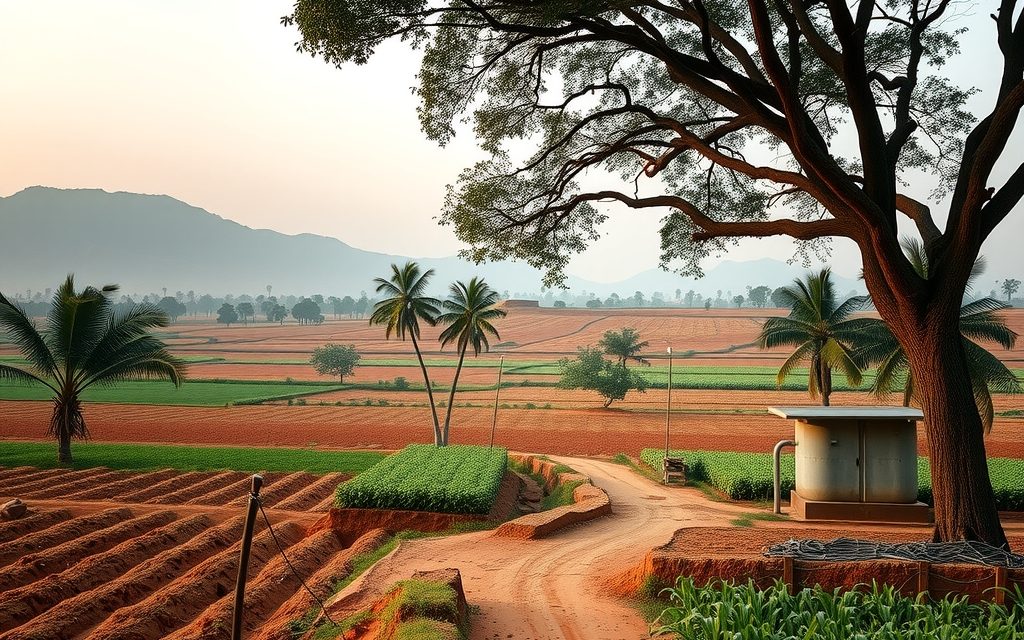
Hyderabad's long-standing weekend-farm belt on the Bijapur highway, about 40 km from Gachibowli. Red soil, mango and guava orchards and interior acreage still priced for real farming.

How NRIs and OCIs draft, sign, attest or apostille, stamp and register a power of attorney for buying, selling or taking a loan on Telangana property, what the SRO checks on the day, and how to revoke it safely.

NRIs and OCIs cannot buy or receive gifts of agricultural land, plantations or farmhouses; inheritance is the only route. What inherited land allows, why benami workarounds are dangerous, and the lawful alternatives near Hyderabad.