Agriculture & Farm Land in Kothur, Rangareddy
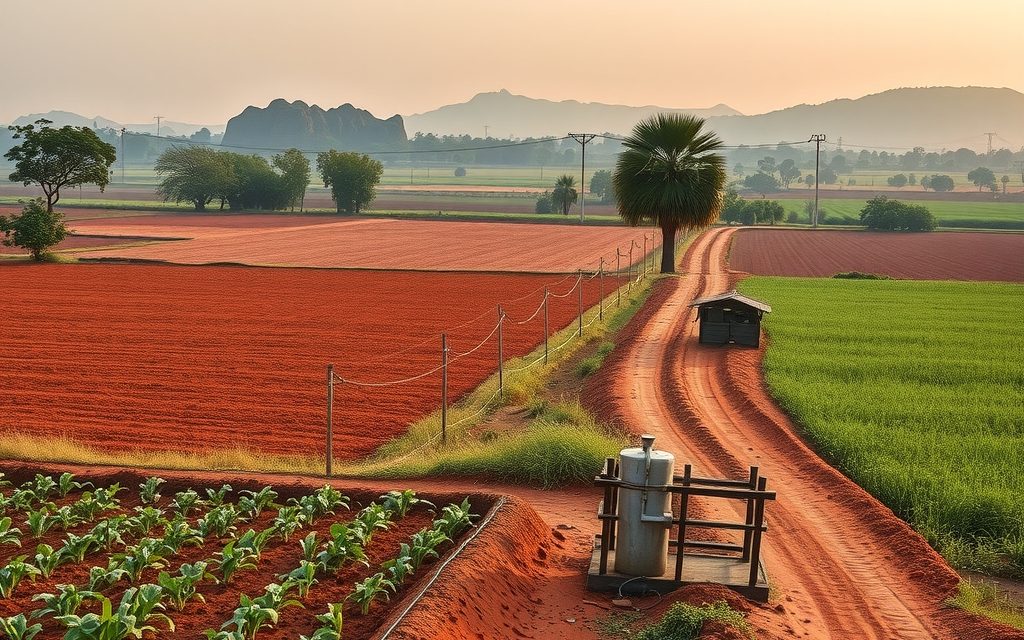
Red-soil farmland on NH-44 between Shamshabad and Shadnagar, where warehousing and industry press in from the highway while interior villages still farm maize, vegetables and mango.
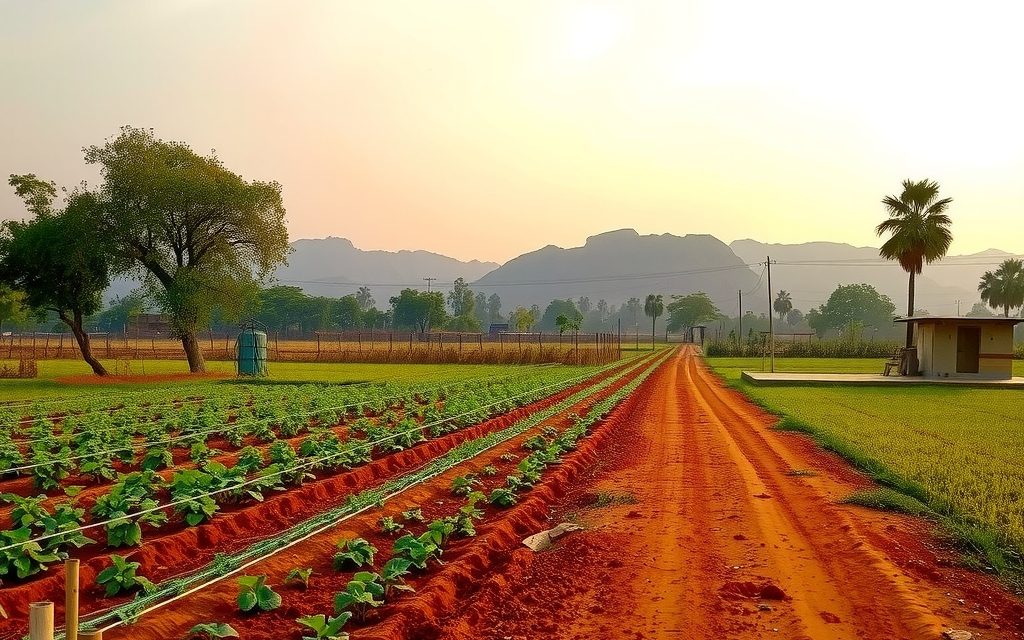
- On NH-44, about 20 km south of Shamshabad; airport typically 30–40 min
- Agricultural land registers at the Kothur Tahsildar as joint sub-registrar
- Borewells typically 400–900 ft; interior fields below village tanks hold water best
- Red sandy to gravelly loam; maize, vegetables, mango, guava, sapota
- Contiguous 5–20 acre family blocks still available in interior villages
| What | Indicative range | Note |
|---|---|---|
| Interior village farm land, 5+ km off NH-44 | ₹80 L – ₹1.6 Cr per acre | indicative, Oct 2026 |
| Farm land 1–4 km from NH-44 on a BT road | ₹1.5 Cr – ₹3 Cr per acre | indicative, Oct 2026 |
| Land with 40 ft+ approach suited to warehousing | ₹2.5 Cr – ₹5 Cr per acre | indicative, Oct 2026; check zoning |
| NH-44 frontage with usable access | ₹5 Cr – ₹10 Cr per acre | indicative, Oct 2026; verify access rights |
| Mango or guava orchard with working borewell | ₹1 Cr – ₹2 Cr per acre | indicative, Oct 2026 |
| Farm plots in gated farm ventures | ₹5 L – ₹10 L per gunta | indicative, Oct 2026; check title structure |
Ranges reflect recent transactions and advisor observation as of 2026-10. Always verify against the sub-registrar market value and the specific parcel.
Kothur sits on NH-44, the Hyderabad–Bengaluru highway, roughly 20 km south of Shamshabad and about 15 km short of Shadnagar. For decades it was simply a highway town in a dry red-soil belt of Rangareddy district, surrounded by maize, vegetables and mango. Today it is one of the most contested pieces of land south of the city: warehousing parks, factories and HMDA ventures press in from the highway, while farming families in the interior villages still drill borewells and plant kharif maize as their grandparents did. Buyers looking for agriculture land in Kothur are, in effect, choosing which of those two worlds they want to own a piece of.
This guide explains the Kothur–Shadnagar belt as we see it in October 2026: how the highway, logistics demand and the proposed Regional Ring Road shape value, what the soil and water are really like, indicative price bands per acre and per gunta, the parcel types on offer, the legal checks that matter for land near industry, and how registration works at the Kothur Tahsildar office.
Why the Kothur belt attracts farm-land buyers
The first attraction is the road. NH-44 is a six-lane access-controlled highway for much of this stretch, which means Kothur is closer in time to the airport and the ORR than many villages that look nearer on a map. A farm here can be reached from Gachibowli in about an hour on a clear morning, and from the airport in half that.
The second is value. Compared with the western farm-land belts around Moinabad, Mokila and Shankarpally, land in the interior villages of Kothur mandal is still priced as farmland rather than as a future villa site. For a buyer who wants two to five acres with a borewell and room to plant an orchard, the rupee goes further here.
The third is demand from industry and logistics. Warehousing operators, consumer-goods manufacturers and pharma units have all set up along the Shamshabad–Shadnagar stretch of the highway, and educational campuses such as Symbiosis have added to the institutional presence. That demand underpins land values near the highway and creates exit options for owners of well-located parcels.
The fourth is the Regional Ring Road, whose southern arm is expected to cross NH-44 in the Shadnagar area. We explain later why that should be treated as a long-term possibility and not a reason to pay today's premium.
Kothur farm land market snapshot
From recent transactions and our own visits across the mandal and its neighbours, as of October 2026:
- Two markets in one mandal. Within about 3 km of the highway, land trades on industrial, warehousing and plotting potential. Beyond 5 km, it trades mostly as farmland, at a fraction of the price.
- Blocks are still available. Unlike the western belts, you can find contiguous holdings of 5 to 20 acres with a single family title, particularly in the interior villages.
- Logistics buyers set the top end. Parcels with a 40 ft or wider approach and easy truck access to NH-44 attract warehousing interest, and that pulls nearby agricultural values up.
- Farming buyers are active too. Hyderabad families and small investors buying 1 to 5 acres for mango, guava or vegetable cultivation make up a steady share of transactions.
- Slow movers: landlocked parcels, land next to noisy or polluting units, and holdings with partition disputes.
Location and access: NH-44, the ORR and the Kothur–Shadnagar corridor
NH-44 north and south
The highway is the spine of everything here. North, it runs past Shamshabad to the ORR interchange and on into the city. South, it continues through Shadnagar and on toward Jadcherla and Kurnool. Service roads along parts of the stretch connect villages to the main carriageway.
Highway frontage is not the same as highway access
Many sellers price land as "NH-44 facing". Remember that national highways have building lines and access-control rules. A parcel that touches the highway boundary may not have a legal right to a direct entry onto the carriageway, and any commercial access needs permission from the highway authority. The useful question is whether the land has a usable approach from a service road or a village road that joins the highway at a junction. A field that faces the highway but can only be entered over a neighbour's land is worth much less than it looks.
Interior roads
West of the highway, roads lead toward Nandigama and Chegur, where the large Kanha Shanti Vanam meditation campus sits. East of the highway, village roads link Penjerla, Inmulnarva, Thimmapur and other villages. BT road quality varies; some stretches are excellent, others narrow and broken. Approach road width is one of the biggest price drivers in the interior.
Rail
The Secunderabad–Mahbubnagar railway line runs roughly parallel to the highway through this belt, with small halts serving local passengers. It matters more for freight and future planning than for landowners' weekend trips.
The RRR's southern arm
The southern arc of the proposed Regional Ring Road is expected to swing through the Chevella–Shadnagar side and cross NH-44 south of Kothur. Land acquired for the road itself would be paid at government compensation rates; land near a future interchange might gain. Until a notification lists survey numbers and acquisition starts, nobody can honestly promise RRR proximity. If a seller adds a premium for it, ask for the notification.
| From Kothur to | Approx. distance | Typical drive (off-peak) |
|---|---|---|
| Shamshabad town | 18–20 km | 20–25 min |
| RGIA, Shamshabad | 25–30 km | 30–40 min |
| ORR Shamshabad interchange | 20–22 km | 20–30 min |
| Gachibowli via ORR | 50–55 km | 55–75 min |
| Shadnagar | 14–17 km | 15–20 min |
| Mahbubnagar | 55–60 km | 60–75 min |
Soil, borewells and crops in Kothur mandal
Red soil, mostly shallow
Kothur sits in the red-soil dryland belt that stretches from Shamshabad to Mahbubnagar. The soil is sandy to gravelly red loam, generally well drained and easy to work, but often shallow over weathered granite. Deeper pockets in the lower parts of each village hold more moisture and suit vegetables and orchards. Higher ground with exposed rock is better left to dryland crops or custard apple.
Water: borewells first
By our observation about 60 percent of working farms in the mandal depend mainly on borewells, roughly 15 percent use open wells, about a fifth are largely rain-fed, and a small share draw on seasonal streams. Recent bores have typically gone 400 to 900 ft. Industrial and residential growth near the highway has added pressure on groundwater, and parcels close to large water users can see yields fall over time. In the interior, fields downstream of restored village tanks generally hold water best.
The Palamuru–Rangareddy lift irrigation scheme has been planned to serve parts of this dryland region, but you should not pay a premium for canal water until it actually reaches the village and the distributary serving your parcel is built.
What farmers grow
- Vegetables: tomato, brinjal, beans, chillies and leafy greens, sent to Hyderabad markets daily.
- Field crops: maize in kharif, paddy on low tank-fed land, red gram and fodder for dairy.
- Flowers: marigold and chrysanthemum around festival seasons.
- Orchards: mango, guava, sapota and custard apple. Mango and guava respond well to drip irrigation on the deeper red soils.
Labour and inputs
One feature of a factory belt is that farm labour is harder to find and more expensive than in purely agricultural areas, because factory and warehouse jobs compete for the same workers. Factor that into any plan to farm intensively. On the other hand, Kothur and Shadnagar have a full range of seed, fertiliser and equipment dealers, borewell contractors and mechanics.
Agriculture land in Kothur: indicative prices per acre and per gunta
These are indicative ranges from recent transactions and advisor observation as of October 2026. Treat them as a starting point, not a quote. Road access, water, title and proximity to industry change the price of any specific parcel.
| Parcel | Indicative range | Comment |
|---|---|---|
| Interior village farm land, 5+ km off NH-44 | ₹80 L – ₹1.6 Cr per acre | Approach road and water decide the top end |
| Farm land 1–4 km from NH-44 on a BT road | ₹1.5 Cr – ₹3 Cr per acre | Mixed farming and plotting demand |
| Land with 40 ft+ approach suited to warehousing | ₹2.5 Cr – ₹5 Cr per acre | Check zoning and truck access |
| NH-44 frontage with usable access | ₹5 Cr – ₹10 Cr per acre | Commercial expectation; verify access rights |
| Mango or guava orchard with working borewell | ₹1 Cr – ₹2 Cr per acre | Tree age and bore yield matter |
| Farm plots in gated farm ventures | ₹5 L – ₹10 L per gunta | Check title structure carefully |
For comparison, HMDA residential plots in Kothur ventures typically trade between ₹11,000 and ₹28,000 per sq yd depending on distance from the highway. Farm land in Shadnagar further south is usually cheaper again per acre, which is why many buyers compare both belts on the same day.
Industry, logistics and what they mean for a farm-land buyer
Kothur's industrial neighbours are a double-edged sword, and an honest advisor has to discuss both edges.
The upside
Industrial and logistics demand keeps land liquid. If you buy a well-located parcel near the highway today, there is a realistic chance that a warehousing operator, a manufacturer or a developer will want it within ten years. Roads, power and mobile coverage also improve faster in a belt where companies are investing.
The downside
- Pollution and nuisance. Some units generate noise, dust, odour or effluent. Visit at different times of day and check which units sit upstream and upwind of the parcel.
- Groundwater competition. Large water users drilling deep bores can lower the water table for neighbouring farms.
- Zoning surprises. The HMDA master plan designates land use for every survey number in its area. A parcel in an industrial or manufacturing zone is valuable to industry but awkward for a farmhouse; a parcel in a conservation zone may not be convertible at all. Check zoning before paying.
- Acquisition risk. Land in the path of planned road widening, industrial parks or the RRR may be acquired at compensation rates. Check for notifications before purchase.
The right approach is to decide what you want the land for and then choose the distance from the highway accordingly. A farmer should be in the interior. A land banker betting on logistics should be close to a good junction. Trying to be both usually means paying the logistics price for land you then use as a farm.
Types of parcels in the Kothur–Shadnagar belt
- Patta farm land in the interior. One to twenty acres, often with an old borewell and open well, held by farming families. The core of the farming market.
- Highway-belt agricultural land. Bought primarily for conversion or warehousing potential. Price depends heavily on approach width and zoning.
- Gated farm ventures. Agricultural land subdivided into gunta-sized portions with internal roads, fencing and sometimes plantation management. Before buying, understand whether you get a separately registered, mutated survey sub-division or an undivided share, and whether the venture's promises about roads, water and maintenance are written into your deed.
- Established orchards. Mango or guava gardens with drip irrigation, offering some annual income while you hold.
- Land with farmhouse potential. Possible only after NALA conversion and building permission, on land whose zoning allows it.
Villages around Kothur and how they differ
East of the highway
Penjerla, Inmulnarva and Thimmapur have seen HMDA ventures alongside working farms. Land within 2 to 3 km of the highway here is priced partly as plot land. Further east, fields become larger and quieter.
West toward Nandigama and Chegur
The Nandigama side has attracted second-home and weekend-land buyers, helped by the Kanha Shanti Vanam campus. Prices are steady, and some parcels have good BT road access.
South toward Shadnagar
Between Kothur and Shadnagar, villages along the highway carry warehousing interest, while interior villages remain largely agricultural.
North toward Shamshabad
Toward Shamshabad and Tondupally, land increasingly prices off the airport and Aerocity story. Buyers who want that exposure usually look at plots in Shamshabad rather than farmland.
Walking a Kothur parcel: what to check on the ground
Documents tell you who owns the land. Only a site visit tells you whether it is worth owning. On every Kothur visit we work through the same list, and we suggest you do the same even if you are using another advisor.
Approach and access
Drive the approach road yourself, preferably in a car rather than an SUV. Note the width at its narrowest point, whether it is a recorded village road or a private track over someone else's field, and whether it floods in the monsoon. Ask the village secretary whether the road appears in the gram panchayat records. A parcel with a recorded 30 ft road is a different asset from one reached by a footpath the neighbour may close tomorrow.
Water and power
Run any existing borewell for at least 30 minutes and watch whether the flow drops. Ask who drilled it, when, and to what depth. Check the agricultural power connection: whose name it is in, whether bills are current, and whether the transformer serving it is shared with ten other farms or only a few. In a belt where factories draw heavily on the grid and on groundwater, both matter.
Neighbours and nuisance
Look at what surrounds the parcel in every direction. A poultry farm upwind, a stone crusher nearby, a unit discharging into the stream that crosses your boundary, or a warehouse with trucks idling all night will all affect how you use the land and what it is worth on resale. Return at a different time of day if anything looks doubtful.
Boundaries and encroachment
Walk the full boundary with the seller and a licensed surveyor holding the FMB sketch. Fences and bunds often do not match the recorded survey lines. Small encroachments by neighbours, or by the seller onto a neighbour's land, are common and much easier to resolve before registration than after.
Trees, structures and tenants
Count bearing trees if you are paying for an orchard, and note any sheds, pump houses or old dwellings. Ask directly whether anyone is cultivating the land on lease or sharecropping. A tenant farmer in occupation should be settled with clearly, and in writing, before you pay the balance.
Managing the land after purchase
Most Hyderabad buyers in Kothur do not farm the land themselves. The usual arrangements are leasing to a neighbouring farmer for vegetables or maize, or engaging a caretaker to manage a mango or guava orchard on drip irrigation. Keep any lease short and written, with a clause confirming the tenant gains no right in the land, and keep the cultivation entries in the records accurate. Fencing, a lockable pump house and a gate on the approach road are worth the money in a belt where land is increasingly valuable and unattended parcels attract encroachers.
Telangana agriculture land legal checklist for Kothur
- Pattadar passbook in the seller's name matching the extent being sold.
- Bhu Bharati (formerly Dharani) record of rights, showing correct survey numbers, patta classification and no prohibition flag. Verify it on the state land records portal.
- 1B and pahani extracts for as many years as are available, to establish possession and cultivation.
- Encumbrance certificate covering at least 30 years, to reveal mortgages, earlier sales and attachments.
- Link documents for every transfer, including succession and partition deeds.
- Survey number and FMB sketch, followed by a physical survey to confirm boundaries.
- NALA status, since converted land registers differently.
- Section 22-A prohibited list covering government, endowment, wakf and certain assigned lands.
- Assigned land. Land assigned to landless families cannot be sold. The Kothur belt has assigned survey numbers in several villages, so check history, not just current status.
- 58/59 regularisation, if title rests on regularised government land.
- Forest, ceiling and acquisition checks, including highway widening, industrial park and RRR notifications.
- HMDA zoning and access rights, including legal access to NH-44 where a seller claims frontage.
Registering farm land at Kothur: office and approximate costs
Agricultural land in Kothur mandal registers at the Kothur Tahsildar office, where the Tahsildar acts as joint sub-registrar and mutation happens in the same step. NALA-converted land, HMDA plots and villas register at the jurisdictional Sub-Registrar Office, which we confirm from the survey number.
| Charge | Approximate rate | Notes |
|---|---|---|
| Stamp duty | About 5.5% | On market value or consideration, whichever is higher |
| Transfer duty | About 1.5% | Paid with stamp duty |
| Registration fee | About 0.5% | At registration |
| Mutation | Nominal or included | Done with the sale at the Tahsildar |
That totals about 7.5% of market value, but rates change, so we verify the current figures on the day. The 1% TDS under Section 194-IA does not apply to rural agricultural land. Land close to municipal limits may be treated as a capital asset, so confirm the classification of your survey number with a chartered accountant.
Who should buy farm land in Kothur, and who should not
Good fit
- Orchard and farming buyers who want larger holdings at farmland prices within an hour of the city.
- Land bankers betting on logistics who buy close to a good highway junction with a wide approach.
- Families pooling funds for a 5 to 10 acre block with one clean title.
- Frequent flyers who value airport proximity for a weekend farm.
Poor fit
- Buyers wanting quiet countryside near the highway, where trucks and factories are part of life.
- Anyone paying an RRR premium without a notification.
- Short-term traders who need to sell within three years.
- Buyers depending on loans; finance for non-farmers buying agricultural land is limited.
Buyers who want a calmer, greener setting at a similar distance often also look at farm land in Maheshwaram and agricultural land in Kandukur to the east.
NRI rules for Kothur agricultural land
NRIs and OCI cardholders cannot purchase agricultural land, plantation property or farmhouses in India under FEMA, and they cannot receive such property by gift. They can inherit agricultural land from a resident and may sell inherited land only to a resident Indian. Returning NRIs who regain resident status can buy like any resident.
NRIs who want exposure to the Kothur corridor can legally buy open plots in Kothur in approved HMDA ventures. Our guide to NRI agriculture land rules in Telangana and our overview of NRI investment in Telangana explain the options.
How NRR Estates works on a Kothur purchase
- Clarifying the goal: farming, orchard, land bank or logistics play, because each points to a different distance from the highway.
- Constraint mapping: zoning, acquisition notifications, access rights and nearby industry checked before visits.
- Site visits: two or three parcels in one morning, with bore tests and conversations with neighbouring farmers.
- Legal verification: passbook, Bhu Bharati, 1B, pahani, 30-year EC, link documents, FMB, 22-A and assigned-land checks with an independent advocate.
- Negotiation: pricing backed by comparable transactions, and a written agreement with clear milestones.
- Registration and mutation: slot booking, documentation and attendance at the Tahsildar or SRO, then follow-up until the passbook is issued.
Our fee is disclosed before you commit. If a parcel fails our checks, we say so.
Kothur agriculture land: your questions answered
What does agriculture land cost in Kothur?
As of October 2026, interior village farm land more than 5 km off NH-44 typically trades between ₹80 lakh and ₹1.6 crore per acre. Land 1 to 4 km from the highway on a BT road ranges roughly ₹1.5 crore to ₹3 crore, parcels with a wide approach suited to warehousing ₹2.5 crore to ₹5 crore, and highway frontage with usable access ₹5 crore to ₹10 crore. Gated farm plots run around ₹5 lakh to ₹10 lakh per gunta. These are indicative ranges from recent transactions and advisor observation.
How far is Kothur from the airport and Gachibowli?
Kothur is about 18 to 20 km south of Shamshabad town on NH-44. Rajiv Gandhi International Airport is typically 30 to 40 minutes away off-peak, and the ORR Shamshabad interchange around 20 to 30 minutes. Gachibowli is roughly 50 to 55 km by the ORR, usually 55 to 75 minutes depending on traffic. Shadnagar is 15 to 20 minutes south. The access-controlled highway makes Kothur quicker to reach than many villages that look closer on a map, which is part of its appeal for weekend farm owners.
Will the Regional Ring Road pass near Kothur?
The southern arm of the proposed Regional Ring Road is expected to swing through the Chevella–Shadnagar side and cross NH-44 south of Kothur. Until official notifications list specific survey numbers and land acquisition begins, nobody can honestly promise that a parcel will sit near the road or an interchange. Land on the alignment itself would be acquired at government compensation rates. Buy Kothur land for its own merits, such as access, water and title, and treat any RRR benefit as a possible long-term bonus.
Is NH-44 frontage land worth the premium?
Sometimes, but frontage and access are not the same thing. National highways have building lines and access-control rules, so a parcel touching the highway boundary may not have a legal right to a direct entry, and commercial access needs the highway authority's permission. The real value lies in parcels with a usable approach from a service road or a village road joining the highway at a junction. Also confirm HMDA zoning, since commercial or warehousing use depends on it. We check access rights before discussing a frontage premium.
Where do I register agricultural land bought in Kothur?
Agricultural land in Kothur mandal registers at the Kothur Tahsildar office, where the Tahsildar acts as joint sub-registrar and mutation is completed in the same step. Land converted under the NALA Act, HMDA plots and villas register at the jurisdictional Sub-Registrar Office, which we confirm from the survey number. Approximate charges are 5.5% stamp duty, 1.5% transfer duty and 0.5% registration fee, roughly 7.5% of market value, but rates change and we verify current figures on the day.
How reliable is groundwater for farming in Kothur?
Most farms rely on borewells drilled to roughly 400 to 900 ft, with open wells and rain-fed cultivation covering the rest. Interior fields below restored village tanks usually hold water best. Near the highway, factories, warehouses and new layouts compete for groundwater, and yields can decline over time. The Palamuru–Rangareddy lift irrigation scheme has been planned for parts of this region, but do not pay for canal water until it actually reaches the village. Test any existing bore in the dry months before paying.
Can NRIs buy agriculture land in Kothur?
No. Under FEMA, NRIs and OCI cardholders cannot purchase agricultural land, plantation property or farmhouses in India, and cannot receive them as a gift. They can inherit agricultural land from a resident relative and may sell inherited land only to a resident Indian. NRIs interested in the Kothur corridor can legally buy approved HMDA open plots or residential property, funded through NRE or NRO accounts. Returning NRIs who regain resident status can buy agricultural land like any other resident buyer.
Should I buy farm land in Kothur or Shadnagar?
Kothur is closer to the airport and the ORR, so land near the highway carries a logistics and plotting premium, while interior villages still offer farmland at reasonable rates. Shadnagar, about 15 km further south, is generally cheaper per acre and has a larger town for labour and services. If your priority is proximity to the city and the airport, Kothur makes sense. If you want a larger holding for farming or orchards on a fixed budget, Shadnagar often stretches further. We usually show both on the same day.
Related guides
HMDA and DTCP-era plots on the Bengaluru highway between the airport and Shadnagar. Indicative per sq yd prices by ring, the HMDA edge explained, airport and industrial restrictions, and legal checks.
Red-soil farm land, orchards and highway land banks along NH-44, 30 km south of the ORR. Indicative per-acre prices, water reality, RRR outlook and the documents to verify before buying in Shadnagar.
Red-soil farm land 15 km from the airport and 10 km from the Tukkuguda ORR exit, beside Fab City. Interior villages still farm vegetables, flowers and mango; ORR-facing land trades as future plot land.
Red-soil farm land on the Srisailam highway, 15 km south of the Tukkuguda ORR exit and next to the Future City area. Good access and low interior prices, with acquisition and zoning checks essential.
HMDA plots in the airport town on NH-44 and the ORR: town, airport-side and ORR pockets, indicative per-sq-yd prices, what the former GO 111 zone means and airport height limits.

NRIs and OCIs cannot buy or receive gifts of agricultural land, plantations or farmhouses; inheritance is the only route. What inherited land allows, why benami workarounds are dangerous, and the lawful alternatives near Hyderabad.

What NRIs and OCIs can and cannot buy under FEMA, how to fund and register a purchase from abroad, TDS and repatriation basics, and where the opportunities are across Hyderabad and the Telangana districts.
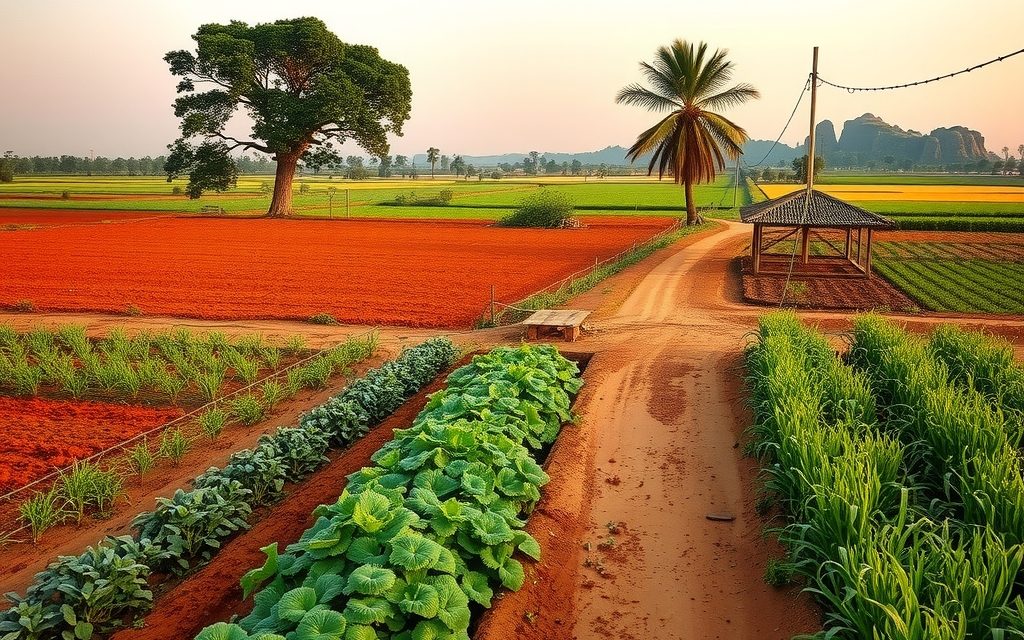
Red-soil farmland 4 km from the ORR beside the Aerospace SEZ and TCS campus. Interior villages still farm vegetables and mango; land near the SEZ is priced as future layout land and needs careful acquisition checks.