LRS in Telangana: Regularising Unapproved Plots
How Telangana's Layout Regularisation Scheme works, from LRS 2015 and 2020 to the 2026 rebate window: eligibility, fee slabs, processing stages, exclusions, and how to price and verify an LRS-pending plot before you pay.
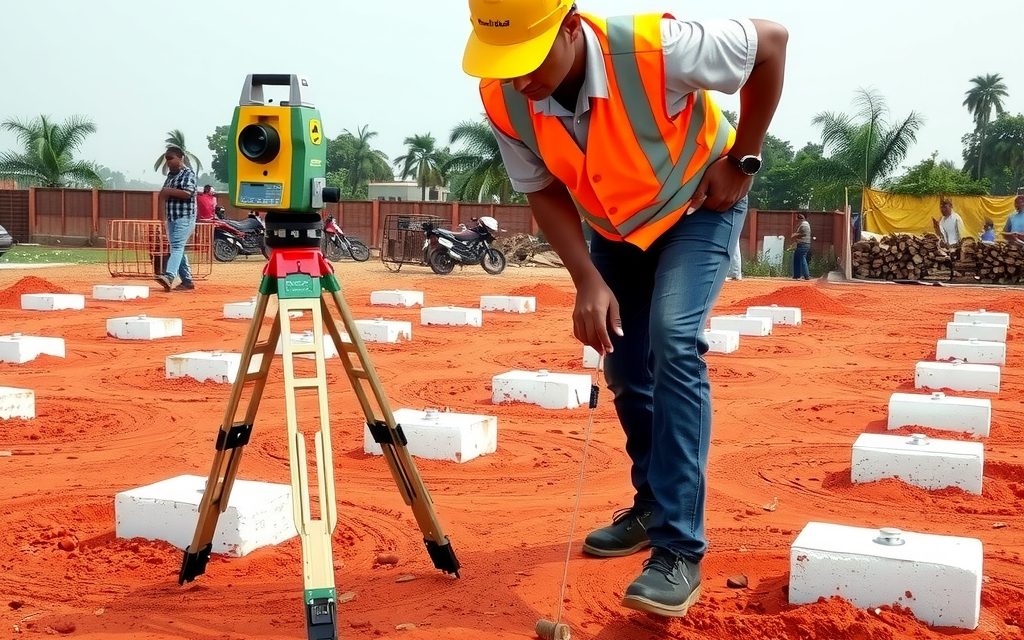
- Only final LRS proceedings with a file number make a plot buildable and bankable; an application receipt does not
- LRS 2020 covered plots whose sale deed was registered on or before 26 August 2020; no fresh window is open as of October 2026
- A 25% rebate ran from 1 May to 31 July 2026 and was reported extended to 30 November 2026; verify on the official portal
- The 14% open space charge often exceeds the regularisation charge in older gram panchayat layouts
- LRS cannot regularise lake FTL, buffer, nala, government, assigned or 22-A listed land
| What | Indicative range | Note |
|---|---|---|
| LRS 2020 application fee (already paid by applicants) | ₹1,000 per plot; ₹10,000 per layout | official, 2020 scheme |
| Regularisation charge slab, by SRO value as on 26 Aug 2020 | 20% – 100% of base charge | official slabs, verify on portal |
| Pro-rata open space charge where layout lacks 10% open space | 14% of plot value at registration date | official, verify |
| Rebate on LRS charges for 2020 applicants | 25% | window reported to 30 Nov 2026, verify |
| Typical total demand, 150–250 sq yd plot, outer Hyderabad | ₹50,000 – ₹3 L | indicative, Oct 2026 |
| Market discount, LRS-pending vs LRS-regularised plot | 10% – 20% | indicative, Oct 2026 |
Ranges reflect recent transactions and advisor observation as of 2026-10. Always verify against the sub-registrar market value and the specific parcel.
If you are buying a resale plot anywhere on the edges of Hyderabad, you will hear the letters LRS within the first ten minutes. The seller says the plot is "LRS done", or "LRS applied", or "LRS will come, everyone in the colony has paid". Those three phrases describe three very different assets. LRS in Telangana, the Layout Regularisation Scheme, is the government's periodic amnesty that lets owners of plots in unapproved layouts pay a fee and bring the plot into the planning system. A plot with final LRS proceedings can usually get building permission and a bank loan. A plot with only an application receipt is still, legally, a plot in an unauthorised layout. This guide explains how the schemes have worked from 2015 to the 2026 rebate window, who was eligible, how the fee is calculated, what an LRS-pending plot is really worth, and how we verify LRS status for clients before they pay an advance.
We are property advisors, not lawyers. Rules on LRS have changed many times since 2015, often through government orders and court directions rather than a single statute, so treat every figure here as the position as of October 2026 and verify it against the current order and the official portal before relying on it.
Who this guide is for
This guide is for buyers looking at resale plots in older colonies and gram panchayat layouts around Hyderabad, for owners who applied under LRS 2020 and are deciding whether to pay, and for NRIs who bought a plot years ago through a relative and now want to know whether it can be built on or sold cleanly. If you are only looking at fresh HMDA or DTCP approved ventures with a layout permit number and a release letter, you will need LRS less often, but you should still read the sections on how to tell the two apart.
What LRS is and why it matters for plot buyers
Every layout, meaning the subdivision of a piece of land into plots with roads and open spaces, is supposed to be approved by the planning authority before plots are sold. Around Hyderabad that authority is HMDA within its area, the Directorate of Town and Country Planning (DTCP) in the districts, and the municipal body where it has delegated powers. In practice, through the 1990s and 2000s, thousands of layouts were laid out on agricultural land with a gram panchayat resolution, a few stone markers and a brochure, and sold as "GP approved" plots. Panchayats within the HMDA area did not have the power to approve layouts. These are the unapproved layouts that LRS exists to fix.
The consequences of buying an unregularised plot are practical, not theoretical:
- No building permission. TG-bPASS, GHMC and HMDA will not sanction a house on a plot in an unapproved layout unless it has been regularised. A house built anyway is an unauthorised structure.
- No bank loan. Banks and housing finance companies generally lend only on plots in approved layouts or plots with final LRS proceedings. That cuts your resale market to cash buyers.
- Registration restrictions. Since 2020, Telangana has restricted registration of plots in unapproved layouts that have not been regularised, with exceptions that have been revised several times. A plot you cannot easily register is a plot you cannot easily sell.
- No services guarantee. Roads, drainage and water in an unapproved layout depend on whatever the developer left behind. Regularisation fees partly fund civic infrastructure, and colonies that complete LRS tend to get services sooner.
LRS does not convert bad land into good land. It regularises the layout irregularity only. If the plot sits in a lake's full tank level, on government or assigned land, or on a nala, LRS cannot help, and the application will be rejected.
A short history of LRS schemes in Telangana
Regularisation schemes in the region pre-date the state. Undivided Andhra Pradesh ran layout and building regularisation drives in the late 2000s. Since Telangana's formation, two schemes matter for buyers today.
LRS 2015
Announced in late 2015 alongside a Building Regularisation Scheme (BRS), LRS 2015 covered plots in unauthorised layouts registered before a cut-off date in October 2015. A large number of colonies on the city edge, from Bandlaguda and Badangpet in the south to Bachupally and Nizampet in the north, completed regularisation under this scheme. If a seller shows you LRS 2015 proceedings with a file number and a sanction from HMDA or the municipality, that plot is in a good position on the layout question.
LRS 2020
The scheme most buyers encounter now was notified in August 2020. It was open to plots in unauthorised layouts where the sale deed had been registered on or before 26 August 2020. Applications were taken online for a limited window in late 2020, with an application fee of ₹1,000 for an individual plot and ₹10,000 for a layout developer applying for a whole layout. The response was enormous: roughly 25 lakh applications were filed across the state, a figure that tells you how many plots in Telangana sit in unapproved layouts.
Then came the stall. Petitions in the High Court challenged the scheme, processing slowed to almost nothing for several years, and lakhs of owners were left with an application receipt and nothing else. Processing resumed after the state government decided to clear the backlog, and a one-time settlement in 2025 offered a 25% rebate on regularisation charges if paid by 31 March 2025, a deadline that was extended into April 2025.
The 2026 rebate window
In 2026 the government reopened the rebate for 2020 applicants: a 25% rebate on LRS charges for payments from 1 May 2026 to 31 July 2026. At the end of July, press reports said the rebate had been extended to 30 November 2026. We have seen that extension reported but recommend confirming it on the official LRS portal or with the municipal or HMDA office before planning around it. This is exactly the kind of date that shifts, and a payment made one day after a rebate window closes is charged in full.
Note what has not happened: as of October 2026, there is no fresh LRS application window for plots that missed the 2020 cut-off or did not apply in 2020. If a plot in an unapproved layout has no 2015 proceedings and no 2020 application, there is currently no regularisation route for it. Sellers sometimes say "a new LRS is coming". It may. It may not. Do not price a plot on a scheme that has not been notified.
How LRS works: bodies, portal and process
LRS 2020 is administered by the Municipal Administration and Urban Development (MA&UD) department through an online portal, with processing by the body that has jurisdiction over the plot: HMDA for its area outside municipal limits, GHMC and the municipalities and municipal corporations within their limits, and DTCP-linked urban development authorities in some districts. The applicant logs in with the application number and the registered mobile number to track status, receive the fee intimation and pay.
Stages of processing
Applications typically move through three levels, often called L1, L2 and L3:
- Document scrutiny (L1). The sale deed, layout copy and supporting documents are checked for eligibility: registration before the cut-off, the plot actually lying in an unapproved layout, and complete uploads. Missing or illegible documents cause a "shortfall" that the applicant must clear.
- Technical and field verification (L2). Planning staff check the plot against the master plan land use, road widths, and whether it falls near a water body, nala, government land or a restricted area. Plots close to lakes or government land are referred for revenue and irrigation department verification. This is where most rejections happen.
- Approval (L3). The competent officer approves the application and the system generates the fee intimation: regularisation charges, any open space charge, and any change-of-land-use or other component.
After payment, the authority issues the final LRS proceedings, the document that matters. It carries the file number, the plot details and the regularisation order. A payment receipt is not proceedings; an "approved" status on screen is not proceedings until the order is issued.
What LRS cannot regularise
The 2020 orders and subsequent processing guidelines exclude, broadly:
- Plots in the full tank level (FTL) or the bed of a lake, kunta or tank, and in the prescribed buffer around it; see our guide to lake FTL and buffer zones in Hyderabad.
- Plots on nalas, canals and their buffers.
- Government land, assigned land, and land on the Section 22-A prohibited list, including endowment and wakf land; see our guide to assigned land and the 22-A list.
- Land declared surplus under urban land ceiling, land under litigation, and land in defence, railway or other restricted areas.
- Plots whose master plan land use is incompatible with residential use and cannot be changed, for example parts of conservation or water-body zones.
Where the land use is industrial, recreational or otherwise non-residential but conversion is permitted, a change-of-land-use charge may be added. That can be a large number and is worth checking before you buy.
Step by step: timelines and costs of LRS
For a 2020 applicant who has not yet completed the process, or a buyer taking over such a plot, the realistic sequence looks like this. Costs and timelines are indicative as of October 2026; verify current rates and windows before paying.
| Step | What happens | Typical time | Indicative cost |
|---|---|---|---|
| 1. Locate the application | Find the 2020 application number, applicant name and registered mobile; log in to the LRS portal | 1 day to 2 weeks (longer if the mobile number has changed) | Nil; ₹1,000 fee was paid in 2020 |
| 2. Check status and shortfalls | See whether the file is at L1, L2 or L3, or rejected; upload missing documents | 2 to 8 weeks | Document costs only (certified copies, EC) |
| 3. Field and technical verification | Planning staff check land use, roads, lake and nala proximity; revenue or irrigation reference if near a water body or government land | 1 to 6 months, highly variable by office | Nil official |
| 4. Fee intimation | System generates regularisation charge, open space charge and any land-use component | Within days of L3 approval | Varies with plot size and value; see worked example |
| 5. Payment | Pay online; check whether the 25% rebate window is open | Same day | Regularisation and open space charges, less rebate if eligible |
| 6. Final proceedings | LRS order issued with file number; download and keep certified copies | 2 weeks to several months after payment | Nil |
| 7. Building permission | Apply through TG-bPASS or the jurisdictional authority with the LRS proceedings | Instant to 21 days for most residential plots under TG-bPASS | Permit fees, impact fees and charges per authority |
How the fee is calculated
Under LRS 2020, as amended in September 2020, the regularisation charge is broadly the plot area multiplied by a base rate that rises with plot size, multiplied by a percentage linked to the sub-registrar's market value of the plot as on 26 August 2020. The market value slabs reported for the scheme are:
| SRO market value as on 26 Aug 2020 (per sq yd) | Percentage applied |
|---|---|
| Up to ₹3,000 | 20% |
| ₹3,001 – ₹5,000 | 30% |
| ₹5,001 – ₹10,000 | 40% |
| ₹10,001 – ₹20,000 | 50% |
| ₹20,001 – ₹30,000 | 60% |
| ₹30,001 – ₹50,000 | 80% |
| Above ₹50,000 | 100% |
On top of that, if the unapproved layout did not leave 10% of its area as open space, a pro-rata open space charge of 14% of the plot value is levied, based on the value at the date the plot's sale deed was registered. In older layouts, which almost never left proper open space, this component is frequently larger than the regularisation charge itself. The portal computes the actual demand; use the slabs only to sanity-check it.
Worked example: a 200 sq yd plot in a GP layout near Shankarpally
Consider a typical case we see in the western belt. A client is offered a 200 sq yd plot in a gram panchayat layout laid out around 2006 on the edge of a village near Shankarpally. The current owner bought it in 2012 and applied under LRS 2020. The application is at L3 approval and the fee has not been paid.
The fee
- Plot area: 200 sq yd, which is about 167.2 sq m.
- Base rate for a plot in the 101–300 sq m band under the 2020 rate card, as we understand it: ₹400 per sq m. Plot area × base rate = about ₹66,900.
- SRO value as on 26 August 2020: say ₹6,500 per sq yd, which falls in the 40% slab. Regularisation charge ≈ ₹66,900 × 40% ≈ ₹26,800.
- Open space: the layout left no proper open space. SRO value on the 2012 registration date: say ₹3,000 per sq yd, so plot value ₹6 lakh. Open space charge at 14% ≈ ₹84,000.
- Total before rebate ≈ ₹1,10,800. With the 25% rebate, if the window is open on the payment date, ≈ ₹83,100.
These numbers are illustrative. The real demand on the portal is what you pay, and it may include components this simple calculation misses.
The price
In the same village, as of October 2026, plots in older GP layouts with completed LRS trade at roughly ₹6,000 to ₹12,000 per sq yd depending on road width, while plots with only a pending application trade at a noticeable discount. If the regularised equivalent is ₹10,000 per sq yd (₹20 lakh) and the seller is asking ₹8,500 per sq yd (₹17 lakh) for the LRS-pending plot, the ₹3 lakh gap looks generous against an ₹83,000 fee. The question is risk, not arithmetic: will the application actually reach proceedings?
Our recommendation in this case
We would check the field verification remarks, plot the survey number against lake and nala maps, confirm the master plan land use is residential, and then structure the deal so that the seller pays the LRS charges from the sale price and the final proceedings are in hand before the balance is released, or at minimum the payment is made and acknowledged before registration. For comparable plots in approved layouts, see our guide to open plots in Shankarpally.
A second example: the rejected plot
A buyer brought us a 300 sq yd plot in a colony on the north-western edge of the city, priced well below the market, with an LRS 2020 receipt. The portal showed the application rejected at L2. The reason, once we obtained it, was proximity to a tank's FTL boundary. No fee, no appeal and no "contact" was going to fix that. The "bargain" was a plot that could not be built on lawfully, and with lake enforcement now active, could become a liability. The buyer walked away. That rejection status took ten minutes to check.
What an LRS-pending plot is worth
Pricing LRS status is where advisors earn their fee. Based on recent transactions and advisor observation as of October 2026, the broad pattern around Hyderabad is:
- Plots in HMDA or DTCP approved layouts with a release letter set the benchmark price for the area.
- Plots with final LRS proceedings typically trade 10% to 25% below comparable approved-layout plots. The discount reflects narrower roads, missing open space and patchier services, not legal weakness.
- Plots with LRS applied and no adverse remarks typically trade a further 10% to 20% below regularised plots, because of fee, time and approval uncertainty, and because the buyer pool excludes loan-dependent buyers.
- Plots with LRS rejected, or never applied trade at whatever a cash buyer accepts, often 30% to 50% below the benchmark, and some are simply unsellable through normal channels.
The discount is not uniform. In established colonies where most neighbours have completed LRS and houses already stand, a pending application is a smaller risk. In a half-empty layout where nobody has proceedings yet, it is a larger one. Corridor-level price bands are in our area guides, such as open plots in Ameenpur and open plots in Bachupally, both belts with a large stock of older colonies.
Bank loans and building permission after LRS
Loans
Most banks will consider a plot loan or a composite plot-plus-construction loan on a plot with final LRS proceedings, provided the title and link documents are clean. They will generally not lend on an application receipt. Loan-to-value on plots is lower than on flats and a construction deadline usually applies; our guide to plot loans versus home loans in Telangana covers the detail. If you need a loan to buy, an LRS-pending plot is usually not for you.
Building permission
With LRS proceedings in hand, the plot is treated as part of a regularised layout and can apply for building permission. Under TG-bPASS, small residential plots get instant or self-certified approval and larger ones go through a time-bound single window; our guide to building permission under TG-bPASS, GHMC and HMDA explains the thresholds. Setbacks and road-widening requirements still apply, and in older colonies with 20 or 25 ft roads, road widening can eat into your plot frontage. Check it before you buy.
Existing houses on unregularised plots
LRS covers plots, not structures. A house built on an unregularised plot without permission is a separate problem that a Building Regularisation Scheme would address, and BRS has not run in the same way as LRS in recent years. If you are buying a house rather than an empty plot, ask for both layout regularisation and building permission or regularisation. One without the other leaves a gap.
Mistakes we see in practice, and the fix
- Accepting "LRS done" verbally. The seller means he paid the ₹1,000 application fee in 2020. Fix: ask for the final proceedings with file number and verify the status on the portal yourself, logged in with the application number.
- Confusing a payment receipt with proceedings. Payment triggers the order; it is not the order. Fix: make release of the final instalment conditional on the proceedings, or on an escrowed amount covering the fee and a time limit.
- Not checking who the applicant is. The application is often in the name of an owner two transactions back, with a mobile number nobody can access. Fix: trace the application before signing, and have the link documents connect the applicant to your seller.
- Ignoring the open space charge. Buyers budget for the small regularisation charge and are surprised by a 14% open space component. Fix: get the actual fee intimation, or estimate the open space charge conservatively, and negotiate the price around it.
- Assuming LRS cures land defects. LRS fixes the layout irregularity, not title, lake, nala, government or assigned land issues. Fix: run the full title and location checks as for any plot; our guide on HMDA vs DTCP vs gram panchayat layouts explains the layout side and the EC guide covers the title side.
- Buying on a future scheme. "Next LRS will cover it" is a hope, not a document. Fix: if there is no 2015 proceeding and no 2020 application, price the plot as unregularisable and walk away unless the price reflects that.
- Missing road widening. The LRS order may note road-widening requirements that reduce the buildable plot. Fix: read the conditions in the proceedings and check master plan road widths.
- Missing the rebate deadline. A 25% rebate on a ₹1.5 lakh demand is real money. Fix: confirm the current window on the official portal and pay with a margin of days, not hours.
LRS for NRIs who own plots in Telangana
Many NRI families bought plots in the early 2000s through a parent or sibling, often in GP layouts. If you hold such a plot, check three things now: whether an LRS 2015 or 2020 application exists in your name, whether the registered mobile number still reaches you or a trusted person, and whether any shortfall or fee intimation is waiting. You can operate the process through a specific power of attorney for the LRS and related municipal work. Residential plots are permitted property for NRIs under FEMA, unlike agricultural land. Sale proceeds and repatriation follow the usual NRI rules; our NRI investment guide for Telangana sets out the framework, and you should take a CA's advice on capital gains and TDS before selling.
How NRR Estates handles LRS for clients
LRS questions come up in almost every resale plot transaction we handle in the Hyderabad periphery. Our process is simple and documentary:
- Status check before advance. We obtain the application number, verify status and remarks, and, where possible, the field verification observations, before any token is paid.
- Location screening. We plot the survey number and plot against lake FTL and buffer maps, nala alignments and master plan land use, because these drive most rejections.
- Fee estimate and negotiation. We estimate the regularisation and open space charges and use them, along with the market discount for pending status, to negotiate price and deal structure.
- Title verification. Independent of LRS, our empanelled advocates check the 30-year title chain, EC, link documents and prohibited-list status.
- Completion support. For clients who buy, we coordinate the shortfall responses, payment within the rebate window and collection of the final proceedings, and then the building permission application.
Our fees for this work are disclosed in writing before we start. We do not promise approvals, and we do not deal with anyone who offers to "manage" a rejection.
Frequently asked questions about LRS in Telangana
What is LRS in Telangana?
LRS is the Layout Regularisation Scheme, a periodic amnesty under which owners of plots in unapproved layouts pay a fee to bring the plot into the planning system. Once the authority issues final LRS proceedings, the plot is treated as part of a regularised layout and can apply for building permission and is generally acceptable to banks. Telangana ran schemes in 2015 and 2020. LRS fixes only the layout irregularity; it does not cure defects in title or problems such as lake, nala or government land.
Can I apply for LRS now if my plot was never regularised?
As of October 2026, there is no fresh LRS application window. The 2020 scheme covered plots whose sale deed was registered on or before 26 August 2020 and whose owners applied within the 2020 window. If your plot has neither LRS 2015 proceedings nor a 2020 application, there is currently no regularisation route. A future scheme may be announced, but it has not been notified, so do not buy or price a plot on that assumption. Check the official portal and MA&UD orders for any new announcement.
Is the 25% LRS rebate still available?
The government offered a 25% rebate on LRS charges for 2020 applicants who paid between 1 May and 31 July 2026. Press reports at the end of July said the window had been extended to 30 November 2026. We recommend confirming the current deadline on the official LRS portal or with the HMDA or municipal office before relying on it, and paying with a few days in hand. Payments made after a rebate window closes are charged in full, and the rebate has been extended and closed more than once.
How is the LRS fee calculated?
Under LRS 2020 as amended, the regularisation charge is broadly the plot area multiplied by a base rate that rises with plot size, multiplied by a percentage between 20% and 100% depending on the sub-registrar market value of the plot as on 26 August 2020. If the layout did not leave 10% open space, a further 14% of the plot value at the registration date is charged. Change-of-land-use charges can apply where land use is not residential. The portal generates the actual demand.
Can I get a bank loan on an LRS-pending plot?
Usually not. Banks and housing finance companies generally lend on plots in HMDA or DTCP approved layouts or plots with final LRS proceedings and clean title. An application receipt or a payment acknowledgement is not normally enough. That is one reason LRS-pending plots trade at a discount: the buyer pool shrinks to cash buyers. If you need a loan, either buy a plot that already has proceedings or structure the purchase so that proceedings are issued before you need the loan.
Why are LRS applications rejected?
The most common reasons are location and land status rather than paperwork: the plot lies in or near a lake's full tank level or buffer, on a nala, on government or assigned land, on land in the Section 22-A prohibited list, or in a master plan zone where residential use is not permitted. Documentary reasons include a sale deed after the cut-off date or unresolved shortfalls. A rejection on location grounds generally cannot be fixed by paying more, so check the reason before considering any appeal.
Does LRS approval mean the title is clear?
No. LRS regularises the layout, meaning the subdivision without approval. It does not examine whether your seller has good title, whether there are mortgages or disputes, or whether link documents are complete. You still need a 30-year title search, an encumbrance certificate, link documents, revenue record checks and a prohibited-list search. Some buyers assume that because the government has approved the LRS file, the plot must be clean. That assumption has cost people money.
Can an NRI complete LRS for a plot in Telangana?
Yes. A residential plot is property an NRI may hold under FEMA, and the LRS process can be handled from abroad. The application is tracked online with the application number and registered mobile, so first make sure you or a trusted person can access that number. Field visits, shortfall responses and collection of proceedings can be handled through a specific power of attorney. Take a CA's advice before a later sale, as TDS and capital gains rules for NRI sellers differ from residents.
Related guides
What HMDA, DTCP and so-called panchayat layout approvals really mean in Telangana: jurisdictions, LP numbers, mortgaged plots and release letters, LRS, bank loan eligibility, online verification and red flags.
Twenty-one checks we run on every open plot in Telangana, in the order that kills bad deals fastest: seller and title, approvals, land character and zoning, then survey, access and dues, with where to check each and what failure means.
What lake full tank levels and buffer zones mean for plot, villa and flat buyers in Hyderabad: buffer distances, who draws the FTL, how HYDRAA enforces, how to check a property against lake maps, and why clean title is not enough.
Shankarpally offers HMDA-approved plots at a fraction of Tellapur prices, 18 km west of the ORR on the Mokila road. Rates by approval and road, the farm-plot trap, legal checks and a realistic holding view.
Ameenpur, between Miyapur and Patancheru, still offers HMDA and LRS plots in a lake-side suburb. Indicative rates by pocket, what the biodiversity heritage site and lake buffers mean for buyers, and the legal checks that matter.
Resale colony plots off the Bachupally–Miyapur road and newer HMDA ventures toward Mallampet, Bowrampet and Dundigal. Indicative prices, approvals, legal checks and registration for family buyers.

What NRIs and OCIs can and cannot buy under FEMA, how to fund and register a purchase from abroad, TDS and repatriation basics, and where the opportunities are across Hyderabad and the Telangana districts.

A 3 BHK under ₹1 crore all-in is still possible in Hyderabad if you know your per sq ft ceiling. This guide maps the areas where a 1,400–1,700 sq ft flat fits after GST and charges, and where it no longer does.