Managed Farmland Schemes in Telangana: What to Check First
What you actually own in a managed farm plot or plantation scheme in Telangana: the four legal structures, mother-title and gunta registration checks, how to read return projections, exit risk and the questions to ask before paying.
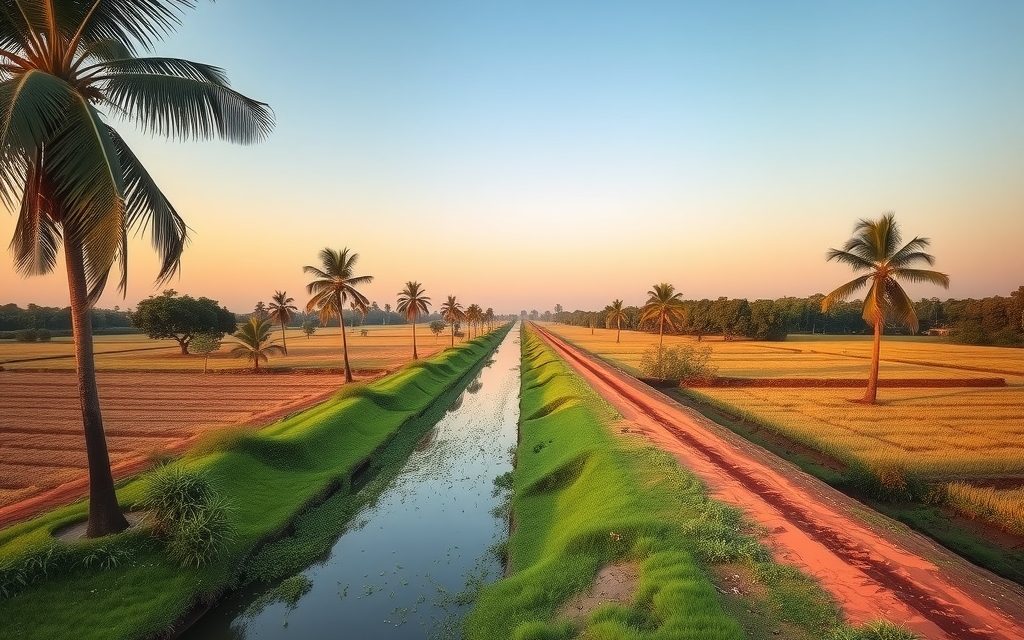
- A managed scheme is two things: a land purchase governed by property law and a farming contract that depends on the manager for 15+ years
- Insist on a registered sale deed for a defined, sub-divided extent mutated into your name on Bhu Bharati; agreements and memberships give no title
- Every survey number in the block must be in the seller's name with clean patta classification before you pay beyond a small advance
- Treat the land as the asset and projected sandalwood, teak or mango payouts as uncertain upside; ask for net figures and the evidence behind them
- NRIs and OCIs cannot buy agricultural land, plantations or farmhouses under FEMA, whatever the scheme is called
| What | Indicative range | Note |
|---|---|---|
| Gated managed farm plot, 1–1.5 hrs from ORR | ₹1.5 L – ₹4 L per gunta | indicative, Oct 2026; land only |
| Plantation and setup charge (one-time) | ₹15,000 – ₹50,000 per gunta | indicative, varies by species |
| Annual management fee | ₹3,000 – ₹10,000 per gunta | indicative; check escalation |
| Advocate title check for a venture block | ₹15,000 – ₹60,000 | indicative, Oct 2026 |
| Registration at Tahsildar office | ~7.5% of higher of market value or price | as of Oct 2026, verify |
Ranges reflect recent transactions and advisor observation as of 2026-10. Always verify against the sub-registrar market value and the specific parcel.
Managed farmland schemes in Telangana are sold with a simple promise: buy a few guntas of land planted with sandalwood, mango, teak or red sanders, let the company tend the trees, and collect a large payout when the timber or fruit is sold. The hoardings appear along every highway out of Hyderabad, and the brochures are polished. Some of these ventures are run on clean, surveyed land and sell you real, registrable title to a defined piece of it. Others sell you something much thinner: an undivided share in a large survey number, a "membership", a plantation agreement or a promise about trees on land you will never own. The difference is not visible from the gate. It is in the documents, and this guide shows you exactly what to read, what to ask and where the real risks sit before you pay a rupee.
We do not name or rate any company in this guide, and nothing here is a comment on any particular venture. It describes the structures we see in the market around Hyderabad and across Telangana's districts, the legal points that decide whether your money is safe, and the questions that separate a sound purchase from an expensive mistake. Rules, rates and fees are stated as of October 2026; verify them for your specific transaction.
Who this guide is for
This guide is for resident Indians who have been pitched a managed farm plot, a plantation scheme or a "farmland investment" with projected returns, and want to know what they would actually own. It is also for families who already hold a plot in such a venture and want to check where they stand. If you are an NRI or OCI cardholder, read the NRI section first: under FEMA you cannot buy agricultural land, plantation property or a farmhouse in India at all, whatever the brochure says.
What a managed farmland scheme actually is
A managed farmland scheme combines two separate things that brochures present as one: a purchase of land, and a contract for someone else to farm it. Understanding that split is the single most useful idea in this guide.
The land part
The developer buys or aggregates agricultural land, usually a block of 20 to 200 acres across several survey numbers in a village beyond the Outer Ring Road. The land stays agricultural in the revenue record. The developer then sells it in small extents, typically 5, 10, 20 or 40 guntas (one acre is 40 guntas, and one gunta is 121 square yards). What you receive in law depends entirely on how that sale is documented, which we cover below.
The management part
Alongside the land, you sign a management, maintenance or plantation agreement. The developer, or a related entity, undertakes to plant, irrigate, fence, guard and eventually harvest the trees or crop. You pay a fee, either upfront for a period or annually per gunta. At the end of the cycle, often 12 to 20 years for sandalwood, 15 to 25 years for teak, and a few years for orchards to start bearing, the produce is sold and you receive a share of the proceeds, or the land with mature trees on it.
Why the split matters
The land part is governed by property law: title, registration, the record of rights on Bhu Bharati and the ceiling and fragmentation rules. The management part is a private contract whose value depends on the developer's competence, honesty and survival for the next fifteen years. A scheme can be perfectly sound on one side and fragile on the other. Most problems we see come from buyers who checked neither, or who checked the plantation and forgot the land.
How it works: the four legal structures we see in Telangana
Every managed farmland scheme falls into one of four broad structures, and some combine more than one. Ask the developer, in writing, which one you are being offered.
| Structure | What you receive | Registrable and mutable? | Our view |
|---|---|---|---|
| 1. Sale deed for a defined, surveyed extent | A registered sale deed for, say, 10 guntas in a specific sub-divided survey number, with boundaries and a sketch | Yes: registered at the mandal Tahsildar office with mutation into your name on Bhu Bharati | The only structure that gives you real ownership of identifiable land |
| 2. Sale deed for an undivided share | A registered deed for "10 guntas out of 30 acres" in one or more survey numbers, with no specific piece identified | Registered, but you become a co-owner of the whole; your piece exists only on the developer's sketch | Workable only with a co-ownership agreement, a clear exit route and a credible plan for later partition; resale is harder |
| 3. Agreement of sale or "allotment letter" only | An unregistered or notarised agreement promising a sale deed later, sometimes with a GPA | No: you own nothing until a deed is registered | High risk; your money is effectively an unsecured advance to the developer |
| 4. Membership, plantation or tree-ownership contract | Rights to trees, produce or returns, with the land owned by someone else | No land title at all | Not a land purchase. Pooled return schemes of this kind can fall under collective investment scheme rules; take legal advice |
Structures 3 and 4 are where buyers lose money. Structure 2 is common and not automatically bad, but it needs far more scrutiny than brochures suggest. Structure 1 is what you should insist on.
Registration of small agricultural extents
Unconverted agricultural land in Telangana registers at the mandal Tahsildar office, where the Tahsildar acts as joint sub-registrar, and the record of rights is updated in the same process. Our guide to Dharani and Bhu Bharati land records explains how that works. For a farm plot, the practical questions are whether the extent you are buying has been formally sub-divided in the record, whether it has its own sub-division number, and whether the mandal is registering and mutating extents of that size without objection at the time you buy. Revenue and registration authorities in Telangana have at times scrutinised or held up small agricultural sub-divisions that look like residential layouts in disguise, especially where land carved into guntas has internal roads, parks and compounds but no conversion or layout approval. There is no single published "minimum gunta" figure we would rely on; the safe approach is to confirm, for that village and that month, that comparable extents in the same venture have registered and mutated cleanly, and to ask to see a recent mutated record for a fellow buyer (with their consent).
The mother title
Before any of the plantation discussion, the land the developer is selling must have clean title in the developer's name, or in the names of landowners who are signing with them. This is the "mother title": the chain of deeds, succession and record entries for the whole block, going back at least 30 years. If the developer has only an agreement with the farmers and not a registered sale, you are buying from someone who does not yet own the land. The usual checks apply to every survey number in the block: patta classification on Bhu Bharati, no assigned, government, inam, endowment or wakf classification, no Section 22-A prohibited listing, no dispute status, an encumbrance search for the pre-2020 period, and a survey that confirms the extent on the ground. Our guide to the survey number, FMB and boundary checks explains why the ground survey matters so much in a sub-divided block.
Ceiling, fragmentation and farming status
The Telangana land ceiling law limits how much agricultural land a family unit can hold, and the developer's aggregation of large blocks should be consistent with it. For an individual buying 10 guntas this is rarely an issue, but a developer holding hundreds of acres through related entities is a question for your advocate. A second issue is purpose. Agricultural land is meant to be farmed. A scheme that is in substance a residential colony, with compound walls, villas and a clubhouse on unconverted land, carries planning and enforcement risk that a genuine orchard does not.
Tree species and felling permissions
Sandalwood, red sanders and teak are not like mangoes. Felling and transporting certain species, including sandalwood and teak, requires permission from the Forest Department and transit passes, and red sanders in particular has historically been subject to strict controls. Rules have been liberalised in several states for trees grown on private land, but the details change. Before you buy into a timber-based scheme, ask who will obtain the felling and transit permissions at harvest, under which rules, and who will buy the timber. Then verify the current position with the Forest Department, as of October 2026.
Return claims versus reality
The brochure numbers are where expectations get set, and where most disappointment begins. A typical pitch projects a payout per tree at maturity, multiplies by the number of trees per gunta, and presents the result as a multiple of your investment. Each part of that calculation deserves a question.
Survival and yield
Not every sapling survives. Young trees die in the first summers, to drought, termites, cattle and neglect. A realistic orchard plan budgets for replacing 10% to 20% of plantings in the first two years. For sandalwood, which is a semi-parasitic tree that needs host plants, survival and heartwood formation vary widely with soil, water and care. Heartwood, which is the valuable part, typically takes well over a decade to develop in commercial quantity, and the amount per tree is uncertain until the tree is felled. Ask what survival rate and heartwood yield the projection assumes, and what evidence supports it from the developer's own mature plantations.
Price at harvest
Projections often use today's retail price for a premium product and assume it holds or rises for fifteen years. Timber prices depend on quality grading, the buyer pool and government controls at the time of sale. Fruit prices swing with the season. A conservative projection uses a wholesale farm-gate price, not a retail figure.
Costs that come off the top
Management fees, harvesting, permissions, transport, the developer's share or commission, and any taxes all come out before your payout. Ask for the projection net of every one of these, and ask whether management fees rise each year.
Tax on the payout
Income from genuine agricultural operations on land you own is treated differently under income tax law from income received under a contract. Whether a payout from a managed scheme qualifies as agricultural income depends on the structure and the facts. Do not assume it is tax-free; ask a CA before you sign.
The honest way to read a projection
Treat the land as the asset and the produce as a possible bonus. If the price per gunta only makes sense when the projected harvest arrives in full, you are taking plantation risk at land prices. If the price per gunta is close to what comparable, clean farm land in the same village sells for in guntas, the plantation becomes upside rather than the whole case.
Step by step: how we check a managed farmland scheme
Here is the sequence we follow when a client brings us a scheme, with typical timelines and costs. Costs are indicative as of October 2026, from recent files and advisor observation.
| Step | What happens | Typical time | Indicative cost |
|---|---|---|---|
| 1. Structure check | Identify which of the four structures is being offered; obtain draft deed, agreement and management contract | 1–2 days | Part of advisory engagement |
| 2. Mother title and record check | Bhu Bharati record, classification, 22-A and dispute status for every survey number; encumbrance search for pre-2020 period; link documents | 5–15 working days | ₹15,000 – ₹60,000 advocate fee, depending on number of survey numbers |
| 3. Sub-division and mutation check | Confirm your extent has its own sub-division and that recent buyers' plots have mutated cleanly | 2–5 days | Nominal certified copy fees |
| 4. Ground survey | Licensed surveyor measures your plot against the record and the developer's sketch | 1–2 weeks | ₹10,000 – ₹30,000 |
| 5. Management contract review | Fees, escalation, harvest rights, termination, what happens if the manager exits | 3–5 days | Included in advocate review |
| 6. Water, access and site walk | Borewell yield and sharing, approach road ownership, power connection, neighbours | 1 day | Travel costs |
| 7. Registration and mutation | At the mandal Tahsildar office, with mutation into your name | 1 day after slot | ~7.5% of the higher of market value or price (stamp duty ~5.5%, transfer duty ~1.5%, registration fee ~0.5%), verify |
The levy in step 7 follows the same structure as any sale deed; our guide to stamp duty and registration charges in Telangana shows the full computation.
Worked example: two offers for ₹30 lakh near Vikarabad
A Hyderabad couple, both resident, had ₹30 lakh to put into land west of the city and liked the idea of a managed orchard. Two offers came to them within the same month, both in villages roughly an hour beyond the ORR on the Vikarabad side. The figures below are illustrative but typical of what we see.
Offer A: 10 guntas in a managed sandalwood venture
The price was ₹2.6 lakh per gunta, so ₹26 lakh for 10 guntas, plus a one-time "plantation and development charge" of ₹3 lakh covering saplings, drip, fencing and the first three years of maintenance. From year four, maintenance would be ₹6,000 per gunta per year. The brochure projected a payout of several times the investment at year fifteen.
On review, the deed offered was for "10 guntas out of 42 acres" across three survey numbers, with the specific plot shown only on the developer's sketch. One of the three survey numbers still stood in the names of the original farmers on Bhu Bharati, with the developer holding only an agreement of sale. The management contract allowed the developer to assign it to any other entity without the buyer's consent, and said nothing about who would obtain felling permissions at harvest.
Offer B: an acre of interior patta land in a nearby village
An acre of clean patta land on a village road, with its own borewell, was available at ₹28 lakh. Registration at about 7.5% added roughly ₹2.1 lakh. Fencing, a drip system and 120 mango and guava saplings cost about ₹2.5 lakh, and a local caretaker family would tend it for a monthly payment.
| Item | Offer A: managed 10 guntas | Offer B: 1 acre patta land |
|---|---|---|
| Land price | ₹26,00,000 | ₹28,00,000 |
| Development or setup | ₹3,00,000 | ₹2,50,000 |
| Registration (~7.5%, verify) | ~₹1,95,000 (on ₹26 lakh, or more if the plantation charge is treated as consideration) | ~₹2,10,000 |
| Legal and survey | ₹40,000 – ₹70,000 | ₹30,000 – ₹50,000 |
| Extent owned | 10 guntas, undivided | 40 guntas, defined |
| Effective land cost per gunta | About ₹2.9 lakh | About ₹0.8 lakh |
| Annual running cost (indicative) | ₹60,000 from year four, rising | ₹50,000 – ₹90,000 caretaker and inputs |
| Title position | One survey number not yet in developer's name | Clean, mutated to seller, verified |
The couple were paying more than three times the per-gunta land price of the surrounding village for Offer A. That premium was the plantation and the management, which in turn depended on a contract the developer could assign away and a harvest whose permissions nobody had addressed. They took Offer B. Had Offer A been on a fully owned, sub-divided block with separate mutation of each plot and a tighter management contract, it might have suited a family that wanted convenience over acreage; the problem was not the idea but the paper. Our guide to agriculture land under ₹50 lakh near Hyderabad shows what similar budgets buy in other directions, and our page on agriculture land in Vikarabad covers that belt in detail.
Red flags we see in managed farmland pitches
- "Assured" or "guaranteed" returns. No one can guarantee a timber price fifteen years out. A promise of fixed returns on pooled agricultural produce is also the kind of feature that has drawn regulatory action against plantation schemes in the past. Fix: treat any guaranteed figure as a reason for more scrutiny, not less, and ask for the legal basis on which the promise is made.
- No registered sale deed, or a deed "after full payment". If your money goes in before a deed is registered, you are an unsecured creditor. Fix: pay a small advance under a written agreement and the balance only at registration.
- Undivided share with no co-ownership terms. You and fifty others own one large block together. Fix: insist on a defined, sub-divided extent; if that is not possible, demand a co-ownership agreement covering access, water, partition and sale.
- Developer does not own all the land. Agreements with farmers are not title. Fix: every survey number in your plot's chain must be in the seller's name on the record and in registered deeds.
- Management contract freely assignable. The company that pitched you may not be the company that tends your trees in year eight. Fix: require your consent for assignment, a named entity, and a right to terminate and take over management yourself.
- Harvest and permissions left vague. Fix: the contract must say who obtains felling and transit permissions, who sells the produce, how the price is determined, and how you verify it.
- Brochure shows villas and clubhouses on unconverted land. Fix: ask for the conversion order and planning permission for each structure; if there are none, assume the buildings carry enforcement risk.
- Pressure to buy on site, today. Fix: take the documents home and give your advocate a week.
Exit liquidity: who buys your 10 guntas later?
A land purchase is only as good as your ability to sell it. With managed farm plots, the resale market is thin. The natural buyers are other resident Indians who want a small farm in that venture, and they will compare your plot with the developer's own unsold inventory, which may be priced with incentives. Several factors make your plot easier or harder to sell:
- Defined, mutated plot with its own passbook entry: easier. A buyer can verify it like any farm land.
- Undivided share: harder. The buyer inherits the co-ownership and the developer's sketch.
- Mature, healthy trees with documented records: easier, if the trees are valued by buyers and not just in the brochure.
- Developer buy-back promise: treat it as worth only as much as the developer's balance sheet at the time you exercise it.
- NRI buyers: not available. NRIs and OCIs cannot buy agricultural land, so the buyer pool is resident Indians only.
Plan to hold for the full plantation cycle, and assume that an early exit may be at or below what you paid.
Questions to ask before you pay anything
Print these and ask for written answers. A well-run venture will answer them without fuss.
- Which survey numbers and sub-division numbers make up my plot, and are they all in the seller's name on Bhu Bharati today?
- Will I receive a registered sale deed for a defined extent with boundaries, or an undivided share?
- Has my extent been formally sub-divided, and will it be mutated into my name at registration?
- Can you show me a mutated record for a plot sold in this venture in the last three months?
- What is the price per gunta for the land alone, separate from plantation and management charges?
- Which entity signs the management contract, can it assign the contract without my consent, and can I terminate it?
- What happens to my trees and my payout if the management company stops operating?
- Who obtains felling and transit permissions at harvest, and who buys the produce?
- What survival rate, yield and price does your projection assume, and what is it based on?
- Is the venture registered with TS RERA, and if not, on what basis do you say it is exempt?
- Who owns the internal roads, the borewell and the fencing, and how are they maintained after you leave?
- What exactly is built on the land, and is there conversion and building permission for each structure?
On question 10: where land is sub-divided into plots with roads and amenities and sold to the public, ask whether the project should be registered with TS RERA. Developers sometimes argue that agricultural farm plots fall outside the law. That is a legal position, not a fact, and your advocate should assess it. You can search registered projects on the TS RERA portal.
A note for NRIs and OCIs
Under FEMA's rules on non-debt instruments, NRIs and OCI cardholders cannot purchase agricultural land, plantation property or farmhouses in India, and cannot receive them as a gift. They can inherit such property, and can sell inherited agricultural land only to a resident Indian citizen. A managed farmland scheme does not change this by calling the plot a "farm villa" or the purchase an "investment". If you are abroad and attracted by the idea, the realistic routes are residential plots in approved, converted layouts, villas or apartments, all of which NRIs can buy. Our page on NRI agricultural land rules in Telangana sets out the position and the alternatives.
Managed scheme or your own small farm?
For many families the better answer is to buy a smaller extent of clean patta land outright and arrange the farming locally. That gives you a defined title and a choice of manager, at the cost of more of your own time. Our guide to farm house plots near Hyderabad compares gated farm plots with interior patta land belt by belt, and our page on agriculture land in Shankarpally shows what defined extents cost closer to the city. A managed scheme makes sense when the land side is as clean as a direct purchase and you are paying a fair price for convenience, not for a projection.
How NRR Estates handles managed farmland for clients
- Structure first. Before anything else we tell you which structure you are being offered and what you would actually own.
- Mother title and record checks. Our panel advocates check every survey number in the chain, with Bhu Bharati, 22-A, encumbrance and link-document searches.
- Ground truth. A licensed surveyor measures your plot, and our advisors walk the block, check water and approach roads, and talk to neighbouring farmers.
- Contract review. We read the management contract for assignment, termination, harvest rights and fee escalation, and put the answers to the twelve questions in writing.
- Comparison with direct purchase. We show you what comparable clean land costs in the same village, so you can see the premium you are paying.
- Registration and mutation. If you proceed, we coordinate the Tahsildar slot and follow through until the record shows your name.
Our fees are disclosed in writing before you commit. We are property advisors, not lawyers, tax advisors or investment advisors; legal opinions come from our panel advocates, and questions about tax on any payout should go to your CA. We do not recommend or rate individual schemes in public.
Managed farmland schemes: frequently asked questions
Are managed farmland schemes in Telangana legal?
Buying agricultural land and hiring someone to farm it is legal for resident Indians. Whether a particular scheme is sound depends on its structure. A registered sale deed for a defined, sub-divided extent, mutated into your name, gives real ownership. An agreement of sale, an allotment letter or a membership gives you no title, and pooled schemes that promise returns from shared produce can fall under collective investment scheme rules. Ask which structure you are being offered and have an advocate read the deed and management contract before you pay.
What is the difference between a defined plot and an undivided share?
A defined plot is a specific piece of land with its own sub-division number, boundaries and survey sketch, registered and mutated in your name. An undivided share is a fraction of a larger block, such as 10 guntas out of 40 acres, where you co-own the whole with other buyers and your piece exists only on the developer's sketch. Undivided shares are harder to sell, fence, finance or convert, and depend on co-owners agreeing. Insist on a defined plot wherever the venture offers one.
Can I register 5 or 10 guntas of agricultural land in Telangana?
Small agricultural extents are registered at the mandal Tahsildar office, with mutation in the same process, but authorities have at times scrutinised or held up small sub-divisions that look like residential layouts on unconverted land. We do not rely on a single published minimum extent. Instead we confirm, for that village and month, that comparable plots in the same venture have registered and mutated cleanly, and ask to see a recent mutated record. Verify the position at the time you buy, as of October 2026.
Are sandalwood farm returns guaranteed?
No. Sandalwood returns depend on sapling survival, heartwood formation over well over a decade, timber grading, the buyer pool, government controls and prices at harvest, none of which anyone can guarantee. A promise of assured returns should make you more cautious, not less. Ask what survival rate, heartwood yield and price the projection assumes, net of management fees, harvesting, permissions and the developer's share, and what evidence from mature plantations supports those numbers. Treat the land as the asset and the produce as upside.
Do I need Forest Department permission to harvest sandalwood or teak?
Generally yes. Felling and transporting certain species, including sandalwood and teak, requires permission and transit passes from the Forest Department, and red sanders has historically been tightly controlled. Rules for trees grown on private land have been relaxed in several states, but the details change. Before buying into a timber-based scheme, get it in writing who will obtain these permissions at harvest and who will buy the timber, and verify the current rules with the Forest Department, as of October 2026.
Can NRIs invest in managed farmland schemes?
No. Under FEMA rules, NRIs and OCI cardholders cannot purchase agricultural land, plantation property or farmhouses in India, and cannot receive them as a gift. Calling the plot a farm villa or an investment does not change this. NRIs can inherit agricultural land and sell it only to a resident Indian citizen. NRIs who want land exposure in Telangana can buy residential plots in approved, converted layouts, villas or apartments, using NRE or NRO funds through banking channels.
Is income from a managed farm plot tax-free?
Not automatically. Agricultural income from land you own and farm is treated differently from income received under a contract with a management company. Whether a payout from a managed scheme counts as agricultural income depends on the structure, who carries out the operations and how the proceeds are paid. Capital gains on selling the land are a separate question that depends on whether it is rural agricultural land. Ask a chartered accountant to review the scheme documents before you invest.
How can I exit a managed farmland scheme early?
Usually by selling your plot to another resident Indian, which is easiest when you hold a defined, mutated plot and hardest with an undivided share. Your buyer will compare your price with the developer's unsold inventory, and NRIs cannot buy, so the pool is limited. Developer buy-back promises are only as strong as the developer's finances when you call on them. Plan to hold for the full plantation cycle, and assume an early exit may be at or below what you paid.
Related guides

A farm plot is usually agricultural land cut into guntas, not a residential plot. What you actually own, whether you can build a farmhouse, how managed ventures work, and indicative per-gunta prices across belts within about 60 km.

₹50 lakh buys one to three acres of agricultural land in outer belts such as Vikarabad, Yadadri or the Jadcherla side, but only a few guntas near the city. This guide maps acreage by direction, checks and registration.

Telangana's record of rights explained: 1B, pahani, pattadar passbooks and mutation, how Dharani gave way to Bhu Bharati in 2025, how to read and verify a record before buying, and how errors get corrected.
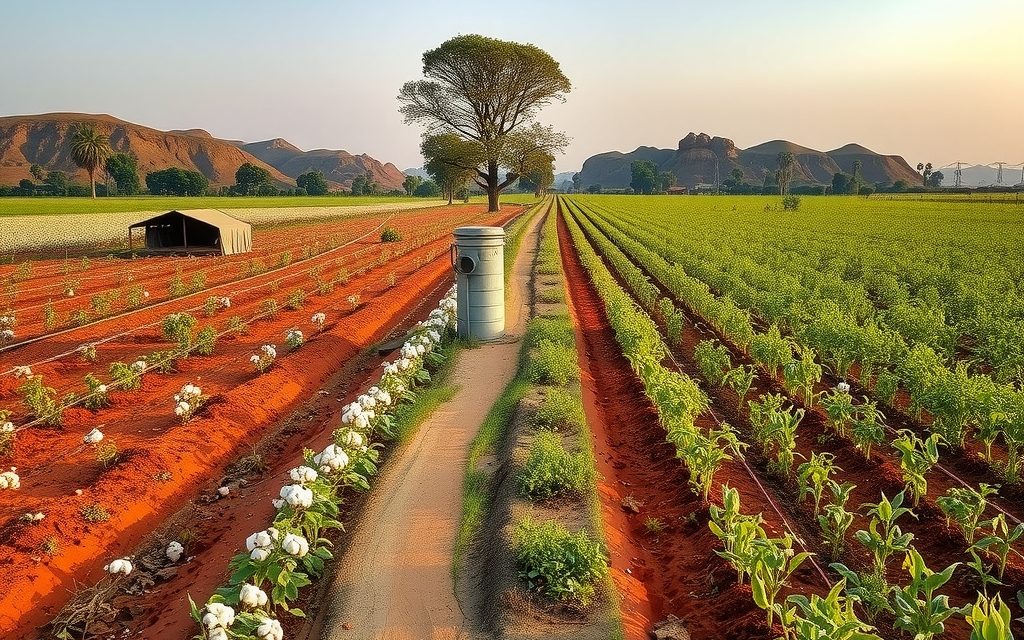
Hill-country farm land at about 2,000 ft, 45–50 km beyond the ORR. Low per-acre prices, cooler weekends and mango or custard apple orchards, with forest boundaries and water as the key checks.
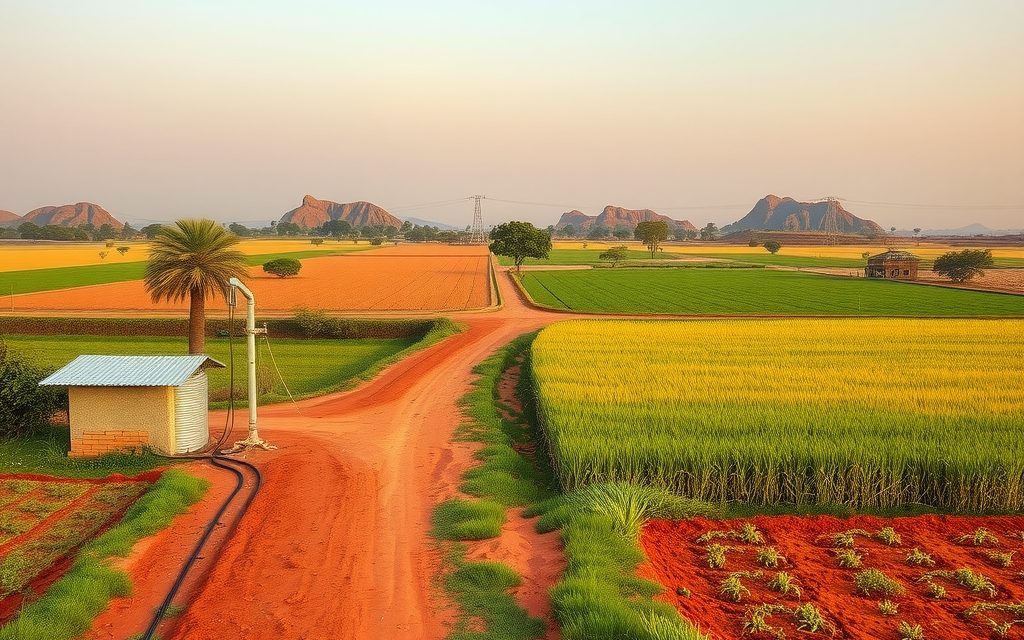
Mandal-town farm land 18 km past the ORR with a railway station, red soil and village tanks. More acres per rupee than Mokila, still within an hour of Gachibowli.
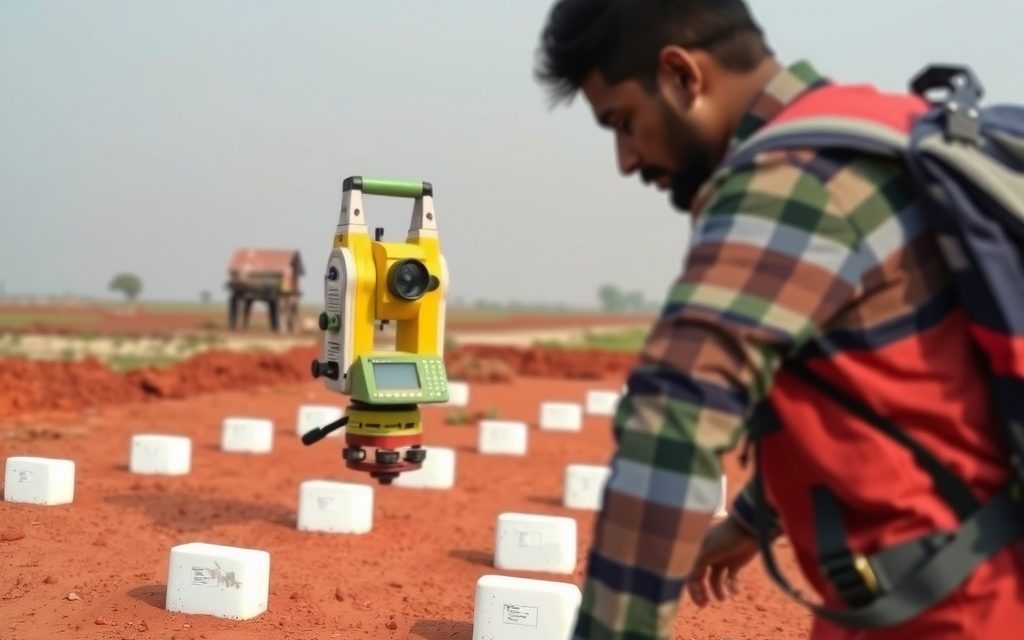
The documents say what you are buying; the survey says where it is. How survey numbers, sub-divisions and the tippan or FMB sketch work in Telangana, how surveys are done, and how to deal with shortfalls and encroachment.

NRIs and OCIs cannot buy or receive gifts of agricultural land, plantations or farmhouses; inheritance is the only route. What inherited land allows, why benami workarounds are dangerous, and the lawful alternatives near Hyderabad.

A 3 BHK under ₹1 crore all-in is still possible in Hyderabad if you know your per sq ft ceiling. This guide maps the areas where a 1,400–1,700 sq ft flat fits after GST and charges, and where it no longer does.