Agriculture & Farm Land in Narsampet, Warangal District
Narsampet, 35 km east of Warangal, offers tank-fed paddy land and red-loam chilli and cotton farms at a wide discount to the tri-city fringe. Pakhal water, indicative per-acre bands, sanctuary and agency checks, and how to bank land here patiently.
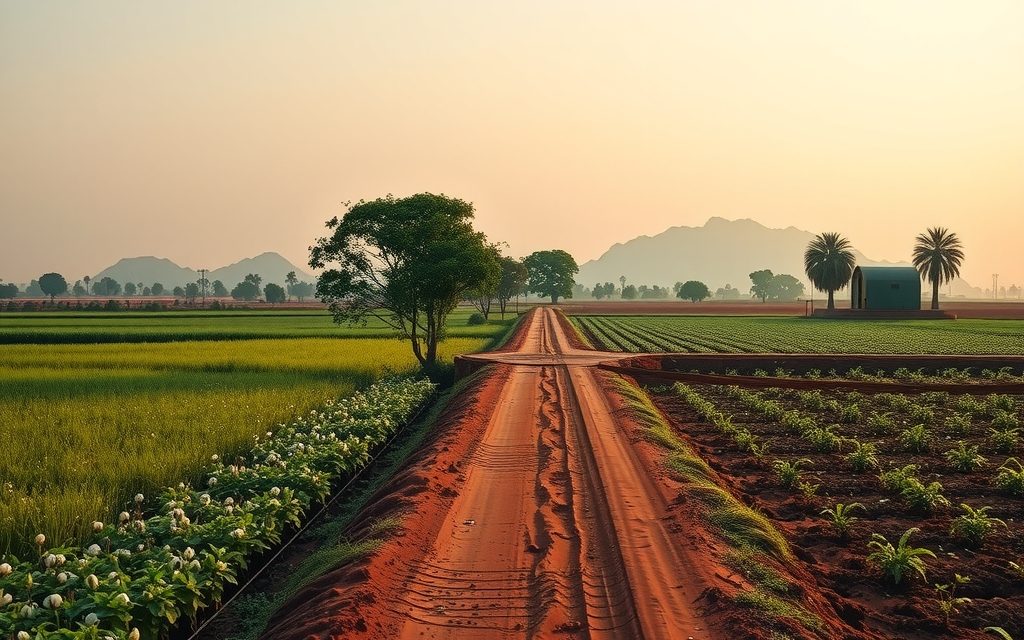
- Roughly 35 km east of Warangal city and 180–190 km from Hyderabad; nearest rail at Warangal, Kazipet or Nekkonda
- Pakhal Lake and Mission Kakatiya tanks irrigate ayacut paddy; bores of 200–500 ft serve chilli and cotton
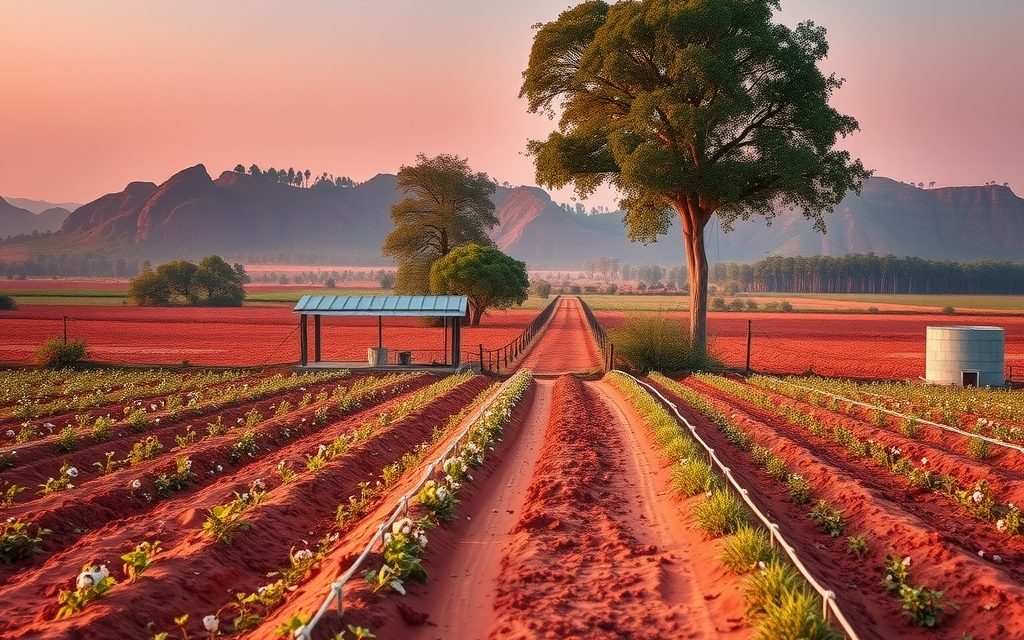
- Red-loam soils with heavier tank-bed soil; chilli, cotton, paddy, maize and turmeric
- Forest, Pakhal sanctuary, Forest Rights Act and Scheduled Area checks needed in fringe villages
- Tank-fed paddy land typically ₹25 L – ₹50 L per acre as of October 2026
| What | Indicative range | Note |
|---|---|---|
| Warangal–Narsampet road frontage outside town | ₹70 L – ₹2 Cr per acre | indicative, Oct 2026 |
| Town fringe within about 5 km, BT road | ₹50 L – ₹1.3 Cr per acre | indicative, Oct 2026 |
| Pakhal ayacut or tank-fed paddy land, BT road | ₹25 L – ₹50 L per acre | indicative, Oct 2026 |
| Red-loam chilli or cotton land with working bore | ₹16 L – ₹32 L per acre | indicative, Oct 2026 |
| Rainfed interior land, including forest-facing villages | ₹8 L – ₹18 L per acre | indicative, Oct 2026 |
| Farm plots in fenced farm ventures near the main road | ₹1.2 L – ₹3 L per gunta | indicative, Oct 2026 |
Ranges reflect recent transactions and advisor observation as of 2026-10. Always verify against the sub-registrar market value and the specific parcel.
East of Warangal, the road to Narsampet runs through some of the most quietly productive farm country in Telangana. Chilli plots turn red in the winter sun, cotton covers the uplands, and paddy fills the ayacuts of village tanks that drain, ultimately, towards one of the great Kakatiya reservoirs: Pakhal Lake, set in its own wildlife sanctuary a short drive beyond the town. Agriculture land in Narsampet is cheaper than land near the Warangal tri-city by a wide margin, and that gap is exactly what draws a certain kind of buyer. This guide is for the patient one: it covers the tank-fed water system, what the chilli and cotton economy means for land, indicative per-acre ranges as of October 2026, the sanctuary and agency-area checks, and registration at the Narsampet Tahsildar office.
Narsampet is a municipality and revenue-division headquarters in Warangal district (the district formerly called Warangal Rural). The division includes mandals such as Khanapur, Chennaraopet, Nallabelly, Duggondi and Nekkonda, stretching from the edge of the tri-city's influence towards the forests of the Pakhal sanctuary and the agency mandals beyond.
Why Narsampet works for farm land and land banking
We recommend Narsampet to a specific profile of buyer, and we are equally clear about who should not buy here.
The value is real. Irrigated, tank-fed paddy land and well-farmed chilli plots around Narsampet often cost a fraction of comparable land on the tri-city's fringes, only 35 km away. For a farming buyer, that means more acres for the same budget. For a land banker, it means a lower entry price with a plausible long-term case.
The farm economy is strong. The Warangal region is one of Telangana's major chilli and cotton belts, and the Enumamula market yard in Warangal is one of the busiest agricultural markets in the state. Narsampet's farmers sell into it, and a working farm here produces a crop with ready buyers.
The long-term story is gradual, not sudden. The tri-city is expanding east, the textile park and the Mamnoor airport revival lie on the Warangal side, and road upgrades keep shortening the drive. None of this will turn Narsampet's farmland into city land quickly. It may, over a decade or more, narrow the gap.
Location and access
Narsampet is reached from Warangal city along the Narsampet road heading east, a straightforward drive through farming villages.
- Warangal city: roughly 35 km west, about 45 minutes to an hour.
- Hanamkonda and Kazipet: roughly 40–50 km.
- Hyderabad: roughly 180–190 km via NH-163 to the tri-city and then east; allow about four hours.
- Pakhal Lake: a short drive north-east of town, inside the Pakhal Wildlife Sanctuary.
- Mahabubabad: roughly 40–50 km south-east.
- Nekkonda railway station: on the Kazipet–Vijayawada line, south of Narsampet.
Most Hyderabad buyers take a train to Kazipet or Warangal and drive the last stretch. There is no railway in Narsampet town itself.
Pakhal Lake and the tank-fed economy
Pakhal Lake was built in the early thirteenth century under the Kakatiya kings, by damming a stream between hills to create a large, permanent reservoir. Eight centuries later it still irrigates fields below it, and it sits at the heart of a landscape of smaller tanks, chain-linked by streams and channels, that is typical of the old Kakatiya country. Many of these tanks were desilted and repaired under Mission Kakatiya.
How tank irrigation works in practice
Each tank has an ayacut, the area of fields it is designed to irrigate through sluices and channels. In a good monsoon, a full tank gives the ayacut a secure kharif paddy crop and often a second crop. In a weak monsoon, the tank may only partly fill, and fields at the far end of the channels miss out. Tank-fed land is therefore secure in most years but not all, and its position within the ayacut matters.
Pakhal's ayacut versus village tanks
Land in the Pakhal ayacut benefits from a large, deep reservoir that rarely fails completely. Land under a small village tank is more exposed to the monsoon. Both are better than rainfed land. Ask the seller which tank serves the field, where the field sits on the channel, and what it grew last rabi season.
Godavari water on the horizon
Proposals have been made to supplement Pakhal with Godavari water through links from the Devadula system and the Ramappa side, which would make the tank system far more reliable. At our last review these were plans rather than working canals. Treat them as long-term upside, not as current water.
Borewells
Outside tank ayacuts, farming relies on borewells into the red-loam plateau and the underlying rock, commonly at 200 to 500 feet. Chilli in particular is usually grown with bore water and drip. A working bore with a sanctioned agricultural power connection adds clear value.
Heritage, tourism and what it does not do for land
Pakhal belongs to a wider Kakatiya heritage circuit that includes Laknavaram and the Ramappa temple in Mulugu district, inscribed as a UNESCO World Heritage Site in 2021. Weekend visitors from the tri-city and Hyderabad now drive past Narsampet to the lake and the forest. This has created some interest in land for farm stays and retreats near Pakhal. Be cautious: much of the attractive land near the lake is sanctuary, forest or restricted fringe, any hospitality use needs NALA conversion and local approvals, and tourist traffic is seasonal. For most buyers, tourism is a pleasant feature of the area rather than a basis for the purchase price.
Soil and crops: chilli, cotton and paddy
The soils are mostly red loam, with sandier red soil on the ridges and darker, heavier soil in tank beds and low-lying fields. This mix suits a rotation of crops that keeps Narsampet's farm economy diversified.
- Chilli: the high-value crop of the region, grown on well-drained red loam with bore water. The Warangal area is known for varieties including the round, mild Chapata or "tomato" chilli associated with villages on the Duggondi and Nallabelly side.
- Cotton: widely grown on the uplands, often rainfed.
- Paddy: in tank ayacuts and wherever water is assured.
- Maize and turmeric: common alternatives and rotations.
- Mango, guava and oil palm: orchards on uplands with water, with oil palm expanding under the state programme.
Chilli country: what it means for a land buyer
Chilli shapes Narsampet's land market more than any other crop, and buyers should understand it.
Chilli land is drained land. Chilli hates waterlogging. The best chilli fields are gently sloping red loam with good drainage and a reliable bore. These are not always the same fields that are best for paddy, which wants heavy, water-holding soil. A buyer planning chilli should walk the parcel after rain to see where water stands.
Chilli is high-value and high-risk. A good season with good prices can earn far more per acre than paddy; a bad season with pest attack or a price slump can wipe out the margin. Lessees who grow chilli pay higher rents in good years and struggle in bad ones. Many owners prefer a fixed cash lease for predictability.
Chilli brings infrastructure. Drying yards, cold storage and traders cluster around the Warangal region. A parcel with space and access for drying is useful to a chilli farmer and adds to its appeal for lease.
Indicative price bands for agriculture land in Narsampet
These ranges come from recent transactions and advisor observation as of October 2026. They are indicative. Tank position, bore yield, road access, title quality and proximity to the forest move individual parcels considerably.
| Parcel type and location | Indicative range | What decides it |
|---|---|---|
| Warangal–Narsampet road frontage outside town | ₹70 L – ₹2 Cr per acre | Frontage, commercial use, distance from Warangal |
| Town fringe within about 5 km, BT road | ₹50 L – ₹1.3 Cr per acre | Layout and conversion potential |
| Pakhal ayacut or tank-fed paddy land, BT road | ₹25 L – ₹50 L per acre | Position in the ayacut, rabi record |
| Red-loam chilli or cotton land with working bore | ₹16 L – ₹32 L per acre | Bore yield, drainage, access |
| Rainfed interior land, including forest-facing villages | ₹8 L – ₹18 L per acre | Access, wildlife pressure, title clarity |
| Farm plots in fenced farm ventures near the main road | ₹1.2 L – ₹3 L per gunta | Fencing, plantation, individual title |
Compare these with land on the tri-city fringe in our Warangal district farm-land guide, and the gap that defines Narsampet's value case is obvious.
The sanctuary, the forest and agency-area checks
North and east of Narsampet, farmland meets forest. The Pakhal Wildlife Sanctuary surrounds the lake, and the forested mandals beyond lead towards the agency areas of Mulugu and Mahabubabad districts. This brings a set of checks that buyers from Hyderabad rarely encounter elsewhere.
Reserve forest and sanctuary boundaries
Forest and sanctuary land cannot be bought or sold. In fringe villages, revenue and forest boundaries are not always aligned in old maps, so a parcel may need a joint survey to confirm where the patta ends. A notified eco-sensitive zone around a sanctuary can also regulate construction and certain activities; farming continues normally, but a farm-stay or large building needs checking.
Forest Rights Act titles
In forest-fringe villages, families have received land titles under the Forest Rights Act, including podu land. Such titles pass to heirs but can never be sold. Such land cannot be lawfully purchased.
Scheduled Area villages
Some villages in the forest-facing mandals around Narsampet, and many across the district line, are notified Scheduled Areas, where the 1/70 land transfer regulation bars transfers to non-tribals. Status is a matter of notification for each village, so we verify it before any discussion of price.
Practical realities
Forest-fringe farmland faces wild boar and other crop damage, weaker roads and patchier power. It suits buyers who want a quiet holding and accept those limits, not anyone planning intensive commercial farming.
Reading the Narsampet division belt by belt
Prices and risks shift across the division. These are broad observations from our visits, not hard lines.
The Warangal road villages
Between the tri-city's eastern edge and Narsampet, villages along the main road feel the city's pull most. Roadside land is priced for commercial use, and interior fields within a couple of kilometres carry an access premium. This belt is the natural choice for a land banker who wants growth optionality without paying tri-city prices. Buyers who would rather hold an approved house site closer to the city should compare open plots in Warangal.
Narsampet town and its immediate surroundings
Around the municipality, land prices reflect the town's role as a division headquarters with a market, schools and hospitals. DTCP layouts are creeping outward, and town-fringe farmland increasingly prices on conversion potential.
The chilli belt towards Duggondi and Nallabelly
South and west of town, red-loam uplands with bores dominate, and chilli and cotton are the main crops. This is working farm country where good land is held by long-settled families and changes hands mainly through local networks.
Khanapur and the Pakhal side
Towards Pakhal Lake, tank ayacuts give way to forest-fringe villages. The ayacut land is among the most secure in the division; the forest-facing land is the cheapest and the most heavily restricted. Every parcel here needs the sanctuary, forest and village-status checks set out above.
Nekkonda and the railway side
To the south, Nekkonda has a station on the Kazipet–Vijayawada line, which helps buyers who prefer the train. The surrounding country mixes tank-fed paddy and bore-irrigated uplands at moderate prices.
Types of parcels around Narsampet
- Tank-fed paddy land: small to medium holdings, often 2 to 6 acres, in the ayacuts of Pakhal and village tanks.
- Chilli and cotton uplands: red-loam parcels with bores, often 3 to 10 acres, the most common offer.
- Larger dry blocks: rainfed land in interior and forest-facing villages, sometimes 10 acres or more, suited to land banking or orchards.
- Road and town-edge land: priced on conversion potential and commercial use.
- Farm plots: a few fenced ventures near the main road, aimed at tri-city buyers.
Legal checklist for Narsampet farm land
- Pattadar passbook and Bhu Bharati record of rights (successor to Dharani), viewable on the state land records portal, for owner, extent and classification.
- Pahani and 1B history, especially for any assignment, government or forest entries.
- Encumbrance certificate for 30 years, including crop-loan charges.
- Link documents to the earliest available record, with all legal heirs' consent.
- FMB sketch for the survey number and sub-division, and boundary stones fixed on the ground by a licensed surveyor.
- Section 22-A prohibited properties list and assigned land under the POT Act.
- Forest and sanctuary boundary for any parcel near Pakhal or forest-fringe villages.
- Forest Rights Act title and Scheduled Area status of the village.
- Tank FTL and channel strips: exclude land under a tank's full tank level or government channels.
- Ceiling and ULC checks where relevant, NALA status for any non-farm use, and 58/59 papers near town.
Our step-by-step guide on how to buy agricultural land in Telangana walks through these checks in order.
Registration and charges in Narsampet
Unconverted agricultural land registers at the Tahsildar office of the mandal where it lies, Narsampet or a neighbouring mandal, with the Tahsildar acting as joint sub-registrar and mutation processed in the same step through Bhu Bharati. Converted land, approved plots and buildings register at the jurisdictional Sub-Registrar Office; Narsampet has its own SRO, and we confirm jurisdiction from the survey number.
| Charge | Approximate rate (Oct 2026) | Note |
|---|---|---|
| Stamp duty | About 5.5% | On the higher of market value and consideration |
| Transfer duty | About 1.5% | Not levied in gram panchayat areas |
| Registration fee | About 0.5% (about 2% in gram panchayat areas) | Total roughly 7.5% |
We verify current rates and the government market value on the registration portal and at the office on the day. The 1% TDS under Section 194-IA does not apply to rural agricultural land, which covers most farmland around Narsampet; land within the municipality or close to its limits may be treated differently for tax, so ask a CA.
Value land banking in Narsampet: a ten-year view
Several of our clients buy here explicitly to hold. If that is your plan, a few principles help.
Buy land that earns while it waits. A tank-fed or bore-irrigated parcel leased to a local farmer pays a modest rent and carries the per-acre state investment support that goes to pattadars under current scheme rules. Dry land that sits idle earns nothing and is more exposed to encroachment.
Favour access over acreage. When growth eventually reaches a rural area, it follows roads. A smaller parcel on a BT road towards Warangal usually appreciates more reliably than a larger one at the end of a cart track.
Keep the title spotless. In ten years, the buyer you sell to will run the same checks you did, under tighter digital records. Any defect you accept now becomes a discount later.
Stay present. Visit at least once or twice a year, keep boundary stones visible, and keep the lease and the passbook in order. Absentee land with no visible owner invites trouble.
Be realistic about the timeline. The textile park, airport revival and road projects are on the Warangal side. Their effect will reach Narsampet gradually, if at all. Base your purchase on farming value and treat appreciation as a bonus.
Inspecting a parcel: what to look for on the ground
Visit at least twice: once in the dry months from February to May, and once after the monsoon. In the dry season, check whether the bore still pumps, how much water the serving tank holds, and whether the chilli or rabi crop on neighbouring fields looks healthy. After the monsoon, look for standing water in low corners, see how the approach road behaves after rain, and check stream crossings. On chilli land, look at the slope and the colour of the soil, and ask neighbours about pest pressure in recent seasons. On tank land, walk the channel from the sluice to the field. On forest-facing land, look for signs of wild boar damage and ask about night-time crop guarding. A conversation with the farmers on either side tells you more about boundaries, water and possession than any document.
Mistakes buyers make in Narsampet
Paying ayacut prices for land outside the ayacut. Being near a tank is not the same as being in its ayacut. Confirm the field is served by a channel and sits within the tank's designed command.
Buying cheap forest-fringe land on trust. Some low-priced parcels near the sanctuary turn out to be Forest Rights Act titles, assigned land or land in Scheduled Area villages that cannot be sold to outsiders. A very low price and vague records are a signal to stop.
Treating chilli income as guaranteed. A lessee's promise of a high chilli-linked rent can collapse in a bad season. A fixed cash lease with modest rent is usually safer for an absentee owner.
Ignoring drainage. Paddy wants water to stand; chilli wants it gone. Match the parcel to the crop you plan, or plan the crop to the parcel.
Leaving land unvisited for years. Boundaries drift and neighbours cultivate idle land. Regular visits and a written lease protect a land bank.
Who should buy here, and who should not
Good fit: farmers and lessors who want productive tank-fed or chilli land at moderate prices; patient land bankers with a ten-year horizon; families with roots in the Warangal region; and buyers who will visit and supervise.
Poor fit: weekend-farmhouse seekers from Hyderabad, since the drive is four hours; investors seeking quick appreciation; and buyers drawn by very cheap forest-fringe land without the patience for heavy title checks. For land nearer the city, see farm land in Hanamkonda or agriculture land around Kazipet; to the south-east, our guide to agriculture land in Mahabubabad covers similar value country.
NRI note
Foreign-exchange rules (FEMA) prevent NRIs and OCI cardholders from buying farmland, plantations or farmhouses in India, and from taking them as gifts. They can inherit agricultural land from a resident Indian, and can sell inherited farm land only to a resident Indian. Warangal-region families abroad often hold inherited land around Narsampet; leasing it through a resident relative with a power of attorney is common. Any fresh purchase has to be made by a resident relative using money that is genuinely theirs. NRIs may buy plots, villas and apartments. See our NRI agricultural land rules for Telangana, and consult a chartered accountant on tax.
How NRR Estates helps in Narsampet
We are advisors, and we disclose our fees before any commitment. In Narsampet our work includes identifying which tank serves each parcel and its position in the ayacut; checking bores and drainage for chilli land; lawyer-led title verification with forest, Forest Rights Act and Scheduled Area checks where relevant; a licensed survey; negotiation against recent village sales; registration and mutation at the Tahsildar office or SRO; and, for land bankers, help setting up a written lease with a local cultivator.
Narsampet agriculture land: common questions
What is the price of agriculture land in Narsampet per acre?
As of October 2026, indicative ranges are about ₹25 lakh to ₹50 lakh per acre for Pakhal ayacut or tank-fed paddy land on a BT road, ₹16 lakh to ₹32 lakh for red-loam chilli or cotton land with a working bore, and ₹8 lakh to ₹18 lakh for rainfed interior land. Town-fringe land runs about ₹50 lakh to ₹1.3 crore and Warangal–Narsampet road frontage ₹70 lakh to ₹2 crore per acre, based on recent transactions and advisor observation.
Does Pakhal Lake irrigate farmland around Narsampet?
Yes, within its ayacut. Pakhal is a Kakatiya-era reservoir built in the early thirteenth century, and it still irrigates fields below it through sluices and channels. Around it, many smaller village tanks, repaired under Mission Kakatiya, irrigate their own ayacuts. Tank-fed land is secure in most years but depends on the monsoon filling the tank, and position on the channel matters. Proposals to add Godavari water to Pakhal were plans rather than working canals at our last review.
Is Narsampet good for long-term land banking?
It can be, for a patient buyer. Prices are far below the Warangal tri-city fringe only 35 km away, and the city's eastward growth, road upgrades and projects on the Warangal side may narrow that gap over a decade or more. Favour land that earns while it waits, such as tank-fed or bore-irrigated parcels on a written lease, prefer road access over raw acreage, keep the title spotless and visit regularly. Treat appreciation as a bonus, not a certainty.
What should I know about buying chilli land in Narsampet?
Chilli wants well-drained red loam and reliable bore water, usually with drip, so the best chilli fields are gently sloping and never waterlogged, unlike paddy land. Walk the parcel after rain to see where water stands. Chilli is high-value but risky: pests and price swings can wipe out a season, so absentee owners often prefer a fixed cash lease over a crop-linked rent. Space and access for drying make a parcel more attractive to lessees.
Can I buy land near the Pakhal Wildlife Sanctuary?
Only clean patta land outside forest and sanctuary boundaries, and only after careful checks. Forest and sanctuary land cannot be sold, and revenue and forest boundaries sometimes need a joint survey. Land held under Forest Rights Act titles is heritable but not saleable, and some villages are notified Scheduled Areas where transfers to non-tribals are barred. An eco-sensitive zone can regulate construction. Farming is fine, but farm-stay or resort plans need thorough approval checks.
Where do I register farm land bought in Narsampet?
Unconverted agricultural land registers at the Tahsildar office of the mandal where it lies, Narsampet or a neighbouring mandal. The Tahsildar acts as joint sub-registrar, and mutation is processed in the same step through Bhu Bharati. Converted land, approved plots and buildings register at the jurisdictional Sub-Registrar Office, and Narsampet has its own SRO. Stamp duty, transfer duty and registration fee total roughly 7.5% of value, and we verify current rates on the day.
How far is Narsampet from Hyderabad and Warangal?
Narsampet is roughly 35 km east of Warangal city, about 45 minutes to an hour by road, and roughly 40 to 50 km from Hanamkonda and Kazipet. From Hyderabad it is about 180 to 190 km via NH-163 to the tri-city and then east, around four hours by car. Many buyers take a train to Kazipet or Warangal and drive from there. Nekkonda, south of Narsampet, has a station on the Kazipet–Vijayawada line.
Can NRIs buy agricultural land in Narsampet?
No. Under FEMA, NRIs and OCI cardholders cannot buy agricultural land, plantations or farmhouses in India, and cannot receive them as a gift. Inheritance from a resident Indian is the exception, and inherited farm land may only be sold to a resident Indian. Families abroad who inherit land around Narsampet often lease it through a resident relative with a power of attorney. NRIs can buy plots, villas and apartments, and should consult a chartered accountant on tax.
Related guides
Paddy, cotton and chilli country around the Warangal–Hanamkonda–Kazipet tri-city, 145 km from Hyderabad on NH-163. Mandal guide, SRSP and Devadula water, KUDA zoning, indicative per-acre prices and scheduled-area legal checks.
Canal and tank-fed paddy, chilli and cotton uplands and oil palm gardens around the tri-city, about 140 km from Hyderabad. Indicative per-acre bands by belt, the KUDA zoning trap and a full Telangana title checklist.
Kazipet's outskirts are where the Warangal tri-city meets its farmland. Pre-urban acreage priced on KUDA zoning sits beside working paddy land: how to tell them apart, indicative per-acre bands, conversion steps and the tax points peri-urban buyers miss.
Cotton, chilli and tank-fed paddy land between the Warangal and Khammam markets, about 190 km from Hyderabad. Where the 1/70 Scheduled Area line runs, indicative per-acre prices and the full Telangana title checklist.
Warangal's tri-city plot market runs on KUDA approvals, not HMDA. Indicative October 2026 prices across Hanamkonda, Kazipet and the growth roads, plus flood, monument and title checks every buyer needs.
Hanamkonda, Warangal and Kazipet form Telangana's largest property market outside Hyderabad. This guide covers KUDA plots, independent houses, apartments and farm land, with indicative October 2026 bands, approvals, drivers and risks.

NRIs and OCIs cannot buy or receive gifts of agricultural land, plantations or farmhouses; inheritance is the only route. What inherited land allows, why benami workarounds are dangerous, and the lawful alternatives near Hyderabad.
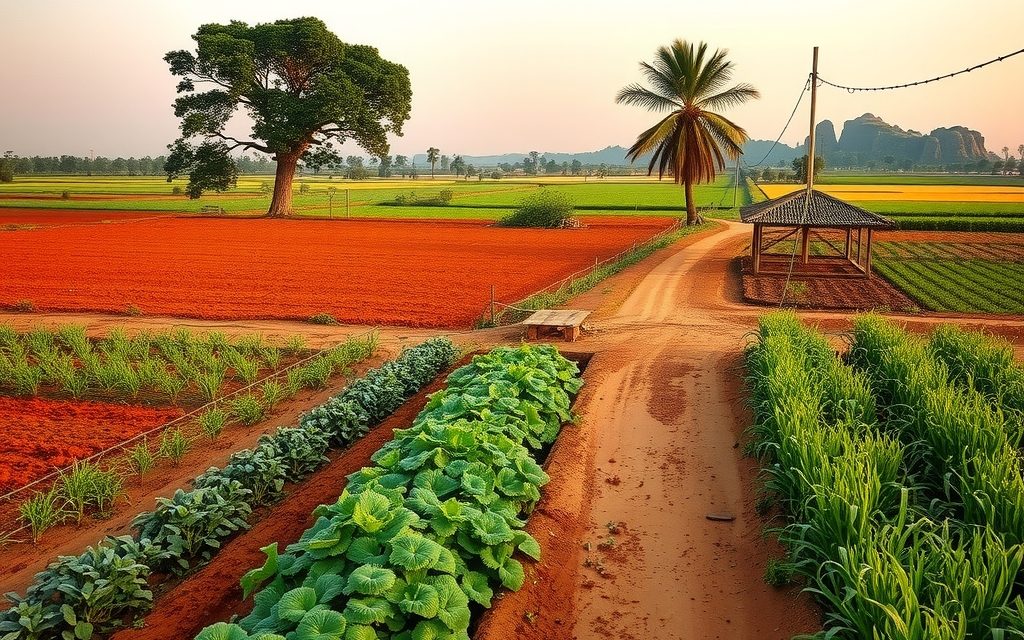
Red-soil farmland 4 km from the ORR beside the Aerospace SEZ and TCS campus. Interior villages still farm vegetables and mango; land near the SEZ is priced as future layout land and needs careful acquisition checks.