Agriculture & Farm Land in Kazipet, Hanamkonda–Warangal
Kazipet's outskirts are where the Warangal tri-city meets its farmland. Pre-urban acreage priced on KUDA zoning sits beside working paddy land: how to tell them apart, indicative per-acre bands, conversion steps and the tax points peri-urban buyers miss.
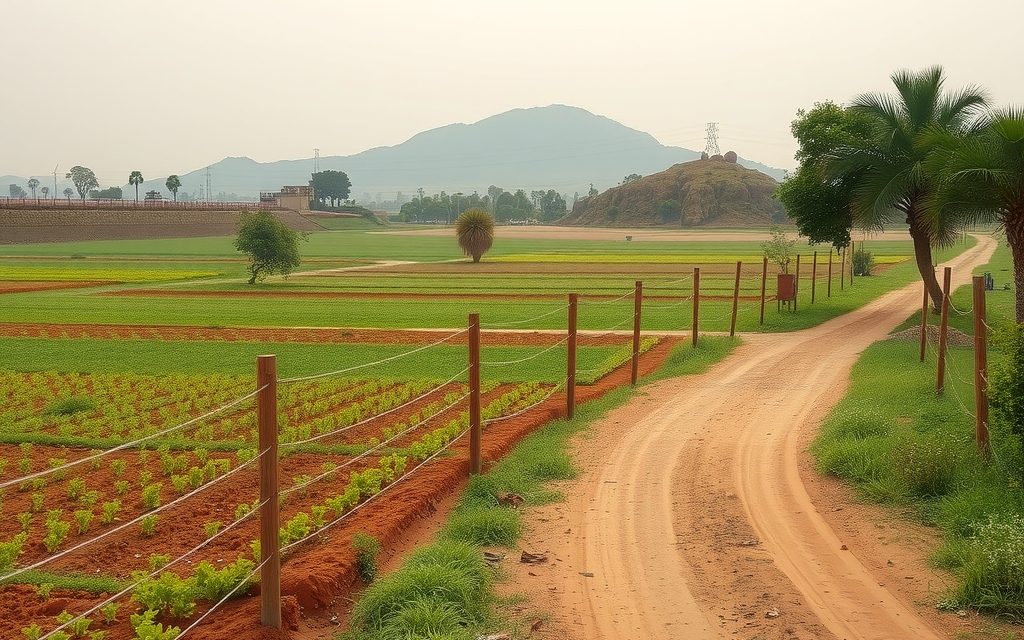
- About 135–145 km from Hyderabad on NH-163; Kazipet Junction has frequent trains to Secunderabad
- KUDA master-plan land-use zone for the exact survey number largely decides value on the urban edge
- Red-loam plateau with Kakatiya-era tanks and Devadula water via the Dharmasagar reservoir
- Growth drivers: NIT Warangal, Madikonda IT campuses, the junction and the railway manufacturing unit
- Farmland near municipal limits may not be rural for tax, so TDS and capital gains can apply
| What | Indicative range | Note |
|---|---|---|
| KUDA fringe within about 8 km, residential zone, main road | ₹1.5 Cr – ₹4.5 Cr per acre | indicative, Oct 2026 |
| NH-163 frontage towards Station Ghanpur | ₹1.5 Cr – ₹4 Cr per acre | indicative, Oct 2026 |
| Villages 8–15 km out on BT roads | ₹70 L – ₹1.8 Cr per acre | indicative, Oct 2026 |
| Tank-fed or Devadula-served paddy land, 12–25 km | ₹30 L – ₹60 L per acre | indicative, Oct 2026 |
| Red upland with working borewell, 15–30 km | ₹22 L – ₹40 L per acre | indicative, Oct 2026 |
| Farm plots in gated farm ventures near the city | ₹2.5 L – ₹6 L per gunta | indicative, Oct 2026 |
Ranges reflect recent transactions and advisor observation as of 2026-10. Always verify against the sub-registrar market value and the specific parcel.
Kazipet is the first part of the Warangal tri-city you reach from Hyderabad, and the place where the city's growth meets its farmland most abruptly. Within a few kilometres of the railway junction and NIT Warangal, paddy fields sit beside new layouts, IT campuses at Madikonda overlook cotton plots, and village tanks are ringed by survey stones for ventures that have not yet been built. Agriculture land in Kazipet is therefore a very different purchase from farm land deep in a district. On the city side, most acreage is really pre-urban land priced on what the master plan allows. Further out, it is still working farmland, but with conversion in the air. This guide explains how to tell the two apart, gives indicative per-acre ranges as of October 2026, sets out the KUDA master-plan and conversion questions, and covers registration and the tax points that catch peri-urban buyers out.
Kazipet lies in Hanamkonda district (the former Warangal Urban district), with the town itself inside the Greater Warangal Municipal Corporation. The farmland that buyers ask about lies on its outskirts and in neighbouring mandals such as Hasanparthy, Dharmasagar, Velair and Elkathurthy, much of it within the planning area of the Kakatiya Urban Development Authority (KUDA).
Why Kazipet's edge attracts farm-land buyers
Buyers come to Kazipet's outskirts for different reasons, and it helps to be honest about which one is yours.
- The conversion investor wants agricultural land in the path of the city, to hold until it can be converted and laid out, or sold to someone who will do so.
- The family land buyer wants a few acres within a short drive of home, perhaps with a farmhouse, mango trees and room for the next generation to build.
- The working farmer or lessor wants productive paddy or cotton land with good access to the Warangal markets and the city's services.
All three are active here. Their price expectations are very different, and much of the confusion in Kazipet's land market comes from a farming parcel being priced as if it were a layout site, or the reverse.
Kazipet's growth drivers: junction, NIT and the IT campuses
Kazipet's edge is priced by forces that have little to do with farming.
The railway junction and the manufacturing unit
Kazipet Junction is where the Secunderabad line meets the Delhi–Chennai trunk route, and it has long been a major railway employment centre. The railway manufacturing unit being built up on the Kazipet outskirts adds a new source of jobs and has lifted interest in nearby villages. Expect continued demand for housing and support services around it, with the usual caution that project timelines shift.
NIT Warangal and the education cluster
The National Institute of Technology anchors a cluster of colleges, schools and coaching centres. Faculty, staff and students sustain rental and housing demand that steadily pushes residential layouts outward.
Madikonda and the Hyderabad road
The IT campuses at Madikonda, on the Hyderabad side of Kazipet, together with NH-163 itself, have pulled the urban edge west and south. Land along the highway towards Station Ghanpur is now priced well above farming value.
Tri-city projects
A ring road around the tri-city being taken up in phases, the Kakatiya Mega Textile Park towards Sangem and Geesugonda on the far side of Warangal, and plans to revive the Mamnoor airport all feed the sense that the tri-city will keep growing. Their direct effect on Kazipet's farmland varies, and the ring-road alignment in particular matters parcel by parcel.
Location and connectivity
- Hyderabad: roughly 135–145 km on NH-163 through Ghatkesar, Bhongir, Aler, Jangaon and Station Ghanpur; Kazipet is the closest part of the tri-city to the capital.
- Trains: frequent services from Kazipet Junction to Secunderabad, typically two to three hours, plus direct trains across India.
- Hanamkonda centre: about 5–6 km.
- Warangal fort and the old city: roughly 12–15 km.
- Station Ghanpur: about 20–25 km south-west on NH-163.
- Karimnagar: roughly 70–75 km north-west via Hasanparthy and NH-563.
Distances below are measured from the edge of the Kazipet–Hanamkonda built-up area, because that is what matters for conversion potential.
Soil, water and what still grows on Kazipet's outskirts
Red loam on the Deccan plateau
The tri-city sits on a red-loam plateau with granite outcrops and low hills. Soils are mostly red loam and sandy red soil, with darker, heavier soil in tank ayacuts and low-lying fields. Drainage is generally good on the uplands; low fields near tanks can waterlog in a heavy monsoon.
Tanks, Devadula and borewells
The area is ringed by Kakatiya-era tanks, many restored under Mission Kakatiya. The Dharmasagar reservoir east of Kazipet is part of the Devadula lift system, which brings Godavari water to the region and also supplies drinking water to the city. Fields below tanks and in Devadula-served pockets grow paddy; elsewhere farming relies on borewells, commonly 200 to 500 feet, with yields that drop as urbanisation reduces recharge.
Crops
- Paddy: in tank ayacuts and irrigated pockets.
- Cotton and maize: on red uplands.
- Chilli and turmeric: grown in the wider Warangal region and traded at the Enumamula market yard.
- Vegetables: increasingly common close to the city, supplying the tri-city's markets.
- Mango, guava and oil palm: smaller orchards on uplands with bore water.
Farm land or future layout? How the KUDA master plan decides
On Kazipet's edge, the single most important document after the title is the land-use zoning in KUDA's master plan. KUDA's current plan, prepared with a long-range horizon to around 2041, divides its planning area into zones such as residential, commercial, industrial, public and semi-public, recreational, water bodies and agriculture or conservation. The zone your survey number falls in largely decides what the land is worth.
- Residential or commercial zone: after NALA conversion, the owner can apply for a KUDA layout approval or building permission. This is where layout-site pricing applies.
- Agriculture or conservation zone: the land is meant to stay agricultural. Change of land use is possible in principle but not guaranteed, and it adds time, cost and uncertainty. Pricing should be closer to farming value with an option premium.
- Water body, buffer or road alignment: land under a tank's full tank level, in a buffer strip, or on a proposed master-plan road cannot be developed as you might hope. Road alignments in particular can take a slice of a parcel.
Before you pay a layout-site price, obtain the master-plan land-use for the exact survey number from KUDA or a licensed planner, and check for proposed roads crossing it. Sellers and intermediaries sometimes describe the whole of Kazipet's outskirts as "residential zone"; it is not.
Municipal limits, KUDA area and gram panchayats
Three layers of jurisdiction overlap on Kazipet's edge, and each one changes something for a buyer. Land inside the Greater Warangal Municipal Corporation follows municipal building rules and attracts transfer duty on registration. Land outside the corporation but inside the KUDA planning area is governed by the master plan and needs KUDA approval for layouts, while day-to-day matters such as house permissions on gram panchayat land go through the village panchayat under KUDA's planning rules. Land beyond the KUDA boundary falls under DTCP for layouts and is priced more like ordinary district farmland. Before comparing two parcels, establish which layer each one sits in; it explains a large part of any price difference and tells you which office will approve whatever you plan to build.
Reading the outskirts direction by direction
Kazipet's edge does not grow evenly. These are broad patterns from our visits.
West and south-west: the Hyderabad road
Madikonda, the IT campuses and NH-163 have made this the most expensive direction. Villages towards Station Ghanpur along the highway are priced for warehousing, commercial frontage and layouts. Farmland here is scarce, and much of what is offered is already informally plotted.
South: Somidi, Kadipikonda and beyond
The southern pockets close to Kazipet are filling with approved and unapproved layouts. A little further out, towards the Inavolu side, farmland survives in tank ayacuts and on red uplands, with prices stepping down noticeably once you leave the immediate urban fringe.
East: Dharmasagar and the reservoir
The Dharmasagar side mixes Devadula-served paddy, rocky uplands and new layouts on the main roads. The reservoir's surroundings need careful FTL and buffer checks. Land here appeals to buyers who want working farmland within a short drive of Kazipet.
North: Hasanparthy and the Karimnagar road
North of Kazipet and Hanamkonda, the Karimnagar road through Hasanparthy and Elkathurthy is a second growth axis. Land close to the highway prices for layouts; interior villages remain farming country with canal and tank water. Our Warangal real estate guide describes how these corridors fit into the wider tri-city market.
Indicative price bands for agriculture land around Kazipet
The ranges below are based on recent transactions and advisor observation as of October 2026. They are indicative. Master-plan zone, road access, distance from the urban edge and title quality move individual parcels dramatically.
| Parcel type and location | Indicative range | Key driver |
|---|---|---|
| KUDA fringe within about 8 km of Kazipet, residential-zone, main road | ₹1.5 Cr – ₹4.5 Cr per acre | Zoning, layout potential, road width |
| NH-163 frontage towards Station Ghanpur | ₹1.5 Cr – ₹4 Cr per acre | Highway visibility, commercial use, setbacks |
| Villages 8–15 km out on BT roads (Dharmasagar, Velair, Hasanparthy sides) | ₹70 L – ₹1.8 Cr per acre | Direction of growth, ring-road proximity |
| Tank-fed or Devadula-served paddy land, 12–25 km | ₹30 L – ₹60 L per acre | Reliability of water, access |
| Red upland with working borewell, 15–30 km | ₹22 L – ₹40 L per acre | Bore yield, approach road |
| Farm plots in gated farm ventures near the city | ₹2.5 L – ₹6 L per gunta | Fencing, plantation, individual title |
The gap between the first and fourth rows is the gap between pre-urban land and farmland. Most disputes we see on Kazipet's edge come from a buyer paying a first-row price for a parcel whose zoning or access belongs in the third or fourth.
From patta land to approved layout: the conversion path
If you are buying with conversion in mind, understand the sequence and the time it takes.
- Confirm title and zoning. Clean title and a residential or commercial master-plan zone are the starting points.
- NALA conversion. Under the Telangana agricultural land (conversion for non-agricultural purposes) law, the owner applies to convert the land, paying a conversion fee based on the land's market value. Once converted, the land moves out of the agricultural record and future registrations happen at the SRO.
- KUDA layout approval. A layout must provide roads, open spaces and amenity areas to the required standards, with an LP number on approval. Plots are often released in stages against mortgaged plots until infrastructure is completed.
- TS RERA registration. Layouts above 500 square metres or with more than eight plots must be registered with TS RERA before plots are marketed.
The whole process can take many months, sometimes longer, and it costs money at every step. That is why a raw acre is worth much less than the sum of the plots it could become. Our guide to NALA conversion in Telangana explains the fee and the process in detail.
Urban agricultural land and tax: a wrinkle worth knowing
Here is a point many buyers miss. Under the Income Tax Act, agricultural land is treated as rural, and outside the capital-gains net, only if it lies beyond prescribed distances from a municipality: 2, 6 or 8 km measured aerially from the municipal limit, depending on the municipality's population. Land within those distances, or inside municipal limits, is a capital asset even if it is still farmed and still classified as agricultural in the land record.
Around Kazipet, a great deal of farmland falls within those distances of the Greater Warangal limits. Two consequences follow:
- TDS under Section 194-IA: the 1% TDS on purchases above ₹50 lakh does not apply to rural agricultural land, but it can apply to agricultural land that is not rural for tax purposes. On the city side of Kazipet, buyers should assume it may apply and check with a CA.
- Capital gains for the seller: the seller may owe capital-gains tax, and an NRI seller triggers Section 195 withholding instead.
We do not give tax advice. We flag the issue and recommend a chartered accountant confirms the position for the specific survey number before registration.
Parcel types on Kazipet's outskirts
Pre-urban acreage
Land close to the urban edge in residential zones, bought for conversion or resale to developers. Ticket sizes are high and title diligence must be thorough.
Working farmland further out
Paddy and cotton land in the villages beyond 10–15 km, priced closer to farming value but with growth optionality. This is where family land buyers and farmers find their best value.
Farmhouse parcels
One- to three-acre parcels with mango or guava trees, bought for a farmhouse within easy reach of home. Building needs permission from the gram panchayat or KUDA as applicable, and commercial use needs conversion.
Farm plots in ventures
Fenced, planted plots of a few guntas. Ensure each plot is a registered, surveyed sub-division in your name, and do not confuse a farm plot with an approved residential plot. If you want a house site, look at open plots in Kazipet with KUDA approval instead.
Legal checklist for Kazipet agriculture land
- Title: pattadar passbook, Bhu Bharati record of rights (successor to Dharani) via the state land records portal, pahani and 1B history, and a 30-year encumbrance certificate.
- Chain: link documents back to the earliest record, with all legal heirs' consent.
- Survey: survey number, sub-division and FMB sketch, with a licensed surveyor marking boundaries. On the urban edge, encroachment by neighbouring layouts is common.
- Master-plan zone and proposed roads from KUDA for the exact survey number.
- Tank FTL and buffer: many tanks around the tri-city have layouts creeping into their full tank level. Exclude any such strip.
- Railway land and highway setbacks near the junction, the manufacturing unit and NH-163.
- Section 22-A, assigned land and inam history: former inam lands exist around Hanamkonda and Kazipet and need careful review.
- 58/59 regularisation papers for parcels near built-up areas, and ULC history inside the old urban agglomeration.
- NALA status: if the land is already converted, it registers at the SRO; if not, at the Tahsildar office.
- Existing unapproved layouts: check whether the parcel has already been informally plotted and part-sold.
Registration and charges
Land still classified as agricultural in the record registers at the Tahsildar office of the mandal where it lies, with the Tahsildar acting as joint sub-registrar and mutation following in the same step through Bhu Bharati. NALA-converted land, approved plots and buildings register at the jurisdictional Sub-Registrar Office on the Hanamkonda–Kazipet side, which we confirm from the survey number.
| Charge | Approximate rate (Oct 2026) | Remarks |
|---|---|---|
| Stamp duty | About 5.5% | On the higher of market value and consideration |
| Transfer duty | About 1.5% | Applies in municipal areas; not in gram panchayat areas |
| Registration fee | About 0.5% (about 2% in gram panchayat areas) | Total roughly 7.5% |
Rates are approximate and the market value for each survey number is set by the department, so we verify both on the registration portal and at the office on the day.
Mistakes we see on the urban edge
Buying a "residential zone" parcel without checking the zone. The master-plan map is public record. A seller's word is not. We have seen agriculture-zone and buffer-zone land offered at layout prices.
Ignoring a proposed master-plan road. A planned 30 or 45 metre road can take a large share of a small parcel, or split it in two. It can also add value if it gives frontage. Either way, know before you pay.
Buying into an informal plotting. Some acreage on the fringe has been sold as unapproved plots, sometimes partly, to dozens of buyers. Acquiring the "balance" of such a parcel means inheriting those buyers' claims.
Paying conversion value for unconverted land. A raw acre needs NALA conversion, layout approval, roads and open spaces before it yields plots. The sum of future plot prices is not today's value.
Forgetting tax. Peri-urban agricultural land may not be rural for tax purposes, so TDS and capital gains can apply. Ask a CA before registration, not after.
A simple comparison: two acres, two very different buys
Consider two one-acre parcels offered in the same month. The first lies about 6 km from Kazipet in a residential zone, on a 40-foot road, with clean title. The second lies about 20 km out, in a tank ayacut, growing paddy, on a village BT road. The first might be offered somewhere in the range of ₹2 crore to ₹3.5 crore; the second around ₹35 lakh to ₹55 lakh. Neither is right or wrong. The first is a conversion play whose return depends on approvals, infrastructure and the pace of the city. The second is farmland that earns a modest income today, with a smaller, slower growth option. Decide which purchase you are making before you start comparing prices.
Who should buy on Kazipet's edge
Good fit: conversion investors who will do the zoning homework and can hold through the approval process; tri-city families who want land close to home; professionals linked to NIT, the railways or Madikonda; and farmers who want productive land near a large market.
Poor fit: buyers looking for cheap acreage, which Kazipet's edge no longer offers; anyone unwilling to verify zoning and road alignments; and buyers who want quiet countryside for decades, since the city is coming. For cheaper farmland in the same region, look east at farm land in Warangal district or south-west along the highway at agriculture land in Jangaon. The neighbouring Hanamkonda farm-land guide covers the northern side of the city.
NRI note
Under FEMA, a non-resident Indian or OCI cardholder may not purchase agricultural land, a plantation or a farmhouse, nor accept one as a gift. Inheritance from a resident Indian is permitted, and inherited farm land can be sold on only to a resident. On Kazipet's edge, the practical alternative is to buy a KUDA-approved residential plot, a villa or an apartment, all of which NRIs may purchase. Once land is lawfully converted and laid out as approved residential plots, those plots fall outside the agricultural-land restriction. See NRI rules for agricultural land in Telangana, and consult a CA on tax and repatriation.
How NRR Estates helps in Kazipet
We are advisors, and we disclose our fee in writing before any commitment. For Kazipet our work typically includes:
- Pulling the master-plan zone and any proposed roads for each shortlisted survey number before you visit.
- Site visits by road or train, or on video for buyers who cannot travel.
- Lawyer-led title verification, including tank FTL, railway and inam checks.
- A licensed survey to fix boundaries and detect encroachments.
- Negotiation that separates farming value from conversion premium.
- Registration and mutation at the Tahsildar office or SRO, and introductions to planners and CAs for conversion and tax.
Kazipet farm land: frequently asked questions
What does agriculture land near Kazipet cost per acre?
As of October 2026, indicative ranges are roughly ₹1.5 crore to ₹4.5 crore per acre for residential-zone land on a main road within about 8 km, and ₹1.5 crore to ₹4 crore for NH-163 frontage towards Station Ghanpur. Villages 8–15 km out on BT roads run about ₹70 lakh to ₹1.8 crore, tank-fed or Devadula-served paddy land 12–25 km out ₹30 lakh to ₹60 lakh, and borewell uplands ₹22 lakh to ₹40 lakh per acre, based on recent transactions and advisor observation.
How does the KUDA master plan affect farm land around Kazipet?
It largely decides what the land is worth. KUDA's plan zones its area into categories such as residential, commercial, industrial, recreational, water bodies and agriculture or conservation. Residential or commercial-zone land can, after NALA conversion, receive layout approval and commands layout-site prices. Agriculture-zone land is meant to stay agricultural, and change of use is uncertain. Proposed master-plan roads and tank buffers can also take part of a parcel. Get the zone for the exact survey number before paying.
Can I convert agricultural land near Kazipet into plots?
Often yes, if the master-plan zone permits it. The usual sequence is clean title, NALA conversion with a fee based on market value, KUDA layout approval with roads, open spaces and amenity areas and an LP number, and TS RERA registration if the layout exceeds 500 square metres or eight plots. Plots are often released in stages against mortgaged plots. The process takes many months and costs money at every step, which is why a raw acre is worth less than its future plots.
Does 1% TDS apply when buying farm land near Kazipet?
It can. Section 194-IA TDS does not apply to rural agricultural land, but tax law treats agricultural land as rural only if it lies beyond 2, 6 or 8 km, measured aerially, from a municipality's limits, depending on population. Much farmland near the Greater Warangal limits falls within those distances, so it may be a capital asset even if farmed, making TDS and the seller's capital gains relevant. We flag this and recommend a chartered accountant confirms the position for the survey number.
Where is agricultural land in Kazipet registered?
Land still classified as agricultural in the Bhu Bharati record registers at the Tahsildar office of the mandal where it lies, with the Tahsildar acting as joint sub-registrar and mutation in the same step. NALA-converted land, approved plots and buildings register at the jurisdictional Sub-Registrar Office on the Hanamkonda–Kazipet side, which we confirm from the survey number. Stamp duty, transfer duty and registration fee total roughly 7.5% of value. We verify current rates on the day.
Which direction around Kazipet is growing fastest?
The west and south-west, along NH-163 and around Madikonda's IT campuses, are the most expensive and most built-up, with farmland scarce. The southern pockets near Somidi and Kadipikonda are filling with layouts. The Dharmasagar side to the east still mixes paddy and uplands with new layouts on main roads, and the Karimnagar road through Hasanparthy is a second growth axis to the north. Interior villages in every direction remain farming country at much lower prices.
What are the main legal risks on Kazipet's urban edge?
Beyond standard title checks, the big ones are master-plan zoning and proposed roads, tank FTL and buffer strips, railway land and highway setbacks, former inam lands, and parcels that have already been informally plotted and part-sold to other buyers. Encroachment by neighbouring layouts is common, so a licensed survey matters. Also check Section 22-A, assigned land, 58/59 regularisation and ULC history inside the old urban agglomeration, and confirm NALA status, which decides where the land registers.
Can NRIs buy farm land near Kazipet?
No. Under FEMA, NRIs and OCI cardholders cannot buy agricultural land, plantations or farmhouses, and cannot receive them as a gift; they can only inherit such land and may sell it only to a resident Indian. Around Kazipet the practical alternative is a KUDA-approved residential plot, villa or apartment, which NRIs may buy. Lawfully converted and approved residential plots fall outside the agricultural-land restriction. Tax and repatriation questions belong with a chartered accountant.
Related guides
Canal and tank-fed paddy, chilli and cotton uplands and oil palm gardens around the tri-city, about 140 km from Hyderabad. Indicative per-acre bands by belt, the KUDA zoning trap and a full Telangana title checklist.
Kazipet is the Warangal tri-city's growth side: the rail junction, NIT, the Madikonda IT campuses and NH 163 to Hyderabad. KUDA ventures, indicative per sq yd bands and the railway, highway and tank checks that matter.
Paddy, cotton and chilli country around the Warangal–Hanamkonda–Kazipet tri-city, 145 km from Hyderabad on NH-163. Mandal guide, SRSP and Devadula water, KUDA zoning, indicative per-acre prices and scheduled-area legal checks.
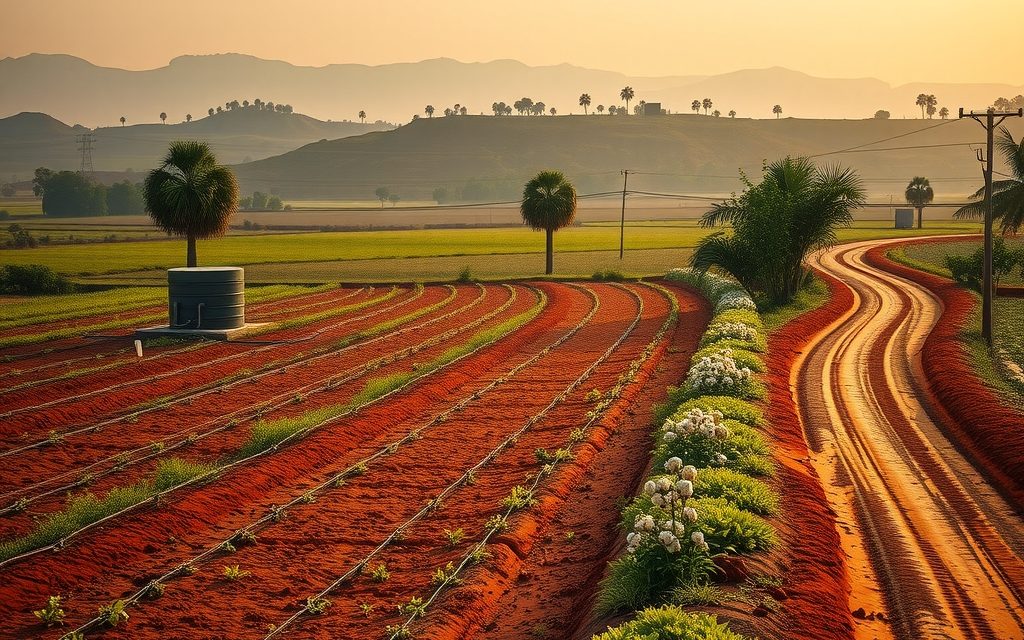
Jangaon sits about 85 km from Hyderabad on the Warangal highway. Highway land bought by city investors, Devadula and tank-fed paddy, red-soil cotton country: indicative per-acre bands, water realities and Telangana title checks.
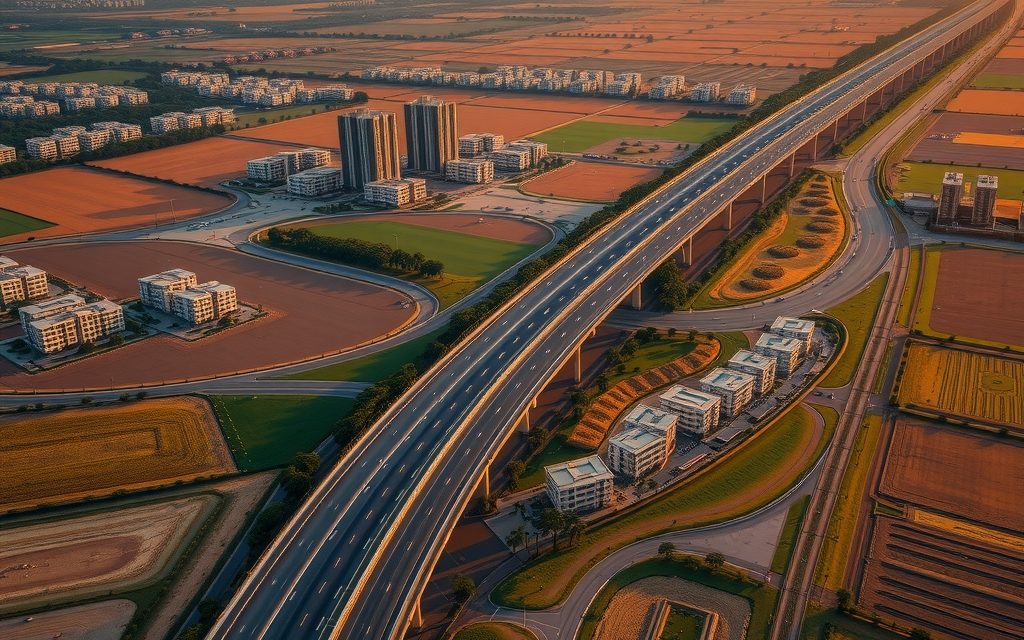
Hanamkonda, Warangal and Kazipet form Telangana's largest property market outside Hyderabad. This guide covers KUDA plots, independent houses, apartments and farm land, with indicative October 2026 bands, approvals, drivers and risks.
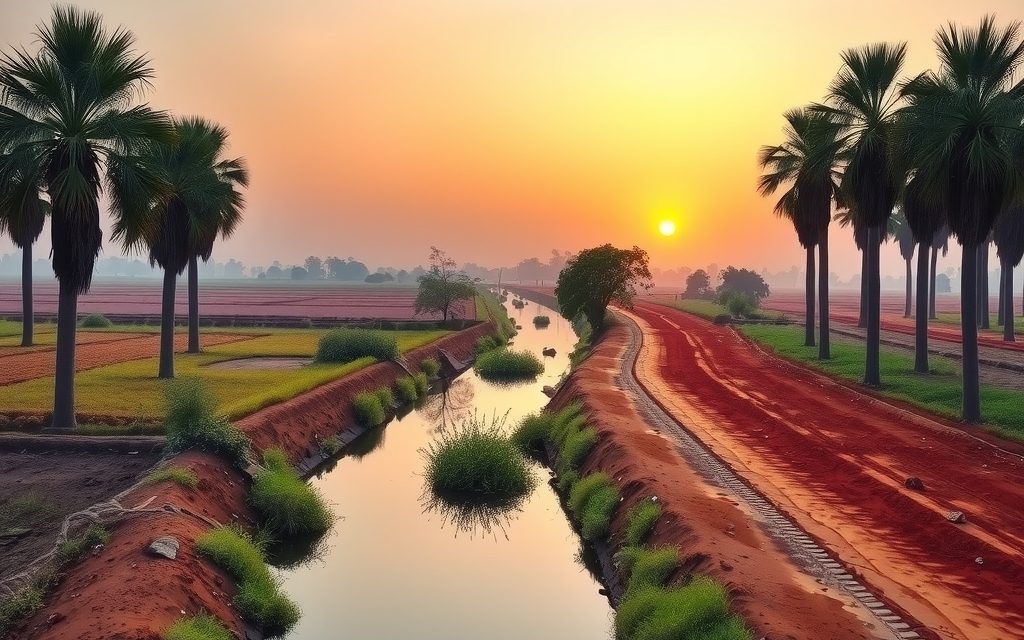
When Telangana farm land needs NALA conversion, how the fee is calculated on government basic value, the online process and timelines, the penalty for building first, and how layout and building approvals follow.

NRIs and OCIs cannot buy or receive gifts of agricultural land, plantations or farmhouses; inheritance is the only route. What inherited land allows, why benami workarounds are dangerous, and the lawful alternatives near Hyderabad.
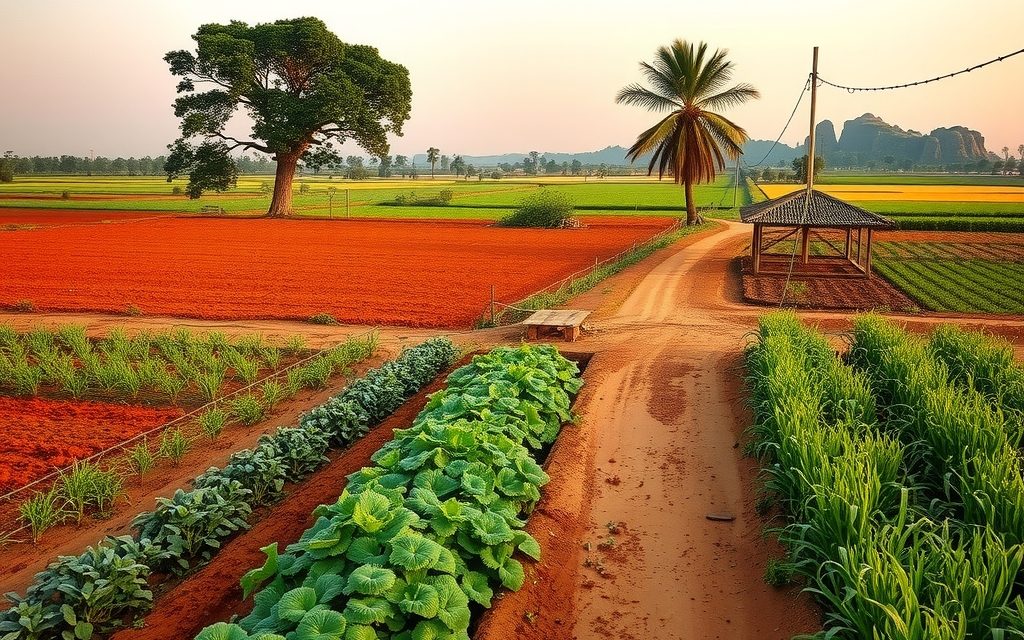
Red-soil farmland 4 km from the ORR beside the Aerospace SEZ and TCS campus. Interior villages still farm vegetables and mango; land near the SEZ is priced as future layout land and needs careful acquisition checks.