Agriculture & Farm Land in Kandlakoya, Medchal-Malkajgiri
Residual agricultural parcels at the ORR Medchal interchange, between the CMR college cluster, the oxygen park and fast-filling HMDA layouts. Priced as future development land; real farming lies further north.
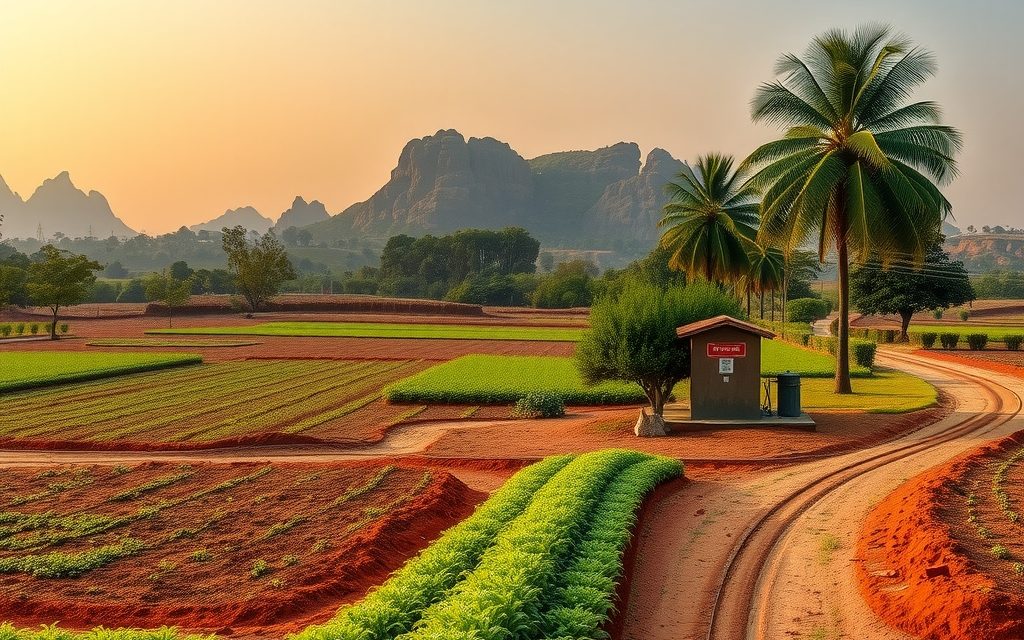
- ORR Medchal interchange at the village; Gachibowli typically 35–50 min off-peak
- Agricultural land registers at the Medchal Tahsildar; converted land at the jurisdictional SRO
- Borewells commonly 600–1,100 ft in hard rock; test yield in April–May
- Thin red gravelly soil; vegetables, fodder, mango, guava and custard apple
- Most offers 10 guntas–2 acres, usually leftovers beside existing layouts
| What | Indicative range | Note |
|---|---|---|
| Residual patta land, residential zone, 30–40 ft road, near the ORR | ₹5 Cr – ₹9 Cr per acre | indicative, as of October 2026 |
| NH-44 or service-road frontage near the interchange | ₹8 Cr – ₹15 Cr per acre | indicative, as of October 2026; verify zoning |
| Interior pockets toward Gundlapochampally, village road | ₹3.5 Cr – ₹6 Cr per acre | indicative, as of October 2026 |
| Land beside the green block, tanks or conservation strips | ₹2.5 Cr – ₹5 Cr per acre | indicative, as of October 2026 |
| Small agricultural parcels sold in guntas | ₹15 L – ₹35 L per gunta | indicative, as of October 2026; often unapproved |
Ranges reflect recent transactions and advisor observation as of 2026-10. Always verify against the sub-registrar market value and the specific parcel.
Kandlakoya is the first village you hit after crossing the Outer Ring Road northward on NH-44, and it has changed faster than almost any place on Hyderabad's northern edge. The ORR Medchal interchange sits on its doorstep, the CMR group's engineering campuses line the highway, the HMDA oxygen park occupies a green block beside the ring road, and gated villa and plot layouts have taken over fields that grew tomatoes and fodder within living memory. Anyone researching agriculture land in Kandlakoya should start with one blunt fact: what survives here is residual agricultural land, valued for what it could become, not for what it yields. This guide explains how that residual market works in October 2026, what the land costs per acre, which documents matter most, where registration happens in Medchal mandal, and when a buyer who genuinely wants to farm should look a few kilometres further north instead.
We have walked most of the remaining survey numbers in this belt with buyers over the last few years. The pattern is consistent: small leftover holdings wedged between layouts, a handful of larger family blocks waiting for the right developer, and a steady stream of enquiries from people in Kompally, Alwal and Bowenpally who want to own a piece of open land close to home. That demand is real. So are the traps.
Why buyers still ask for farm land in Kandlakoya
The short answer is location. Kandlakoya is the closest point on the NH-44 corridor where an agricultural survey number can still be bought at all. South of the ring road, Kompally and Dulapally are fully urban. North of it, Kandlakoya and Gundlapochampally form a transition strip where the agricultural record survives on paper even where the ground has become a construction site. For a buyer living in north Hyderabad, it is the nearest place to hold land rather than a flat.
The second reason is the institutions. The CMR engineering, technology and management colleges at Kandlakoya, and the Malla Reddy group's large campuses a few kilometres south at Maisammaguda and Dulapally, bring tens of thousands of students and staff into the belt every working day. Hostels, mess halls, shops and rental housing follow students. Land that can host any of those uses gets priced on that basis, which is why a field next to a college compound is rarely sold as a field.
The third reason is the expected office demand. A state-backed IT park project was announced for Kandlakoya on the ring road to bring technology employment to the north side of the city. How quickly that space fills is uncertain, and we tell buyers not to pay today for jobs that have not arrived. But the announcement alone has pulled Kandlakoya into the conversation that once belonged only to the western corridor.
And there is a quieter reason: some buyers simply want a land bank close to the city with a credible road and civic story behind it. Kandlakoya serves that buyer well when the title is clean and the zoning is right. It serves the serious farmer poorly, and we say so in the first meeting.
The Kandlakoya residual-land market in October 2026
From recent transactions and our own site visits, five features define the market right now:
- Parcels are small and irregular. Most agricultural offers are between 10 guntas and 2 acres, usually the remainder of a family holding after the larger portion went into a layout. Contiguous blocks above 5 acres are rare and almost always negotiated directly with developers.
- The buyer pool is mixed. We see salaried professionals from north Hyderabad, small builders looking for a site next to an existing layout, education-sector investors eyeing hostel land, and local families consolidating holdings. Very few buyers intend to cultivate.
- The conversion premium is already in the price. Sellers know the plot rate in neighbouring HMDA layouts and price their acre accordingly. Raw land here is not cheap land.
- Access decides everything. A parcel with legal frontage on a 40 ft road can sell for twice what an identical parcel behind it fetches, if the rear parcel depends on a disputed cart track.
- Problem parcels are visible. Assigned land, heirship disputes, forest-boundary questions and old unapproved plotting have left some survey numbers stuck. Those are often the ones advertised as bargains.
Getting there: the ORR Medchal interchange, NH-44 and the road network
Kandlakoya's geography is what makes it expensive. The ORR Medchal interchange lies right at the village, which puts the whole ring road one turn away. NH-44 runs through the middle of the belt as a six-lane highway with service roads, carrying traffic north to Medchal town, Toopran and Nagpur, and south to Kompally, Suchitra and Secunderabad.
From the IT corridor
From Gachibowli, the Financial District or Kondapur, the ORR clockwise to the Medchal exit is the default route. Off-peak, expect roughly 35 to 50 minutes. At peak, the Patancheru and Dundigal sections can slow, and an hour is realistic. For land-bank buyers who live in the west, that drive is the honest cost of owning land here.
From Secunderabad and Alwal
The city route via Bowenpally, Suchitra and Kompally is the most direct for the north-eastern suburbs. Congestion between Suchitra and Kompally is the bottleneck. The NH-44 elevated corridor planned out of Secunderabad, once complete, should ease the inner stretch, but completion dates should be checked rather than assumed.
Westward and eastward links
Interior roads run west from the highway toward Gundlapochampally and the Dundigal side, and east toward the Shamirpet belt. Many of the residual agricultural parcels sit on these smaller roads, and their width and legal status vary sharply. Some are widened BT roads; others are village tracks that a layout developer has temporarily improved.
| From Kandlakoya to | Approx. distance | Typical drive, off-peak |
|---|---|---|
| Kompally centre | 5–7 km | 12–18 min |
| Medchal town | 4–6 km | 10–15 min |
| Suchitra Circle | 10–12 km | 25–35 min |
| Secunderabad | 22–25 km | 45–60 min |
| Gachibowli via ORR | 38–45 km | 35–50 min |
| Shamirpet via ORR | 15–18 km | 18–25 min |
| RGIA Shamshabad via ORR | 70–80 km | 65–85 min |
The proposed northern arm of the Regional Ring Road is expected to run through the Toopran side, roughly 30 km north. It is not a driver for Kandlakoya prices today. If you want RRR exposure, compare agriculture land around Toopran, and confirm any alignment from official notifications before paying for it.
Colleges, the IT park and the oxygen park: what really moves prices here
Most farm-land guides talk about soil first. In Kandlakoya, three non-agricultural anchors matter more, and a buyer should understand each before discussing price.
The education cluster
The concentration of engineering and management colleges along NH-44 between Maisammaguda and Kandlakoya is one of the largest in Telangana. It supports a rental economy of student hostels, PG accommodation and food outlets that spills into the villages behind the highway. Agricultural land within walking distance of a campus therefore trades on hostel and commercial expectations. That is a legitimate reason for a premium, but it only becomes value if the land can lawfully be converted and built on, which brings us back to zoning and NALA.
The IT park project
Office projects change land values twice: once on announcement, and again when people actually report to work. Kandlakoya has had the first. Whether it gets the second at scale depends on leasing, transport and the broader office market. We advise buyers to treat the IT park as optional upside and to make the purchase work on fundamentals they can verify today: road access, zoning and title.
The oxygen park and the green block
The HMDA-developed urban forest park beside the ring road is a genuine amenity, and villa buyers pay for proximity to it. For agricultural land, it brings a different question: where exactly does the protected green area end? Any survey number adjoining the park, a forest block, or a recreational or conservation zone needs the boundary confirmed on official maps before a price is agreed. A field that looks like it backs onto a park can turn out to carry restrictions that a developer will discount heavily.
Soil, water and farming around Kandlakoya
Thin red soil and granite
Kandlakoya sits on the same Deccan granite that shapes the whole north of the city. Upland soils are red sandy loam, often gravelly, with sheet rock close to the surface in places and boulder outcrops on the higher ground. The lower fields beside village tanks and drainage lines carry deeper, darker soil, and that is where the old paddy and vegetable plots were concentrated before the layouts arrived.
Groundwater under pressure
By our observation, about two-thirds of the farming that remains in the Medchal belt depends on borewells, with open wells, rain-fed fields and a little tank irrigation making up the rest. Around Kandlakoya specifically, the water table has been drawn down by layouts, colleges and gated communities drilling their own bores. Recent agricultural bores in the surrounding villages have commonly gone 600 to 1,100 ft, and some neighbouring parcels have struck very different yields at similar depths. If water matters to your plan, test the existing bore in April or May, not after the monsoon, and get a water-quality test as well.
What is grown, and by whom
- Vegetables and leafy greens on short leases by tenant farmers, sold into Bowenpally and the local markets.
- Fodder and maize for the dairy households that still keep buffaloes in the older village core.
- Paddy in the tank-fed low fields after a good monsoon, increasingly rare.
- Mango, guava and custard apple on the uplands. Custard apple handles the thin soil and patchy water better than most fruit trees and is the sensible choice if you want a green holding with minimal care.
The honest summary: farming survives in Kandlakoya as an interim use. Land is leased to cultivators while owners wait. If you want cultivation to pay its way, compare farm land in Medchal's northern villages, where holdings are larger and neighbours still farm.
Agriculture land in Kandlakoya: indicative rates per acre
These ranges are indicative, based on recent transactions and advisor observation as of October 2026. They are not quotes. In this belt the gap between a good parcel and a poor one is driven mostly by road access, zoning and title, not by the village boundary.
| Parcel type | Indicative range | What drives the number |
|---|---|---|
| Residual agricultural patta land, residential use zone, 30–40 ft road, within 2–3 km of the ORR interchange | ₹5 Cr – ₹9 Cr per acre | Priced off neighbouring HMDA plot rates; developer demand |
| NH-44 or service-road frontage near the interchange | ₹8 Cr – ₹15 Cr per acre | Commercial and institutional expectation; verify zoning |
| Interior pockets toward Gundlapochampally and the western link roads, village road access | ₹3.5 Cr – ₹6 Cr per acre | Road width and legal access decide the top end |
| Land beside the green block, tanks or conservation-zoned strips | ₹2.5 Cr – ₹5 Cr per acre | Buffer and land-use restrictions cap development |
| Small agricultural parcels sold in guntas | ₹15 L – ₹35 L per gunta | Often unapproved subdivision; heavy due diligence needed |
For context, released HMDA plots on the Kandlakoya and Gundlapochampally side within about 3 km of the ring road have typically traded around ₹26,000 to ₹42,000 per sq yd as of October 2026. An acre is 4,840 sq yd gross, but a layout surrenders roads, parks and social infrastructure space, so only about 55 to 60 percent becomes saleable plots, and conversion, approval and development costs come on top. That is why raw agricultural land trades well below "plot rate times 4,840", and why sellers who quote close to that figure are pricing in someone else's work.
The conversion premium: paying for what land might become
Every residual parcel in Kandlakoya carries a conversion premium, the difference between its value as farmland and its value as future development land. Understanding that premium is the key to not overpaying.
Step one: confirm the land use
Kandlakoya lies within the HMDA planning area, and every survey number carries a master-plan land use. Residential and commercial zones can be converted and developed; conservation, recreational and certain other zones face much stricter limits. You can start on the HMDA website, but have the survey number plotted by someone who reads master-plan maps regularly. Zoning is the single largest component of the premium.
Step two: price the conversion route
Using agricultural land for any non-agricultural purpose needs conversion under the Telangana NALA Act, with a fee linked to the land's value, followed by layout or building permission. Our NALA conversion guide explains the process. The cost and the time both belong in your calculation.
Step three: run the arithmetic honestly
Take an acre bought at ₹7 crore. Add stamp duty and registration at roughly 7.5%, conversion fees, layout approval charges, road and drain works, and the value of the land you surrender for roads and open spaces. The all-in cost can approach ₹9.5 to ₹10 crore before any plot is sold. Selling about 2,800 sq yd at ₹35,000 brings roughly ₹9.8 crore. In other words, the premium is often already fully priced. The buyers who do well here bought earlier, bought cheaper parcels with fixable issues after proper legal advice, or hold long enough for plot rates to move. Anyone buying an acre to "convert and flip" in two years should see these numbers first.
What you will actually be offered in Kandlakoya
- Leftover family patta land. One to two acres behind or beside an existing layout, sometimes with frontage on the layout's internal road. Access rights through the layout must be written, not assumed.
- Highway-side agricultural strips. Narrow parcels with NH-44 or service-road frontage. Often marketed as commercial. Check depth, the road-widening line and whether the zoning actually permits commercial use.
- Unapproved gunta subdivisions. Agricultural land cut into 5 to 10 gunta portions without layout approval, sometimes sold as "farm plots". Building on them lawfully may need approvals that are never granted. We generally steer buyers away.
- Parcels with old structures. Cattle sheds, a farm room or a disused poultry shed. Confirm whether any permission existed and whether the structure has affected the record.
- Institution-adjacent land. Parcels near college campuses offered as hostel sites. Promising only after zoning, conversion and building rules have been checked.
Buyers who want a ready, approved product rather than land to manage should look at HMDA open plots in Kandlakoya or the villa layouts covered on our Medchal villas page.
Legal checklist for agricultural land in Kandlakoya, Medchal mandal
Fast-changing villages generate more transactions, and more transactions mean more chances for a broken title. Our checklist for every Kandlakoya parcel:
- Pattadar passbook in the seller's name, with the extent matching what is being sold.
- Record of rights on Bhu Bharati, the successor to Dharani, showing the correct survey and sub-division numbers, patta classification, the seller as pattadar and no prohibition flag. Verify it yourself on the Telangana land records portal.
- 1B and pahani (adangal) extracts going back as far as the records allow, to trace possession and cultivation.
- Encumbrance certificate for at least 30 years, to catch mortgages, prior agreements and attachments.
- Complete link documents, including partition and succession deeds. Leftover parcels often sit inside larger family partitions where one heir sold early.
- Survey number and FMB sketch, followed by a physical survey by a licensed surveyor. Layout boundaries next door are not proof of your boundary.
- NALA status, because partial conversion changes both the record and the registration route.
- Section 22-A prohibited properties list. Government, endowment, wakf and certain other lands are barred from registration.
- Assigned land caution. Land assigned to landless families cannot be sold under the Prohibition of Transfers Act, however long ago the assignment.
- GO 58/59 regularisation, if any part of the seller's title rests on regularised government land.
- Forest, urban land ceiling and agricultural ceiling checks. Some survey numbers in the north of the city went through ULC proceedings; confirm closure. Check forest-block adjacency near the green belt.
- HMDA zoning, road-widening lines and tank FTL or buffer, all plotted on the survey sketch.
Every file we handle also goes to an independent advocate. If a seller resists sharing documents before advance, that resistance is your answer.
Registering agricultural land in Kandlakoya: office, charges and TDS
Unconverted agricultural land in Kandlakoya registers at the Medchal mandal Tahsildar office, where the Tahsildar acts as joint sub-registrar under the Bhu Bharati system and mutation happens in the same step. NALA-converted land, plots and villas register at the jurisdictional Sub-Registrar Office. For most of the mandal that is the Medchal SRO, but some villages on the ring-road side have historically come under a different office, so we confirm it from the survey number before booking a slot on the Telangana registration portal.
| Item | Approximate rate or position | Comment |
|---|---|---|
| Stamp duty | About 5.5% | On the higher of market value and consideration |
| Transfer duty | About 1.5% | Collected along with stamp duty |
| Registration fee | About 0.5% | Total government charges roughly 7.5% |
| Mutation | Integrated with registration | New passbook follows the Tahsildar's approval |
| TDS under Section 194-IA | Not applicable to rural agricultural land | May apply if the land counts as urban agricultural land; see below |
We verify current rates on the day of registration, because procedures and values are revised from time to time. On TDS: the 1% deduction under Section 194-IA does not apply to rural agricultural land. However, Kandlakoya sits close to municipal limits, and agricultural land within the prescribed distance of a municipality is treated as a capital asset under income-tax law. If your parcel falls in that category and the price exceeds ₹50 lakh, TDS may apply. A chartered accountant should confirm the position for your survey number before registration.
Who should consider Kandlakoya farm land, and who should not
A good fit
- North Hyderabad land bankers with a 7 to 10 year horizon who have verified zoning, access and title, and who accept that today's price already includes much of the conversion premium.
- Small developers and education-sector investors assessing a specific parcel next to existing infrastructure, with conversion costs built into the plan.
- Local families consolidating adjoining holdings to create a more usable block.
A poor fit
- Anyone who wants to farm for income. Land is too expensive per acre for crops to make sense.
- Weekend farmhouse seekers on a budget. The same money buys several acres of genuine farmland 20 to 30 km north or east; see farm land around Shamirpet.
- Buyers expecting quick resale. Residual parcels can take a long time to sell to the right developer.
- Buyers depending on loans. Bank finance for agricultural land bought by non-farmers is limited.
Buyers torn between this belt and the NH-44 stretch south of the ring road should also read our page on agricultural land around Kompally.
NRI buyers and Kandlakoya agricultural land
NRIs and OCI cardholders cannot purchase agricultural land, plantation property or farmhouses in India under FEMA, and they cannot receive such property as a gift. Inheritance is the only route: an NRI can inherit agricultural land from a resident relative and may later sell it only to a resident Indian. Once an NRI returns and becomes resident again, the restriction falls away.
For NRIs who want a stake in Kandlakoya's growth, the lawful options are non-agricultural: approved HMDA plots or villas bought through NRE or NRO accounts. Our guide to NRI agricultural land rules in Telangana sets out the limits and the alternatives, and we recommend a chartered accountant for tax planning.
How NRR Estates handles a Kandlakoya land purchase
We act for the buyer, and our fee is disclosed in writing before you commit. A typical engagement runs in six stages:
- Purpose first. We pin down whether you want a land bank, a development site or a green holding, because each points to different survey numbers, or to a different village entirely.
- Desk screening. Shortlisted survey numbers are checked against the HMDA master plan, the green block, tank maps and road-widening lines before anyone drives out.
- Site visits. Two or three parcels in a single morning, with boundary walks, access checks and a look at the existing bore.
- Title verification. Passbook, Bhu Bharati record, 1B, pahani, 30-year EC, link documents, FMB, 22-A and assigned-land checks, reviewed by an independent advocate.
- Negotiation and agreement. Price argued from comparable transactions; a written agreement with staged payments and clear seller obligations, including access rights.
- Registration and mutation. Document preparation, slot booking, attendance at the Medchal Tahsildar or SRO, and follow-up until the new passbook is issued.
If a parcel fails our checks, we say so plainly, even when it ends the deal.
Kandlakoya agricultural land: questions buyers ask us
What does agriculture land in Kandlakoya cost per acre?
As of October 2026, residual agricultural patta land in a residential use zone with a 30–40 ft road within two or three kilometres of the ORR Medchal interchange typically trades between ₹5 crore and ₹9 crore per acre. Highway or service-road frontage runs higher, roughly ₹8 crore to ₹15 crore, while interior pockets toward Gundlapochampally sit around ₹3.5 crore to ₹6 crore. Land next to the green block or tanks sells lower. These are indicative ranges from recent transactions and advisor observation, not quotes for any parcel.
Is there genuine farmland left in Kandlakoya?
Very little. Most surviving agricultural survey numbers are leftover family holdings between HMDA layouts, college campuses and the highway, and they are leased to tenant farmers for vegetables or fodder while the owners wait for a development buyer. You will see cultivation, but it is an interim use. Buyers who want to farm, plant an orchard at scale or own several acres for the price of one should look at Medchal's northern villages, the Shamirpet side or the Toopran belt instead.
Why is raw land in Kandlakoya priced so close to plot rates?
Because sellers know what neighbouring HMDA plots fetch and price in the conversion premium. Released plots near the interchange have typically traded around ₹26,000 to ₹42,000 per sq yd. But an acre only yields 55 to 60 percent saleable plot area after roads and open spaces, and conversion, approval and development costs come on top. When you run the full arithmetic, many parcels leave little margin for the buyer. A careful buyer pays for verified zoning and access, not for a developer's eventual profit.
Where is agricultural land in Kandlakoya registered?
Unconverted agricultural land registers at the Medchal mandal Tahsildar office, where the Tahsildar acts as joint sub-registrar under Bhu Bharati and mutation is completed in the same step. NALA-converted land, plots and villas register at the jurisdictional Sub-Registrar Office, usually Medchal, though some ring-road villages have historically fallen under another office, so we confirm from the survey number. Government charges are approximately 5.5% stamp duty, 1.5% transfer duty and 0.5% registration fee, about 7.5% in total; we verify rates on the day.
Do the colleges and the IT park make Kandlakoya land a safe bet?
They make it a stronger story, not a safe bet. The CMR and Malla Reddy campuses create real demand for hostels, rentals and shops, and the announced IT park could add office employment over time. But that demand only turns into value for your parcel if the master plan permits the intended use and the land can be converted and accessed legally. We advise buyers to make the purchase work on verifiable fundamentals today and treat the IT park as possible upside.
Does 1% TDS apply when buying agricultural land in Kandlakoya?
The 1% TDS under Section 194-IA does not apply to rural agricultural land. Kandlakoya, however, sits close to municipal limits, and agricultural land within the prescribed distance of a municipality is treated as a capital asset under income-tax law. If a parcel falls into that category and the consideration exceeds ₹50 lakh, the buyer may need to deduct TDS. The answer depends on the survey number's distance from municipal limits and related population criteria, so have a chartered accountant confirm it before registration.
Can NRIs buy farm land in Kandlakoya?
No. FEMA rules bar NRIs and OCI cardholders from purchasing agricultural land, plantation property or farmhouses in India, and they cannot receive such property as a gift either. They can inherit agricultural land from a resident relative and may sell it later only to a resident Indian. NRIs who want exposure to the Kandlakoya belt can buy approved HMDA open plots or villas using NRE or NRO funds. A returning NRI who becomes resident again can buy agricultural land like any resident.
What is the biggest risk with Kandlakoya residual parcels?
Access and zoning, closely followed by title. Many leftover parcels sit behind layouts and depend on an internal road whose use has never been granted in writing, or lie in a conservation, recreational or tank-buffer zone that caps development. Old family partitions, assigned-land history and unapproved gunta subdivisions add title risk. We plot every survey number against the HMDA master plan, tank maps and road-widening lines, and have an independent advocate review the 30-year chain before any advance is paid.
Related guides
HMDA and gated villa plots at the ORR Medchal interchange beside the oxygen park. Indicative per sq yd prices, a straight comparison with Kompally, approvals, highway and buffer checks, and registration.
Red-soil farms, orchards and highway-side villages 8 km past the ORR Medchal exit on NH-44. Indicative per-acre prices, water realities, HMDA zoning checks and how agricultural land is registered in Medchal.
Little true farm land remains inside Kompally, but a 5–25 km ring along NH-44, towards Dundigal and Shamirpet, offers real choice. Indicative per-acre ranges, water and title checks, and a costed two-acre farm budget.
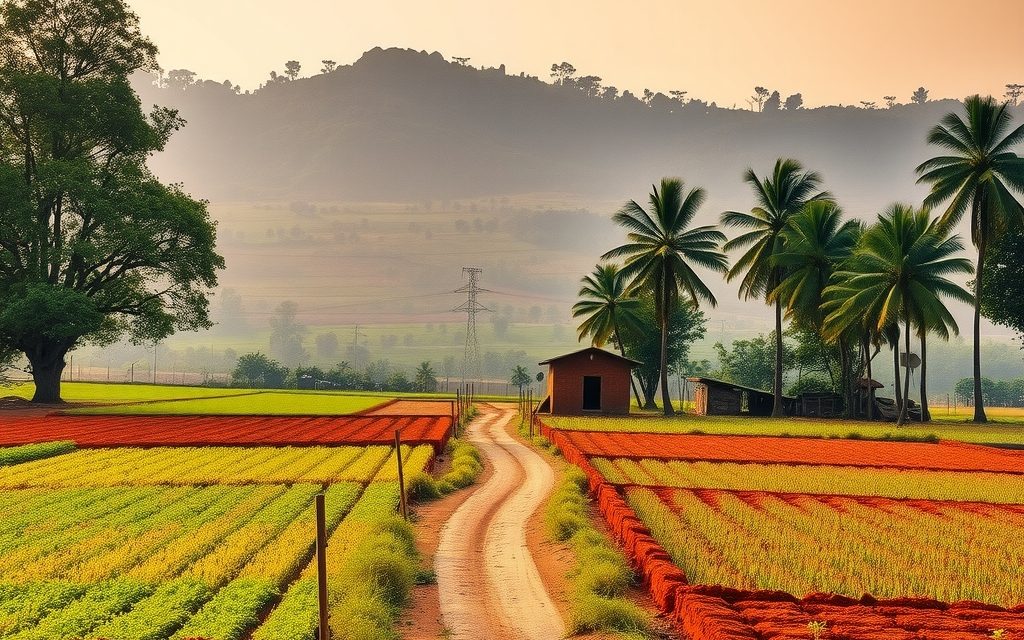
Northern farm belt at the ORR Shamirpet exit on the Karimnagar highway, anchored by Genome Valley, BITS Pilani and NALSAR. Hard-rock land where water and lake or forest boundaries decide value.
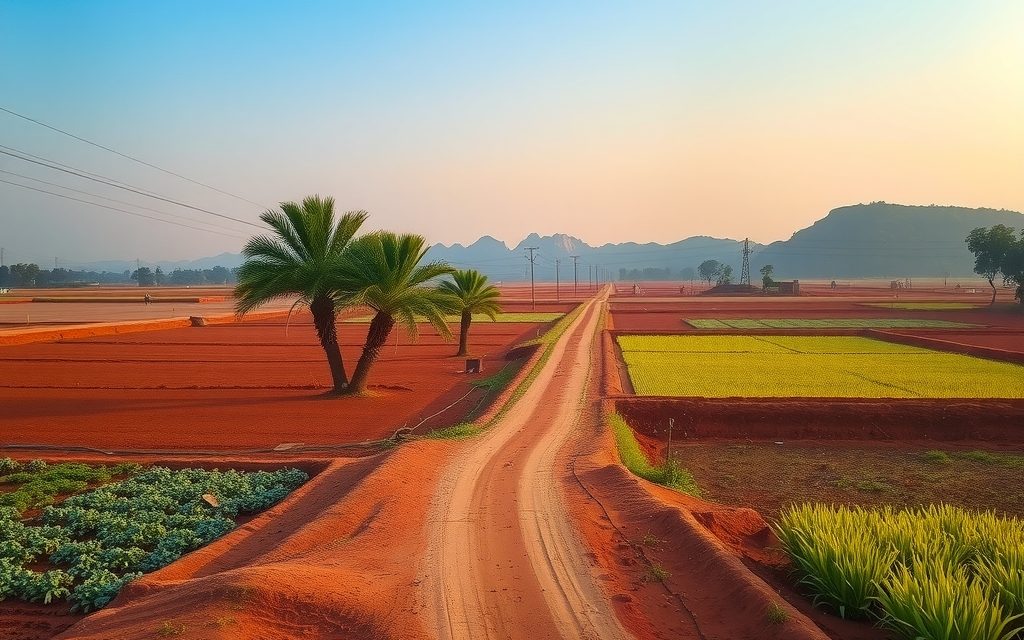
The last agricultural pockets on Hyderabad's north-west edge, next to the Air Force Academy and the ORR. Mostly future plot land now; genuine farmland lies further north.
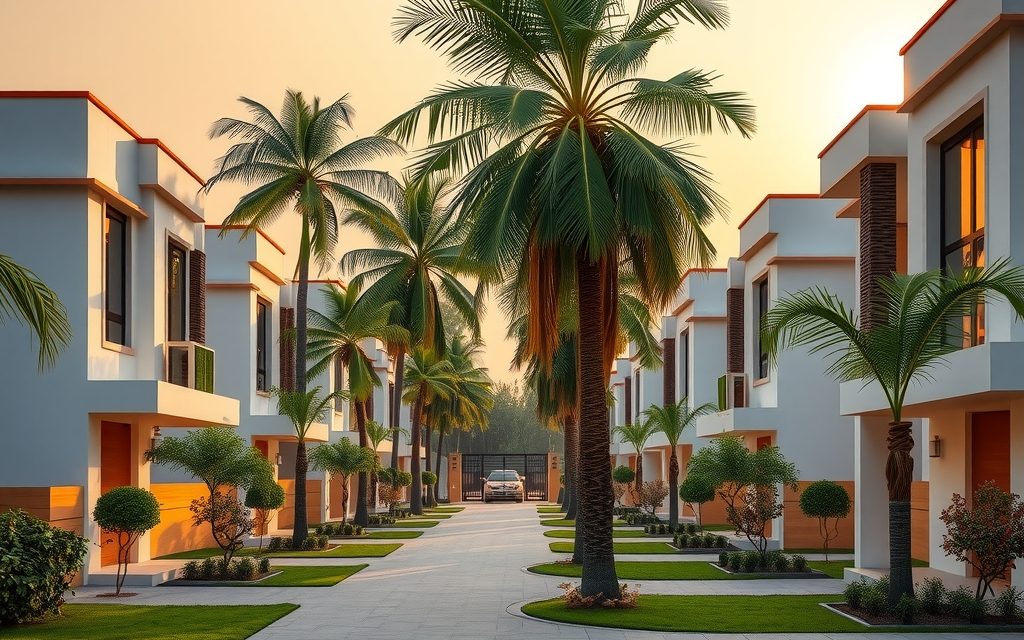
Medchal is north Hyderabad's value villa market beyond the ORR on NH-44: gated and row villas on 120–300 sq yd at tickets below Kompally. See pocket-wise price ranges, commute realities and the approval checks we run.

NRIs and OCIs cannot buy or receive gifts of agricultural land, plantations or farmhouses; inheritance is the only route. What inherited land allows, why benami workarounds are dangerous, and the lawful alternatives near Hyderabad.
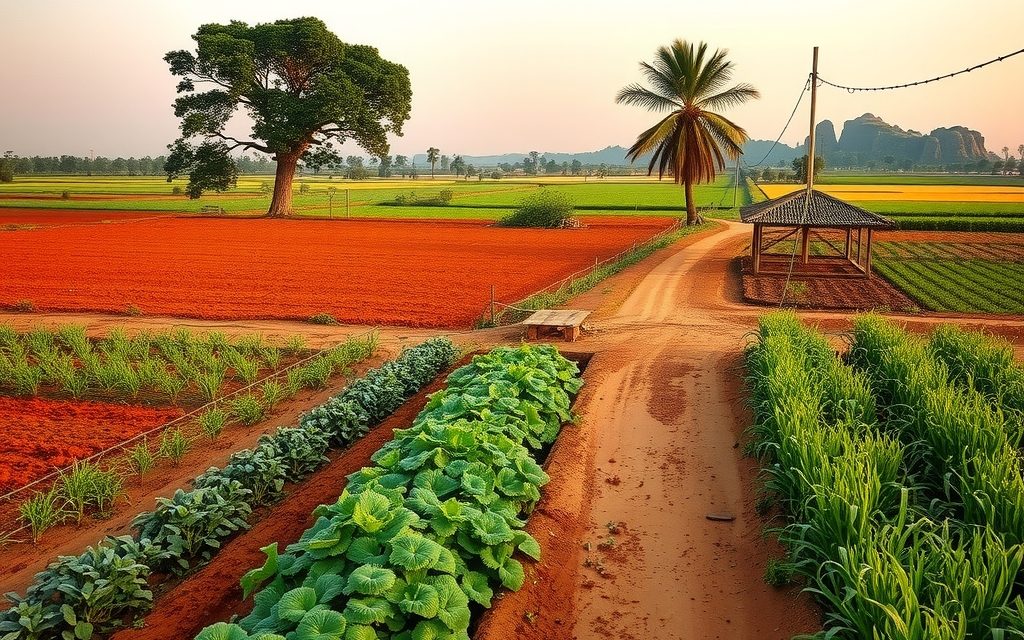
Red-soil farmland 4 km from the ORR beside the Aerospace SEZ and TCS campus. Interior villages still farm vegetables and mango; land near the SEZ is priced as future layout land and needs careful acquisition checks.