Agriculture & Farm Land in Huzurabad, Karimnagar District
Huzurabad sits midway between Karimnagar and Warangal in SRSP canal country, where two paddy crops a year are the norm. How the canal water really works, indicative per-acre bands and the checks that matter for wet land.
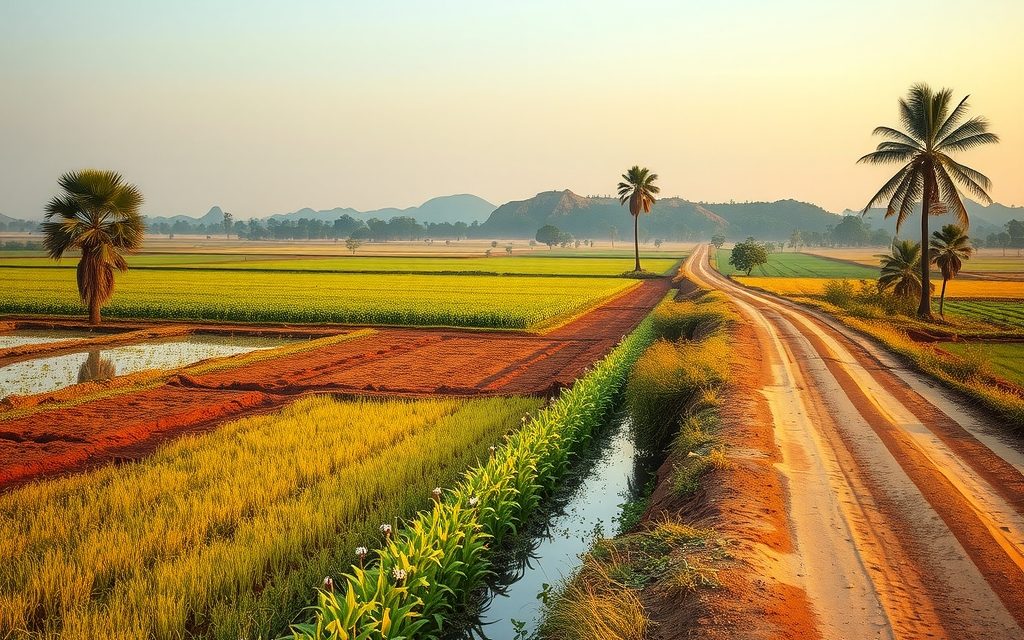
- On NH-563 roughly 35 km from Karimnagar and 35–40 km from Hanamkonda; Kazipet Junction under an hour away
- Kakatiya main canal of the SRSP system below the Lower Manair Dam irrigates much of the belt
- Chalka uplands with darker canal soils; paddy dominates, cotton and maize on lighter land
- Kaleshwaram support uncertain since the 2023 Medigadda barrage damage; SRSP and Manair storage do the work
- Canal-command paddy land typically ₹28 L – ₹50 L per acre as of October 2026
| What | Indicative range | Note |
|---|---|---|
| NH-563 frontage near Huzurabad | ₹80 L – ₹2.2 Cr per acre | indicative, Oct 2026 |
| Town fringe within about 5 km, BT road | ₹60 L – ₹1.5 Cr per acre | indicative, Oct 2026 |
| Kakatiya canal-command paddy land, two crops | ₹28 L – ₹50 L per acre | indicative, Oct 2026 |
| Chalka upland with working borewell | ₹18 L – ₹35 L per acre | indicative, Oct 2026 |
| Rainfed or tail-end land, cart-track access | ₹10 L – ₹20 L per acre | indicative, Oct 2026 |
| Farm plots in fenced farm ventures near the highway | ₹1.5 L – ₹3.5 L per gunta | indicative, Oct 2026 |
Ranges reflect recent transactions and advisor observation as of 2026-10. Always verify against the sub-registrar market value and the specific parcel.
Halfway along the 70 km highway between Karimnagar and Warangal, Huzurabad is a market town surrounded by water. Canals branch off the Kakatiya main canal of the Sriram Sagar project, paddy runs green to the horizon in both seasons, and rice mills line the approach roads. Agriculture land in Huzurabad is canal country first and foremost: the question buyers ask is not whether there is water, but how reliably it reaches a particular field, and how much of the price is already paying for it. This guide covers the Huzurabad belt of Karimnagar district as it stands in October 2026, with indicative per-acre ranges, an explanation of how the SRSP, Lower Manair and Kaleshwaram waters fit together, the title checks we run, and how registration works at the Huzurabad Tahsildar office.
Huzurabad is a mandal and revenue-division town in Karimnagar district. The surrounding division takes in mandals such as Jammikunta, Veenavanka, Ellandakunta, Saidapur and Shankarapatnam, a band of flat, irrigated country between the Lower Manair Dam near Karimnagar and the edge of the Hanamkonda district around Elkathurthy and Kamalapur.
Why buyers choose farm land in Huzurabad
For a buyer who wants productive farmland rather than a weekend retreat, Huzurabad offers a combination that is hard to find closer to Hyderabad.
- Assured canal water in much of the belt. Large parts of the division sit inside the command of the SRSP Kakatiya canal system below the Lower Manair Dam, which makes two paddy crops a year normal rather than exceptional.
- A deep agricultural economy. Rice mills, a market yard, procurement centres and the cotton trade at nearby Jammikunta mean that what you grow has buyers close by.
- Two cities within an hour. Karimnagar and the Warangal tri-city are each well under an hour away, so services, hospitals and the property markets of both are within reach.
- Prices below the city fringes. Irrigated land here typically costs less than comparable land on the immediate edges of Karimnagar or Hanamkonda, where urban demand has taken over.
The trade-off is distance from Hyderabad and a market that is driven by farm income rather than speculative demand. That suits farming families and serious agricultural investors more than short-term traders.
Between two cities: access and connectivity
NH-563 is Huzurabad's lifeline. It runs north-west to Karimnagar and south-east through Elkathurthy and Hasanparthy to Hanamkonda, and almost every price conversation starts with how far a parcel is from this road.
- Karimnagar: roughly 35 km north-west on NH-563.
- Hanamkonda and the Warangal tri-city: roughly 35–40 km south-east.
- Jammikunta: about 15 km east, with a station on the Kazipet–Balharshah section of the Delhi–Chennai trunk line.
- Husnabad: about 30–35 km south-west, in Siddipet district.
- Hyderabad: roughly 165–180 km, either via the Rajiv Rahadari and Karimnagar, or via NH-163 to the tri-city and then NH-563. Allow three and a half to four hours.
By train, Kazipet Junction is under an hour away with frequent services to Secunderabad, and Jammikunta station serves some trains on the trunk route. For many of our Hyderabad clients the practical pattern is train to Kazipet, then a short drive.
Soil, water and what grows around Huzurabad
Chalka and the darker canal soils
The higher ground carries chalka, a red sandy loam that drains quickly and suits cotton, maize and orchards. In the canal command and around tank beds, decades of irrigation have built up darker, heavier soils that hold water well for paddy. A typical village has both: wet fields below the canal and lighter uplands above it.
Canal, tank and borewell
The canal network is the defining feature, but it is not the only source. Restored village tanks support their own ayacuts, and borewells are common even in the command as a backup for the late rabi weeks. Groundwater inside the command tends to be relatively shallow because canal seepage recharges it; on the uplands outside the command bores are deeper and yields less predictable.
Crops and orchards
- Paddy: the dominant crop, grown in both kharif and rabi where water allows. Karimnagar is regularly among Telangana's leading paddy procurement districts.
- Cotton: on the chalka uplands, feeding the ginning mills and market at Jammikunta.
- Maize: a common rabi alternative on lighter soils.
- Turmeric: grown in pockets, though the main turmeric belt lies further north-west.
- Oil palm: expanding under the state's oil palm mission, with plantations on irrigated land that a farmer wants to move out of paddy.
- Mango and sweet lime: smaller orchards, usually on uplands with bore water.
Canal water in practice: SRSP, Lower Manair and Kaleshwaram
Buyers from Hyderabad often hear three project names used interchangeably. They are linked, but they are not the same thing, and understanding the chain helps you judge how secure a field's water really is.
Sriram Sagar and the Kakatiya canal
The Sriram Sagar Project dam on the Godavari in Nizamabad district feeds the Kakatiya main canal, which runs south-east across Jagtial and Karimnagar towards Warangal. Below Karimnagar, the canal passes through the Lower Manair Dam and continues through the Huzurabad belt. Distributaries and minors off this canal irrigate most of the division's wet land. This is the long-established system on which Huzurabad's paddy economy was built.
The Lower Manair Dam as a buffer
The Lower Manair Dam near Karimnagar stores water for the canal stretch below it. When the reservoir is full, villages downstream, including the Huzurabad side, can count on both seasons. In dry years, releases are rationed and tail-end villages feel it first.
Where Kaleshwaram fits
The Kaleshwaram lift scheme was designed to lift Godavari water from below the Pranahita confluence and push it upstream through a chain of barrages and reservoirs, including the Mid Manair and Lower Manair, so that the SRSP command would no longer depend only on inflows to Sriram Sagar. In October 2023 piers of the Medigadda barrage, the first structure in the chain, sank, and lifting from the lower barrages has been sharply curtailed since, pending repairs and expert reviews. In practice, Huzurabad's canal water today depends mainly on SRSP inflows and storage at the Manair reservoirs, with Kaleshwaram support uncertain.
What this means for a buyer: land at the head and middle of a well-maintained distributary is secure in most years. Land at the tail of a minor, or above the canal level, is less so. Ask what the field grew in the last two rabi seasons, and look at the condition of the channel that serves it.
Indicative price bands for agriculture land in Huzurabad
The ranges below reflect recent transactions and advisor observation as of October 2026. They are indicative only. Position on the canal, road access, distance from NH-563 and title quality move individual parcels significantly.
| Parcel type and location | Indicative range | What moves the price |
|---|---|---|
| NH-563 frontage near Huzurabad | ₹80 L – ₹2.2 Cr per acre | Frontage width, commercial use, highway setback |
| Town fringe within about 5 km, BT road | ₹60 L – ₹1.5 Cr per acre | Layout and conversion potential |
| Kakatiya canal-command paddy land, two crops, village BT road | ₹28 L – ₹50 L per acre | Position on the distributary, rabi record |
| Chalka upland with working borewell | ₹18 L – ₹35 L per acre | Bore yield, approach road |
| Rainfed or tail-end land, cart-track access | ₹10 L – ₹20 L per acre | Water uncertainty, access |
| Farm plots in fenced farm ventures near the highway | ₹1.5 L – ₹3.5 L per gunta | Fencing, plantation, individual title |
Canal-command land here sits broadly in line with similar land around Karimnagar, a little below the Hanamkonda side. A gunta is one-fortieth of an acre; at ₹3 lakh per gunta, a farm-venture plot works out to ₹1.2 crore per acre, far above plain canal land a few kilometres away.
What an acre of canal land actually earns
Because Huzurabad land is bought for farming more than for speculation, it helps to think about income. We do not give farm-income projections as advice, but some reference points are useful.
- Lease rent: owners who do not farm themselves commonly lease canal paddy land to local cultivators on annual terms. Rents vary widely with water security and soil; indicatively they are often quoted in the range of ₹15,000 to ₹30,000 per acre per year for good two-crop land, lower for single-crop or tail-end land.
- State investment support: under Rythu Bharosa, the state pays per-acre investment support to pattadars of cultivable land, announced in 2025 at ₹12,000 per acre per year across two seasons. Eligibility rules change, so check the current scheme.
- Self-cultivation: margins on paddy depend on yields, procurement prices and labour. Owners who supervise closely do better than absentee owners who rely entirely on a manager.
The point is that canal land here yields a modest but real annual income, which is more than most peri-urban land offers. That income is what supports Huzurabad's prices in years when speculative demand is quiet.
Moving out of paddy
Some newer owners want to switch part of their canal land from paddy to oil palm, mango or vegetables, either to reduce labour or to diversify. This is possible, but plan it carefully. Oil palm takes several years to start yielding and needs a buyer tie-up, which in Telangana usually means a company allotted to the area under the state's oil palm programme. Orchards on heavy, waterlogged canal soil often struggle; the uplands above the canal suit them better. A common compromise is to keep the wet fields in paddy under a lease and plant the drier corner of the holding. Discuss any change with the neighbouring cultivators too, because field channels are shared and a switch can affect how water moves through the block.
Reading the belt around Huzurabad
Inside a single revenue division, prices can vary by half or more. These are the patterns we see on the ground.
Highway villages between Huzurabad and Elkathurthy
Villages strung along NH-563 towards the Hanamkonda district line feel the pull of the tri-city. Roadside parcels are priced for commercial use, and even interior fields a kilometre or two off the highway carry a premium for easy access. This is where buyers from Hanamkonda and Kazipet often look first.
The canal heartland towards Jammikunta and Veenavanka
East and north-east of town, the distributary network is dense and paddy dominates. Holdings are smaller, families are long-settled, and good land changes hands mostly within the local community. Outside buyers who are patient and well introduced can find sound two-crop parcels here at farming prices.
Towards Saidapur and the Karimnagar side
Closer to the Lower Manair Dam, water security is generally good, and the influence of Karimnagar city grows as you move north-west. Prices step up near the district headquarters' fringe, where layout developers compete with farmers.
Upland pockets above the canal
Scattered through every mandal are higher patches of chalka that the canal cannot reach by gravity. These are cheaper, rely on borewells, and suit orchards and oil palm. They are also where sellers are most tempted to describe dry land as canal land, so check the levels yourself.
Mistakes we see with canal land
Paying canal prices for land above the canal. A field can sit right next to a distributary and still be too high to take water by gravity. Ask how water physically reaches the field, and look for the field channel.
Ignoring the tail. Minors are long, and fields at the far end get water last. In a year when the Lower Manair is low, tail-end farmers may lose the rabi crop entirely. Position on the minor is a price factor in its own right.
Missing a crop loan in the EC. Paddy farmers routinely borrow against land. An outstanding loan must be repaid and the charge released before registration, not after.
Buying the extent on paper, not on the ground. Bunds shift, channels widen and neighbours encroach over decades. A licensed survey before payment avoids paying for land that is actually under a canal or in a neighbour's field.
Assuming a lease will run itself. Absentee owners who agree informal leases often struggle to collect rent or get land back. A written, witnessed lease with clear terms protects both sides.
Types of farm land in the Huzurabad belt
Wet land in the canal command
The heart of the market: small and medium holdings, often 2 to 8 acres, worked for paddy. Supply is steady because families divide and sell, but good parcels on a reliable distributary rarely stay unsold for long.
Upland dry or borewell land
Chalka uplands above the canal, used for cotton, maize or orchards. Cheaper, and the natural choice for a buyer who wants to plant mango, sweet lime or oil palm with drip.
Highway and town-edge land
Parcels on NH-563 or near town, priced for warehouses, rice mills, fuel stations and future layouts. These are investment purchases, and buyers should study setbacks and conversion rules before paying highway prices. For house plots rather than farmland, see open plots in Huzurabad.
Farm plots
A small number of fenced farm-plot ventures operate near the highway, mostly aimed at buyers from Karimnagar and the tri-city. As anywhere, insist on a registered deed for a surveyed sub-division in your own name.
Legal checklist for Huzurabad farm land
The standard Telangana checks apply. In canal country a few points deserve extra attention, marked below.
- Pattadar passbook and the Bhu Bharati record of rights (successor to Dharani) for owner, extent and classification; the state land records portal shows the current entry.
- Pahani and 1B history, checking for consistent cultivation and any change in classification.
- Encumbrance certificate for 30 years. Paddy land is often pledged for crop loans, so look for bank charges and get them cleared before registration.
- Link documents to the earliest available record, including partition deeds and the consent of all legal heirs.
- Survey number, sub-division and FMB sketch, with a licensed surveyor marking boundaries; bunds between paddy fields often shift over generations.
- Canal and field-channel strips: government land under canals, distributaries and field channels is not the seller's to sell. Make sure the extent you pay for excludes it.
- Tank beds and FTL: exclude any portion under a tank's full tank level.
- Section 22-A prohibited properties list, assigned land under the POT Act, and any inam or endowment history.
- Highway acquisition: for NH-563 frontage, check for any widening or service-road notification.
- Ceiling, ULC and forest checks where relevant, NALA status for any non-farm plan, and 58/59 papers for town-edge parcels.
Our guide to pattadar passbooks and mutation explains how to read the record and confirm the change of name after purchase.
Registration and charges
Unconverted agricultural land registers at the Tahsildar office of the mandal where the survey number lies, typically Huzurabad or a neighbouring mandal. The Tahsildar acts as joint sub-registrar, and mutation is processed in the same transaction through Bhu Bharati. Converted land, DTCP plots and buildings register at the jurisdictional Sub-Registrar Office; Huzurabad town has a sub-registrar office, and we confirm jurisdiction from the survey number.
| Item | Approximate rate (Oct 2026) | Note |
|---|---|---|
| Stamp duty | About 5.5% | Applied to the higher of market value and price |
| Transfer duty | About 1.5% | Not levied in gram panchayat areas |
| Registration fee | About 0.5% (about 2% in gram panchayat areas) | Overall roughly 7.5% |
We check current rates and the market value for the survey number on the registration portal and at the office on the day. The 1% TDS under Section 194-IA on purchases above ₹50 lakh does not apply to rural agricultural land, but does apply to converted and urban property.
Huzurabad compared with its neighbours
Buyers often weigh Huzurabad against the district headquarters and the tri-city. Our rough guide:
- Against Karimnagar's fringe: land within a few kilometres of Karimnagar city now prices for layouts. Huzurabad's canal land offers similar water at farming prices. See agriculture land in Karimnagar for that market.
- Against Jammikunta: very similar canal country, with a stronger cotton-trade identity and a railway station. Our Jammikunta farm-land guide covers it.
- Against Hanamkonda's rural mandals: slightly higher prices nearer the tri-city, with more urban spillover. See farm land in Hanamkonda.
- Against Husnabad: cheaper upland country to the south-west, with irrigation still arriving. Compare agriculture land in Husnabad.
A realistic buying timeline
For a Hyderabad or tri-city buyer, a typical Huzurabad purchase runs over six to ten weeks. The first fortnight goes on shortlisting and site visits, ideally one of them in the rabi season to see water in the channels. Document collection and the lawyer's review take two to four weeks, longer if a family partition or crop-loan release is needed. Negotiation usually overlaps with the legal review. Once the title is clear, slot booking and registration at the Tahsildar office can be completed within days, with mutation in the same step. Sellers generally prefer to close after a harvest, so the weeks after the kharif harvest in November and December, or after the rabi harvest in April and May, are when most deals happen.
Who should buy in Huzurabad
Well suited: farming families expanding holdings; investors who want income-producing paddy land they can lease out; buyers with roots in Karimnagar or the tri-city; and orchard or oil palm planters looking for upland with backup canal-area groundwater.
Less suited: anyone wanting a farmhouse they can reach from Hyderabad after work; short-term traders, since land here moves at the pace of the farm economy; and buyers who cannot supervise a lease or a manager. Absentee ownership of paddy land works best with a trusted local cultivator on a written lease.
NRI note: inheritance only
NRIs and OCI cardholders cannot buy agricultural land, plantations or farmhouses in India under FEMA and cannot receive them as a gift. They may inherit agricultural land from a resident Indian and may sell inherited farm land only to a resident Indian. Many Huzurabad families have children in the US, the UK or the Gulf who inherit wet land; managing a lease from abroad is common, and a power of attorney to a resident relative helps. A resident family member can buy land with their own funds. Open plots, villas and apartments remain open to NRI buyers. Read our NRI agricultural land rules for Telangana and take a chartered accountant's advice on tax.
How NRR Estates helps in Huzurabad
We are advisors, and every fee is disclosed before you commit. In Huzurabad we focus on:
- Mapping each offered parcel against its distributary and asking the neighbours about the last two rabi seasons.
- Site visits by road or via Kazipet by train, with video walk-throughs for buyers abroad.
- Lawyer-led title checks, including crop-loan charges in the EC and canal-strip exclusions.
- A licensed survey to fix bunds and boundaries.
- Negotiation against recent sales in the same village.
- Registration and mutation at the Tahsildar office or SRO, and help setting up a written lease if you will not farm yourself.
Huzurabad agriculture land: FAQs
What is the price of agriculture land in Huzurabad per acre?
As of October 2026, indicative ranges are about ₹28 lakh to ₹50 lakh per acre for two-crop paddy land in the Kakatiya canal command on a village BT road, ₹18 lakh to ₹35 lakh for chalka uplands with a working borewell, and ₹10 lakh to ₹20 lakh for rainfed or tail-end land. Town-fringe land runs roughly ₹60 lakh to ₹1.5 crore and NH-563 frontage ₹80 lakh to ₹2.2 crore per acre, based on recent transactions and advisor observation.
Where does Huzurabad's canal water come from?
Mainly from the Sriram Sagar Project on the Godavari, through the Kakatiya main canal, which passes the Lower Manair Dam near Karimnagar before running through the Huzurabad belt towards Warangal. Distributaries and minors off this canal irrigate most of the wet land. The Lower Manair reservoir acts as a buffer, so when it is full both seasons are secure, while in dry years releases are rationed and tail-end villages are affected first.
Does Kaleshwaram water reach Huzurabad?
It was designed to support the SRSP command by lifting Godavari water upstream into reservoirs including the Mid and Lower Manair. However, piers of the Medigadda barrage, the first structure in the chain, sank in October 2023, and lifting from the lower barrages has been sharply curtailed since, pending repairs and expert reviews. In practice Huzurabad's canal water currently depends mainly on SRSP inflows and Manair storage, so we do not add a Kaleshwaram premium to land prices.
How far is Huzurabad from Hyderabad and Warangal?
Huzurabad is roughly 165 to 180 km from Hyderabad, either via the Rajiv Rahadari and Karimnagar or via NH-163 to the Warangal tri-city and then NH-563; allow three and a half to four hours. Hanamkonda is about 35 to 40 km south-east and Karimnagar about 35 km north-west on NH-563. Many buyers take a train from Secunderabad to Kazipet Junction, under an hour from Huzurabad by road, and drive from there.
Can I lease out paddy land in Huzurabad if I do not farm myself?
Yes, and many absentee owners do. Canal paddy land is commonly leased to local cultivators on annual terms, with rents often quoted around ₹15,000 to ₹30,000 per acre per year for good two-crop land, lower for single-crop or tail-end fields. These are indicative and vary by village. Use a written, witnessed lease with clear terms on rent, crop, water use and return of the land. Per-acre state investment support under Rythu Bharosa is paid to the pattadar under current scheme rules.
Where is agricultural land in Huzurabad registered?
Unconverted agricultural land registers at the Tahsildar office of the mandal in which the survey number lies, usually Huzurabad or a neighbouring mandal. The Tahsildar acts as joint sub-registrar and mutation is processed in the same transaction through Bhu Bharati. Converted land, DTCP plots and buildings register at the jurisdictional Sub-Registrar Office. Stamp duty, transfer duty and registration fee together come to about 7.5% of value, and we verify current rates on the day.
What legal checks matter most for canal paddy land?
Beyond the standard passbook, Bhu Bharati record, pahani, 30-year EC and link documents, three checks stand out. First, make sure the extent excludes government land under canals, distributaries and field channels. Second, look for crop-loan charges in the EC and have them released before registration. Third, use a licensed surveyor, because bunds shift over generations. Also check tank FTL, Section 22-A, assigned land and, for highway frontage, any widening notification on NH-563.
Can NRIs buy farm land in Huzurabad?
No. Under FEMA, NRIs and OCI cardholders cannot buy agricultural land, plantations or farmhouses in India and cannot receive them as a gift. Inheriting agricultural land from a resident Indian is allowed, and a later sale of that inherited land must be to a resident Indian. NRIs who inherit wet land often lease it through a resident relative holding a power of attorney. NRIs can buy open plots, villas and apartments, and should take advice from a chartered accountant on tax.
Related guides
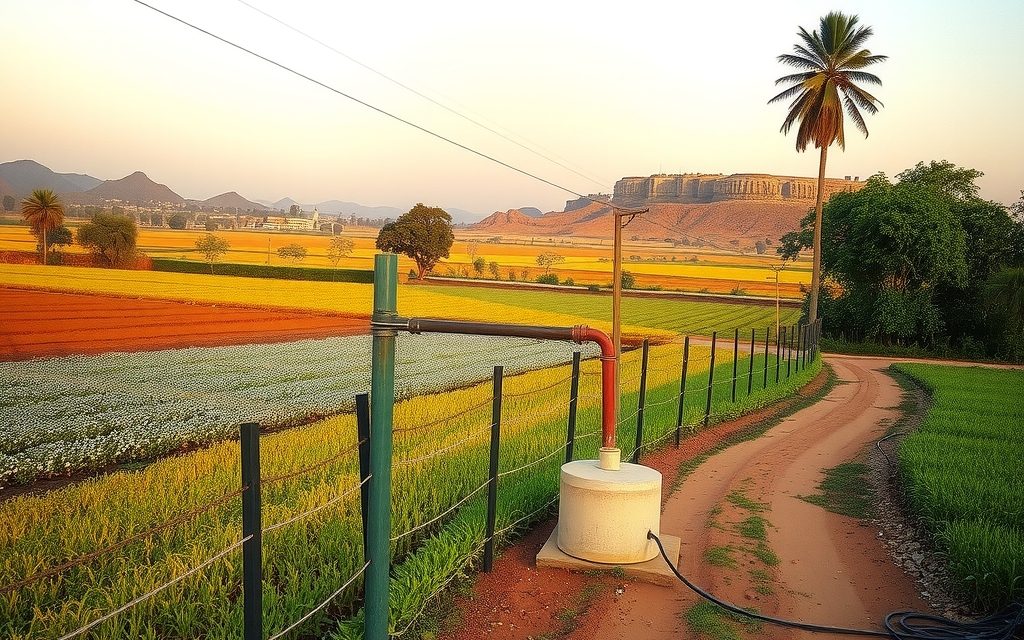
SRSP canal paddy land, cotton uplands and young oil palm gardens about 160 km from Hyderabad. Indicative per-acre prices by distance from Karimnagar town, the water question and a full Telangana title checklist.
Value farmland around Karimnagar's cotton market town: canal-fed paddy, chalka cotton uplands and tank-ayacut fields 40 km from Karimnagar. Indicative per-acre prices, water checks and the Telangana title checklist.

Huzurabad is a canal-country rice-mill town on NH-563, about 35 km from both Karimnagar and the Warangal tri-city. SUDA and DTCP layouts, indicative per sq yd bands and the site checks every buyer needs.
Canal and tank-fed paddy, chilli and cotton uplands and oil palm gardens around the tri-city, about 140 km from Hyderabad. Indicative per-acre bands by belt, the KUDA zoning trap and a full Telangana title checklist.
Affordable farm land where Siddipet, Karimnagar and Hanamkonda districts meet. Red chalka soils, the Gouravelli reservoir's real status, mandal guide, indicative per-acre prices and the title checks for this district-edge market.
Lower Manair Dam water, Gulf and US remittances and highway growth shape Karimnagar's property market. This guide covers SUDA plots, houses, apartments and farm land with indicative October 2026 bands, corridors and checks.

NRIs and OCIs cannot buy or receive gifts of agricultural land, plantations or farmhouses; inheritance is the only route. What inherited land allows, why benami workarounds are dangerous, and the lawful alternatives near Hyderabad.
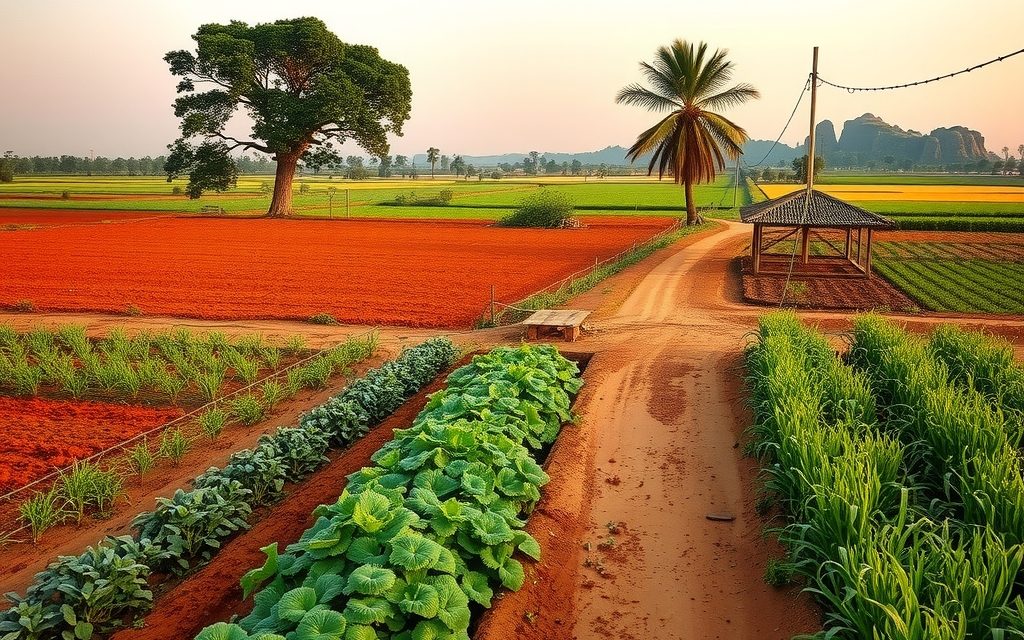
Red-soil farmland 4 km from the ORR beside the Aerospace SEZ and TCS campus. Interior villages still farm vegetables and mango; land near the SEZ is priced as future layout land and needs careful acquisition checks.