Agriculture & Farm Land in Jammikunta, Karimnagar
Value farmland around Karimnagar's cotton market town: canal-fed paddy, chalka cotton uplands and tank-ayacut fields 40 km from Karimnagar. Indicative per-acre prices, water checks and the Telangana title checklist.
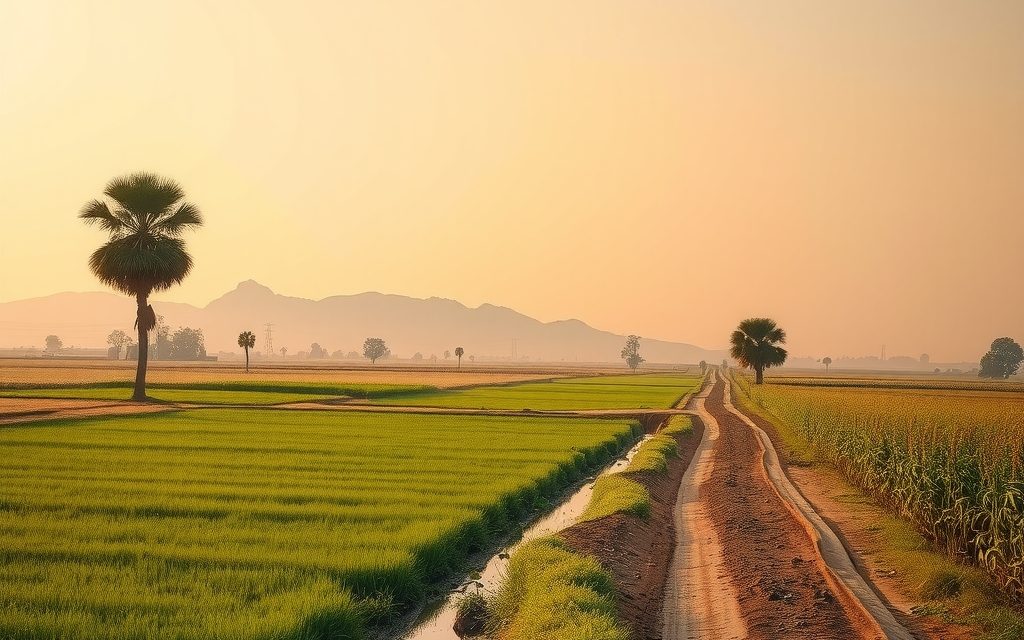
- About 40 km east of Karimnagar, 12 km from Huzurabad and roughly 170–190 km from Hyderabad
- Railway station on the Kazipet–Balharshah main line; one of Telangana's busier cotton market yards
- SRSP canal distributaries, Kaleshwaram-linked releases and restored village tanks supply water
- Chalka red loam on uplands for cotton and maize; heavier soils in the canal belt for paddy
- Canal paddy land typically ₹22 L – ₹38 L per acre as of October 2026; registration at the mandal Tahsildar office
| What | Indicative range | Note |
|---|---|---|
| Jammikunta town fringe within about 5 km, BT road | ₹60 L – ₹1.6 Cr per acre | indicative, Oct 2026 |
| Jammikunta–Huzurabad road frontage | ₹60 L – ₹1.5 Cr per acre | indicative, Oct 2026 |
| Canal-command paddy land with a working field channel | ₹22 L – ₹38 L per acre | indicative, Oct 2026 |
| Chalka upland with a working borewell, cotton or maize | ₹14 L – ₹26 L per acre | indicative, Oct 2026 |
| Rainfed dry land or cart-track access | ₹8 L – ₹16 L per acre | indicative, Oct 2026 |
| Farm plots in small ventures near town | ₹1 L – ₹2.5 L per gunta | indicative, Oct 2026 |
Ranges reflect recent transactions and advisor observation as of 2026-10. Always verify against the sub-registrar market value and the specific parcel.
Every winter, lorries loaded with white cotton queue outside the market yard in Jammikunta, a railway town in the eastern corner of Karimnagar district. That yard is the reason most people outside north Telangana have heard of the place, and it says a lot about the farmland around it: red chalka uplands that grow cotton and maize, canal-fed fields that grow paddy, and a farming economy busy enough to keep ginning mills, traders and seed dealers in business. For buyers, agriculture land in Jammikunta is value land. It sits about 40 km from Karimnagar and a little over 30 km from Hanamkonda, it has canal and Kaleshwaram-linked water in many villages, and it still trades well below the per-acre figures you see around the district headquarters. This guide sets out what the land is like, indicative prices as of October 2026, the water questions to ask, and how to complete registration at the Tahsildar office.
When we say Jammikunta we mean the town, its mandal and the neighbouring villages that market their crops here, including Veenavanka to the north and the belt toward Huzurabad to the south-west. Since 2016 these mandals belong to the reorganised Karimnagar district, and some neighbouring mandals moved to Hanumakonda district, so deeds and encumbrance records can sit under more than one jurisdiction. Expect to trace title through both the old and the new names.
Why Jammikunta for farm land
The first argument is price relative to quality. Karimnagar city's growth has pushed land within 15 to 20 km of it into a plotting-and-speculation band. Jammikunta is far enough away to escape most of that, yet the soils, water and crops are similar to the better parts of the district. A buyer who wants a working farm rather than a future layout gets more acres for the money here.
The second argument is a functioning farm economy on the doorstep. The cotton market yard, ginning and pressing units, paddy procurement centres and input dealers mean a farmer leasing your land can sell close by, which keeps leases realistic and the land in use. Productive land that someone wants to farm is easier to hold and easier to sell.
The third is access. Jammikunta has a station on the Kazipet–Balharshah main line, a short run from Kazipet Junction, and it sits between two growing district towns, Karimnagar and Hanamkonda. Hyderabad is a long drive, but not an unreasonable one for a buyer who visits a few times a year.
Getting there: rail, roads and distances
From central Hyderabad, Jammikunta is roughly 170 to 190 km depending on the route. One option is the Warangal highway (NH-163) toward Hanamkonda and then north; another runs through Siddipet and Husnabad to Huzurabad and on to Jammikunta. Either way, plan on about three and a half to four hours from Gachibowli. Rail is a practical alternative: trains on the Secunderabad–Kazipet–Balharshah route stop at Jammikunta.
- Huzurabad: about 12 km south-west, on the Karimnagar–Warangal highway (NH-563).
- Karimnagar: about 40 km west, the district headquarters, with hospitals, courts and the Lower Manair Dam.
- Hanamkonda and Kazipet: a little over 30 km south-east; Kazipet is the nearest major rail junction.
- Peddapalli: roughly 35 to 40 km north along the rail line.
- Warangal: about 45 km, for larger hospitals, the Kakatiya heritage sites and wholesale markets.
For land prices, the roads that matter are the Jammikunta–Huzurabad road, which links to NH-563, the roads toward Veenavanka and the Peddapalli side, and the village roads into the canal belt. A parcel half a kilometre from a BT road and a parcel at the end of a two-kilometre cart track can differ by a third or more in price, and the cart track usually loses in the rains.
A cotton market town: how the yard shapes land demand
The Jammikunta agricultural market is one of the busier cotton markets in Telangana. In the procurement season, the Cotton Corporation of India and private traders buy at the yard, and ginning and pressing units around the town run long shifts. Paddy, maize and other crops also move through the market and nearby procurement centres.
That matters to a land buyer in three ways. First, it supports cotton cultivation on upland chalka soil that would otherwise be worth less, because farmers have a buyer close by and transport costs are low. Second, it creates a local class of traders and mill owners with cash to invest, who are steady buyers of land near the town. Third, it means roadside land near the yard and the ginning belt is priced partly for godowns, cotton storage and processing, not agriculture alone.
There is a caution here too. Land right next to ginning units can be affected by lint, dust and traffic, and some parcels near the town have already been converted or informally used for storage. If you want clean farmland, buy a few kilometres out; if you want commercial land, price it and check it as development land, with NALA and zoning confirmed.
Water in layers: canals, Kaleshwaram releases and village tanks
Water around Jammikunta comes from overlapping sources, and the value of a parcel depends on which of them actually reaches it.
SRSP canal command
The Sriram Sagar Project's canal system, running from the Godavari through the Lower Manair Dam at Karimnagar and onward toward Warangal, has distributaries serving parts of this belt. Land on a working minor with a field channel to the boundary is the most dependable farmland in the area and supports two paddy crops in a good year.
Kaleshwaram-linked supply
Water lifted from the Godavari under the Kaleshwaram scheme has been used to fill the Mid Manair and Lower Manair reservoirs, which feed the canals downstream. Supply through the scheme has been uneven since the Medigadda barrage damage in late 2023, and future operation depends on state decisions. We price a parcel on the water it has reliably received in recent seasons, not on what the scheme promises.
Tanks and groundwater
Many villages have restored irrigation tanks under the state's tank revival programme, which recharge nearby borewells and supply land in the tank's ayacut. Borewells in the canal and tank belts commonly find water at 120 to 300 feet; on the chalka uplands, 300 to 500 feet is more typical and yield varies widely between neighbouring fields. Ask the seller for the bore depth and how many hours of pumping it sustains in April.
Chalka soil, black patches and the crops they carry
Most of the land around Jammikunta is chalka, the red sandy loam of north Telangana: well drained, quick to warm, and good for cotton, maize, red gram and orchards when watered. Lower-lying land, especially in the canal command and around tanks, has darker, heavier soil that holds water and suits paddy. A single village can have both, so soil is something to check on the parcel, not assume from the village name.
Cotton is the signature kharif crop on the uplands, followed by maize. Paddy dominates wherever canal or tank water reaches, often in both seasons. Turmeric appears in pockets. Mango is the traditional orchard tree, and oil palm has been planted under the state's mission in villages with assured borewell water, while sweet lime gardens appear on lighter soils. Buyers interested in an orchard should look at deeper chalka with a reliable bore rather than the heavy paddy soils.
Value land: why Jammikunta trades below Karimnagar
Jammikunta's per-acre prices sit noticeably below those around Karimnagar city for comparable water and soil. The reasons are simple. It is farther from the district headquarters and the plotting market that radiates out of it. It is off the main highway, which passes through Huzurabad instead. And the town itself is a market and rail town rather than an administrative centre, so there is less pressure from government offices, colleges and housing.
For a farmer or a long-term holder, that discount is the opportunity. For a speculator, it is a warning: interior land here appreciates at the pace of farm incomes and slow infrastructure, not at the pace of city edges. The figures below show where Jammikunta sits relative to our Karimnagar district farm land guide.
Agriculture land in Jammikunta: indicative price bands
These ranges reflect recent transactions and advisor observation as of October 2026. They are indicative only, and specific parcels move outside them for frontage, shape, water and title. Prices are per acre unless stated; farm plots are quoted per gunta, and 40 guntas make an acre.
| Parcel and location | Indicative range | Main price factors |
|---|---|---|
| Jammikunta town fringe within about 5 km, BT road | ₹60 L – ₹1.6 Cr per acre | Godown and plotting potential, distance to the yard |
| Jammikunta–Huzurabad road frontage | ₹60 L – ₹1.5 Cr per acre | Frontage, depth, commercial use |
| Canal-command paddy land with a working field channel | ₹22 L – ₹38 L per acre | Head or tail of the minor, two-crop record |
| Tank-ayacut land or tail-end canal land | ₹16 L – ₹28 L per acre | Tank condition, second-crop reliability |
| Chalka upland with a working borewell, cotton or maize | ₹14 L – ₹26 L per acre | Bore yield, power, soil depth |
| Rainfed dry land or cart-track access | ₹8 L – ₹16 L per acre | Access, rock, distance from water |
| Farm plots in small ventures near town | ₹1 L – ₹2.5 L per gunta | Fencing, plantation, approach road |
Land priced at the bottom of a band is usually there for a reason: shape, access, a missing sibling signature, or no field channel. Land priced above the band is usually pricing in a road widening or a conversion that may not happen. We check both before agreeing a number.
Where to look around Jammikunta
The canal villages
Villages served by SRSP distributaries carry the area's best paddy land. Good parcels move by word of mouth within the village, so local introductions matter. Prices are at the top of the agricultural band.
Toward Veenavanka
North of Jammikunta, a mix of canal, tank and upland. Good value for buyers who want a mix of paddy land and upland in a single holding.
The Huzurabad side
South-west toward the highway town of Huzurabad, prices rise with road access. If you are comparing the two towns, our page on farm land in Huzurabad covers that market.
Toward Hanamkonda
South-east, the land gradually prices in proximity to the Warangal urban area. Fringe parcels on this side can be attractive for long-term holding; our guide to agriculture land in Hanamkonda describes the market closer to the city.
Parcel types you are likely to see
Canal paddy land. A patta survey number or sub-division of 1 to 5 acres with a passbook and Bhu Bharati entry, served by a minor. The most leasable and most liquid land in the area.
Mixed holdings. Common here: a paddy plot near the canal plus an upland field nearby with a bore. These are often sold together and give you flexibility across seasons.
Upland cotton land. Larger, cheaper chalka parcels, good for cotton, maize or an orchard once water is secured. Expect more variation in bore yields.
Roadside conversion land. Near the town or on the Huzurabad road, sometimes bought for cotton storage, godowns or rice mills. Price these as development land, and confirm NALA, road widening lines and any municipal planning before you pay.
Farm plots. Small ventures selling 10 to 20-gunta fenced plots exist near the town. Each plot must come with a registered sale deed for a defined part of a specific survey number, and it remains agricultural land.
Legal checklist for agriculture land in Jammikunta, Telangana
The most common problems we find around Jammikunta are incomplete family partitions, sellers whose extent on paper is larger than on the ground because of canal and road strips, and old unregistered agreements with neighbours. Work through this list before any advance.
- Pattadar passbook and Bhu Bharati entry. Seller name, survey number, extent and classification must match; check online on the Telangana land records portal. Our explainer on the pattadar passbook and mutation shows what each field means.
- Pahanis and 1B. Look at cultivation history and any past government, assigned or inam classification.
- Encumbrance certificate for 30 years. Cover both current and pre-2016 jurisdictions.
- Link documents. Every sale, partition and succession record back to a clear origin.
- Survey and FMB. A licensed surveyor to fix boundaries against the village map and account for canal, field channel and road strips.
- Irrigation and rail acquisitions. SRSP canals, Kaleshwaram-linked works and railway line works can affect strips of land; confirm no part is notified.
- Tank limits. Land inside a tank's full tank level or its feeder channels is not private farmland.
- Section 22-A and assigned land. Government, endowment and assigned lands cannot be registered; POT Act assigned land is generally not transferable.
- Crop loans. Village farmland is often pledged for crop loans at local banks; get loan closure and a no-dues letter before registration.
- NALA, ceiling and 58/59. Conversion is needed before non-agricultural use; check ceiling records for large holdings and regularisation orders for fringe land.
Registration and charges for Jammikunta farmland
Unconverted agricultural land registers at the mandal Tahsildar office. The Tahsildar acts as joint sub-registrar under Bhu Bharati, and mutation is completed in the same sitting, so the buyer's name is entered in the record of rights on the day of registration. Slots are booked online and both parties attend in person with identity proofs and witnesses. NALA-converted land, open plots and houses register at the jurisdictional Sub-Registrar Office, which we confirm from the survey number.
The government market value for each village sets a floor: duties are charged on it or on your agreed price, whichever is more. The approximate rates below apply as of October 2026, and we verify them with the registration department before the slot.
| Item | Approximate rate | Comment |
|---|---|---|
| Stamp duty | About 5.5% | On the higher of market value and price |
| Transfer duty | About 1.5% | Gram panchayat areas: none, but registration fee rises to 2% |
| Registration fee | About 0.5% | Total roughly 7.5% in either case |
| Mutation | Nominal | Part of the Tahsildar transaction |
On a ₹25 lakh canal acre whose government value is lower than the price, expect roughly ₹1.9 lakh in duties and fees, plus survey and legal costs. Rural agricultural land falls outside the 1 percent buyer-deducted TDS of Section 194-IA, which bites only on urban or converted property worth more than ₹50 lakh. Fringe land near the town's municipal limits may not qualify as rural agricultural land, so confirm with a CA.
A worked example: pricing a mixed holding near Jammikunta
Mixed holdings are so common here that it helps to walk through one. Suppose a family offers 4 acres: 1 acre 20 guntas of paddy land on a canal minor, and 2 acres 20 guntas of chalka upland about 400 metres away with one borewell, both reached by a gravel road that joins a BT road. They ask ₹1.05 crore for the lot.
We would split the offer rather than accept a single blended figure. The paddy land, if neighbours confirm two crops in at least three of the last five years, sits in the canal band; at ₹32 lakh per acre that piece is worth about ₹48 lakh. The upland, with a bore that runs four to five hours a day in April, sits in the borewell band; at ₹20 lakh per acre it comes to about ₹50 lakh. That gives a reasoned figure of roughly ₹98 lakh, below the asking price, before any title or survey findings.
Then the adjustments. If the survey shows the canal strip has taken 3 guntas out of the paddy plot, the price falls with the extent. If the bore fails a pumping test, the upland moves toward the rainfed band. If one of the seller's siblings lives in Hyderabad and has not signed, nothing moves until that is resolved. Finally, add about 7.5 per cent in duties on the higher of the agreed price and market value, plus the surveyor and advocate. A buyer who budgets for the land alone usually runs short at the registration counter.
The same method works for any parcel here: price each piece on its own water, check the extent on the ground, and only then talk about a total.
Leasing cotton and paddy land: what to expect
Absentee owners around Jammikunta usually lease to neighbouring farmers. Canal paddy land leases most easily; upland cotton land leases too, but rents swing with cotton prices and the monsoon. In our observation, cash leases typically fall around ₹12,000 to ₹25,000 per acre per year for good canal land and less for uplands. These are indicative and should be checked in the village.
Leases here are often agreed before the kharif season, around May and June. If you are buying in the dry months, line up a tenant before the rains so the land is not left fallow. Write each lease down, keep it to one or two years at a time, and visit at least once during the season.
Who should buy around Jammikunta, and who should not
Good fit: farming families expanding their holdings; Karimnagar and Warangal residents who want a leasable farm within an hour; traders and mill owners in the cotton economy; and long-term holders who want productive land at a lower entry price than around the district headquarters.
Poor fit: Hyderabad buyers looking for a weekend farmhouse; investors expecting city-edge appreciation; and anyone unwilling to manage a tenant or appoint someone local.
A simple Jammikunta test: visit in late December when the cotton is being picked. Healthy bolls on the parcel and its neighbours tell you more about soil and water than any seller's description.
NRI note: farmland in Jammikunta
NRIs and OCI cardholders cannot purchase agricultural land, plantations or farmhouses in India under FEMA, and cannot receive them as a gift. Inheritance from a resident Indian is permitted, and land acquired that way can later be sold only to a resident Indian. Families from Karimnagar district abroad often ask whether a parent can gift farmland to an NRI child: under current rules, no, though inheritance is allowed. A resident relative can buy in their own name with their own funds, and NRIs can buy residential property and plots. See our page on NRI agriculture land rules in Telangana and speak to a CA on tax.
How NRR Estates helps buyers in Jammikunta
We are advisors, not a listing marketplace, and our fees are disclosed before any commitment. For a Jammikunta parcel, our work typically includes:
- Water verification: the canal minor, tank ayacut and bore performance, checked with neighbours.
- Site visit: walking the boundaries in person or on video, including access in the monsoon.
- Title review: Bhu Bharati, pahanis, 30-year EC across old and new jurisdictions, link documents, 22-A, assignment and crop-loan status, with an advocate's opinion.
- Survey: a licensed surveyor against the village map.
- Negotiation: based on recent village transactions.
- Registration and mutation: Tahsildar slot through to the updated record.
For a broader view of the district, see our Karimnagar real estate guide, and for residential plots near the city, open plots in Karimnagar.
Jammikunta agriculture land: frequently asked questions
What is the price of agriculture land in Jammikunta per acre?
As of October 2026, indicative ranges are about ₹22 lakh to ₹38 lakh per acre for canal-command paddy land with a working field channel, ₹16 lakh to ₹28 lakh for tank-ayacut or tail-end land, ₹14 lakh to ₹26 lakh for chalka uplands with a borewell, and ₹8 lakh to ₹16 lakh for rainfed land with poor access. Town-fringe and Huzurabad road frontage ranges from about ₹60 lakh to ₹1.6 crore per acre. These figures are based on recent transactions and advisor observation.
Why is farm land in Jammikunta cheaper than near Karimnagar?
Jammikunta is about 40 km from Karimnagar, off the main highway, and is a market and rail town rather than an administrative centre. That keeps plotting and speculative demand low, so interior farmland is priced mainly on what it produces. For farmers and long-term holders, the discount is an opportunity to buy similar soil and water for less. For short-term investors, it means appreciation tends to follow farm incomes and slow infrastructure rather than city-edge growth.
Does land around Jammikunta get canal water?
Parts of the belt are served by distributaries of the SRSP canal system, which has been supplemented by Kaleshwaram-linked releases into the Manair reservoirs, and many villages also have restored irrigation tanks. Reliability differs from village to village and between the head and tail of each minor. Supply through Kaleshwaram has been uneven since the 2023 barrage damage. We check which minor or tank serves the survey number and the recent two-crop record before accepting any premium.
How does the cotton market affect land in Jammikunta?
The market yard gives upland farmers a nearby buyer, which supports cotton cultivation and keeps leases realistic on chalka soil. It also creates a local group of traders and ginning-mill owners who buy land near the town. Roadside land near the yard is often priced for godowns and storage rather than farming. If you want clean farmland, buy a few kilometres out; if you are buying for commercial use, treat it as development land and check NALA and zoning.
Where is farm land registered in Jammikunta?
Unconverted agricultural land registers at the mandal Tahsildar office, where the Tahsildar acts as joint sub-registrar under Bhu Bharati and completes mutation in the same sitting. Both parties attend in person after booking a slot online. NALA-converted land, plots and houses register at the jurisdictional Sub-Registrar Office, which we confirm from the survey number. Charges total roughly 7.5 percent of the higher of market value and price, verified on the day.
What legal checks matter most for Jammikunta farmland?
Start with the pattadar passbook, Bhu Bharati entry, pahanis and 1B, a 30-year encumbrance certificate across pre- and post-2016 jurisdictions, and every link document. Then commission a licensed survey to reconcile canal and road strips with the recorded extent. Confirm the land is not on the Section 22-A list or assigned land, is not inside a tank's full tank level, and is free of crop loans, with a bank no-dues letter before registration.
Can an NRI buy or be gifted agricultural land in Jammikunta?
No. FEMA rules bar NRIs and OCI cardholders from purchasing agricultural land, plantations or farmhouses in India and from receiving them as gifts, so a parent cannot gift farmland to an NRI child. NRIs can inherit agricultural land from a resident Indian and can sell inherited land only to a resident Indian. They may buy residential property and plots. A resident relative can buy farmland with their own funds. Consult a CA on tax and repatriation.
What can I earn by leasing farm land near Jammikunta?
In our observation, cash leases on good canal paddy land typically fall around ₹12,000 to ₹25,000 per acre per year, with upland cotton land lower and more variable because rents follow cotton prices and the monsoon. That is a gross yield of around 1 percent or less at current land prices. Leases are usually agreed before the kharif season in May or June, so buyers should line up a tenant before the rains and document every lease.
Related guides
SRSP canal paddy land, cotton uplands and young oil palm gardens about 160 km from Hyderabad. Indicative per-acre prices by distance from Karimnagar town, the water question and a full Telangana title checklist.
Huzurabad sits midway between Karimnagar and Warangal in SRSP canal country, where two paddy crops a year are the norm. How the canal water really works, indicative per-acre bands and the checks that matter for wet land.
Canal and tank-fed paddy, chilli and cotton uplands and oil palm gardens around the tri-city, about 140 km from Hyderabad. Indicative per-acre bands by belt, the KUDA zoning trap and a full Telangana title checklist.
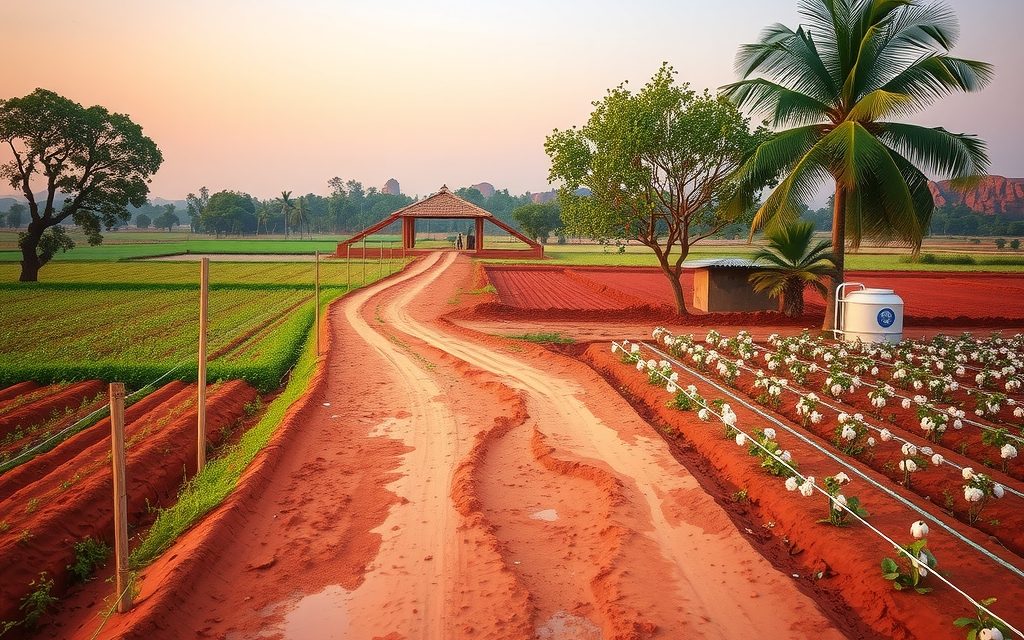
SRSP canal paddy land and Godavari-bank fields around 200 km from Hyderabad, next to the Ramagundam power and coal cluster. Indicative per-acre prices, industrial checks and the Telangana title checklist.
Karimnagar's plot market runs on local families, doctors, traders and Gulf NRIs rather than speculators. SUDA-approved layouts on the Kothapalli, Bommakal and Thimmapur fringes, indicative per sq yd bands, and the legal checks that matter.
Lower Manair Dam water, Gulf and US remittances and highway growth shape Karimnagar's property market. This guide covers SUDA plots, houses, apartments and farm land with indicative October 2026 bands, corridors and checks.

NRIs and OCIs cannot buy or receive gifts of agricultural land, plantations or farmhouses; inheritance is the only route. What inherited land allows, why benami workarounds are dangerous, and the lawful alternatives near Hyderabad.
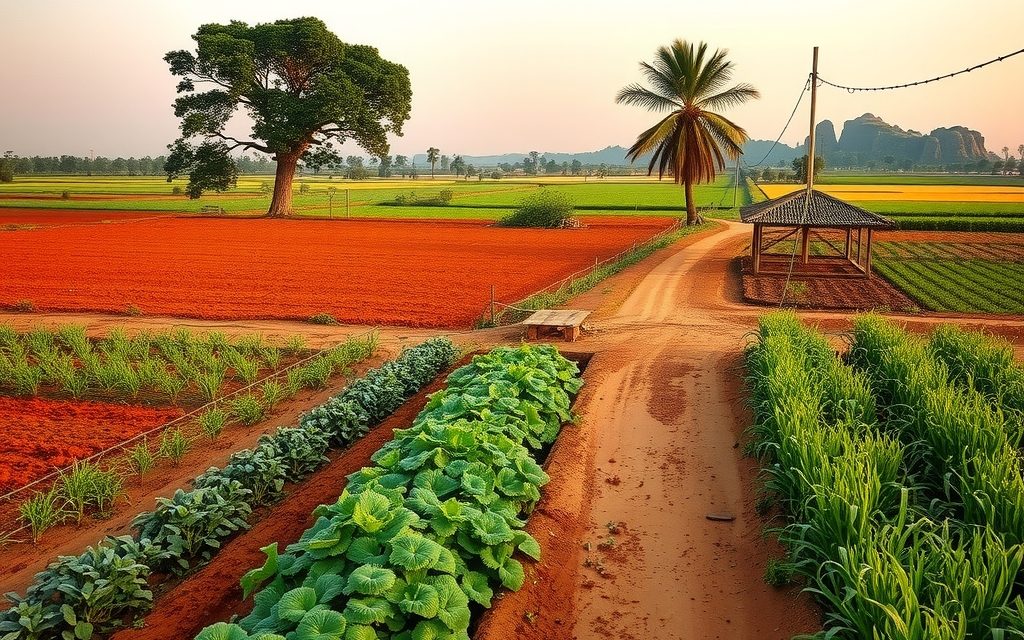
Red-soil farmland 4 km from the ORR beside the Aerospace SEZ and TCS campus. Interior villages still farm vegetables and mango; land near the SEZ is priced as future layout land and needs careful acquisition checks.