Open Plots in Pragathi Nagar, Hyderabad
Larger resale plots in an established lake-side colony behind Kukatpally. Indicative October 2026 prices, how original-layout and extension titles differ, lake FTL and buffer checks, and a Bachupally comparison.
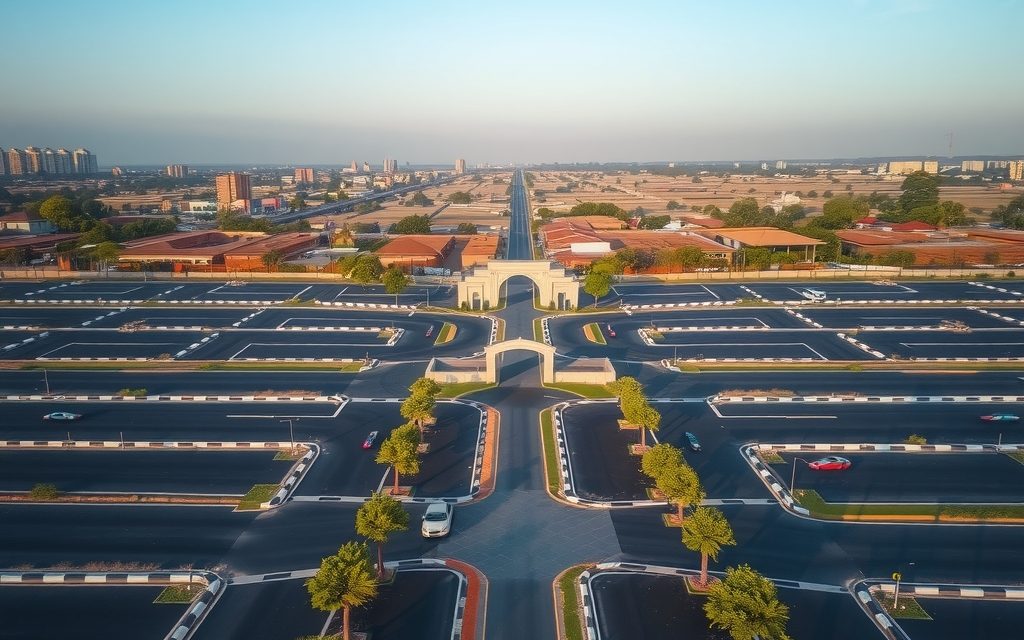
- Planned colony with 200–400 sq yd plots in the core, unusual for the north-west belt
- Indicative ₹60,000–₹90,000 per sq yd for original colony plots with clean title, as of October 2026
- JNTU College and KPHB Colony metro stations typically 3–5 km away
- Lake FTL and buffer verification is essential for plots near the water
- Medchal-Malkajgiri district; many plots now held by heirs of original owners
| What | Indicative range | Note |
|---|---|---|
| Original colony plot, 30–40 ft road, clean title chain | ₹60,000 – ₹90,000 per sq yd | indicative, Oct 2026 |
| Extension plot with HMDA approval or final LRS order | ₹50,000 – ₹75,000 per sq yd | indicative, Oct 2026 |
| Link-road plot toward Bachupally | ₹55,000 – ₹80,000 per sq yd | indicative, Oct 2026 |
| Lake-side plot, FTL and buffer verified clear | ₹58,000 – ₹85,000 per sq yd | indicative, Oct 2026 |
| Plot with lake buffer or regularisation unresolved | ₹30,000 – ₹50,000 per sq yd | risk discount, Oct 2026 |
| Main road frontage, JNTU road approach | ₹1.2 L – ₹1.9 L per sq yd | indicative, Oct 2026 |
Ranges reflect recent transactions and advisor observation as of 2026-10. Always verify against the sub-registrar market value and the specific parcel.
Pragathi Nagar is a colony that was planned before its neighbours were, and it still shows. Behind Kukatpally and the JNTU road, around a sizeable lake, it began as an organised residential layout of generous plots on a regular street grid, at a time when Nizampet and Bachupally were still fields. Independent houses on 200–400 sq yd plots, tree-lined streets and a quieter pace than KPHB define it today. For buyers looking at open plots in Pragathi Nagar, that history is both the attraction and the homework: the plots are larger and the streets better laid than in most of the surrounding belt, but every purchase involves an older title chain and, for a meaningful share of plots, a careful reading of where the lake's boundary really lies.
This guide is for families who want to build an independent home in an established colony close to the metro, for buyers comparing Pragathi Nagar with Bachupally's newer ventures, and for NRIs whose families already live in the Kukatpally–Nizampet area. It sets out indicative per square yard prices as of October 2026, how the original layout and later extensions differ on paper, the lake full tank level and buffer checks we insist on, registration costs in Medchal-Malkajgiri district and a candid view of who should buy here.
Why buyers look for a plot in Pragathi Nagar
When families tell us why they want Pragathi Nagar specifically, rather than the wider north-west, the same reasons come up again and again.
- A planned colony. Wider internal roads, a regular block structure and parks set aside at the outset make it feel different from the organic, lane-by-lane growth of the localities around it.
- Bigger plots. Plots of 200, 267, 300 and even 400 sq yd are common in the older core, compared with the 120–167 sq yd units typical of newer row-house enclaves nearby.
- The lake. The lake and its surroundings give the colony open sky and a morning-walk culture that buyers value, even as they create due-diligence work.
- Metro and the city within reach. JNTU College and KPHB Colony stations are a short drive away, and Kukatpally's markets and hospitals are close.
- Schools. Pragathi Nagar sits within the school cluster that extends through Nizampet and Bachupally, so families relocating for admissions often look here first.
The trade-off is cost and choice. Vacant plots are few, many sellers are second-generation owners with strong price expectations, and the best-located plots often change hands within family and neighbourhood networks before they ever reach the open market.
Pragathi Nagar plot market in brief, October 2026
| Indicator | What we see on the ground |
|---|---|
| Supply | Scarce; resale plots and old houses sold for land value |
| Layout origin | Original planned colony plus later extensions on surrounding survey numbers |
| Typical sizes | 200–400 sq yd in the core; 150–200 sq yd in extensions |
| Buyer mix | Self-build families, NRIs buying near relatives, small builders seeking land for boutique flats |
| Key checks | Society and allotment documents, lake FTL and buffer, extension-area approvals |
Location and growth drivers: JNTU road, Kukatpally and the north-west belt
How Pragathi Nagar connects
The colony is reached from Kukatpally and the JNTU junction on the Mumbai highway via the JNTU road, and from Nizampet and Bachupally to the west and north. In practice, residents use two or three entry routes depending on time of day, and the colony's internal grid absorbs traffic better than the narrow lanes of older villages around it. Peak-hour congestion is concentrated on the approach roads rather than inside the colony itself.
Metro and commute
JNTU College and KPHB Colony stations on the Red Line are typically within 3–5 km. Hitech City and Madhapur are roughly 10–13 km by road, 25–35 minutes off-peak and 40–60 minutes at peak. The ORR is reachable via the Bachupally–Miyapur side for trips to the Financial District and the airport.
Employment and institutions
The north-west belt draws on several employment clusters at once: the IT corridor to the south-west, Kukatpally's commercial district, JNTU and the colleges along the Bachupally road, and the industrial areas to the north around Jeedimetla and beyond. This mix means Pragathi Nagar's demand is not hostage to any single sector.
What we deliberately leave out
We do not price Pragathi Nagar plots on announced-but-unsanctioned metro extensions or new radial roads. The colony's value is built on access that exists today, and that is how we advise clients to think about it.
The original colony versus later extensions: why the paperwork differs
To understand Pragathi Nagar plot titles, you need to know that the colony did not grow in one piece. The original planned area was laid out and allotted to members in an organised way, with plots registered to individual owners. As the city grew, adjoining survey numbers were developed into extensions, some with formal approvals and some as gram panchayat colonies that later sought regularisation.
Plots in the original layout
Where a plot traces back to an organised society-style allotment, the title chain typically starts with an allotment, followed by a registered sale or conveyance to the member, and then subsequent transfers. The documents to look for include the original allotment or membership record, the first registered deed in the member's favour, and every transfer since. If the colony organisation still exists, a no-dues or no-objection letter can be useful supporting evidence, though it is not a substitute for registered title.
Plots in extension areas
Extensions vary. Some have HMDA layout approval with an LP number. Others began as gram panchayat colonies and depend on a final LRS order. A few have neither, and those are where we advise most caution. The same street name can cover plots in more than one of these categories, so the paperwork must be read plot by plot, not colony by colony.
Why it matters for price
Buyers sometimes assume that anything with a Pragathi Nagar address enjoys the original colony's reputation. In practice, the market prices the difference. A well-documented plot in the original layout commands the top of the range; an extension plot with a regularisation question can trade 15–30 percent lower, and should.
Pragathi Nagar plot prices: indicative bands per sq yd
These ranges reflect recent transactions and advisor observation as of October 2026. Expect real deals to vary with plot size, road width, facing, distance from the lake and, above all, the quality of documents.
| Plot type | Indicative range (per sq yd) | Comment |
|---|---|---|
| Original colony plot, 30–40 ft road, clean title chain | ₹60,000 – ₹90,000 | Larger plots; rarely listed publicly |
| Extension area plot with HMDA approval or final LRS order | ₹50,000 – ₹75,000 | Check approval basis plot by plot |
| Link-road plot toward Bachupally | ₹55,000 – ₹80,000 | Closer to schools; more traffic |
| Plot near the lake, FTL and buffer verified clear | ₹58,000 – ₹85,000 | Views add value only once the boundary is confirmed |
| Plot with lake buffer or regularisation unresolved | ₹30,000 – ₹50,000 | A risk discount; we generally advise against |
| Main road frontage on the JNTU road approach | ₹1,20,000 – ₹1,90,000 | Commercial potential; zoning and set-backs decide |
For a sense of ticket sizes: a 267 sq yd plot in the original layout at ₹75,000 per sq yd comes to about ₹2 crore before charges. A 167 sq yd extension plot at ₹60,000 is roughly ₹1 crore. Larger plots of 300–400 sq yd attract small builders looking to put up boutique apartment buildings, which can push prices for those sizes toward the upper end.
Pragathi Nagar lake: FTL, buffer and what they mean for your plot
No plot purchase in Pragathi Nagar near the water should proceed without a clear answer to one question: where is the lake's full tank level, and how far does the buffer extend from it? This is not an abstract concern. Since 2024, Hyderabad has seen sustained enforcement against structures in lake FTL areas and buffer zones, and that enforcement does not respect sale deeds, old layout plans or the length of time a building has stood.
The basic concepts
- Full tank level (FTL) is the boundary of the water spread when the tank is full. Land within the FTL is part of the water body and cannot be built on.
- Buffer zone is a no-construction strip around the FTL. Under the state's building rules, it is typically 30 metres for tanks of 10 hectares or more and 9 metres for smaller ones, but notified boundaries and specific orders govern each case.
- Inlet and outlet channels and connected nalas carry their own clearance requirements, and these often run behind or between colony plots.
How we check a lake-side plot
- Locate the survey number on the notified FTL and buffer maps for the tank and overlay the plot boundary.
- Check whether the plot or its approach road falls within any part of the buffer or on a channel alignment.
- Walk the site with the layout plan: compare the plot's position with the visible bund, inlets, outlets and storm-water drains.
- Look for signs of past water-logging and ask long-time neighbours about monsoon conditions.
- Review whether building permission has been granted to adjoining plots in recent years, which is a useful, though not conclusive, indicator.
Our detailed guide to lake FTL, buffer zones and HYDRAA enforcement explains the rules. The short version for Pragathi Nagar is simple: a plot with lake views is worth paying for only after its boundary has been confirmed against official maps, and a seller who resists that check is telling you something.
Plot sizes and building on an older colony plot
Pragathi Nagar's larger plot sizes give owners options that are hard to find elsewhere in the belt. On a 267–300 sq yd plot, a family can build a generous duplex with a garden, or a G+2 or G+3 house with self-contained rental floors, subject to the setbacks and height permitted for the road width. Plots on 30 and 40 ft internal roads support more floors than those on narrower lanes in the extension areas.
A few site realities to keep in mind:
- Soil and ground level. Lake-side pockets can have softer, moisture-retaining soil and higher groundwater. Foundations may need extra depth or a raised plinth, and a soil test is worthwhile.
- Water supply. Many households combine a municipal connection with a borewell and sump. Groundwater near the lake is often reasonable, but quality varies; test it.
- Trees. Mature trees on or beside older plots may need permission to fell. Factor this into your design and timeline.
- Old structures. If the plot carries an old compound wall, outhouse or house, budget for demolition and confirm that utility accounts are closed or transferred cleanly.
Pragathi Nagar or Bachupally: comparing the two plot markets
Most of our Pragathi Nagar enquiries end with a comparison against Bachupally, a short drive north. They serve overlapping buyers but offer quite different propositions.
| Factor | Pragathi Nagar | Bachupally |
|---|---|---|
| Character | Established planned colony, quieter streets | Busy family suburb with new townships and ventures |
| Typical plot sizes | 200–400 sq yd in the core | 150–267 sq yd |
| Supply | Very limited resales | Resales in the core; newer HMDA ventures to the north |
| Paperwork pattern | Older allotment-based chains; extensions vary | Mix of LRS colonies and newer HMDA layouts |
| Lake factor | Central to due diligence for many plots | Present for some pockets |
| Price direction | Higher per sq yd in the core | Wide range; lower toward Mallampet and Bowrampet |
If you want an established neighbourhood and a larger plot and can stretch the budget, Pragathi Nagar makes sense. If you want a newer layout with laid infrastructure at a lower price per sq yd, our guide to open plots in Bachupally covers the options. Buyers who want something between the two often look at open plots in Nizampet, which is closer to the metro but has smaller plots.
Worked example: an heir-held 267 sq yd plot in the original colony
A pattern we see often in Pragathi Nagar: three siblings inherit a 267 sq yd plot with a small old house from their parents, who were among the colony's early owners. Two siblings live abroad, one in Hyderabad. They agree to sell at an indicative ₹75,000 per sq yd. Here is how such a transaction typically comes together, and what it costs the buyer.
| Step or cost | Illustrative figure or action |
|---|---|
| Agreed price (267 × ₹75,000) | About ₹2 crore |
| Title preparation by sellers | Legal heir documentation, registered release or partition if needed, consent of all three heirs |
| Power of attorney | The two overseas siblings execute property-specific POAs abroad in favour of the local sibling, or each signs at registration |
| Government charges (~7.5% of the higher of price and market value) | Roughly ₹15 lakh |
| TDS | Deducted per seller: 1% on the resident sibling's share; non-resident rates on the overseas siblings' shares unless they hold lower-deduction certificates |
| Demolition of the old house | Budget separately; varies with structure and debris volume |
| Legal verification and advisory fee | As disclosed and agreed in writing |
The step that takes longest is rarely the price. It is aligning three heirs on documents, getting POAs executed and adjudicated, and sorting out TDS for sellers with different residential status. Buyers who understand this up front, and build realistic timelines and a clear sequence of payments into the agreement of sale, avoid most of the friction. We also advise holding back a meaningful part of the consideration until the last heir has signed and the deed is registered, so that no single seller can stall the transaction after receiving money.
For the sellers, the same example shows why clean paperwork commands a premium. A plot whose heirs have already registered a partition or release, closed the utility accounts and gathered the original allotment papers sells faster and closer to the top of the range than an identical plot where all of that still has to be done.
Legal checklist for a Pragathi Nagar plot
- Origin of title. Identify whether the plot belongs to the original colony or an extension, and collect the allotment record or approval basis accordingly.
- Full chain of registered deeds. From the first conveyance to the present seller, with no unregistered links. Our guide to link documents and the title chain explains what a complete chain looks like.
- Encumbrance certificate. A 30-year EC from the registration department, reconciled entry by entry.
- Approvals for extension plots. HMDA LP number and release, or a final LRS proceedings order naming the correct survey number, plot number and extent.
- Lake and channel clearance. FTL, buffer and nala checks against official maps, as described above.
- Heirship. Many Pragathi Nagar plots are now held by heirs of original allottees. We look for succession documents, registered partition or release deeds, and consent from all heirs.
- Section 22-A and government land. A check of the prohibited list and the survey number's history.
- Zoning. Residential use confirmed under the master plan; main-road plots may be zoned differently.
- Civic records. Property tax or vacant land tax assessment, utility accounts and the current permitting authority, since civic jurisdiction in this belt has been reorganised more than once.
- Possession and measurements. A physical survey against the deed and layout, boundary marks and confirmation that no one else occupies the plot.
Registration and charges for Pragathi Nagar plots
Pragathi Nagar falls in Medchal-Malkajgiri district. The sale deed is registered at the jurisdictional sub-registrar office for the revenue village, which we confirm from the survey number rather than assume from the postal address.
| Item | Approximate rate | Notes |
|---|---|---|
| Stamp duty | ~5.5% | On the higher of consideration or government market value |
| Transfer duty | ~1.5% | Collected with stamp duty |
| Registration fee | ~0.5% | Paid at the SRO |
| Total | ~7.5% | Verify current rates at the SRO on the day |
| TDS (Section 194-IA) | 1% above ₹50 lakh | Buyer deducts from a resident seller; higher rates if the seller is an NRI |
With most Pragathi Nagar plots well above ₹50 lakh, TDS compliance is a routine part of every purchase here. Heirs selling jointly may each need a separate TDS calculation in proportion to their share, which is worth setting up correctly in the agreement.
Investment outlook for Pragathi Nagar land
Pragathi Nagar is a low-supply, established market. Its strengths are durable: a planned layout, larger plots, the lake setting, metro proximity and a school-led family buyer base. Values here tend to move steadily rather than in bursts, and plots with clean title hold their liquidity well even in slow markets.
Risks to keep in view:
- Lake enforcement is the biggest single risk for plots near the water, and it can be binary.
- Older title chains with heirship gaps can delay or derail sales.
- Densification. As larger plots become boutique apartment buildings, parts of the colony are becoming denser, which some buyers welcome and others do not.
- Approach-road congestion limits how much of a premium the colony can command over Nizampet and Bachupally.
We see Pragathi Nagar as a build-and-live or long-hold market, typically five years or more. It suits buyers who value certainty and setting over the highest possible appreciation.
Who should buy a plot in Pragathi Nagar
It suits you if you:
- Want an independent house on a larger plot in an established colony
- Have children in, or headed for, schools in the Nizampet–Bachupally cluster
- Work in Kukatpally, Hitech City or Madhapur and want metro access
- Are an NRI planning a family home near relatives in the area
It may not suit you if you:
- Need a plot under ₹1 crore; options here at that budget are few
- Want a new gated layout with a clubhouse
- Prefer a ready home: see our guides to villas in Pragathi Nagar and apartments in Pragathi Nagar
NRI note: buying a Pragathi Nagar plot from abroad
NRIs and OCIs can purchase residential and commercial plots in Pragathi Nagar under FEMA, with payment through NRE or NRO accounts or inward remittance. They cannot purchase, or receive as a gift, agricultural land, plantation property or farmhouses; such land can come to them only through inheritance. Colony plots are residential, so the restriction does not normally arise here, but we confirm the land's status during verification.
Many of our Pragathi Nagar NRI clients are buying near parents, and a family member often handles site visits. Registration can be completed through a registered, property-specific power of attorney, and our guide to NRI power of attorney for property registration explains how to execute it abroad. On a future sale, the buyer will deduct TDS at non-resident rates; consult a chartered accountant on tax and repatriation.
How NRR Estates helps in Pragathi Nagar
- Understanding the brief: plot size, build plan, budget and school or commute priorities.
- Finding plots: including resales and old houses that circulate within the neighbourhood before reaching listings.
- Title work: original allotment or approval basis, full registered chain, EC, heirship and zoning.
- Lake verification: FTL, buffer and channel checks against official maps, with a site walk.
- Negotiation and registration: all-in pricing, agreement drafting, TDS, SRO registration and tax mutation.
Fees are disclosed and agreed in writing before we begin.
Open plots in Pragathi Nagar: frequently asked questions
What do open plots in Pragathi Nagar cost per sq yd?
As of October 2026, plots in the original colony with a clean title chain typically trade at ₹60,000 to ₹90,000 per sq yd. Extension-area plots with HMDA approval or a final LRS order are around ₹50,000 to ₹75,000, and link-road plots toward Bachupally ₹55,000 to ₹80,000. Main road frontage on the JNTU road approach can reach ₹1.2 lakh to ₹1.9 lakh. These indicative ranges come from recent transactions and advisor observation; documents and lake distance move individual prices considerably.
How do I check whether a Pragathi Nagar plot is in the lake buffer?
Start with the survey number. It must be located on the notified full tank level and buffer maps for the lake and overlaid with the plot boundary. Under the state's building rules the buffer is typically 30 metres for tanks of 10 hectares or more and 9 metres for smaller ones, though notified boundaries govern each case. Check inlet and outlet channels too, walk the site with the layout plan, and ask neighbours about monsoon water-logging. We do this before any advance is paid.
Is there a difference between original colony plots and extension plots?
Yes, and the market prices it. Original colony plots usually trace back to an organised allotment followed by registered transfers, and sit on wider, planned roads. Extension plots were developed later on adjoining survey numbers; some have HMDA approval, others depend on LRS, and a few have neither. The same street can contain both types, so documents must be read plot by plot. A well-documented original plot can command 15 to 30 percent more than an extension plot with open questions.
Should I choose Pragathi Nagar or Bachupally for a plot?
Choose Pragathi Nagar if you want an established, quieter planned colony with larger plots and can pay a higher price per sq yd. Choose Bachupally if you want more choice, newer HMDA ventures with fresh infrastructure, and lower prices toward Mallampet and Bowrampet. Both sit in the same school cluster. Pragathi Nagar's due diligence leans on old title chains and lake checks; Bachupally's on LRS orders in older colonies and release letters in newer layouts.
Why are so many Pragathi Nagar plots sold by heirs?
The colony is old enough that many original owners have passed their plots to children, who often live in different cities or countries and prefer to sell rather than build. That makes heirship documents central to due diligence: legal heir proof, registered partition or release deeds where appropriate, and the consent of every heir. Overseas heirs typically sign through registered powers of attorney. Plots where heirs have already completed this paperwork tend to sell faster and closer to the top of the range.
What can I build on a 267 sq yd plot in Pragathi Nagar?
A 267 sq yd plot gives real flexibility: a spacious duplex with a garden, or a G+2 or G+3 house with self-contained rental floors, depending on road width and the setbacks and height permitted under the building rules in force. Lake-side pockets may need deeper foundations or a raised plinth, so a soil test is worth doing. Mature trees can require felling permission. We recommend a short architect's feasibility check before you agree a price.
What are the registration charges for a Pragathi Nagar plot?
Government charges are approximately 5.5 percent stamp duty, 1.5 percent transfer duty and 0.5 percent registration fee, around 7.5 percent of the higher of the sale price or government market value. The deed is registered at the jurisdictional sub-registrar office in Medchal-Malkajgiri district, which we confirm from the survey number. The buyer deducts 1 percent TDS on purchases above ₹50 lakh from resident sellers, and higher rates for NRI sellers. Verify current rates at the SRO on the day.
Can NRIs buy a plot in Pragathi Nagar?
Yes. NRIs and OCIs can buy residential and commercial plots in Pragathi Nagar under FEMA, paying through NRE or NRO accounts or inward remittance. They cannot buy, or receive as a gift, agricultural land, plantation property or farmhouses, which can come to them only by inheritance. Registration can be handled through a registered, property-specific power of attorney given to a trusted relative. When they later sell, the buyer deducts TDS at non-resident rates, so consult a chartered accountant on tax.
Related guides
Pragathi Nagar offers independent houses on larger plots, small gated duplex clusters and row houses beside its lake, near the Bachupally school belt. See October 2026 price ranges, older-house checks, lake rules and rebuild costs.
Pragathi Nagar is a lakeside co-operative colony of plots turning into small apartment buildings, minutes from KPHB and the Bachupally schools. Here is what flats cost and the society-title and lake checks to run.
Vacant plots in Nizampet are scarce resales in older HMDA and gram panchayat layouts. Indicative October 2026 prices, LRS file checks, tank buffers and registration for families who want to build near JNTU and Miyapur.
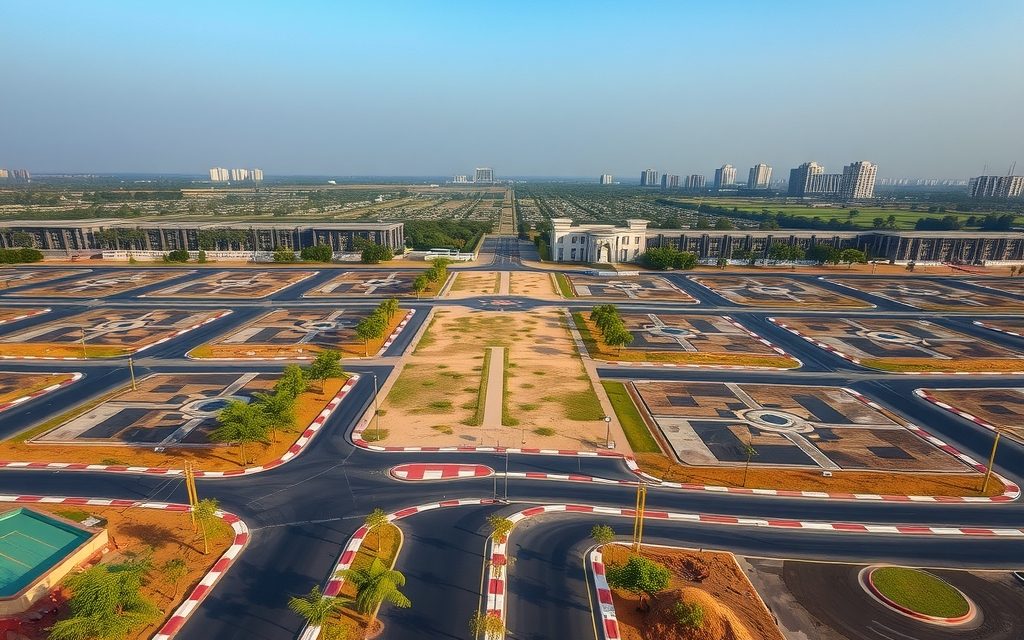
Resale colony plots off the Bachupally–Miyapur road and newer HMDA ventures toward Mallampet, Bowrampet and Dundigal. Indicative prices, approvals, legal checks and registration for family buyers.
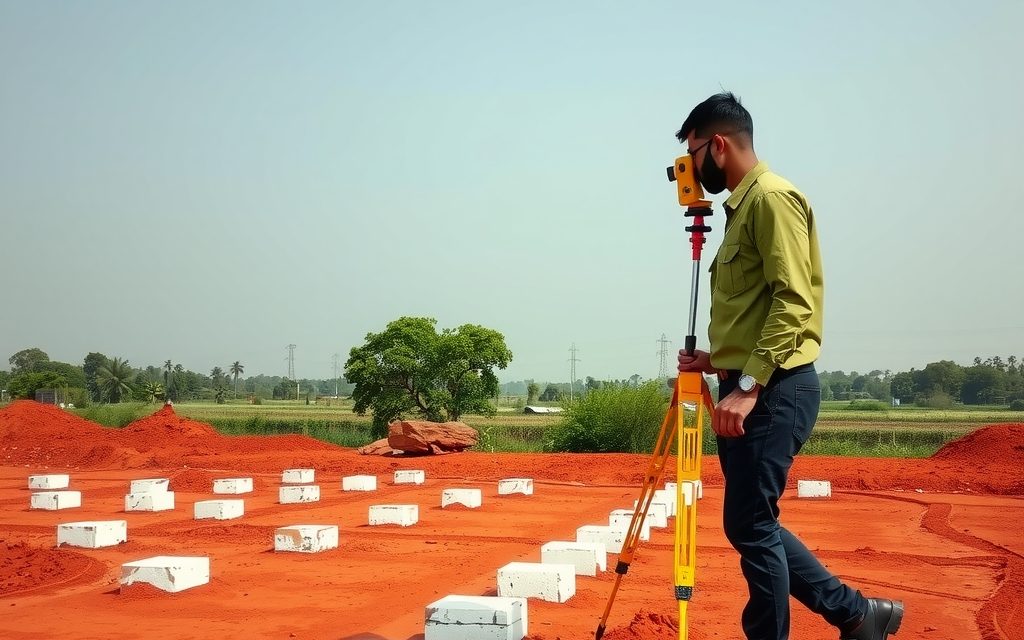
What lake full tank levels and buffer zones mean for plot, villa and flat buyers in Hyderabad: buffer distances, who draws the FTL, how HYDRAA enforces, how to check a property against lake maps, and why clean title is not enough.
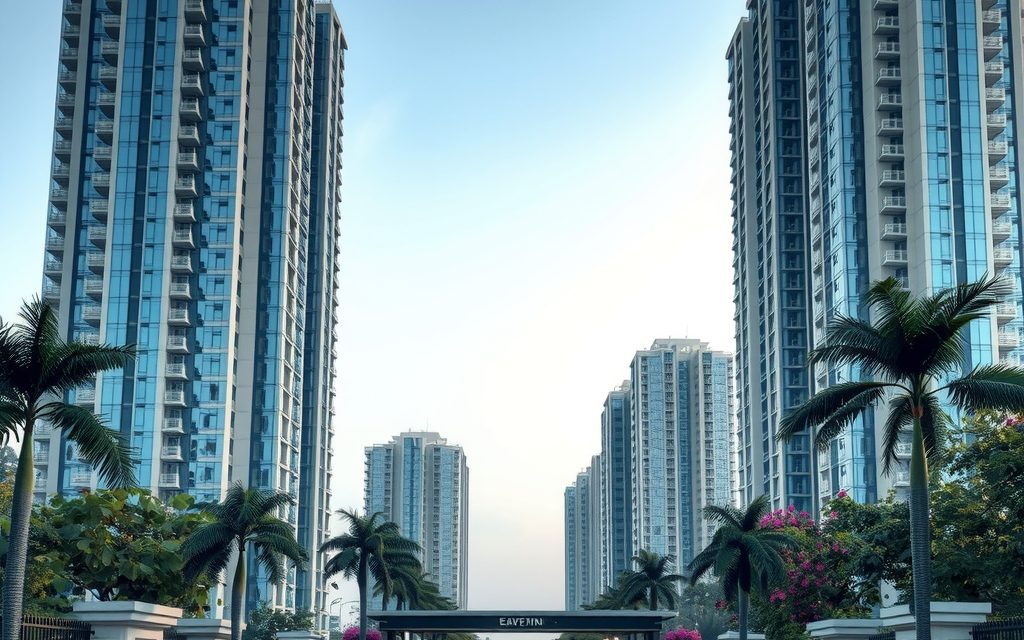
Kukatpally is one of Hyderabad's densest, most liquid flat markets: four metro stations, the KPHB phases and a deep resale pool beside new high-rise launches. Here is how to choose between them and what each costs.

What NRIs and OCIs can and cannot buy under FEMA, how to fund and register a purchase from abroad, TDS and repatriation basics, and where the opportunities are across Hyderabad and the Telangana districts.
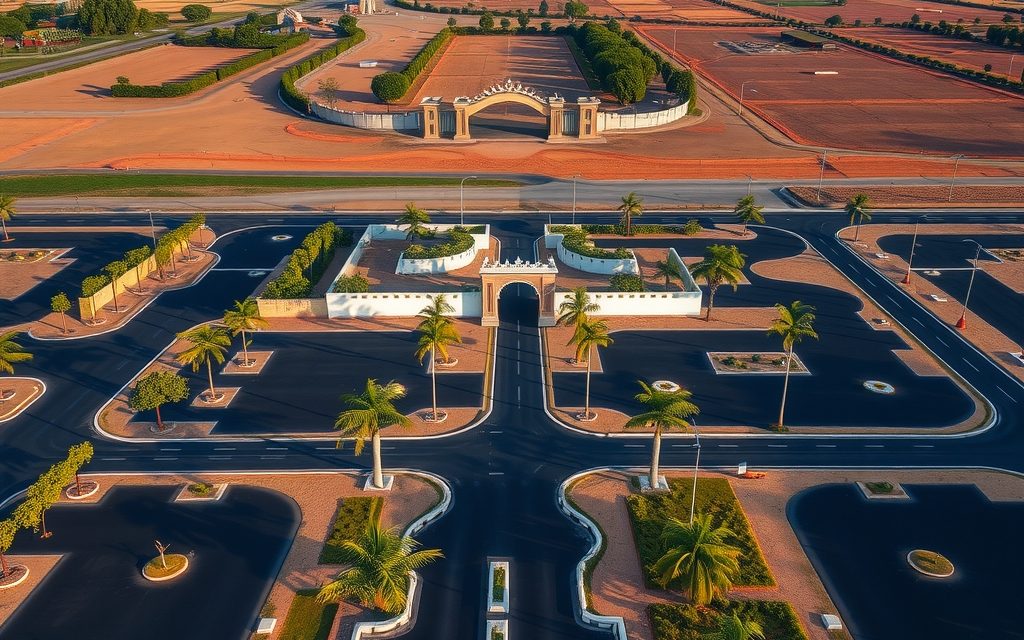
HMDA plots 4 km from the ORR beside TCS and the Aerospace SEZ: Adibatla, Bongulur, Kongara Kalan and Mangalpally pockets, indicative per-sq-yd prices and an honest take on Future City and Pharma City.