Open Plots in Nizampet, Hyderabad
Vacant plots in Nizampet are scarce resales in older HMDA and gram panchayat layouts. Indicative October 2026 prices, LRS file checks, tank buffers and registration for families who want to build near JNTU and Miyapur.
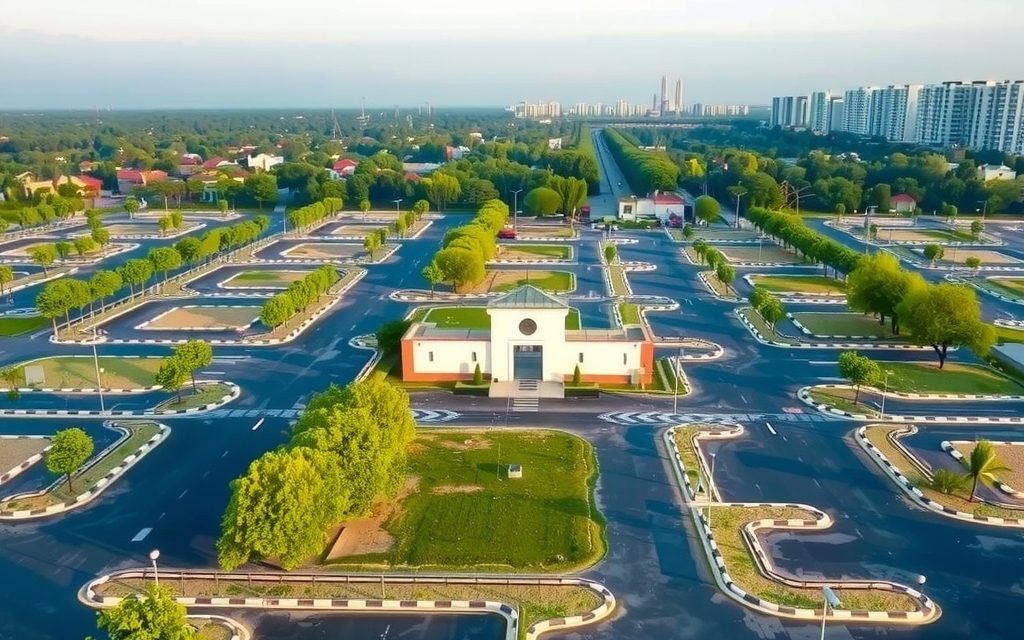
- JNTU College and KPHB Colony metro stations typically 2–4 km; Hitech City roughly 8–12 km
- Indicative ₹70,000–₹1,00,000 per sq yd for released HMDA plots in the core, as of October 2026
- Most traded sizes 150, 167 and 200 sq yd on 20–40 ft roads
- Many older colonies depend on a final LRS proceedings order, not just an application
- Medchal-Malkajgiri district; registration at the jurisdictional SRO for the revenue village
| What | Indicative range | Note |
|---|---|---|
| HMDA layout, released, 30–40 ft road, Nizampet core | ₹70,000 – ₹1,00,000 per sq yd | indicative, Oct 2026 |
| Older GP colony with final LRS order, 20–30 ft road | ₹60,000 – ₹85,000 per sq yd | indicative, Oct 2026 |
| Bachupally and Pragathi Nagar edge, mixed layouts | ₹62,000 – ₹90,000 per sq yd | indicative, Oct 2026 |
| Plot with LRS pending or incomplete papers | ₹45,000 – ₹65,000 per sq yd | risk discount, Oct 2026 |
| Nizampet Road or main-road commercial frontage | ₹1.5 L – ₹2.5 L per sq yd | indicative, Oct 2026 |
Ranges reflect recent transactions and advisor observation as of 2026-10. Always verify against the sub-registrar market value and the specific parcel.
Nizampet is one of those Hyderabad localities where the open plot has become the rarest thing on the market. Two decades ago the stretch from the JNTU junction up Nizampet Road to Bachupally was village land with scattered gram panchayat colonies. Today it is a dense family suburb of row houses, standalone apartment blocks and owner-built G+2 homes, and the few vacant plots that remain are almost all resales in layouts that were drawn up long before the current rules. If you are searching for open plots in Nizampet, the honest starting point is this: supply is thin, prices are set by competition with row-house developers, and the paperwork on an older colony plot matters far more than its location on the map.
This guide is written for families who want to build their own house close to KPHB, JNTU and Miyapur, for investors who want a land holding inside the city rather than on its fringe, and for NRIs buying near relatives in the Kukatpally–Bachupally belt. It covers where the remaining plots are, what they cost per square yard as of October 2026, how to read HMDA, gram panchayat and LRS papers on a Nizampet plot, registration in Medchal-Malkajgiri district, and when it makes more sense to look one locality further out.
Why open plots in Nizampet are scarce, and why buyers still chase them
Nizampet filled up from the south. Families priced out of KPHB Colony and Kukatpally in the 2000s bought GP-era plots off Nizampet Road, built two or three floors and rented out the upper portions. Local developers followed with triplex row-house enclaves on 120–165 sq yd units and five-storey standalone apartment buildings on 300–600 sq yd parcels. Each wave consumed the vacant land the previous wave left behind.
The result is a locality where an empty 200 sq yd plot is a genuine event. Most of what we see come to market falls into four groups:
- Original-allottee plots in colonies laid out in the 1990s and early 2000s, held by owners who bought for a future house and never built.
- Inherited plots where siblings have decided to sell rather than build jointly, which often means a family settlement or partition deed sits in the title chain.
- Teardown houses, where an ageing single-storey or G+1 house is priced essentially on its land value.
- Corner and main-road plots held back by owners waiting for a commercial buyer.
Buyers keep chasing these plots for reasons that have not changed: Nizampet is a short drive to Hitech City, it sits within reach of three Red Line metro stations, the school cluster of the Bachupally–Pragathi Nagar belt is on its doorstep, and a self-built house with a rental floor still works financially here in a way it no longer does in Kondapur or Madhapur.
Nizampet plot market at a glance, October 2026
| Indicator | What we observe |
|---|---|
| Supply | Very limited; almost entirely resale plots and teardown houses |
| Layout types | Older gram panchayat colonies (many regularised under LRS), HMDA-approved layouts from the 2000s and 2010s |
| Typical plot sizes | 120–300 sq yd; 150, 167 and 200 sq yd are the most traded |
| Competing buyers | Self-build families, row-house developers, small apartment builders on joint development |
| Main risks | Incomplete LRS, unclear link documents, tank and nala proximity, narrow access roads |
| Revenue district | Medchal-Malkajgiri (Bachupally mandal) |
Connectivity: JNTU, the KPHB metro stations and the Miyapur link
Nizampet Road as the spine
Nizampet Road runs from the JNTU junction on the Mumbai highway (NH-65) north to Nizampet X Roads and on toward Bachupally and Pragathi Nagar. Almost every plot decision here comes down to how far the plot is from this road and how the access lane connects to it. A plot 300 metres off the main road on a 30 ft lane behaves very differently, in both price and daily life, from one tucked behind three turns on a 20 ft lane that floods in heavy rain.
Metro access
JNTU College and KPHB Colony stations on the Red Line are typically 2–4 km from most Nizampet colonies, and Miyapur, the line's terminus, is a similar distance from the western side. That makes Nizampet one of the few plot markets in Hyderabad where a family can realistically rely on the metro for daily trips to Ameerpet, Punjagutta or the old city, using an auto or two-wheeler for the last stretch.
Commute to the IT corridor
Hitech City and Madhapur are roughly 8–12 km away via KPHB and the Hitech City road. Off-peak that is a 20–30 minute drive; at peak, budget 35–55 minutes. The Financial District is further, and many residents use the ORR via the Miyapur–Bachupally side to reach Gachibowli and Nanakramguda. For a family whose earners work in Hitech City or Kondapur, Nizampet offers one of the shortest commutes available on a plot-and-build budget.
JNTU and the institutional anchor
Jawaharlal Nehru Technological University Hyderabad at Kukatpally anchors the southern end of the corridor. Faculty, staff, coaching centres and student housing around JNTU create steady rental demand for the upper floors of houses built on Nizampet plots, which is one reason the self-build-and-rent model has lasted here.
What is not yet a driver
Metro extensions and new radial roads in the north-west have been discussed for years. As of October 2026, nothing sanctioned for construction changes Nizampet's connectivity in the near term, and we do not price speculative infrastructure into plot values here. Nizampet's case rests on access that already exists.
Approvals on a Nizampet plot: HMDA layouts, old GP colonies and LRS
Nizampet sits inside HMDA's jurisdiction, but much of its housing predates the modern approval regime. That gives the locality three distinct types of plot paperwork, and you should know which one you are looking at before you discuss price.
HMDA-approved layouts
Layouts approved by HMDA carry a layout permit (LP) number and a sanctioned plan showing roads, open spaces and plot numbering. In these layouts a share of plots is typically mortgaged to HMDA until the developer completes roads, drains and other works, after which HMDA issues a release. On a resale, the key questions are whether the plot was ever in the mortgaged share and, if so, whether the release was obtained. Layout approvals and master plan land use can be checked on the HMDA website.
Gram panchayat colonies
Before Nizampet became an urban local body, many colonies were laid out with only gram panchayat permission or none at all. GP layouts were never a substitute for a planning-authority approval within HMDA limits. Plots in these colonies can still be perfectly good purchases, but only once they have been regularised.
LRS and the Nizampet reality
The Layout Regularisation Scheme allowed owners of plots in unapproved layouts to regularise them on payment of fees. In Nizampet, a large share of the older colony stock went through LRS. The scheme's 2020 round saw lakhs of applications statewide, and processing restarted in 2025 with a time-bound fee concession. The practical consequence for a buyer is that you will meet plots in every possible state: fully regularised with a proceedings order, applied but pending, rejected, or never applied. Our guide to LRS for Telangana plots explains the scheme; the section below explains how we read it on a Nizampet file.
RERA
New plotted ventures above 500 sq m or eight plots must register with TS RERA. In Nizampet, new plotted layouts are now rare, so RERA is more relevant to the row-house and apartment projects that compete for land than to most plot purchases. Where a small new layout does appear, we check its registration and the promised works.
Nizampet plot prices per sq yd: indicative bands
The bands below come from recent transactions and advisor observation as of October 2026. In a scarce market, individual deals can sit outside these ranges, especially for corners, wide-road plots and teardown houses with unusual dimensions.
| Plot type and location | Indicative range (per sq yd) | What drives the spread |
|---|---|---|
| HMDA layout, released, 30–40 ft road, Nizampet core | ₹70,000 – ₹1,00,000 | Distance from Nizampet Road, facing, road width |
| Older GP colony with a final LRS order, 20–30 ft road | ₹60,000 – ₹85,000 | Quality of link documents, lane width, drainage |
| Bachupally and Pragathi Nagar edge, mixed layouts | ₹62,000 – ₹90,000 | Proximity to the school cluster, colony maturity |
| Plot with LRS pending or papers incomplete | ₹45,000 – ₹65,000 | A discount for risk, not a bargain |
| Nizampet Road or main-road commercial frontage | ₹1,50,000 – ₹2,50,000 | Frontage, zoning, set-backs, visibility |
Translated into ticket sizes, a 167 sq yd released HMDA plot in the core typically costs between ₹1.17 crore and ₹1.67 crore before charges. A 200 sq yd LRS-regularised colony plot might be ₹1.2–1.7 crore. Teardown houses are priced on the same land rate, sometimes with a modest premium if the existing structure can be rented while you plan construction, and sometimes with a discount if demolition and debris removal are expected to be expensive.
The pending-LRS band deserves a warning. A plot that is ₹20,000 per sq yd cheaper because its regularisation is incomplete is cheaper for a reason. It may not get building permission, banks may decline a loan against it, and the next buyer will ask the same questions you are asking. We only recommend such plots when the remaining steps are clear, cheap and contractually the seller's responsibility before registration.
Reading an LRS file on a Nizampet plot
Because so many Nizampet plots depend on LRS, this is where we spend most of our verification time. An LRS file is not a single document; it is a trail, and every step must line up.
- The application. An application number and fee receipt prove only that someone applied. On their own they confer nothing.
- Scrutiny and site inspection. The authority checks the plot against land use, water bodies, government land and prohibited lists. Plots in lake FTL areas, on nalas or on government land are typically rejected at this stage.
- The fee demand and payment. If the plot passes scrutiny, a demand for the regularisation fee and any open-space charges is raised. Proof of full payment is essential.
- The proceedings or regularisation order. This is the document that matters. It should name the applicant, the survey number, the plot number and the extent, and these must match the sale deed exactly.
- Applicant versus seller. If the LRS applicant is not the person selling to you, the title chain between them must be complete and registered.
Two problems recur in Nizampet. The first is a mismatch in plot extent, where the LRS order records 180 sq yd but the deed records 200, usually because a neighbouring strip or a road margin was absorbed at some point. The second is a regularisation order issued to an earlier owner, after which the plot was sold under a deed that does not mention it. Both can often be resolved, but they must be resolved before you pay, not after.
Plot sizes and what you can realistically build
Nizampet plots are compact by suburban standards. The most common sizes are 150, 167 and 200 sq yd, with older corner plots of 240–300 sq yd and some narrow 100–120 sq yd plots in the densest colonies. Access roads are typically 20, 25 or 30 ft in older colonies and 30–40 ft in HMDA layouts.
What you can build depends on plot size, road width and the building rules in force, which set front, side and rear setbacks and the permitted height. A few practical observations from Nizampet builds:
- On 150–167 sq yd, a stilt-plus-two or ground-plus-two family house with one rental floor is the common outcome. Setbacks on all sides eat noticeably into the footprint.
- On 200 sq yd and above, stilt-plus-three with two rental units becomes realistic, which is why these plots attract both families and small builders.
- Road width matters for height. A plot on a 20 ft lane will usually support fewer floors than the same plot on a 30 or 40 ft road, which is reflected directly in price.
- Parking is the hidden constraint. On narrow plots, stilt parking is often the only practical way to meet parking norms, and it shapes the whole design.
Before you buy, we recommend a one-page feasibility sketch from an architect familiar with HMDA-area rules: permitted floors, built-up area and parking for that specific plot. It costs little and frequently changes what a buyer is willing to pay.
Competing with row-house builders and joint development offers
One feature of the Nizampet market that surprises first-time plot buyers is who they are bidding against. Local developers who build triplex row houses or small apartment blocks actively look for 300–600 sq yd parcels and adjoining plots they can combine. When a large plot comes up, the owner often has two offers on the table: an outright sale to a family, or a joint development agreement in which the builder constructs on the land and the owner keeps a share of the built units.
This has two effects for buyers. First, it puts a floor under land prices for larger plots, because a developer's residual-land calculation often supports a higher price than a family would pay for a self-build. Second, it means that smaller plots of 150–200 sq yd, which developers find harder to use, can sometimes be negotiated more effectively. If you own a plot in Nizampet and are weighing a builder's offer, our guide to the joint development agreement for Telangana landowners sets out what to insist on.
Tanks, nalas and low-lying pockets around Nizampet
The Nizampet–Bachupally–Pragathi Nagar area grew around a network of tanks and the channels that connect them. Several colonies sit close to tank beds or on land that was once part of a catchment. Enforcement against encroachment on lake full tank level areas, buffer zones and nalas has been strict across Hyderabad since 2024, including demolition drives in the north-west, and neither a registered sale deed nor an LRS application protects a structure inside these zones.
On every Nizampet plot near water we check:
- The survey number against notified FTL maps and the applicable buffer
- Whether a nala or storm-water channel passes along or through the plot, and its required clearance
- Historical flooding: we ask neighbours, look for raised plinths and water marks, and walk the drainage outfall
- Ground level relative to the road, since a plot below road level will need filling and careful drainage design
A plot near water is not automatically a bad buy. A plot whose position relative to water nobody can confirm is.
Legal checklist for open plots in Nizampet
- Approval basis. HMDA LP number and sanctioned plan, or a final LRS proceedings order. Match plot number and extent.
- Release letter. For HMDA layouts, confirm the plot was not in the mortgaged share or that it has been released.
- Encumbrance certificate. We pull a 30-year EC through the Telangana registration department and reconcile every entry with the documents.
- Link documents to agricultural origin. Many Nizampet colonies were carved out of farmland within the last 25–35 years. We trace the chain to the original pattadar and confirm how and when the land left agricultural use.
- Family settlements and inheritance. Where a plot passed through heirs, we want a registered partition, release or settlement, legal heir documentation and no-objection from every heir with a claim.
- Section 22-A and government land. We check the prohibited properties list and the survey number's history for assigned or government land.
- Master plan zoning. Some pockets along main roads are zoned commercial or mixed. Confirm the use you intend is permitted.
- Civic records. Urban local body boundaries in this part of Hyderabad have been reorganised more than once. We confirm which body issues building permission today and that property tax or vacant land tax is assessed and paid.
- Physical check. Measurement against the deed, boundary stones, road width as built, and no third-party possession or encroachment.
Registration and government charges
Nizampet falls in Medchal-Malkajgiri district. Plots are registered at the jurisdictional sub-registrar office for the revenue village, which we confirm from the survey number before booking a slot. The charges are calculated on the higher of the agreed consideration and the government market value.
| Charge | Approximate rate | Notes |
|---|---|---|
| Stamp duty | ~5.5% | On the higher of consideration or market value |
| Transfer duty | ~1.5% | Collected with stamp duty in urban areas |
| Registration fee | ~0.5% | Paid at the SRO |
| Total government charges | ~7.5% | Verify current rates at the SRO on the day |
| TDS under Section 194-IA | 1% above ₹50 lakh | Deducted by the buyer from a resident seller; higher rates apply if the seller is an NRI |
Almost every Nizampet plot crosses the ₹50 lakh threshold, so the buyer must deduct TDS, deposit it and file the statement. On a ₹1.4 crore plot, government charges of about 7.5 percent come to roughly ₹10.5 lakh, a figure worth building into your budget from day one.
Buying a teardown house for its land
Because vacant plots are so scarce, a meaningful share of Nizampet "plot" purchases are really old houses bought for demolition. This can be the best route into the locality, but it carries its own checks. Confirm whether the existing building had a sanctioned plan, because an unauthorised structure can sometimes complicate the title history. Check that electricity, water and property tax accounts are in the seller's name and clear of dues. If tenants are in occupation, vacant possession must be a condition of registration. And budget realistically for demolition and debris removal, which on a G+1 house can be a noticeable sum.
The upside is that teardown houses often come with better-established title chains than vacant plots, since they have been lived in, taxed and mortgaged over decades. A bank's earlier mortgage and release, visible in the EC, can actually be reassuring.
Investment outlook for Nizampet plots
The long-term case for land in Nizampet is straightforward: it is an established residential locality close to the IT corridor and metro, with very little new land coming to market. Scarcity supports values, and the self-build-and-rent model gives owners an income option while they hold.
The risks are equally clear:
- Title quality. Older colonies carry more paperwork risk than new layouts, and a weak title can make a plot effectively unsellable.
- Congestion. Nizampet Road and the JNTU junction are heavily congested at peak hours, which caps how far the locality's premium can stretch.
- Water bodies. Plots near tanks or nalas carry enforcement risk.
- Competition from flats. Many families choose a ready flat over the effort of a self-build, which limits the pool of plot buyers at the top of the range.
We treat Nizampet as a market for buyers who intend to build or hold for five years or more. Short-term flipping in a market this thin is rarely sensible, because transaction costs of roughly 7.5 percent plus brokerage need real appreciation to recover.
Who a Nizampet plot suits, and who should look one locality further out
A Nizampet plot suits you if you:
- Work in Hitech City, Madhapur, Kondapur or Kukatpally and want a short commute
- Want to build a family house with a rental floor close to the metro
- Have family in KPHB, Kukatpally or Bachupally and want to stay close
- Value an established neighbourhood over a new layout with no neighbours
Consider alternatives if you:
- Need a larger plot for the money: open plots in Bachupally and the newer ventures toward Mallampet offer more land per rupee
- Want a lakeside colony with older, larger plots: compare open plots in Pragathi Nagar
- Do not want to manage construction: a ready home may suit better, and our guides to villas in Nizampet and apartments in Nizampet cover that route
NRI note for Nizampet plot buyers
NRIs and OCIs can buy residential and commercial plots in Nizampet under FEMA, paying through NRE or NRO accounts or by inward remittance through banking channels. What they cannot buy, or receive as a gift, is agricultural land, plantation property or a farmhouse; those can only come to an NRI by inheritance. Since every Nizampet plot we recommend is in a residential layout or regularised colony, that restriction rarely bites here, but we confirm the land's non-agricultural status as part of verification.
Most NRI buyers here complete registration through a relative holding a registered, property-specific power of attorney. When an NRI later sells, the buyer deducts TDS at the rates applicable to a non-resident seller, and repatriation follows RBI rules. Take advice from a chartered accountant on tax. Our page on NRI investment in Telangana covers the end-to-end process.
How NRR Estates helps you buy a plot in Nizampet
In a market where good plots rarely reach public listings, much of our work is finding them and then proving they are sound.
- Brief: plot size, budget, build plan, commute and school priorities.
- Sourcing: resale plots and teardown houses across Nizampet and its edges, including off-market leads from owners we know.
- Verification: approval basis, LRS file, release letter, 30-year EC, link documents, heirship, zoning and water-body checks.
- Feasibility: an early read on what you can build, so the price reflects the plot's real potential.
- Negotiation and closing: all-in price, agreement of sale, TDS, SRO registration and mutation of tax records.
Our fees are disclosed and agreed in writing before any work starts.
Open plots in Nizampet: questions buyers ask us
What is the price of open plots in Nizampet in 2026?
As of October 2026, released plots in HMDA layouts in the Nizampet core typically trade between ₹70,000 and ₹1,00,000 per sq yd, and plots in older colonies with a final LRS order between ₹60,000 and ₹85,000. Plots toward the Bachupally and Pragathi Nagar edge sit around ₹62,000 to ₹90,000. Main-road commercial frontage can reach ₹1.5 lakh to ₹2.5 lakh. These are indicative ranges from recent transactions and advisor observation, and individual deals vary with road width, facing and paperwork.
Are there any new plotted layouts left in Nizampet?
Very few. Nizampet is largely built out, and almost all plots that come to market are resales in layouts drawn up between the 1990s and 2010s, or old houses sold for their land value. Large parcels that do appear are usually bought by row-house or apartment developers, often on joint development. If you specifically want a new HMDA venture with fresh infrastructure, the nearest options are typically north toward Bachupally, Mallampet and Bowrampet, at lower per sq yd prices.
Is an LRS application enough to buy a Nizampet plot safely?
No. An LRS application number and fee receipt show only that regularisation was sought. What you need is the final proceedings or regularisation order, with full fee payment, naming the survey number, plot number and extent that match the sale deed. If the order was issued to an earlier owner, the registered chain from that owner to your seller must be complete. Without the final order, building permission and bank loans can be difficult, and the plot is harder to resell.
How far is Nizampet from Hitech City and the metro?
Most Nizampet colonies are roughly 8 to 12 km from Hitech City and Madhapur by road, about 20 to 30 minutes off-peak and 35 to 55 minutes at peak via KPHB. JNTU College and KPHB Colony stations on the Red Line are typically 2 to 4 km away, and Miyapur is a similar distance from the western side. That combination of metro access and a short IT-corridor commute is the main reason plot demand stays strong despite limited supply.
What can I build on a 167 sq yd plot in Nizampet?
On a 167 sq yd plot, a stilt-plus-two or ground-plus-two family house with one rental floor is the usual outcome, depending on road width and the setbacks required under the building rules in force. Wider roads generally allow more floors. Parking norms often push designs toward stilt parking on compact plots. We suggest a short feasibility sketch from an architect familiar with HMDA-area rules before you finalise a price, because buildable area drives the plot's real value.
Do lakes and nalas affect plots in Nizampet?
They can. The Nizampet, Bachupally and Pragathi Nagar belt developed around several tanks and connecting channels, and enforcement against construction in full tank level areas, buffer zones and nalas has been strict since 2024. A registered deed or an LRS application does not protect a structure inside these zones. We check the survey number against notified FTL maps, look for nalas along the boundary, ask about past flooding and compare plot level with the road before recommending any plot.
What are the registration charges for a plot in Nizampet?
Government charges are approximately 5.5 percent stamp duty, 1.5 percent transfer duty and 0.5 percent registration fee, about 7.5 percent of the higher of the sale price or the government market value. Registration happens at the jurisdictional sub-registrar office in Medchal-Malkajgiri district for the revenue village. Since most Nizampet plots exceed ₹50 lakh, the buyer must also deduct 1 percent TDS from a resident seller. Rates can change, so verify them at the SRO on the day.
Can NRIs buy open plots in Nizampet?
Yes. NRIs and OCIs can buy residential and commercial plots in Nizampet under FEMA, paying from NRE or NRO accounts or through inward remittance. They cannot buy or receive as a gift agricultural land, plantation property or farmhouses, which can come to them only by inheritance. Most NRI buyers here register through a relative holding a registered, property-specific power of attorney. On a later sale, the buyer deducts TDS at non-resident rates, so consult a chartered accountant on tax.
Related guides
Nizampet offers triplex row houses, independent homes and a few gated villas near JNTU metro and the Bachupally school belt. See October 2026 price ranges, how its civic history affects permissions and which low-lying pockets to check.
Nizampet offers new gated 2 and 3 BHK flats at prices well below KPHB, with Bachupally schools minutes away. Here is what flats cost, how water supply has changed and which towers stand up to checks.
Resale colony plots off the Bachupally–Miyapur road and newer HMDA ventures toward Mallampet, Bowrampet and Dundigal. Indicative prices, approvals, legal checks and registration for family buyers.
Larger resale plots in an established lake-side colony behind Kukatpally. Indicative October 2026 prices, how original-layout and extension titles differ, lake FTL and buffer checks, and a Bachupally comparison.
HMDA plots in Bachupally's next ring, between Bowrampet lake, Mallampet and Gandimaisamma. Indicative per sq yd prices, approvals, lake-buffer and drainage checks, and registration for Bowrampet buyers.
How Telangana's Layout Regularisation Scheme works, from LRS 2015 and 2020 to the 2026 rebate window: eligibility, fee slabs, processing stages, exclusions, and how to price and verify an LRS-pending plot before you pay.

What NRIs and OCIs can and cannot buy under FEMA, how to fund and register a purchase from abroad, TDS and repatriation basics, and where the opportunities are across Hyderabad and the Telangana districts.
HMDA plots 4 km from the ORR beside TCS and the Aerospace SEZ: Adibatla, Bongulur, Kongara Kalan and Mangalpally pockets, indicative per-sq-yd prices and an honest take on Future City and Pharma City.