Open Plots in Bodhan, Nizamabad
Bodhan is a Nizam Sagar canal town 25 km west of Nizamabad. DTCP and municipal layouts, indicative per sq yd bands, small-town plot arithmetic and the document checks that matter before you pay.
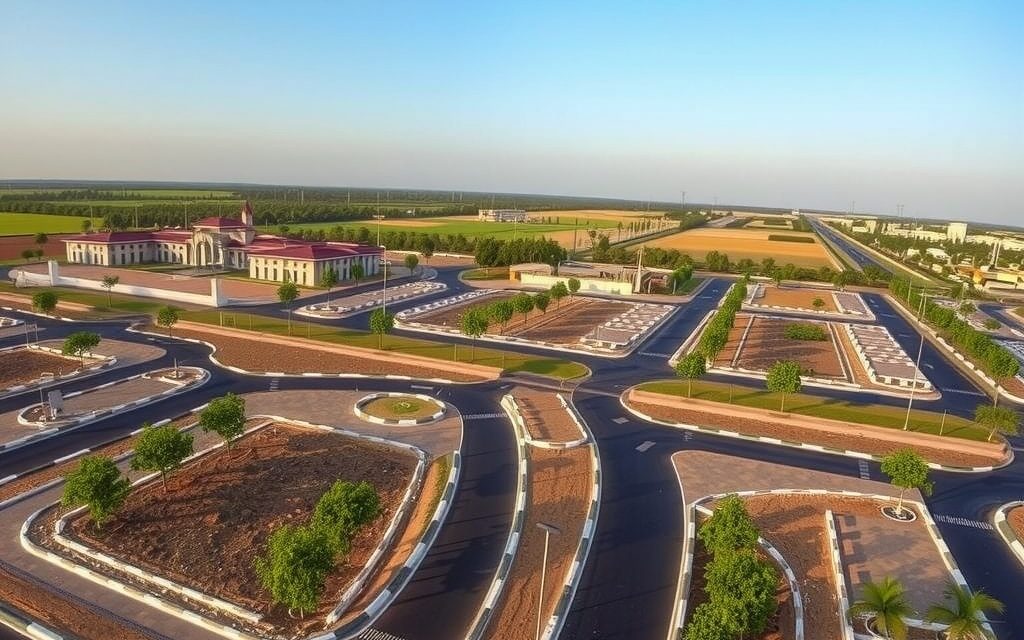
- About 25 km west of Nizamabad and roughly 195–210 km from Hyderabad via NH-44
- Outside the NUDA area: new layouts are DTCP approved, with Bodhan municipality handling building permission in town
- Town-fringe DTCP plots typically ₹6,500–₹12,000 per sq yd as of October 2026
- Common sizes 150, 167 and 200 sq yd; black cotton soil adds to foundation cost
- Demand rests on canal-country farm incomes, Gulf remittances and divisional-town services
| What | Indicative range | Note |
|---|---|---|
| Established town colonies (resale) | ₹14,000 – ₹26,000 per sq yd | indicative, Oct 2026 |
| DTCP layouts on the town fringe, within ~3 km | ₹6,500 – ₹12,000 per sq yd | indicative, Oct 2026 |
| DTCP layouts along the Nizamabad road | ₹7,000 – ₹13,000 per sq yd | indicative, Oct 2026 |
| Main-road frontage, 60–80 ft roads | ₹12,000 – ₹20,000 per sq yd | indicative, Oct 2026 |
| Outer villages, approved ventures | ₹3,500 – ₹6,500 per sq yd | indicative, Oct 2026 |
| GP / unapproved plots | ₹1,800 – ₹4,000 per sq yd | indicative, Oct 2026; LRS risk |
Ranges reflect recent transactions and advisor observation as of 2026-10. Always verify against the sub-registrar market value and the specific parcel.
Bodhan is the kind of Telangana town that people from outside the district tend to overlook and people from inside it rarely leave. About 25 km west of Nizamabad, close to the Maharashtra border, it grew up on the Nizam Sagar canals and the sugar mill at Shakkarnagar, and it still feels like a canal-country market town: rice mills on the approach roads, tractors in the lanes at harvest, and a residential edge that pushes outward one modest layout at a time. Buying open plots in Bodhan is a different exercise from buying near Hyderabad. Tickets are smaller, buyers are mostly local or returning from the Gulf, and the questions that matter — Is the layout really approved? Will the black cotton soil crack my foundation? Will the colony ever fill in? — are practical ones. This guide answers them, with indicative per square yard ranges as of October 2026, the approval routes that apply (DTCP layouts and municipal sub-divisions, with gram panchayat ventures as the risk case), and how registration works at the Bodhan sub-registrar office.
Prices here are indicative ranges drawn from recent transactions and advisor observation. In a town this size a single motivated seller can move a micro-market, so treat every figure as a starting point.
Why buyers look at plots in Bodhan
Bodhan's plot market is small, but it is real, and it rests on three things that do not depend on Hyderabad at all.
Canal money. The Nizam Sagar main canal reached this corner of Nizamabad district in the 1930s, and the black cotton soil between Bodhan, Kotagiri, Rudrur and Varni has grown paddy and sugarcane ever since. When the canal delivers and paddy procurement prices hold, farming families buy town plots — for a son who wants to build, for a daughter's wedding, or simply because land is the asset they trust most.
Gulf and city remittances. Like much of Nizamabad district, Bodhan has families with members in the UAE, Saudi Arabia, Oman and Qatar, and many more with children in Hyderabad, Bengaluru or the US. Their savings come home as plots and houses. A good share of buyers in the ₹6 lakh to ₹25 lakh range are these families.
A divisional town with services. Bodhan is a revenue division headquarters with courts, a government hospital, colleges, schools, banks and a market yard serving a wide rural belt. That gives the town a permanent population of teachers, government employees, traders and professionals who want a house of their own.
What Bodhan lacks is a strong outside growth story. The sugar mill, once the town's identity, has been shut for years, and talk of reviving it comes and goes. That keeps prices grounded, which can be exactly what a careful end user wants.
Bodhan plot prices in brief
- Established town colonies (resale): ₹14,000 to ₹26,000 per sq yd, usually for an old house or a rare vacant plot.
- Approved layouts on the town fringe, within about 3 km: typically ₹6,500 to ₹12,000 per sq yd.
- Layouts along the Nizamabad road: roughly ₹7,000 to ₹13,000 per sq yd, the most active corridor.
- Outer villages, approved ventures: around ₹3,500 to ₹6,500 per sq yd.
- Gram panchayat and unapproved plots: ₹1,800 to ₹4,000 per sq yd, with regularisation risk.
Location, roads and the pull of Nizamabad
From Hyderabad
Most visitors drive NH-44 north from the ORR at Medchal through Toopran, Kamareddy and Dichpally, then cut west through Nizamabad city to Bodhan. Allow roughly 195 to 210 km and about four hours. That distance is the key to understanding the market: Bodhan is not a weekend-plot destination for Hyderabad buyers, and it is not priced like one.
The Nizamabad road
The 25 km road east to Nizamabad is Bodhan's lifeline. People commute along it to the district headquarters for work, hospitals and higher education, and most of the newer approved layouts face it or sit a short distance off it. As Nizamabad's own growth reaches west along its Bodhan road toward Ashok Sagar, the stretch between the two towns is the obvious long-term growth zone. Buyers weighing the bigger city should read our guide to open plots in Nizamabad, where NUDA layouts on the Bodhan road start roughly where Bodhan's own fringe prices end.
Towards Maharashtra and the interior
West and north of the town, roads run to the Maharashtra border and to villages like Salura and Kotagiri. Layouts here are sparse and mostly village ventures. South, the road toward Rudrur, Varni and Banswada runs through deep canal country, with the Nizam Sagar dam itself roughly 45 to 55 km away in Kamareddy district.
Rail
A branch line links Bodhan to Nizamabad junction, which connects to the Secunderabad–Manmad line. Services are limited, and the long-discussed extension of the line toward Bidar remains a proposal, so we do not price it into any plot.
What actually moves plot prices in Bodhan
Because Bodhan is not driven by IT corridors or ring roads, it helps to be clear about the forces that do matter here.
The paddy and turmeric cycle
Plot enquiries rise noticeably after a good kharif harvest and procurement season, and again after rabi if the canal has run. In drought or low-storage years at Nizam Sagar, buyers disappear and sellers become flexible. A buyer with patience and cash can use this rhythm.
The sugar mill question
The Nizam Deccan Sugars unit at Shakkarnagar was once the largest employer in the area. It has been closed for several years, and successive announcements about reopening it have not yet produced a running mill. A revival would help the town's economy and the Shakkarnagar side in particular, but we advise clients not to pay a premium today for something that has been promised before. If it reopens, treat any uplift as a bonus.
Gulf employment
When construction and services hiring in the Gulf is strong, more Bodhan families buy. When it slows, fewer do. This shows up within a season in plot enquiry levels.
Nizamabad's westward spread
The slow growth of Nizamabad toward Ashok Sagar and the Bodhan road is the one structural trend that favours plots on the eastern side of Bodhan. It is a long-horizon effect, measured in a decade rather than a year.
Reading Bodhan by direction: where layouts actually sit
Bodhan is compact enough to drive around in twenty minutes, yet each side of town behaves differently when it comes to plots.
The eastern side, towards Nizamabad
This is where most approved layouts launched in the last decade sit, and where buyers who commute to Nizamabad prefer to live. Ventures closest to the town fringe have filled in with houses; those further out along the road are still largely open, with a few early houses and a lot of fenced, empty plots. The difference in price between the two is real, and it is usually worth paying for the built-up end if you intend to live there soon.
The Shakkarnagar side
The old sugar-factory colony and its surroundings have a character of their own: wide spaces, older housing, and a quieter market that waits on news about the mill. Plots here can look good value, but check the title chain carefully for any link to company or government land, and do not assume a reopening will rescue a weak purchase.
The canal side, south towards Rudrur and Varni
South of town the land is flat, green and wet. Paddy fields press right up against the houses, and most of what is offered is either village ventures or farmland waiting for conversion. This is attractive country, but drainage is the issue: a plot that looks fine in March can stand in water in September. Visit in the monsoon before committing.
The western and northern edges
Toward the Maharashtra border and the Salura and Kotagiri roads, layout activity thins out. Prices are lower and demand is mostly from families with roots in those villages. For an outside buyer, these edges make sense only with a clear personal reason to be there.
Inside the town
Vacant plots inside established colonies are rare. When they appear, they are often the result of a family partition or an old house sold for land value. These deals need the most careful title work, because informal divisions and unregistered family arrangements are common in older parts of any town, but they also offer the strongest end-use location and the best liquidity if you ever need to sell.
Approvals in Bodhan: DTCP, municipal sub-divisions and the GP problem
Bodhan lies outside the area of the Nizamabad Urban Development Authority, which centres on the Nizamabad city mandals. New layouts around Bodhan are therefore approved by the Directorate of Town and Country Planning (DTCP), with building permission handled by Bodhan municipality inside town limits. Always confirm which authority issued an approval on the specific file — boundaries of urban development areas are sometimes revised.
DTCP-approved layouts
A DTCP layout permission confirms that the land use, road widths, open space and plot sizes meet the rules, and that a portion of plots has been mortgaged until the developer completes roads and drains. Ask for the LP number, the approved drawing and the release order, and check that your plot is shown as released.
Sub-divisions inside municipal limits
Within the town, many plots come from older family holdings divided over the years. Some are approved sub-divisions; some are not. A plot with a clean title chain, property tax assessment and an approved sub-division order is straightforward. One carved informally from a larger holding will need regularisation before a building permission is granted.
Gram panchayat ventures
On the village roads around Bodhan you will see ventures marketed as "GP approved". Gram panchayats do not have the power to approve layouts in Telangana; these are unapproved sub-divisions, frequently on land that was never NALA-converted. They are cheap because a buyer may need to go through the Layout Regularisation Scheme before building, and LRS is not available for land under tank full tank level, government or assigned land, or ceiling surplus land. Our guide to HMDA, DTCP and gram panchayat layouts explains the differences in detail.
RERA for new layouts
Layouts larger than 500 sq m or with more than eight plots must be registered with Telangana RERA before marketing. Small-town ventures sometimes skip this. Check the registration on the TS RERA portal; a missing registration on a new venture is a warning sign about the developer, not just a paperwork gap.
Indicative price bands for open plots in Bodhan
The ranges below reflect recent transactions and advisor observation as of October 2026.
| Location and approval | Typical road width | Indicative price per sq yd | Comment |
|---|---|---|---|
| Established town colonies (resale) | 20–40 ft | ₹14,000 – ₹26,000 | Limited vacant plots; mostly land value of older houses |
| DTCP layouts on the town fringe, within ~3 km | 30–33 ft | ₹6,500 – ₹12,000 | Main end-user band |
| DTCP layouts along the Nizamabad road | 30–40 ft | ₹7,000 – ₹13,000 | Most active corridor; commuter demand |
| Main-road frontage plots, Nizamabad road and town arterials | 60–80 ft | ₹12,000 – ₹20,000 | Shops and clinics; check setbacks and widening |
| Outer villages, approved ventures | 30 ft | ₹3,500 – ₹6,500 | Slow build-out; long hold |
| GP / unapproved plots | 20–30 ft | ₹1,800 – ₹4,000 | LRS, loan and building-permission risk |
Small-town plot economics: a worked example
The arithmetic of a Bodhan plot is worth setting out, because it differs sharply from what Hyderabad buyers are used to.
Take a 200 sq yd east-facing plot in a DTCP layout on the Nizamabad road, priced at ₹9,500 per sq yd:
- Plot price: ₹19 lakh.
- Registration charges at about 7.5 per cent, assuming the market value is not higher than the price: roughly ₹1.43 lakh.
- Document writer, EC and incidental costs: perhaps ₹15,000 to ₹25,000.
- All-in acquisition cost: about ₹20.6 lakh to ₹20.7 lakh.
Now compare a GP venture plot of the same size at ₹3,000 per sq yd, or ₹6 lakh. The saving looks dramatic. But if the plot needs LRS before you can build, add the regularisation charges and penalties, which depend on the market value and the date of the layout, plus months of follow-up, and accept that it may be refused outright if any part of the parent land turns out to be government or tank land. You also lose the bank-loan option until regularisation is complete. For an end user, the approved plot is usually the cheaper decision over the life of the house.
On the build side, a modest ground-plus-one house on black cotton soil costs more than the same house on red soil because of deeper footings or piles. Allow for this in the budget, and get a soil test before finalising a design.
Plot sizes and layout features
- 150 and 167 sq yd: common in town-fringe layouts; enough for a compact independent house.
- 200 sq yd: the standard family size, with space for parking and a small garden.
- 240 to 300 sq yd: preferred by buyers planning a rental portion or a joint-family house.
- Main-road commercial plots in larger ventures, sold at a separate rate.
A properly developed DTCP venture should have 30 ft or wider internal roads, side drains, electricity lines, a reserved open space and numbered corner stones. In Bodhan, pay special attention to drainage: black cotton soil holds water, and internal roads built without a proper base become impassable in a heavy monsoon. A visit in August or September tells you more than any brochure.
Legal checklist for a Bodhan plot
Before you pay a token advance, the following should be in hand and verified:
- LP number and approved drawing from DTCP, with your plot number, size and facing matching the ground.
- Release order showing your plot is free of the developer's mortgage to the authority.
- NALA conversion order for the parent survey number.
- Encumbrance certificate for 30 years, downloaded from the registration department portal and read line by line. Our EC guide shows what to look for.
- Link documents tracing title from the original pattadar to the developer and to every later buyer.
- Revenue record history of the parent land in Bhu Bharati and old pahanis, confirming patta status rather than government, assigned or inam land.
- Section 22-A prohibited properties check.
- Canal and tank boundaries: the Nizam Sagar distributaries and village tanks around Bodhan carry government land and buffer restrictions. Make sure no part of the plot sits on canal land or within a tank's full tank level.
- Sugar factory land: near Shakkarnagar, confirm the parent land has no claim by, lease to, or history with the sugar company.
- Seller identity and authority, including registered and current powers of attorney.
Registration and charges at Bodhan
Open plots and NALA-converted land register at the jurisdictional Sub-Registrar Office, which for most of the town area is the Bodhan SRO. We confirm the correct office from the survey number before booking a slot.
| Item | Approximate rate | Basis |
|---|---|---|
| Stamp duty | ~5.5% | Higher of sale price or government market value |
| Transfer duty | ~1.5% | Same base; in gram panchayat areas transfer duty does not apply but the registration fee is higher, so the total is similar |
| Registration fee | ~0.5% | Same base |
| Approximate total | ~7.5% | Verify current rates at the SRO on the day |
| TDS (Section 194-IA) | 1% above ₹50 lakh | Rarely triggered on Bodhan plots; higher rates apply to NRI sellers |
Loans for Bodhan plots
Banks and housing finance companies in Bodhan and Nizamabad do lend on plots, but only on approved, NALA-converted plots with clear title. Plot loans typically cover a lower share of value than home loans and carry slightly higher interest; a composite plot-plus-construction loan can be better if you plan to build within a year or two. Our guide on plot loans versus home loans explains the trade-offs. A GP plot, by contrast, is usually unbankable until it is regularised.
Building on your plot
Inside municipal limits, building permission runs through TG-bPASS, which gives quick approvals for smaller residential plots on approved land. Our guide to building permission under TG-bPASS covers the process. Outside the municipality, the gram panchayat handles permission within the same state framework, and the plot's layout status is checked either way.
Investment outlook
Supports: steady end-use demand from the town and its canal-country hinterland; Gulf and city remittances; Bodhan's role as a divisional headquarters; and the gradual approach of Nizamabad along the connecting road.
Risks: dependence on Nizam Sagar storage and paddy prices; the absence of a large new employer; an oversupply of village ventures; and low liquidity — a Bodhan plot can take months to sell, even at a fair price.
Holding period: think in terms of seven years or more for pure investment. If you are buying to build, the return is the house, and the decision rests on layout quality and location rather than on appreciation.
Who should — and should not — buy a plot in Bodhan
A good fit for:
- Families from Bodhan and the surrounding mandals who want to build in town.
- Government employees, teachers and professionals posted here.
- Gulf NRIs from the area wanting a converted residential plot near family.
- Buyers who want a low-ticket, end-use-backed holding near Nizamabad.
Not a fit for:
- Hyderabad buyers looking for a weekend plot or fast appreciation.
- Anyone unwilling to visit or to appoint a trusted local to watch the plot.
- Buyers really after farmland — our page on agriculture land in Bodhan covers canal-command parcels.
If the Gulf-money belt to the north-east interests you more, compare our guide to open plots in Armoor.
NRI buyers: what the rules allow
NRIs and OCIs can buy residential and commercial plots, so a NALA-converted plot in a DTCP layout in Bodhan is a lawful purchase. They cannot buy agricultural land, plantation property or farmhouses, and cannot receive them as a gift. Inheritance is allowed, and inherited farmland may be sold only to a resident Indian. Around Bodhan, where canal fields meet the town edge, many parcels offered as "plots" are still agricultural in the revenue record; for an NRI, those are off limits.
- Payment must come from an NRE, NRO or FCNR account or by inward remittance.
- A PAN is required for registration and future sale.
- A power of attorney signed before an Indian consulate abroad, then adjudicated and registered in Telangana, allows a relative to complete the purchase.
- When you sell later, the buyer must deduct TDS at the rates applicable to NRI sellers; take a chartered accountant's advice on tax and repatriation.
Our NRI investment guide sets out the sequence.
How NRR Estates helps with a Bodhan plot
We are advisors; our fee is agreed in writing before you commit. For a Bodhan purchase we:
- Take your brief — budget, purpose, preferred side of town and build timeline.
- Shortlist approved layouts and visit them, checking roads, drainage, water, construction activity and any canal or tank nearby, with video walkthroughs for clients abroad.
- Verify the LP, release order, NALA order, EC, link documents, Bhu Bharati history and 22-A status with our lawyer.
- Negotiate using recent comparable sales in the same corridor.
- Prepare and review the sale deed, calculate duty and attend registration at the Bodhan SRO.
- Complete the property tax mutation and hand over an indexed document file.
Open plots in Bodhan: frequently asked questions
What is the price of open plots in Bodhan per square yard?
As of October 2026, DTCP-approved layouts on the Bodhan town fringe typically sell for ₹6,500 to ₹12,000 per sq yd, and layouts along the Nizamabad road for ₹7,000 to ₹13,000. Main-road frontage can reach ₹12,000 to ₹20,000, while approved ventures in outer villages sit around ₹3,500 to ₹6,500. Vacant plots in established town colonies, when available, fetch ₹14,000 to ₹26,000. These are indicative ranges from recent transactions and advisor observation and vary with facing, road width and layout development.
Who approves layouts in Bodhan — NUDA or DTCP?
Bodhan lies outside the area of the Nizamabad Urban Development Authority, which centres on the Nizamabad city mandals, so new layouts around Bodhan are approved by DTCP, the Directorate of Town and Country Planning. Inside town limits, Bodhan municipality handles building permission. Urban development area boundaries are occasionally revised, so we confirm the issuing authority on every file by checking the LP number, the approved drawing and the release order against the plot on the ground.
Will the sugar factory reopening raise plot prices in Bodhan?
It could help, particularly near Shakkarnagar, but we would not pay for it in advance. The Nizam Deccan Sugars unit has been closed for several years and revival announcements have come and gone without a running mill. A reopening would bring jobs and cane payments back into the local economy and would likely lift demand. Until it actually happens, we price Bodhan plots on what drives them today: canal farm incomes, remittances and the town's role as a divisional headquarters.
Does black cotton soil make building in Bodhan more expensive?
Usually, yes. Black cotton soil swells when wet and shrinks as it dries, which can crack shallow foundations and break up poorly built roads. Engineers often recommend deeper footings, under-reamed piles or a sand cushion, which adds to the cost compared with red-soil towns. A soil test before design is a small, sensible expense. When we inspect layouts, we look closely at drainage and internal road condition after the monsoon for the same reason.
Can I get a bank loan for a plot in Bodhan?
Yes, for an approved, NALA-converted plot with a clean title. Banks and housing finance companies in Bodhan and Nizamabad offer plot loans, usually financing a lower share of value than a home loan and at a slightly higher rate. A composite loan covering plot and construction is often better if you plan to build soon. Unapproved GP plots are generally not financed until they are regularised under LRS, which is one more reason to prefer DTCP layouts.
How long does it take to sell a plot in Bodhan?
Longer than most buyers expect. Bodhan is a small, end-use market, so a fairly priced plot in a good DTCP layout may still take several months to find the right buyer, and plots in remote or unbuilt ventures can take much longer. Liquidity improves with location: plots on the Nizamabad road and close to the town fringe sell faster. If you might need to exit quickly, buy where houses are already being built rather than in an empty venture.
What are the registration charges for a Bodhan plot?
Expect about 7.5 per cent of the higher of the sale price or government market value: roughly 5.5 per cent stamp duty, 1.5 per cent transfer duty and 0.5 per cent registration fee. Most town plots register at the Bodhan SRO, which we confirm from the survey number. The 1 per cent TDS under Section 194-IA applies only above ₹50 lakh with a resident seller, which few Bodhan plots reach. Rates are revised from time to time, so verify at the SRO.
Can a Gulf NRI from Bodhan buy a plot in the town?
Yes, provided it is a residential or commercial plot on NALA-converted land in an approved layout. NRIs and OCIs cannot buy agricultural land, plantations or farmhouses, nor receive them as a gift, although they may inherit them. Funds must come from an NRE, NRO or FCNR account or inward remittance, and a PAN is required. A power of attorney executed at an Indian consulate and then adjudicated and registered in Telangana lets a relative sign. Consult a chartered accountant on tax.
Related guides
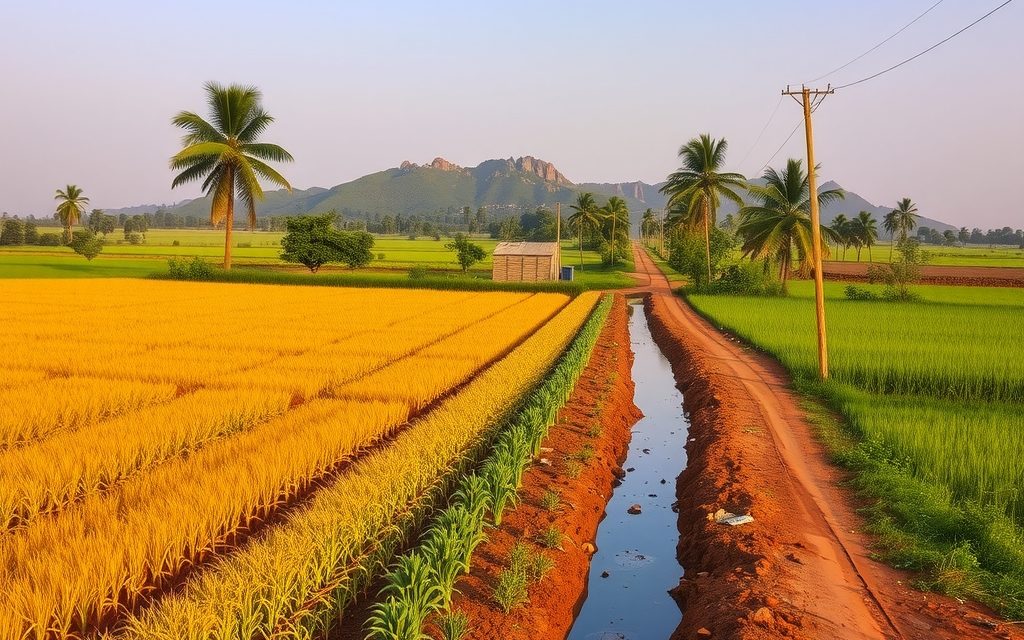
Black-soil paddy and former cane land in the Nizam Sagar command, 25 km west of Nizamabad. Indicative per-acre prices, how to judge canal water, the sugar factory's legacy and the Telangana title checklist.
Nizamabad is a self-contained turmeric and Gulf-remittance city 175 km up NH-44. NUDA layouts on the Armoor road, bypass and Dichpally side, indicative per sq yd bands, and the document checks every buyer needs.

Armoor is a turmeric and Gulf-remittance town at the NH-44 and NH-63 junction in Nizamabad district. DTCP layouts, indicative per sq yd bands and a step-by-step process for buying a plot from abroad.
A district headquarters on NH-44 about two hours from Hyderabad. DTCP and municipal layouts, indicative per sq yd bands, the zoning and tank-buffer questions, and how to separate real spill-over from brochure talk.

What a Telangana encumbrance certificate shows and what it misses, why advocates search 30 years, how to run an EC search online through IGRS, how to read each entry, and the nil EC traps that catch buyers.

Plot loans finance less, cost more, run shorter and give no tax relief on their own. Which Telangana plots banks will finance, how LTV and construction deadlines work, and when a composite loan is the smarter route.

What NRIs and OCIs can and cannot buy under FEMA, how to fund and register a purchase from abroad, TDS and repatriation basics, and where the opportunities are across Hyderabad and the Telangana districts.
HMDA plots 4 km from the ORR beside TCS and the Aerospace SEZ: Adibatla, Bongulur, Kongara Kalan and Mangalpally pockets, indicative per-sq-yd prices and an honest take on Future City and Pharma City.