Agriculture & Farm Land in Isnapur, Sangareddy
Farm land and residual development parcels on the Mumbai highway 4–7 km past the ORR Patancheru interchange. Orchards toward Rudraram and Bhanur, layouts toward Muthangi, and an industrial legacy that makes water tests essential.
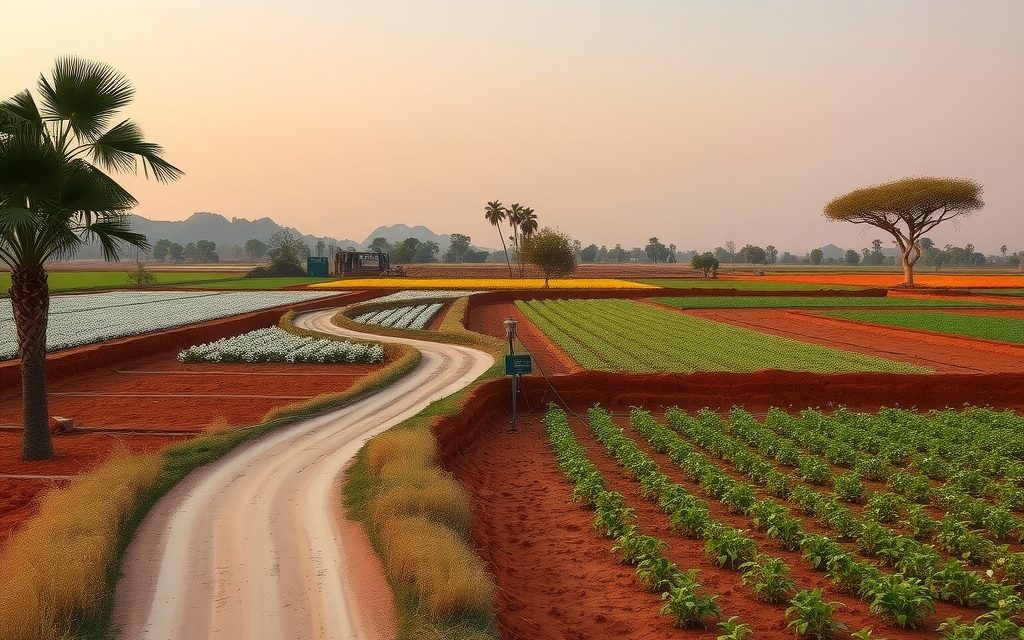
- On NH-65 about 4–7 km west of the ORR Patancheru interchange; Gachibowli 28–34 km
- Agricultural land registers at the Patancheru Tahsildar; converted land at the jurisdictional SRO
- Lab-test bore water: parts of the Patancheru belt have documented contamination
- Red loam with black-soil patches; cotton, maize, paddy, mango, sapota and guava
- Parcels 20 guntas–2 acres near the crossroads; 2–10 acres toward Bhanur
| What | Indicative range | Note |
|---|---|---|
| NH-65 frontage around Isnapur crossroads | ₹5 Cr – ₹10 Cr per acre | indicative, as of October 2026; verify zoning |
| Agricultural land in a residential zone near layouts | ₹3.5 Cr – ₹7 Cr per acre | indicative, as of October 2026 |
| Isnapur–Bhanur road frontage | ₹3.5 Cr – ₹6 Cr per acre | indicative, as of October 2026 |
| Farmed land or orchards toward Rudraram and Bhanur interior | ₹2 Cr – ₹4.5 Cr per acre | indicative, as of October 2026 |
| Land beside industrial units or drains, or in manufacturing zones | ₹1.5 Cr – ₹3 Cr per acre | indicative, as of October 2026 |
| Small agricultural parcels sold in guntas | ₹10 L – ₹22 L per gunta | indicative, as of October 2026; often unapproved |
Ranges reflect recent transactions and advisor observation as of 2026-10. Always verify against the sub-registrar market value and the specific parcel.
Isnapur is a crossroads town on the Mumbai highway where three land markets collide. To the east, toward the ORR Patancheru interchange, HMDA layouts and gated villa projects have filled the roadside. To the north, the Pashamylaram industrial area and the pharma and chemical units of the Patancheru belt shape the skyline and the groundwater. To the west and south, along the Isnapur–Bhanur road and toward Rudraram, red-loam fields, mango orchards and cotton plots still look like the countryside they were. Anyone researching agriculture land in Isnapur has to decide which of those three markets they are actually buying into, because the price, the risks and the checks differ sharply between them. This guide sets out what the Isnapur belt in Patancheru mandal, Sangareddy district, offers as of October 2026, indicative per-acre prices, the pollution-zone and zoning checks we insist on, how to think about farming versus conversion, and how registration works at the Patancheru Tahsildar office.
Isnapur rewards buyers who do their homework and punishes those who buy on a highway hoarding. The land here can be a sound long-term holding at a fraction of ORR-fringe prices. It can also be a field downstream of an effluent drain, in a manufacturing zone, sold as a future villa site.
Why buyers look at farm land around Isnapur
The case for Isnapur rests on value and connectivity. It sits on NH-65 roughly 4 to 7 km west of the ORR Patancheru interchange, which puts Gachibowli and the Financial District about 28 to 34 km away. Within that distance of the IT corridor, very few places still sell agricultural land by the acre at prices measured in low single-digit crores.
Employment is the second pillar. BHEL, the Patancheru and Pashamylaram industrial areas, the pharma units along the highway, the defence establishments near Bhanur and the university campus at Rudraram employ thousands of people at every level. Those employees need housing, and their demand has pushed residential layouts outward from Patancheru through Isnapur toward Bhanur.
The third pillar is the corridor itself. NH-65 continues west to Sangareddy, IIT Hyderabad at Kandi, and on toward Zaheerabad, and the Regional Ring Road's northern arm is planned to begin in the Sangareddy area. Land on this axis carries a long-term growth story, though the RRR is too far away to drive Isnapur prices directly.
The counterweight is the industrial legacy. Parts of the Patancheru belt have featured for decades in pollution assessments, court proceedings and research on groundwater contamination. That history is why diligence here has to go beyond title.
Isnapur land market snapshot, October 2026
- Three distinct zones. The highway-and-layout belt toward Muthangi and the ORR; the industrial fringe toward Pashamylaram; and the farm villages toward Bhanur, Rudraram's interior and the Sangareddy side.
- Parcel sizes widen as you go west. Near the crossroads, offers are mostly 20 guntas to 2 acres. Toward Bhanur and the interior, 2 to 10 acre holdings are still common.
- Buyers are mixed. Developers and land bankers on the eastern side; weekend-farm and orchard buyers on the western side; industrial and warehousing users along the highway.
- Price gradients are steep. Highway frontage can cost three to five times an interior acre a few kilometres away.
- Environmental checks are not optional. We see buyers walk away from otherwise attractive parcels after a water test, and we consider that a good outcome.
Getting around: NH-65, the Muthangi interchange and the Bhanur road
The highway
NH-65, the Hyderabad–Mumbai highway, is Isnapur's spine. Eastward it runs to Patancheru town and the ORR interchange near Muthangi; westward to Rudraram, Kandi and Sangareddy. It carries heavy truck traffic from the industrial estates, and the junction at Isnapur crossroads slows at shift-change times.
The Isnapur–Bhanur road
This road runs south-west from the crossroads to Bhanur and on toward the villages beyond. It is the main axis for farm land and DTCP or HMDA ventures on the western side, and frontage along it carries a clear premium over interior land.
Northern links
Roads north lead toward the Pashamylaram industrial area. Land on this side is shaped by industrial neighbours, truck movements and the land-use zoning that comes with them.
| From Isnapur crossroads to | Approx. distance | Typical drive, off-peak |
|---|---|---|
| ORR Patancheru interchange (Muthangi) | 4–7 km | 10–15 min |
| Patancheru town | 4–6 km | 10–15 min |
| Gachibowli via ORR | 28–34 km | 35–50 min |
| Bhanur | 5–7 km | 12–18 min |
| Rudraram | 4–6 km | 10–15 min |
| Sangareddy town | 20–24 km | 30–40 min |
Pollution-zone checks: what we test before you buy
The Patancheru–Bollaram industrial cluster has appeared in the Central Pollution Control Board's assessments of critically polluted industrial areas, and studies by research institutions and pollution control authorities over several decades have reported elevated dissolved solids, heavy metals and organic contaminants in groundwater, streams and tanks in parts of the belt. Conditions vary greatly from village to village and even field to field. Some Isnapur parcels have perfectly usable water; others do not. The only way to know is to check.
1. Groundwater quality
Take a sample from the existing bore, ideally in the dry season, and have it tested at an accredited laboratory for total dissolved solids, hardness, chlorides, nitrates, heavy metals and, if a chemical unit is nearby, organic contaminants. If the parcel has no bore, test the nearest neighbouring bores. Water that is unfit for irrigation or drinking changes both the farming case and the resale case.
2. Drainage and streams
Walk the parcel's low edge. Find out where storm water and any industrial drain flow during the monsoon. The Nakkavagu stream and other drainage lines in the wider Patancheru area have a long history of contamination, and fields downstream of discharge points can carry contaminated silt. Low-lying land next to a drain is usually the cheapest on offer for this reason.
3. Neighbouring units
List the industrial units within about a kilometre and find out what they make. Pharmaceutical bulk-drug and chemical units classed as red-category industries by the pollution control board carry more risk than warehouses or engineering workshops. Ask neighbouring farmers about odours, crop damage or past complaints.
4. Soil
Where a parcel adjoins an industrial unit or drain, a basic soil test for heavy metals is inexpensive insurance, especially if you plan an orchard or vegetables.
Our rule in Isnapur: no advance until the water test is back. A few thousand rupees of lab fees has saved clients from crores of regret.
Industrial neighbours and HMDA zoning
Isnapur falls within HMDA's planning area, and every survey number carries a master-plan land use. On this side of the city, that matters more than usual, because manufacturing and industrial zones sit right beside residential and agricultural ones.
- Residential zone: conversion and layout approval are possible; this is where development-level prices are justified.
- Manufacturing or industrial zone: residential development is restricted. The land may suit warehousing or industrial use, but it will not become a villa layout, whatever a broker suggests.
- Conservation, recreational or water-body zones: development is limited; price accordingly.
- Proposed roads and highway widening: frontage land can lose depth to a widening line, and master-plan roads can cut through interior parcels.
Check zoning before you visit, starting with the HMDA website, and have the survey number plotted by someone who reads master-plan maps every week. An industrial neighbour plus a residential price is the most common mismatch we see in this belt.
Soil, water and farming around Isnapur
Red loam uplands, darker low fields
The Isnapur belt sits on red loam over granite, moderately deep on the gentle slopes and thinner on the rocky rises. Darker, heavier soils occur in the low fields along drainage lines and below village tanks, and black cotton soil appears in patches toward Bhanur. Red loam suits mango, sapota, guava, maize and vegetables; the heavier soils suit cotton and paddy when water is available.
Water
By our observation, a little over half the farmed land in the belt relies mainly on borewells, about a tenth on open wells, roughly a quarter is rain-fed and the remainder benefits from tanks or minor irrigation. Agricultural bores commonly run 300 to 700 ft. Yield varies, and so, critically, does quality, as explained above.
Crops and orchards
- Cotton and maize on the larger rain-fed and bore-irrigated holdings.
- Paddy in tank-fed low fields after a good monsoon.
- Mango orchards, common toward Rudraram and Bhanur, with sapota and guava in smaller blocks.
- Vegetables for the Patancheru and local markets.
- Sugarcane and turmeric in some well-watered fields in the wider district.
Isnapur agriculture land prices per acre
The ranges below are indicative, based on recent transactions and advisor observation as of October 2026. They are not quotes. Zoning, frontage, water quality and title move individual prices more than location labels.
| Parcel type | Indicative range | What drives it |
|---|---|---|
| NH-65 frontage around Isnapur crossroads | ₹5 Cr – ₹10 Cr per acre | Commercial and warehousing demand; verify widening line and zoning |
| Agricultural land in a residential zone near existing layouts, 30–40 ft road | ₹3.5 Cr – ₹7 Cr per acre | Priced off nearby HMDA plot rates |
| Isnapur–Bhanur road frontage | ₹3.5 Cr – ₹6 Cr per acre | Frontage length, depth, venture activity |
| Farmed land or orchards toward Rudraram and Bhanur interior | ₹2 Cr – ₹4.5 Cr per acre | Water yield and quality, access, soil |
| Land beside industrial units or drains, or in manufacturing zones | ₹1.5 Cr – ₹3 Cr per acre | Environmental and zoning discount |
| Small agricultural parcels sold in guntas | ₹10 L – ₹22 L per gunta | Often unapproved subdivision; check carefully |
For context, released HMDA plots in the Isnapur core and on the Rudraram road have typically traded around ₹22,000 to ₹35,000 per sq yd, and toward Muthangi around ₹30,000 to ₹45,000. Those figures explain why residential-zone agricultural land near the crossroads trades at development prices while interior farm land a few kilometres away remains far cheaper.
Farm land or conversion: choosing your strategy in Isnapur
Because Isnapur straddles the urban edge, buyers usually face a choice between three strategies. Each needs a different parcel.
Keep it as farm land
Suits buyers who want an orchard or weekend farm and a long holding period. Choose interior land on the Bhanur or Rudraram side with good water quality and a clear approach road. Do not pay a residential-zone premium for land you intend to farm. Expect modest farm income at best, and value from slow appreciation as the city edge moves west.
Hold for future conversion
Suits land bankers with a seven-to-ten-year horizon. Choose residential-zone land with legal road access, away from industrial units and drains. Understand the NALA conversion route and its costs before you buy; our NALA conversion guide sets it out. The price you pay already includes some of the conversion premium, so the gain depends on plot rates continuing to rise.
Develop now
Suits experienced developers. A one-acre residential-zone parcel bought at ₹5 crore, with registration at roughly 7.5%, conversion fees, layout approval, roads, drains and power, can cost ₹6.5 crore to ₹7 crore before sales. Selling 2,800 sq yd at ₹28,000 brings about ₹7.8 crore. The margin exists but is thin, and it depends on approvals moving on time and plots selling near the top of the range.
The worst outcome is mixing strategies: paying a conversion price for land in a manufacturing zone, or buying cheap farm land beside a drain and hoping to sell it as a villa site later.
Pockets around Isnapur and how they differ
The Muthangi side, toward the ORR
The stretch between Isnapur and the ORR interchange is the most urbanised part of the belt, with released HMDA layouts, gated villa projects and highway businesses. Agricultural survey numbers that remain here are small and priced firmly as development land. This is the right place for a land banker with a conversion plan and the wrong place for a farm.
The Pashamylaram edge
North of the highway, the industrial area sets the tone. Land here can suit warehousing, workshops or industrial support uses if the zoning allows, and some of it is cheaper than its location suggests. It is rarely suitable for residential development or an orchard, and it is where water and soil tests most often change a buyer's mind.
Rudraram and the highway west
Toward Rudraram, the university campus and residential layouts mix with orchards and farmed fields. Mango blocks are common, and some well-maintained orchards with sound water come up for sale. Land a kilometre or two off the highway on a good road often offers the best balance of price, access and setting in the whole belt.
The Isnapur–Bhanur road
South-west of the crossroads, the road to Bhanur passes DTCP and HMDA ventures, then opens into farm villages with larger holdings and patches of black soil. Defence establishments near Bhanur bring boundary restrictions for adjoining land, which we check on the map before a visit. For more on this side, read our page on farm land in Bhanur.
The interior toward Sangareddy
Further west and south, away from both the highway and the industry, holdings of five acres and more appear, prices fall, and the land is still farmed by families who intend to keep farming. For a buyer whose priority is a quiet farm with good water rather than proximity to the ORR, this is where Isnapur's market quietly overlaps with Sangareddy's.
Types of parcels around Isnapur
- Interior patta farm land, 2–10 acres. Family holdings on the Bhanur and Rudraram side with bores and village-road access. Title chains are often simpler than near the highway, but heirship still needs checking.
- Bearing mango orchards. Ten-to-twenty-year-old orchards come up occasionally. A healthy orchard with good water deserves a premium over bare land.
- Residual parcels beside layouts. Small holdings near the crossroads, priced as development land. Confirm access, zoning and distance from industry.
- Highway frontage. Commercial or warehousing potential, high prices, highway setbacks and widening lines to confirm.
- Gunta-sold portions. Unapproved subdivisions marketed as plots. We advise buyers who want a house site to choose a released HMDA plot instead; see open plots in Isnapur, or for a finished home, villas in Isnapur.
Legal checklist for Telangana agriculture land in Isnapur
- Pattadar passbook in the seller's name for the exact extent.
- Bhu Bharati record of rights, the successor to Dharani, showing survey and sub-division numbers, patta classification, the seller as pattadar and no prohibition entry. Verify it on the Telangana land records portal.
- 1B and pahani extracts for as many years as available.
- Encumbrance certificate for at least 30 years, watching for industrial lease agreements, mortgages and earlier agreements of sale.
- Link documents for every transfer, including partitions and succession.
- Survey number and FMB sketch, then a licensed surveyor's demarcation on the ground.
- NALA status for any converted portion.
- Section 22-A prohibited properties list, which bars registration of government, endowment, wakf and similar listed survey numbers.
- Assigned land caution. Assigned land cannot be sold under the Prohibition of Transfers Act; several villages in Patancheru mandal have assigned survey numbers.
- GO 58/59 regularisation, if the title relies on it.
- Forest, urban land ceiling, agricultural ceiling and acquisition checks, including any land acquired or notified for industrial areas or road widening.
- HMDA zoning, tank FTL and buffer, and environmental tests for water and, where relevant, soil.
Registration at Patancheru: office, charges and TDS
Unconverted agricultural land in Isnapur registers at the Patancheru mandal Tahsildar office, where the Tahsildar acts as joint sub-registrar under Bhu Bharati and mutation is completed in the same step. NALA-converted land, plots and houses register at the jurisdictional Sub-Registrar Office, typically Patancheru, which we confirm from the survey number before booking a slot on the registration department's portal.
| Charge | Approximate rate | Note |
|---|---|---|
| Stamp duty | About 5.5% | On the higher of market value and consideration |
| Transfer duty | About 1.5% | Collected with stamp duty |
| Registration fee | About 0.5% | Total roughly 7.5% |
| Mutation | Processed with registration | Passbook updated after approval |
We confirm current rates and market values on the day. The 1% TDS under Section 194-IA does not apply to rural agricultural land. Isnapur, however, sits within a few kilometres of the Greater Hyderabad civic boundary at Patancheru, and civic status in the area has been under reorganisation. Agricultural land within the prescribed distance of municipal limits is treated as a capital asset, and TDS may then apply where the price exceeds ₹50 lakh. A chartered accountant should confirm the position for your survey number.
Who Isnapur suits, and who should look elsewhere
Good fit: land bankers who want NH-65 corridor exposure close to the ORR at moderate prices; families from Miyapur, Chandanagar, BHEL and Lingampally wanting an orchard within 40 minutes; professionals working in the Patancheru industrial belt; and experienced developers evaluating residential-zone parcels.
Poor fit: buyers unwilling to commission water and soil tests; anyone seeking a quiet rural retreat with no industry in sight; buyers needing quick resale; and non-farmers relying on bank loans for agricultural land. If you want a calmer belt with deeper farming roots, compare the Bhanur villages described above or agricultural land around Sangareddy. For the urban side, see agriculture land in Patancheru and residual land in Ameenpur.
NRI note for Isnapur agricultural land
NRIs and OCI cardholders cannot buy agricultural land, plantation property or farmhouses in India under FEMA, and cannot receive such property as a gift. They may inherit it from a resident relative and may sell inherited agricultural land only to a resident Indian. Returning NRIs who regain resident status can buy like any resident.
NRIs who want exposure to Isnapur can buy approved HMDA plots, villas or apartments using NRE or NRO funds. Our NRI agricultural land rules guide explains the details. For tax, consult a chartered accountant.
How NRR Estates works on an Isnapur purchase
We act for buyers only, with our fee disclosed in writing before you commit.
- Strategy first. Farm, hold for conversion, or develop: we agree which, because each points to a different part of the belt.
- Desk screening. Zoning, industrial neighbours, drains, tank buffers, acquisition notices and highway widening checked before any visit.
- Site visit. Boundary walk, access check, bore run and conversations with neighbouring farmers.
- Environmental tests. Water sample to an accredited lab and, where needed, a soil test, before any advance.
- Title verification. Full document set reviewed by an independent advocate.
- Negotiation, registration and mutation. Price argued from comparable deals and test results; attendance at the Patancheru Tahsildar or SRO; follow-up until your passbook issues.
If the tests or the title fail, we tell you, and we move on to the next parcel.
Isnapur agricultural land: frequently asked questions
What is the price of agriculture land in Isnapur per acre?
As of October 2026, agricultural land in a residential zone near existing layouts typically trades between ₹3.5 crore and ₹7 crore per acre, while NH-65 frontage around the crossroads runs roughly ₹5 crore to ₹10 crore. Farmed land and orchards toward Rudraram and the Bhanur interior sit around ₹2 crore to ₹4.5 crore, and land beside industrial units, drains or in manufacturing zones sells lower. These are indicative ranges from recent transactions and advisor observation, not quotes for any parcel.
Is groundwater around Isnapur safe for farming?
It depends on the parcel. The Patancheru–Bollaram industrial cluster has appeared in pollution assessments of critically polluted areas, and studies over decades have reported contamination in groundwater, streams and tanks in parts of the belt. Some Isnapur parcels have perfectly usable water; others do not. Have the existing bore, or neighbouring bores, tested at an accredited laboratory for dissolved solids, heavy metals and other contaminants before paying any advance, and add a soil test if the land adjoins an industrial unit or drain.
How does HMDA zoning affect farm land in Isnapur?
Isnapur falls within HMDA's planning area, and each survey number carries a land use such as residential, manufacturing, conservation or water body. Residential-zone land can be converted and laid out, which justifies higher prices. Land in a manufacturing zone may suit warehousing or industrial use but will not become a villa layout. Conservation and water-body zones restrict development. We plot every survey number on the master plan before a site visit, because an industrial zone with a residential asking price is a common mismatch here.
Where is agricultural land in Isnapur registered?
Unconverted agricultural land registers at the Patancheru mandal Tahsildar office, where the Tahsildar acts as joint sub-registrar under Bhu Bharati and mutation is completed in the same step. NALA-converted land, plots and houses register at the jurisdictional Sub-Registrar Office, typically Patancheru, confirmed from the survey number. Government charges are approximately 5.5% stamp duty, 1.5% transfer duty and 0.5% registration fee, about 7.5% of the higher of market value and price. We verify the current rates on the day.
Should I farm the land or plan to convert it?
Decide before you choose the parcel, because each strategy needs different land. For an orchard or weekend farm, buy interior land toward Bhanur or Rudraram with good water quality and do not pay a residential-zone premium. To hold for conversion, buy residential-zone land with legal road access away from industry and drains. Developing now suits experienced developers only, since margins after conversion, approvals and works are thin. Mixing strategies, such as paying conversion prices for manufacturing-zone land, is where buyers lose money.
Does TDS apply when buying agricultural land in Isnapur?
The 1% TDS under Section 194-IA does not apply to rural agricultural land. Isnapur, however, sits within a few kilometres of the Greater Hyderabad civic boundary at Patancheru, and civic status in the area has been under reorganisation. Agricultural land within the prescribed distance of municipal limits is treated as a capital asset under income-tax law, so TDS may apply where the price exceeds ₹50 lakh. A chartered accountant should confirm the position for the specific survey number before registration.
Can NRIs buy farm land in Isnapur?
No. Under FEMA, NRIs and OCI cardholders cannot purchase agricultural land, plantation property or farmhouses in India, and cannot receive them as gifts. They can inherit agricultural land from a resident relative and may sell inherited land only to a resident Indian. NRIs who want exposure to the Isnapur corridor can buy approved HMDA plots, villas or apartments using funds from NRE or NRO accounts. A returning NRI who regains resident status can buy agricultural land like any resident.
Which part of the Isnapur belt is best for an orchard?
Usually the land a kilometre or two off the highway toward Rudraram, or the farm villages along and beyond the Isnapur–Bhanur road. These pockets combine red loam suited to mango, sapota and guava with reasonable access and prices well below the crossroads. Avoid low-lying land beside drains or industrial units, and land in manufacturing zones. Test bore yield in April or May and water quality at a laboratory, and check defence boundary restrictions on the Bhanur side before agreeing a price.
Related guides
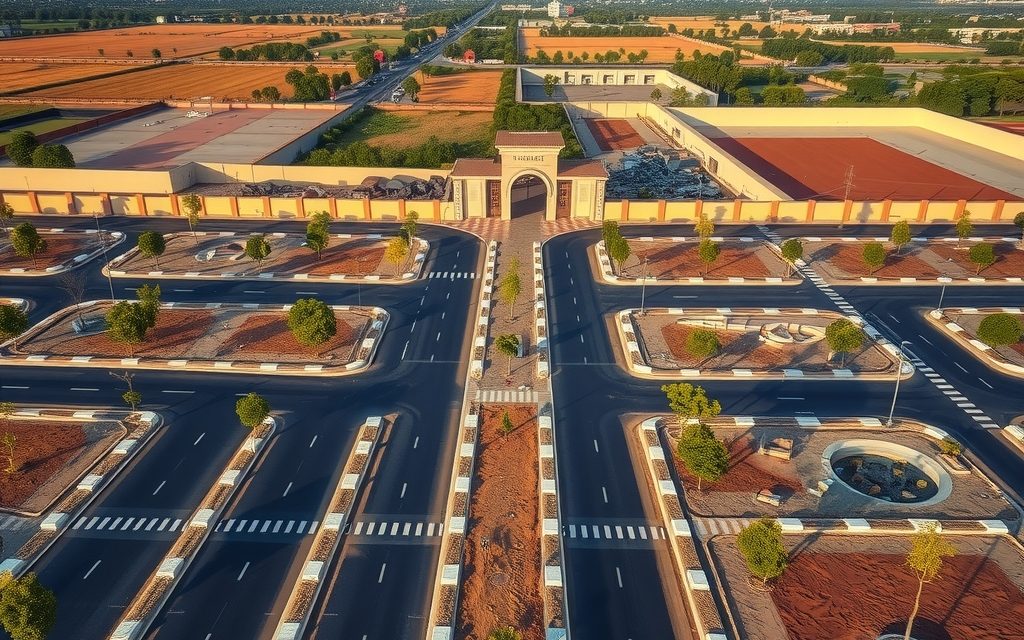
Isnapur, 4–7 km west of the ORR Patancheru interchange on NH-65, offers mid-segment HMDA plots in a working town. Indicative rates from Muthangi to the Bhanur road, what ₹50 L–₹1 Cr buys, and key checks.
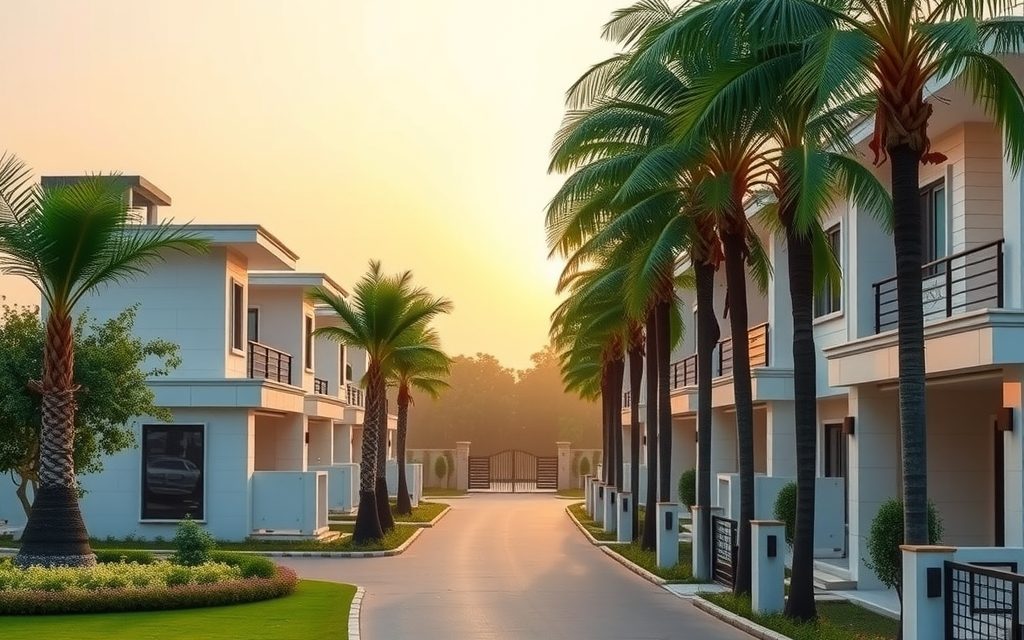
Mid-segment gated, row and independent villas in Isnapur on the Mumbai highway near the ORR Patancheru exit, with indicative prices, industrial-buffer and groundwater checks, approvals and resale outlook.
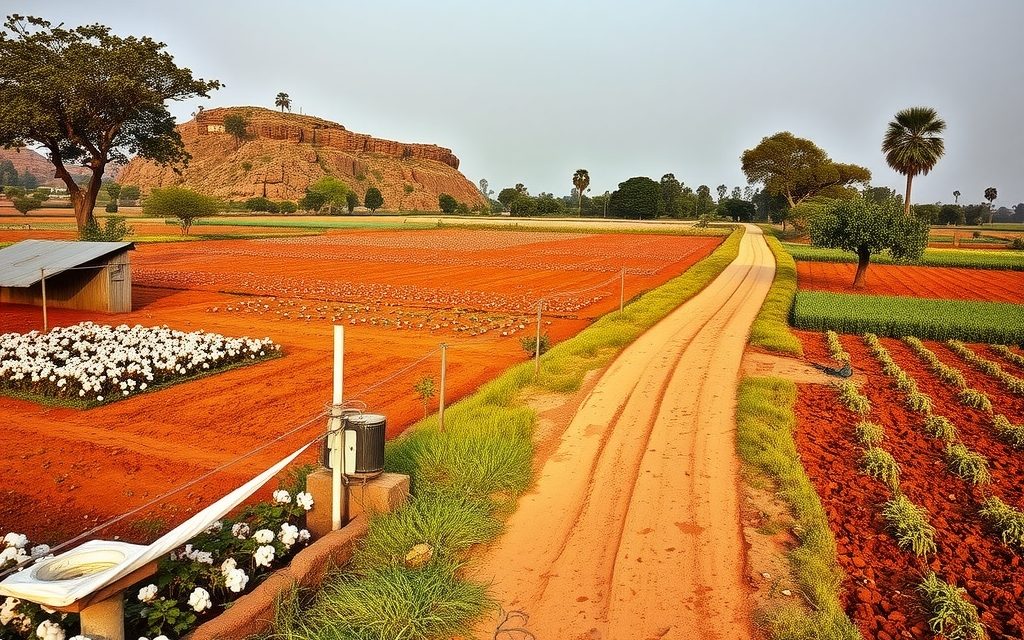
Red-loam and black-soil farmland in Patancheru mandal, 10 km from the ORR. Far cheaper per acre than Kollur, but water quality, industrial buffers and defence land must be checked first.
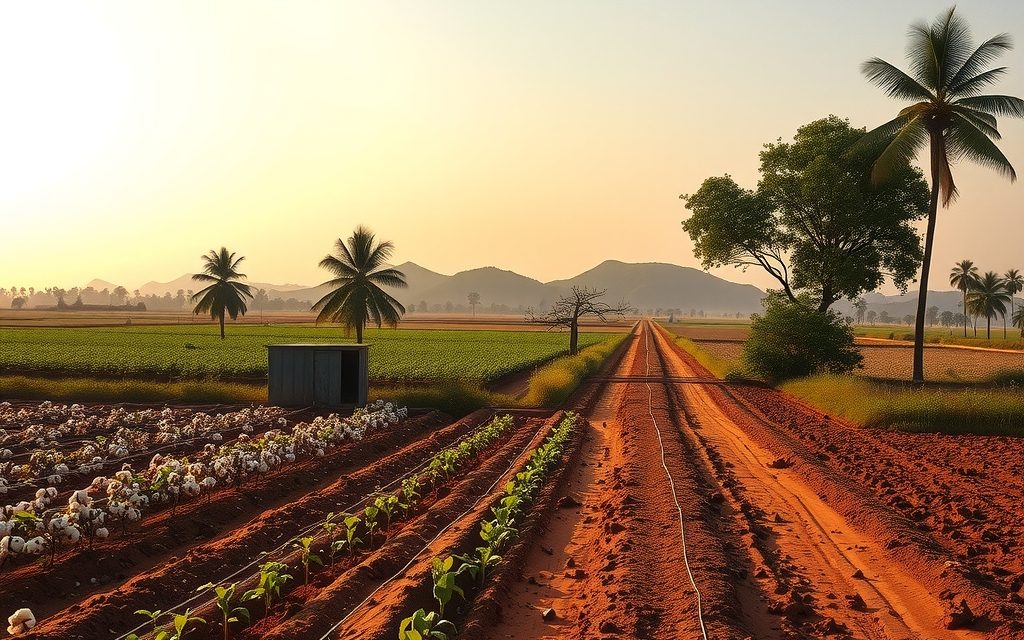
Farm land at the ORR's Patancheru exit, where an industrial belt meets mango orchards towards Rudraram and Isnapur. Groundwater and Nakkavagu checks come first; outer villages still trade at farm prices.
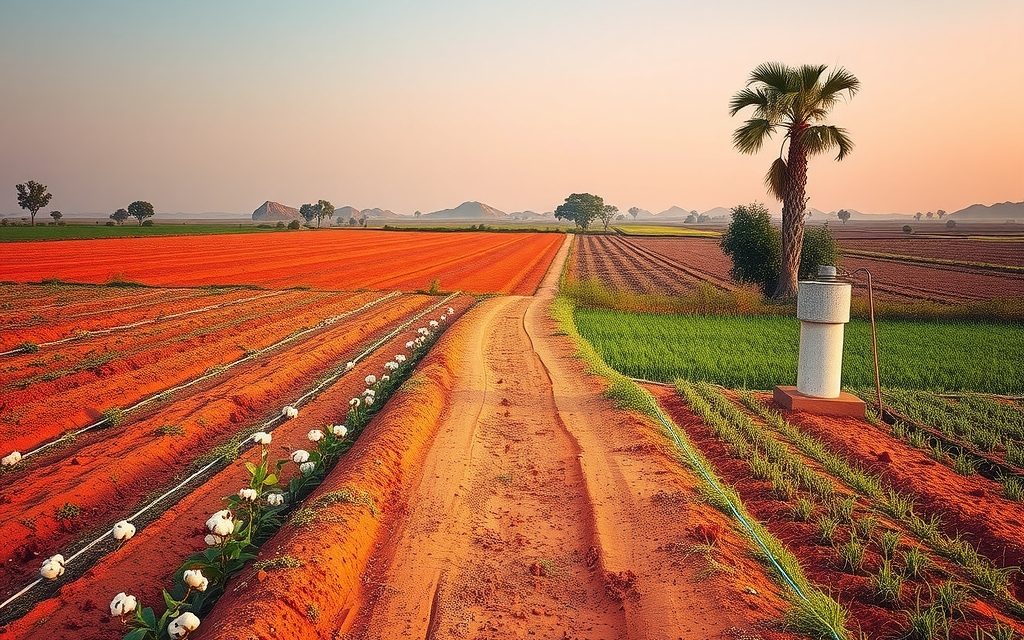
District-headquarters farm land on the Mumbai highway, 25 km past the Patancheru ORR exit. Red loam and black soil, cotton and maize country, larger blocks at a fraction of inner-ring prices.
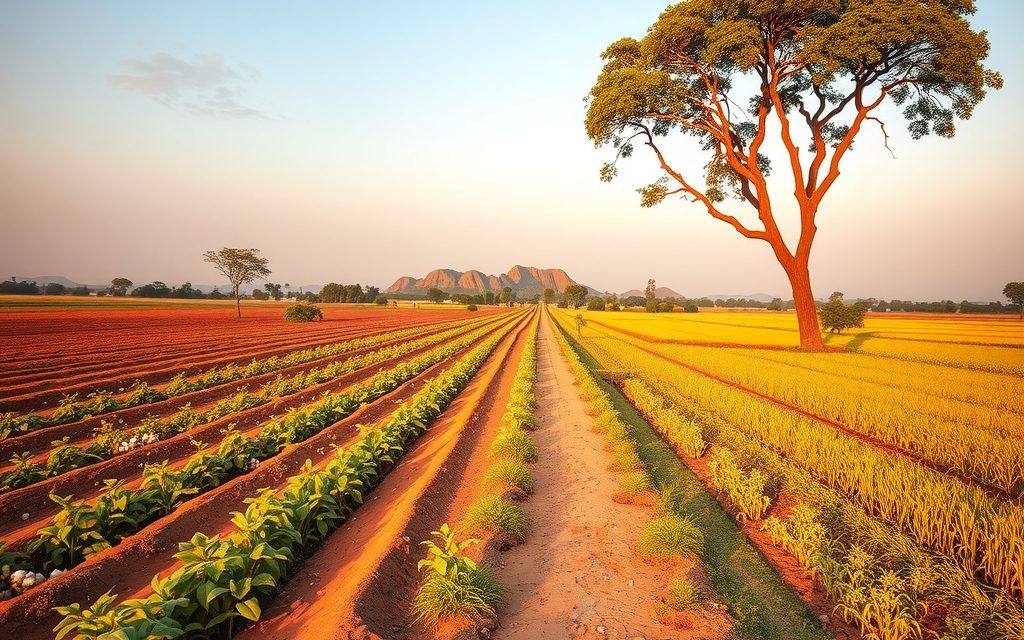
Residual agricultural parcels in an urbanised mandal between Miyapur and Patancheru, around India's first biodiversity-heritage lake. Priced against suburban plot rates; lake buffers and zoning decide what is usable.
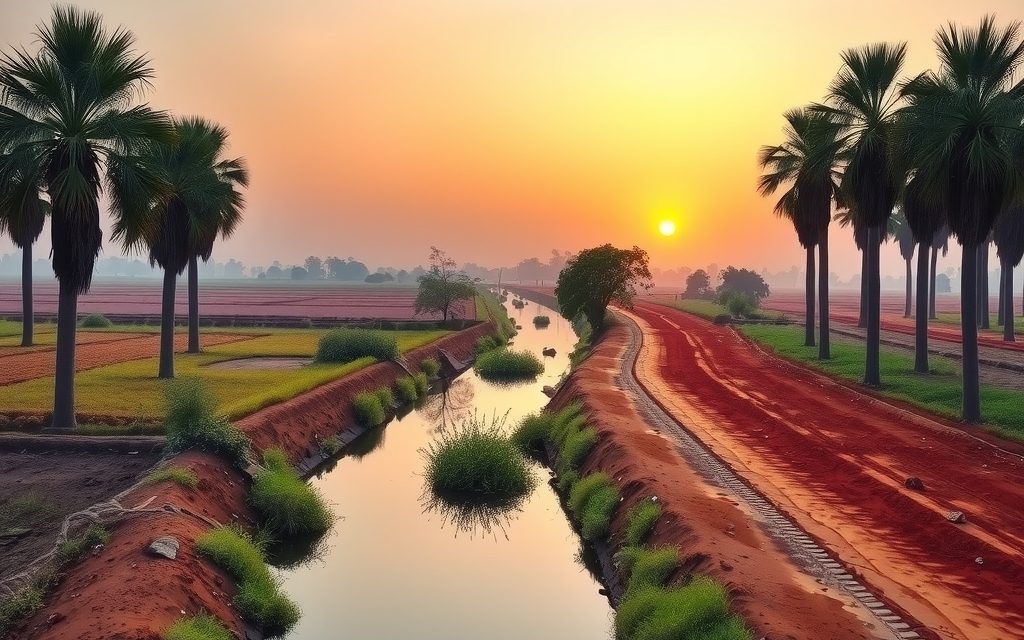
When Telangana farm land needs NALA conversion, how the fee is calculated on government basic value, the online process and timelines, the penalty for building first, and how layout and building approvals follow.

NRIs and OCIs cannot buy or receive gifts of agricultural land, plantations or farmhouses; inheritance is the only route. What inherited land allows, why benami workarounds are dangerous, and the lawful alternatives near Hyderabad.