Villas in Isnapur, Sangareddy (Patancheru–Muthangi Belt)
Mid-segment gated, row and independent villas in Isnapur on the Mumbai highway near the ORR Patancheru exit, with indicative prices, industrial-buffer and groundwater checks, approvals and resale outlook.
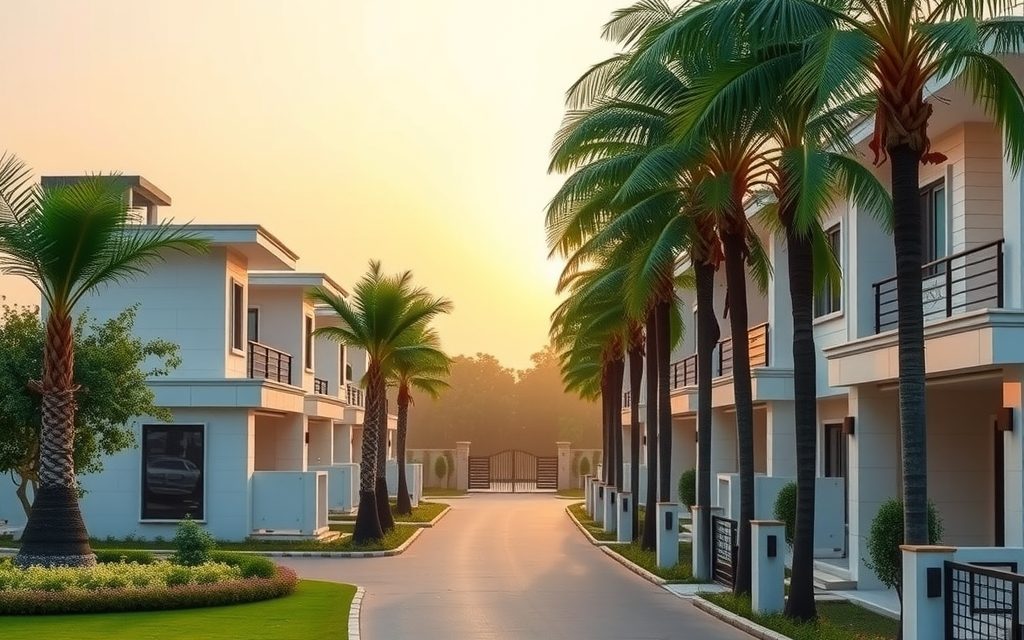
- On NH-65 about 4–6 km west of the ORR Patancheru (Muthangi) interchange; 30–36 km to Gachibowli
- Villa pockets: Muthangi side, Isnapur X Roads core, Isnapur–Bhanur road and Rudraram
- Indicative tickets about ₹72 L to ₹2.2 Cr; most deals ₹90 L–₹1.5 Cr
- Registration typically at the Patancheru SRO; jurisdiction confirmed by survey number
- Insist on a recent borewell lab report and an industrial-neighbour map before any advance
| What | Indicative range | Note |
|---|---|---|
| Row villa, Isnapur town / Bhanur road (120–167 sq yd) | ₹72 L – ₹1.05 Cr | indicative, Oct 2026 |
| Independent duplex, X Roads core (150–200 sq yd) | ₹90 L – ₹1.4 Cr | indicative, Oct 2026 |
| Independent duplex, Muthangi side (167–240 sq yd) | ₹1.15 Cr – ₹1.75 Cr | indicative, Oct 2026 |
| Gated community villa, Muthangi side | ₹1.35 Cr – ₹2.2 Cr | indicative, Oct 2026 |
| Gated villa, per sq ft built-up | ₹5,200 – ₹7,200 per sq ft | indicative, Oct 2026; land value dominates |
Ranges reflect recent transactions and advisor observation as of 2026-10. Always verify against the sub-registrar market value and the specific parcel.
Villas in Isnapur are what most buyers find when they follow the Mumbai highway (NH-65) past the Outer Ring Road's Patancheru interchange and keep going for another four or five kilometres. Isnapur sits in Patancheru mandal of Sangareddy district, Telangana, between the Muthangi exit on one side and the Pashamylaram industrial area and the Isnapur–Bhanur road on the other. It is not a glamour address. It is a working town with pharma and engineering units, a busy X Roads, a growing ring of HMDA layouts and a steady supply of mid-segment gated villa communities priced well below the IT corridor. This guide explains where the villa product actually sits, what it costs as of October 2026, which industrial-buffer and groundwater checks we insist on, and how the purchase works from token advance to the Patancheru sub-registrar office.
We write this from repeated site visits with three kinds of buyers: plant managers and engineers who work within ten kilometres and are tired of renting, families from Miyapur, Chandanagar and BHEL who want a standalone home on a budget that would only buy a flat closer in, and NRIs who grew up in this belt and want a villa they can rent out now and live in later. The advice below is specific to Isnapur. Where Ameenpur, Beeramguda or Kollur are a better fit, we say so and point you to those guides.
Why villas in Isnapur are drawing mid-segment buyers
The simplest reason is price per square yard of land. A villa is mostly a land purchase with a house on top, and in Isnapur the land underneath a villa still costs a fraction of what it does in Tellapur, Kollur or even Ameenpur. For a family whose budget sits between roughly ₹75 lakh and ₹1.6 crore, Isnapur is one of the few places inside a 35-kilometre radius of Gachibowli where that money buys a genuine independent home with a private terrace and parking, rather than a high-floor flat.
The second reason is employment. The Pashamylaram industrial area is effectively Isnapur's backyard, the older Patancheru industrial estate is a short drive east, and the defence and engineering establishments along the Bhanur side (including the ordnance factory at Yeddumailaram and the Bharat Dynamics facility at Bhanur) employ thousands of people who prefer to live close to work. Add GITAM's Hyderabad campus at Rudraram and the IIT Hyderabad corridor towards Kandi, and you get a tenant and buyer base that is not dependent on the software sector alone. That diversity matters when IT hiring slows.
The third reason is the ORR. The Patancheru interchange at Muthangi is a few minutes from Isnapur X Roads, which puts the Financial District, Gachibowli and the Kokapet–Narsingi belt at roughly 30 to 45 minutes outside peak hours. Isnapur does not pretend to be a Hitech City suburb, but for a family where one partner works locally and the other works in the IT corridor two or three days a week, the arithmetic works.
The trade-offs we explain on the first call
Isnapur's weaknesses are real. The wider Patancheru–Bollaram belt was flagged for decades as an industrially polluted cluster, and the reputation lingers even where the ground facts have improved. Some streams and village tanks in the region received effluent in the past. Truck traffic on NH-65 is heavy and slow at shift-change hours. Social infrastructure is thinner than in Ameenpur: there are good schools and hospitals within reach, but fewer of them, and premium retail means a drive towards Chandanagar or Miyapur. Buyers who go in with clear eyes on these points tend to be happy here; buyers who expect Tellapur at half price usually are not.
Isnapur villa market snapshot (October 2026)
- Location: Isnapur, Patancheru mandal, Sangareddy district, on NH-65 roughly 4–6 km west of the ORR Patancheru (Muthangi) interchange.
- Distance: about 30–36 km to Gachibowli and the Financial District by road, 18–22 km to Miyapur metro, 18–20 km to Sangareddy town.
- Villa product: row villas on 120–167 sq yd, independent duplexes on 150–240 sq yd in HMDA layouts, and mid-size gated communities of roughly 40–200 villas.
- Indicative ticket sizes: roughly ₹72 lakh to ₹2.2 crore, with most transactions between ₹90 lakh and ₹1.5 crore.
- Registration: typically the Patancheru sub-registrar office, confirmed by survey number before drafting.
- Key checks: distance and direction from industrial units, borewell water quality report, piped supply status, HMDA layout and LP number, TS RERA for gated projects.
Isnapur micro-markets and the gated villa formats you will see
Isnapur is small enough to drive across in ten minutes, but the villa market splits clearly into four zones, and the price gap between the best and weakest of them can be 30 percent for an otherwise similar house.
Muthangi side, between the ORR and Isnapur X Roads
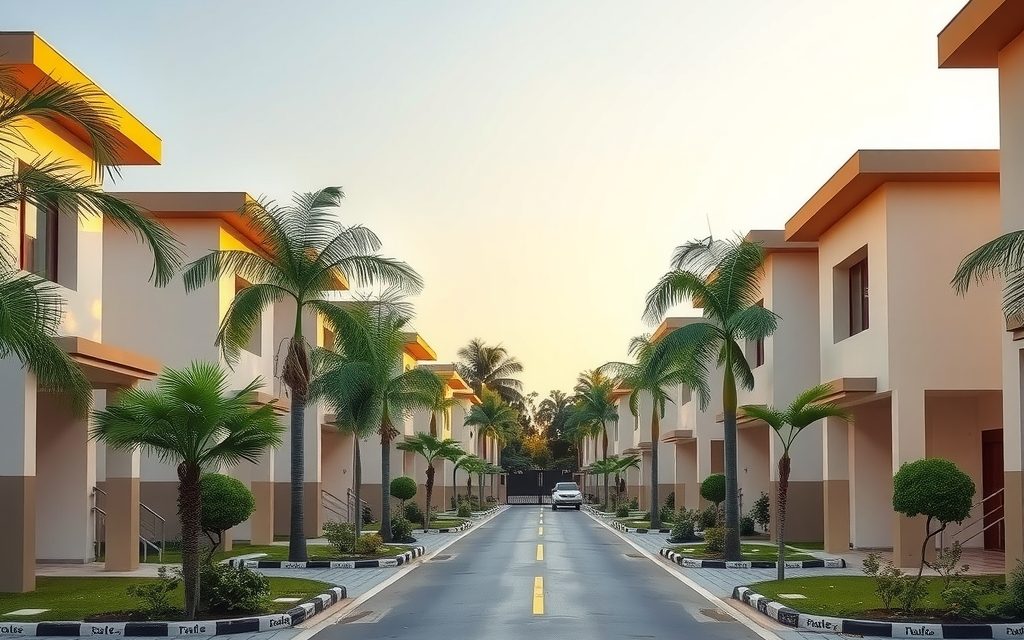
The stretch closest to the ORR interchange commands the highest prices in the Isnapur market because every minute saved on the commute shows up in resale value. This is where you see the more polished gated communities: compound walls with security, a clubhouse with a small pool and gym, 30- to 40-foot internal roads and villas of 1,800 to 3,000 square feet on plots of 150 to 250 square yards. Buyers here are mostly dual-income families with one partner in the IT corridor. If you are comparing this pocket with the wider belt, our guide to villas in Patancheru covers Ameenpur, Beeramguda and Kistareddypet alongside it.
Isnapur town and the X Roads core
Around the X Roads and the older village core, the market is dominated by individually built duplexes on HMDA and older layout plots, often by small local builders who construct three to ten houses at a time. Build quality varies widely, so this is where a structural walk-through and a careful look at the sanctioned plan earn their keep. Prices are moderate, daily needs are on the doorstep, and rental demand from plant staff is steady. Expect narrower streets, 25- to 33-foot roads in older layouts, and a mix of houses of different ages.
Isnapur–Bhanur road
Heading north-west towards Bhanur and the Kardanur–Pocharam side, a newer generation of HMDA layouts has opened up, and some developers have launched gated villa projects here with an eye on defence and PSU employees as well as investors. Plots tend to be larger for the money, roads are wider, and there is more green around. The catch is that infrastructure is still catching up; check the status of the approach road, drainage outfall, streetlights and the piped water line rather than relying on brochure promises. Buyers who want land value with room to grow often prefer this side.
Rudraram and the GITAM direction
East and south towards Rudraram, villas are fewer and the market is closer to the Patancheru town fringe, with some faculty and student-linked rental demand. It is a reasonable fallback if the Muthangi side is out of budget, but walk the surroundings carefully; some parcels sit nearer to older industrial plots than the map suggests.
Villa formats in Isnapur
- Row villas: two-storey homes sharing side walls, on 120–167 sq yd, usually 1,400–1,900 sq ft. The entry ticket to villa living here.
- Independent duplexes in plotted layouts: standalone G+1 houses on 150–240 sq yd, sold by small builders or owner-built. Most common product.
- Gated community villas: uniform design, common amenities and an association, typically 1,800–3,200 sq ft. The format most NRIs prefer because maintenance is organised.
- Triplex or G+2 villas: occasional, on compact plots where the builder stacks a third floor to hit a larger built-up area. Check that the sanctioned plan actually allows the third floor.
Villas in Isnapur: indicative price bands and ticket sizes
The ranges below reflect recent transactions and advisor observation across the Isnapur market as of October 2026. They are indicative only. Corner plots, east facing, wider roads and a builder with a delivered track record all push prices to the top of a band; tanker-dependent water, proximity to an industrial boundary wall or an unfinished approach road pull them down.
| Villa type and pocket | Typical plot / built-up | Indicative price range |
|---|---|---|
| Row villa, Isnapur town / Bhanur road HMDA layout | 120–167 sq yd; 1,400–1,900 sq ft | ₹72 lakh – ₹1.05 crore |
| Independent duplex, X Roads core (resale or small builder) | 150–200 sq yd; 1,800–2,400 sq ft | ₹90 lakh – ₹1.4 crore |
| Independent duplex, Muthangi side | 167–240 sq yd; 2,000–2,800 sq ft | ₹1.15 crore – ₹1.75 crore |
| Gated community villa, Muthangi side | 180–260 sq yd; 2,200–3,200 sq ft | ₹1.35 crore – ₹2.2 crore |
| Gated community villa, Isnapur–Bhanur road | 160–240 sq yd; 1,900–2,800 sq ft | ₹1.05 crore – ₹1.7 crore |
Divided by built-up area, gated villas in Isnapur typically work out between ₹5,200 and ₹7,200 per square foot, and plotted-layout duplexes between ₹4,500 and ₹6,200. Treat those numbers as a sanity check only. The more useful method is to split the price into land and building. HMDA layout plots on the Isnapur and Pashamylaram side have been trading at roughly ₹18,000 to ₹30,000 per square yard, rising towards the Muthangi side; construction for a mid-specification duplex runs about ₹2,200 to ₹3,000 per square foot today. If the asking price is far above land value plus replacement cost of the house, ask what you are paying for. Our page on open plots in Patancheru gives the land-side benchmarks in more detail.
What a villa budget really buys in Isnapur
- Under ₹90 lakh: a row villa or a smaller resale duplex in an older layout, usually on a 25- to 30-foot road.
- ₹90 lakh to ₹1.3 crore: a new independent duplex on 150–200 sq yd in a reasonable HMDA layout, or an entry villa in a gated community on the Bhanur road.
- ₹1.3 crore to ₹1.8 crore: a well-specified gated villa nearer Muthangi, or a larger standalone house on a 40-foot road.
- Above ₹1.8 crore: top units in the best gated communities, corner villas, or larger plots. At this level, also compare Ameenpur and the Kollur edge, because the commute saving can justify the step up.
Industrial buffers and groundwater: the checks that matter most in Isnapur
This is the section we spend longest on with every Isnapur buyer, because the risks are specific to this belt and are often skipped by sellers. None of what follows means Isnapur is unsafe. It means you should verify rather than assume.
Know exactly what is upwind and upstream
Before shortlisting, open a satellite view and mark every industrial plot within two to three kilometres of the villa, then visit at different times of day, including early morning and late evening when emissions and odours are most noticeable. Prevailing winds in this part of Telangana are broadly westerly for much of the year, so a unit to the west matters more than one to the east. Ask the seller or association about any history of complaints. Bulk-drug and chemical units are the ones to map carefully; light engineering and assembly plants are generally less of a concern.
Groundwater: test, do not trust
Groundwater quality in the Patancheru region has a documented history of contamination from older effluent discharges, especially along the Nakkavagu stream system and some village tanks. Monitoring has tightened since then, and many Isnapur layouts sit well away from the affected streams, but the only reliable answer is a laboratory report. We ask for, or commission, a recent test of the borewell serving the villa or the community covering total dissolved solids, hardness, heavy metals and key organic parameters. A gated community that runs a reverse-osmosis or treatment plant for borewell water, and receives piped supply as well, is meaningfully more secure than one that depends on an untested borewell and tankers.
Piped water, drainage and sewage
Ask in writing whether the layout receives piped drinking water from the municipal or Mission Bhagiratha network, how many days a week supply arrives, and whether the connection is in the owner's name. Check where the layout's stormwater and sewage go. A gated project with its own sewage treatment plant and a functioning outfall is preferable to one that discharges into an open drain or a low-lying field next door.
Industrial zoning around the plot
Check the HMDA master plan land use for the plot and for the land around it. A residential layout surrounded by land zoned industrial or manufacturing may look calm today and have a factory boundary wall at the back fence in five years. Equally, buffer strips and green belts shown on the master plan are worth knowing about, because they protect your view and value. Master plan details and layout approvals can be cross-checked on the HMDA website, and we pull the relevant extracts as part of our checks.
Daily life in Isnapur: schools, hospitals, shopping and commute times
Isnapur works best for families who accept that some needs are met locally and some mean a drive. Here is how it typically plays out.
- Schools: several CBSE and state-board schools operate in Isnapur and Patancheru, along with institution-linked schools serving employees of the larger establishments. Families wanting a wider choice of international or premium CBSE schools usually look towards the Ameenpur, Beeramguda and Chandanagar side, which is 15–25 minutes away.
- Healthcare: clinics, nursing homes and diagnostic centres operate around the X Roads and in Patancheru town; for larger multi-speciality care, residents typically drive to Chandanagar, Miyapur or the Gachibowli corridor.
- Shopping: supermarkets, weekly markets and daily needs are local. Malls and large-format retail are in Chandanagar, Miyapur and Kukatpally.
- Higher education: GITAM at Rudraram and IIT Hyderabad at Kandi are within easy reach, which helps rental demand from faculty and staff.
Indicative commute times from Isnapur X Roads (off-peak / peak)
| Destination | Route | Typical drive time |
|---|---|---|
| Pashamylaram industrial area | Local roads | 5–12 minutes |
| Gachibowli / Financial District | NH-65 to Muthangi, then ORR | 35–45 / 55–75 minutes |
| Miyapur metro | NH-65 via Beeramguda | 30–40 / 50–70 minutes |
| Sangareddy town | NH-65 west | 20–30 minutes |
| Rajiv Gandhi International Airport | ORR south | 60–75 / 80–100 minutes |
The ORR is the reason the long-distance numbers are workable. Once you are on it at Muthangi, the IT corridor and the airport are mostly free-flowing. The bottleneck is NH-65 between Isnapur and the interchange at shift-change times, and the highway towards Beeramguda and Miyapur in the evening.
RERA, HMDA and title checks for gated villas in Sangareddy district
Isnapur sits within the Hyderabad Metropolitan Development Authority's planning area, so HMDA is the reference point for most layout approvals. Local body jurisdiction in this belt has been reorganised more than once in recent years, so we confirm which authority issued the building permission for a specific house rather than assuming.
The approval stack, in order
- Layout approval: the plot should be in an HMDA-approved layout with a layout permit (LP) number, and the specific plot should be released from the developer's mortgage to HMDA. Older plots may instead carry LRS regularisation proceedings; read them to see what was regularised and on what conditions.
- Building permission: the villa needs a sanctioned building plan from the competent authority, commonly processed through TG-bPASS. Compare the plan with what is built: number of floors, setbacks, and any extra structure on the terrace.
- TS RERA: gated villa projects on land above 500 square metres or with more than eight units must be registered with the Telangana Real Estate Regulatory Authority. Search the project on the TS RERA portal, match the number on the brochure, check validity and read the quarterly updates.
- Occupancy certificate: for completed villas, ask for the OC. Without it, home loans, utility connections and resale all become harder.
Title and land-record checks
- Thirty-year encumbrance certificate and the full chain of link documents back to the original layout and, before that, the agricultural title.
- NALA conversion order for the layout land, because Isnapur layouts sit on what was farmland not long ago.
- Survey number check against the Section 22-A prohibited properties list and for any assigned-land history; assigned lands cannot be sold.
- Lake full tank level and buffer boundaries for any village tank nearby, and nala setbacks along drains.
- In a gated project, the undivided share of land (UDS) or the specific plot area conveyed with each villa, the common-area plan, and the association's bylaws.
- Builder due diligence: delivered projects in the belt, litigation search, and whether the project is on the builder's own land or under a joint development agreement with landowners.
Buying process, stamp duty, GST and TDS for an Isnapur villa
The sequence we run with clients is designed so that no meaningful money moves until the checks are done.
- Shortlist two or three villas and visit each at least twice, once in the evening.
- Pay only a small, refundable token while title, approval, water and buffer checks are run.
- Negotiate and sign an agreement of sale that records price, payment schedule, specification, possession date and penalties for delay.
- Arrange the home loan; most major banks lend in Isnapur against HMDA-approved villas with building permission.
- Register the sale deed at the jurisdictional sub-registrar office, typically Patancheru for this belt, confirmed by survey number.
- Complete property tax mutation and transfer electricity and water connections into your name.
Indicative charges
| Item | Approximate rate | What to know |
|---|---|---|
| Stamp duty | ~4% of market value | Charged on the higher of agreed price and government value |
| Transfer duty | ~1.5% | Together with the others, totals around 6% |
| Registration fee | ~0.5% | Paid at the SRO |
| GST, under-construction villa | 5% without input tax credit | Not payable on a completed villa with OC |
| TDS by the buyer | 1% under Section 194-IA | Where the price exceeds ₹50 lakh and the seller is resident |
These rates are approximate and change from time to time, so we verify the current figures at the SRO on the day. You can check government market values and book a registration slot on the Telangana registration portal. One structure to watch for in this belt is the split purchase, where the plot is registered first and the house is built under a separate construction agreement. It can reduce the stamp duty base but it changes your GST position and your protection if the builder stalls, so read both agreements together.
Rental yield and resale outlook for villas in Isnapur
Isnapur villas rent mostly to plant managers, engineers, defence and PSU employees, and some faculty. Indicative monthly rents as of October 2026 run roughly ₹18,000 to ₹30,000 for a row villa, ₹25,000 to ₹40,000 for an independent duplex, and ₹32,000 to ₹55,000 for a villa in a well-run gated community near Muthangi. That is a gross yield of roughly 2.6 to 3.6 percent, a little better than the western IT corridor because entry prices are lower. Vacancy is generally short for well-maintained gated villas and longer for older duplexes on narrow roads.
On resale, the drivers are straightforward: proximity to the ORR, the quality of the gated community and its association, water security, and the gap between Isnapur and Ameenpur prices. As Ameenpur and the Kollur edge become more expensive, some demand spills west along the highway, which supports Isnapur. The risks are an industrial expansion that changes the character of a pocket, and oversupply of small-builder duplexes of uneven quality. A villa in a good gated community on the Muthangi side, with clean water reports and a clear title, has historically been the most liquid product here. Hold periods of seven years or more make more sense than short flips.
Who should buy a villa in Isnapur, and who should not
Good fit: families with at least one earner in the Patancheru, Pashamylaram, Bhanur or Sangareddy belt; buyers who want land-backed space on a budget under ₹1.6 crore; NRIs with local roots who want a rentable villa now and a retirement home later; and investors comfortable with a seven- to ten-year hold.
Look elsewhere: if both partners commute daily to Hitech City, if top-tier schools on the doorstep are non-negotiable, or if any industrial neighbour is a dealbreaker regardless of test results. In those cases villas in Kollur or villas in Tellapur may justify the higher price.
NRI guide to buying a villa in Isnapur
NRIs and OCI cardholders can buy residential villas in Isnapur without RBI permission. What they cannot buy is agricultural land, plantation property or a farmhouse, and some projects on the outer Bhanur road are marketed as "farm villas" on land that has not been converted. Insist on the NALA conversion order and an HMDA-approved layout before you consider such a product.
- Funds: pay through an NRE, NRO or FCNR account or by inward remittance through normal banking channels. Cash and third-party payments are a problem later, especially at resale.
- Power of attorney: if you cannot travel for registration, execute a specific power of attorney before an Indian mission abroad, then have it adjudicated in Telangana within the prescribed time before your attorney uses it.
- Home loans: several Indian banks lend to NRIs for villas; EMIs are paid from NRE or NRO accounts.
- Repatriation: sale proceeds of residential property bought with foreign exchange can generally be repatriated for up to two residential properties, subject to RBI rules and taxes. Keep every bank record.
- Selling later: when an NRI sells, the buyer deducts TDS under Section 195 at the applicable capital-gains rate plus surcharge and cess, rather than the 1% that applies to resident sellers. Long-term capital gains are taxed at 12.5% without indexation since 2024. You can apply for a lower-deduction certificate. Speak to a chartered accountant before you sign the sale.
Our guide on how NRIs buy villas and apartments in Hyderabad covers remote due diligence, video walkthroughs and the POA process in more depth.
How NRR Estates helps you buy a villa in Isnapur
We are advisors, not a listing portal, and our fee is disclosed before you commit. For an Isnapur villa, our work typically covers:
- A shortlist matched to your commute, school needs and budget, drawn from gated communities and individual sellers we have inspected.
- Site visits at two different times of day, with an industrial-neighbour map and a note on wind direction and drainage.
- Water checks: we ask for recent lab reports or arrange testing, and confirm piped supply in writing.
- Title and approval verification by our legal team: EC, link documents, NALA, LP number, building permission, OC and TS RERA.
- Price benchmarking against registered comparable sales and current plot rates, then negotiation.
- Registration at the jurisdictional SRO, property tax mutation, and utility transfers.
- For NRIs, POA drafting guidance, remote walkthroughs and coordination with your bank and chartered accountant.
If you are weighing a ready villa against building your own, compare this page with our guides to open plots in Sangareddy and the wider Patancheru belt. For many Isnapur buyers, the right answer turns out to be a gated villa near Muthangi; for others, a plot on the Bhanur road and a house built over two years.
Villas in Isnapur: questions buyers ask us
What does a villa in Isnapur cost as of October 2026?
Row villas on 120 to 167 square yards in Isnapur town and on the Bhanur road typically range from about ₹72 lakh to ₹1.05 crore. Independent duplexes around the X Roads usually sit between ₹90 lakh and ₹1.4 crore, rising to about ₹1.75 crore on the Muthangi side nearer the ORR. Villas in well-run gated communities near Muthangi range roughly from ₹1.35 crore to ₹2.2 crore. These are indicative ranges drawn from recent transactions and advisor observation, not quotations, and we benchmark every villa against registered comparable sales before advising a price.
Is the groundwater in Isnapur safe to use?
It varies by location, which is why we test rather than generalise. The wider Patancheru region has a documented history of contamination from older industrial effluent, particularly along certain streams and village tanks. Many Isnapur layouts sit well away from those, and monitoring has tightened, but only a recent laboratory report on the borewell serving your villa answers the question properly. We look for tests covering dissolved solids, hardness, heavy metals and organic parameters, plus confirmation of piped municipal supply. A gated community with a treatment plant and piped water is the more secure choice.
How far should a villa be from industrial units in Isnapur?
There is no single safe distance, but we map every industrial plot within two to three kilometres before shortlisting and pay most attention to bulk-drug and chemical units. Prevailing winds here are broadly westerly for much of the year, so a unit to the west of the villa matters more than one to the east. Visit early morning and late evening, when odours are most noticeable, and check the HMDA master plan zoning of surrounding land. A residential plot next to land zoned industrial can end up beside a factory wall within a few years.
Is Isnapur or Ameenpur better for a villa?
Ameenpur is more established, with a wider choice of schools, retail and hospitals, deeper resale demand and a shorter drive to Miyapur and the ORR, but villas there cost noticeably more for the same plot size. Isnapur suits families with an earner in the Pashamylaram, Patancheru, Bhanur or Sangareddy belt, and buyers who want more land for the money. If both partners commute to Hitech City every day, Ameenpur or the Kollur edge usually makes more sense. If one works locally, Isnapur's Muthangi side often offers the best balance of price and access.
Which approvals should a villa in Isnapur have?
The plot should sit in an HMDA-approved layout with a valid LP number and be released from the developer's mortgage, or carry LRS regularisation proceedings that you have read. The villa needs a sanctioned building plan from the competent authority, often processed through TG-bPASS, and the built structure should match it. Gated projects above 500 square metres or eight units must carry a valid TS RERA registration, and completed villas should have an occupancy certificate. We also check the NALA order, Section 22-A list, assigned-land history and lake buffers.
Where are Isnapur villas registered and what are the charges?
Most Isnapur survey numbers register at the Patancheru sub-registrar office, though we always confirm jurisdiction from the survey number before drafting. Charges are approximately 4% stamp duty, 1.5% transfer duty and 0.5% registration fee, about 6% of market value in total. Under-construction villas attract 5% GST without input tax credit, while completed villas with an OC do not. The buyer deducts 1% TDS where the price exceeds ₹50 lakh and the seller is resident. Rates change, so we verify current figures at the SRO on the day.
What rental income can a villa in Isnapur earn?
Indicative monthly rents as of October 2026 are roughly ₹18,000 to ₹30,000 for a row villa, ₹25,000 to ₹40,000 for an independent duplex and ₹32,000 to ₹55,000 for a gated community villa near Muthangi. That is a gross yield of around 2.6 to 3.6 percent, slightly higher than the IT corridor because entry prices are lower. Tenants are mainly plant managers, engineers, defence and PSU staff and university faculty. Well-maintained gated villas re-let quickly; older duplexes on narrow roads can sit vacant longer between tenants.
Can an NRI buy a villa in Isnapur?
Yes. NRIs and OCI cardholders can buy residential villas in Isnapur without RBI permission, paying through NRE, NRO or FCNR accounts or inward remittance. They cannot buy agricultural land, plantations or farmhouses, so avoid farm villas on the outer Bhanur road unless the land has a NALA conversion order and an HMDA-approved layout. A specific power of attorney, attested abroad and adjudicated in Telangana, lets someone sign for you. On resale the buyer deducts TDS under Section 195 on capital gains, so plan the exit with a chartered accountant.
Related guides
Independent and gated villas across the Patancheru belt on the Mumbai highway, from Ameenpur and Beeramguda to Isnapur, with indicative prices, HMDA approval checks, water-quality advice and commute times to the IT corridor.
HMDA plots on the Mumbai highway at the ORR Patancheru exit: Rudraram, Isnapur and Muthangi pockets, indicative per-sq-yd prices, industrial-belt realities and the document checks to run before paying an advance.
Kollur offers Tellapur-style gated villas at lower tickets, with its own ORR interchange. Most supply is under construction, so developer record, approvals and a realistic commute test matter more than usual.
Tellapur is west Hyderabad's busiest villa belt: township-scale gated communities, row and independent villas from about ₹2.2 crore, Meru International School nearby and a 25–40 minute run to Gachibowli.
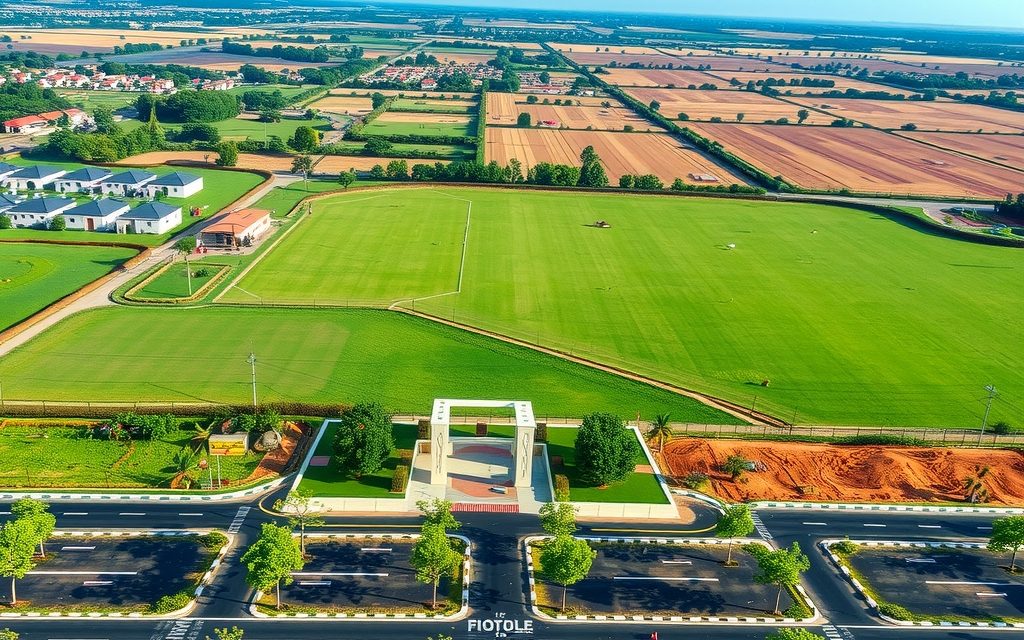
Sangareddy is a working district town on the Mumbai highway, close to IIT Hyderabad and the Patancheru industrial belt. Indicative October 2026 plot prices, HMDA and DTCP approvals, sub-markets and checks.

District-headquarters farm land on the Mumbai highway, 25 km past the Patancheru ORR exit. Red loam and black soil, cotton and maize country, larger blocks at a fraction of inner-ring prices.

Which Hyderabad micro-markets suit NRIs, what each budget buys, new versus resale, RERA and OC checks, GST, TDS for resident and NRI sellers, rental yields, management and repatriation of sale proceeds.
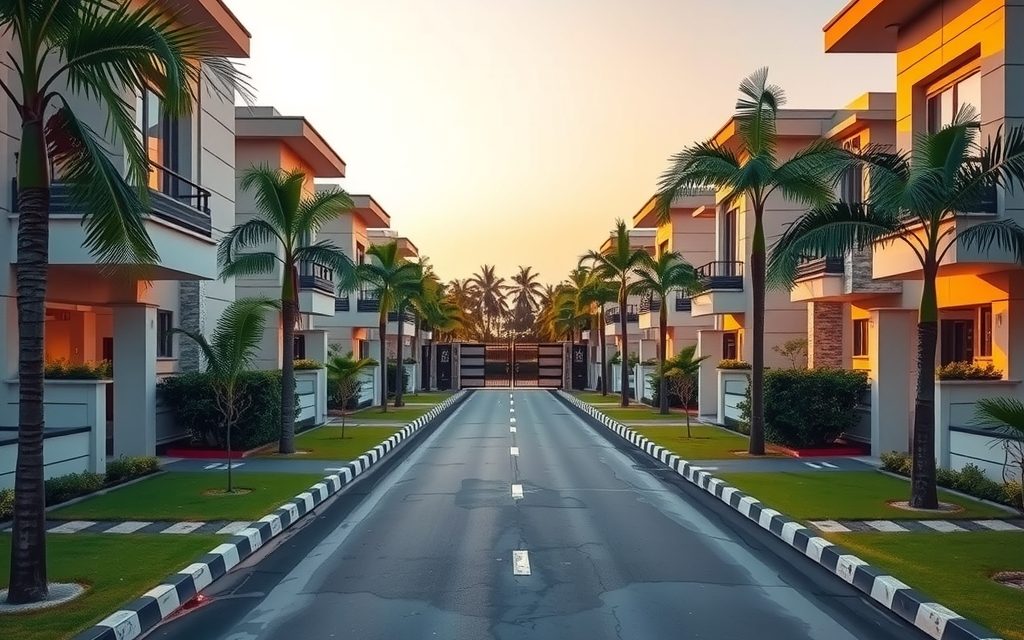
Independent duplexes, row villas and gated communities in Adibatla near TCS, the Aerospace SEZ and the Bongloor ORR exit, with indicative prices, build-versus-buy maths, HMDA approval checks and rental yields.