Open Plots in Nanakramguda, Hyderabad
Nanakramguda's plots are rare resale lots beside the Financial District and the ORR interchange. How auctions shape prices, indicative per sq yd bands, zoning and the title checks that matter.
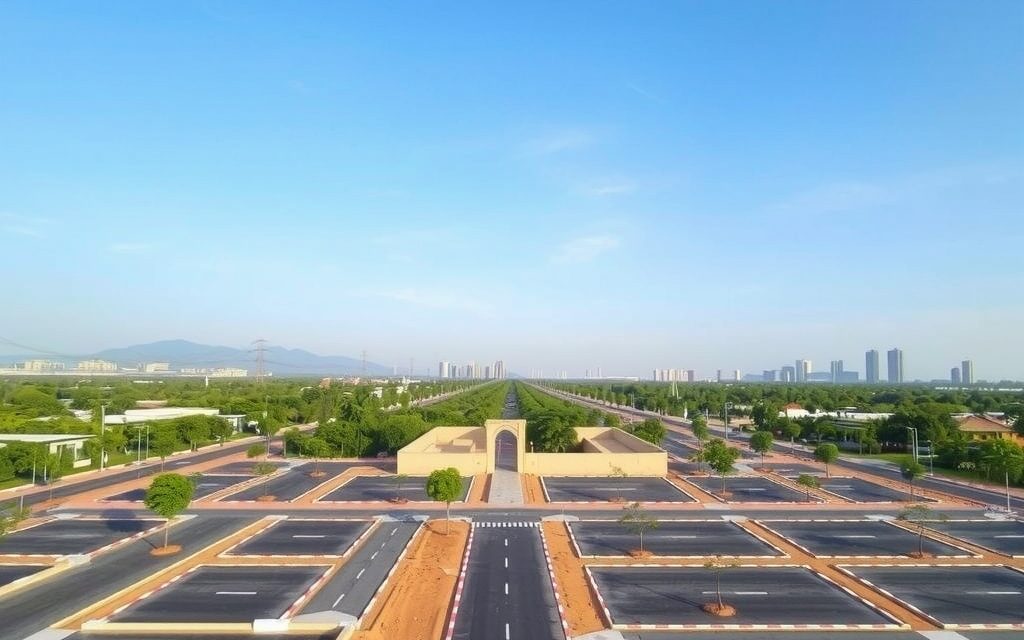
- Minutes from Wipro Circle and the Financial District campuses; ORR Nanakramguda interchange on the doorstep
- Near-zero fresh supply: village-core plots, old houses on land, a few fringe HUDA/HMDA layouts
- Nearby government auctions (Kokapet 2023 top bid ~₹100 crore per acre, reported) anchor seller expectations
- Indicative ₹1 lakh – ₹2.2 lakh per sq yd for residential plots; more for commercial frontage (Oct 2026)
- Within GHMC and HMDA limits, Serilingampally mandal, Rangareddy district; Khajaguda lake buffers apply nearby
| What | Indicative range | Note |
|---|---|---|
| Village-core plot, 20–25 ft lane, regularisation varies | ₹1,00,000 – ₹1,50,000 per sq yd | indicative, Oct 2026 |
| Plot with old house, priced on land value | ₹1,10,000 – ₹1,60,000 per sq yd (land-equivalent) | indicative, Oct 2026 |
| Approved or regularised fringe layout, 30–40 ft road | ₹1,40,000 – ₹2,00,000 per sq yd | indicative, Oct 2026 |
| Gated villa enclave or HMDA layout plot, fringe | ₹1,50,000 – ₹2,20,000 per sq yd | indicative, Oct 2026 |
| Main-road or ORR-side frontage, commercial potential | ₹2,20,000 – ₹3,50,000+ per sq yd | indicative, Oct 2026 |
Ranges reflect recent transactions and advisor observation as of 2026-10. Always verify against the sub-registrar market value and the specific parcel.
Open plots in Nanakramguda barely exist as a market in the usual sense. This small pocket in Serilingampally mandal of Rangareddy district sits right on the edge of the Financial District, between Wipro Circle, the Gachibowli belt and the Outer Ring Road's Nanakramguda interchange. Almost everything around it is campus, tower or road. The plots that do change hands are resale lots in the old village core, a handful of fringe layouts and the occasional old house on land worth far more than the building. When one comes up, it is priced against the most valuable office district in Telangana, and buyers compete for it.
This guide is for buyers who are seriously considering a plot here, whether to build a family home a few minutes from work, to hold prime land for the long term, or to develop a small building. It explains why supply is close to zero, how government land auctions in the neighbourhood set the tone for every negotiation, which approvals and land-use rules matter, indicative per-square-yard bands as of October 2026, and the legal checks that are specific to land sitting beside large government and institutional parcels.
Why a plot in Nanakramguda is such a rare thing
Nanakramguda was a village of farmland and rocky outcrops until the early 2000s. When the state decided to create the Financial District, large extents of land in and around the village, much of it government land, were allotted to technology companies, banks and developers. Over the next fifteen years those allotments became the campuses and towers that now define the skyline around Wipro Circle. The ORR was built along the western side, and wide arterial roads cut through what had been fields.
What was left for private plotted housing was the old village settlement and a few small private holdings that had been divided into plots before the transformation. That is why the plotted market here is so thin. You are not choosing between layouts; you are choosing between whichever two or three legitimate plots happen to be on offer in a given season, and you are competing with small builders, business families and senior professionals who all want the same thing.
The reward for persistence is an address that is genuinely walkable or a five-minute drive from some of the city's largest employers, with the ORR on your doorstep and the airport within about half an hour outside peak traffic.
Location and growth drivers around Nanakramguda
The Financial District next door
The demand driver is employment on a scale few Indian neighbourhoods can match. Global capability centres, bank technology arms, IT services majors and consulting firms occupy the campuses around Wipro Circle and the Nanakramguda road. Tens of thousands of professionals work within a short radius, and a meaningful number of them would rather live in an independent home close by than commute from Tellapur or Kollur.
The ORR Nanakramguda interchange
The Nanakramguda interchange puts the Outer Ring Road a few minutes from any plot in the area. From there, Rajiv Gandhi International Airport at Shamshabad is typically 25 to 35 minutes outside peak traffic, Kokapet and Narsingi are a short hop south, and the western townships of Tellapur and Kollur are 15 to 20 minutes north. Few residential pockets in Hyderabad offer this combination of office proximity and highway access.
Gachibowli, Khajaguda and the social infrastructure
To the east lie Gachibowli's established residential and institutional belt and the rocky, lake-side stretch of Khajaguda. Multi-speciality hospitals, international schools, the Gachibowli stadium complex and large malls are all within 10 to 15 minutes. For a family, the neighbourhood is complete; the only thing in short supply is land.
Transit plans
Metro corridors toward the Financial District have been part of the state's expansion proposals. We note them as proposals subject to approval and funding, and we do not add any premium to a plot's price for a line that is not under construction.
Where Nanakramguda's plot supply actually comes from
When clients ask us for "open plots in Nanakramguda", we explain that there are really only four sources, and each behaves differently.
- Village-core plots. Small plots, often 100 to 250 square yards, on narrow lanes in and around the original Nanakramguda settlement. Many were created informally decades ago, some have been regularised, and title chains vary widely in quality. These are the most frequently traded but also the most heavily discounted for legal and access reasons.
- Old houses on valuable land. Ground or ground-plus-one houses on plots that are now worth many times the structure. Families sell these when the next generation moves away or wants to divide inheritance. These are effectively land sales and should be priced that way.
- Small approved layouts on the fringe. A few plotted layouts on the edges toward Gachibowli, Gowlidoddi and Khajaguda were approved in the HUDA or HMDA era or regularised later. Plots here on 30 to 40 foot roads are the cleanest and most sought-after supply in the area.
- Larger private parcels. Occasionally a private holding of several hundred to a few thousand square yards comes to market, usually aimed at builders for a joint development or a small project. These need specialist legal and zoning review and are outside the scope of a typical home-builder's purchase.
If none of these fits your timeline, plots in neighbouring belts are easier to secure. Our page on open plots in Gopanpally covers the closest pocket with meaningful HMDA villa-plot supply, and open plots in Kokapet covers the premium layouts across the ORR.
Government auctions and what they mean for private plot prices
The single largest influence on seller expectations in Nanakramguda is the record of government land sales nearby. HMDA's auctions in Kokapet in 2021 and 2023 were reported at averages of roughly ₹40 crore and ₹70 crore per acre respectively, with the top bid in 2023 a little over ₹100 crore per acre. Government land sales in the Raidurg and Knowledge City belt have since been reported at levels well above that. Every landowner in the Financial District orbit has read those headlines.
The arithmetic sellers use is straightforward: ₹100 crore per acre is roughly ₹2 lakh per square yard. A village-core seller with 150 square yards on a 20-foot lane may therefore quote ₹2 lakh or more, citing the auction. The comparison is flawed. Auction parcels are large, regular, cleanly titled sites on wide roads with permission for high-rise or commercial development. A small residential plot on a narrow lane can never be built to that intensity, and its value is set by what an individual home-builder can do with it.
Our job in a Nanakramguda negotiation is to translate the auction benchmark into the specific plot's reality: road width, permissible construction, zoning, shape, access and legal history. The auction number is a ceiling for the best large sites, not a floor for every lane plot in the village.
Approvals and land use in Nanakramguda
Nanakramguda falls within GHMC limits through the former Serilingampally municipality and within HMDA's planning area. DTCP does not apply anywhere here; it approves layouts outside HMDA's area in other parts of Telangana.
Approved layouts and LP numbers
The small approved layouts on the fringe carry a HUDA or HMDA Layout Permit number and an approved plan. If you are buying such a plot, verify the LP number through HMDA's website or office, check that the plot appears on the approved plan with the same dimensions, and confirm release from any mortgage held by the authority.
Village-core plots and regularisation
Most village-core plots were never part of an approved layout. Some have been regularised through the Telangana Layout Regularisation Scheme, first opened in 2020 and offered again in 2025 with a fee concession. Others remain unregularised. The difference matters enormously for building permission, bank finance and resale. Ask for the final LRS proceedings or the building permission under which the existing house was built, and price accordingly.
Master plan zoning and road widening
Land use in and around the Financial District includes residential, multiple-use and commercial zones, and the zone determines what you may build and how high. A plot in a multiple-use zone on a wide road can be worth far more than a same-sized residential plot on a lane. Equally important is road widening: as the Financial District's traffic grows, roads around the village have been and may continue to be widened, and a plot on a road marked for widening can lose part of its frontage.
TS RERA
RERA registration is mandatory for new plotted layouts above 500 square metres or with more than eight plots, but almost all Nanakramguda plot purchases are resales and RERA rarely applies. If someone offers plots in a new project here, check its registration on the TS RERA portal before you pay anything.
Nanakramguda plot price per sq yd: indicative bands, October 2026
These bands are indicative, based on the limited recent transactions and advisor observation in and around Nanakramguda as of October 2026. Because so few plots trade, a single transaction can move perceptions, and individual plots can fall well outside these ranges depending on road width, zoning, regularisation, shape and the seller's circumstances. They are a framework for negotiation, not a valuation.
| Plot type | Indicative range (per sq yd) | Key variable |
|---|---|---|
| Village-core plot, 20–25 ft lane, regularisation varies | ₹1,00,000 – ₹1,50,000 | LRS status and lane access |
| Plot with old house, priced on land value | ₹1,10,000 – ₹1,60,000 (land-equivalent) | Permission status of the structure |
| Approved or regularised fringe layout, 30–40 ft road | ₹1,40,000 – ₹2,00,000 | Release, facing, corner |
| Plot in a gated villa enclave or HMDA layout on the fringe | ₹1,50,000 – ₹2,20,000 | Community rules, very thin supply |
| Main-road or ORR-side frontage with commercial potential | ₹2,20,000 – ₹3,50,000+ | Zoning and permissible use |
In practice, a 200 square yard regularised plot on a 30-foot fringe road can cost ₹2.8 crore to ₹4 crore, while a 150 square yard village-core plot on a lane might be ₹1.5 crore to ₹2.25 crore. For comparison, a new 3 BHK flat in a Nanakramguda high-rise typically costs ₹2.2 crore to ₹4.4 crore, as we set out on our page on apartments in Nanakramguda. Villa plots on the Financial District fringe, covered on our villas in Financial District page, sit in a similar band to the top rows of this table.
What pushes a plot toward the top or bottom
- Road width. Here more than anywhere, road width drives value, because it decides how many floors and what uses are permissible.
- Regularisation. A plot with completed LRS or an approved layout can be worth 25 to 40 percent more than an otherwise similar unregularised plot.
- Access. Plots reached through narrow, congested lanes in the village core trade at a discount even when they are close to the main road.
- Shape and terrain. Rocky ground and irregular shapes raise construction cost and reduce usable area.
- Zoning. Multiple-use or commercial zoning on a wide road creates builder interest and lifts prices sharply.
An illustration shows how these variables interact. Imagine two plots of 180 square yards each, a few hundred metres apart. One sits on a 20-foot lane in the village core with an LRS application still pending; the other is in a regularised fringe colony on a 33-foot road, east facing, with a clean thirty-year EC. Sellers of plots like the first often quote a number close to the second, citing the auction headlines. On evidence, the realistic gap between them is typically a third of the price or more, because the second plot can be built higher, financed by a bank and resold to a much wider pool of buyers.
Plot sizes and what you can build
Village-core plots are typically 100 to 250 square yards. Fringe layouts offer 200 to 400 square yards, and gated villa enclaves sometimes go larger. Plots above 500 square yards are uncommon and usually attract builders rather than individual home-builders.
What you can build depends on plot size, road width, zoning and GHMC's building rules. As a broad guide, a 200 square yard plot on a 30-foot road commonly supports a stilt-plus-three or ground-plus-three structure, while a plot on a narrow lane may be restricted to fewer floors and larger setbacks relative to its size. Some buyers build a family home on the lower floors and rent the upper floors to Financial District professionals, where rental demand is strong. Construction on rocky ground can require blasting or extra foundation work, which adds cost, so factor in a soil and rock assessment before finalising your budget.
Legal checklist for a plot beside the Financial District
Nanakramguda's history of large government allotments next to small private holdings creates specific risks. This is the checklist we work through before any client pays an advance.
- Private title from the root. Trace the title to an original private pattadar. Any link to government land, an allotment, or an assignment needs specialist review, and we usually advise walking away.
- Section 22-A and prohibited lists. Confirm the survey number is not on the prohibited properties list, which covers government, assigned, endowment and certain other lands.
- Boundary with government or institutional parcels. Where a plot adjoins a large allotted or government parcel, get a licensed surveyor to confirm that the plot lies wholly within the private survey number.
- Encumbrance certificate for 30 years or more. Check for prior sales, mortgages, attachments and court orders.
- Complete link documents. Every deed in the chain, with extents and boundaries that reconcile. Old village deeds can describe plots loosely.
- Layout approval or LRS proceedings. The actual approval or final regularisation order, not an application receipt.
- Master plan zoning and road widening. Confirm land use and any widening proposal affecting the frontage.
- Lake and nala buffers. Khajaguda lake and the storm-water drains of this rocky terrain carry FTL and buffer restrictions, which HYDRAA has enforced actively since 2024.
- Existing structure permission. If there is a house, check its permission and property tax assessment.
- Litigation search. Civil court records for the survey number, including partition suits among the original village families, which are common when land values rise this fast.
In Nanakramguda, the price is so high that a single document gap can wipe out years of appreciation. Verification here is not a formality; it is the purchase.
Registration and charges
Plots in Nanakramguda register at the sub-registrar office with jurisdiction over the survey number, which we confirm before booking the slot. Slots and challans are handled through the Telangana registration portal. Charges apply to the higher of the sale price and the government market value.
| Component | Approximate rate, Oct 2026 | On a ₹3.5 crore plot |
|---|---|---|
| Stamp duty | ~5.5% | ~₹19.2 lakh |
| Transfer duty | ~1.5% | ~₹5.25 lakh |
| Registration fee | ~0.5% | ~₹1.75 lakh |
| Approximate total | ~7.5% | ~₹26.2 lakh |
Rates change, and we verify the current figures at the SRO on the day. Virtually every Nanakramguda plot exceeds ₹50 lakh, so the buyer deducts 1 percent TDS from payments to a resident seller and deposits it through Form 26QB. Where the seller is an NRI, TDS under Section 195 is calculated on capital-gains rules and is far higher; you need a TAN and a chartered accountant's guidance before signing the agreement. After registration, apply for mutation of the property tax record in your name.
Investment outlook for Nanakramguda plots
The investment case rests on three facts. Supply cannot increase meaningfully, because there is no open land left to plot. Demand is anchored in the Financial District, which continues to add office space and employees. And government land sales nearby keep reinforcing the value of land in this orbit. Together these make a well-documented Nanakramguda plot one of the more resilient land holdings in Hyderabad.
The risks are equally specific. Entry prices are already at prime urban levels, so future appreciation is more likely to be steady than spectacular. Liquidity is limited: a small village-core plot with modest paperwork may take a long time to sell. Traffic around the Financial District is heavy and will grow. And the risk of a title or boundary problem is higher than in a clean modern layout, simply because of the area's land history. For investors, a holding horizon of seven to ten years and a preference for regularised fringe plots over village-core lots is the sensible approach. For builders, the economics depend on road width and zoning more than on plot size.
Plot, flat or a plot elsewhere: choosing honestly
For most families, the realistic alternatives to a Nanakramguda plot are a large flat in a local high-rise, or a larger plot in a neighbouring belt. A ₹3 crore budget buys roughly 150 to 200 square yards of land here before construction, a spacious 3 BHK in a premium tower nearby, or a 300 square yard plot in parts of Gopanpally or Narsingi with money left for construction. Our pages on open plots in Narsingi and open plots in Manikonda cover two neighbours with deeper supply. If proximity to the office is the deciding factor and you want an independent house, Nanakramguda is worth the wait. If space and choice matter more, the neighbours usually win.
Who should buy a plot in Nanakramguda
It suits senior professionals who want to live within minutes of the Financial District in their own house; business families seeking prime land as a long-term store of value; small developers who can use a plot on a wide road for a multi-floor building; and families from the original village area consolidating land.
It does not suit buyers with budgets under about ₹1.5 crore, buyers who need a plot within a fixed short timeline, anyone seeking a quick flip, and anyone unwilling to invest in thorough legal verification.
NRI note
NRIs and OCI cardholders can buy residential, non-agricultural plots in Nanakramguda. FEMA prohibits them from acquiring agricultural land, plantation property and farmhouses, so confirm that the plot is recorded as non-agricultural. Payments must come through Indian banking channels such as NRE, NRO or FCNR accounts or inward remittance. A specific Power of Attorney, executed before an Indian consulate abroad and adjudicated in Telangana, allows a trusted representative to complete registration. Given the legal complexity of this area, we recommend NRI buyers allow additional time for verification. Our guide on NRI investment in Telangana explains the broader rules, including repatriation limits. For tax planning, consult a chartered accountant.
How NRR Estates helps in Nanakramguda
NRR Estates is an advisory firm, and our fee is disclosed before any commitment. In a market this thin, we spend more time finding and filtering than selling.
- Sourcing quietly. Many Nanakramguda plots are sold through family networks rather than public listings. We track these and bring you only those that pass a first legal screen.
- Title and boundary review. We coordinate independent legal verification of the full title chain, the 22-A and government-land checks, and a surveyor's boundary confirmation where a plot adjoins public land.
- Zoning and buildability. We confirm land use, road widening and what you can actually build before price is discussed.
- Negotiation on evidence. We translate auction headlines into a realistic value for the specific plot.
- Registration and after. Agreement, TDS (including NRI-seller cases with your CA), slot booking, registration and mutation.
Nanakramguda open plots: frequently asked questions
Can you still buy an open plot in Nanakramguda?
Yes, but supply is close to zero and almost entirely resale. Most land around Nanakramguda was allotted for the Financial District campuses and towers, so private plots exist mainly in the old village core, as old houses on valuable land, and in a few small approved layouts on the fringe toward Gachibowli and Khajaguda. In a typical season only a handful of legally clean, buildable plots are available, and they attract quick competition from home-builders, business families and small developers.
What is the price of plots in Nanakramguda per square yard?
As of October 2026, village-core plots on narrow lanes typically trade between ₹1 lakh and ₹1.5 lakh per square yard, regularised fringe-layout plots on 30 to 40 foot roads between ₹1.4 lakh and ₹2 lakh, and gated villa-enclave plots up to about ₹2.2 lakh, based on limited recent transactions and advisor observation. Main-road frontage with commercial potential can go well above ₹2.2 lakh. These are indicative ranges; because so few plots trade, individual prices vary widely.
Do government auction prices apply to private plots in Nanakramguda?
Not directly. Government auctions in Kokapet and the Raidurg and Knowledge City belt sold large, regular, cleanly titled parcels with high-rise or commercial potential, and reported bids of ₹100 crore per acre and more equate to roughly ₹2 lakh per square yard or above. A small residential plot on a narrow lane cannot be developed to that intensity. Auction figures act as a ceiling for the best large sites, not a benchmark for every village plot, and we negotiate on that basis.
Are Nanakramguda plots HMDA approved?
Some are. A few fringe layouts were approved by HUDA before 2008 or by HMDA afterwards and carry a Layout Permit number. Most village-core plots were never in an approved layout; some have been regularised under the Telangana LRS scheme and others have not. DTCP has no role because Nanakramguda lies within GHMC and HMDA limits. Always ask for the LP number or the final LRS order, verify it, and price an unregularised plot at a meaningful discount.
What legal risks are specific to Nanakramguda?
The main risk is proximity to large government and institutional parcels allotted for the Financial District. Make sure the title traces to an original private pattadar, that the survey number is not on the Section 22-A prohibited list, and that a licensed surveyor confirms the plot lies fully within private land where it adjoins public parcels. Also check road-widening proposals, zoning, Khajaguda lake and nala buffers, and family partition litigation, which is common where values rise quickly.
What are the registration charges for a Nanakramguda plot?
Approximately 7.5 per cent of the higher of the sale price and the government market value, made up of about 5.5 per cent stamp duty, 1.5 percent transfer duty and 0.5 percent registration fee, as of October 2026. On a ₹3.5 crore plot that is roughly ₹21 lakh. Rates change, so we verify them at the jurisdictional SRO on the day. The buyer also deducts 1 percent TDS for a resident seller on purchases above ₹50 lakh, and higher TDS under Section 195 for an NRI seller.
Can NRIs buy plots in Nanakramguda?
Yes. NRIs and OCI cardholders may buy residential, non-agricultural plots in Nanakramguda; FEMA restricts only agricultural land, plantation property and farmhouses. Confirm that the plot is recorded as non-agricultural. Payment must come through Indian banking channels such as NRE, NRO or FCNR accounts or inward remittance. A specific Power of Attorney executed before an Indian consulate and adjudicated in Telangana lets a representative register on your behalf. Allow extra time for verification and consult a chartered accountant on tax.
Is a Nanakramguda plot a good investment?
It can be a resilient long-term holding, but not a quick gain. Supply cannot grow, demand is anchored by the Financial District, and nearby government land sales support values. Against that, entry prices are already at prime urban levels, liquidity is thin for small lane plots, and legal risk is higher than in a modern layout. A seven to ten year horizon and a preference for regularised plots on 30 foot or wider roads is the sensible approach for investors.
Related guides
Super-tall gated towers on the Financial District edge with the ORR interchange next door. Indicative per-sq-ft bands, 3 and 4 BHK tickets, tower-selection advice and RERA checks for premium new launches.
Few true villas exist near Wipro Circle. Here is how gated villa pockets, plotted villas and sky villas compare on price, commute and paperwork, and what the Financial District proximity premium is worth.
Gopanpally is the last plotted pocket within ten minutes of Gachibowli and the Financial District. Indicative HMDA and villa-plot rates, approval history, legal checks and registration costs.
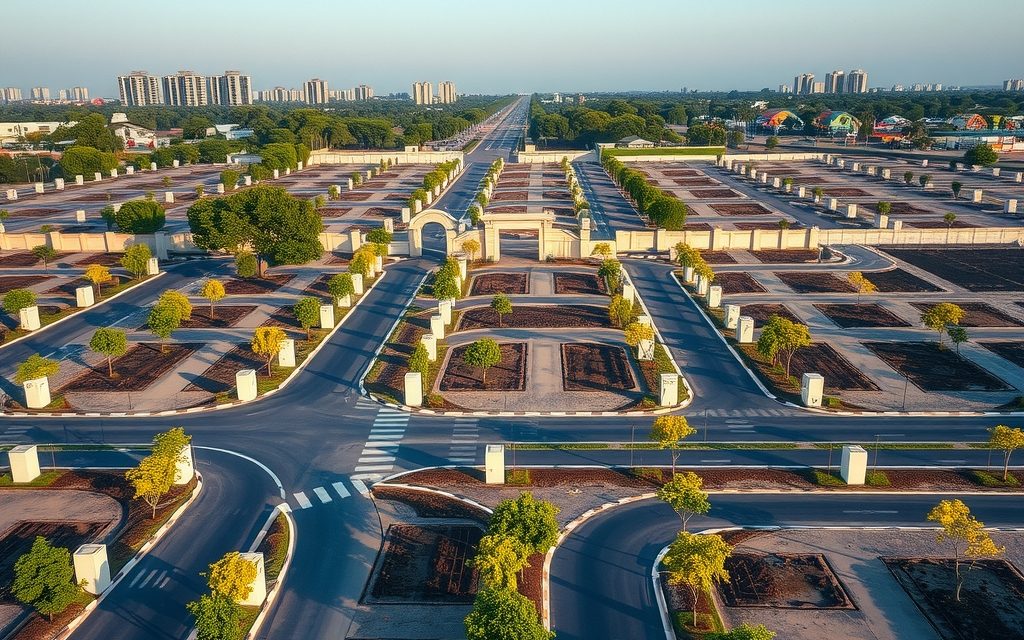
Manikonda's plots sit in old Jagir-era colonies ten minutes from the Financial District. Indicative land rates, title history, 22-A and LRS checks, and the economics of rebuilding an old house.
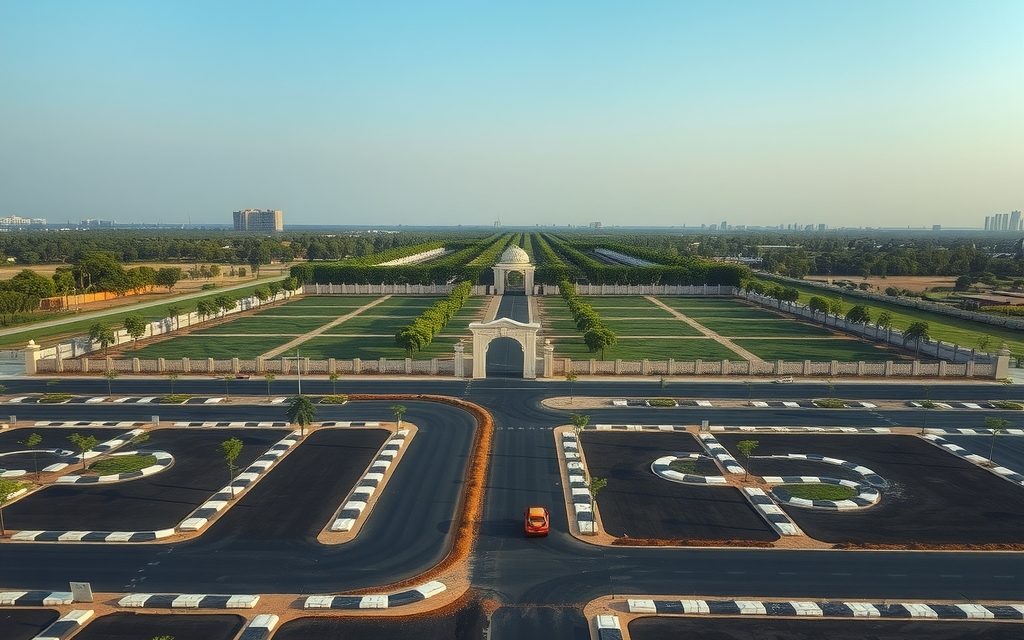
Narsingi's HMDA and villa plots sit at the ORR interchange between Kokapet and the Financial District. Indicative rates by pocket, what the GO 111 repeal changed, legal checks and costs.
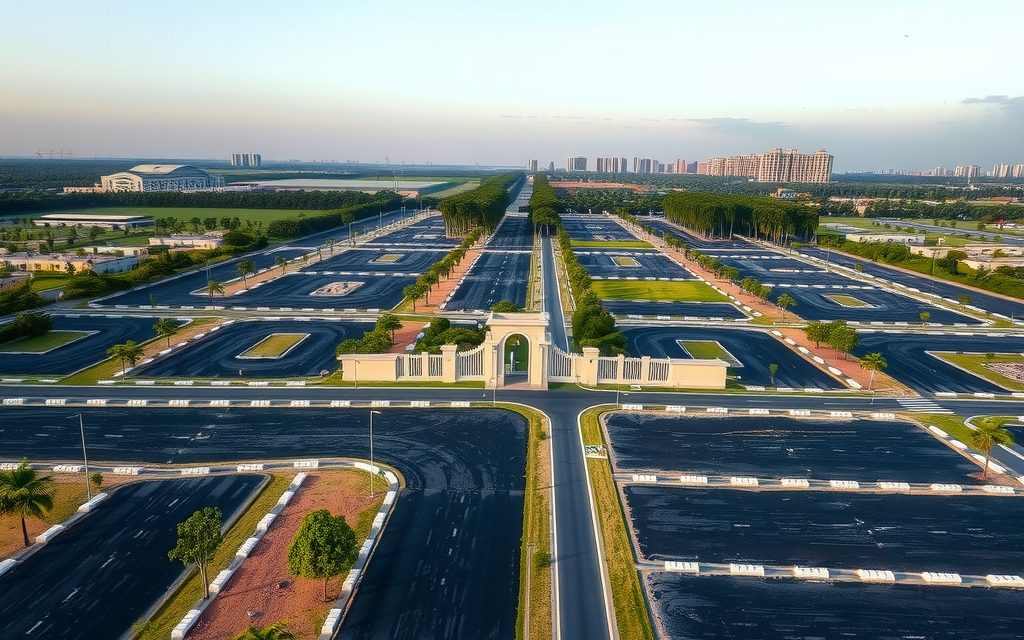
Kokapet's plots sit beside the Neopolis towers and the ORR, minutes from the Financial District. Indicative rates, HMDA versus GP approvals, legal checks and registration costs for buyers and NRIs.

What NRIs and OCIs can and cannot buy under FEMA, how to fund and register a purchase from abroad, TDS and repatriation basics, and where the opportunities are across Hyderabad and the Telangana districts.
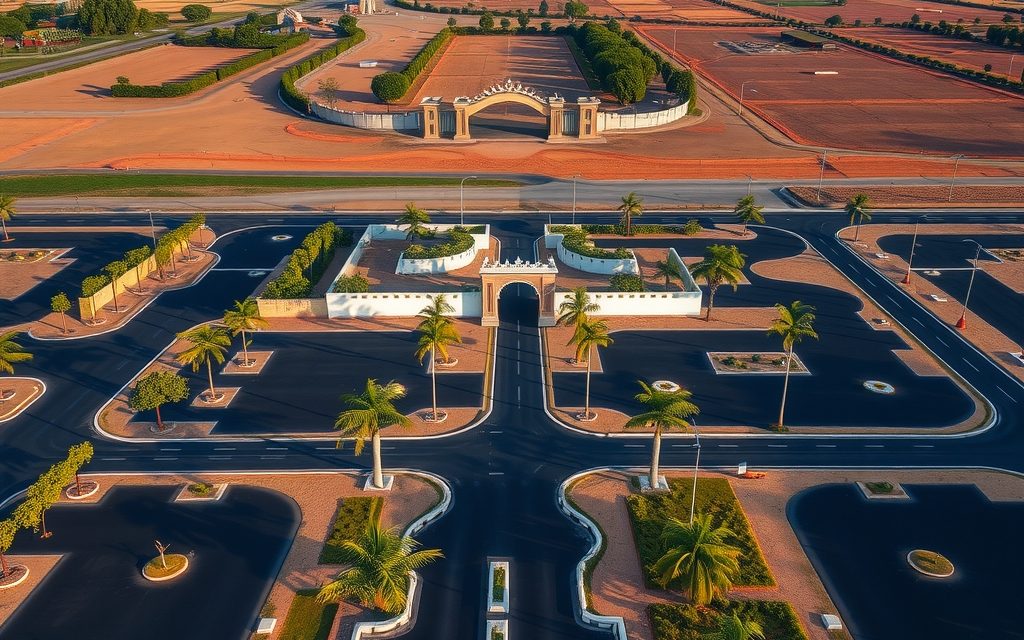
HMDA plots 4 km from the ORR beside TCS and the Aerospace SEZ: Adibatla, Bongulur, Kongara Kalan and Mangalpally pockets, indicative per-sq-yd prices and an honest take on Future City and Pharma City.