Open Plots in Manikonda, Hyderabad
Manikonda's plots sit in old Jagir-era colonies ten minutes from the Financial District. Indicative land rates, title history, 22-A and LRS checks, and the economics of rebuilding an old house.
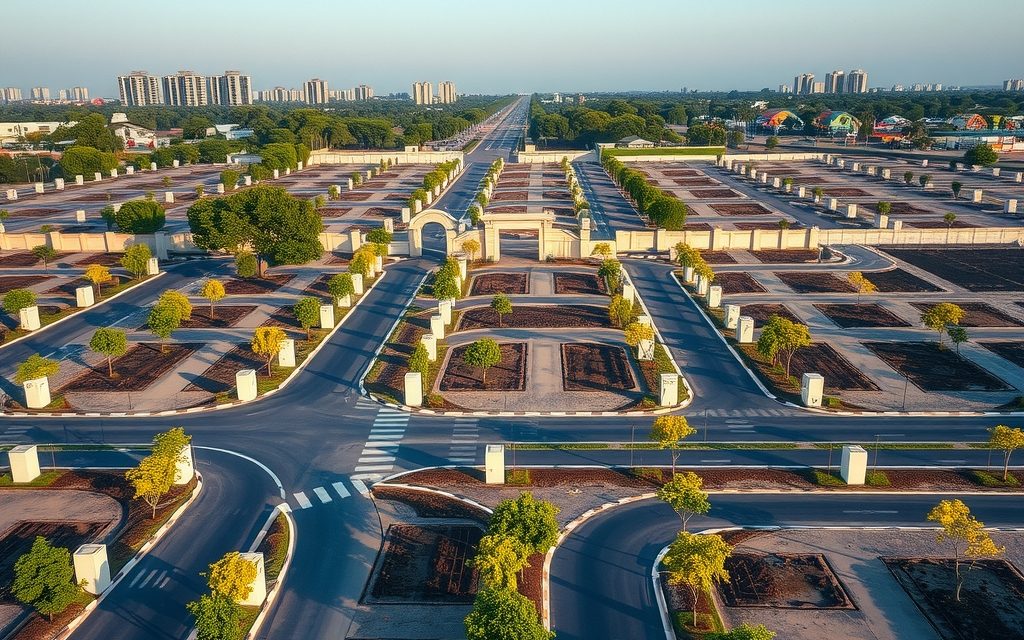
- 10–20 minutes to the Financial District and Gachibowli; Shaikpet flyover and Narsingi ORR interchange nearby
- No fresh layouts: supply is old colony plots, often with an ageing house priced on land value
- Title history needs care: Section 22-A checks, GPA or unregistered links, past large land disputes
- Indicative land value ₹1 lakh – ₹2.4 lakh per sq yd for residential plots (Oct 2026)
- Gandipet mandal, Rangareddy district; deep IT rental demand supports rebuild economics
| What | Indicative range | Note |
|---|---|---|
| Inner-lane old colony plot, 20–25 ft road, often with old house | ₹1,00,000 – ₹1,40,000 per sq yd | indicative, Oct 2026 |
| Regularised colony plot, 30 ft road | ₹1,25,000 – ₹1,70,000 per sq yd | indicative, Oct 2026 |
| Corner or 40 ft+ road, Puppalaguda / Lanco Hills edge | ₹1,40,000 – ₹2,00,000 per sq yd | indicative, Oct 2026 |
| Planned township layout plot, Alkapur Township | ₹1,50,000 – ₹2,40,000 per sq yd | indicative, Oct 2026 |
| Main-road frontage with commercial use | ₹2,20,000 – ₹3,50,000+ per sq yd | indicative, Oct 2026 |
Ranges reflect recent transactions and advisor observation as of 2026-10. Always verify against the sub-registrar market value and the specific parcel.
Open plots in Manikonda are a different proposition from almost anywhere else on the western side of Hyderabad. There are no fresh layouts here and very little vacant land. What buyers actually find is a plot inside one of the old plotted colonies of Manikonda Jagir, often with an ageing house on it, in a neighbourhood that sits ten minutes from the Financial District and has some of the strongest rental demand in the city. Manikonda lies in Gandipet mandal of Rangareddy district, between Puppalaguda, Shaikpet and the Lanco Hills towers, and its plotted market is driven by two questions: is the title genuinely clean after decades of informal transactions, and does the land justify rebuilding?
This guide is written for buyers weighing exactly those questions as of October 2026. It explains how Manikonda's colonies came to be, the land and title history you need to understand before you pay an advance, how approvals and building permissions work in old colonies, indicative per-square-yard bands by pocket and road width, the economics of buying an old house to rebuild, and who Manikonda suits.
Why buy a plot in Manikonda at all
Because the location is hard to beat for the price. From most of Manikonda, Wipro Circle and the Financial District are 10 to 20 minutes away, Gachibowli is a similar distance, and the Shaikpet flyover puts Tolichowki, Mehdipatnam and Jubilee Hills within easy reach. The neighbourhood is fully built, with markets, schools, hospitals, gyms and restaurants on almost every main road. And Manikonda's rental market, fed by IT professionals, students and young families, is one of the deepest in Hyderabad.
That combination makes a Manikonda plot attractive to three kinds of buyer: families who want an independent house within a short commute of the IT corridor at a lower price than Gachibowli or Jubilee Hills; owner-landlords who want to build a multi-floor building and live on one floor while renting the rest; and long-term holders who see land in a central, fully serviced neighbourhood as a store of value. All three need the same thing first: a plot whose paperwork can stand up to scrutiny.
How Manikonda's plotted colonies were made
Manikonda Jagir, as the revenue village is still known, was once part of a jagir estate. After jagirs were abolished in the Hyderabad State in 1949, the land passed through a long series of revenue, inheritance and transfer processes. Through the 1980s and 1990s, as the city expanded westward, landowners divided many agricultural survey numbers into residential plots. A small number of these layouts were approved by HUDA. Many more were approved only by the gram panchayat, and some were sold without any formal approval at all.
Buyers in that period often purchased through unregistered agreements, General Power of Attorney arrangements or simple sale deeds that described plots loosely by boundaries. As the IT corridor arrived in the 2000s, Manikonda filled up rapidly with independent houses, many extended upward floor by floor to meet rental demand. Manikonda Jagir became a municipality in 2018, and the urban local body structure around GHMC has since been restructured, so the authority that issues building permission today is something we confirm for each survey number. The result is a dense, lively neighbourhood whose plot titles range from impeccable to untraceable.
The title history every Manikonda buyer should understand
Large land disputes in the village's past
Manikonda is known for a long-running dispute between the Waqf Board and the state over a large extent of land claimed as endowment land of the Dargah Hussain Shah Wali. The Supreme Court decided that matter in the state's favour in 2023, as widely reported. That case concerned specific large survey numbers, much of it allotted by the state for development, not the private plotted colonies. But it explains why some Manikonda survey numbers have appeared on prohibited-property lists at various times, and why a buyer should never assume a survey number is free of claims simply because houses stand on it.
Section 22-A and registration blocks
The Section 22-A prohibited properties list, which covers government, assigned, endowment, Waqf and certain other categories of land, has at times included survey numbers in and around Manikonda. If a survey number is on the list, the SRO will refuse registration. Check the current position for your exact survey number before agreeing a price, and be cautious of any seller who proposes a workaround.
GPA chains and unregistered agreements
In old colonies it is common to find a chain in which one or more links is a General Power of Attorney sale or an unregistered agreement rather than a registered sale deed. The Supreme Court made clear in 2011 that GPA or agreement-based transactions do not convey title in immovable property. A plot whose chain depends on such a link is not clean, even if the current occupant has lived there for decades. Sometimes the gap can be cured by obtaining a registered deed from the original owner or their legal heirs; sometimes it cannot. Either way, it must be resolved before you buy, not after.
Connectivity and growth drivers around Manikonda
The Financial District and Gachibowli
Manikonda's single biggest driver is its proximity to the Financial District, Nanakramguda and Gachibowli. Professionals working there value a short commute, which keeps both rental and purchase demand steady even in slower years.
ORR access and the Shaikpet flyover
The ORR is reachable through the Narsingi interchange to the south-west or via Khajaguda toward the Nanakramguda interchange. From there, the airport at Shamshabad is typically 30 to 40 minutes outside peak traffic. The Shaikpet flyover has eased the run toward Tolichowki, Mehdipatnam and the older city, making Manikonda a bridge between the IT corridor and established Hyderabad.
Neknampur lake and green space
Neknampur lake, on the Manikonda side, has been rejuvenated in recent years and is one of the few significant green and water spaces in this dense belt. It adds amenity to nearby colonies and, like every water body in the city, brings FTL and buffer restrictions that plot buyers must check.
Rental depth as a value driver
Unlike newer plotted belts, Manikonda's land value is supported by income. A plot here can carry a building that earns rent from day one of completion, which gives Manikonda land a floor that pure speculation markets lack.
Manikonda's pockets and how they differ
- Alkapur Township. A planned township layout with wider roads, larger plots and a more upscale residential character. Plots here command the highest per-yard prices for residential use in Manikonda, and resale supply is limited.
- Puppalaguda and Lanco Hills edge. The western side, closest to the high-rise belt of Puppalaguda and the Lanco Hills towers, with strong demand from IT families. Our page on villas in Puppalaguda covers the gated options on that side.
- The dense core around the main road. The commercial and rental heart of Manikonda, with narrow lanes, multi-floor rental buildings and very high activity. Plots here are small, often under 200 square yards, and priced heavily on rental potential.
- Pipeline Road and Panchavati side. Mixed colonies of independent houses and small apartment buildings, generally quieter than the core and popular with families.
- Neknampur side. Colonies toward the lake, where buffer checks are especially important and prices vary according to distance from the water body.
Approvals and building permission in Manikonda's old colonies
Manikonda is within HMDA's planning area, so DTCP does not apply; DTCP approves layouts outside HMDA limits elsewhere in Telangana. What matters in Manikonda is less the original layout approval than the combination of layout status, regularisation and building permission.
HUDA, HMDA and planned township layouts
A minority of Manikonda's colonies, including planned township layouts, were approved by HUDA or later by HMDA. Plots in these layouts, with a verified Layout Permit number on HMDA's website or from the HMDA office, are the cleanest in Manikonda and carry a price premium.
Gram panchayat layouts and LRS
Most colonies began as gram panchayat layouts. The Telangana Layout Regularisation Scheme, opened in 2020 and offered again with a fee concession in 2025, allowed many such plots to be regularised. A plot with final LRS proceedings can generally obtain building permission subject to other conditions. Without it, permission for a new building may be difficult and bank finance unlikely.
The existing building and unauthorised floors
Many Manikonda houses were extended upward over the years, not always with permission. If you are buying a plot with a building on it, check which floors were sanctioned. Unauthorised floors can attract penalties or demolition action, and they complicate bank finance and resale. If you plan to demolish and rebuild, this matters less, but you still need the land's own approval status to be sound.
TS RERA
New plotted layouts above 500 square metres or with more than eight plots must register with TS RERA, but since Manikonda has almost no fresh plotted supply, RERA rarely applies to a plot purchase here. It becomes relevant if you later develop a building of more than eight units on a larger plot and sell them, or if you buy a plot from a developer marketing a new project. In either case, check the registration requirements and status on the TS RERA portal.
Manikonda plot price per sq yd: indicative bands, October 2026
The bands below are indicative, based on recent transactions and advisor observation in Manikonda as of October 2026. In this market, many plots trade with a building on them; the table expresses value as land-equivalent per square yard. Individual plots can sit outside these ranges depending on lane width, legal status, rental potential and the condition of any building. The upper band is consistent with the land values implied on our page on villas in Manikonda.
| Location and road | Indicative land value (per sq yd) | What drives the price |
|---|---|---|
| Inner-lane old colony plot, 20–25 ft road, often with old house | ₹1,00,000 – ₹1,40,000 | LRS status, lane access, title chain |
| Regularised colony plot, 30 ft road | ₹1,25,000 – ₹1,70,000 | Buildable floors, rental potential |
| Corner or 40 ft+ road, Puppalaguda or Lanco Hills edge | ₹1,40,000 – ₹2,00,000 | Visibility and permissible height |
| Planned township layout plot, Alkapur Township | ₹1,50,000 – ₹2,40,000 | Approved layout, wider roads, larger plots |
| Main-road frontage with commercial use | ₹2,20,000 – ₹3,50,000+ | Zoning and shop or office rents |
At these rates, a 200 square yard regularised plot on a 30-foot road represents ₹2.5 crore to ₹3.4 crore of land value, and a 300 square yard plot in Alkapur Township ₹4.5 crore to ₹7.2 crore. For comparison with flats in the same belt, see our page on apartments in Manikonda.
Rebuild economics: buying an old house to build new
The typical Manikonda plot transaction is really a land purchase with a building attached. The question is whether rebuilding pays. The table below is an illustration, not a projection for any specific plot; every number depends on permission, specification and the rental market at the time.
| Item (illustrative, 200 sq yd plot, 30 ft road) | Indicative range |
|---|---|
| Land value at ₹1.25 – ₹1.5 lakh per sq yd | ₹2.5 crore – ₹3 crore |
| Demolition and clearance of old house | ₹3 lakh – ₹6 lakh |
| New building, stilt plus three to four floors, 5,500–7,000 sq ft built-up | ₹1.5 crore – ₹2.3 crore at ₹2,600 – ₹3,400 per sq ft |
| Permission, utility connections and professional fees | ₹10 lakh – ₹20 lakh |
| Gross annual rent if fully let as 2 BHK units | ₹18 lakh – ₹28 lakh |
On these assumptions, the gross rental yield on total cost works out to roughly 4 to 5.5 percent, before maintenance, vacancy and tax, which is noticeably higher than the yield on a premium flat in the Financial District belt. The model works best on plots of 200 square yards or more on 30-foot or wider roads, where permissible floors justify the build cost. On a 120 square yard plot in a 20-foot lane, permissible floors are fewer and the economics thin out. Always confirm permissible construction under the current building rules before you fix a price, because the number of floors you can legally build is what determines the land's value to you.
Plot sizes and what Manikonda colonies look like
Old colony plots are typically 150 to 267 square yards, with 167 and 200 square yards very common. Alkapur Township and a few planned layouts offer 300 to 500 square yards. Plots under 150 square yards are frequent in the dense core. Roads range from 20-foot lanes in the core to 30 and 40 foot roads in better-planned colonies and wider roads in the township.
Infrastructure is that of a mature urban area: municipal water supply and sewerage in most colonies, cement-concrete roads, street lighting and power. The challenges are density and parking. Many lanes are crowded with vehicles, and new buildings must provide stilt parking under the building rules. Open spaces shown in original layouts were sometimes built over in the past, which can complicate approvals for neighbouring plots.
Walking the colony before you commit
Paperwork tells you whether a plot can be bought; the street tells you whether you will want to live on it. Visit on a weekday evening and a weekend morning. Check how far vehicles can actually reach the plot when the lane is parked up, whether water stagnates after rain, how high the neighbouring buildings are and whether they shade the plot, and whether there is commercial activity next door that will grow. In the dense core, a plot that looks well located on a map can turn out to sit behind a row of six-floor rental blocks with no sunlight on its lower floors. In Alkapur Township and the quieter Pipeline Road colonies, the opposite surprise is common: the street is calmer and greener than the address suggests.
Legal checklist for buying a plot in Manikonda
Given Manikonda's history, this checklist is longer than usual. We work through it before any client pays an advance.
- Section 22-A status of the survey number, checked fresh, since lists have changed over time.
- Full registered title chain back to the original pattadar, identifying any GPA, agreement or unregistered link and how it was cured.
- Encumbrance certificate for 30 years or more, checking for double sales, which are a known risk in old colonies.
- Layout approval or LRS proceedings, with the final regularisation order, not an application.
- Building permission for the existing structure, including which floors were sanctioned.
- Surveyor's measurement of the plot against deeds and the layout, since boundary creep is common in dense colonies.
- Master plan zoning and road widening, especially on main roads where widening could take frontage.
- Neknampur lake and nala buffers. Check FTL and buffer maps; HYDRAA has enforced these actively since 2024.
- Property tax and utility bills in the seller's name, with no arrears.
- Tenancies. Confirm whether tenants occupy the building and agree a vacant-possession date in the sale agreement.
- Litigation search on the survey number and the specific plot.
In Manikonda, the house you can see is the least important thing you are buying. The title you cannot see is everything.
Registration and charges in Manikonda
Manikonda plots register at the sub-registrar office with jurisdiction over the survey number, typically the Gandipet SRO, which we confirm before booking the slot on the Telangana registration portal. Charges apply to the higher of the sale consideration and the government market value; where a building stands on the plot, its value is added to the market value calculation.
| Charge | Approximate rate, Oct 2026 | On a ₹2.8 crore property |
|---|---|---|
| Stamp duty | ~5.5% | ~₹15.4 lakh |
| Transfer duty | ~1.5% | ~₹4.2 lakh |
| Registration fee | ~0.5% | ~₹1.4 lakh |
| Approximate total | ~7.5% | ~₹21 lakh |
Rates change, and we verify them at the SRO on the day. On purchases above ₹50 lakh from a resident seller, the buyer deducts 1 percent TDS and deposits it via Form 26QB. If the seller is an NRI, TDS under Section 195 is much higher and is based on capital-gains rules; obtain a TAN and involve a chartered accountant before signing. After registration, apply for mutation of the property tax record in your name.
Investment outlook for Manikonda plots
Manikonda's strengths are location, rental depth and a fully built neighbourhood. Land here is supported by what it can earn, and demand from IT professionals has proved resilient across cycles. Redevelopment of older houses into modern rental buildings continues to lift land values on well-located plots.
The weaknesses are density, traffic, parking pressure and, above all, title quality. A plot with a clean title and a 30-foot road is a strong asset; a plot with a broken chain in a 20-foot lane may be very difficult to sell, however central it is. Price growth in Manikonda is more likely to be steady than dramatic. For an investor, a five to ten year horizon with a rebuild plan is a better case than holding vacant land. If you want more space or a newer layout, compare with open plots in Narsingi, or with open plots in Nanakramguda if proximity to the Financial District is the deciding factor.
Who should buy a plot in Manikonda
It suits owner-landlords who want to build a multi-floor building and live on one floor; families seeking an independent house close to the IT corridor at a lower price than Gachibowli; and long-term holders who value central, income-producing land.
It is not ideal for buyers who want a quiet, low-density setting; buyers uncomfortable with complex title histories; and those looking for a modern gated villa plot with amenities, who will find more choice in Narsingi or further west.
NRI note for Manikonda plots
NRIs and OCI cardholders can buy residential, non-agricultural plots and houses in Manikonda; FEMA restricts only agricultural land, plantation property and farmhouses. Payment must come through Indian banking channels, typically NRE, NRO or FCNR accounts or inward remittance. A specific Power of Attorney executed before an Indian consulate and adjudicated in Telangana allows a representative to register. Because Manikonda titles can be complex, NRI buyers should allow extra time for legal verification and resist pressure to close quickly. Our guide on NRI investment in Telangana covers the rules, and our NRI guide to buying villas and apartments in Hyderabad helps if you are comparing a plot with a ready home. Rental income and future sale have tax implications; consult a chartered accountant.
How NRR Estates helps you buy in Manikonda
NRR Estates is an advisory firm, and our fee is disclosed before any commitment. In Manikonda, our work focuses on title and buildability.
- Title screening first. Before you visit, we check the survey number's 22-A status and the shape of the title chain, so you do not fall for a plot that cannot be registered cleanly.
- Independent legal review. We coordinate an advocate's scrutiny of the full chain, GPA or agreement links, EC, LRS and litigation.
- Buildability and rebuild modelling. We confirm permissible floors and help you model construction cost and rental income before you agree a price.
- Negotiation on land value. We price old houses on land value and permission status, not on the seller's view of the building.
- Registration, tenants and mutation. We manage the agreement, vacant possession, TDS, Gandipet SRO slot, registration and property tax mutation.
Frequently asked questions about open plots in Manikonda
Are there open plots for sale in Manikonda?
Very few vacant ones. Manikonda has no fresh layouts and little open land, so most plot purchases are lots in old Manikonda Jagir colonies, frequently with an ageing ground or ground-plus-one house on them. Planned layouts such as Alkapur Township occasionally offer resale plots. Buyers should expect to evaluate land with a building attached, price it on land value, and focus most of their effort on verifying the title and the permissible construction rather than on the existing structure.
What is the land rate per square yard in Manikonda?
As of October 2026, inner-lane plots in old colonies typically carry land value of about ₹1 lakh to ₹1.4 lakh per square yard, regularised plots on 30 foot roads ₹1.25 lakh to ₹1.7 lakh, corner or 40 foot road plots toward Puppalaguda ₹1.4 lakh to ₹2 lakh, and Alkapur Township plots ₹1.5 lakh to ₹2.4 lakh, based on recent transactions and advisor observation. Main-road commercial frontage goes higher. These are indicative ranges that vary with lane width, title and permission status.
Why is title verification so important in Manikonda?
Because many plots changed hands over decades through gram panchayat layouts, General Power of Attorney arrangements and unregistered agreements, and the village has a history of large land disputes and survey numbers appearing on the Section 22-A prohibited list. The Supreme Court held in 2011 that GPA or agreement-based sales do not convey title. A plot whose chain relies on such a link is not clean until the gap is cured with registered documents. We check 22-A status, the full chain and a 30-year EC first.
Does the Waqf land case affect plots in Manikonda?
The long-running dispute between the Waqf Board and the state over land claimed for the Dargah Hussain Shah Wali was decided by the Supreme Court in the state's favour in 2023, as widely reported. It concerned specific large survey numbers rather than private plotted colonies. Its practical lesson is that you should never assume a Manikonda survey number is free of claims because houses already stand on it. Check the current prohibited-property position and litigation for your exact survey number before paying.
Is it worth buying an old house in Manikonda to rebuild?
Often, on the right plot. On a 200 square yard plot on a 30 foot road, demolishing an old house and building stilt plus three to four floors of rental units can produce an indicative gross yield of about 4 to 5.5 percent on total cost, before maintenance, vacancy and tax, thanks to Manikonda's deep IT rental demand. The case weakens on small plots in narrow lanes, where fewer floors are permitted. Confirm permissible construction under current building rules before fixing a price.
What are the registration charges for a Manikonda plot?
Approximately 7.5 per cent of the higher of the sale price and government market value: around 5.5 per cent stamp duty, 1.5 percent transfer duty and 0.5 percent registration fee, as of October 2026. Where a building stands on the plot, its value is included in the market value. On a ₹2.8 crore property that is roughly ₹16.8 lakh. Registration is typically at the Gandipet SRO, confirmed from the survey number, and we verify rates on the day. TDS of 1 percent applies above ₹50 lakh for resident sellers.
Can NRIs buy plots or old houses in Manikonda?
Yes. NRIs and OCI cardholders can buy residential, non-agricultural plots and houses in Manikonda; FEMA restricts only agricultural land, plantation property and farmhouses. Payments must come through Indian banking channels such as NRE, NRO or FCNR accounts or inward remittance, and a specific Power of Attorney adjudicated in Telangana allows a representative to register. Because titles here can be complex, allow extra time for legal verification. Rental income and any future sale carry tax implications, so consult a chartered accountant.
Which part of Manikonda is best for a plot?
It depends on your purpose. Alkapur Township offers approved layouts, wider roads and larger plots for a family home, at the top of the price range. The Puppalaguda and Lanco Hills edge suits buyers wanting proximity to the Financial District. The dense core around the main road has the strongest rental demand but small plots and narrow lanes. Pipeline Road and Panchavati colonies are quieter family pockets, and the Neknampur side needs careful lake buffer checks before buying.
Related guides
Compact-luxury villas and independent houses in Manikonda, Alkapur Township and Puppalaguda, minutes from the Financial District, with indicative prices, teardown maths, approval checks and rental outlook.
Manikonda sits 15–25 minutes from the Financial District, packing dense builder flats, mid-sized gated projects and Lanco Hills towers into a few square kilometres. Prices, rents and the compliance checks that separate good buys.
Narsingi's HMDA and villa plots sit at the ORR interchange between Kokapet and the Financial District. Indicative rates by pocket, what the GO 111 repeal changed, legal checks and costs.
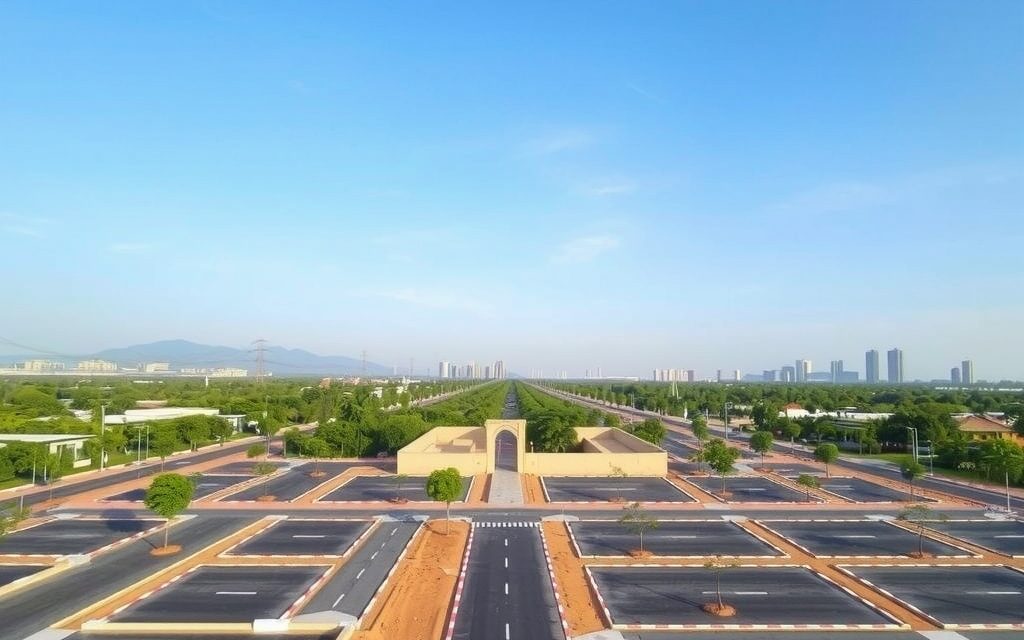
Nanakramguda's plots are rare resale lots beside the Financial District and the ORR interchange. How auctions shape prices, indicative per sq yd bands, zoning and the title checks that matter.
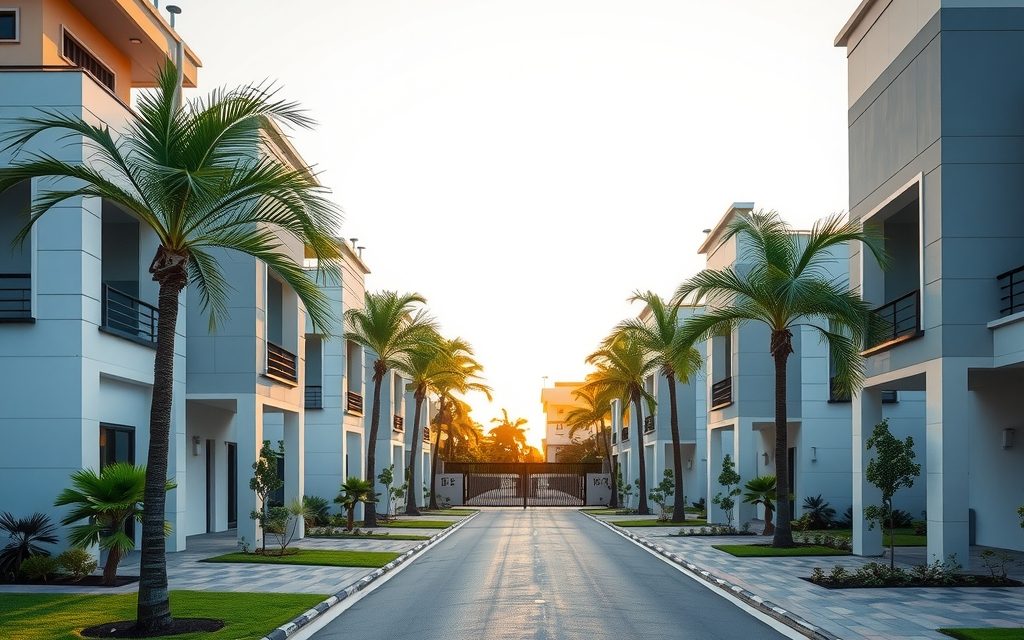
Puppalaguda's villas sit minutes from the Financial District on scarce, rocky land between Manikonda and Narsingi. See October 2026 price ranges, how to value the land underneath, and the rock, lake and approval checks that matter.
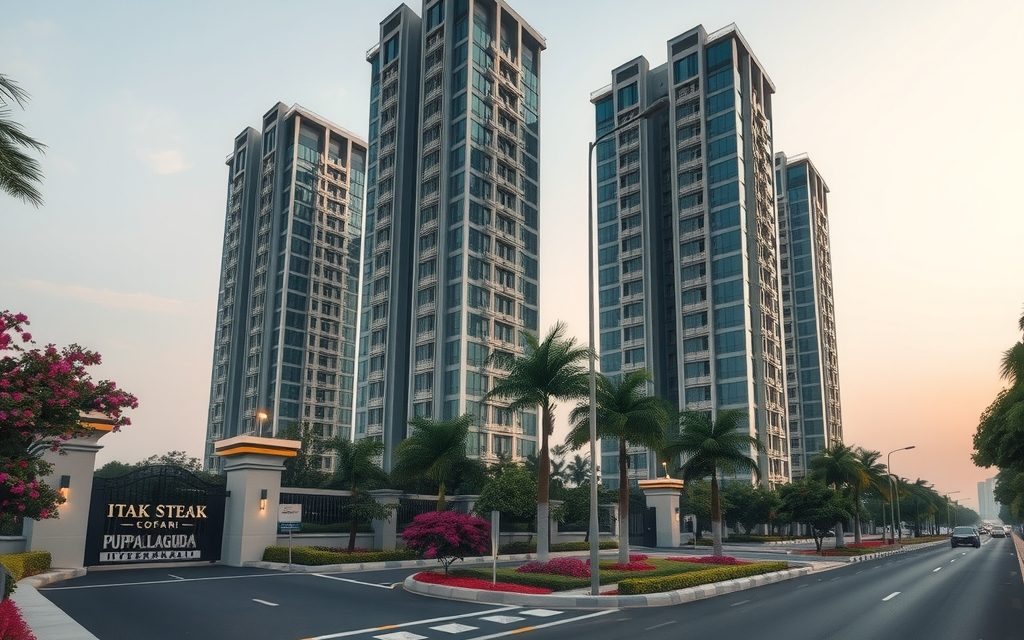
Compact premium towers on the slopes between Manikonda, Narsingi and the Financial District. Indicative per-sq-ft bands, BHK tickets and the rock, lake buffer and approval checks this terrain demands.

What NRIs and OCIs can and cannot buy under FEMA, how to fund and register a purchase from abroad, TDS and repatriation basics, and where the opportunities are across Hyderabad and the Telangana districts.

Which Hyderabad micro-markets suit NRIs, what each budget buys, new versus resale, RERA and OC checks, GST, TDS for resident and NRI sellers, rental yields, management and repatriation of sale proceeds.