Open Plots in Gopanpally, Hyderabad
Gopanpally is the last plotted pocket within ten minutes of Gachibowli and the Financial District. Indicative HMDA and villa-plot rates, approval history, legal checks and registration costs.
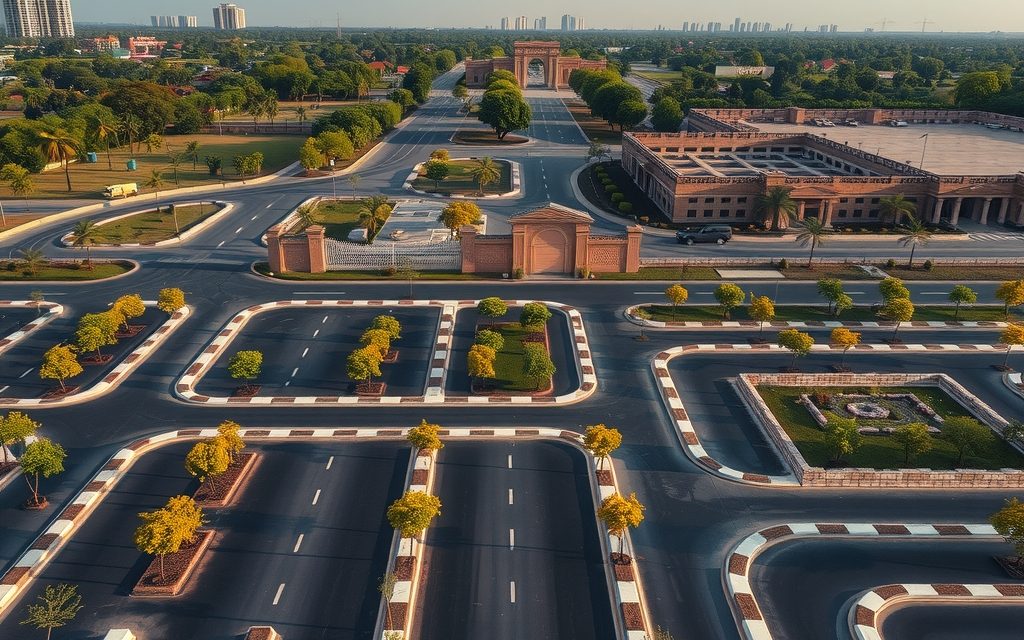
- 10–15 minutes to Wipro Circle and the Financial District; Nanakramguda and Tellapur ORR interchanges on either side
- Mostly HMDA and HUDA-era villa-plot layouts; GP layouts with LRS in the old village and thanda core
- Villa plots in gated communities indicatively ₹75,000 – ₹1.25 lakh per sq yd (Oct 2026)
- Typical plot sizes 200–400 sq yd; 267 and 300 sq yd most common
- University of Hyderabad campus forms the green northern boundary; Serilingampally mandal, Rangareddy district
| What | Indicative range | Note |
|---|---|---|
| Old village or thanda-side GP layout, LRS completed, 25–30 ft road | ₹55,000 – ₹80,000 per sq yd | indicative, Oct 2026 |
| HMDA layout, released, 30–33 ft road | ₹70,000 – ₹95,000 per sq yd | indicative, Oct 2026 |
| HMDA layout, 40 ft+ road, Gowlidoddi / Financial District side | ₹85,000 – ₹1,15,000 per sq yd | indicative, Oct 2026 |
| Villa plot inside a gated community | ₹75,000 – ₹1,25,000 per sq yd | indicative, Oct 2026 |
| Main-road frontage, 60 ft+ road | ₹1,20,000 – ₹1,80,000 per sq yd | indicative, Oct 2026 |
Ranges reflect recent transactions and advisor observation as of 2026-10. Always verify against the sub-registrar market value and the specific parcel.
Open plots in Gopanpally are the closest thing the western IT corridor still offers to buildable land within a ten-minute drive of Gachibowli. The village sits in Serilingampally mandal of Rangareddy district, tucked behind the University of Hyderabad campus and the Wipro junction, on the road that runs from the Financial District toward Nallagandla and Tellapur. Fifteen years ago it was a cluster of farms, a thanda settlement and a few gram panchayat layouts. Today it is a belt of HMDA villa-plot layouts, gated villa communities and new high-rises, and the plots that remain are priced against Gachibowli, not against the outskirts.
This guide is for buyers who want a plot here to build a family home, to hold for the long term, or to compare against a ready villa. It covers where the plots actually are, how approvals work in a pocket that straddles municipal and HMDA history, indicative per-square-yard bands as of October 2026, the legal checks we insist on, registration costs, and an honest view of who Gopanpally suits and who should look a little further west.
Why Gopanpally for open plots
The case for Gopanpally starts with a map. Draw a circle of five kilometres around Wipro Circle and you capture the Financial District, Nanakramguda, most of Gachibowli and the southern half of Gopanpally. Very little of that circle is open land. The Financial District and Nanakramguda are built out with campuses and towers; Gachibowli is a dense mix of apartments, the stadium complex and institutional land. Gopanpally is the one pocket in that circle where private plotted layouts still exist in meaningful numbers, which is why villa-plot buyers who work in the Financial District keep landing here.
The second reason is that Gopanpally is quieter than its neighbours. The University of Hyderabad's large, green campus forms a long northern boundary, and that boundary is not going to become a row of towers. Buyers who want an independent house with a garden, without the noise and traffic of the Gachibowli main roads, find that combination here at a price that is still a step below Kokapet and the Financial District edge.
The third reason is that the layouts are relatively recent. Much of the plotted supply in Gopanpally came through HMDA-approved villa-plot layouts in the last decade, with 30 to 40 foot internal roads, underground drainage and compound walls. That makes the average Gopanpally plot easier to verify and easier to finance than plots in an old village core, where layouts may date back to the 1980s and carry patchy paperwork.
Connectivity and growth drivers around Gopanpally
The Gachibowli and Financial District commute
From most Gopanpally layouts the drive to Wipro Circle is 10 to 15 minutes outside peak hours, and the DLF Cybercity and Gachibowli stadium area is a similar distance. The main spine is the Gachibowli–Gopanpally–Nallagandla road, which was widened and given flyovers at the busier junctions over the last few years. The Gopanpally junction itself has become a traffic node as Tellapur and Kollur traffic heads into the city through it, and anyone buying a plot right on the junction should visit at 9 am and 6 pm before committing.
ORR access in two directions
Gopanpally has the Outer Ring Road on two sides. The Nanakramguda interchange is a short drive south through Gowlidoddi, and the Tellapur interchange is reachable to the west via Nallagandla. From the ORR, Rajiv Gandhi International Airport at Shamshabad is typically 35 to 45 minutes away outside peak traffic, and the Patancheru and Kollur exits open the route to the industrial belt and the western townships.
Employment, schools and hospitals
The demand base is the Financial District and Nanakramguda office cluster, which houses global capability centres, bank technology arms and IT services campuses, together with Gachibowli's older IT parks. Several international and CBSE schools sit along the Gachibowli–Nallagandla road and in neighbouring Khajaguda and Tellapur, and multi-speciality hospitals are within 15 minutes in Gachibowli and Nanakramguda. For a family building a home, this is a fully serviced location, not a bet on future social infrastructure.
Metro and transit plans
Metro expansion proposals for the western corridor have been discussed for years, including links toward the Financial District and Kokapet. None currently serves Gopanpally directly, and we do not price any plot on a metro alignment that is not under construction. The nearest rail access is the Lingampally MMTS station, roughly 20 minutes north.
Gopanpally's plot pockets, block by block
Gopanpally is small on the map, but plot prices inside it can differ by 40 percent or more depending on which side of the village you are on. These are the pockets we brief clients on.
- Gowlidoddi and the Financial District side. The southern edge, closest to Nanakramguda and Wipro Circle, carries the highest land values. Plotted supply here is thin and mostly resale; when a plot does come up on a 40-foot road, it is priced close to the Financial District fringe. Our page on open plots in Nanakramguda explains how scarce plots are just across that edge.
- The HMDA villa-plot belt in the centre. The heart of Gopanpally's plotted market: HMDA layouts of 50 to 200 plots, many now partly built with independent homes. Resale plots here are the most liquid in the area, and the comparables are easy to establish.
- The Tellapur road side. Toward the west, Gopanpally merges into the Nallagandla and Tellapur belt. Prices step down gently, layouts are newer, and some are still filling up. See our guide on open plots in Nallagandla for the adjoining market.
- The thanda and old village core. The original settlement has older gram panchayat layouts and small plots on narrow roads. These are the cheapest plots in Gopanpally, and the most variable in legal quality. Some are regularised and perfectly sound; others have never been regularised and carry real risk.
- The university boundary edge. Plots overlooking or near the University of Hyderabad campus have a green outlook that buyers value. They also sit close to land whose use has been contested, which we discuss further below.
Approvals explained: HMDA, GHMC, gram panchayat and LRS in Gopanpally
Gopanpally sits inside the Hyderabad Metropolitan Development Authority's planning area, and much of it is within GHMC limits through the old Serilingampally municipality, which merged into the Greater Hyderabad Municipal Corporation in 2007. That history matters, because the approval on a Gopanpally plot depends on when the layout was created and who governed the land at the time. DTCP does not approve layouts here; DTCP is the approving authority outside HMDA's area in the rest of Telangana.
HMDA and HUDA-era layouts
Most of the villa-plot layouts in Gopanpally were approved by HMDA, or by HUDA before HMDA was created in 2008. An approved layout has a Layout Permit (LP) number, an approved layout plan showing every plot, road and open space, and a record of mortgaged plots that HMDA held back until the developer completed infrastructure. A plot in such a layout, with its LP number verified and its release confirmed, is the cleanest kind of plot you can buy in Gopanpally. Banks lend against these plots without fuss.
GHMC jurisdiction for building permission
Where the survey number falls within GHMC limits, your building permission after purchase comes from GHMC, usually through the state's online building permission system. That is a practical advantage: GHMC areas have established processes for permission, water and sewerage connections. For survey numbers outside GHMC, the permitting body is different. We confirm which body governs your survey number before you buy, because it affects timelines and fees.
Gram panchayat layouts and LRS
Plots created before urbanisation, approved only by the gram panchayat, do not carry HMDA approval. The Telangana Layout Regularisation Scheme, opened in 2020 and reopened with a fee concession in 2025, allowed owners of such plots to regularise them. A plot with completed LRS proceedings is a reasonable purchase subject to other checks; a plot with only an LRS application receipt is not yet regularised, and you should price that uncertainty in or walk away.
TS RERA for new layouts
Any new plotted layout above 500 square metres or with more than eight plots must be registered with TS RERA before it is marketed. If you are buying from a developer in a new or ongoing Gopanpally layout, take the registration number and check its validity and project details on the TS RERA portal. Resale plots in completed older layouts do not need fresh RERA registration, but the original layout approval still has to be verified.
Gopanpally plot price per sq yd: indicative bands, October 2026
The bands below are indicative, based on recent transactions and advisor observation in Gopanpally as of October 2026. They are not quotes and not a valuation of any specific plot. Facing, corner status, shape, exact position relative to the Gopanpally junction and the Financial District, and the seller's urgency can each move a plot outside these ranges. The villa-plot band is consistent with what we see inside gated communities covered on our villas in Gopanpally page.
| Plot type and road | Indicative range (per sq yd) | What to watch |
|---|---|---|
| Old village or thanda-side GP layout, LRS completed, 25–30 ft road | ₹55,000 – ₹80,000 | LRS proceedings, actual road width on the ground |
| HMDA layout, released, 30–33 ft road | ₹70,000 – ₹95,000 | Most common resale type; easy comparables |
| HMDA layout, 40 ft+ road, Gowlidoddi or Financial District side | ₹85,000 – ₹1,15,000 | Thin supply; corners priced higher |
| Villa plot inside a gated community | ₹75,000 – ₹1,25,000 | Design guidelines, maintenance charges, clubhouse |
| Main-road frontage, 60 ft+ road | ₹1,20,000 – ₹1,80,000 | Commercial potential; zoning decides value |
On these numbers, a 267 square yard plot in a released HMDA layout on a 30-foot road costs roughly ₹1.9 crore to ₹2.55 crore, and a 400 square yard villa plot in a gated community runs from about ₹3 crore to ₹5 crore. Compare that with a finished gated villa in the same belt at ₹5.5 crore and above for the larger formats, and the logic of buying land and building becomes clear for families who are willing to manage construction.
What pushes a Gopanpally plot up or down
- Distance from the Financial District. Every few hundred metres closer to Gowlidoddi and Wipro Circle adds to the price.
- Road width and continuity. A 40-foot road that actually connects to the main spine is worth more than a 40-foot road that dead-ends at a boundary wall.
- Released versus mortgaged status. An unreleased plot trades at a discount, and banks may not fund it until release.
- Neighbourhood build-out. In a layout that is already 60 percent built, plots sell faster because buyers can see the finished street.
- Facing and shape. East and north facing, rectangular plots command a premium among Hyderabad buyers.
Plot sizes and typical layout features
Gopanpally plot sizes reflect its villa-plot character. In the HMDA layouts, 200 to 400 square yards is the norm, with 267 square yards (a common 40 by 60 foot plot) and 300 square yards especially frequent. Gated villa-plot communities tend toward 300 to 500 square yards. Older GP layouts in the village core have smaller plots of 120 to 200 square yards, often on 20 to 25 foot lanes.
A good Gopanpally layout today typically offers cement-concrete or blacktop internal roads of 30 to 40 feet, underground drainage connected to a trunk line, street lighting, a water supply connection or an overhead tank, a perimeter wall with gated entry, and landscaped open spaces. Gated communities add a clubhouse, pool, children's play areas and security. Because many layouts are partly built, you can usually see what the infrastructure is like after years of use, which is more useful than any brochure.
What you can build on a Gopanpally plot
Most buyers here are building an independent family home, and the permissible construction is a function of plot size, road width, zoning and the governing body's building rules. As a rough guide, a 267 to 300 square yard plot on a 30-foot road commonly supports a ground-plus-two or stilt-plus-three independent house, giving 4,000 to 5,500 square feet of built-up area once setbacks are applied. Larger plots on wider roads can go further. Gated communities often add their own design guidelines on height, elevation and boundary treatment, which sit on top of the statutory rules.
Construction cost for a good-quality independent house in this belt typically runs ₹2,800 to ₹4,200 per square foot depending on specification, before interiors. A family that buys a 300 square yard plot at ₹85,000 per square yard and builds 5,000 square feet at ₹3,500 per square foot ends up around ₹4.3 crore all-in, before registration and interiors. That is often 20 to 30 percent below the price of a comparable finished villa in a gated project nearby, in exchange for 18 to 24 months of construction management.
Legal checklist for a Gopanpally plot
Gopanpally's legal profile is better than many older belts because so much of its supply is in recent HMDA layouts. That does not remove the need for full scrutiny. This is the checklist we work through before any client pays an advance.
- LP number and approved layout. Obtain the LP number and a copy of the approved layout plan. Match plot number, dimensions, road widths and open spaces on paper to what you see on site. HMDA approvals can be cross-checked through HMDA's website or office.
- Release letter. Confirm the plot is not among the mortgaged plots or, if it was, that HMDA has issued a release.
- Encumbrance certificate for 30 years or more. Check for prior sales, mortgages, attachments or court orders against the plot and parent survey number.
- Complete link documents. Every sale deed from the original pattadar through the developer to the present seller, without gaps, with names and extents that match.
- Parent land conversion. Confirm the original agricultural land was converted under NALA before it was plotted, and that the survey number is not assigned land, ceiling surplus land or on the Section 22-A prohibited list.
- Master plan zoning. Check the land use designated for the survey number. Residential, multiple-use, institutional and recreational zones permit very different construction.
- Lake and nala buffers. Small tanks and storm-water nalas drain this belt toward the larger lakes to the south and west. Get the plot position checked against FTL and buffer maps; HYDRAA's enforcement since 2024 has made this check non-negotiable across the city.
- Government and institutional boundaries. For plots near the university campus or other public land, confirm that the survey number is private patta land with an unbroken private title, not part of a government or institutional parcel.
- Litigation search. Search civil court records for suits on the survey number, including partition suits from the original landowning families.
- Taxes and association dues. Vacant land tax or property tax receipts, and a no-dues letter from the layout or community association.
In Gopanpally, the cheapest plot on the street is usually cheap for a reason we can find in the paperwork within a week. Spend that week before you pay the advance, not after.
The university land question and why it matters to plot buyers
In 2025, the proposed development of roughly 400 acres of state land in Kancha Gachibowli, adjoining the University of Hyderabad, became a major public controversy, with student protests and the Supreme Court stepping in on tree clearance. We mention it not because it affects private plots directly, but because it shows how sensitive land use is along the university edge. Two practical lessons follow for anyone buying a plot near that boundary.
First, do not assume the green view is permanent or that it will become a development zone; its future depends on government decisions and courts, not on what a seller tells you. Second, make sure your own survey number is unambiguously private, with a title chain that starts with a private pattadar and not with a government allotment. We check this from the revenue record and the link documents, and where it is unclear we recommend walking away.
Registration and charges for a plot in Gopanpally
A Gopanpally plot is registered at the sub-registrar office with jurisdiction over the survey number. For most of this belt that is an SRO in the Serilingampally area, and we confirm the exact office from the survey number before booking a slot. Slot booking and challan payment are done through the Telangana registration portal.
Charges are calculated on the higher of the agreed sale price and the government market value. As of October 2026 the approximate rates are below; they change from time to time, so we verify current rates at the SRO on the day.
| Item | Approximate rate | On a ₹2.4 crore plot |
|---|---|---|
| Stamp duty | ~5.5% | ~₹13.2 lakh |
| Transfer duty | ~1.5% | ~₹3.6 lakh |
| Registration fee | ~0.5% | ~₹1.2 lakh |
| Total government charges | ~7.5% | ~₹18 lakh |
| TDS deducted by buyer (resident seller, above ₹50 lakh) | 1% of consideration | ~₹2.4 lakh, deposited via Form 26QB |
The TDS is not an extra cost; it is deducted from the amount you pay the seller and deposited in the seller's name. If the seller is an NRI, TDS under Section 195 is calculated on capital-gains rules and is much higher, and you will need a TAN; take advice from a chartered accountant before the agreement. After registration, apply for mutation in the local body's property tax records so that the plot is assessed in your name.
Investment outlook for Gopanpally plots
What supports prices
- Employment proximity. The Financial District and Nanakramguda remain the city's densest cluster of high-income jobs, and Gopanpally is one of the few plotted pockets within a short commute.
- Finite supply. The university campus to the north and built-out neighbours to the south and east limit how much more plotted land can come to market.
- Owner-occupier depth. A large share of buyers build and live, which supports prices in slow markets better than a purely speculative belt.
- Completed infrastructure. Roads, drainage and utilities are already in place in most layouts, removing the delivery risk that weighs on newer corridors.
What to weigh against that
- Entry prices are already high. Gopanpally has re-rated a long way in the last decade. Future appreciation is more likely to track the broader western corridor than to repeat the early jumps.
- Traffic at the junction. As Tellapur and Kollur fill up, through-traffic on the Gopanpally road will grow.
- Vacant land earns nothing. Unless you build, the plot yields no rent, and holding costs include tax and maintenance.
- Cyclical demand. Premium plot demand follows IT hiring and bonus cycles, and resale can take months in a soft year.
A sensible holding period for an investment plot here is five to eight years. For an end user, the relevant comparison is not appreciation but the cost of a finished villa versus land plus construction, and on that measure Gopanpally plots usually come out ahead.
Who should buy a plot in Gopanpally
Gopanpally suits Financial District and Gachibowli professionals who want to build an independent home without a long commute; families who prefer a quieter, greener pocket than Gachibowli; NRIs who want a residential asset close to the city's main employment hub; and buyers who have priced Kokapet and found it a stretch.
Gopanpally is probably not right for buyers with a total budget below roughly ₹1.5 crore, because the plots in that range are mostly small, in old GP layouts, or on narrow lanes. It is also not the place for a quick flip. If your priority is a lower entry price and a longer runway, compare Gopanpally with open plots in Tellapur, a few kilometres west, where per-yard rates are meaningfully lower. If you would rather not build at all, our page on apartments in Gopanpally covers the high-rise options in the same belt.
NRI note for Gopanpally plot buyers
NRIs and OCI cardholders can buy residential plots in Gopanpally. FEMA bars them from acquiring agricultural land, plantation property and farmhouses, not non-agricultural residential plots. Payment has to come through Indian banking channels, usually from NRE, NRO or FCNR accounts or by inward remittance; cash and payments abroad are not permitted.
Most overseas buyers appoint a trusted person in Hyderabad through a specific Power of Attorney, executed before the Indian consulate abroad and adjudicated in Telangana, to sign at the SRO. Before paying, confirm that the plot is genuinely non-agricultural in the revenue and municipal records. A survey number still recorded as agricultural, even inside an otherwise urban belt, is not something an NRI can buy. Our guide on NRI investment in Telangana sets out the framework, including repatriation limits on sale proceeds. Tax on a future sale should be discussed with a chartered accountant.
How NRR Estates helps you buy a plot in Gopanpally
NRR Estates is an advisory, not a listing portal, and our fee is disclosed before you commit to anything. For a Gopanpally plot, our work typically includes:
- Pocket selection. We match your budget and plans to the right part of Gopanpally, and screen out plots with obvious approval or title gaps before you visit.
- On-site checks. We walk the plot with you, measure road widths, compare boundaries with the approved layout, and look at drainage and access in the rain if timing allows.
- Document scrutiny. We coordinate independent legal verification of the title chain, EC, LP and release status, zoning, buffers and litigation.
- Negotiation. We bring recent comparables from the same layout or pocket so the price reflects the plot, not the seller's hopes.
- Registration and mutation. We manage the agreement, TDS, slot booking, registration day and the property tax mutation afterwards.
For overseas clients we add video walkthroughs, Power of Attorney coordination and a single paperwork timeline so you need not fly in more than once.
Open plots in Gopanpally: frequently asked questions
What is the price of open plots in Gopanpally per square yard?
As of October 2026, released HMDA plots on 30 to 33 foot roads in Gopanpally typically trade between ₹70,000 and ₹95,000 per square yard, based on recent transactions and advisor observation. Villa plots inside gated communities run roughly ₹75,000 to ₹1.25 lakh, and older regularised gram panchayat plots in the village core sit lower at about ₹55,000 to ₹80,000. Main-road frontage with commercial potential can exceed ₹1.2 lakh. These are indicative ranges, not quotes, and every plot is priced on its own road width, facing, approval and position.
Are Gopanpally plots HMDA approved or DTCP approved?
Gopanpally is inside HMDA's planning area, so approved layouts here carry HMDA approval, or HUDA approval if they predate 2008, with a Layout Permit number. DTCP approves layouts outside HMDA limits in other parts of Telangana and has no role here. Older plots in the village core may be gram panchayat layouts regularised under LRS. If a seller describes a Gopanpally plot as DTCP approved, ask for the actual LP number and verify it, because the description itself suggests confusion or a problem.
Is Gopanpally under GHMC?
Much of Gopanpally falls within GHMC limits through the former Serilingampally municipality, which was merged into the Greater Hyderabad Municipal Corporation in 2007. That means building permission, property tax and utility connections for many survey numbers are handled by GHMC. Some survey numbers on the fringes may be governed differently, so we confirm the jurisdiction from the survey number before you buy. It affects permission timelines, fees and which office records your mutation after registration.
How big are plots in Gopanpally?
In the HMDA villa-plot layouts, plots of 200 to 400 square yards are typical, with 267 square yards, roughly a 40 by 60 foot plot, and 300 square yards being the most common sizes. Gated villa-plot communities tend to offer 300 to 500 square yards. In the older gram panchayat layouts near the village and thanda core, plots are smaller, often 120 to 200 square yards on 20 to 25 foot lanes. Larger plots near the Financial District edge come up only occasionally and sell quickly.
Does the University of Hyderabad land dispute affect plots in Gopanpally?
Not directly. The 2025 controversy concerned roughly 400 acres of state land at Kancha Gachibowli next to the university, and private plots in Gopanpally layouts are a separate matter. It does underline two points for buyers near the campus edge. Do not pay a premium on the assumption that a green view will stay green or will turn into development. And make sure your survey number has a clean private title chain from an original private pattadar, not a government or institutional allotment.
What are the registration charges for a Gopanpally plot?
Approximately 7.5 per cent of the higher of the sale price and the government market value, made up of about 5.5 per cent stamp duty, 1.5 percent transfer duty and 0.5 percent registration fee, as of October 2026. On a ₹2.4 crore plot that is roughly ₹14.4 lakh. Rates change, so we verify them at the jurisdictional sub-registrar office on the day. Separately, the buyer deducts 1 percent TDS from the payment to a resident seller when the price exceeds ₹50 lakh and deposits it through Form 26QB.
Can NRIs buy open plots in Gopanpally?
Yes. NRIs and OCI cardholders can buy residential, non-agricultural plots in Gopanpally. FEMA restricts them only from agricultural land, plantation property and farmhouses. Payment must come through Indian banking channels such as NRE, NRO or FCNR accounts or inward remittance. Most overseas buyers sign through a specific Power of Attorney executed at an Indian consulate and adjudicated in Telangana. Confirm that the plot is recorded as non-agricultural before paying, and consult a chartered accountant on tax and repatriation.
Is it better to buy a plot or a ready villa in Gopanpally?
It depends on how much effort you want to put in. A 300 square yard plot plus a 5,000 square foot good-quality house typically comes to around ₹4 crore to ₹4.5 crore all-in at current indicative rates, often 20 to 30 percent below a comparable finished gated villa nearby. In exchange you manage 18 to 24 months of design, permission and construction. Families who want full design control and can supervise a build usually prefer the plot; those who want to move in quickly choose a villa.
Related guides
Gopanpally offers new gated villas between Gachibowli, Nallagandla and Tellapur. Here are indicative prices by villa type, how the ORR and school routes work, and the land-record checks newer projects need.
A fast-rising high-rise cluster behind the University of Hyderabad, minutes from Gachibowli. Indicative per-sq-ft bands, BHK tickets, and how to read RERA completion dates, OC timing and developer risk.
Nallagandla's plots are rare resale lots in older HUDA and gram panchayat layouts between Lingampally and Tellapur. Indicative rates, old-document checks, lake buffers and costs.
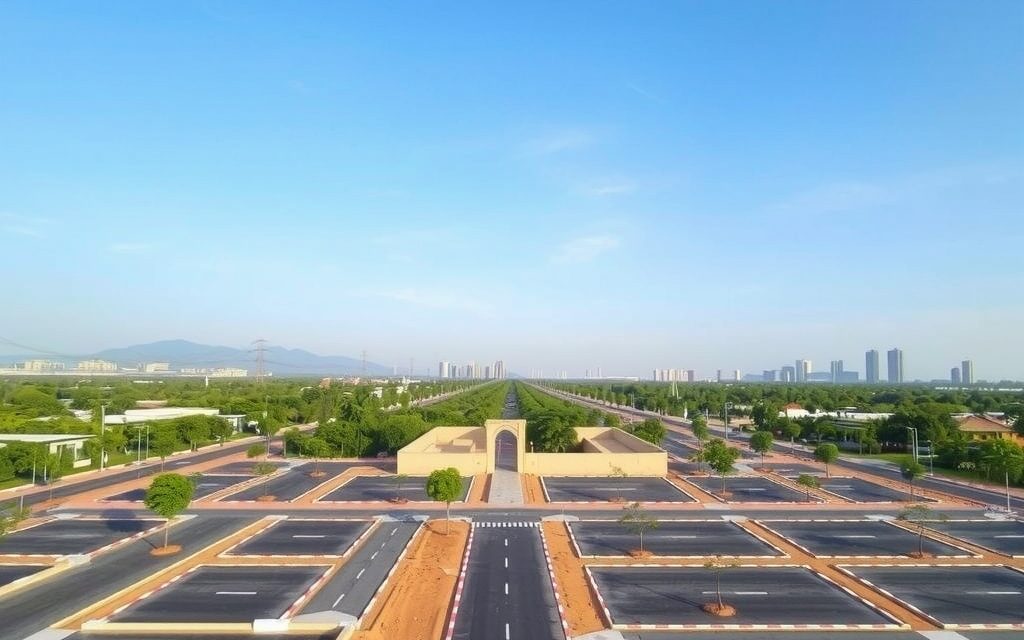
Nanakramguda's plots are rare resale lots beside the Financial District and the ORR interchange. How auctions shape prices, indicative per sq yd bands, zoning and the title checks that matter.
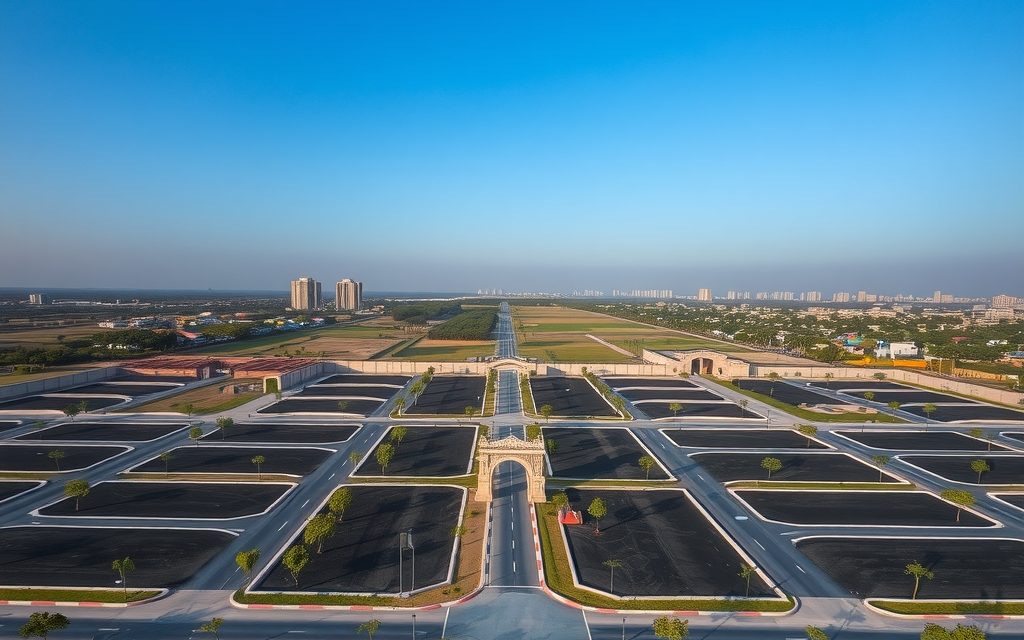
Tellapur blends ORR access, finished social infrastructure and a wide choice of HMDA layouts. Indicative plot rates by pocket and road width, legal checks, and whether a plot beats a villa or flat.
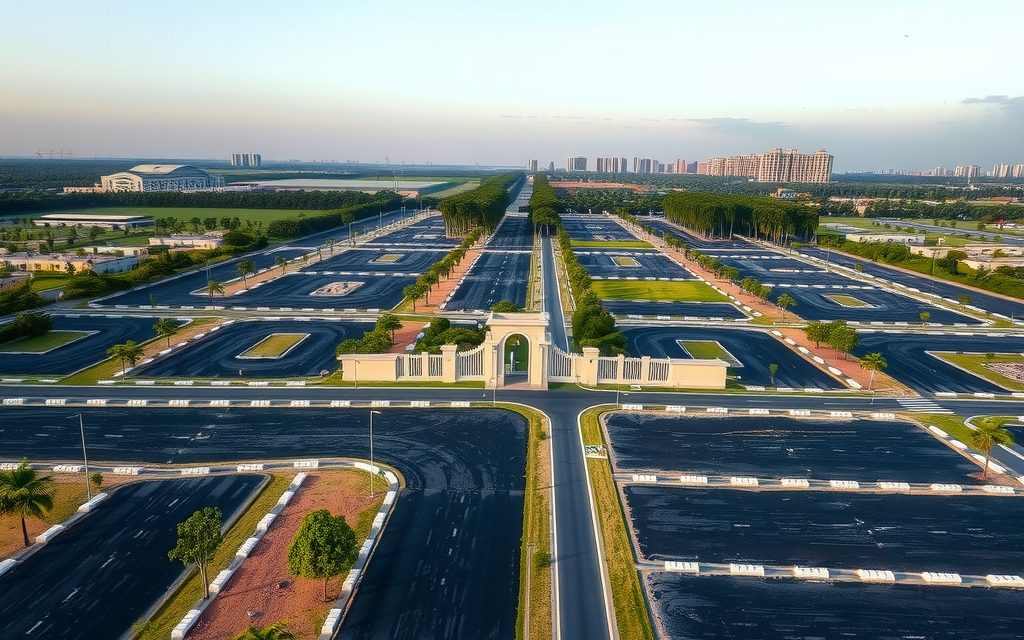
Kokapet's plots sit beside the Neopolis towers and the ORR, minutes from the Financial District. Indicative rates, HMDA versus GP approvals, legal checks and registration costs for buyers and NRIs.

What NRIs and OCIs can and cannot buy under FEMA, how to fund and register a purchase from abroad, TDS and repatriation basics, and where the opportunities are across Hyderabad and the Telangana districts.
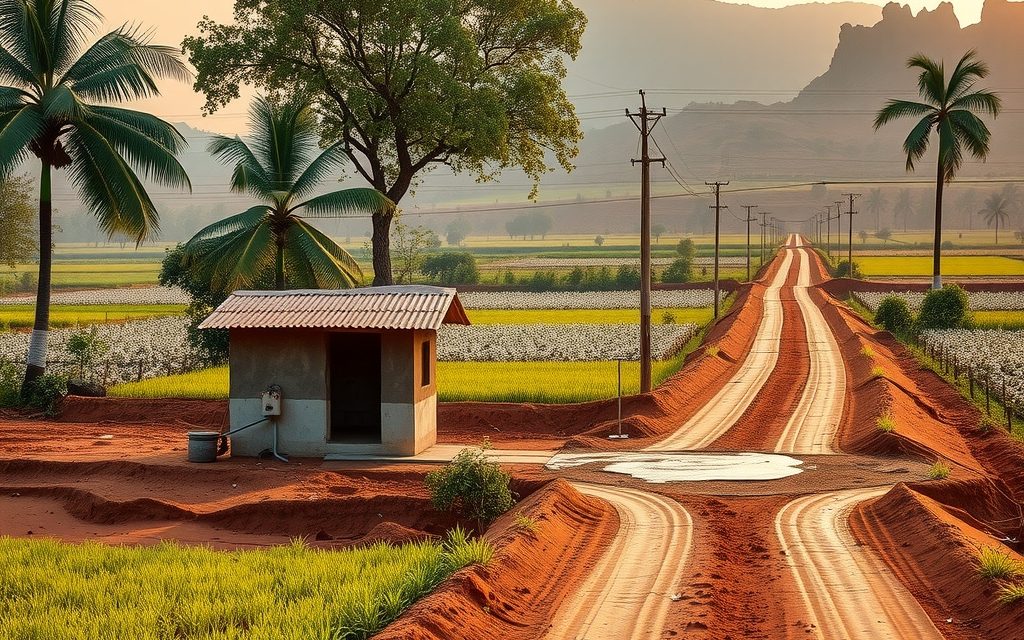
Almost no farm land survives in Gopanpally, 4–6 km from Gachibowli. What remains is development land; for farms and farm villas, Gandipet, Mokila and Moinabad are the realistic options.