Open Plots in Khajaguda, Hyderabad
Khajaguda's plots straddle a granite ridge between the Financial District and Manikonda. Indicative rates by side of the ridge, lake FTL and hillock checks, approvals and registration costs explained.
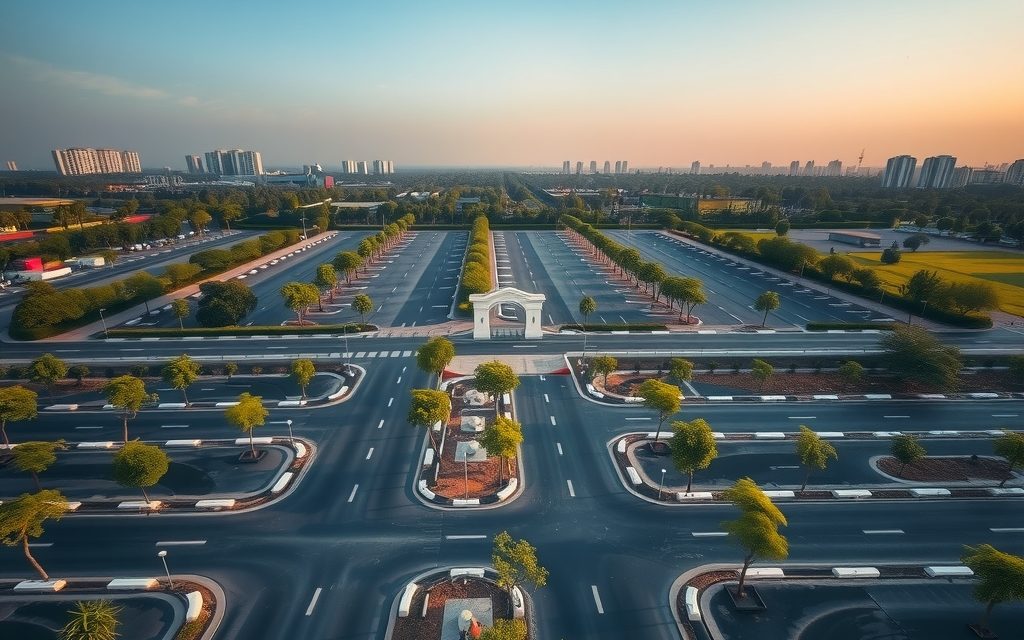
- 5–15 minutes to Wipro Circle and Nanakramguda; Nanakramguda and Narsingi ORR interchanges nearby
- Two markets: Nanakramguda side trades well above the Manikonda side for similar plots
- Inside HMDA limits: HMDA layouts or LRS-regularised older layouts, not DTCP
- Khajaguda lake FTL and buffer, nalas and protected hillocks decide usable area
- Typical plots 150–400 sq yd; jurisdictional SRO confirmed by survey number
| What | Indicative range | Note |
|---|---|---|
| Manikonda side, LRS-regularised older layout, 25–30 ft road | ₹65,000 – ₹95,000 per sq yd | indicative, Oct 2026 |
| Manikonda side, released HMDA plot, 30–40 ft road | ₹85,000 – ₹1,15,000 per sq yd | indicative, Oct 2026 |
| Hillside plot with gradient or rock, either side | ₹60,000 – ₹95,000 per sq yd | indicative, Oct 2026 |
| Nanakramguda side, HMDA or regularised, 30–40 ft road | ₹95,000 – ₹1,40,000 per sq yd | indicative, Oct 2026 |
| Nanakramguda side, 40 ft+ road or developer-grade site | ₹1,25,000 – ₹1,70,000+ per sq yd | indicative, Oct 2026 |
Ranges reflect recent transactions and advisor observation as of 2026-10. Always verify against the sub-registrar market value and the specific parcel.
Open plots in Khajaguda come in two very different flavours, and the side of the ridge you buy on matters as much as the plot itself. Khajaguda is the rocky, hilly locality that rises between Nanakramguda and the Financial District on one side and Manikonda and Lanco Hills on the other, in Rangareddy district on the western edge of Hyderabad. A granite ridge runs through it, the Khajaguda lake sits below it, and the roads that connect Gachibowli to Manikonda squeeze around both. Plots on the Nanakramguda side trade like Financial District land; plots on the Manikonda side trade like a premium residential suburb. The gap can be 30 percent or more for plots a kilometre apart.
This guide sets out how we read the Khajaguda plot market for clients in October 2026: the geography of the ridge and the lake, the difference between the two sides, approvals that are genuine here, indicative price bands per square yard, the legal checks that matter most given the lake's Full Tank Level and the protected hillocks, registration costs, and who this market suits.
Why open plots in Khajaguda appeal to buyers
Khajaguda's pull is simple. It is one of the few places where you can still buy independent-house land within walking or short driving distance of the Financial District's office towers. A family that builds here can commute to Wipro Circle, Nanakramguda or the Gachibowli stadium side in 5 to 15 minutes, use schools and hospitals already operating along the Khajaguda and Nanakramguda roads, and still live on a quieter residential street rather than in a 40-storey tower.
The second draw is the landscape. Khajaguda's boulders and hillocks give it a character the flat suburbs lack. Some plots have open views across the lake or toward the Financial District skyline. That visual quality supports premium pricing, but it also comes with constraints that a buyer must understand: protected rock formations, steep plots, and a lake whose FTL and buffer zones have been tightly enforced in recent years.
Supply is the third factor. As in neighbouring Puppalaguda, high-rise developers absorbed much of the large land, so plotted inventory today consists mainly of older layouts, small newer ventures, and residual pieces. Most plots fall between 150 and 400 square yards.
Nanakramguda side vs Manikonda side: two markets on one ridge
Buyers often ask for "a plot in Khajaguda" without realising the locality behaves like two separate markets. Here is how we explain the split.
| Factor | Nanakramguda / Financial District side | Manikonda / Lanco Hills side |
|---|---|---|
| Commute to Wipro Circle | Roughly 5–10 minutes | Roughly 10–20 minutes, more at peak |
| Neighbourhood character | Corporate, newer towers, international schools nearby | Established residential, mixed independent houses and towers |
| Typical plot size | 200–400 sq yd | 150–300 sq yd |
| Buyer profile | Senior IT and finance professionals, builders | Families upgrading within Manikonda, rental-building owners |
| Price level | Higher; overlaps Financial District land | Lower; closer to Manikonda and Puppalaguda rates |
| Main diligence issue | Zoning and approval on high-value plots | LRS status, road widths, nala buffers in older layouts |
The Nanakramguda side
On the northern and western slopes facing Nanakramguda, Khajaguda merges into the Financial District's residential fringe. Plots here are fewer and larger, roads are generally better, and the buyer pool includes small developers looking for sites for boutique villas or low-rise apartments. Proximity to the Nanakramguda ORR exit and the corporate campuses is the selling point. If your priority is the shortest possible commute and resale to a high-income buyer, this is the side to focus on. Nearby high-rise options are covered on our page about apartments in Nanakramguda.
The Manikonda side
On the southern and eastern slopes, Khajaguda blends into Manikonda's grid of older colonies, Lanco Hills and the road toward Puppalaguda. Plots are smaller and the layouts older, with more former gram panchayat layouts regularised under LRS. Prices are meaningfully lower, which makes this side attractive to families who want an independent home without paying Financial District rates, and to owner-builders planning compact rental units. Our page on villas in Manikonda shows what built independent homes cost on this side.
The granite ridge: what it means for your plot
The Khajaguda ridge is part of the Deccan granite landscape that once covered most of western Hyderabad. Its boulders and hillocks have attracted climbers and walkers for decades, and some hillocks in the locality have been the subject of heritage-protection campaigns and court proceedings. For a plot buyer, three issues follow.
- Protected and restricted zones. Master plan land use around certain hillocks may be conservation, recreational or similar rather than residential. A plot that extends into such a zone may be partly unbuildable. We check land use for the exact survey number before any advance.
- Construction cost. Sheet rock makes shallow foundations cheap but cellars and level platforms expensive. Controlled rock breaking near occupied buildings is slow and restricted. Get a structural engineer's estimate before comparing a rocky plot with a level one.
- Access gradients. Some hillside plots sit well above or below the road. Steep driveways, retaining walls and stormwater management add cost and affect day-to-day usability.
None of these make a ridge plot a bad buy. A well-chosen hillside plot with a view can be the most desirable home site in the locality. They do mean the per-square-yard price should reflect the true cost of building, not just the size on paper.
Khajaguda lake: FTL, buffer and enforcement
The Khajaguda lake collects runoff from the surrounding ridge and has been surrounded by development on several sides. Like every notified water body in the Hyderabad region, it has a Full Tank Level boundary and a buffer zone in which construction is prohibited. Under the Telangana building rules, the buffer is typically around 30 metres from the FTL for lakes of 10 hectares and above and around 9 metres for smaller tanks, and the nalas feeding or draining the lake carry their own buffers. Confirm the exact figures for the lake and your survey number against official maps.
Enforcement has become much stricter since the formation of HYDRAA in 2024, which has carried out demolitions of structures inside FTL and buffer zones across the Hyderabad region. For a buyer, this means a lake-view plot must be checked carefully: a plot that sits fully outside the buffer can command a premium, while one that overlaps the buffer may lose a slice of usable area or be unbuildable. Lake boundaries have also been re-surveyed in places, so older layout plans may not reflect current maps. Our guide to lake FTL and buffer zones in Hyderabad explains the process in detail.
A lake view is worth paying for only after you have proof the plot sits outside the buffer. Ask for the FTL map overlay before you ask for the price.
Connectivity and growth drivers for Khajaguda plots
- Financial District and Nanakramguda offices. The densest cluster of high-paying jobs in Telangana sits immediately next door, and it continues to add global capability centres.
- ORR access. The Nanakramguda and Narsingi interchanges link Khajaguda to the airport, Kokapet and the northern ORR exits.
- Shaikpet flyover and the old-city link. Road improvements toward Tolichowki and Mehdipatnam have made the eastern side more connected to the core city.
- Gachibowli social infrastructure. Hospitals, international schools, malls and the stadium belt are within short driving distance.
- Metro proposals. Proposed Metro Phase 2 corridors through the Financial District could improve access in future. We treat them as proposals until work begins.
The constraint is road capacity. The Khajaguda junction and the roads around the lake carry heavy traffic at peak hours, and further widening is limited by the ridge, the lake and existing buildings. Plots on through-roads have commercial potential but also noise; plots on quiet internal streets are better for homes.
Approvals explained: HMDA, LRS, local body and RERA in Khajaguda
Khajaguda is inside HMDA's planning area, so DTCP approval does not apply. Genuine plots here fall into a few categories, and each comes with its own document trail.
HMDA layouts
HMDA-approved layouts carry a Layout Permit number, an approved plan and conditions on road and open-space handover. HMDA holds a share of plots as mortgage until the developer completes infrastructure, then issues a release. Released HMDA plots are the most bankable and easiest to resell.
Regularised older layouts
Particularly on the Manikonda side, many plots come from layouts that once had only gram panchayat permission. Telangana's LRS, opened in 2020 and offered again with a fee concession in 2025, allowed regularisation of such plots. Final LRS proceedings make a plot buildable subject to other rules; a pending application does not.
Which local body governs your plot
Khajaguda straddles administrative boundaries. Some survey numbers have been under the Greater Hyderabad Municipal Corporation's western zone, others under the Manikonda urban local body, and the state has been consolidating ORR-belt municipalities into the Greater Hyderabad framework. The governing body determines where you apply for building permission, which fees apply and which property-tax records you update after purchase. We confirm it for your survey number.
TS RERA for new plotted ventures
New plotted layouts above 500 square metres or with more than eight plots must be registered with TS RERA before sale. Check the registration number and validity on the TS RERA portal if you are buying from a developer.
Khajaguda plot prices per sq yd: indicative bands for October 2026
These ranges are indicative, based on recent transactions and advisor observation in Khajaguda as of October 2026. They are not quotes. Inventory is thin and plots differ sharply by side, slope, road and buffer position, so we build a fresh comparable set for every plot.
| Plot type | Indicative range (per sq yd) | Comment |
|---|---|---|
| Manikonda side, LRS-regularised older layout, 25–30 ft road | ₹65,000 – ₹95,000 | Most common category; verify LRS final order |
| Manikonda side, released HMDA plot, 30–40 ft road | ₹85,000 – ₹1,15,000 | Good liquidity |
| Hillside plot with gradient or rock, either side | ₹60,000 – ₹95,000 | Discount for site-preparation cost |
| Nanakramguda side, HMDA or regularised, 30–40 ft road | ₹95,000 – ₹1,40,000 | Commute premium |
| Nanakramguda side, 40 ft+ road or developer-grade site | ₹1,25,000 – ₹1,70,000+ | Builder demand; often larger plots |
In ticket terms, a 200 square yard regularised plot on the Manikonda side might come to roughly ₹1.3 crore to ₹1.9 crore, while a 300 square yard plot on the Nanakramguda side on a 40-foot road could run from about ₹3 crore to ₹4.5 crore. A lake-view plot verified to be fully outside the buffer can sit at the top of its band or above it.
Price signals specific to Khajaguda
- Side of the ridge. The single biggest factor, as explained above.
- Buffer clearance. Proven clearance from the lake and nala buffers adds value; uncertainty subtracts it.
- Level versus slope. A level plot at road grade can be worth 15 to 25 percent more than a steep one of the same size.
- Road width and frontage. Forty-foot and wider roads open up rental-building and commercial ground-floor potential.
- Approval quality. Released HMDA plots and final LRS orders trade well above plots with incomplete files.
Plot sizes and what owners build in Khajaguda
On the Manikonda side, 150 to 250 square yard plots dominate, and the usual build is a G+2 or G+3 family home or a small rental building with four to six units. On the Nanakramguda side, 250 to 400 square yard plots are common, and owners build larger independent homes or, where zoning and road width allow, boutique apartment blocks targeted at Financial District tenants.
Permissible floors, setbacks and coverage depend on plot size, road width, zoning and the building rules of the governing local body. Rock and slope may make a theoretically permissible configuration impractical. Ask an architect to test your design against the specific plot before you buy, especially if you plan a cellar.
What we look for on a Khajaguda site visit
A first visit to a Khajaguda plot should take longer than you expect. On flat land in the outer suburbs, a quick look at the boundary stones and the approach road is often enough to decide whether to proceed. Here, the ridge and the lake make the walk-through a real part of the due diligence. These are the things we check on the ground before any document is requested.
- Road level against plot level. We note whether the plot sits above, at or below the road, and by roughly how much. A plot two metres below road level on the lake side behaves very differently in the monsoon from one at grade on the ridge.
- Exposed rock inside the boundary. We mark any sheet rock or boulder clusters within the plot and photograph them. These tell the engineer what excavation is likely, and they flag any outcrop that may be part of a protected formation.
- Water paths. We trace where runoff enters and leaves the plot, look for culverts and nala channels along the boundary, and ask neighbours and watchmen how high water rises in heavy rain.
- Actual road width. We measure the road in front of the plot at more than one point. In older Khajaguda layouts, roads shown as 30 feet on the plan are sometimes narrower on the ground because of encroachment or compound walls, which affects building permission and resale.
- Neighbouring construction. Towers and cellars next door can affect light, privacy and drainage, and ongoing blasting nearby tells you something about how rock work is being handled locally.
- Distance and sightline to the lake. We note the approximate distance to the visible water edge and the bund, as a first reality check before the official FTL overlay.
A worked example shows why this matters. Two 250 square yard plots on the Manikonda side were offered to a client at similar asking prices. One sat at road grade on a 30-foot road with no visible rock. The other was half a storey below the road, with sheet rock across a third of the plot and a seasonal channel along one boundary. On paper they were the same size. In practice, the second needed retaining walls, rock breaking for any cellar and a careful buffer check on the channel. Our client paid a little more per square yard for the first plot and still came out ahead once construction cost was counted.
Legal checklist for Khajaguda plots
- Approval proof. HMDA Layout Permit and approved plan, or final LRS proceedings. Match plot number and dimensions on the ground.
- Release status. For HMDA plots, the release letter or confirmation that the plot is not mortgaged.
- Encumbrance certificate for 30 years. Mortgages, attachments, prior sales and court orders.
- Link documents. Full chain of title from the original landholder. Our guide to link documents and title chains in Telangana explains what a complete chain looks like.
- Parent land checks. Proper conversion from agricultural use; not assigned land, ceiling surplus or on the Section 22-A prohibited list.
- Master plan zoning. Residential, multiple-use, conservation or recreational land use, including any protected hillock.
- Lake FTL, buffer and nala positions. Overlay the plot on official maps; confirm usable area.
- Local body jurisdiction. Which body governs the survey number, and whether property tax records are in the seller's name.
- Survey and boundaries. A licensed surveyor's measurement where the sketch and ground differ or where plots were sub-divided.
- Litigation search. Civil court records for the survey number and adjoining land.
Registering a plot in Khajaguda: process and charges
Plot sale deeds are registered at the Sub-Registrar Office with jurisdiction over the survey number. Because Khajaguda straddles administrative boundaries, the jurisdictional SRO is confirmed from the survey number before we book a slot on the Telangana registration portal. Charges apply on the higher of sale value and the government market value.
| Charge | Approximate rate | On a ₹2 crore plot |
|---|---|---|
| Stamp duty | ~5.5% | ~₹11 lakh |
| Transfer duty | ~1.5% | ~₹3 lakh |
| Registration fee | ~0.5% | ~₹1 lakh |
| Total (approximate) | ~7.5% | ~₹15 lakh |
These are approximate rates as of October 2026; verify current rates at the SRO on the day. On purchases above ₹50 lakh from a resident seller, deduct 1 percent TDS under Section 194-IA and file Form 26QB. If the seller is an NRI, TDS under Section 195 applies at the capital-gains rate plus surcharge and cess, and the buyer needs a TAN; consult a chartered accountant. After registration, update the property-tax records with the local body.
Investment outlook for Khajaguda
Khajaguda is a mature, location-driven market. Its strength is proximity to the largest office cluster in the state, combined with a natural cap on new supply set by the ridge and the lake. Its weakness is that both of those features also bring restrictions and congestion.
On the Nanakramguda side, value is underpinned by builder demand and executive buyers; expect plots to track the Financial District's fortunes. On the Manikonda side, value is underpinned by family end users and rental-building owners, which tends to be steadier but slower. Across both, a five to eight year holding period is realistic for an investment plot.
Key risks include stricter buffer enforcement, possible changes to zoning around protected hillocks, traffic saturation at peak hours, and the general cyclicality of IT hiring. None of these are reasons to avoid Khajaguda, but each is a reason to buy carefully and to pay for usable, clean land rather than a headline size.
Who should buy, and the alternatives
Khajaguda suits Financial District professionals who want to build close to work, small developers seeking a boutique site on the Nanakramguda side, Manikonda families upgrading to their own plot, and NRIs who value a proven, central western-corridor location.
It is less suitable for buyers who want large plots on a modest budget, those who need a flat, easy-build site, or short-term investors. Compare open plots in Puppalaguda for similar compact plots a little further south. If you prefer a ready home, see villas in Khajaguda and apartments in Khajaguda.
NRI note for Khajaguda plot buyers
NRIs and OCI cardholders can buy residential, non-agricultural plots in Khajaguda. FEMA bars them from buying agricultural land, plantation property and farmhouses, so verify that the survey number is non-agricultural. Payments must come through banking channels from NRE, NRO or FCNR accounts or by inward remittance. A transaction-specific registered Power of Attorney, attested abroad and adjudicated in Telangana, lets a trusted representative complete registration. Given Khajaguda's lake and ridge issues, we send recorded video of the plot, the surrounding slope and the lake edge, along with the map overlay. Our guide to NRI investment in Telangana covers the broader rules, and a chartered accountant should advise on tax and future repatriation.
How NRR Estates helps with Khajaguda plots
We are advisors, not a listing portal, and our fee is disclosed upfront before any commitment. For Khajaguda we typically:
- Clarify which side of the ridge fits your budget, commute and plans, and shortlist accordingly.
- Locate off-portal resale plots through owner and local networks.
- Check zoning, protected-hillock status, lake FTL and nala buffers to establish usable area.
- Arrange a structural engineer's view on hillside or rocky plots.
- Coordinate independent legal verification of title, EC, approvals and litigation.
- Negotiate on comparables and handle agreement, TDS, SRO slot and post-registration records.
Khajaguda open plots: questions buyers ask us
What is the price of open plots in Khajaguda per square yard?
As of October 2026, LRS-regularised plots in older layouts on the Manikonda side typically trade around ₹65,000 to ₹95,000 per square yard, and released HMDA plots there around ₹85,000 to ₹1,15,000, based on recent transactions and advisor observation. On the Nanakramguda side, plots on 30 to 40 foot roads are usually ₹95,000 to ₹1,40,000, and developer-grade sites on wider roads can exceed ₹1.7 lakh. Hillside or rocky plots sit lower. These are indicative ranges only; side, slope, road width and buffer clearance decide individual prices.
Why is the Nanakramguda side of Khajaguda more expensive than the Manikonda side?
The Nanakramguda side is a 5 to 10 minute drive from Wipro Circle and the corporate campuses, sits close to the Nanakramguda ORR exit and attracts senior professionals and small developers looking for boutique sites. Plots there tend to be larger and on better roads. The Manikonda side is an established residential area with older, smaller layouts and more regularised plots, so it draws families and rental-building owners at lower rates. The gap for comparable plots can be 30 percent or more.
How does the Khajaguda lake affect plots nearby?
The lake has a Full Tank Level boundary and a buffer zone in which construction is prohibited, typically around 30 metres from the FTL for lakes of 10 hectares and above and around 9 metres for smaller tanks under the Telangana building rules, with separate buffers for connected nalas. HYDRAA has enforced these zones strictly since 2024. A plot fully outside the buffer can carry a view premium; one that overlaps may lose usable area or be unbuildable. Always get the plot overlaid on official FTL maps before agreeing a price.
Can I build on a rocky or hillside plot in Khajaguda?
Usually yes, if the plot is in residential zoning and outside any protected formation, but costs differ from a level plot. Sheet rock allows shallow foundations, yet cellars, levelling and retaining walls can be expensive, and rock breaking near occupied buildings is restricted. Some hillocks in the locality carry conservation or recreational zoning. We check master plan land use for the survey number and recommend a structural engineer's estimate before you compare a hillside plot with a level one on price per square yard.
Are Khajaguda layouts approved by HMDA or DTCP?
Khajaguda is within HMDA's planning area, so genuine layouts carry HMDA approval with a Layout Permit number, or they are older gram panchayat layouts regularised under LRS. DTCP approves layouts outside HMDA limits and has no role here. If a seller claims DTCP approval for a Khajaguda plot, ask for the permit and verify it. For HMDA plots, confirm release from mortgage; for regularised plots, ask for the final LRS proceedings, not just the application receipt.
Which local body and SRO cover Khajaguda?
Khajaguda straddles administrative boundaries. Some survey numbers have been under the Greater Hyderabad Municipal Corporation's western zone and others under the Manikonda urban local body, and the state has been consolidating ORR-belt municipalities into the Greater Hyderabad framework. The jurisdictional Sub-Registrar Office also depends on the survey number. NRR Estates confirms both before you buy, because they decide where building permission is applied for, which property-tax records you update, and where the sale deed is registered.
What are the registration charges for a plot in Khajaguda?
Approximately 7.5 per cent of the higher of sale value and the government market value as of October 2026: about 5.5 per cent stamp duty, 1.5 percent transfer duty and 0.5 percent registration fee. On a ₹2 crore plot that is roughly ₹12 lakh. Rates change, so we verify at the SRO on the day. Buyers deduct 1 percent TDS under Section 194-IA on purchases above ₹50 lakh from a resident seller. If the seller is an NRI, Section 195 TDS applies at capital-gains rates plus surcharge and cess.
Can NRIs buy plots in Khajaguda?
Yes. NRIs and OCI cardholders can buy residential, non-agricultural plots in Khajaguda. FEMA prohibits them from buying agricultural land, plantation property and farmhouses, so the survey number must be non-agricultural. Payments must come through banking channels from NRE, NRO or FCNR accounts or by inward remittance. Most NRI buyers use a specific registered Power of Attorney for registration. We provide recorded walkthroughs of the plot, slope and lake edge plus the map overlay. Consult a chartered accountant on tax and repatriation.
Related guides
Khajaguda's villas sit on scarce, rocky land minutes from Nanakramguda and the Financial District. See October 2026 price ranges, how to value the land and buildable area, and the rock, lake and title checks that matter here.
Khajaguda puts premium towers minutes from Nanakramguda and the Financial District, with granite ridge and lake views. Here is what flats cost, which pockets differ, and the lake and title checks to run first.
Puppalaguda's plots are compact, scarce and minutes from the Financial District. Indicative rates, rock and buffer checks, HMDA versus LRS plots and registration costs for families, small builders and NRIs.
Super-tall gated towers on the Financial District edge with the ORR interchange next door. Indicative per-sq-ft bands, 3 and 4 BHK tickets, tower-selection advice and RERA checks for premium new launches.
Compact-luxury villas and independent houses in Manikonda, Alkapur Township and Puppalaguda, minutes from the Financial District, with indicative prices, teardown maths, approval checks and rental outlook.
What lake full tank levels and buffer zones mean for plot, villa and flat buyers in Hyderabad: buffer distances, who draws the FTL, how HYDRAA enforces, how to check a property against lake maps, and why clean title is not enough.

A sale deed is only as good as the deeds behind it. Why lawyers trace at least 30 years to a root of title, how partitions, GPA sales, wills and decrees fit in, and what a title opinion actually checks.

What NRIs and OCIs can and cannot buy under FEMA, how to fund and register a purchase from abroad, TDS and repatriation basics, and where the opportunities are across Hyderabad and the Telangana districts.