Agriculture & Farm Land in Kokapet, Hyderabad
The last private agricultural pockets in Kokapet, between Neopolis, the old village and the Gandipet slopes. Indicative per-acre bands, why auction prices mislead, land-bank break-even maths and title checks.
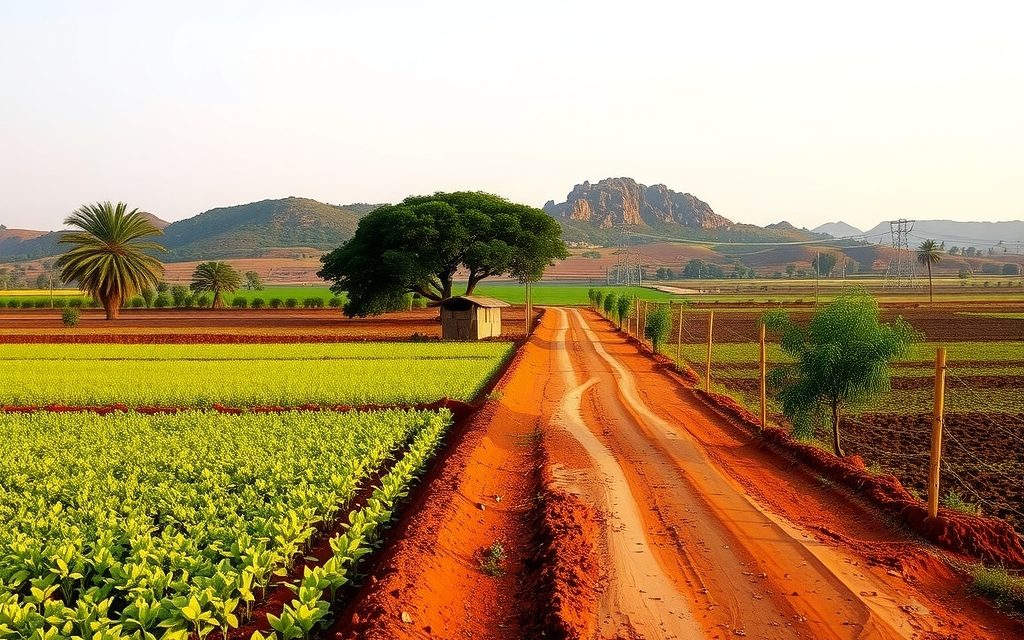
- Kokapet and Narsingi ORR interchanges; 10–20 min to the Financial District
- Gandipet mandal: agricultural land at the Gandipet Tahsildar, converted land at the Gandipet SRO
- HMDA Neopolis auctions reported up to about ₹100 Cr per acre at the top (2023); raw land is not comparable
- Red sandy loam over granite; bores commonly 600–1,200 ft; farming is incidental
- Remaining holdings mostly 10 guntas to 2 acres; road width decides value
| What | Indicative range | Note |
|---|---|---|
| Agricultural-record land zoned residential, near Neopolis, wide-road access | ₹35 Cr – ₹65 Cr per acre | indicative, Oct 2026 |
| Village-interior agricultural holdings, narrow road | ₹22 Cr – ₹40 Cr per acre | indicative, Oct 2026 |
| Western slopes toward Gandipet, agricultural or conservation zoning | ₹10 Cr – ₹25 Cr per acre | indicative, Oct 2026; zoning-dependent |
| Small agricultural holdings sold in guntas | ₹80 L – ₹1.6 Cr per gunta | indicative, Oct 2026; verify building rights |
| Public benchmark: HMDA Neopolis auctions (2023) | Reported up to about ₹100 Cr per acre | serviced, zoned plots; not comparable to raw land |
Ranges reflect recent transactions and advisor observation as of 2026-10. Always verify against the sub-registrar market value and the specific parcel.
Kokapet is the most expensive land in Telangana, and almost none of it looks like farmland any more. The HMDA's Neopolis layout, auctioned in phases, set public benchmarks reported at close to ₹100 crore an acre at the top in 2023, and the glass towers that followed now define Hyderabad's western skyline. Yet agriculture land in Kokapet has not entirely disappeared. Patta pockets survive in the old village, on the slopes toward Gandipet and Osman Sagar, and in fragments between the auctioned layouts. This guide is for buyers, landowners and investors trying to understand what those last pockets are, what they are really worth, and whether holding Kokapet acreage as a land bank still makes economic sense in October 2026.
We cover the Neopolis effect on prices, where agricultural land remains and why, access and terrain, soil and water, indicative per-acre and per-gunta ranges, land-bank economics with a worked example, the title history issues specific to Kokapet, the full Telangana legal checklist, and registration through the Gandipet Tahsildar and the Gandipet sub-registrar office. All figures are indicative and come from recent transactions and advisor observation.
Why agriculture land in Kokapet still matters
Kokapet's story is the story of Hyderabad's western expansion compressed into one village. It sits on the ORR immediately beyond the Financial District, with its own interchange and the Narsingi interchange close by. When the Financial District filled, Kokapet was the obvious next step, and the state used its large holdings of government land here to create planned layouts with wide roads, which it auctioned to developers. Those auctions turned a farming village into a premium high-rise district within about a decade.
Agricultural land matters here for three reasons. First, private patta holdings are the only Kokapet land not sold through HMDA auctions, so they are the only route for a developer or investor to acquire land without bidding against the market's biggest names. Second, the remaining agricultural pockets toward Gandipet carry a different zoning and regulatory history, which creates a wide price gap within one village. Third, many long-time landowning families still hold acreage and need honest advice on whether to sell, wait or enter a joint development.
For a buyer looking for an orchard or weekend farm, Kokapet is not realistic. The farm belt around the far side of Osman Sagar, covered on our page on agriculture land in Gandipet, is the nearest place where farming and price still line up.
Kokapet land snapshot, October 2026
- Supply: very limited. Most of the village has been auctioned by HMDA, developed or tied into joint development agreements.
- Where agricultural pockets survive: around the old village settlement, on the western slopes toward Gandipet, near the Kokapet lake and in fragments between layouts.
- Typical holding: 10 guntas to 2 acres; a contiguous five-acre private block is a rare event.
- Buyers: developers, family offices and high-net-worth investors; essentially no farm buyers.
- Biggest risks: government-land claims, lake and nala buffers, road-widening lines and prices that assume the maximum possible building height.
The Neopolis effect on Kokapet land values
Neopolis changed how Kokapet land is priced. Before the auctions, private land in the village traded on informal comparisons with Narsingi and Gachibowli. Once HMDA published auction results, every landowner had a public benchmark. The 2021 auctions set the first marker and the 2023 round pushed the top bid to roughly ₹100 crore per acre, with the average well below that.
Those numbers need careful reading. Neopolis plots are planned, serviced, zoned and approved for high-rise development, with wide internal roads that permit tall buildings under Hyderabad's setback-based building rules, where the width of the abutting road largely determines permissible height. A private agricultural parcel on a 30-foot village road, needing NALA conversion, building permission and possibly road widening, is a fundamentally different asset. Pricing it off the Neopolis top bid is the single most common error we see in Kokapet.
A sensible approach is to start from what a developer can actually build on the parcel, given its zoning, road width, shape and constraints, and work back to a land value after costs, approvals, time and profit. That residual value is what an informed developer will pay. Everything above it is hope.
The auctions also shifted expectations around the village. Landowners several kilometres from Neopolis began quoting prices anchored to the auction results, and some aggregators paid those prices in the expectation that the boom would continue indefinitely. When the high-rise market slowed in places and approvals took longer than expected, a number of those deals stalled. The lesson for buyers in 2026 is that Kokapet's fundamentals are strong, but individual parcels still need to be valued on their own merits, not on the village's headline.
For buyers who want Kokapet exposure without the conversion risk, approved plots carry far more certainty; our page on open plots in Kokapet sets out the current per-square-yard bands by layout type.
Where agricultural patta pockets remain in Kokapet
Around the old village
The original Kokapet settlement, with its temple, narrow lanes and family homes, is surrounded by small agricultural holdings that were never part of the government land. Access is through village roads, holdings are fragmented by generations of partition, and title chains can be complex. These pockets are valuable but slow to transact.
The western slopes toward Gandipet
As the land falls toward Osman Sagar, holdings get larger and greener. Parts of this side were influenced by the old GO 111 catchment restrictions, and zoning can include conservation or agricultural uses. This is where the gap between agricultural value and development value is widest, and where survey-number checks matter most. Our explainer on the GO 111 repeal covers the regulatory background.
Near the Kokapet lake
Land around the village lake and its feeder channels has remained in agricultural or open use partly because of FTL and buffer restrictions. Some of it is attractive; some of it can never be built on. The lake's notified boundary, not the visible water line, is what counts.
Fragments between layouts
Small private parcels left between auctioned blocks and roads can have excellent addresses and awkward shapes or access. They often suit a neighbouring developer far better than anyone else, which shapes both price and negotiation.
Access, roads and terrain
Kokapet is one of the best-connected land markets in the city. The Kokapet ORR interchange and the Narsingi interchange both feed the area, and the planned road grid of Neopolis gives the auctioned layouts wide frontage. The remaining agricultural pockets are typically reached by older village roads, which is a key reason their value differs from the layouts.
| From Kokapet (Neopolis area) to | Approx. distance | Typical drive |
|---|---|---|
| Financial District / Wipro Circle | 4–6 km | 10–20 min |
| Gachibowli | 8–10 km | 20–30 min |
| Hitech City | 12–14 km | 30–45 min |
| Osman Sagar (Gandipet lakefront) | 4–6 km | 10–15 min |
| Narsingi interchange | 3–5 km | 8–15 min |
| RGIA, Shamshabad (via ORR) | 26–30 km | 30–40 min |
Road width deserves particular attention in Kokapet because it drives value so directly. Under Hyderabad's building rules, the width of the road a site abuts largely determines how tall a building can go and therefore how much saleable area a developer can create. A parcel on a 30-foot village road and an otherwise identical parcel on a 100-foot master plan road can differ in value several times over. Before valuing any agricultural pocket, we read the master plan road network and the road development plan to see whether widening is proposed, how much of the parcel it would take, and whether widening is likely within your holding period. Land surrendered for road widening may earn development rights in some cases, which changes the calculation again, and an advocate should confirm how that would work for a specific survey number.
The terrain rises and falls over granite, with boulder clusters on the higher ground and gentler slopes toward the lake. Levelling and rock removal can add significantly to development costs on some parcels, which a developer will price in. The proposed Regional Ring Road is irrelevant to Kokapet values; this is an ORR and Financial District market.
Soil, water and the little farming that continues
Kokapet's soils are red sandy loams over granite, thin on the ridges and deeper in the hollows toward the lake. Where farming continues, it is mostly small guava and mango orchards around family homes, a few vegetable plots and fodder patches. Groundwater has been heavily drawn down by surrounding construction; agricultural bores here commonly run 600 to 1,200 feet, and many older wells are dry. Nobody should buy Kokapet land for its agricultural output. Its farming is, at most, a way of keeping land in use and records in order while the owner waits.
That said, the agricultural status of a parcel still matters legally. Land recorded as agricultural needs NALA conversion before non-agricultural use, registers through the Tahsildar, and cannot be bought by NRIs. Those facts shape who can buy and how, regardless of whether anything grows on it.
Indicative price ranges for agriculture land in Kokapet
These ranges are indicative, based on recent transactions and advisor observation as of October 2026. They are not quotes. Road width, zoning, shape, constraints and title move individual parcels well outside these bands.
| Parcel type | Indicative range | What drives the number |
|---|---|---|
| Agricultural-record land zoned residential, near Neopolis, wide-road access | ₹35 Cr – ₹65 Cr per acre | Road width and permissible height, frontage, shape |
| Village-interior agricultural holdings, narrow road | ₹22 Cr – ₹40 Cr per acre | Road widening prospects, fragmentation, title complexity |
| Western slopes toward Gandipet, agricultural or conservation zoning | ₹10 Cr – ₹25 Cr per acre | Zoning, catchment conditions, lake buffer |
| Small agricultural holdings sold in guntas | ₹80 L – ₹1.6 Cr per gunta | Building rights, mutation path, neighbour interest |
| Public benchmark: HMDA Neopolis auctions (2023) | Reported up to about ₹100 Cr per acre | Planned, serviced, zoned, wide-road plots; not comparable to raw land |
Land-bank economics: does holding Kokapet acreage still pay?
The case for buying agricultural land in Kokapet as a land bank depends on whether future value growth beats the cost of holding. Most buyers look only at the first half of that equation.
The costs of holding
- Entry costs: roughly 7.5% in stamp duty, transfer duty and registration fee, plus legal, survey and advisory fees.
- Opportunity cost: the return the same money would earn elsewhere. At 8% a year, capital roughly doubles in nine years.
- Carrying costs: fencing, security, records maintenance and the occasional legal action against encroachment.
- Exit costs: brokerage or advisory fees on sale and capital gains tax.
- Zero income: agricultural use in Kokapet produces negligible income.
A worked example
Consider a hypothetical one-acre parcel bought at ₹30 crore, zoned residential, on a village road that the master plan proposes to widen. Entry costs of about 6% plus fees bring the effective cost to around ₹32 crore. If the buyer's alternative is an investment earning 8% a year, the parcel needs to be worth roughly ₹55 crore after seven years just to match it, before exit costs and tax.
| Holding period | Break-even value at 8% opportunity cost (from ~₹32 Cr effective cost) | Implied annual land appreciation needed |
|---|---|---|
| 3 years | ~₹40 Cr | ~10% a year on the ₹30 Cr price |
| 5 years | ~₹47 Cr | ~9.5% a year |
| 7 years | ~₹55 Cr | ~9% a year |
Those figures are illustrations, not projections. The point is that Kokapet land bought at today's prices needs sustained appreciation to justify itself, and the widening of the road, the timing of conversion and the state of the high-rise market all affect whether that happens. A parcel bought below its residual development value has a margin of safety; one bought at a Neopolis-derived price does not.
When a land bank makes sense
It makes sense when the parcel has a credible path to development within your horizon, the price leaves room below its residual value, the title is clean enough to sell to a cautious developer, and you do not need the capital back on a fixed date. If any of those is missing, the economics weaken quickly.
If you already own agricultural land in Kokapet
A large share of our Kokapet conversations are with owners rather than buyers: families who have farmed or held land here for generations and are now fielding offers from developers and aggregators. The choices usually come down to three, and the right one depends on the family's circumstances as much as on the land.
| Option | What you get | What you risk | Usually suits |
|---|---|---|---|
| Outright sale | Certainty and liquidity now | Leaving future appreciation on the table | Families needing to divide proceeds among many heirs, or with other uses for capital |
| Joint development | A share of built units or proceeds, potentially a larger total | Builder delays, approval risk, market cycles, disputes over the share | Owners with clean title, patience and a credible developer partner |
| Continue holding | Optionality on future value | Opportunity cost, encroachment, family disagreements over time | Owners with no need for capital and a united family |
Whichever route you take, the land's value to any buyer depends on the same things: clean title with every co-owner identified, accurate Bhu Bharati records, a surveyed boundary, a clear understanding of zoning and road lines, and no unresolved claims. Owners who put that file in order before entertaining offers consistently achieve better terms, because developers price uncertainty heavily. We often spend the first weeks of an engagement simply fixing records: correcting extents, completing succession mutations and documenting old partitions.
Two cautions. First, be wary of aggregators who ask for a long exclusive agreement with a small advance; it can tie up your land for months while they shop it around. Second, do not sign any agreement of sale or development agreement without an advocate reading it and a CA explaining the capital gains consequences, which differ between a sale and a joint development and depend on how the land is classified for tax.
Government land, auctions and title history in Kokapet
Large parts of Kokapet were government land, which is why HMDA had so much to auction. That history creates a specific risk for private parcels: boundaries between government and private land, old assignments and claims arising from earlier land allotments. Over the years, some Kokapet land has been the subject of extended litigation. A private parcel that adjoins government land, or whose chain includes an assignment or regularisation, needs especially careful checking against the Section 22-A prohibited list, government land records and court records.
We trace the title back to the earliest available record, check the parcel against prohibited lists and government land registers, and ask the surveyor to locate the boundary with government land on the ground. Where litigation has touched a survey number in the past, we read the orders, not just the summary.
Agriculture land legal checklist in Telangana, applied to Kokapet
- Pattadar passbook matching the seller, survey number and extent.
- Bhu Bharati record: verify on dharani.telangana.gov.in (now linked to Bhu Bharati) for status, extent and prohibited flags.
- 1B and pahani history for ownership and cultivation.
- 30-year EC from the Gandipet SRO, and earlier records from the predecessor office where needed.
- Link documents through every partition and succession, which are numerous in old village holdings.
- Survey number, FMB and fresh survey, with boundaries against government land and roads fixed on the ground.
- NALA status and the converted extent.
- Section 22-A prohibited properties, government land registers and endowment records.
- Assigned land caution, given Kokapet's history of government land.
- 58/59 regularisation conditions if relevant.
- Ceiling, ULC and forest checks.
- Master plan land use, lake FTL and buffer, nala and road-widening lines, and any catchment-related conditions on the Gandipet side.
- Litigation search on the survey number and the seller.
Registering land in Kokapet: offices, charges and tax
Kokapet is in Gandipet mandal. Land still recorded as agricultural registers at the Gandipet Tahsildar office, where the Tahsildar acts as joint sub-registrar and mutation is processed together. Converted land, plots and built property register at the Gandipet SRO.
| Charge | Approximate rate | Notes |
|---|---|---|
| Stamp duty | ~5.5% | On the higher of market value or consideration |
| Transfer duty | ~1.5% | Collected with stamp duty |
| Registration fee | ~0.5% | Verified on the day |
| Indicative total | ~7.5% | Excludes professional fees |
Verify rates at the office or on registration.telangana.gov.in before budgeting. Kokapet is fully urbanised, so agricultural land here is generally not rural agricultural land for income-tax purposes; expect the 1% TDS under Section 194-IA on purchases above ₹50 lakh, and higher deduction if the seller is an NRI. Your CA should confirm the treatment for the parcel.
Who should consider Kokapet agricultural land
Worth considering for
- Developers and family offices with the capital, patience and expertise to convert and develop.
- Investors buying below residual development value, with clean title and a credible development path.
- Landowning families who need valuation and negotiation support for a sale or joint development.
Not suitable for
- Farm buyers, weekend farmhouse seekers and orchard investors.
- Anyone relying on a loan or needing the money back on a fixed date.
- End users who want a home; our pages on villas in Kokapet and apartments in Kokapet are the simpler route.
NRIs and agricultural land in Kokapet
Under FEMA, NRIs and OCI cardholders cannot purchase agricultural land, plantation property or farmhouses in India and cannot receive them as a gift. They can inherit agricultural land, and they may sell inherited farm land only to a resident Indian. Several Kokapet families have members abroad who hold inherited shares, and getting those shares mutated correctly is often the first step before any sale or joint development can proceed.
NRIs who want to invest directly can buy approved plots, villas and apartments in Kokapet with NRE or NRO funds. Our guide to NRI agricultural land rules in Telangana explains the position, and a CA should advise on tax and repatriation.
How NRR Estates supports Kokapet land decisions
- Residual valuation: we estimate what a developer can realistically build and pay, so you are not anchored to auction headlines.
- Survey-number screening for zoning, government land, buffers and road lines.
- Title and litigation review with an advocate, going back as far as records allow.
- Negotiation for buyers and for landowners considering a sale or joint development.
- Registration and mutation at the Gandipet Tahsildar or SRO, with follow-through.
Our fees are agreed in writing before you commit. For comparison, the remaining farm parcels just east, covered on our page on agriculture land in Narsingi, and the true farm belt further out around farm land in Mokila, show how quickly prices fall away from the Neopolis edge.
Kokapet agriculture land: frequently asked questions
Is there still agriculture land in Kokapet?
Only in pockets. Most of Kokapet was government land that HMDA auctioned as planned layouts, and much of the remaining private land has been developed or committed to builders. Agricultural patta holdings survive around the old village settlement, on the western slopes toward Gandipet and Osman Sagar, near the Kokapet lake and in fragments between auctioned blocks. Typical holdings are 10 guntas to 2 acres. Most transactions happen privately with developers and aggregators, so there is rarely a public listing to compare against.
What is the price of agricultural land in Kokapet per acre?
As of October 2026, agricultural-record land zoned residential near Neopolis with wide-road access typically ranges from ₹35 crore to ₹65 crore per acre. Village-interior holdings on narrow roads are around ₹22 crore to ₹40 crore, and land on the western slopes toward Gandipet with agricultural or conservation zoning around ₹10 crore to ₹25 crore. These are indicative ranges from recent transactions and advisor observation, not quotes. Road width, zoning, shape and title move individual parcels well outside these bands.
Can I price Kokapet farm land using the Neopolis auction results?
Not directly. Neopolis plots are planned, serviced, zoned and approved for high-rise development on wide roads, and under Hyderabad's setback-based rules road width largely decides permissible height. A private agricultural parcel on a village road still needs NALA conversion, building permission and perhaps road widening. A better method is residual valuation: estimate what a developer can realistically build on the parcel, deduct costs, approvals, time and profit, and arrive at the land value an informed developer would actually pay.
Is buying Kokapet land as a land bank still worthwhile?
It can be, but the maths is tighter than many buyers assume. With roughly 6% entry costs plus fees, zero income and an opportunity cost of, say, 8% a year, a parcel bought at ₹30 crore needs to be worth around ₹55 crore after seven years just to match the alternative, before exit costs and tax. It works best when the price sits below residual development value, the title is clean, there is a credible development path and you do not need the capital back on a fixed date.
Where is agricultural land in Kokapet registered?
Kokapet is in Gandipet mandal. Land still recorded as agricultural registers at the Gandipet Tahsildar office, where the Tahsildar acts as joint sub-registrar and mutation is processed in the same step. Converted land, plots and built property register at the Gandipet SRO. Charges are approximately 5.5% stamp duty, 1.5% transfer duty and 0.5% registration fee, around 7.5% in total. Because Kokapet is urbanised, the 1% TDS under Section 194-IA generally applies above ₹50 lakh. We verify rates and tax treatment on the day.
What title risks are specific to Kokapet?
Kokapet's history as a village with large government landholdings means private parcels can adjoin or overlap government land, carry old assignments or regularisations, or have been touched by litigation. Village holdings are also heavily fragmented by generations of partition. We check every parcel against the Section 22-A prohibited list and government land records, trace title to the earliest available record, search for litigation on the survey number and seller, and have a surveyor fix the boundary with government land on the ground before any advance.
I own agricultural land in Kokapet. Should I sell, hold or sign a JDA?
It depends on your family's needs as much as the land. An outright sale gives certainty and liquidity; a joint development can give a larger total value through built units or proceeds but carries builder, approval and market risk; holding keeps future upside but costs opportunity and invites encroachment and family disputes. In every case, putting your title, Bhu Bharati records, survey and succession mutations in order first will improve the terms you are offered. Take advocate and CA advice before signing anything.
Can NRIs buy agricultural land in Kokapet?
No. Under FEMA, NRIs and OCI cardholders cannot purchase agricultural land, plantation property or farmhouses in India and cannot receive them as a gift. They can inherit agricultural land and may sell inherited farm land only to a resident Indian. Many Kokapet families have members abroad holding inherited shares, and correct mutation of those shares is often needed before any sale or JDA can proceed. NRIs can invest directly in approved plots, villas and apartments in Kokapet through NRE or NRO funds.
Related guides
Kokapet's plots sit beside the Neopolis towers and the ORR, minutes from the Financial District. Indicative rates, HMDA versus GP approvals, legal checks and registration costs for buyers and NRIs.
Kokapet is the closest point to the Financial District where gated villa communities still exist. Expect tight supply, land-led pricing from about ₹6 crore, and careful title and approval checks.
Kokapet's Neopolis towers form Hyderabad's newest luxury skyline beside the ORR and Financial District. Indicative per-sq-ft bands, 3 and 4 BHK budgets, high-rise checks, maintenance and rental reality.
Red-soil acreage, orchards and farmhouse estates around Osman Sagar, minutes from Kokapet. What the GO 111 repeal changed, indicative per-acre bands, lake FTL risks and how registration works.
The last patta parcels between the Narsingi interchange, Manchirevula and the Musi. How to tell genuine farm land from development land, indicative per-acre bands, JDA basics and the checks that matter here.
Red-soil patta land and orchards 8 km past the Kollur ORR exit, priced as a land bank on Hyderabad's western IT corridor. Indicative per-acre bands, water, zoning and the full legal checklist.

NRIs and OCIs cannot buy or receive gifts of agricultural land, plantations or farmhouses; inheritance is the only route. What inherited land allows, why benami workarounds are dangerous, and the lawful alternatives near Hyderabad.

What NRIs and OCIs can and cannot buy under FEMA, how to fund and register a purchase from abroad, TDS and repatriation basics, and where the opportunities are across Hyderabad and the Telangana districts.