Villas & Independent Houses in Kukatpally, Hyderabad
Kukatpally's villa market is really KPHB Housing Board houses, older colony homes, G+2 rebuilds and a few gated rows. See indicative prices, Board title checks, rebuild economics and NRI rules before you buy.
- Four Red Line metro stations; Ameerpet 10–15 min, HITEC City typically 15–35 min by road
- Stock is mostly KPHB Housing Board houses (LIG/MIG/HIG plots), older colony homes and G+2/G+3 rebuilds
- Indicative tickets ₹70 L – ₹5.5 Cr; land ₹90,000 – ₹2.3 L per sq yd
- Check the Board allotment, conveyance deed and any GPA chain before paying an advance
- Medchal-Malkajgiri district; deeds typically registered at the Kukatpally SRO
| What | Indicative range | Note |
|---|---|---|
| LIG-category Housing Board house, extended, 50–90 sq yd | ₹70 L – ₹1.5 Cr | indicative, Oct 2026 |
| MIG-category Housing Board house, 100–170 sq yd | ₹1.6 Cr – ₹3.0 Cr | indicative, Oct 2026 |
| HIG-category house or older bungalow, 200–270 sq yd | ₹3.0 Cr – ₹5.5 Cr | indicative, Oct 2026 |
| Rebuilt G+2/G+3 with rental floors, 150–200 sq yd | ₹2.8 Cr – ₹4.8 Cr | indicative, Oct 2026 |
| Villa in a small gated row, Hydernagar–Nizampet edge | ₹2.4 Cr – ₹4.0 Cr | indicative, Oct 2026 |
| Residential land value, KPHB phases near metro | ₹1.5 L – ₹2.3 L per sq yd | clean Board title |
Ranges reflect recent transactions and advisor observation as of 2026-10. Always verify against the sub-registrar market value and the specific parcel.
Search for villas in Kukatpally and you will quickly learn that the word means something different here. Kukatpally is not a gated-villa suburb. It is one of Hyderabad's oldest planned residential belts, built around the Kukatpally Housing Board Colony (KPHB) that the state Housing Board developed in phases from the late 1970s onward. What changes hands today is mostly independent houses on Housing Board plots, older homes in the colonies around Vivekananda Nagar, Allwyn Colony, Hydernagar and Moosapet, and a steady stream of rebuilds where a 1980s single-storey house is demolished and replaced with a G+2 or G+3 building with rental floors. Genuine gated villa rows exist, but they are few and mostly on the Hydernagar and Nizampet edge. This guide explains how the Kukatpally independent-house market works as of October 2026: what each type of property costs, how Housing Board titles differ from ordinary sale deeds, what a rebuild involves, and what NRIs need to know before buying here.
NRR Estates is a Hyderabad advisory, not a listing portal. We walk these streets with buyers, read the Board papers line by line, and tell clients plainly when a house is better valued as land.
Why buyers still want villas in Kukatpally and its independent houses
Kukatpally's argument is location plus land. It sits between the old city and the IT corridor, with four Red Line metro stations (JNTU College, KPHB Colony, Kukatpally and Balanagar) and a road link to HITEC City through Kaithalapur and the JNTU–HITEC City road. Few places this central still offer an independent house on its own plot at prices that are below the western suburbs on a per-square-yard basis.
- Metro and road access. Ameerpet is typically 10–15 minutes by metro from KPHB Colony station; HITEC City is usually 15–35 minutes by road depending on the hour.
- A finished neighbourhood. Markets, schools, hospitals, temples, bus depots and two large malls (Forum Sujana and the mall formerly known as Manjeera, now operated as Lulu) are already here. Nothing is "coming soon".
- Plot-based ownership. An independent house gives you the land, the right to rebuild within the building rules, and freedom from apartment association politics.
- Rental income. Students from JNTU, working professionals on the HITEC City commute and families who cannot afford the west keep floor-wise rental demand steady.
The trade-off is density. Kukatpally is crowded, the interior lanes are narrow, parking is a daily negotiation, and the old KPHB plots are small by modern standards. If your mental picture is a 300 sq yd villa in a landscaped gated community with a clubhouse, you will find that in villas in Bachupally or villas in Pragathi Nagar, not in KPHB.
Kukatpally's micro-markets: what kind of house you are actually buying
We do not name private projects or societies. The Kukatpally independent-house market breaks into five recognisable types, and knowing which one you are looking at tells you most of what you need about price, title and risk.
KPHB Housing Board houses by phase
The Housing Board colony was laid out in numbered phases on both sides of the main KPHB road, with plots allotted in income categories that the market still calls LIG, MIG and HIG. LIG plots are small, often well under 100 sq yd, MIG plots typically 100–170 sq yd and HIG plots up to around 260–270 sq yd, though actual sizes vary by phase and scheme. Many original houses were single-storey or G+1 built to a Board design; most have since been extended upward, sideways or rebuilt entirely. Phases closer to the metro stations and the main road command clear premiums over interior phases.
Older private colonies around KPHB
Vivekananda Nagar, Allwyn Colony, Balaji Nagar, Bhagyanagar Colony, Hydernagar and the colonies off the Moosapet side grew alongside the Housing Board area on private layouts. Plot sizes here are often a little larger, roads a little more irregular, and titles run through ordinary registered sale deeds rather than Board allotments. Some of these colonies began as unapproved layouts and were later regularised, so the layout history matters.
Rebuilt G+2 and G+3 houses
The most active product. A buyer or a small builder purchases an old house, demolishes it and builds a G+2 or G+3 with the owner on the top floors and rental units below, or a duplex on the upper floors over rental flats. On a 150–200 sq yd plot this can yield four to six rentable units. Quality depends entirely on the builder, so the structure needs an engineer's eye and the permissions need a lawyer's.
Kukatpally village core and the Balanagar–Moosapet fringe
The old village core near the Kukatpally main road and the pockets toward Moosapet and Balanagar carry older stock on irregular plots, mixed residential and commercial use, and the occasional large family property. These are land plays with title histories that can run back several generations.
The few gated villa rows
On larger parcels toward Hydernagar, the Nizampet border and the edges where Kukatpally meets Pragathi Nagar, small gated rows of duplex or triplex villas have come up, typically 10–40 units with a common gate and driveway. They sell quickly because supply is thin. For larger gated communities, buyers usually move north to villas in Nizampet and beyond.
Indicative price bands for Kukatpally houses and villas, October 2026
These ranges come from recent transactions and advisor observation as of October 2026. They are indicative, not quotes. Phase, road width, facing, distance to the metro, the state of the structure and the cleanliness of the title all move individual properties outside these bands.
| Property type in Kukatpally | Typical size | Indicative ticket |
|---|---|---|
| LIG-category Housing Board house, extended | 50–90 sq yd; G+1 or G+2 | ₹70 L – ₹1.5 Cr |
| MIG-category Housing Board house | 100–170 sq yd | ₹1.6 Cr – ₹3.0 Cr |
| HIG-category house or older bungalow | 200–270 sq yd | ₹3.0 Cr – ₹5.5 Cr |
| Rebuilt G+2/G+3 with rental floors | 150–200 sq yd; 4,000–6,500 sq ft built | ₹2.8 Cr – ₹4.8 Cr |
| Villa in a small gated row, Hydernagar–Nizampet edge | 150–250 sq yd; 2,400–3,600 sq ft | ₹2.4 Cr – ₹4.0 Cr |
| Residential land value, KPHB phases near metro | — | ₹1.5 L – ₹2.3 L per sq yd |
| Residential land value, interior colonies | — | ₹90,000 – ₹1.5 L per sq yd |
| Monthly rent, full 3–4BHK independent house | — | ₹40,000 – ₹90,000 |
Two patterns are worth understanding. First, in KPHB almost every older house is valued primarily on land, with the structure adding little unless it is recent and well built. Second, a property whose Board conveyance has never been executed, or that has been sold onward on a GPA or agreement alone, trades at a real discount and may not be financeable. A price far below the band is usually a paperwork story.
What moves value from street to street
- Road width: a house on a 40–60 ft road with room for parking is worth materially more than one on a 20–25 ft internal lane, especially for rebuild potential.
- Distance to the metro: walking distance to KPHB Colony or JNTU College station adds a premium for rental and for resale.
- Corner and east or north facing: preferred by most local buyers and priced accordingly.
- Permissible floors: what the building rules allow on that plot and road decides what a rebuild is worth.
- Nala and lake proximity: parts of Kukatpally lie near the Kukatpally nala and the area's tanks, which affects flooding and legal risk.
Housing Board titles: how a KPHB house deed differs
This is where Kukatpally differs from almost every other locality. A Housing Board property does not begin with a farmer's patta and a layout approval. It begins with an allotment by the state Housing Board (the Andhra Pradesh Housing Board in the colony's early decades, now the Telangana State Housing Board). The allottee typically paid in instalments under a hire-purchase or similar arrangement, received possession, and only after full payment and clearance of conditions did the Board execute a registered sale or conveyance deed in the allottee's favour.
Most KPHB titles are clean and have changed hands many times through registered deeds. But because the colony is several decades old, a meaningful number of properties carry one of these issues:
- Conveyance never executed. The original allottee paid but never obtained the Board's registered deed, then sold on a general power of attorney or agreement of sale. The current occupant may have possession and tax receipts but no registered title from the Board.
- GPA chains. Sales through unregistered or registered GPAs instead of sale deeds, sometimes several deep. A GPA is not a transfer of ownership, and it dies with the person who gave it.
- Allotment conditions. Some schemes restricted resale within a period or required Board permission to transfer. Breaches are usually historic, but a careful buyer confirms there is no pending claim.
- Additions beyond sanction. Floors and extensions added without permission, or encroachments onto Board open land and setbacks.
- Succession gaps. Original allottees who passed away without the property being formally transferred to heirs.
Documents we ask to see for a KPHB house
- The Board's allotment letter and possession certificate for the original allottee.
- Proof of full payment or a no-dues certificate from the Board.
- The Board's registered sale or conveyance deed, with plot number and phase matching the property on the ground.
- Every registered deed in the chain since then, with any GPAs examined carefully and, where needed, ratified by proper sale deeds.
- An encumbrance certificate covering at least 30 years, searched by both the plot description and the owners' names.
- GHMC property tax records, building permission and any regularisation under the Building Regularisation Scheme.
- Succession documents where any owner in the chain has died: registered or probated will, legal heir certificate, or a registered family settlement.
Where the Board conveyance is missing, the fix usually lies with the original allottee or their heirs obtaining it from the Board, followed by a fresh sale deed to the buyer. It can be done, but it takes time and cooperation, and it must happen before you pay the bulk of the price. Our guide to link documents and the title chain in Telangana explains why each step matters.
Rebuilding an old Kukatpally house: permissions, floors and costs
Many buyers are really buying a plot with a house they intend to replace. Before you pay for that plan, test it.
What you can build
Building permission in Kukatpally comes from GHMC through the state's online building permission system (TG-bPASS and its successor platforms). The number of floors, setbacks and parking requirements depend on plot area, road width and abutting conditions under the Telangana Building Rules (GO Ms 168 of 2012, as amended). Small plots on narrow roads may be limited to fewer floors than a seller suggests, and stilt parking eats into usable area. We get an architect to sketch the realistic permissible envelope before the client commits.
Indicative rebuild economics
- Demolition and site clearance: typically a small fraction of the build cost, sometimes offset by salvage.
- Construction: roughly ₹2,400–₹3,500 per sq ft of built area for good-quality residential construction as of October 2026, depending on specification and the contractor.
- Time: 12–18 months from permission to occupation for a G+2 or G+3.
- Rental floors: a 2BHK unit in a newly built house near the metro typically rents for ₹15,000–₹26,000 a month.
The arithmetic works best on MIG and HIG plots with decent road frontage. On a narrow LIG plot on a 20 ft lane, the rebuild may produce only a marginal improvement over a sensible renovation.
Living in Kukatpally: schools, healthcare, shopping and commute
Kukatpally is a complete city district. That is its biggest strength and, for some buyers, its weakness: everything is close, and so is everyone.
Commute times
| From KPHB / Kukatpally to | Typical time | Best mode |
|---|---|---|
| HITEC City / Madhapur | 15–35 min | Road via Kaithalapur or JNTU–HITEC City road |
| Ameerpet | 10–15 min | Red Line metro |
| Financial District / Gachibowli | 30–55 min | Road |
| Secunderabad | 30–50 min | Road or metro with an interchange |
| Rajiv Gandhi International Airport | 50–80 min | ORR via the Gachibowli side |
Schools and colleges
JNTU Hyderabad anchors the area's education profile, and the neighbourhood has a dense spread of CBSE, ICSE and state-board schools, intermediate colleges and coaching institutes along the KPHB and JNTU roads. Families with school-age children rarely need a long school run. We suggest visiting shortlisted schools during admission season, since the better-known ones fill early.
Healthcare
Multi-specialty hospitals sit along the JNTU–HITEC City road, in KPHB and toward Miyapur and Madhapur, with clinics and diagnostic centres in every phase. Emergency access is good by Hyderabad standards, although peak-hour traffic on the main road can slow ambulances.
Shopping and daily life
Two large malls, the KPHB and Kukatpally main-road markets, wholesale and vegetable markets, and endless neighbourhood shops mean almost nothing requires a drive. The flip side is congestion, noise on the main roads and limited parking on interior lanes. Buyers who work from home should visit at different hours before deciding.
Walking a Kukatpally house: what we check on site
An afternoon on site saves months of regret. On every Kukatpally visit we look at:
- Plot boundaries against the Board plan or layout: whether the compound wall matches the plot dimensions in the deed, and whether the house has crept onto setbacks or common land.
- Structure: cracks, dampness, exposed reinforcement, roof leakage, and how added floors were supported on the original foundation.
- Drainage and flooding: the level of the plot relative to the road, neighbours' accounts of monsoon waterlogging, and distance from the nala.
- Water supply: HMWSSB connection, borewell yield and how often tankers are needed in summer.
- Tenancies: whether existing tenants hold valid agreements and when they end, because vacant possession is your right at registration.
- Parking and access: whether a car can actually enter and turn, which matters more than buyers expect.
Approvals and legal due diligence beyond the Board papers
Housing Board titles are only one layer. For every Kukatpally purchase, independent house or gated villa, we also run these checks:
- Building permission and deviations: GHMC sanction, any regularisation under the Building Regularisation Scheme, and the extent of unauthorised additions, which affects both loans and future demolition risk.
- Layout approval: for private colonies, the original layout status and any LRS regularisation. Our guide to HMDA, DTCP and gram panchayat layouts covers what each approval means.
- Lake and nala buffers: whether the plot falls within the full tank level or buffer of nearby tanks or the Kukatpally nala, which HYDRAA and GHMC have been enforcing more actively.
- Road widening: master plan road-widening lines on the main and arterial roads can take frontage.
- Section 22-A prohibited list: rare in KPHB but always checked, especially for older village-core properties.
- RERA for gated rows: projects over 500 sq m or more than 8 units must be registered with TS RERA; we verify the number, validity, approved plan and the occupancy certificate for completed villas.
- Builder due diligence: for rebuilt houses sold by small builders, past projects, structural design and whether the builder has paid the landowner in full.
Buying process and charges for a Kukatpally house
A typical resale purchase runs like this: a token advance against a simple receipt, a detailed agreement of sale once the title is cleared, the balance payment at registration, and then mutation of property tax and transfer of utilities. For a gated villa under construction, payments follow the RERA-registered schedule.
| Charge | Approximate rate | Notes |
|---|---|---|
| Stamp duty | ~5.5% | On the higher of agreement value and government market value |
| Transfer duty | ~1.5% | GHMC area |
| Registration fee | ~0.5% | Paid at the SRO |
| GST | Typically 5% on under-construction homes | Not on completed resale houses with OC |
| TDS by buyer | 1% above ₹50 lakh (resident seller) | Section 195 rates if seller is an NRI |
Deeds for Kukatpally are typically registered at the Kukatpally Sub-Registrar Office, though we confirm the jurisdictional SRO from the plot's location before booking a slot on the Telangana registration portal. Rates are revised from time to time, so we verify them on the day. Our step-by-step guide to buying a villa in Hyderabad walks through the full sequence.
Who should buy in Kukatpally, and who should look elsewhere
Kukatpally suits:
- Families who want an independent house within metro reach of Ameerpet and a short drive from HITEC City.
- Buyers who want rental income from floors and are comfortable managing tenants.
- People who grew up in KPHB and want to stay near parents and community.
- Investors who value land in a finished neighbourhood over brochure amenities.
Look elsewhere if:
- You want a large gated community with a clubhouse and open space.
- You need a large plot and quiet streets at Kukatpally's budget; consider the northern suburbs.
- You are not prepared for title work on older properties.
Many buyers also compare an independent house here with a modern flat. If a gated apartment would do, apartments in Kukatpally give you amenities and easier maintenance at a lower entry ticket.
Rental yield and resale outlook for Kukatpally houses
Independent houses in Kukatpally are an income-and-land story rather than a rapid-appreciation story. A full independent house let to one family typically yields around 2%–3% gross on its market value. A rebuilt G+2 or G+3 let floor-wise can push gross yields toward 3.5%–4.5%, with more management effort and vacancy risk between tenants.
Resale demand is deep because the buyer pool is large: families upgrading from flats, local investors and builders looking for rebuild plots. Land values in KPHB have moved steadily over the past decade, and metro connectivity has supported the phases near the stations. Risks to watch:
- Congestion limits how much further premium the interior lanes can command.
- Older structures depreciate; value sits in the land.
- Title friction on Board properties with incomplete conveyances slows resale.
- Flood exposure near nalas and tanks has become a sharper buyer concern since recent monsoons.
Holding periods of seven years or more, with rental income in the meantime, tend to make the most sense.
Buying a house in Kukatpally as an NRI
Many KPHB families have children in the US, UK, Gulf and Australia, so NRIs are active here as buyers and as sellers of parents' houses. NRIs and OCI cardholders can buy residential property, including independent houses and villas, without RBI approval. They cannot buy agricultural land, plantations or farmhouses. Our NRI guide to buying villas and apartments in Hyderabad covers the full process. Key points:
- Funds: pay from NRE, NRO or FCNR accounts or through inward remittance via banking channels. Cash is not an option.
- Power of attorney: a property-specific POA executed abroad, attested or apostilled as applicable, and adjudicated in Telangana lets a trusted relative sign at the SRO.
- Selling a parent's KPHB house: complete succession and, where needed, the Board conveyance before listing; buyers' lawyers will ask.
- Buying from an NRI seller: the buyer deducts TDS under Section 195 on the capital gain, not 1%.
- When you sell: your buyer deducts TDS at the applicable capital-gains rate plus surcharge and cess; long-term gains are taxed at 12.5% without indexation since 2024. A lower-deduction certificate is possible if your actual liability is lower. Consult a CA.
- Repatriation: sale proceeds can generally be repatriated within the applicable limits and rules, subject to tax compliance and documentation.
How NRR Estates helps Kukatpally buyers
- Title-first shortlisting: we read the Board allotment, conveyance and chain before we discuss price, so you do not fall for a house you cannot register cleanly.
- Rebuild feasibility: an architect's permissible-envelope sketch and a cost estimate before you commit.
- Site inspection: structure, drainage, boundaries, tenancies and parking, checked in person.
- Negotiation on comparables: recent sales in the same phase or colony, adjusted for road width, condition and title.
- Registration and mutation: charges verified, SRO slot booked, GHMC property tax and utilities transferred.
Our advisory fee is disclosed in writing before you commit. If a property's title cannot be made clean, we say so and recommend walking away.
Questions buyers ask about villas and houses in Kukatpally
What does an independent house or villa in Kukatpally cost in October 2026?
Indicatively, extended LIG-category Housing Board houses on 50–90 sq yd range from about ₹70 lakh to ₹1.5 crore, MIG houses on 100–170 sq yd from about ₹1.6 crore to ₹3.0 crore, and HIG houses or older bungalows on 200–270 sq yd from about ₹3.0 crore to ₹5.5 crore. Rebuilt G+2 or G+3 houses typically sit between ₹2.8 crore and ₹4.8 crore. These are ranges from recent transactions and advisor observation, not quotes.
Are there gated villa communities in Kukatpally?
Very few. Kukatpally is built out, so large gated villa communities with clubhouses are not part of its market. A handful of small gated rows of roughly 10 to 40 duplex or triplex villas exist toward Hydernagar, the Nizampet border and the Pragathi Nagar edge, and they sell quickly when they come up. Buyers who want a bigger gated community usually compare Nizampet, Pragathi Nagar and Bachupally, which are 15 to 25 minutes north.
What is special about buying a KPHB Housing Board house?
The title starts with an allotment by the state Housing Board rather than a private layout. The allottee paid in instalments and, after full payment, the Board executed a registered sale or conveyance deed. Most KPHB titles are clean, but some properties never received the Board deed and were sold on GPAs or agreements. You must see the allotment letter, proof of full payment, the Board's registered deed and every registered transfer since then before paying.
Can I buy a Kukatpally house that was sold on a GPA?
You can, but only after the title is regularised. A general power of attorney is not a transfer of ownership and lapses on the death of the person who gave it. The usual fix is for the original allottee or their heirs to obtain the Board conveyance, if missing, and then execute a registered sale deed. Until that is done, banks will usually not lend and resale will be difficult. Never pay the bulk of the price against a GPA.
Is it worth rebuilding an old house in KPHB?
Often, on MIG and HIG plots with reasonable road frontage. A G+2 or G+3 rebuild on 150–200 sq yd can produce four to six rentable units, with construction indicatively costing ₹2,400–₹3,500 per sq ft and taking 12 to 18 months. On narrow LIG plots on 20 ft lanes, permissible floors and parking rules may limit the gain. We get an architect to sketch the realistic permissible envelope under the Telangana building rules before you commit.
What rental yield can I expect from a house in Kukatpally?
A full independent house let to one family typically yields around 2% to 3% gross on market value. A rebuilt house let floor-wise can reach roughly 3.5% to 4.5% gross, with newer 2BHK units near the metro often renting for ₹15,000 to ₹26,000 a month. Floor-wise letting means more tenant management and occasional vacancies, so factor in maintenance, property tax and a month or two of vacancy each year when you run the numbers.
Can NRIs buy a house in Kukatpally?
Yes. NRIs and OCI cardholders can buy independent houses and villas in Kukatpally without RBI approval, paying from NRE, NRO or FCNR accounts or through inward remittance. A property-specific power of attorney, adjudicated in Telangana, lets a relative sign at the SRO. If you buy from an NRI seller, you must deduct TDS under Section 195 on the capital gain rather than 1%. For tax planning on purchase or sale, consult a chartered accountant.
What are the registration charges for a house in Kukatpally?
Approximately 5.5% stamp duty, 1.5% transfer duty and 0.5% registration fee, roughly 7.5% in total, calculated on the higher of the agreement value and the government market value. Buyers also deduct 1% TDS on purchases above ₹50 lakh from resident sellers. Deeds are typically registered at the Kukatpally Sub-Registrar Office, but we confirm the jurisdictional SRO from the plot's location and verify current rates before booking your slot.
Related guides
Kukatpally is one of Hyderabad's densest, most liquid flat markets: four metro stations, the KPHB phases and a deep resale pool beside new high-rise launches. Here is how to choose between them and what each costs.
Nizampet offers triplex row houses, independent homes and a few gated villas near JNTU metro and the Bachupally school belt. See October 2026 price ranges, how its civic history affects permissions and which low-lying pockets to check.
Pragathi Nagar offers independent houses on larger plots, small gated duplex clusters and row houses beside its lake, near the Bachupally school belt. See October 2026 price ranges, older-house checks, lake rules and rebuild costs.
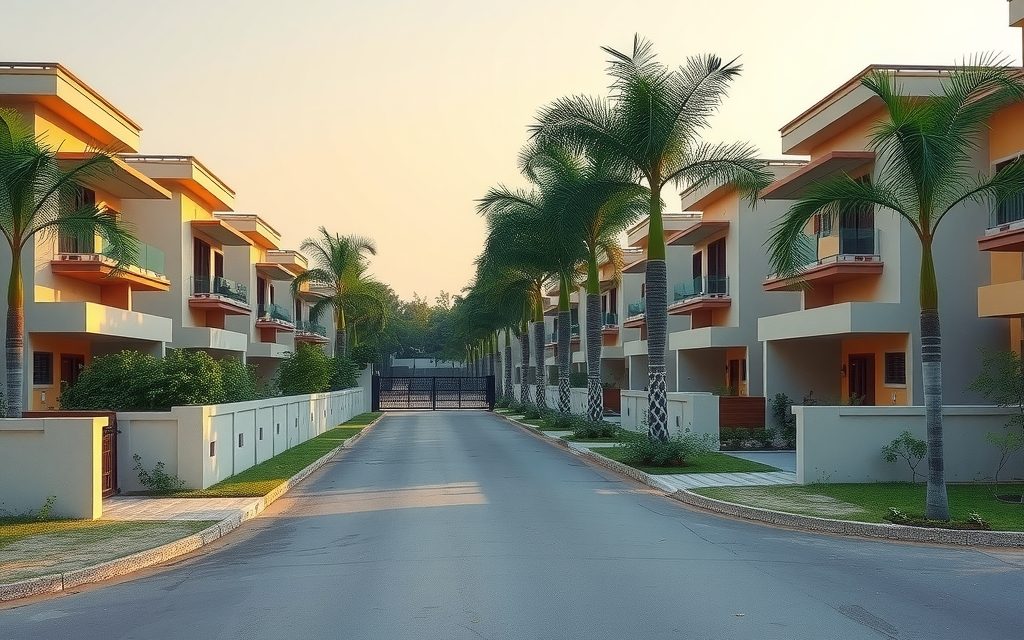
Bachupally offers mid-segment gated villas, row villas and independent houses near some of north-west Hyderabad's best-known schools. See October 2026 price ranges, how to choose around the school map and what to verify.

Which Hyderabad micro-markets suit NRIs, what each budget buys, new versus resale, RERA and OC checks, GST, TDS for resident and NRI sellers, rental yields, management and repatriation of sale proceeds.

A sale deed is only as good as the deeds behind it. Why lawyers trace at least 30 years to a root of title, how partitions, GPA sales, wills and decrees fit in, and what a title opinion actually checks.
A villa is usually a family's largest cheque. The full process in Hyderabad: gated, plotted or resale, TS RERA and builder checks, the agreement for sale, payment plans with GST and TDS, registration, the OC and a handover snag list.
What HMDA, DTCP and so-called panchayat layout approvals really mean in Telangana: jurisdictions, LP numbers, mortgaged plots and release letters, LRS, bank loan eligibility, online verification and red flags.