Open Plots in Nallagandla, Hyderabad
Nallagandla's plots are rare resale lots in older HUDA and gram panchayat layouts between Lingampally and Tellapur. Indicative rates, old-document checks, lake buffers and costs.
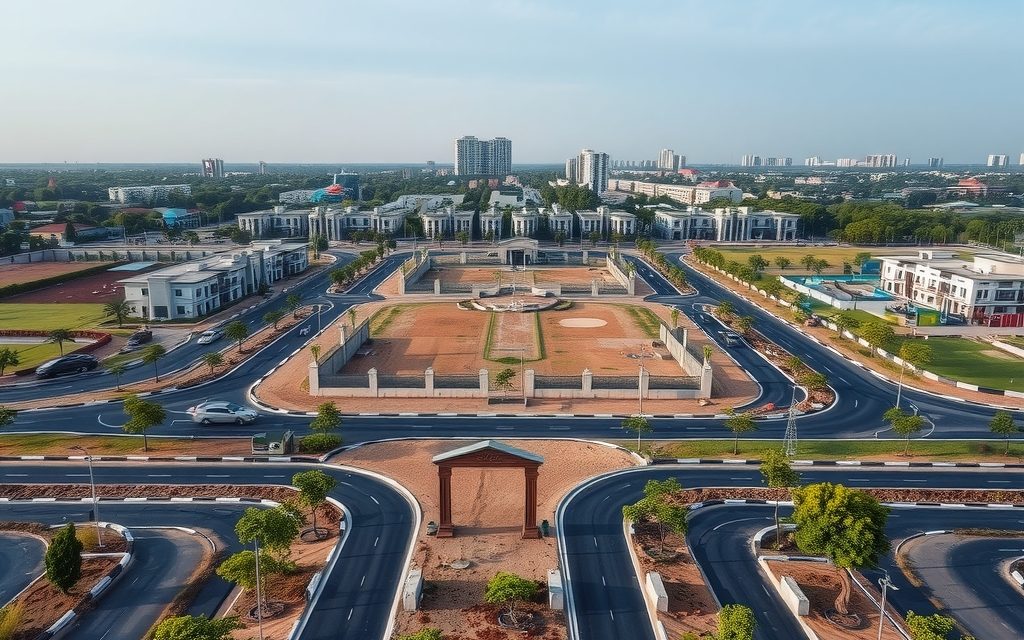
- Almost entirely resale supply in 1990s–2000s HUDA and gram panchayat layouts; few new plotted projects
- 20–25 minutes to Gachibowli; Tellapur ORR interchange to the west and Lingampally MMTS to the north
- Typical plots 150–300 sq yd; 200 and 267 sq yd most common
- Many plots carry an old house and are best priced on land value
- Within GHMC and HMDA limits, Serilingampally mandal, Rangareddy district; lake FTL and buffer check essential
| What | Indicative range | Note |
|---|---|---|
| Old village-core GP layout, LRS completed, 20–30 ft lane | ₹60,000 – ₹85,000 per sq yd | indicative, Oct 2026 |
| HUDA or HMDA layout resale, 30–33 ft road | ₹75,000 – ₹1,00,000 per sq yd | indicative, Oct 2026 |
| Plot with old house, priced on land value | ₹80,000 – ₹1,10,000 per sq yd (land-equivalent) | indicative, Oct 2026 |
| Approved layout, 40 ft+ road, Gopanpally side | ₹90,000 – ₹1,20,000 per sq yd | indicative, Oct 2026 |
| Main-road frontage, Nallagandla or Tellapur road | ₹1,20,000 – ₹1,70,000 per sq yd | indicative, Oct 2026 |
Ranges reflect recent transactions and advisor observation as of 2026-10. Always verify against the sub-registrar market value and the specific parcel.
Open plots in Nallagandla are hard to find, and that scarcity is the whole story of this market. Nallagandla sits in Serilingampally mandal of Rangareddy district, between the University of Hyderabad and the Lingampally railway belt, on the stretch where the Gachibowli corridor runs out toward Tellapur. Over the past decade its open land was absorbed by large gated townships and high-rise projects. What remains for a plot buyer is mostly resale: individual plots in older layouts created a generation ago, some vacant, some carrying a modest old house, and almost all of them changing hands only when a family decides to sell.
If you want a plot here, you are not choosing from a brochure. You are waiting for the right plot to surface, checking paperwork that may be thirty years old, and paying a price set by what the townships around it have done to land values. This guide explains how that market works as of October 2026: where plots still come up, what approvals you will see on old layout documents, indicative rates per square yard, the specific risks of buying in old layouts, and how to decide whether Nallagandla is worth the wait or whether a newer belt nearby suits you better.
Why buyers still look for plots in Nallagandla
The appeal is simple. Nallagandla is already a finished neighbourhood. Roads, drainage, water supply, schools, supermarkets, clinics and restaurants are all in place, and the area has a settled residential character built around its townships. A plot here gives you an independent home inside that finished neighbourhood, 20 to 25 minutes from Gachibowli and a short hop from the Lingampally MMTS station, without the construction dust and empty streets of a new outer layout.
Buyers also like the green buffer. The University of Hyderabad campus lies to the east and the BHEL township's tree cover to the north, and that combination keeps Nallagandla cooler and less congested than the Gachibowli core. For families who want to build their own house rather than buy a fifteenth-floor flat, and who do not want to move as far out as Kollur or Mokila, Nallagandla is one of the few pockets where that is still possible at all.
The trade-off is supply. In a typical month, the number of genuinely buildable, legally clean vacant plots on offer in Nallagandla can be counted on one hand. Patience and a ready budget matter more here than in any growth-corridor market.
How Nallagandla's plotted land came to be
Understanding the history saves time when you read the documents. Before the IT corridor reached it, Nallagandla was a village of agricultural survey numbers around a lake, with a small settlement near the old village core. As Lingampally and BHEL grew in the 1980s and 1990s, landowners began dividing parts of their fields into residential plots. Some of these layouts were approved by HUDA, HMDA's predecessor; many were approved only by the gram panchayat; a few were never formally approved at all.
When the Serilingampally municipality was merged into GHMC in 2007, much of Nallagandla came under the corporation. From around 2010, as land values rose, large contiguous parcels were assembled for gated townships and high-rise projects, and the remaining small plots in old layouts became islands among them. That is why a Nallagandla plot today can have a title chain that runs through a 1990s gram panchayat layout, a later LRS regularisation and several resales, all of which have to be read in sequence.
Connectivity: Lingampally, Gopanpally, Tellapur and the ORR
Road links to the IT corridor
Nallagandla's main road connects east to Gopanpally and on to Gachibowli and the Financial District. Outside peak hours the drive to the Gachibowli flyover area is about 20 minutes, and Wipro Circle is 20 to 30 minutes. The road was widened and its key junctions improved as Tellapur and Kollur traffic grew, but peak-hour delays at the Gopanpally end are real, and anyone buying here should test the commute at office hours.
ORR and the western townships
The Tellapur interchange on the Outer Ring Road is a short drive west. From there you reach the Patancheru industrial belt, Kollur and Mokila to the north-west, and the airport at Shamshabad in roughly 40 to 50 minutes outside peak times. The ORR also gives Nallagandla residents a bypass around the Gachibowli traffic when heading south.
Rail and the Lingampally side
Lingampally MMTS station, a few kilometres north, connects to Hitech City, Begumpet and Secunderabad, and the long-distance trains that stop there make Nallagandla convenient for families with roots in other parts of Telangana and Andhra Pradesh. The Miyapur metro terminus is within a reasonable drive for those who need it.
Where resale plots still surface in Nallagandla
Plots do not come up evenly across Nallagandla. These are the pockets where we see them, and how they differ.
- Old village core near the lake. The oldest plotted layouts sit around the original settlement. Plots are smaller, lanes narrower and paperwork older. This is where the lowest per-yard prices are, and where legal verification takes longest.
- HUDA-era colonies off the main road. Planned layouts from the 1990s and early 2000s, with 30 to 40 foot roads, many now built with independent houses. When a vacant plot or a plot with a dated house comes up here, it attracts quick interest from families wanting to build.
- The Gopanpally side. Toward the east, plots are priced closer to Gopanpally's levels because of the shorter commute to Gachibowli. Our page on open plots in Gopanpally covers that adjoining market and its HMDA villa-plot layouts.
- The Tellapur road edge. To the west, Nallagandla blends into Tellapur, and plots here sit between the two markets in price. Supply is a little better on this side, because some layouts were developed later.
- The Lingampally and BHEL edge. To the north, older colonies near the railway and BHEL have mature, quieter streets. Plots here suit buyers who value rail access and an established neighbourhood over proximity to the Financial District.
Approvals you will see on Nallagandla plot documents
Nallagandla is within HMDA's planning area, and most of it is inside GHMC limits. DTCP has no role here; DTCP approves layouts outside HMDA's jurisdiction elsewhere in Telangana. Because the plotted layouts are old, the approval on your plot could be any of the following, and each means something different.
HUDA or HMDA approved layouts
A layout approved by HUDA before 2008, or by HMDA afterwards, carries a Layout Permit number and an approved plan. These are the most reliable plots in Nallagandla. Check that the LP number on the documents is genuine, that the plot number and dimensions match the approved plan, and that the plot was released if it was among the mortgaged plots retained by the authority.
Gram panchayat layouts regularised under LRS
Many older Nallagandla plots began in gram panchayat layouts. The Telangana Layout Regularisation Scheme, first opened in 2020 and reopened in 2025 with a fee concession, let owners regularise such plots. A plot with completed LRS proceedings can generally get building permission subject to other conditions. A plot with only a pending application, or with no LRS at all, is a materially weaker asset, and its price should reflect the cost and uncertainty of regularisation.
Building permission and the house already on the plot
If the plot carries an existing house, check whether that house was built with permission. An unauthorised structure does not automatically make the land unsafe to buy, but it affects what you can do next and how a bank views the property. Where you plan to demolish and rebuild, the old structure matters less than the land's approval status and zoning.
RERA in a resale market
TS RERA registration is required for new layouts above 500 square metres or with more than eight plots. Since Nallagandla's plotted market is overwhelmingly resale in completed old layouts, RERA rarely applies to a plot purchase here. If a developer does launch a new plotted project, verify its registration on the TS RERA portal before you pay a booking amount.
Nallagandla plot rates per sq yd: indicative bands, October 2026
These bands are indicative, drawn from recent transactions and advisor observation in Nallagandla as of October 2026. Because resale plots are few, each transaction carries more weight than in a busy market, and individual plots can sit outside these ranges. Treat the table as a starting point for negotiation, not a valuation.
| Plot type | Indicative range (per sq yd) | Comments |
|---|---|---|
| Old village-core GP layout, LRS completed, 20–30 ft lane | ₹60,000 – ₹85,000 | Smaller plots; longest paperwork review |
| HUDA or HMDA layout resale, 30–33 ft road | ₹75,000 – ₹1,00,000 | The core of the market; quick to sell |
| Plot with old house, priced on land value | ₹80,000 – ₹1,10,000 (land-equivalent) | House usually adds little; check permission |
| Approved layout, 40 ft+ road, Gopanpally side | ₹90,000 – ₹1,20,000 | Rare; corners at the top of the band |
| Main-road frontage, Nallagandla or Tellapur road | ₹1,20,000 – ₹1,70,000 | Commercial interest; zoning decides value |
On these numbers, a 200 square yard plot in a HUDA-era colony on a 30-foot road works out to about ₹1.5 crore to ₹2 crore, while a 300 square yard plot on a 40-foot road toward Gopanpally can reach ₹3.6 crore. For context, a resale villa in one of Nallagandla's gated enclaves typically costs ₹3.5 crore to ₹7 crore, which you can compare on our page on villas in Nallagandla.
Why scarcity cuts both ways on price
Scarcity means good plots rarely go cheap. It also means comparables are thin, and some sellers quote numbers based on the best plot that sold in the last year rather than on their own plot's road, size and paperwork. We build a comparable set from several pockets and adjust for road width, facing, shape and legal status, so that the negotiation is anchored on evidence. In this market, a well-documented plot on a 30-foot road can command more than a larger plot with an unresolved LRS application.
Buying a plot that already has an old house
A significant share of Nallagandla's plot supply comes with a structure on it: a ground-floor or ground-plus-one house built in the 1990s or 2000s, sometimes rented out. Buyers often see the house as a bonus. Usually it is not. A 25-year-old load-bearing house on a 200 square yard plot rarely suits a modern family, and most buyers end up demolishing it.
The useful way to price such a property is on land value. Work out what the plot would fetch vacant, subtract a modest amount for demolition and clearance, and add back only the rental income you will actually collect before you start building. Demolition and debris removal for a small house typically costs a few lakh rupees. If the seller is pricing the house as a significant addition to the land, show them the arithmetic.
There are also legal points. Check whether the house was built with permission, whether property tax has been paid and is assessed in the seller's name, whether there are tenants who need notice, and whether any part of the house encroaches on the road or a neighbour's plot. An encroachment that existed for years can surface only when you apply for fresh building permission and the surveyor measures the setbacks.
Plot sizes and what old layouts actually look like
Old Nallagandla layouts are mostly made up of 150 to 300 square yard plots. The 200 square yard plot, roughly 30 by 60 feet, and the 267 square yard plot, roughly 40 by 60 feet, are the most frequent. Larger plots of 400 square yards and above are rare outside a handful of colonies. Village-core plots can be as small as 100 to 150 square yards on narrow lanes.
The infrastructure is what you would expect of a mature municipal neighbourhood: cement-concrete or blacktop roads, municipal water and sewerage connections in most colonies, street lighting and power connections. What old layouts often lack are the features of modern gated villa-plot projects: wide internal roads throughout, compound walls, security and landscaped open space. You also need to check that the open spaces shown on the original layout still exist; in some older colonies they were encroached or built on over the years, which can complicate approvals.
Paper trail checks for an old-layout plot in Nallagandla
Old layouts reward careful buyers and punish hasty ones. This is the checklist we work through before a client pays any advance.
- Original layout approval. Identify who approved the layout (HUDA, HMDA or gram panchayat) and obtain the approved plan. Verify an HMDA or HUDA LP number through HMDA's website or office.
- LRS proceedings, if applicable. For gram panchayat layouts, see the final regularisation proceedings, not just an application receipt.
- Encumbrance certificate for 30 years or more. Look for prior sales of the same plot, mortgages, attachments and court orders. In old layouts, double sales of one plot to two buyers are a known risk.
- Every link document. The full chain from the original pattadar to the layout owner, then to each later buyer. Old deeds may describe the plot by different boundaries or measurements; reconcile them.
- Parent survey number history. Confirm the land was not assigned land, ceiling surplus or government land, and is not on the Section 22-A prohibited list.
- Physical measurement. Have a licensed surveyor measure the plot and compare it with the deed and layout plan. Short extents and boundary shifts are common in old colonies.
- Zoning and road widening. Check the master plan land use and any proposed road widening that could take a strip of your plot.
- Lake and nala buffers. See the next section.
- Tax and dues. Property tax or vacant land tax receipts, water and electricity bills, and no pending dues.
- Litigation search. Civil court search on the survey number and plot, including family partition suits.
A clean Nallagandla plot with thirty years of tidy paperwork is worth waiting for. A plot that needs three affidavits to explain its history is not a bargain, whatever the price.
Nallagandla lake, nalas and buffer zones
Nallagandla has its own lake, and storm-water nalas drain parts of the area toward it and onward. Telangana law prohibits construction within a lake's Full Tank Level and restricts it in the buffer around it, and nalas carry their own buffers. Since HYDRAA began enforcement across the city in 2024, plots and buildings found inside FTL or buffer limits have faced action, including demolition, regardless of how many times they were sold.
For a plot buyer, the practical step is to have the plot's location checked against the lake's notified FTL boundary and buffer before you pay anything, and to look at the drainage pattern on the ground during or after rain. Plots on the lower side of old layouts near the lake deserve particular care. If any part of the plot falls inside a buffer, the buildable area shrinks, and in a worse case the plot may be unbuildable.
Registration and charges for a Nallagandla plot
Nallagandla plots are registered at the sub-registrar office with jurisdiction over the survey number, which we confirm before booking the slot. Slot booking and challans are handled through the Telangana registration portal.
| Charge | Approximate rate, Oct 2026 | On a ₹1.8 crore plot |
|---|---|---|
| Stamp duty | ~5.5% | ~₹9.9 lakh |
| Transfer duty | ~1.5% | ~₹2.7 lakh |
| Registration fee | ~0.5% | ~₹0.9 lakh |
| Approximate total | ~7.5% | ~₹13.5 lakh |
Charges are levied on the higher of the sale consideration and the government market value. Rates change, and we verify the current figures at the SRO on the day. Where the price exceeds ₹50 lakh and the seller is a resident, the buyer deducts 1 percent TDS and deposits it through Form 26QB. If the seller is an NRI, which is common in Nallagandla because many original buyers have since moved abroad, TDS under Section 195 is much higher and is calculated on capital-gains rules; you will need a TAN and a chartered accountant's input before you sign. After registration, apply to have the property tax record mutated into your name.
Outlook: scarcity value against liquidity
The investment case for a Nallagandla plot rests on scarcity in a finished neighbourhood. Very little new plotted land can be created here, end-user demand from IT families is steady, and land under a modest house in a good colony has historically held value through slow markets. Redevelopment interest from small builders, who buy old houses to build independent homes or small multi-floor buildings, adds another layer of demand.
The weaknesses are equally clear. Because transactions are infrequent, selling can take time, and the buyer pool for a 150 square yard plot in an old village lane is narrower than for a released HMDA plot in a new layout. Price growth is likely to track the broader western corridor rather than outrun it. Investors seeking higher growth from a lower base should compare Nallagandla with open plots in Tellapur or open plots in Kollur, where layouts are newer and supply deeper. A five to ten year holding period is realistic here, and the strongest case is always for buyers who intend to build.
Who a Nallagandla plot suits
It suits families who want to build an independent house inside an established neighbourhood; buyers with roots in the Lingampally and BHEL area who want to stay close; professionals working in Gachibowli or the Financial District who can tolerate a 20 to 30 minute commute; and small builders looking for a redevelopment plot.
It is less suitable for buyers in a hurry, because the right plot may take months to appear; investors seeking a quick gain; and anyone uncomfortable with old documentation. If you would rather not build or wait, our page on apartments in Nallagandla covers the township and new-tower options.
NRI note: buying a Nallagandla plot from abroad
NRIs and OCI cardholders can buy residential plots in Nallagandla; FEMA restricts them only from agricultural land, plantation property and farmhouses. Payments must come through Indian banking channels, typically NRE, NRO or FCNR accounts or inward remittance. Most overseas buyers appoint a representative through a specific Power of Attorney executed before an Indian consulate and adjudicated in Telangana.
Old-layout plots need more verification than new ones, and an NRI buyer is less able to check things in person, so the document review deserves extra time. Make sure the plot is recorded as non-agricultural and that the title chain is complete. For the wider framework, see our guide on NRI investment in Telangana, and if you are also weighing a ready home, our NRI guide to buying villas and apartments in Hyderabad. Consult a chartered accountant on tax and repatriation.
How NRR Estates helps you secure a plot in Nallagandla
NRR Estates is an advisory, and we disclose our fee before you commit. In a scarce resale market like Nallagandla, most of our value lies in finding the plot and protecting you from a bad one.
- Sourcing. We track plots as they come up, including off-market sales through owners and families, and tell you quickly which ones merit a visit.
- Old-document review. We coordinate independent legal scrutiny of layout approval, LRS, EC, link documents and litigation, with a surveyor's measurement.
- Buffer and zoning checks. We check the plot against lake and nala maps and the master plan before you commit.
- Pricing on evidence. We assemble comparables and price plots with old houses on land value, so you do not pay for a building you will demolish.
- Registration to mutation. We handle the agreement, TDS (including NRI-seller cases with your CA), slot booking, registration and property tax mutation.
Frequently asked questions: open plots in Nallagandla
Are open plots still available in Nallagandla?
Yes, but only in small numbers and almost entirely as resale. Most open land in Nallagandla has been absorbed by gated townships and high-rise projects, so the plots that come up are individual lots in older HUDA, HMDA or gram panchayat layouts, often sold by families who bought them decades ago. Some are vacant and many carry a small old house. Expect to wait for the right plot and to act quickly when a clean one appears, with your budget and documents ready.
What is the plot price per square yard in Nallagandla?
As of October 2026, resale plots in HUDA or HMDA layouts on 30 to 33 foot roads typically trade between ₹75,000 and ₹1 lakh per square yard, based on recent transactions and advisor observation. Older village-core plots with completed LRS sit around ₹60,000 to ₹85,000, plots on 40 foot roads toward Gopanpally reach ₹90,000 to ₹1.2 lakh, and main-road frontage can exceed ₹1.2 lakh. Because transactions are infrequent, individual plots vary more than these indicative bands suggest.
Should I pay extra for the old house on a Nallagandla plot?
Usually very little. Most houses on these plots were built in the 1990s or 2000s as ground or ground-plus-one structures, and most buyers demolish them to build a modern home. Price the property on its vacant land value, subtract demolition and clearance costs, and add only the rent you will genuinely collect before construction starts. Also check whether the house was built with permission, whether it encroaches on the road or a neighbour's plot, and whether tenants need notice.
What approvals do Nallagandla plots have?
Because the layouts are old, you will find a mix. Some were approved by HUDA before 2008 or by HMDA afterwards and carry a Layout Permit number. Many started as gram panchayat layouts and were later regularised under the Telangana LRS scheme. A few were never regularised. DTCP does not apply because Nallagandla is inside HMDA's planning area and largely within GHMC. Ask for the LP number or the final LRS proceedings, not just an application receipt, and verify them.
Is the Nallagandla lake a risk for plot buyers?
It can be for plots on the lower side of old layouts near the lake or along nalas. Construction is prohibited within a lake's Full Tank Level and restricted in its buffer, and nalas carry their own buffers. Since HYDRAA began city-wide enforcement in 2024, structures found inside these limits have faced demolition regardless of their sale history. Have the plot checked against the notified FTL and buffer maps before paying any advance, and look at drainage on the ground after rain.
What are the registration charges for a plot in Nallagandla?
Approximately 7.5 per cent of the higher of the sale price and government market value: around 5.5 per cent stamp duty, 1.5 percent transfer duty and 0.5 percent registration fee, as of October 2026. On a ₹1.8 crore plot that comes to roughly ₹10.8 lakh. We verify current rates at the jurisdictional SRO on the day. If the price is above ₹50 lakh, the buyer deducts 1 percent TDS for a resident seller, and much higher TDS under Section 195 if the seller is an NRI.
Can NRIs buy plots in Nallagandla?
Yes. NRIs and OCI cardholders can buy residential non-agricultural plots in Nallagandla, as FEMA restricts only agricultural land, plantation property and farmhouses. Payment must come from Indian banking channels such as NRE, NRO or FCNR accounts or inward remittance. A specific Power of Attorney, executed before an Indian consulate and adjudicated in Telangana, lets a representative sign at the SRO. Old-layout plots need extra document review, so allow more time and consult a chartered accountant on tax.
Is Nallagandla or Tellapur better for buying a plot?
They suit different buyers. Nallagandla is a finished neighbourhood with full civic infrastructure and a shorter commute to Gachibowli, but its plots are scarce resale lots in older layouts, often with complex paperwork. Tellapur, a few kilometres west, has more supply in newer HMDA layouts at noticeably lower per-yard rates, with more room for growth but a less settled neighbourhood. Families who want to build soon in an established area lean to Nallagandla; buyers seeking choice and a lower entry price lean to Tellapur.
Related guides
Nallagandla offers villas in settled gated townships and enclaves near Lingampally and Tellapur. See indicative resale prices, when an apartment makes more sense, and how to judge an older community.
Township-scale gated communities beside the University of Hyderabad, close to schools and Lingampally station. Indicative per-sq-ft bands, BHK tickets, resale checks and rental yields for families and investors.
Gopanpally is the last plotted pocket within ten minutes of Gachibowli and the Financial District. Indicative HMDA and villa-plot rates, approval history, legal checks and registration costs.
Tellapur blends ORR access, finished social infrastructure and a wide choice of HMDA layouts. Indicative plot rates by pocket and road width, legal checks, and whether a plot beats a villa or flat.
Kollur has its own ORR interchange and sits between Tellapur, Mokila and Velimela, with HMDA plots usually 15–25% below Tellapur. Indicative rates, approval checks, pricing traps and the investment case.

What NRIs and OCIs can and cannot buy under FEMA, how to fund and register a purchase from abroad, TDS and repatriation basics, and where the opportunities are across Hyderabad and the Telangana districts.

Which Hyderabad micro-markets suit NRIs, what each budget buys, new versus resale, RERA and OC checks, GST, TDS for resident and NRI sellers, rental yields, management and repatriation of sale proceeds.
HMDA plots 4 km from the ORR beside TCS and the Aerospace SEZ: Adibatla, Bongulur, Kongara Kalan and Mangalpally pockets, indicative per-sq-yd prices and an honest take on Future City and Pharma City.