New Apartments in Punjagutta, Hyderabad
Older apartments and small redevelopments behind Hyderabad's busiest junction, with indicative October 2026 prices, an all-in resale cost example, parking and occupancy certificate checks, and rental demand around NIMS and the metro.
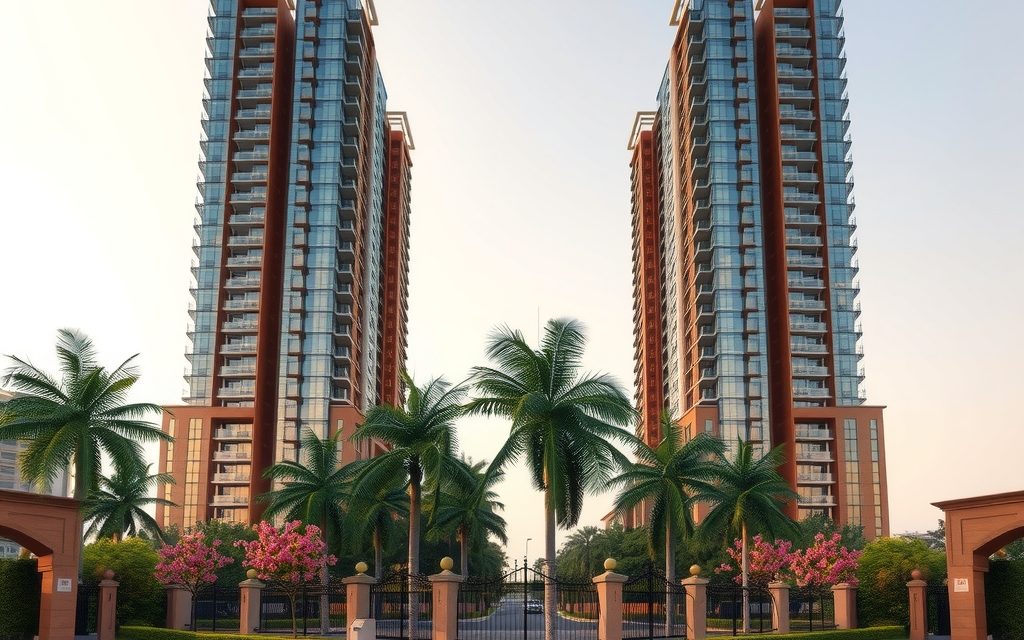
- Red Line metro at Punjagutta, one stop from the Ameerpet Red–Blue interchange
- Older flats with an OC about ₹7,500–₹10,500 per sq ft; new redevelopment ₹11,500–₹15,000
- Flats without an OC typically trade 10–20% below compliant ones and are harder to finance
- Documented, allotted parking can add several lakh rupees to resale value
- NIMS, nearby hospitals and the central business belt keep 1 and 2 BHK rental demand steady
| What | Indicative range | Note |
|---|---|---|
| Older flat, compliance gaps or main-road setting | ₹6,000 – ₹8,000 per sq ft | indicative, Oct 2026 |
| Older flat, 1980s–2000s, with OC | ₹7,500 – ₹10,500 per sq ft | indicative, Oct 2026 |
| Resale, 10–15 years old, interior lane | ₹9,500 – ₹12,500 per sq ft | indicative, Oct 2026 |
| New redevelopment, Dwarakapuri and Banjara Hills side | ₹11,500 – ₹15,000 per sq ft | indicative, Oct 2026 |
| 2 BHK rent, older building | ₹25,000 – ₹38,000 per month | indicative, Oct 2026 |
Ranges reflect recent transactions and advisor observation as of 2026-10. Always verify against the sub-registrar market value and the specific parcel.
Apartments in Punjagutta come with a trade that every buyer should understand before viewing a single flat: you get one of the most connected addresses in Hyderabad, at the junction where Banjara Hills, Ameerpet, Somajiguda and Khairatabad meet, and in return you accept older buildings, heavy traffic and very little parking. Punjagutta is the city's busiest commercial crossroads, home to the Nizam's Institute of Medical Sciences, the Hyderabad Central mall, a Red Line metro station one stop from the Ameerpet interchange, and a wall of showrooms and offices. Behind that frontage are residential colonies with apartment buildings, mostly from the 1980s to the 2000s, and a slow stream of small redevelopments. This guide covers indicative prices as of October 2026, works through the resale economics, and explains the parking and occupancy certificate checks that decide whether a Punjagutta flat is a good buy or a long-term headache.
Our Punjagutta clients are usually practical people. Doctors and staff at NIMS and the nearby hospitals, professionals working in the central business belt, families who want to stay close to relatives in older central neighbourhoods, and investors who see a dependable rental pool around a major hospital and a metro station. Very few are looking for amenities; most are looking for a fair price on a sound flat in a convenient place. That is a reasonable goal here, provided you do the paperwork properly.
Why apartments in Punjagutta still make sense
The first reason is reach. From Punjagutta, Banjara Hills Road No. 1 and the GVK One mall are a few minutes away, Somajiguda and Begumpet under fifteen minutes, and the Abids and Koti business districts within about twenty-five minutes outside peak hours. Punjagutta station on the Red Line runs directly to Miyapur in the north-west and LB Nagar in the south-east, and the Ameerpet interchange, one stop north, connects to the Blue Line for HITEC City and Secunderabad. Few residential neighbourhoods let a household with members working in three different parts of the city all commute reasonably.
The second reason is the institutional economy. NIMS is one of the largest public hospitals in the state, and the hospitals of Somajiguda and Banjara Hills are minutes away. Along with offices, banks and retail, this creates a constant flow of people who need somewhere to live within a short distance, which keeps rental demand steady in almost any market.
The third reason is price relative to location. Because much of the stock is older and the setting is busy, Punjagutta flats often cost noticeably less per square foot than comparable homes in Banjara Hills or the quieter parts of Somajiguda, even though they share many of the same conveniences. For buyers who will live with the trade-offs, that discount is the opportunity.
Punjagutta apartment market snapshot (October 2026)
- Location: Punjagutta, Hyderabad district, pincode 500082; between Ameerpet to the north, Somajiguda to the east, Khairatabad to the south and Banjara Hills to the west.
- Stock: stilt-plus-four and stilt-plus-five apartment buildings from the 1980s–2000s, some newer mid-rises and small redevelopment projects.
- Indicative pricing: about ₹6,000 to ₹8,000 per sq ft for older flats with compliance gaps; ₹7,500 to ₹10,500 for older flats with an OC; ₹11,500 to ₹15,000 for new redevelopment on interior lanes.
- Landmarks: Punjagutta metro station, NIMS, Hyderabad Central mall, Nagarjuna Circle.
- Rental pool: hospital staff, professionals, students and families; strong demand for 1 and 2 BHK homes.
- Key checks: occupancy certificate, deviations from the sanctioned plan, allotted parking and approved use.
Punjagutta's residential map
The commercial frontage along the main roads hides several distinct residential pockets. Each has its own price level and its own typical problems.
Dwarakapuri Colony and the Banjara Hills side
West of the main junction, the colonies leading towards Banjara Hills Road No. 1 are the most residential part of Punjagutta. Streets are narrower than in Banjara Hills but calmer than the main road, and some older houses have been redeveloped into small apartment buildings with cellar parking. Prices here are at the top of the Punjagutta range, and new redevelopment flats can approach the lower end of Banjara Hills older-stock pricing. Buyers drawn to this side should compare with our guide to apartments in Banjara Hills.
The NIMS and Erramanzil side
Towards NIMS and Erramanzil Colony, the stock is older and the rental market is driven by the hospital. One and two bedroom flats here are in steady demand from medical staff, students and the families of patients. Many buildings date from the 1980s and 1990s, and approval history varies, so this is where careful checking matters most. Investors who choose well can achieve some of the better yields in central Hyderabad.
The Ameerpet edge
To the north, Punjagutta merges into Ameerpet and the coaching economy around the metro interchange. Buildings are dense, flats compact, and tenants often students and young professionals. Prices are similar to or slightly above Ameerpet's. Our guide to apartments in Ameerpet covers that market and the SR Nagar redevelopment belt in detail.
Behind the commercial frontage
Immediately behind the showrooms and offices of the main roads are small residential lanes with older buildings, some partly converted to commercial use. These flats are often the cheapest in Punjagutta and the most complicated. Noise, parking, mixed use and approval gaps are common. They can work for investors who understand the risks and price them in, but they are rarely good family homes.
Indicative prices for apartments in Punjagutta, October 2026
The ranges below reflect recent transactions and advisor observation as of October 2026. They are indicative, not quotations. In older central stock, the building's compliance record and parking often explain more of the price than the size of the flat.
| Segment | Typical size | Indicative rate per sq ft | Indicative ticket |
|---|---|---|---|
| Older flat, compliance gaps or main-road setting | 800–1,300 sq ft | ₹6,000 – ₹8,000 | ₹50 lakh – ₹1 crore |
| Older flat, 1980s–2000s, with OC | 1,000–1,600 sq ft | ₹7,500 – ₹10,500 | ₹75 lakh – ₹1.65 crore |
| Resale, 10–15 years old, interior lane | 1,200–1,900 sq ft | ₹9,500 – ₹12,500 | ₹1.15 crore – ₹2.35 crore |
| New redevelopment, Dwarakapuri and Banjara Hills side | 1,500–2,600 sq ft | ₹11,500 – ₹15,000 | ₹1.75 crore – ₹3.9 crore |
Rents in Punjagutta
| Unit and letting type | Indicative monthly rent |
|---|---|
| 1 BHK, older building | ₹14,000 – ₹22,000 |
| 2 BHK, older building | ₹25,000 – ₹38,000 |
| 3 BHK, older or recent building | ₹35,000 – ₹65,000 |
| Furnished 1–2 BHK near NIMS, medium stay | ₹25,000 – ₹50,000 equivalent |
Resale economics: what a Punjagutta flat really costs and earns
Older central flats look cheap on a per-square-foot basis, but the purchase price is only part of the bill. Before making an offer, we build a simple all-in cost and income picture for each shortlisted flat. Here is how that works for a typical case.
A worked example
Take a 1,300 square foot 2 BHK in a 1990s building with an OC, priced at ₹8,800 per square foot, or about ₹1.14 crore. Registration charges of roughly 7.5 percent of the higher of market value and price add about ₹8.6 lakh if the price is the higher figure. A building of this age usually needs work: rewiring, plumbing, a kitchen and bathrooms might cost ₹8 lakh to ₹15 lakh. Add a few thousand rupees of legal and documentation costs, and the all-in figure lands at roughly ₹1.31 crore to ₹1.38 crore.
If that flat rents for ₹32,000 a month, the gross yield on the all-in cost is about 2.8 to 2.9 percent. Deduct maintenance, property tax, a month of vacancy every couple of years and occasional repairs, and the net yield falls to roughly 2.2 to 2.5 percent. These figures are illustrative; your own numbers will depend on the flat, the building and the tenant. The point is that renovation and charges can change the picture materially, and a flat that needs heavy work is only a bargain if it is priced to reflect it.
The OC discount
Flats in buildings without an occupancy certificate typically trade 10 to 20 percent below comparable compliant flats. That discount is not free money. It reflects the difficulty of getting a bank loan, the narrower pool of future buyers and the risk of enforcement on deviations. A buyer who pays cash and plans to hold for a long time may accept that risk at the right price; a buyer who needs a loan or may sell within a few years usually should not.
The parking premium
In Punjagutta, an allotted covered car park can be worth several lakh rupees in resale value, because so many buildings have fewer spaces than flats. Two otherwise identical flats can differ meaningfully in price simply because one has a documented parking slot and the other does not.
Parking: the scarcest asset in a Punjagutta building
Most older Punjagutta buildings were designed when few households had cars. A stilt that comfortably held eight cars in 1995 may now be asked to hold twenty. Parking disputes are among the most common problems in central Hyderabad apartment associations, and they directly affect both daily life and resale value.
- Count it yourself: visit at night, when residents are home, and count the cars against the available spaces.
- Read the documents: check whether the sale deed of the flat you are buying mentions an allotted parking space, and whether that space is identified on a plan. A verbal assurance from the seller is not enough.
- Check the association rules: some buildings allot spaces by flat, others operate first-come systems, and some charge for extra slots.
- Look at the street: if residents park on the road, expect enforcement challenges and friction with neighbours.
- Consider two-wheelers: in buildings where car parking is impossible, secure two-wheeler parking still matters for tenants.
Our guide to occupancy certificates, UDS and car parking in Hyderabad explains how parking is documented and why it matters when you sell.
The OC question in older Punjagutta buildings
A large share of Punjagutta's 1980s and 1990s stock was built at a time when occupancy certificates were not consistently obtained, and some buildings added floors, enclosed balconies or converted stilts beyond what the sanctioned plan allowed. Telangana has run building regularisation schemes in the past that allowed certain deviations to be regularised on payment of fees, and some buildings hold such papers. Others simply have no OC.
For a buyer, the questions are practical. Is there a sanctioned plan, and does the building match it? Is there an OC, or a regularisation order covering the deviations? If not, how many floors or units are outside the approval, and does the flat you are buying sit on one of them? A flat on an unauthorised top floor carries far more risk than one on a sanctioned lower floor of the same building. Banks will often decline to lend on non-compliant buildings, which affects both you and your eventual buyer. We review the sanctioned plan, the OC or regularisation order and the building as built, and we tell clients plainly when a flat is not worth the risk.
Metro, roads and daily life in Punjagutta
- Metro: Punjagutta station on the Red Line; Ameerpet interchange one stop north for the Blue Line; Irrum Manzil one stop south.
- Roads: the Punjagutta junction links Ameerpet, Banjara Hills Road No. 1, Khairatabad and Somajiguda, with a flyover easing some through traffic.
- Healthcare: NIMS on the doorstep, with Somajiguda and Banjara Hills hospitals within minutes.
- Shopping: Hyderabad Central and GVK One nearby, plus extensive street retail along the main roads.
- IT corridor: HITEC City is typically 25 to 40 minutes by road, or around 20 minutes by metro via Ameerpet.
- Airport: RGIA at Shamshabad is usually 45 to 65 minutes away, joining the PV Narasimha Rao Expressway at Mehdipatnam.
Daily life is convenient but loud. Traffic at the junction is heavy for much of the day, and main-road flats get the noise. Schools are spread across Banjara Hills, Somajiguda, Begumpet and Ameerpet, all within a short drive. Open space is limited within Punjagutta itself, though KBR National Park and Necklace Road are short drives away. For a quieter central alternative with more residential lanes, our guide to apartments in Somajiguda is the natural comparison.
RERA and legal checklist for Punjagutta apartments
- Title chain: a thirty-year encumbrance certificate and link documents for the land and the flat, including earlier flat sales in the same building.
- Sanctioned plan: the GHMC building permission and plan, compared with the building as it stands today.
- Occupancy certificate or regularisation order: confirm which floors and units are covered.
- TS RERA: for new projects above 500 square metres of land or eight units; verify on the TS RERA portal. Many small redevelopments are exempt.
- Parking and UDS: the allotted space and the undivided share of land stated in the sale deed.
- Approved use: residential approval, and the extent of commercial use within the building.
- Fire NOC: where the building height requires one.
- Dues and disputes: property tax, utilities, association dues, and any litigation affecting the building or the land.
Payment, loans and charges
Most Punjagutta transactions are resales: a token, an agreement of sale with an advance, and the balance at registration. Banks usually lend up to about 75 to 80 percent of value on compliant buildings, but may decline older buildings without an OC or with significant deviations. New redevelopment flats are typically sold on construction-linked plans.
| Charge | Approximate rate | Notes |
|---|---|---|
| Stamp duty | ~5.5% | On the higher of market value and price |
| Transfer duty | ~1.5% | Municipal areas |
| Registration fee | ~0.5% | Together about 7.5% |
| GST, new under-construction flats | 5% without input tax credit | Not on resales or completed flats with an OC |
| TDS | 1% above ₹50 lakh, resident seller | Section 195 if the seller is an NRI |
| Maintenance | ₹2 – ₹4 per sq ft per month | Older buildings may raise special levies for lifts and repairs |
Registration takes place at the jurisdictional sub-registrar office, which we confirm from the document schedule. Rates change from time to time, so we verify current figures at the SRO on the day; market values and slot booking are available on the Telangana registration portal. If you are buying from an NRI seller, our guide to TDS on property purchases from NRI sellers explains your obligations.
Letting near NIMS and the metro: what tenants actually ask for
Because so many Punjagutta buyers are investors, it is worth knowing what the local tenant pool values. The answers are not the same as in the IT corridor, where tenants compare clubhouses and swimming pools.
Medical staff and hospital-linked tenants
Resident doctors, nurses and administrators want a short walk or a two-minute ride to the hospital, reliable water, power backup for at least lights and fans, and a building where shift workers coming and going at night does not cause friction with neighbours. Furnished one and two bedroom flats suit them well. Families of patients on longer treatment cycles often look for furnished flats on monthly terms; these lets earn more per month but come with higher turnover and management effort.
Professionals and small families
Young professionals working in the central business belt, or commuting to HITEC City by metro, want a flat within walking distance of Punjagutta or Ameerpet station, a modern kitchen and bathroom, and secure two-wheeler parking. Small families add schools within a short drive and a building that feels safe for children. For this group, a well-renovated flat in an older compliant building often lets faster than a dated flat in a newer one.
What to spend on, and what not to
In our experience, the renovations that pay back in Punjagutta are practical: reliable plumbing, a clean modern kitchen, good bathrooms, inverter backup, window treatments that cut traffic noise, and fresh paint. Expensive false ceilings, imported fittings and elaborate interiors rarely raise the rent enough to justify the cost. Noise is the most common complaint from tenants in main-road buildings, so better windows on the road-facing side are often money well spent.
Rental yield and appreciation outlook
Gross yields on long-term lets typically run at about 2.8 to 3.8 percent on purchase price, higher for compact flats near NIMS and the metro and lower for larger family flats. Net yields after maintenance, tax and renovation are lower, as the worked example above shows.
Appreciation in Punjagutta is driven by centrality, the metro and gradual redevelopment rather than new supply. Values in compliant, well-maintained buildings with parking have historically held up well, while non-compliant buildings have lagged. Over the next few years, the factors to watch are redevelopment activity in the residential colonies, any traffic improvements at the junction, and further metro connectivity in the city. The main risks are building age, compliance gaps, congestion and the possibility that central commercial pressure gradually displaces residential use on some lanes.
NRI guide to buying a Punjagutta apartment
- Eligibility: NRIs and OCI cardholders can buy residential apartments without RBI approval.
- Funds: through NRE, NRO or FCNR accounts or inward remittance; keep all bank records for repatriation.
- Signing from abroad: sign a property-specific power of attorney at the Indian embassy or consulate, have it adjudicated in Telangana on arrival, and your attorney can execute the sale deed at the SRO.
- Renting out: rental income is taxable in India; tenants paying rent to an NRI may need to deduct TDS. A local caretaker is essential for older buildings.
- Exit and tax: when you eventually sell, your buyer must withhold tax under Section 195, calculated at the capital-gains rate with surcharge and cess rather than the 1% that applies to resident sellers. Long-term gains attract 12.5 percent without indexation under the 2024 rules, and applying for a lower-deduction certificate can reduce the amount withheld. A chartered accountant should handle the filing.
Our guide to how NRIs buy villas and apartments in Hyderabad covers the process in detail.
Who should buy in Punjagutta, and who should not
Good fit: hospital staff and doctors, central-city professionals, investors seeking dependable rents around NIMS and the metro, and buyers who value connectivity above everything else and are comfortable doing thorough compliance checks.
Poor fit: families wanting quiet streets, open space and amenities; buyers who depend on a loan but are tempted by cheap non-compliant flats; and anyone expecting fast appreciation. For a more residential setting further south-west along the same corridor, our guide to apartments in Masab Tank covers the Banjara Hills edge towards Mehdipatnam.
How NRR Estates helps Punjagutta buyers
We are advisors, not a listing site, and we disclose our fee before you commit. For Punjagutta, our work typically covers:
- Filtering out flats with serious compliance or parking problems before you spend time on them.
- Building an all-in cost and yield model for each shortlisted flat, including renovation.
- Legal review by our advocates: title, encumbrance, sanctioned plan, OC or regularisation, parking documentation, approved use.
- A physical inspection of the building, the stilt and the association's records.
- Negotiation against registered comparables, adjusted for compliance and parking.
- Arranging the home loan, booking the SRO slot, completing registration, and helping you find a tenant after handover.
Punjagutta apartment FAQs
How much do apartments in Punjagutta cost?
As of October 2026, older flats with compliance gaps or on main roads typically sell for about ₹6,000 to ₹8,000 per square foot, and older 1980s to 2000s flats with an occupancy certificate for about ₹7,500 to ₹10,500. Resales ten to fifteen years old on interior lanes sit around ₹9,500 to ₹12,500, and new redevelopment flats on the Dwarakapuri and Banjara Hills side around ₹11,500 to ₹15,000. These are indicative ranges from recent transactions and advisor observation, not quotations. Compliance, parking and the specific lane explain most of the difference between buildings.
Is Punjagutta a metro interchange?
Not strictly. Punjagutta station is on the Red Line between Miyapur and LB Nagar. The interchange with the Blue Line, which runs towards HITEC City and Secunderabad, is at Ameerpet, one stop north. In practice that makes Punjagutta almost as well connected: a resident can reach HITEC City in roughly twenty minutes by metro with one change at Ameerpet, or head south towards Khairatabad, Lakdikapul and the old city directly. Flats within walking distance of the station command a modest premium and let faster to professionals and students.
Should I buy a Punjagutta flat in a building without an OC?
Only with clear eyes and a matching price. Flats in buildings without an occupancy certificate typically trade 10 to 20 percent below compliant ones because banks often decline to lend on them, the pool of future buyers is smaller and deviations may face enforcement. Check whether the flat sits on a sanctioned floor or on an addition outside the approved plan, and whether any regularisation order covers the deviations. A cash buyer planning a long hold may accept the risk at the right price; a buyer who needs a loan or may sell soon usually should not.
How important is parking when buying in Punjagutta?
Very important. Many older Punjagutta buildings have fewer parking spaces than flats, and parking disputes are common. A documented, allotted covered space can add several lakh rupees to resale value and makes the flat easier to let. Before buying, visit at night to count cars against spaces, check that the sale deed names an allotted slot, ideally marked on a plan, and read the association's parking rules. If residents park on the street, expect friction and enforcement problems. Even where car parking is impossible, secure two-wheeler parking matters to tenants.
What does a Punjagutta flat cost all-in, beyond the price?
Add registration charges of roughly 7.5 percent, made up of about 5.5 percent stamp duty, 1.5 percent transfer duty and 0.5 percent registration fee, calculated on the higher of market value and price. Older flats often need ₹8 lakh to ₹15 lakh of renovation for wiring, plumbing, kitchen and bathrooms. Add legal and documentation costs, and possibly a special levy if the building is planning lift or structural repairs. On a ₹1.14 crore flat, the all-in figure can reach roughly ₹1.31 crore to ₹1.38 crore. We verify current rates at the SRO on the day.
What rental yield do Punjagutta apartments give?
Gross yields on long-term lets typically run at about 2.8 to 3.8 percent of the purchase price, higher for compact one and two bedroom flats near NIMS and the metro. As of October 2026, an older 2 BHK commonly rents for about ₹25,000 to ₹38,000 a month and a 3 BHK for ₹35,000 to ₹65,000. After maintenance, property tax, vacancies and renovation, net yields are lower, often closer to 2.2 to 2.8 percent. Furnished medium-stay lets to medical staff and patients' families can earn more but need active management.
Which part of Punjagutta is best for families?
The colonies on the Banjara Hills side, around Dwarakapuri Colony and towards Road No. 1, are generally the most residential and the calmest, with some newer redevelopment buildings that have cellar parking. They cost more than the rest of Punjagutta but offer a far better daily experience. The NIMS and Erramanzil side suits investors targeting hospital-linked tenants, and the lanes immediately behind the commercial frontage are usually better avoided by families because of noise, mixed use and approval gaps. Somajiguda is worth comparing if you want similar centrality with quieter lanes.
Can NRIs buy and rent out a Punjagutta apartment?
Yes. NRIs and OCI cardholders can buy residential apartments without RBI approval, paying through NRE, NRO or FCNR accounts or by inward remittance, and a specific power of attorney adjudicated in Telangana lets a trusted person register on their behalf. Rental income is taxable in India, and tenants may need to deduct TDS when paying an NRI landlord. Older buildings need a reliable local caretaker. On a later sale, the buyer deducts TDS under Section 195; long-term gains are taxed at 12.5 percent without indexation since 2024. Consult a chartered accountant.
Related guides
Ameerpet sits on the metro's main interchange and the city's biggest coaching hub, so rents are strong and stock is dense. The catch is older buildings with setback and OC gaps. Here is how to buy well.
Older central apartment buildings, boutique redevelopments and a few premium mid-rises behind Raj Bhavan Road, with indicative October 2026 prices, redevelopment economics, mixed-use and height checks, and hospital-driven rental demand.
Older apartments, boutique redevelopments and premium residences across Banjara Hills Road No. 1 to 14, with indicative prices, land-led UDS value, redevelopment checks and hospital-corridor rental demand.
Older colony flats, mid-rises and newer buildings between Banjara Hills, Lakdikapul and Mehdipatnam, with indicative October 2026 prices, a pocket-by-pocket guide, the central location premium, airport access and drainage and OC checks.
Begumpet offers premium, low-density mid-rise flats a short ride from both Secunderabad and HITEC City. Supply is thin and heights are capped near the old airport. Here is what it costs and what to verify.

The three apartment checks most Hyderabad buyers skip: the occupancy certificate from GHMC or HMDA, the undivided share of land in your deed, and a properly allotted parking slot, plus corpus and maintenance terms.

Which Hyderabad micro-markets suit NRIs, what each budget buys, new versus resale, RERA and OC checks, GST, TDS for resident and NRI sellers, rental yields, management and repatriation of sale proceeds.
Adibatla's new towers put affordable gated flats minutes from TCS, the aerospace SEZ and the Bongloor ORR exit. Pockets, indicative rates, rents, how to vet newer builders and how much Future City to price in.