Agriculture & Farm Land in Pocharam, Hyderabad East
Farmland behind the Infosys and Mindspace campuses on the Warangal highway, 4–6 km from the ORR. Upland farms and Musi-belt paddy survive; HMDA zoning, river buffers and water quality decide what a parcel is worth.
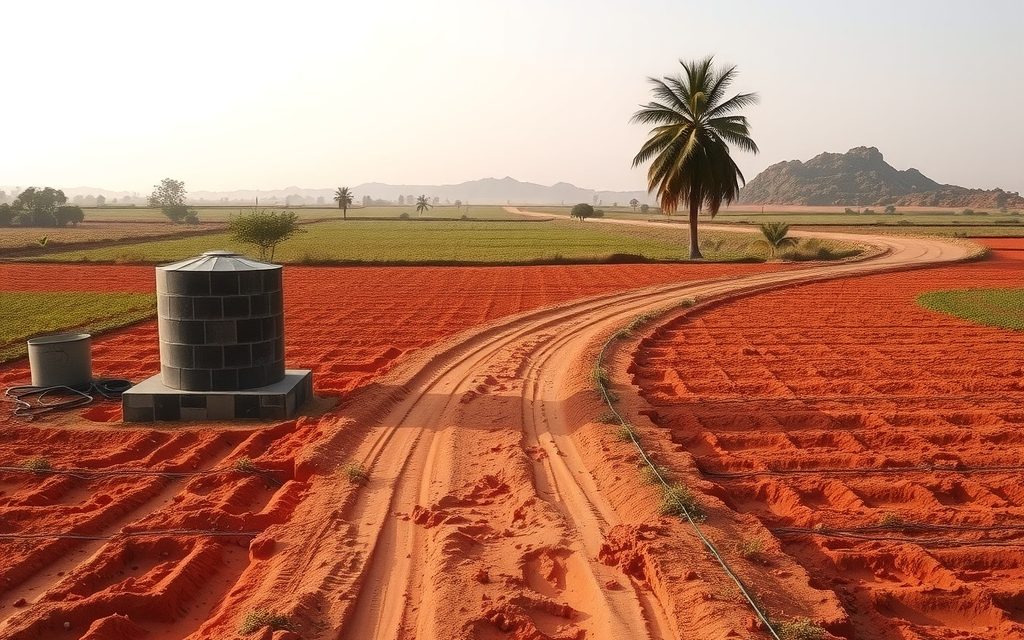
- About 4–6 km from the ORR Ghatkesar interchange; Uppal about 12 km on NH 163
- Agricultural land registers at the Ghatkesar Tahsildar office; converted land at the Ghatkesar or Uppal SRO
- About two-thirds of farms on borewells (300–600 ft); Musi-irrigated fields need water and soil tests
- Red loam uplands and dark alluvial soil near the Musi; paddy, fodder, vegetables, some mango
- Typical parcels 1–5 acres in outer villages; residential-zoned acreage near the municipality
| What | Indicative range | Note |
|---|---|---|
| Warangal highway or main-road frontage near Pocharam | ₹6 Cr – ₹12 Cr per acre | indicative, Oct 2026 |
| In or at the edge of Pocharam municipality, BT road | ₹4 Cr – ₹8 Cr per acre | indicative, Oct 2026 |
| Villages 3–6 km out towards Yamnampet and Edulabad | ₹2 Cr – ₹4 Cr per acre | indicative, Oct 2026 |
| Musi-belt paddy land towards Pratapasingaram | ₹1.5 Cr – ₹3 Cr per acre | indicative, Oct 2026 |
| Farm plots in gated farm ventures | ₹8 L – ₹16 L per gunta | indicative, Oct 2026 |
Ranges reflect recent transactions and advisor observation as of 2026-10. Always verify against the sub-registrar market value and the specific parcel.
Pocharam is the eastern edge of Hyderabad's IT map. The Infosys campus and Raheja Mindspace sit just off the Warangal highway (NH 163) a few kilometres from the Outer Ring Road's Ghatkesar interchange, and around them a young municipality in Ghatkesar mandal of Medchal-Malkajgiri district has filled up with apartments, gated villas and HMDA plot ventures. Behind that frontage, towards the Musi river in the south and the Ghatkesar villages to the east, there is still farmland: paddy fields irrigated by Musi channels, fodder plots, vegetable farms and a few mango orchards. Buyers asking about agriculture land in Pocharam are usually weighing that farmland against the city that is visibly arriving next to it. This guide covers where farm parcels survive, why Musi water needs careful thought, how HMDA zoning decides value, indicative per-acre prices as of October 2026, and how registration works at the Ghatkesar Tahsildar office.
One clarification before we start. This page is about Pocharam on the eastern side of Hyderabad. It is not the Pocharam reservoir and wildlife sanctuary on the Medak–Kamareddy border, and not the village of the same name in Patancheru mandal. Sellers and online listings mix these up more often than you would expect, so always confirm the district, mandal and survey number.
Why Pocharam is on the list for eastern farm-land buyers
The eastern corridor has grown more slowly than the west, which is exactly why it attracts a certain kind of buyer. Prices are lower than in comparable distances from Gachibowli, the Warangal highway and the ORR give strong road access, and the IT campuses provide an employment anchor that most eastern villages lack. Add the new Cherlapally railway terminal a short drive away and the planned growth along the Warangal highway towards Bibinagar and AIIMS, and the logic for land banking is clear.
The buyers we meet fall into three groups. Families from Uppal, Boduppal, Habsiguda and Secunderabad want a weekend farm or ancestral-style plot within half an hour. Long-term investors want acreage near an IT node before it is fully plotted. And local landowners want to consolidate or understand what their holdings are worth as the municipality expands. Each group needs a different part of the map.
The IT park pressure, explained
An IT campus changes the land market around it in a predictable sequence. First come rental apartments and paying-guest buildings for employees. Then plot ventures and villa projects for those who want to own nearby. Then commercial frontage: restaurants, hostels, offices. Each wave pushes agricultural land further out and raises the price of what remains. Around Pocharam, the first two waves are well advanced. That is why genuine farmland at farm prices now starts several kilometres from the campuses, and why parcels close to them trade as future layout land. If you want to live near the campuses rather than farm, our pages on apartments in Pocharam and villas in Pocharam are more relevant.
Location and connectivity from Pocharam
Pocharam sits north of the Warangal highway between Uppal and Ghatkesar. Approximate distances:
- ORR Ghatkesar interchange: about 4 to 6 km.
- Uppal junction and the Uppal metro station: about 12 km west along NH 163.
- Secunderabad: roughly 22 to 25 km.
- Cherlapally railway terminal: about 8 to 10 km.
- Gachibowli and the Financial District: about 50 km via the ORR, typically an hour or more.
- Rajiv Gandhi International Airport: about 45 km via the ORR.
- Ghatkesar town: about 5 km east; Bibinagar and AIIMS: about 20 km further along the highway.
The Warangal highway is the spine, carrying traffic to Bhuvanagiri, Yadagirigutta and Warangal. The MMTS suburban rail network reaches Ghatkesar, and the Cherlapally terminal has taken pressure off Secunderabad for long-distance trains, which makes the east more practical for families who travel often. Village roads run south from the highway towards Pratapasingaram, Korremula and the Musi, and north and east towards Yamnampet, Chowdariguda and Edulabad.
The Regional Ring Road on the eastern side
The planned Regional Ring Road passes well beyond Pocharam, through the Bhuvanagiri region to the east. Its effect here is indirect: it strengthens the long-term case for the Warangal highway corridor rather than for Pocharam specifically. Treat it as background, not as a reason to pay a premium on a particular parcel.
Soil, water and what grows around Pocharam
Two landscapes meet here. On the higher ground north of the highway, soils are red loams over granite, gravelly in places, suited to vegetables, fodder and orchards with drip irrigation. In the low ground towards the Musi, soils are heavier and darker, built up by the river over centuries, and traditionally used for paddy.
By our observation, around two-thirds of farmland in the Pocharam–Ghatkesar belt relies on borewells, typically 300 to 600 feet deep, with yields that vary sharply between neighbouring survey numbers and weaken near dense housing. A smaller share near the river is irrigated by Musi water through channels and lifts, some land is tank-fed, and the rest is rain-fed.
Musi water: useful, abundant and a real concern
The Musi carries a large share of Hyderabad's treated and partially treated wastewater eastwards, which is why the river flows year-round when most streams in Telangana run dry. For decades, farmers downstream of the city have used that water to grow paddy, para grass for dairy fodder and leafy vegetables. It is reliable and nutrient-rich, and it is also the reason for concern. Studies over the years have reported pathogens and heavy metals in Musi water, in soils irrigated by it and in some crops grown there.
For a buyer, the practical position is this:
- For a land bank, Musi irrigation matters less than zoning and buffers.
- For a weekend farm where your family will eat the produce, Musi-irrigated land is a poor choice unless you switch to bore or harvested rainwater and test the soil.
- For dairy or fodder, understand the water quality and its effect on animals before investing.
We arrange laboratory tests of bore water and soil for any parcel in the Musi belt and record the results in your file.
The Musi rejuvenation and its buffers
The state has announced a major rejuvenation and riverfront development programme for the Musi, including treatment capacity, cleaning and development along the banks. For riverbank land, this cuts both ways. Cleaner water and better infrastructure would improve the area. But river buffers, flood zones and land needed for the project could restrict what owners can do and, in some stretches, lead to acquisition. Any parcel within a short distance of the river must be checked against the river boundary, the flood line, the buffer and the latest project plans before any advance.
Crops you will see
Paddy and para grass near the river, vegetables such as tomato, brinjal, okra and leafy greens on the uplands for Uppal and city markets, maize and fodder on rain-fed land, and some mango and guava orchards in the outer villages. Many parcels close to the municipality are fallow and fenced, held for conversion.
HMDA zoning: the number that decides value in Pocharam
Pocharam and the surrounding Ghatkesar villages lie within HMDA's planning area. Every survey number carries a land-use designation in the master plan, and in a fast-urbanising municipality that designation matters more than soil or water.
- Residential zones: land trades at layout or villa prices, even while it is farmed. Conversion and layout approval are realistic.
- Commercial or mixed zones along the highway: valued on frontage and depth.
- Peri-urban, agricultural or conservation zones: lower prices, better suited to genuine farming, conversion unlikely in the near term.
- Water bodies and buffers: tanks in the area, the Musi and nalas carry full tank level, flood and buffer restrictions that override everything else.
- Master plan roads: proposed widening or new roads can take a strip from a parcel, or improve its access.
Two parcels a kilometre apart can differ in value by a factor of two because of zoning alone. Ask for the zoning of the exact survey number before you discuss price, and verify it yourself on hmda.gov.in or through us. Conversion to non-agricultural use requires NALA conversion followed by layout or building approval; our NALA conversion guide explains the process.
Zoning also shapes how a parcel will sell later. A residential-zoned acre near the municipality has a deep pool of future buyers: developers, villa builders and investors. An agricultural-zoned acre further out sells mainly to other farmers and weekend buyers, a smaller and more price-sensitive group. Neither is wrong, but you should know which pool you will be selling into before you buy, because it decides both the exit price and how long the exit takes.
Indicative prices for agriculture land in Pocharam
The ranges below reflect recent transactions and advisor observation as of October 2026. They are indicative, not quotes. Zoning, frontage, approach road, water, title quality and distance from the river all move individual parcels outside these bands.
| Location and parcel | Indicative range | Comment |
|---|---|---|
| Warangal highway or main-road frontage near Pocharam | ₹6 Cr – ₹12 Cr per acre | Commercial expectation; check road widening |
| In or at the edge of Pocharam municipality, BT road | ₹4 Cr – ₹8 Cr per acre | Residential-zoned land trades as future layout land |
| Villages 3–6 km out towards Yamnampet, Chowdariguda and Edulabad | ₹2 Cr – ₹4 Cr per acre | Mixed farm and land-bank demand |
| Musi-belt paddy land towards Pratapasingaram and Korremula | ₹1.5 Cr – ₹3 Cr per acre | Verify river buffer, flood line and project plans first |
| Farm plots in gated farm ventures | ₹8 L – ₹16 L per gunta | Confirm independent titles and approvals |
A useful cross-check is the plot market. Approved plots in Pocharam typically trade at ₹10,000 to ₹20,000 per square yard. After a layout gives up roads, open spaces and amenities, a developer can usually sell only a little over half of an acre's 4,840 square yards as plots, and must also bear approval and development costs. That arithmetic explains why residential-zoned raw land near the municipality trades at ₹4 crore to ₹8 crore an acre, and why genuinely agricultural land further out costs much less.
Parcel types around Pocharam
Patta farmland in the outer villages
Plain agricultural land with a pattadar passbook, typically 1 to 5 acres, occasionally more in the villages towards Ghatkesar and Keesara. Family holdings with several co-owners are common.
Musi-belt paddy fields
Low-lying, river-irrigated land, often in small fragments. Fertile and productive but carrying water-quality, flood and buffer questions that must be answered before purchase.
Residential-zone acreage near the municipality
Land that is still farmed, or more often fallow, but zoned residential. It is bought for conversion and layout, and priced accordingly. Buyers who want a plot to build on may find approved open plots in Pocharam simpler.
Farm plots in gated farm ventures
Gunta-sized plots with fencing and plantation, usually further out. This close to a municipality, check carefully that the venture is not an unapproved residential layout on agricultural land.
Setting up a weekend farm near Pocharam: realistic costs
For buyers who want to use the land rather than simply hold it, the setup budget often surprises. Indicative figures as of October 2026, varying with parcel size, shape and terrain:
- Boundary fencing with stone or concrete posts and chain-link: roughly ₹2.5 lakh to ₹5 lakh per acre of perimeter. Near a growing municipality, a solid boundary is the first defence against encroachment and debris dumping.
- Borewell with pump and wiring: ₹1.5 lakh to ₹4 lakh, with yield never guaranteed. A hydrogeologist's point survey costs little and improves the odds.
- Drip irrigation for vegetables or an orchard: commonly ₹50,000 to ₹1.2 lakh per acre before any subsidy.
- Farm pond and rainwater recharge: valuable everywhere, and especially useful if you want to avoid Musi water entirely.
- A basic farm shed or store: modest structures for tools and a pump are generally accepted on farmland, but anything resembling a dwelling needs conversion and permission.
- Caretaker and upkeep: a local caretaker or a lease to a neighbouring farmer keeps the land in use and visibly possessed.
Upland parcels north of the highway, with a working bore and a farm pond, tend to make the most practical weekend farms. They avoid the river questions, drain well in the monsoon and sit closer to the roads families actually use.
Legal checklist for Telangana agricultural land, Pocharam edition
- Pattadar passbook in the seller's name matching the survey number and extent.
- Bhu Bharati record with no prohibited, dispute or acquisition flag, checked on dharani.telangana.gov.in.
- Pahani / 1B records across years confirming possession and cultivation.
- Encumbrance certificate for 30 years or more.
- Link documents to the original patta or grant, with succession and partition papers.
- Survey number and FMB sketch, and a licensed survey on the ground. In a municipality, also check whether any part has been mapped as a road or public space.
- NALA status, and whether the municipality or HMDA has any record of conversion or layout on the land.
- Section 22-A prohibited list and assigned land checks.
- 58/59 regularisation papers where relevant.
- Musi buffer, flood line and tank FTL verification, plus any Musi project land requirements.
- HMDA master plan zoning and proposed roads.
- Urban land ceiling history: land near the old urban agglomeration boundary may have ceiling proceedings in its past.
- Forest and agricultural ceiling checks for larger holdings.
- Development agreements or GPAs previously signed by the owner.
Registration: Ghatkesar Tahsildar and the jurisdictional SRO
Pocharam is in Ghatkesar mandal. Unconverted agricultural land registers at the Ghatkesar Tahsildar office, where the Tahsildar acts as joint sub-registrar. After an online slot booking, buyer, seller and witnesses attend with identity documents, and registration and mutation happen together so the passbook moves into the buyer's name.
NALA-converted land, plots, villas and apartments register at the sub-registrar office with jurisdiction over the revenue village, typically the Ghatkesar or Uppal SRO depending on the survey number. We confirm the office before booking.
| Charge | Approximate rate | Notes |
|---|---|---|
| Stamp duty | About 5.5% | On the higher of consideration and government market value |
| Transfer duty | About 1.5% | Collected with stamp duty |
| Registration fee | About 0.5% | Plus mutation and passbook charges |
| TDS under Section 194-IA | Not applicable to rural agricultural land | Land in or near a municipality may not count as rural for income tax; confirm with a CA |
Together these come to roughly 7.5 per cent of market value. Rates and market values change, so verify on registration.telangana.gov.in or at the office on the day.
The TDS point deserves emphasis in Pocharam. For income tax purposes, agricultural land inside a municipality, or within specified distances of municipal limits depending on population, is generally not treated as rural agricultural land. Much of the land around Pocharam is likely to fall in that category, in which case the 1 percent TDS on purchases above ₹50 lakh would apply and the seller's capital gains would be taxable. A CA should confirm the position for the specific survey number before the payment schedule is fixed.
Pocharam against Ghatkesar, Keesara and Bibinagar
Ghatkesar, just east, has more genuine farmland and a wider range of prices, from highway frontage to Musi-side villages; see agriculture land in Ghatkesar. Keesara, to the north, offers quieter, hillier farmland with orchards and farm ventures, at similar or slightly lower prices outside the ORR belt; see farm land in Keesara. Bibinagar, further along the highway in Yadadri Bhuvanagiri district, is cheaper again and anchored by AIIMS, but adds 20 to 30 minutes; see farm land in Bibinagar.
Pocharam's advantage is proximity to the IT campuses, the ORR and the city's eastern suburbs. Its disadvantage is that much of what remains is either priced as plot land or sits in the Musi belt with its water and buffer questions. Buyers who want to farm usually end up a little further out; buyers who want an eastern land bank close to employment often stay.
Mistakes we see in the Pocharam farm-land market
- Confusing the place. Buying on a listing that mixes eastern Pocharam with the Medak reservoir area or the Patancheru village. Fix: confirm district, mandal, village and survey number on the land record before anything else.
- Paying plot prices for conservation land. Assuming all land near the campuses is residential-zoned. Fix: check the master plan zone of the exact survey number.
- Ignoring the river. Buying cheaper Musi-belt land without checking the flood line, buffer and project plans. Fix: a boundary and buffer check before the advance, not after.
- Trusting a farm-plot brochure. Buying a gunta in a "farm venture" that is really an unapproved layout with no independent passbook. Fix: insist on an individual registered title and verify any approval claimed.
- Forgetting tax status. Assuming the land is rural agricultural land and skipping TDS. Fix: get a CA's view on the survey number's tax status before fixing payments.
- Leaving co-owners out. Registering with only some family members signing. Fix: every recorded co-owner, or their legal heirs, must join the sale.
Who should buy farmland around Pocharam, and who should not
Good fit:
- Land bankers with a 7 to 10 year horizon who buy residential-zoned land with clean title and good access.
- Eastern-Hyderabad families wanting a weekend farm within 30 minutes, choosing upland parcels with bore water rather than Musi irrigation.
- Local owners consolidating adjoining parcels.
Poor fit:
- Buyers seeking organic or natural farming on Musi-irrigated land.
- Anyone expecting farm prices close to the IT campuses.
- Buyers unwilling to check river buffers, flood lines and Musi project plans.
- Short-term traders; conversion and approvals take time, and transaction costs are significant.
NRI note: Pocharam farmland and FEMA
NRIs and OCIs cannot buy agricultural land, plantations or farmhouses in India, and cannot receive such land as a gift. They can only inherit it, and can later sell inherited agricultural land only to a resident Indian. Many families in the eastern suburbs have relatives abroad who co-own ancestral land in Ghatkesar mandal; we help verify records, plan partition or sale, and coordinate documents from overseas. For new investment, approved plots, villas and apartments are permitted. Read our NRI guide to agricultural land rules and take CA advice on tax and repatriation.
How NRR Estates helps you buy near Pocharam
- Brief-first search: land bank near the campuses, weekend farm in the uplands or working farm further out.
- Zoning and buffer screening against the HMDA master plan, the Musi river boundary and flood line, tank FTLs and proposed roads.
- Water and soil testing for any parcel with Musi exposure.
- Document verification by an independent advocate, including ceiling history and earlier development agreements.
- Negotiation grounded in registered village comparables and plot-market arithmetic.
- Registration and mutation at the Ghatkesar Tahsildar office or the jurisdictional SRO, with follow-up until the record shows your name.
Our fee is disclosed in writing before you commit. After purchase we can arrange fencing, a caretaker and periodic checks on the land.
Pocharam farm land: frequently asked questions
What is the price of agriculture land in Pocharam per acre?
As of October 2026, indicative ranges run from about ₹1.5 crore to ₹3 crore per acre for Musi-belt paddy land towards Pratapasingaram and Korremula, ₹2 crore to ₹4 crore in villages 3 to 6 km out towards Yamnampet, Chowdariguda and Edulabad, and ₹4 crore to ₹8 crore in or at the edge of Pocharam municipality. Warangal highway and main-road frontage trades at ₹6 crore to ₹12 crore. Gated farm plots sell at about ₹8 lakh to ₹16 lakh per gunta. These figures reflect recent transactions and advisor observation.
Is Musi-irrigated land near Pocharam safe for farming?
It is productive but carries real concerns. The Musi carries much of Hyderabad's treated and partially treated wastewater, which keeps it flowing year-round and has long irrigated paddy, para grass and vegetables downstream. Studies have reported pathogens and heavy metals in the water, irrigated soils and some crops. For a land bank it matters less; for a family weekend farm, prefer upland parcels with bore or harvested rainwater. We test bore water and soil for any parcel in the Musi belt before an advance.
How does the Musi rejuvenation project affect land near the river?
It could help and restrict at the same time. The state's rejuvenation and riverfront programme aims to improve treatment, clean the river and develop the banks, which would improve the area over time. But river buffers, flood lines and land needed for the project may limit what owners can do near the banks, and some stretches could see acquisition. Any parcel close to the river must be checked against the river boundary, flood line, buffer and the latest project plans before you pay anything.
Why does HMDA zoning matter so much in Pocharam?
Because it can double or halve a parcel's value. Pocharam lies within HMDA's planning area, and each survey number carries a land-use designation. Residential-zoned land near the municipality trades at layout prices even while farmed, and conversion is realistic. Agricultural or conservation-zoned land is cheaper and better suited to farming, but conversion is unlikely soon. Highway land may be commercial, and water body buffers override everything. Check the exact survey number's zone, proposed roads and buffers before discussing price.
Where is agricultural land in Pocharam registered?
Pocharam is in Ghatkesar mandal of Medchal-Malkajgiri district, so unconverted agricultural land registers at the Ghatkesar Tahsildar office, where the Tahsildar acts as joint sub-registrar. After an online slot booking, buyer, seller and witnesses attend with identity documents, and registration and mutation happen together. NALA-converted land, plots, villas and apartments register at the sub-registrar office for the revenue village, typically Ghatkesar or Uppal, which we confirm from the survey number.
Does 1% TDS apply when buying farm land near Pocharam?
Possibly. TDS under Section 194-IA does not apply to rural agricultural land, but for income tax purposes land inside a municipality, or within specified distances of municipal limits depending on population, is generally not treated as rural. Much of the land around Pocharam may fall in that category, in which case 1 percent TDS applies to purchases above ₹50 lakh and the seller's capital gains are taxable. Ask a CA to confirm the status of the specific survey number before fixing the payment schedule.
Can NRIs buy agricultural land in Pocharam?
No. Under FEMA rules, NRIs and OCIs cannot purchase agricultural land, plantation property or farmhouses in India, and cannot receive such land as a gift. They can inherit it from a relative and may later sell inherited agricultural land only to a resident Indian. NRIs who want exposure to the Pocharam IT node usually buy approved open plots, villas or apartments, which are permitted. Take CA advice on tax and repatriation of any sale proceeds.
Is Pocharam better than Ghatkesar or Keesara for farm land?
It depends on your goal. Pocharam is closest to the IT campuses, the ORR and the eastern suburbs, but much of what remains is priced as plot land or sits in the Musi belt. Ghatkesar offers more genuine farmland across a wider price range. Keesara is quieter and hillier, with orchards and farm ventures at similar or slightly lower prices outside the ORR belt. Bibinagar is cheaper again but farther out. Land bankers near employment often choose Pocharam; buyers who want to farm usually go further.
Related guides
Colony plots near the Infosys campus, HMDA layouts in Narapally and Annojiguda, and value ventures toward Korremula. Indicative prices, approvals, rental outlook and registration for Pocharam buyers.
Pocharam is east Hyderabad's gated-villa market, built around the Infosys and Raheja IT parks on the Warangal highway and spilling toward Ghatkesar. See township-wise price ranges, commute realities and the RERA, HMDA and builder checks we run.
Pocharam, home to the Infosys and Raheja Mindspace campuses on the Warangal highway, offers new gated flats at east-side prices. Pockets, price bands, commute realities and the legal checks that matter here.
Farm land on Hyderabad's eastern edge where NH 163, the ORR and the MMTS meet. Real agricultural parcels now sit toward the Musi, Keesara and Bibinagar side, priced by zoning and road access.
City-edge farm land beside the ORR on Hyderabad's north-east, around the Keesaragutta temple. Indicative per-acre and per-gunta prices, borewell reality, HMDA zoning and the forest, endowment and access checks Keesara needs.
The closest affordable farm belt east of the ORR, now shaped by AIIMS Bibinagar. Indicative per-acre prices, the Musi water question, HMDA zoning and the Bhoodan and assigned-land checks this belt needs.

NRIs and OCIs cannot buy or receive gifts of agricultural land, plantations or farmhouses; inheritance is the only route. What inherited land allows, why benami workarounds are dangerous, and the lawful alternatives near Hyderabad.
When Telangana farm land needs NALA conversion, how the fee is calculated on government basic value, the online process and timelines, the penalty for building first, and how layout and building approvals follow.