Open Plots in Patancheru, Sangareddy
HMDA plots on the Mumbai highway at the ORR Patancheru exit: Rudraram, Isnapur and Muthangi pockets, indicative per-sq-yd prices, industrial-belt realities and the document checks to run before paying an advance.
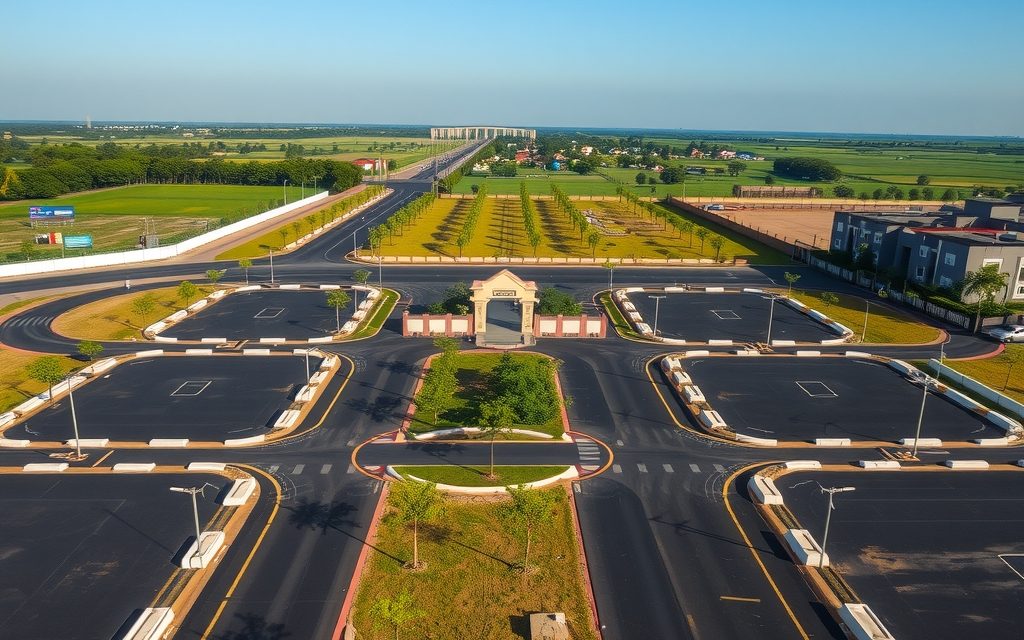
- ORR Patancheru interchange, roughly 20–25 km from Gachibowli
- Sits on NH-65 (Mumbai highway) with IDA Patancheru, Pashamylaram and BHEL nearby
- HMDA plots indicatively ₹18,000–₹48,000 per sq yd depending on pocket
- Common plot sizes: 150, 167, 200 and 240 sq yd
- Check groundwater quality, industrial buffers and lake FTL before buying
| What | Indicative range | Note |
|---|---|---|
| HMDA layout, Muthangi / near ORR interchange | ₹32,000 – ₹48,000 per sq yd | indicative, Oct 2026 |
| HMDA layout, Rudraram / GITAM side | ₹24,000 – ₹38,000 per sq yd | indicative, Oct 2026 |
| HMDA layout, Isnapur / Pashamylaram side | ₹18,000 – ₹30,000 per sq yd | indicative, Oct 2026 |
| Resale plot, older Patancheru town colony | ₹28,000 – ₹45,000 per sq yd | indicative, Oct 2026 |
| DTCP layout, west toward Sangareddy | ₹9,000 – ₹18,000 per sq yd | indicative, Oct 2026 |
Ranges reflect recent transactions and advisor observation as of 2026-10. Always verify against the sub-registrar market value and the specific parcel.
Patancheru is where the Mumbai highway (NH-65) meets the Outer Ring Road on Hyderabad's north-western edge, and for four decades it has been better known for chimneys than for plots. That is changing. Open plots in Patancheru now draw steady enquiries from engineers and supervisors working in the pharma and engineering units around the town, from BHEL and ICRISAT families who grew up here, and from western-corridor buyers who have been priced out of Ameenpur, Tellapur and Kollur. This guide explains what the plot market in Patancheru, Sangareddy district, actually looks like as of October 2026: which pockets are worth a look, what HMDA-approved and DTCP plots cost per square yard, the industrial-belt risks you should not ignore, and the document checks we insist on before a buyer pays a token advance.
We have walked these layouts on foot, from the highway service road behind the bus stand out to Rudraram, Isnapur and Muthangi. What follows is written the way we would brief a client sitting across the table, not the way a listing portal would describe it.
Why open plots in Patancheru are back on buyers' lists
For a long time, Patancheru was a place people commuted to, not a place they bought into. The industrial development areas at Patancheru and Pashamylaram, the bulk-drug and chemical units along the highway, and the old reputation for polluted lakes kept residential demand modest. Three things shifted that over the past decade.
First, the ORR. The Patancheru interchange puts the town roughly 20–25 km from the Gachibowli and Financial District exits, which in practical terms is a 30–40 minute drive outside peak hours. A plot here is no longer "far from the IT corridor"; it is at the far end of the same ring.
Second, price spillover. As plot rates in Tellapur, Kollur and Ameenpur climbed well past what a salaried buyer can stretch to, demand moved one ring outward. Patancheru, Rudraram and Isnapur are where that demand landed for buyers who still want an HMDA layout rather than a far-flung DTCP venture.
Third, the employment base became more diverse. Beyond the older chemical units, the belt now includes engineering suppliers, the Telangana medical devices park at Sultanpur, logistics yards along NH-65, and institutions like GITAM's Hyderabad campus at Rudraram and IIT Hyderabad further west at Kandi. That mix produces genuine end-user demand: people who want to build a house within 15 minutes of work.
None of this makes Patancheru a premium address, and it would be dishonest to pitch it as one. What it offers is HMDA-approved plots at a fraction of western-corridor rates, with real jobs nearby and a highway that is not going anywhere.
Connectivity and growth drivers along the Mumbai highway
NH-65 and the ORR interchange
NH-65 runs from Pune through Solapur, Zaheerabad and Sangareddy into Hyderabad, and Patancheru sits right at the point where it crosses the ORR. Heading east, the highway carries you through BHEL Ramachandrapuram, Chandanagar and Miyapur into the city. Heading west, Sangareddy town is about 25 km away. The ORR interchange is the real asset: it links Patancheru to Gachibowli, Kokapet and the airport in the south, and to Medchal and Shamirpet in the north, without touching city traffic.
Industrial parks and institutions
- IDA Patancheru and IDA Pashamylaram — long-established industrial areas with pharma, chemical and engineering units employing thousands of skilled and semi-skilled workers.
- BHEL Ramachandrapuram — the public-sector township just east of the town that anchored the area's first wave of housing.
- ICRISAT — the international crop research campus, a large green buffer that also keeps a section of land permanently out of the development pipeline.
- Medical devices park at Sultanpur (Ameenpur mandal) — a newer cluster that has added white-collar manufacturing jobs.
- Education — GITAM at Rudraram, IIT Hyderabad at Kandi, and a string of engineering colleges along the highway.
Metro, rail and RRR — what is planned versus what is built
A Miyapur–Patancheru metro extension has featured in the state's Phase 2 metro proposals. As of October 2026, treat it as a proposal: alignment, funding and timelines can change, and we would not pay a premium for a plot on the strength of a metro line that has not reached construction. Similarly, the northern segment of the proposed Regional Ring Road (RRR) passes near Sangareddy, which may eventually help Patancheru's logistics role, but RRR timing has slipped before and land acquisition is still a moving target in places.
Our rule for clients is simple: price a plot on what exists today (ORR, NH-65, jobs) and treat metro and RRR as upside you are not paying for.
Approximate distances
| From Patancheru town | Approx. distance | Typical drive (off-peak) |
|---|---|---|
| Gachibowli / Financial District (via ORR) | 20–25 km | 30–40 min |
| Miyapur metro station | 14–16 km | 30–45 min |
| Sangareddy town | 24–26 km | 30–35 min |
| IIT Hyderabad, Kandi | 22–25 km | 30 min |
| Rajiv Gandhi International Airport (via ORR) | 55–60 km | 55–70 min |
Micro-markets around Patancheru: where the plots actually are
"Patancheru" on a brochure can mean anything within a 10 km radius. These are the pockets that matter, each with a different buyer profile.
Patancheru town and the highway service roads
Older residential colonies, small independent plots and some resale stock. Convenient for shops, the bus stand and the government area hospital, but lanes are narrow and many plots are in pre-2000 layouts where documentation needs extra care. Good for an end user who wants to build immediately; less interesting for a pure investor.
Rudraram
South-west of the town toward GITAM and the Sangareddy road. This is where much of the newer HMDA layout activity has happened, with 30 ft and 40 ft internal roads, compound walls and underground drainage in the better ventures. Rudraram tends to attract salaried buyers from the industrial belt and parents planning a house near the university.
Isnapur and Pashamylaram
Further west along NH-65. Isnapur sits close to the Pashamylaram industrial area, which keeps prices lower and rental demand from workers healthy. If you are buying here, the industrial buffer question (covered below) matters more than anywhere else.
Muthangi and the ORR edge
Closer to the ORR interchange and quicker to Gachibowli. Plots here price above Rudraram and Isnapur because the commute story is stronger. Some layouts are quite close to the ORR itself, so check service-road access and the ORR right-of-way boundary.
The Ameenpur edge
Toward Ameenpur and Kistareddypet, prices start converging with the western corridor. If your budget allows Ameenpur, compare it directly with open plots in Ameenpur before deciding; the trade-off is usually a shorter commute against a noticeably higher rate.
HMDA, DTCP, gram panchayat layouts and LRS: approvals explained for Patancheru
Patancheru falls within the Hyderabad Metropolitan Development Authority's planning area, and parts of the town fall within GHMC limits. Local-body boundaries around the ORR have been restructured more than once, so we confirm the current jurisdiction of each survey number before quoting anything. Here is what the approval labels mean on the ground.
HMDA-approved layouts
An HMDA layout carries a final Layout Permit (LP) number, an approved plan showing road widths, open spaces and amenity sites, and conditions the developer must meet. As security for completing roads, drains and water lines, HMDA keeps a portion of the plots mortgaged until it issues a release. For most buyers in Patancheru, an HMDA-approved plot with a final LP is the default recommendation: it is bank-loanable, easier to resell, and permission to build a house is straightforward.
DTCP-approved layouts
The Directorate of Town and Country Planning approves layouts outside HMDA's area. Around Patancheru you will mostly see DTCP ventures further west, toward Sangareddy and Sadasivpet. DTCP approval is legitimate; the question is simply which authority had jurisdiction on the date of approval.
Gram panchayat layouts
Older "GP layouts" were approved by village panchayats without proper town-planning sanction. Telangana's panchayat law no longer allows panchayats to approve layouts, and these plots typically need regularisation before a building permission is granted. They are cheaper for a reason.
LRS (Layout Regularisation Scheme)
LRS is the route by which plots in unapproved layouts can be regularised by paying a fee. Whether a particular plot is eligible, and whether its application was actually processed, is something we check on the portal and with the seller's paperwork. A seller saying "LRS applied" is not the same as "LRS approved".
TS RERA for plotted developments
Any plotted project above 500 sq m or more than eight plots must be registered with TS RERA. Check the registration number and its validity on rera.telangana.gov.in before booking from a developer; an unregistered venture selling on brochures is a red flag.
Indicative open plot prices in Patancheru per sq yd
The ranges below are drawn from recent transactions and our own observation on the ground as of October 2026. They are indicative only. Corner plots, east-facing plots, 40 ft and wider roads and plots next to parks command premiums of 5–15%. Plots facing an industrial boundary or a high-tension line sell at a discount.
| Plot type and location | Indicative range (per sq yd) | Notes |
|---|---|---|
| HMDA layout, Muthangi / near ORR interchange, 30–40 ft roads | ₹32,000 – ₹48,000 | Strongest commute story; limited fresh supply |
| HMDA layout, Rudraram / GITAM side | ₹24,000 – ₹38,000 | Most active new-layout pocket |
| HMDA layout, Isnapur / Pashamylaram side | ₹18,000 – ₹30,000 | Check industrial buffer and approach road |
| Resale plot in older town colony | ₹28,000 – ₹45,000 | Wide spread; documentation varies |
| DTCP layout, west toward Sangareddy | ₹9,000 – ₹18,000 | Longer hold; verify approval authority |
| GP / unapproved layout | ₹7,000 – ₹15,000 | Regularisation risk; not recommended for loans |
To put that in rupees: a 167 sq yd plot (roughly a 30×50 ft site) in a Rudraram HMDA layout at ₹30,000 per sq yd works out to about ₹50 lakh before registration charges. The same size in a Muthangi layout near the ORR can cross ₹70 lakh.
Plot sizes and typical layout features in Patancheru ventures
The most common plot sizes in Patancheru's HMDA layouts are 150, 167, 200 and 240 sq yd. Larger 300–500 sq yd plots exist, usually as corner or premium plots in bigger ventures. In the older town colonies you will find 100–150 sq yd plots that suit a G+2 independent house.
A well-run HMDA venture in this belt typically offers:
- Black-top or CC internal roads of 30, 33 or 40 ft, with a 60 ft main spine in larger layouts
- Underground drainage and a storm-water drain, at least on paper; we check what is actually laid
- Overhead tank or water connection plan, plus common borewells
- Electricity poles and street lighting
- A compound wall and gated entrance, sometimes with a small park and children's play area
- Mortgaged plots marked in the approved plan
What you should not assume is that every item in the brochure exists. In several Patancheru-area layouts we have visited, roads were laid but drainage was incomplete, or water was promised "after the release letter". Walk the layout, not the brochure.
Living next to an industrial belt: pollution, groundwater and buffer zones
This is the section most plot sellers skip. We will not, because a buyer who ignores it often regrets it.
Patancheru's industrial cluster was, for years, among those flagged by national pollution regulators as critically polluted, and the area's lakes and groundwater carried a long history of effluent contamination. Enforcement and treatment have improved, and conditions in the newer residential pockets are not what they were in the 1990s. But the legacy is real, and it shows up in three practical ways.
- Groundwater quality. Do not assume borewell water is drinkable. Ask neighbours what they use, and if you plan to build, budget for a water test and treatment. Municipal or Mission Bhagiratha supply, where available, is the safer source for drinking water.
- Odour and air. Wind direction matters. A plot one kilometre downwind of a bulk-drug unit can feel very different from one two kilometres upwind. Visit in the evening and early morning, not just at noon.
- Zoning and buffers. HMDA's master plan zones land as residential, industrial, conservation and so on. A residential layout sitting next to an industrial-use zone may carry buffer restrictions, and occasionally plots have been sold in areas zoned for something other than residential use. We pull the master-plan land use for every survey number.
Lakes are the other issue. Patancheru's Sakhi Cheruvu and the lakes toward Ameenpur have well-defined full tank levels (FTL) and buffer zones. Construction inside FTL or buffer is not permitted, and recent enforcement drives around Hyderabad have demolished structures that were built inside them, regardless of what the buyer was told. If a plot is near any water body, insist on an FTL check against irrigation and HMDA records.
Legal checklist before buying an open plot in Patancheru
This is the checklist our team runs on every Patancheru plot before we let a client pay an advance:
- Layout approval and LP number — Match the LP number on the seller's papers with the approved layout plan. Confirm the plot number, dimensions and road widths match the sanctioned plan, not just the brochure.
- Release letter — If the plot was among those mortgaged to HMDA, confirm it has been released. A mortgaged plot cannot be validly sold until release.
- Title chain and link documents — Trace the title back through every sale deed to the original land owner, ideally 30 years. Each link document should be registered and consistent in survey numbers and extents.
- Encumbrance certificate (EC) — Pull the EC for at least 30 years from the registration department. It shows mortgages, prior sales and any registered claims.
- Land conversion (NALA) — The parent agricultural land should have been converted to non-agricultural use before the layout was formed.
- Master plan zoning — Confirm residential use under the current HMDA master plan; check for industrial zones, road widening lines and conservation zones.
- Prohibited lists — Check that the survey number is not on the Section 22-A prohibited properties list (government, assigned, endowment, wakf lands and similar).
- Lake FTL, buffer and nala — Physical inspection plus record check for water bodies, nalas and their buffers.
- High-tension lines and pipelines — Several areas in this belt are crossed by HT lines and industrial pipelines; plots inside their corridors carry restrictions.
- Property tax and pending dues — For resale plots, confirm vacant land tax status and that there are no pending dues or litigation.
Where the parent land's record of rights matters, we also check the land history on the state's land records portal, dharani.telangana.gov.in (now Bhu Bharati), to make sure the agricultural record was properly closed out before conversion.
Registration and charges at the Patancheru-area SRO
Plot sale deeds are registered at the sub-registrar office with jurisdiction over the village where the plot lies. For most of Patancheru mandal that is the local SRO in the Patancheru/Sangareddy jurisdiction; we confirm the exact office from the survey number before booking a slot. Charges are calculated on the higher of the agreed price or the government market value.
| Charge | Approximate rate | On a ₹50 L plot |
|---|---|---|
| Stamp duty | ~4% | ~₹2,00,000 |
| Transfer duty | ~1.5% | ~₹75,000 |
| Registration fee | ~0.5% | ~₹25,000 |
| Total (approx.) | ~6% | ~₹3,00,000 |
These are approximate current rates. Telangana has revised market values and rates in the past, so verify on the day at the SRO or on registration.telangana.gov.in. If the price is above ₹50 lakh and the seller is resident, the buyer must deduct 1% TDS and deposit it; for an NRI seller the TDS rate is higher and you should involve a CA.
Investment outlook for Patancheru plots: demand, risks and holding period
What supports prices
- Real local employment. Thousands of jobs within a 10 km radius create end-user demand that does not depend on speculation.
- ORR access. The interchange keeps Patancheru inside the IT-corridor commute envelope.
- Spillover from the west. As Kollur, Tellapur and Ameenpur get costlier, Patancheru's relative value improves.
- Rental housing demand. Workers and young professionals rent independent houses and floors, which gives owners who build an income option.
What holds prices back
- Industrial perception. Some buyers will simply never consider Patancheru, which caps the buyer pool.
- Supply. New layouts keep coming up toward Rudraram and Isnapur; oversupply in any one pocket slows appreciation.
- Infrastructure promises. Metro and RRR announcements can inflate asking prices ahead of reality.
Holding period
For an investor, we suggest planning on at least 5–7 years. Plots near the ORR interchange and in well-developed HMDA layouts have historically held value better than isolated ventures. If you plan to build and live, the calculation is different: you are buying a house site near work at a price that would get you a small flat in the city.
Who should buy open plots in Patancheru, and who should look elsewhere
Good fit:
- Professionals working in the Patancheru, Pashamylaram, Sultanpur or BHEL belts who want to build an independent house
- Western-corridor families priced out of Ameenpur and Tellapur who want an HMDA plot within ORR reach
- Investors with a 5–7 year horizon who are comfortable with a mid-market, end-user-driven location
- Landlords looking to build a G+2 for rental to the industrial workforce
Probably not a fit:
- Buyers looking for a premium address or rapid short-term flips
- Anyone uncomfortable with an industrial neighbourhood, even after seeing the newer pockets
- Buyers who want villa-community amenities; compare villas in Patancheru instead
If you want land for a farmhouse or a long-term land bank rather than a house site, the pockets beyond Isnapur toward Sangareddy are a different conversation; see our guide to agriculture and farm land around Patancheru.
Patancheru versus the neighbouring plot markets
Buyers rarely look at Patancheru in isolation. The usual comparison set is:
- Ameenpur — closer to Miyapur and the western corridor, cleaner residential image, noticeably higher price per square yard.
- Isnapur — further along NH-65, cheaper, more industrial. Our separate page on open plots in Isnapur goes deeper.
- Sangareddy — the district headquarters, DTCP-heavy, cheaper still, with a longer commute to the IT corridor. See open plots in Sangareddy.
- Kollur — south of the ORR, newer and pricier, closer to the Financial District.
Patancheru's position is the middle ground: HMDA plots, ORR access, and prices below the western corridor, with the industrial trade-off priced in.
NRI note: buying an open plot in Patancheru from abroad
NRIs and OCIs can buy residential open plots in India, including in Patancheru, using funds from NRE or NRO accounts or inward remittance. What they cannot buy under FEMA is agricultural land, plantation property or a farmhouse, so make sure the plot is in a converted, approved residential layout and not a "farm plot" on agricultural land.
Most of our NRI clients appoint a trusted relative through a registered power of attorney, executed at the Indian consulate or notarised and apostilled abroad and then adjudicated in Telangana. We handle the site visit, video walkthroughs, document checks and registration with the attorney holder. Taxation on future sale (TDS on NRI sellers, capital gains and repatriation limits) is a matter for a CA. For a broader picture, read our NRI investment guide for Telangana.
How NRR Estates helps you buy a plot in Patancheru
We are advisors, not a listing site, and our fee is disclosed to you before any commitment. For a Patancheru plot purchase, our work typically covers:
- Shortlisting — We match your budget and purpose (end use, rental, investment) to specific pockets and layouts.
- Site visits — We walk the layout with you, check roads, drains, water and neighbouring land use, and visit at different times of day if odour or traffic is a concern.
- Document verification — LP number, release letter, link documents, 30-year EC, NALA, master-plan zoning, 22-A and FTL checks.
- Negotiation — We know what similar plots have actually closed at, which usually matters more than the asking price.
- Registration — Draft review, stamp duty computation, SRO slot booking and accompanying you on the day.
- After registration — Property tax mutation, and building-permission guidance if you plan to construct.
Frequently asked questions about open plots in Patancheru
What is the price of open plots in Patancheru per sq yd?
As of October 2026, HMDA-approved plots in Patancheru indicatively range from about ₹18,000 per sq yd on the Isnapur and Pashamylaram side to ₹48,000 per sq yd near the ORR interchange at Muthangi. Rudraram, the most active new-layout pocket, typically sits between ₹24,000 and ₹38,000. Corner plots, 40 ft roads and east-facing plots carry premiums, while plots next to industrial boundaries or high-tension lines sell at a discount. These figures come from recent transactions and advisor observation and should be treated as ranges, not quotes for a specific plot.
Is Patancheru under HMDA or GHMC?
Patancheru falls within HMDA's planning area, and parts of the town fall within GHMC limits. Local-body boundaries around the ORR have been restructured more than once, so the jurisdiction of a particular survey number can differ from what an older document suggests. For plot buyers, the key question is which authority approved the layout and whether it had jurisdiction on the date of approval. We confirm the current jurisdiction, the layout permit number and the master-plan land use for every plot before a client commits any money.
Is pollution still a problem for plots in Patancheru?
Patancheru has a long history of industrial pollution, and its industrial cluster was flagged by regulators as critically polluted in past assessments. Conditions have improved with tighter enforcement, and the newer residential pockets are a different experience from the 1990s. Still, groundwater quality varies, wind direction affects odour, and residential layouts close to industrial zones may face buffer restrictions. We recommend visiting at different times of day, testing water if you plan to build, and checking master-plan zoning around the plot before buying.
Which is better for plots, Rudraram or Isnapur?
Rudraram generally suits buyers who want newer HMDA layouts with wider internal roads, closer to GITAM and the Sangareddy road, and it prices a little higher. Isnapur is cheaper and closer to the Pashamylaram industrial area, which supports rental demand from workers but makes the industrial buffer question more important. If you plan to build and live, Rudraram is usually the more comfortable choice. If you are an investor or plan to build for rental income, Isnapur can offer better value per square yard, provided documents and zoning are clean.
Will the Miyapur–Patancheru metro increase plot prices?
A Miyapur–Patancheru metro extension has featured in the state's Phase 2 metro proposals, but as of October 2026 we treat it as a proposal rather than committed infrastructure. Alignments, funding and timelines can change. If and when construction actually begins, plots near the proposed stations may see stronger demand. Until then, we advise clients to price plots on what exists today, namely the ORR interchange, NH-65 and the employment base, and to treat any metro benefit as upside they are not paying for in advance.
What documents should I check before buying a plot in Patancheru?
At minimum, check the HMDA final layout permit number and approved plan, the release letter if the plot was mortgaged to HMDA, a 30-year chain of registered link documents, and a 30-year encumbrance certificate. Confirm NALA conversion of the parent land, residential zoning under the HMDA master plan, and that the survey number is not on the Section 22-A prohibited list. Physically check for lake FTL and buffer zones, nalas, high-tension lines and industrial pipelines. For resale plots, also confirm property tax status and that there is no litigation.
Can NRIs buy open plots in Patancheru?
Yes. NRIs and OCIs can buy residential plots in approved layouts in Patancheru, paying from NRE or NRO accounts or through inward remittance. They cannot buy agricultural land, farmhouses or plantation property under FEMA, so the plot must be in a converted, approved residential layout rather than a farm-plot venture on agricultural land. Most NRIs buy through a registered power of attorney held by a trusted relative, with NRR Estates handling site visits, document checks and registration. For tax on future sale, consult a CA.
How long should I hold a plot in Patancheru as an investment?
For investment, plan on at least five to seven years. Patancheru's demand is driven mainly by real local employment and spillover from the costlier western corridor, which supports steady rather than explosive appreciation. Plots near the ORR interchange and in well-developed HMDA layouts have historically held value better than isolated ventures with incomplete infrastructure. If you plan to build and live, the calculation is different: you are buying a house site near work at a price that would get you a small flat in the city.
Related guides
Independent and gated villas across the Patancheru belt on the Mumbai highway, from Ameenpur and Beeramguda to Isnapur, with indicative prices, HMDA approval checks, water-quality advice and commute times to the IT corridor.
Sangareddy is a working district town on the Mumbai highway, close to IIT Hyderabad and the Patancheru industrial belt. Indicative October 2026 plot prices, HMDA and DTCP approvals, sub-markets and checks.

What NRIs and OCIs can and cannot buy under FEMA, how to fund and register a purchase from abroad, TDS and repatriation basics, and where the opportunities are across Hyderabad and the Telangana districts.
HMDA plots 4 km from the ORR beside TCS and the Aerospace SEZ: Adibatla, Bongulur, Kongara Kalan and Mangalpally pockets, indicative per-sq-yd prices and an honest take on Future City and Pharma City.
Adilabad is a cotton market town and district headquarters on NH 44, near the Maharashtra border. DTCP layouts, indicative per sq yd bands, and the agency-area, black-cotton-soil and flood checks that make or break a plot here.
Resale colony plots off the Bachupally–Miyapur road and newer HMDA ventures toward Mallampet, Bowrampet and Dundigal. Indicative prices, approvals, legal checks and registration for family buyers.
Bhongir, the Yadadri Bhuvanagiri district headquarters 30 km past the ORR, blends town services with AIIMS, temple-corridor and RRR growth. HMDA and DTCP plot bands by ring, acquisition and tank checks, and what to verify.
HMDA plots between Bachupally and the ORR Dundigal exit, where west-side IT buyers find independent-house plots at lower rates. Prices by belt, Air Force Academy limits, approvals and legal checks.