Open Plots in Devarakonda, Nalgonda District
Devarakonda, the fort town and revenue division headquarters on the Nagarjuna Sagar road, offers some of Nalgonda district's most affordable approved plots. DTCP approvals, price bands and assigned-land checks.
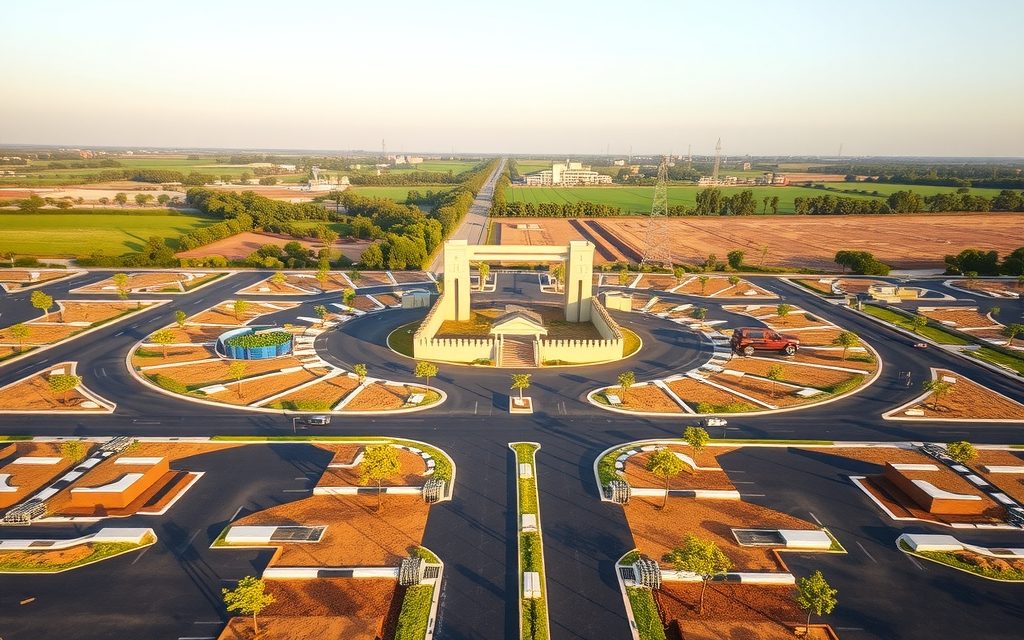
- About 110 km from Hyderabad via the Nagarjuna Sagar highway; roughly 60 km from Nalgonda town
- Revenue division headquarters below a Recherla Velama-era hill fort, serving a wide dry-land catchment
- Town-edge DTCP layouts typically ₹4,500–₹9,000 per sq yd as of October 2026
- Outside HMDA: DTCP layouts; assigned and government land checks are the top priority
- Mission Bhagiratha water; borewell water should be tested given the district's fluoride history
| What | Indicative range | Note |
|---|---|---|
| Town core resale plots | ₹10,000 – ₹20,000 per sq yd | indicative, Oct 2026 |
| Main-road commercial frontage | ₹12,000 – ₹25,000 per sq yd | indicative, Oct 2026 |
| Town-edge DTCP layouts, 30–40 ft roads | ₹4,500 – ₹9,000 per sq yd | indicative, Oct 2026 |
| Hyderabad road and Sagar road, approved | ₹3,500 – ₹7,500 per sq yd | indicative, Oct 2026 |
| Outer villages, approved layouts | ₹2,000 – ₹4,500 per sq yd | indicative, Oct 2026 |
| Unapproved panchayat ventures | ₹1,500 – ₹3,500 per sq yd | indicative, Oct 2026; LRS risk |
Ranges reflect recent transactions and advisor observation as of 2026-10. Always verify against the sub-registrar market value and the specific parcel.
Devarakonda is a fort town on a hill road. Around 110 km south-east of Hyderabad, reached by the Nagarjuna Sagar highway through Ibrahimpatnam, Mall and Chintapalli, it sits beneath the granite ramparts of a medieval hill fort built by the Recherla Velama rulers and serves as a revenue division headquarters for the southern, drier half of Nalgonda district. The countryside around it is dry-land cotton and red gram, dotted with Lambada tandas and village tanks, and its land prices are among the lowest in the district. Buyers searching for open plots in Devarakonda are overwhelmingly local or have family roots here: farming families moving into town, teachers and government staff, small traders, and Hyderabad and Gulf-based families building homes for parents. This guide covers DTCP and municipal approvals (HMDA does not reach this far), indicative per sq yd price bands as of October 2026, the assigned-land and water-quality checks that matter most in this belt, and how registration works at the Devarakonda sub-registrar office.
Every price below is an indicative range based on recent transactions and advisor observation as of October 2026. It is a negotiating reference, not a quote for any particular plot.
Why Devarakonda for an open plot
Devarakonda is not a speculative market, and the buyers who do well here understand that. The case for a plot rests on four plain facts.
- It is the service town for a large rural catchment. As a revenue division and assembly constituency headquarters, Devarakonda hosts the RDO office, courts, an area hospital, schools, junior and degree colleges, banks and a market yard serving dozens of surrounding villages and tandas. Families from those villages move into town for schooling and healthcare, and they need plots and houses.
- Entry prices are low. An approved plot in Devarakonda costs a fraction of one in Nalgonda town or on NH-65. For a first-time builder or a family buying a plot for a child, that matters more than appreciation forecasts.
- Remittance money flows in. A noticeable share of households in the Devarakonda belt have members working in Hyderabad, the Gulf or further afield. Their savings often come home as a plot and a house in town.
- Irrigation is slowly improving. Long-pending irrigation schemes aimed at this upland belt — the Dindi reservoir system and the Srisailam Left Bank Canal tunnel scheme among them — could, if completed, raise farm incomes and with them town demand. That is a long-horizon possibility, not a near-term certainty.
Devarakonda plot market snapshot, October 2026
| Topic | Ground observation |
|---|---|
| District and civic body | Nalgonda district; Devarakonda municipality and revenue division, with surrounding gram panchayats and tandas |
| Distance | About 110 km from Hyderabad via the Nagarjuna Sagar highway; roughly 60 km from Nalgonda town |
| Approvals | DTCP layouts; TG-bPASS building permission inside municipal limits; outside HMDA |
| Indicative spread | About ₹1,500 per sq yd for unapproved village plots to ₹20,000 for town-core resale |
| Common plot sizes | 120–200 sq yd in town; 200–300 sq yd in newer fringe layouts |
| Main risks | Assigned and government land, unapproved layouts, tank buffers, fort-hill and heritage surroundings, groundwater quality |
Getting to Devarakonda: the Sagar highway and local roads
From Hyderabad
The usual route leaves Hyderabad through LB Nagar or the ORR at Bongloor, follows the Nagarjuna Sagar highway past Ibrahimpatnam, Yacharam and Mall, and turns toward Devarakonda near Chintapalli. Allow roughly two and a half hours outside peak traffic. The highway has been improved in stages, and the stretch nearest Hyderabad passes through the Ibrahimpatnam and Future City belt, which gives Devarakonda a long-distance connection to Hyderabad's southern growth — but at this distance, it is not a commuter link.
Toward Nagarjuna Sagar
From Devarakonda, roads lead south-east through Kondamallepally toward Nagarjuna Sagar, the dam town on the Krishna. Sagar brings tourists and pilgrims through the region, especially when the dam's gates are open after a strong monsoon, and Devarakonda benefits modestly as a stop on the way.
To Nalgonda, Miryalaguda and the west
Roads north-east link Devarakonda to Nalgonda town, the district headquarters, and south-east toward Miryalaguda. Westward, roads run toward the Nagarkurnool and Kalwakurthy side. These are two-lane roads with farm and bus traffic; travel times are longer than distances suggest.
Rail
Devarakonda has no railway station of note. Residents use Nalgonda or Hyderabad for rail travel. Do not pay extra for talk of future rail lines; treat any announcement as something to watch.
Open plots in Devarakonda: indicative price bands by belt
The ranges below reflect recent transactions and advisor observation as of October 2026. In a town this size, approval status and road access drive almost all of the spread.
| Belt and plot type | Indicative range (per sq yd) | What to watch |
|---|---|---|
| Town core resale (main road, bus stand, market area) | ₹10,000 – ₹20,000 | Rare; local buyers; narrow lanes in parts |
| Main-road commercial frontage | ₹12,000 – ₹25,000 | Road-widening lines; zoning |
| Town-edge DTCP layouts, 30–40 ft roads | ₹4,500 – ₹9,000 | Most active segment for owner-occupiers |
| Hyderabad road (Chintapalli side) and Sagar road, approved | ₹3,500 – ₹7,500 | Infrastructure varies; check land history |
| Outer villages, approved layouts | ₹2,000 – ₹4,500 | Slow demand; long hold |
| Unapproved panchayat ventures | ₹1,500 – ₹3,500 | No loan or building permission without LRS |
A 200 sq yd plot in a completed DTCP layout on the town edge typically costs ₹9 lakh to ₹18 lakh before registration charges. Corner and east-facing plots usually command a 5 to 10 percent premium. Always ask for the all-in price; some ventures quote a low base rate and add development charges later.
Demand in Devarakonda follows the farm calendar and the remittance calendar. Enquiries tend to pick up after the cotton and red gram crops are sold, and again around festivals and summer holidays when families working in Hyderabad or the Gulf come home and look at plots together. Sellers know this, and asking prices firm up in those weeks. Buyers who can decide outside those peaks, and who have their documents checked in advance, often negotiate better terms. A thin market cuts both ways, though: a good plot in a well-occupied layout may not reappear for months once it sells.
Approvals in Devarakonda: DTCP, the municipality and what to ignore
Devarakonda is well outside the Hyderabad Metropolitan Development Authority's area. Any claim of "HMDA approval" for a Devarakonda layout is wrong. The relevant authorities are the Directorate of Town and Country Planning for layouts and Devarakonda municipality for building permissions within town limits.
DTCP layout permission
A genuine layout carries a DTCP layout permission with an LP number and an approved plan showing every plot, road, open space and amenity site. Typical conditions include internal roads of 30 to 40 feet, about 10 percent open space, and a mortgage of roughly 15 percent of saleable plots until the developer completes roads, drains, power and water. If your plot is among the mortgaged ones, insist on the release order naming it.
Municipal permissions
Inside Devarakonda municipality, building permission is issued through TG-bPASS. Villages merged into the municipality now fall under its rules. A building permission does not legalise an unapproved layout.
Panchayat layouts and LRS
Gram panchayats cannot approve layouts, but many plots around Devarakonda have been sold on panchayat resolutions or simple agreements. LRS, reopened with a fee concession in 2025 for eligible earlier applicants, can regularise some of them. Plots on government land, assigned land, tank beds or buffers cannot be regularised.
TS RERA
Layouts above 500 square metres or more than eight plots must be registered with Telangana RERA. Check the registration on rera.telangana.gov.in. Several small ventures around Devarakonda are not registered; that alone is a reason for caution.
Assigned land, tandas and the fort: Devarakonda-specific cautions
Assigned and government land
The upland belt around Devarakonda has a large amount of land that was assigned by the government to landless families over the decades, along with government poramboke land, tank beds and grazing land. Under the Telangana assigned-lands law, assigned land cannot be sold, and purchases of it are void regardless of how many documents change hands. Plots carved out of such land and sold to unsuspecting buyers are one of the most common problems we see in this part of the district. Before paying anything, the parent survey number's status must be confirmed on Dharani or Bhu Bharati at dharani.telangana.gov.in, and checked against the Section 22-A prohibited list.
Tanda and village boundaries
Many Lambada tandas around Devarakonda have become gram panchayats in their own right. Land records in some of these villages are still being consolidated, and boundaries between private, assigned and government land are not always clear on the ground. A plot venture near a tanda needs particular attention to the survey number, FMB sketch and boundary stones.
The fort hill and heritage surroundings
The Devarakonda fort, with its walls, gateways and temples spread over the hills above the town, is a protected heritage site. Construction close to protected monuments can be restricted, and the hill slopes themselves may be government land. If a plot sits near the fort hill, we check for any heritage-related restrictions and confirm that the land is genuinely private before recommending it.
Tanks and streams
Village tanks and the streams feeding them are common around Devarakonda. Land within a tank's full tank level cannot be built on, and buffers — typically 30 metres for larger water bodies and 9 metres for smaller ones under state rules — restrict construction beyond it.
Water in the Devarakonda belt: groundwater, fluoride and supply
Nalgonda district has a long history of high fluoride levels in groundwater, and the upland mandals around Devarakonda were among the areas most affected. The state's Mission Bhagiratha scheme now supplies treated surface water to towns and villages across the district, which has transformed the situation for drinking water. For a plot buyer, this still has practical implications.
- Check the drinking-water connection. Inside municipal limits and in most villages, piped supply from Mission Bhagiratha should be available. Confirm that the layout has a connection or can obtain one.
- Test borewell water. If a layout relies on a common borewell, have the water tested for fluoride and other parameters before relying on it for drinking. Bore water may be fine for construction and gardening even if it is unsuitable for drinking.
- Yield varies. Groundwater yields in this hard-rock terrain vary widely from one borewell to the next. A borewell that worked for a neighbour is not a guarantee.
- Irrigation projects. The Dindi reservoir and the long-delayed Srisailam Left Bank Canal tunnel scheme are intended to bring Krishna water to this belt. Progress on them is worth watching, but they do not change a plot's drinking-water situation today.
Plot belts around Devarakonda
The old town below the fort
The established town around the main road, the bus stand and the market is compact and densely built. Vacant plots are rare and go to local buyers.
The town edges
DTCP layouts on the fringes, within a short ride of schools, the hospital and government offices, are where most first-time builders buy. The better ones have roads, drains and houses already up.
The Hyderabad road toward Chintapalli
Layouts on the road back toward the Sagar highway attract families with links to Hyderabad. They are cheaper than the town edge and benefit from better road access, but they need careful land-history checks.
The Sagar road toward Kondamallepally
South-east toward Kondamallepally and Nagarjuna Sagar, a few layouts target buyers who travel on that side. Demand is thinner; patience is required.
Plot sizes, soil and layout quality
Town plots are typically 120 to 200 sq yd; newer fringe layouts offer 200 to 300 sq yd. Soils around Devarakonda vary — patches of black cotton soil in the valleys, red and gravelly soils on higher ground, with rock close to the surface near the hills. Black soil needs deeper or specially designed foundations; rocky ground adds excavation cost for sumps and septic tanks. A soil test before construction is inexpensive insurance.
A layout worth paying for should offer:
- Black-top or CC roads with side drains
- A drainage outfall that does not simply flood a neighbouring field or tank
- Electricity lines and an energised transformer
- Mission Bhagiratha or municipal water
- Open spaces as marked in the approved plan
- Boundary stones matching the plan
Legal checklist for a Devarakonda plot
- DTCP LP number and approved plan, with your plot number and dimensions confirmed.
- Mortgage release order naming your plot, where applicable.
- NALA conversion of the layout's survey numbers.
- Thirty-year encumbrance certificate, read entry by entry.
- Link documents from the original pattadar to the developer and your seller.
- Dharani or Bhu Bharati status of the parent survey number, ruling out assigned, government, ceiling or endowment land.
- Section 22-A prohibited-properties list.
- Survey number and FMB match on the ground, especially near tandas.
- Heritage proximity for plots near the fort hill.
- Tank FTL and buffers.
- Road-widening lines on the main roads.
- Taxes and dues cleared with the municipality or panchayat.
Registration and charges
Converted plots register at the jurisdictional sub-registrar office. For most town layouts that is the Devarakonda SRO; for outer villages we confirm jurisdiction from the survey number. Slots and payments run through registration.telangana.gov.in.
| Charge | Approximate rate | Notes |
|---|---|---|
| Stamp duty | ~5.5% | On the higher of agreed price or market value |
| Transfer duty | ~1.5% | With stamp duty |
| Registration fee | ~0.5% | About 7.5% in total |
| TDS (Section 194-IA) | 1% | Only above ₹50 lakh with a resident seller; rare here |
| Mutation and tax assessment | Nominal | Municipality or panchayat after registration |
Rates are approximate and change periodically; we verify current figures at the SRO on the day.
Plot loans and financing in Devarakonda
Banks and housing finance companies lend on DTCP-approved and LRS-regularised plots with clean title, NALA conversion and, where relevant, a mortgage release order. Funding is typically around 60 to 75 percent of the lender's own valuation, and in a smaller town that valuation can be below the price you agree, so plan for a larger down payment. Many lenders want construction to start within two to three years. Government staff and teachers generally find approval straightforward; farming and self-employed buyers should keep land records, crop-sale receipts and bank statements ready. Families abroad often find it simpler to buy the plot outright and take a home loan later for construction. Unapproved plots are almost never financed.
A practical example: a family home on the town edge
Consider a family working in Hyderabad who want to build a house in Devarakonda for their parents, who currently live in a village 15 km away. Their budget for the plot is around ₹15 lakh.
Option one is a 180 sq yd plot in a DTCP layout on the town edge, at roughly ₹8,000 per sq yd, close to the area hospital and a school. The LP is verified, the plot was never mortgaged, roads and drains are complete, Mission Bhagiratha water is connected and several families already live in the layout. All-in, with registration of about 7.5 per cent, the cost is a little over ₹15 lakh.
Option two is a 300 sq yd plot for the same money in a venture a few kilometres out on the Sagar road, sold on a panchayat resolution, with no LP and a parent survey number that, on checking, appears in the assigned-land records.
Option two offers more land, but it cannot lawfully be bought, financed or built on. Option one gives the parents a house near the hospital, within reach of the bus stand, on a plot that can be resold easily to another local family. We would recommend option one, and in Devarakonda that kind of plain comparison is the most valuable thing an advisor can do.
Investment outlook for Devarakonda plots
What supports demand
- Revenue division headquarters with courts, offices, hospital and colleges
- A wide rural catchment moving into town for schooling and healthcare
- Remittance income from Hyderabad and abroad
- Gradual road improvements on the Sagar highway
- Long-term upside if irrigation schemes reach the belt
What limits it
- Dry-land farming and income that swings with the monsoon
- A thin resale market beyond local buyers
- Assigned and government land mixed into private holdings
- A sizeable stock of unapproved village plots
Holding period
Plan on eight to twelve years if you are buying as an investment, and buy primarily for use. Approved, developed town-edge layouts where families already live are the safest choice. Remote fringe ventures with no houses built can take a very long time to fill.
Who should buy — and who should not
Good fit: families from Devarakonda and its villages; teachers, doctors and government staff posted to the town; Hyderabad and Gulf-based families building homes for parents; first-time builders who want an affordable approved plot.
Poor fit: outside investors with no local ties expecting quick gains; buyers unwilling to verify assigned-land status; anyone tempted by cheap village plots without approval.
For a larger market in the same district, compare open plots in Nalgonda, the district headquarters, or open plots in Miryalaguda, the rice-mill town on the canal. To the west, open plots in Nagarkurnool offer another upland district-headquarters option. If farmland interests you more than a town plot, see agriculture land in Nalgonda district.
NRI note for Devarakonda buyers
NRIs and OCIs can buy residential or commercial plots in approved, NALA-converted layouts in Devarakonda. Under FEMA rules they cannot buy agricultural land, plantations or farmhouses, or receive them as gifts; they can inherit them and sell inherited farm land only to a resident Indian. In this belt, where family land and town plots often come up in the same conversation, keep the two clearly separate.
- Pay from NRE, NRO or FCNR accounts or by inward remittance.
- Keep a PAN for the deed and tax records.
- If you cannot travel, a power of attorney executed before the Indian mission (or apostilled where applicable) must be adjudicated and registered in Telangana before use.
- On resale, the buyer deducts TDS at NRI rates; a chartered accountant should advise on capital gains and repatriation.
Our NRI investment guide for Telangana covers the full process.
How NRR Estates helps on a Devarakonda plot
We act as your advisor, and our fee is disclosed and agreed in writing before any commitment. For Devarakonda we:
- Understand your purpose — a home for the family, a plot for a child or a long hold.
- Shortlist approved layouts and screen out unapproved and doubtful-title stock.
- Inspect the site — soil, rock, roads, drainage, water connection and tank proximity — with video walkthroughs for families in Hyderabad and abroad.
- Verify documents — LP, mortgage release, NALA, EC, link documents, Dharani or Bhu Bharati, assigned-land and 22-A checks, heritage and buffer issues.
- Negotiate on local transaction evidence.
- Manage registration and mutation and hand over a complete document file.
Devarakonda open plots: frequently asked questions
What are open plot prices in Devarakonda?
As of October 2026, DTCP-approved plots on the town edge typically sell for ₹4,500 to ₹9,000 per sq yd on 30–40 ft roads. Approved layouts on the Hyderabad and Sagar roads sit around ₹3,500 to ₹7,500, and outer villages ₹2,000 to ₹4,500. Town-core resale plots reach ₹10,000 to ₹20,000. These are indicative ranges from recent transactions and advisor observation, and approval status drives most of the spread.
Which approval should a Devarakonda plot have?
A DTCP layout permission with an LP number and approved plan showing your plot's number and dimensions, NALA conversion of the land, and a release order if your plot was mortgaged to DTCP. HMDA does not reach Devarakonda, so an HMDA claim is wrong. Inside municipal limits, building permission goes through TG-bPASS. Panchayat resolutions are not approvals and need a completed LRS order.
Why is assigned land a concern around Devarakonda?
The upland belt has a large amount of land assigned by the government to landless families, plus government, tank-bed and grazing land. Assigned land cannot be sold under Telangana law, and purchases of it are void however many documents change hands. Plots carved from such land are a common trap here. We check the parent survey number on Dharani or Bhu Bharati and the Section 22-A list before any payment.
Is water quality an issue for plots in Devarakonda?
It can be. Nalgonda district has a long history of high fluoride in groundwater, and the Devarakonda uplands were among the affected areas. Mission Bhagiratha now supplies treated surface water to towns and most villages, so confirm the layout has or can get a connection. If a layout relies on a common borewell, test the water before drinking it; yields also vary widely in this hard-rock terrain.
How far is Devarakonda from Hyderabad?
Devarakonda is about 110 km from Hyderabad. The usual route follows the Nagarjuna Sagar highway past Ibrahimpatnam, Yacharam and Mall, turning toward Devarakonda near Chintapalli, and takes roughly two and a half hours outside peak traffic. Nalgonda town is about 60 km away and Nagarjuna Sagar is reached via Kondamallepally. Devarakonda has no railway station of note. For rail, residents use Nalgonda or Hyderabad, and buses connect the town to all of these.
Can I build near the Devarakonda fort?
Plots close to the fort hill need extra checks. The fort is a heritage site, and construction near protected monuments can be restricted, while the hill slopes themselves may be government land. Before recommending a plot near the fort, we check for heritage-related restrictions, confirm the land is genuinely private patta land converted under NALA, and verify that it sits within an approved layout.
What registration charges apply to a Devarakonda plot?
Approximately 7.5 per cent of the higher of agreed price or government market value: about 5.5 per cent stamp duty, 1.5 percent transfer duty and 0.5 percent registration fee. TDS of 1 percent applies only if the price exceeds ₹50 lakh with a resident seller, which is rare here. Most town layouts register at the Devarakonda SRO; we confirm jurisdiction and verify current rates on the day.
Can an NRI buy a plot in Devarakonda?
Yes, NRIs and OCIs can buy residential or commercial plots in approved, NALA-converted layouts. They cannot buy agricultural land, plantations or farmhouses, or receive them as gifts; they can inherit them and sell inherited farm land only to a resident Indian. Pay through NRE, NRO or FCNR accounts or by inward remittance, keep a PAN ready, and use a registered power of attorney if you cannot travel.
Related guides
Nalgonda sits two hours from Hyderabad via NH-65, with a university, medical college and steady local demand. DTCP and NUDA layouts by corridor, indicative per sq yd bands, and the water and approval checks that matter here.
The rice-mill capital of Nalgonda district, on the NSP left canal and the NAM highway. DTCP and municipal layouts, indicative per sq yd bands, and the mill, canal and flood-line checks that matter here.
Nagarkurnool's plot market runs on district-office families, doctors and mandal-town farmers, not speculators. DTCP layouts by ring, indicative per sq yd bands, tank and forest-fringe cautions, and the legal checks that matter.
Black cotton fields, NSP canal paddy and sweet lime orchards around Nalgonda, about 100 km from Hyderabad via NH-65. Mandal guide, canal and fluoride realities, indicative per-acre prices and the title checks district land needs.
Two-crop paddy land on the Nagarjuna Sagar left canal, black cotton soils and a rice-mill economy about 150 km from Hyderabad. Indicative per-acre prices by canal reach, soil and water tests, and the title checks that matter.

What NRIs and OCIs can and cannot buy under FEMA, how to fund and register a purchase from abroad, TDS and repatriation basics, and where the opportunities are across Hyderabad and the Telangana districts.
HMDA plots 4 km from the ORR beside TCS and the Aerospace SEZ: Adibatla, Bongulur, Kongara Kalan and Mangalpally pockets, indicative per-sq-yd prices and an honest take on Future City and Pharma City.
Adilabad is a cotton market town and district headquarters on NH 44, near the Maharashtra border. DTCP layouts, indicative per sq yd bands, and the agency-area, black-cotton-soil and flood checks that make or break a plot here.