New Apartments in Film Nagar, Hyderabad
Premium low-rise buildings, hill-view boutique towers and older blocks between Jubilee Hills and Shaikpet, with indicative October 2026 prices, society-land title checks, hill-site due diligence and Apollo-side rental demand.
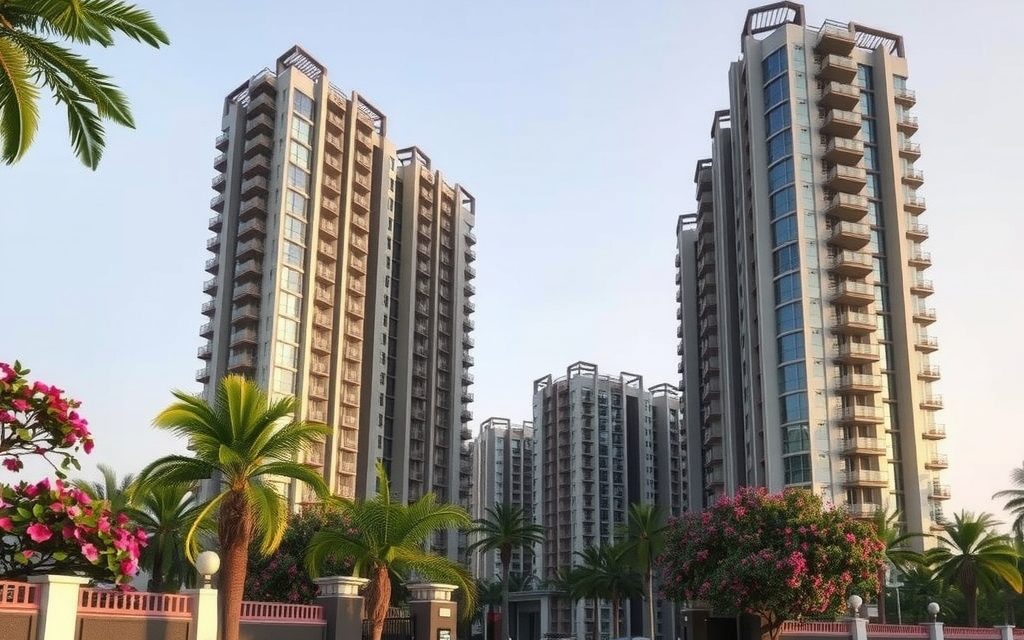
- Hilly pocket beside Jubilee Hills; prices typically sit below the comparable Jubilee Hills road
- Older resale about ₹8,500–₹13,000 per sq ft; new premium hill-view homes ₹16,000–₹24,000
- Very thin new supply: most projects are small JDA redevelopments, often below the TS RERA threshold
- Apollo Hospitals Jubilee Hills keeps furnished medium-stay rental demand high on nearby lanes
- No metro inside Film Nagar; Blue Line at Jubilee Hills Check Post; Shaikpet flyover speeds IT-corridor trips
| What | Indicative range | Note |
|---|---|---|
| Older block resale, built late 1990s–2000s | ₹8,500 – ₹13,000 per sq ft | indicative, Oct 2026 |
| Recent boutique building, 2010–2020 | ₹13,000 – ₹18,000 per sq ft | indicative, Oct 2026 |
| New premium low-rise, hill roads with views | ₹16,000 – ₹24,000 per sq ft | indicative, Oct 2026 |
| Newer building, Shaikpet and OU Colony edge | ₹11,500 – ₹15,500 per sq ft | indicative, Oct 2026 |
| 3 BHK rent, recent boutique building | ₹70,000 – ₹1.4 L per month | indicative, Oct 2026 |
Ranges reflect recent transactions and advisor observation as of 2026-10. Always verify against the sub-registrar market value and the specific parcel.
Apartments in Film Nagar sit in one of Hyderabad's most unusual residential pockets: a hilly, rock-strewn neighbourhood wedged between Jubilee Hills, Banjara Hills and Shaikpet, laid out decades ago for people from the Telugu film industry and still home to studios, the Film Nagar Cultural Centre, the Film Nagar temple and the Apollo Hospitals campus. It is not a place of big towers. What you find instead are premium low-rise buildings, a handful of boutique towers that use the slope for views, older apartment blocks from the 1990s and 2000s, and a very thin pipeline of new launches. This guide gives indicative prices as of October 2026, explains how hill sites and society-origin land change your due diligence, and sets out what we check before a client commits.
The people who call us about Film Nagar tend to want the Jubilee Hills experience at a slightly lower entry price, or they work at Apollo, in the studios or in the central business district and want a short commute without living on a main road. A second group is made up of NRIs with family ties to the area who want a manageable, rentable home near parents. Very few are speculators. The market is too thin and too dependent on individual buildings for quick trades, and that suits patient buyers who do their homework.
Why apartments in Film Nagar attract a particular kind of buyer
The first draw is adjacency. Film Nagar shares a long boundary with Jubilee Hills, and many of its roads feel like an extension of it: tree cover, low building heights, walls and gates rather than shopfronts. Yet because Film Nagar developed on a separate layout with generally smaller plots, apartment prices typically sit below the comparable Jubilee Hills road. Buyers effectively trade a slightly less famous postcode for a more sensible ticket size, while keeping the same restaurants, clubs and hospitals within five to ten minutes.
The second draw is terrain. Film Nagar is built over granite hillocks, and on the upper roads a fourth or fifth floor can look out over the green canopy of Jubilee Hills, towards the Banjara Hills ridge, or west across Shaikpet to the IT corridor skyline. Hill views are rare in a flat city, and Hyderabad buyers will pay for them. A well-placed upper-floor flat with a protected outlook can command a premium of 10 to 20 percent over the same plan facing an inner lane.
The third draw is scarcity. There is very little vacant land left, and most redevelopment happens one ageing house or old building at a time. In a typical year, the number of genuinely new apartment projects in Film Nagar can be counted on one hand. That keeps resale demand healthy and gives owners of well-built, compliant flats a measure of price support even in slower years.
Film Nagar apartment market snapshot (October 2026)
- Location: Film Nagar, Hyderabad district, pincode 500096; bounded by Jubilee Hills to the north and east, Banjara Hills to the south-east and Shaikpet and OU Colony to the west.
- Stock: older mid-rise blocks of 12 to 40 flats, premium stilt-plus-four to stilt-plus-six buildings, and a few taller boutique towers on larger hill plots.
- Indicative pricing: about ₹8,500 to ₹13,000 per sq ft for older resale; ₹13,000 to ₹18,000 for recent boutique buildings; ₹16,000 to ₹24,000 for new premium homes with views.
- Typical sizes: 1,500 to 2,200 sq ft in older blocks; 2,400 to 4,500 sq ft in newer premium buildings.
- Landmarks: Film Nagar temple, Apollo Hospitals Jubilee Hills, the Film Nagar Cultural Centre and the studio belt.
- Approvals: GHMC building permission, occupancy certificate, fire NOC where height requires it, and TS RERA registration only where the project crosses the statutory threshold.
How Film Nagar's apartment stock came to be
To understand what you are buying, it helps to know how the neighbourhood was assembled. Much of Film Nagar traces back to a film-industry cooperative housing society that allotted plots to members on the rocky ground south-west of Jubilee Hills. Studios, a cultural club and the hilltop temple followed. Through the 1980s and 1990s most members built independent houses. From the late 1990s onwards, some of those houses were replaced by small apartment buildings, typically under a joint development agreement in which the landowner family kept a share of the flats and the builder sold the rest.
That history produces three distinct layers of stock. The oldest apartment blocks, from the late 1990s and 2000s, are usually stilt-plus-four or stilt-plus-five buildings with modest lobbies, one lift and car parking in the stilt. A middle layer, built roughly between 2010 and 2020, has better specifications, two lifts in larger buildings, power backup for common areas and often a small gym or terrace sit-out. The newest layer consists of premium low-density buildings with one or two homes per floor, double-height lobbies, cellar parking cut into rock and much larger plans.
Alongside these sit denser settled pockets on the lower slopes and near the main roads, where houses are small and plots irregular. These areas see occasional small redevelopment buildings, but title and approval questions are more common there, and we approach them carefully. For the purposes of this guide, prices refer to the planned residential roads, not those pockets.
Pockets within Film Nagar and how they differ
Film Nagar is compact, but within a couple of kilometres the character changes noticeably. Price differences of 30 percent or more between two buildings of similar age are common, and they almost always trace back to which of the following pockets the building sits in.
The upper hill roads
The roads climbing towards the temple and along the ridge carry the best views and the quietest traffic. Plots here are often irregular because they follow the rock, which can make for interesting plans: split-level entrances, wide terraces, living rooms angled towards the view. This is where most of the premium new supply has come up. Expect to pay at the top of the Film Nagar range, and expect to spend time verifying how the building handled its rock excavation and drainage.
The studio side
Around the studio belt, the street pattern is more regular and the mix more varied: older apartment blocks, independent houses, offices linked to the film industry and production support services. Activity during shooting schedules can mean vehicles, generators and crews on the road at odd hours. Some buyers enjoy the buzz; others find it intrusive. Prices here sit in the middle of the range, and some of the better value in older compliant buildings is found on these lanes.
The Apollo stretch
The roads around Apollo Hospitals Jubilee Hills form their own micro-market. Demand from doctors, nurses, administrators and the families of long-stay patients keeps rental occupancy high, and furnished two and three bedroom flats here rarely stay vacant for long. The trade-off is traffic: hospital visitors, ambulances and parking spill-over can make the immediate roads busy throughout the day. For owner-occupiers, a building one or two lanes back usually works better than one facing the hospital approach.
The Shaikpet and OU Colony edge
On the western side, Film Nagar shades into Shaikpet and OU Colony, where plots are larger in places and a few taller gated buildings have come up. The Shaikpet flyover, opened in 2022, has made this edge noticeably quicker to Gachibowli and HITEC City. Prices are a little lower than the hill roads, and the stock is often newer. Buyers comparing this edge should also read our guide to apartments in Tolichowki, which covers the market just beyond Shaikpet.
Indicative prices for apartments in Film Nagar, October 2026
The bands below come from recent transactions and advisor observation as of October 2026. They are indicative ranges, not quotations, and in a market with few sales in any month, a single building's condition, approvals or view can move a price outside them.
| Segment | Typical size | Indicative rate per sq ft | Indicative ticket |
|---|---|---|---|
| Older block resale, built late 1990s–2000s | 1,500–2,200 sq ft | ₹8,500 – ₹13,000 | ₹1.3 crore – ₹2.8 crore |
| Recent boutique building, 2010–2020 | 2,000–3,200 sq ft | ₹13,000 – ₹18,000 | ₹2.6 crore – ₹5.7 crore |
| New premium low-rise, hill roads with views | 2,600–4,500 sq ft | ₹16,000 – ₹24,000 | ₹4.2 crore – ₹10.8 crore |
| Newer building, Shaikpet and OU Colony edge | 1,800–3,000 sq ft | ₹11,500 – ₹15,500 | ₹2.1 crore – ₹4.6 crore |
Indicative rents in Film Nagar
| Unit and letting type | Indicative monthly rent |
|---|---|
| 2 BHK, older block, unfurnished | ₹32,000 – ₹50,000 |
| 3 BHK, older block, unfurnished | ₹45,000 – ₹75,000 |
| 3 BHK, recent boutique building | ₹70,000 – ₹1.4 lakh |
| Furnished 2–3 BHK near Apollo, medium stay | ₹60,000 – ₹1.2 lakh equivalent |
Land on the planned residential roads has been changing hands indicatively at roughly ₹1.5 lakh to ₹2.8 lakh per square yard, depending on road width, slope and outlook. That figure matters because in a small Film Nagar building the undivided share of land attached to each flat can be 50 to 90 square yards, which is a large part of what you are paying for. We always work out the implied land value per flat before advising on price.
Hill sites and views: what the terrain changes in a building
The rock that gives Film Nagar its character also creates problems that flat-land buyers rarely think about. Before you fall for a view, it is worth understanding how the slope affects the building you are looking at.
Rock excavation and cellars
Cutting a cellar into granite is expensive and slow. Some builders limit cellar depth and push parking into the stilt; others blast or break rock to fit two cellar levels. Either approach can work, but ask how the excavation was done, whether neighbours raised complaints about vibration or cracks during construction, and whether the retaining walls were designed by a structural engineer. Cracks in the boundary wall or water marks in the cellar are worth investigating before you sign anything.
Drainage and seepage
Rainwater runs down a slope, and buildings on the lower side of a hill road receive it. Look at the cellar after a heavy shower if you can, check where the storm-water drains discharge and ask the association about pump maintenance. A building with a sump that floods every monsoon will cost its owners money every year.
Water pressure and supply
Upper-hill buildings can face lower municipal water pressure, so many rely on tankers to supplement supply in summer. Ask the association for twelve months of water expenses. The number tells you more about day-to-day living than any brochure.
Can you protect a view?
Not completely. A view across a neighbour's single-storey house exists only until that neighbour redevelops. Before paying a premium for an outlook, look at what sits between your window and the horizon, estimate whether those plots are likely to be redeveloped and to what height, and ask whether any road, park or slope makes the view more durable. A view over a public open space or down a steep drop is safer than one across private plots.
Limited new supply: how buyers actually get into Film Nagar projects
New buildings in Film Nagar rarely get a big launch campaign. Many are sold quietly through the builder's own network, through brokers who know the area, and to friends and relatives of the landowner family. Some units are blocked for the landowner's share under the joint development agreement and come to the market later as resales. This has practical consequences.
First, good units can be committed before the building is even out of the ground. Buyers who want a particular floor or view need to be ready to move, which means having finance and legal checks lined up in advance. Second, small projects often fall below the TS RERA threshold of 500 square metres of land or eight units, so you will not always have a RERA registration to rely on. Your own diligence has to cover what the regulator would otherwise check. Third, the landowner's share and the builder's share are often sold by different people, and you must be sure you are buying from the party entitled to that specific flat. Our guide to joint development agreements in Telangana explains how these arrangements are structured.
For buyers who would rather own the land outright, Film Nagar also has a small market in independent houses, which we cover in our guide to villas in Film Nagar.
Connectivity and everyday life in Film Nagar
Film Nagar works best for people whose days revolve around central and western Hyderabad. Approximate off-peak drive times are below; peak-hour times can be considerably longer.
- Jubilee Hills Check Post and Road No. 36: 5 to 10 minutes.
- Banjara Hills Road No. 12 and the hospital cluster: 10 to 15 minutes.
- HITEC City and Madhapur: 15 to 25 minutes via Jubilee Hills or the Shaikpet flyover.
- Gachibowli and the Financial District: 20 to 35 minutes.
- Punjagutta and Somajiguda: 15 to 20 minutes.
- Rajiv Gandhi International Airport: typically 40 to 60 minutes via Mehdipatnam and the PV Narasimha Rao Expressway.
There is no metro station inside Film Nagar. The nearest stations are on the Blue Line at Jubilee Hills Check Post and Road No. 5 Jubilee Hills, a short cab or auto ride away. In practice most residents drive, and parking provision is one of the most important features of any building.
Healthcare is a real strength, with Apollo Hospitals on the doorstep and the Banjara Hills hospital cluster minutes away. Established schools across Jubilee Hills, Banjara Hills and the Shaikpet side are within a short drive. Daily shopping happens at local stores along the main roads, with larger supermarkets and the Jubilee Hills restaurant strip close by. The Film Nagar Cultural Centre and the temple anchor community life, and the area's walking is best on the upper hill roads in the early morning.
If you want a building that feels similar but sits closer to the Jubilee Hills clubs and the cable bridge, compare with our guide to apartments in Jubilee Hills. If you want more central, institutional surroundings, our guide to apartments in Banjara Hills covers the hills to the south-east.
Society land, title and the RERA checklist for Film Nagar flats
Film Nagar adds one layer to the standard Hyderabad apartment checklist: the society origin of much of the land. Where a plot traces back to a cooperative society allotment, the title chain starts with that allotment, and any gaps or disputes at the society level can travel down to every flat in the building. We work through the following before advising a client to proceed.
- Society allotment and transfers: the original allotment, any society-level transfers, and confirmation that the society record matches the chain of registered documents.
- Thirty-year title and encumbrance: a full encumbrance certificate and link documents for the land, including any family partitions or settlement deeds before the JDA.
- GHMC building permission: the sanctioned plan, matched floor by floor to the building, including the number of floors, setbacks and parking.
- Occupancy certificate: for completed buildings; a building without an OC can face difficulties with utility connections, bank loans and resale.
- Fire NOC where the building height requires one.
- TS RERA registration: required where the project exceeds 500 square metres of land or eight units; verify it on the TS RERA portal, including validity and any complaints.
- JDA and share schedule: confirm which flats belong to the landowner and which to the builder, and buy only from the party entitled to sell yours.
- Rock and structural records: the structural engineer's drawings and any soil or rock investigation; for older buildings, a structural condition check.
- UDS and car parking: the undivided land share and allotted parking stated clearly in the sale deed, along with the association bylaws.
Payment plans, loans and charges
Boutique developers in Film Nagar usually work on construction-linked plans, often with a larger share due at foundation and slab stages. Resales follow the familiar pattern of a token, an agreement of sale with an advance, and the balance at registration. Banks typically lend up to about 75 to 80 percent of value for homes in this price range, provided the building has clear approvals and an OC where completed. Older buildings without an OC may struggle to secure a loan at all, which narrows the buyer pool when you sell.
| Cost | Approximate rate | What to note |
|---|---|---|
| Stamp duty | ~5.5% | On the higher of market value and consideration |
| Transfer duty | ~1.5% | Applies within municipal limits |
| Registration fee | ~0.5% | Total of about 7.5% with the two items above |
| GST, under-construction | 5% without input tax credit | Not payable on ready flats with an OC |
| TDS by buyer | 1% above ₹50 lakh | Resident seller; Section 195 if the seller is an NRI |
| Maintenance | ₹3 – ₹7 per sq ft per month | Higher in buildings with cellar pumps and backup |
Registration takes place at the jurisdictional sub-registrar office, which we confirm from the document schedule. Rates are revised from time to time, so we verify the current figures at the SRO on the day; market values and slot booking are available on the Telangana registration portal.
Rental yield and appreciation outlook
Gross rental yields on Film Nagar apartments typically run at about 2.5 to 3.5 percent, a little higher than prime Jubilee Hills because entry prices are lower, and higher still for furnished flats near Apollo let on medium stays. Like most central premium markets, Film Nagar is a capital-preservation story first and an income story second.
Appreciation has historically come in steps, tied to redevelopment cycles and the wider Hyderabad market rather than any single infrastructure project. Three things support values from here: the near-total absence of new land, continued spill-over demand from Jubilee Hills, and the improved western access since the Shaikpet flyover opened. The risks are equally clear: uneven construction quality in some small redevelopments, congestion around the hospital and studio roads, and the slow, sometimes contentious process of redeveloping older blocks where owners must agree. Buyers should plan on a holding period of seven years or more.
Buying a Film Nagar apartment from abroad: NRI guide
Film Nagar has a meaningful NRI owner base, many of them children of the area's original families. The process for buying an apartment is straightforward if handled carefully.
- Eligibility: NRIs and OCI cardholders can buy residential apartments in India without RBI approval. Agricultural land, plantations and farmhouses are a different matter and are not relevant to apartments.
- Funds: pay through NRE, NRO or FCNR accounts or by inward remittance. Keep every bank record, because repatriation later depends on them.
- Power of attorney: a specific POA, executed before an Indian mission abroad and adjudicated in Telangana, lets a trusted relative sign and register on your behalf.
- Rent from abroad: rental income is taxable in India, and tenants paying an NRI landlord may need to deduct TDS. Use a local manager for furnished or medium-stay lets.
- When you sell: whoever buys from you deducts tax at source under Section 195, using the capital-gains rate plus surcharge and cess. Since the 2024 changes, long-term gains on property are taxed at 12.5 percent with no indexation. You can apply for a certificate allowing lower deduction. Plan the sale with a chartered accountant.
Our guides on how NRIs buy villas and apartments in Hyderabad and on NRI investment in Telangana walk through each step.
Is Film Nagar the right fit for you?
It suits: owner-occupiers who want the green, low-rise feel of Jubilee Hills at a more measured price; medical professionals working at Apollo or in Banjara Hills; families who value a view and are willing to verify how the building handled its hill site; and long-term investors who want a land-backed asset in a supply-constrained pocket.
It may not suit: buyers who want a large gated community with a clubhouse and pool; anyone who needs to walk to a metro station; investors chasing high rental yields; and people uncomfortable with the extra legal work that society-origin land and small redevelopment projects demand. For newer gated stock a few minutes further north, compare our guide to apartments in Yousufguda.
How NRR Estates helps you buy an apartment in Film Nagar
We are an advisory, not a listing portal, and our fee is disclosed before you commit. For Film Nagar, our work typically covers:
- Finding the boutique launches and quiet resales that never reach the portals, including landowner-share units.
- Comparing shortlisted flats on pocket, slope, view durability, UDS, building age and parking.
- Legal review by our advocates: society allotment, title chain, encumbrance, GHMC permission, OC, fire NOC, RERA, JDA and share schedule.
- A practical site inspection covering cellar condition, retaining walls, drainage and water supply.
- Negotiation grounded in registered comparable sales and implied land value.
- Loan coordination, registration at the jurisdictional SRO and handover, with remote support and POA guidance for NRI buyers.
Film Nagar apartment questions, answered
What do apartments in Film Nagar cost per square foot?
As of October 2026, older apartment blocks built in the late 1990s and 2000s typically resell for about ₹8,500 to ₹13,000 per square foot. Recent boutique buildings from roughly 2010 to 2020 sit around ₹13,000 to ₹18,000, and new premium low-rise homes on the hill roads with protected views around ₹16,000 to ₹24,000. Newer buildings on the Shaikpet and OU Colony edge fall at about ₹11,500 to ₹15,500. These are indicative ranges from recent transactions and advisor observation, not quotations, and a single building's view, approvals and condition can move the price outside them.
Is Film Nagar cheaper than Jubilee Hills for apartments?
Usually, yes. Film Nagar developed on a separate layout with generally smaller plots and a more mixed setting, so a comparable flat typically costs less than one on a well-known Jubilee Hills road. The gap varies by pocket: an upper hill road in Film Nagar with a strong view can approach Jubilee Hills secondary-road prices, while older blocks on the studio side or near busy approach roads are noticeably cheaper. Many buyers choose Film Nagar precisely because it offers similar restaurants, clubs, hospitals and commute times at a more sensible ticket size.
Why is new apartment supply in Film Nagar so limited?
There is almost no vacant land left. New apartments come from redeveloping an existing house or an old building, usually under a joint development agreement between the landowner family and a builder. Each project is small, often six to twenty homes, and owners redevelop only when it suits them. Many of these units are sold through the builder's network or kept as the landowner's share, so they never reach a public launch. Buyers who want a specific floor or view in a new Film Nagar building should have finance and legal checks ready before the right unit appears.
Does every Film Nagar project need TS RERA registration?
No. TS RERA registration is mandatory only where the project's land exceeds 500 square metres or it has more than eight units. Many Film Nagar redevelopments are smaller than that and are legally exempt. In those cases there is no regulator checking the builder's title, approvals and escrow on your behalf, so your own due diligence must cover the same ground: title chain, society allotment where relevant, GHMC building permission, occupancy certificate, JDA and share schedule. Where a project is registered, verify the number, its validity and any complaints on the TS RERA portal before paying.
What extra checks apply to apartments on Film Nagar's hill roads?
Hill sites bring structural and drainage questions. We look at how the cellar was cut into rock, whether retaining walls were designed by a structural engineer, and whether neighbours reported cracks during excavation. We check the cellar for water marks and ask where storm water discharges, because buildings on the lower side of a slope receive run-off. Upper-hill buildings can have weaker municipal water pressure, so we ask for a year of tanker and water expenses. Finally, we assess how durable a view is by looking at which plots lie between the window and the horizon.
How does the society origin of Film Nagar land affect my purchase?
Much of Film Nagar traces back to a cooperative society that allotted plots to members from the film industry. Where a building's land came from such an allotment, the title chain begins there, so we check the original allotment, any transfers recorded by the society and whether those records match the registered documents that follow. Gaps or disputes at society level can affect every flat in the building. This sits on top of the standard checks: a thirty-year encumbrance certificate, link documents, GHMC permission, occupancy certificate and, for redevelopments, the JDA and share schedule.
What rental yield can I expect from a Film Nagar apartment?
Gross rental yields typically run at about 2.5 to 3.5 percent, a little higher than prime Jubilee Hills because purchase prices are lower. As of October 2026, a 3 BHK in a recent boutique building commonly rents for about ₹70,000 to ₹1.4 lakh a month, and older-block 3 BHKs for about ₹45,000 to ₹75,000. Furnished flats near Apollo Hospitals let to doctors, staff and patients' families on medium stays can earn more, though they need active management, furnishing and a reliable local caretaker.
Can NRIs buy apartments in Film Nagar, and how?
Yes. NRIs and OCI cardholders can buy residential apartments without RBI approval, paying through NRE, NRO or FCNR accounts or by inward remittance. A specific power of attorney, executed before an Indian mission and adjudicated in Telangana, lets a relative sign and register for you at the jurisdictional SRO. Rental income is taxable in India, and on a later sale the buyer deducts TDS under Section 195; long-term gains are taxed at 12.5 percent without indexation since 2024. A chartered accountant should advise on your specific tax position and repatriation.
Related guides
Ultra-premium boutique apartments on redeveloped bungalow plots in Jubilee Hills, with indicative per-sq-ft bands, Road No. pockets, why UDS matters, redevelopment checks and rental outlook.
Older apartments, boutique redevelopments and premium residences across Banjara Hills Road No. 1 to 14, with indicative prices, land-led UDS value, redevelopment checks and hospital-corridor rental demand.
Film Nagar's villa market is premium resale and rebuild homes on sloping, rocky society plots beside Jubilee Hills. See October 2026 land rates, how to reconcile society and registration records, and what hill terrain costs to build on.
Yousufguda puts HITEC City about ten minutes away on the Blue Line at prices well below Jubilee Hills. Stock is older and dense, so compliance checks decide whether a flat is a bargain or a trap.
Tolichowki offers mid-segment flats close to Gachibowli and the old city, backed by a strong Gulf-returnee community. Heritage buffers and a history of unauthorised floors mean compliance comes first. Here is how to buy well.

Which Hyderabad micro-markets suit NRIs, what each budget buys, new versus resale, RERA and OC checks, GST, TDS for resident and NRI sellers, rental yields, management and repatriation of sale proceeds.

What NRIs and OCIs can and cannot buy under FEMA, how to fund and register a purchase from abroad, TDS and repatriation basics, and where the opportunities are across Hyderabad and the Telangana districts.
Adibatla's new towers put affordable gated flats minutes from TCS, the aerospace SEZ and the Bongloor ORR exit. Pockets, indicative rates, rents, how to vet newer builders and how much Future City to price in.