Agriculture & Farm Land in Gajwel, Siddipet District
Farm land 35–40 km past the ORR on the Rajiv Rahadari, inside the Kondapochamma and Mallanna Sagar commands and on the RRR alignment. Mandal guide, field-level water reality, indicative per-acre prices and Gajwel-specific title checks.
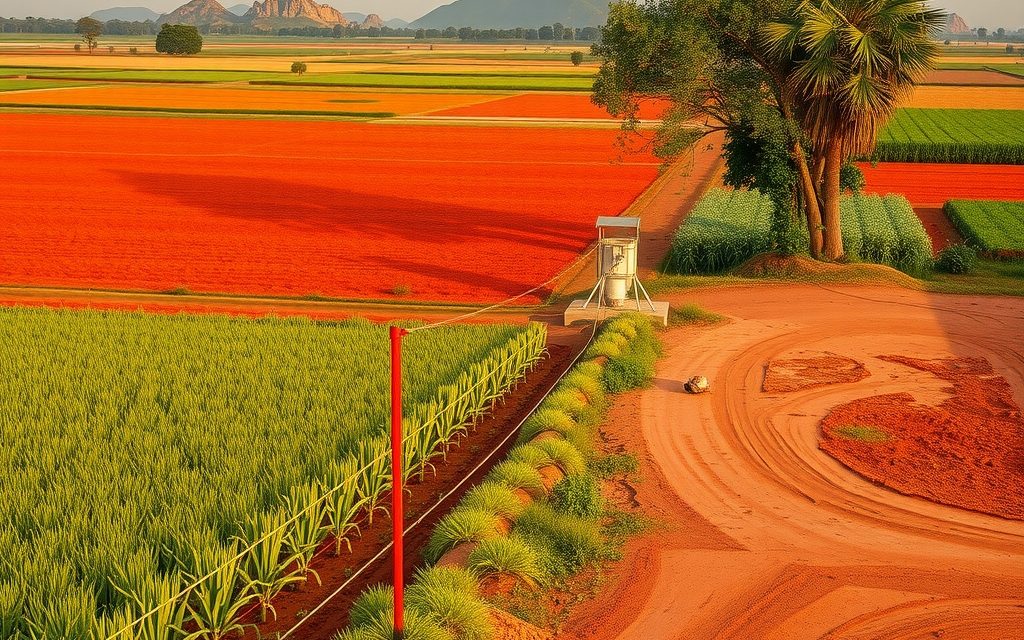
- About 35–40 km from the ORR Shamirpet exit on the four-lane Rajiv Rahadari; Gajwel station on the Manoharabad–Kothapalli line
- Agricultural land registers at the Gajwel (or respective mandal) Tahsildar office; converted land at the jurisdictional SRO, typically Gajwel
- Kondapochamma Sagar and Mallanna Sagar canals plus borewells of 250–600 ft; canal releases irregular since 2023
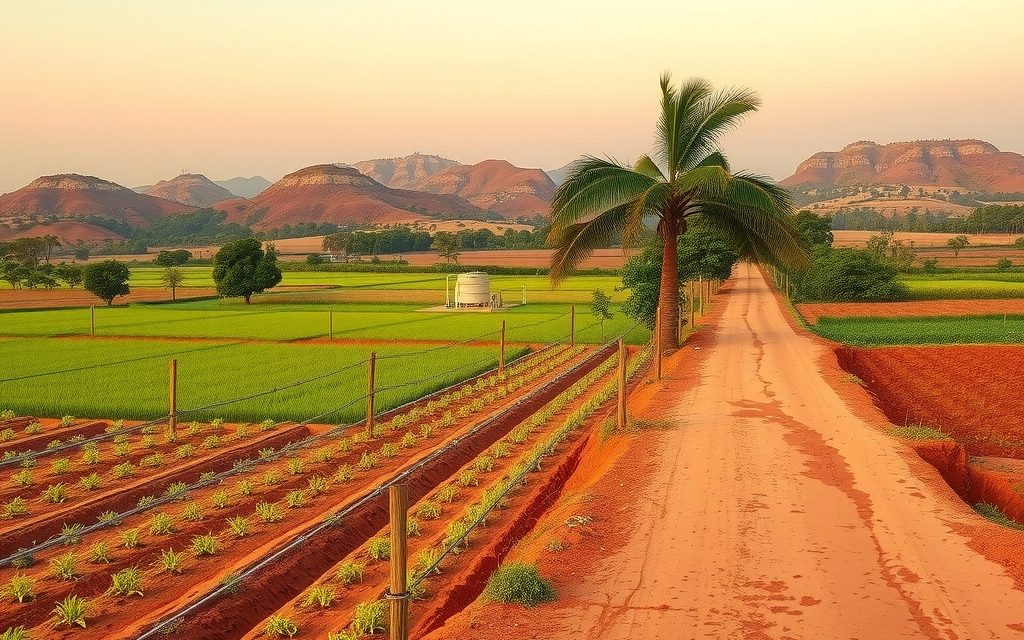
- Red chalka and red loam uplands with darker paddy soils below tanks; oil palm, mango and guava on drip
- Typical parcels: 2–15 acre family patta holdings; 10–40 gunta managed farm-venture plots
| What | Indicative range | Note |
|---|---|---|
| Interior villages 10+ km off the Rajiv Rahadari, borewell or rainfed | ₹35 L – ₹65 L per acre | indicative, Oct 2026 |
| Kondapochamma or Mallanna Sagar command with backup borewell | ₹45 L – ₹90 L per acre | indicative, Oct 2026 |
| BT-road villages 3–10 km from the Gajwel ring road | ₹70 L – ₹1.6 Cr per acre | indicative, Oct 2026 |
| Town fringe and Pragnapur belt, conversion potential | ₹1.5 Cr – ₹3.5 Cr per acre | indicative, Oct 2026 |
| Rajiv Rahadari frontage | ₹3 Cr – ₹7 Cr per acre | indicative, Oct 2026 |
| Farm plots in gated farm ventures | ₹3.5 L – ₹8 L per gunta | indicative, Oct 2026 |
Ranges reflect recent transactions and advisor observation as of 2026-10. Always verify against the sub-registrar market value and the specific parcel.
Drive north out of Hyderabad on the Rajiv Rahadari, past Shamirpet and Turkapally, and within about 40 minutes of leaving the Outer Ring Road the landscape changes: wide four-lane road, new canals cutting across red fields, and the raised bund of Kondapochamma Sagar on the horizon to the west. This is Gajwel, a Siddipet district town that has been rebuilt over the last decade with a ring road, an integrated government office complex, an education hub and a railway station, and that now sits inside the command area of two Kaleshwaram reservoirs. For buyers searching for agriculture land in Gajwel, the town offers something rare: real farmland with surface-water infrastructure, less than 90 minutes from much of Hyderabad, on the proposed alignment of the Regional Ring Road. This guide explains how the mandals around Gajwel differ, what the Kondapochamma Sagar command really delivers in the field, indicative per-acre prices as of October 2026, and the paperwork that applies at the Gajwel Tahsildar and sub-registrar offices.
Gajwel is also one of the most actively traded land markets in Siddipet district, which brings its own risks: speculative farm ventures, inflated "canal land" premiums and titles complicated by reservoir acquisition. We cover each of them below.
What draws farm land buyers to Gajwel
When Hyderabad buyers widen their search beyond Shamirpet and Medchal, Gajwel tends to appear on every shortlist. The reasons are fairly consistent.
- Distance that works: roughly 35–40 km from the ORR's Shamirpet exit on a fast four-lane road. Kompally, Alwal, Bowenpally and Secunderabad residents can realistically visit every weekend.
- Surface water on the map: Kondapochamma Sagar in neighbouring Markook mandal and Mallanna Sagar to the north are both part of the Kaleshwaram lift irrigation chain, with canals and distributaries running through Gajwel's mandals.
- A town that functions: Gajwel has a government hospital, banks, markets, input dealers, schools and colleges, and civic infrastructure that was upgraded heavily in the last decade. A farm here is not isolated.
- The RRR: the proposed northern arm of the Regional Ring Road is aligned through the Gajwel and Jagdevpur belt, which gives the area a long-term connectivity story independent of Hyderabad's ORR.
- Horticulture ecosystem: the state horticultural university and the Forest College and Research Institute are at Mulugu, a short drive south, and oil palm cultivation has spread across Siddipet district with state support.
The trade-off is price. Gajwel is no longer cheap district land. Well-located parcels near the town and the highway now trade at levels that would have seemed implausible a decade ago, so the value is in the interior villages, and in choosing them carefully.
Rajiv Rahadari, the railway and the RRR: getting to Gajwel
Approximate road distances to Gajwel town:
| From | Distance | Notes |
|---|---|---|
| ORR Shamirpet exit | ~35–40 km | Rajiv Rahadari via Turkapally and Pragnapur; 40–50 minutes |
| Secunderabad / Paradise | ~60 km | About 1.25–1.5 hours outside peak |
| Kompally | ~50 km | Via Medchal–Shamirpet link roads or the ORR |
| Gachibowli / Hitech City | ~80–85 km | ORR north to Shamirpet, then Rajiv Rahadari; 1.5–2 hours |
| Siddipet | ~45–50 km | Continue north on the Rajiv Rahadari |
| Toopran (NH-44) | ~25 km | Cross-country link to the Nagpur highway |
The Rajiv Rahadari
The state highway from Shamirpet towards Siddipet and Karimnagar is Gajwel's lifeline. Frontage on it, and on the Gajwel ring road, is priced as commercial or conversion land. Farm buyers should focus on the district roads branching east towards Jagdevpur, west towards Markook and Mulugu, north towards Thoguta and north-west towards Wargal and Toopran.
Rail
Gajwel station is on the new Manoharabad–Kothapalli line, which links the town to the Secunderabad network and onwards to Siddipet. For a farm owner, the main value is for caretakers, family members and farm workers who do not drive.
Regional Ring Road northern arm
The proposed northern section runs Sangareddy–Narsapur–Toopran–Gajwel–Jagdevpur and on towards Bhongir and Choutuppal. Acquisition notifications have been issued for parts of the alignment. Land inside the right-of-way is compensated at government rates, so being "on the RRR" is not automatically good news. Value tends to accrue to parcels near interchanges and service roads, and only once construction is visible. Verify the latest notification for any survey number before treating the RRR as a price factor. If you are comparing with the belt on the other side of the alignment, our guides to agriculture land in Shamirpet and farm land in Medchal cover the stretch closer to the ORR.
Kondapochamma Sagar command area: plan versus field
Kondapochamma Sagar, inaugurated in 2020 in Markook mandal, is the highest-elevation reservoir in the Kaleshwaram chain. Water lifted from the Godavari through Mallanna Sagar is stored here and released into canals designed to irrigate parts of Siddipet, Medchal-Malkajgiri and Yadadri Bhuvanagiri districts and to fill village tanks along the way. Gajwel, Markook, Mulugu, Wargal and Jagdevpur mandals sit within or close to its command. Mallanna Sagar, the larger reservoir in Thoguta mandal to the north, supplies parts of the northern villages.
That is the plan. What a buyer needs is the field-level reality, which in October 2026 looks like this:
- Pumping has been irregular. Since the 2023 damage at the Medigadda barrage, releases through the Kaleshwaram chain have varied season to season. Reservoirs have still held water in many periods, but canal deliveries to specific villages are less predictable than the original design.
- Tanks matter more than canals. Where canal releases fill village tanks, groundwater around them recharges and borewells hold up through summer. That benefit is real, even in years when the field itself gets no canal water.
- Distributaries are uneven. Main canals are built; some minor distributaries and field channels are incomplete. A field "near the canal" may be above it or beyond the reach of any working outlet.
Our checklist for a Gajwel parcel sold as canal or command-area land:
- Identify the exact distributary and outlet that serves the survey number, and walk it.
- Ask at least two neighbouring farmers whether water reached their fields in the last two seasons, and for how long.
- Confirm the field has its own working borewell, and see it run in summer.
- Check for acquisition notifications covering canals, distributaries, pipelines or reservoir buffers.
- Pay a command-area premium only for demonstrated water, not for a line on a map.
Soil, water and crops around Gajwel
Soils
Red soils dominate: red chalka and red loam on gently undulating uplands, with sheet rock and boulders on the ridges. Lower ground near tanks and streams has darker, heavier soil that suits paddy and holds moisture longer. Black cotton patches appear in some villages towards Thoguta and Wargal. Red soil drains well and is forgiving for orchards, but it loses water quickly, so drip irrigation is close to essential for anything other than paddy.
Water sources
By advisor observation, about half the farmed land around Gajwel relies on borewells, roughly a quarter gets canal or tank water, about a fifth is rainfed and a small share uses open wells. Borewells typically run 250–600 ft, shallower near filled tanks and the reservoirs and deeper on the uplands.
What grows here
Paddy has expanded sharply where canal-filled tanks allow it. Cotton and maize remain the main dry-land crops, and turmeric has a long local history. Oil palm is the newest story: Siddipet district has been one of Telangana's focus areas for oil palm, with subsidised saplings and drip systems, and young plantations are now visible on many Gajwel-area holdings. Mango and guava orchards are common on red uplands, and vegetable farms supply Hyderabad markets via the Rajiv Rahadari.
Agriculture land in Gajwel: indicative price bands
These ranges come from recent transactions and advisor observation as of October 2026. They are not quotations; approach, frontage, water history, soil and title quality move individual parcels within and sometimes outside these bands.
| Parcel type around Gajwel | Indicative range | Key price drivers |
|---|---|---|
| Interior villages 10+ km off the Rajiv Rahadari, borewell or rainfed | ₹35 L – ₹65 L per acre | Approach track, borewell yield, rock cover |
| Kondapochamma or Mallanna Sagar command, with backup borewell | ₹45 L – ₹90 L per acre | Proven canal and tank water, outlet access |
| BT-road villages 3–10 km from the Gajwel ring road | ₹70 L – ₹1.6 Cr per acre | Road width, distance to town, frontage |
| Town fringe and Pragnapur belt, conversion potential | ₹1.5 Cr – ₹3.5 Cr per acre | DTCP layout demand, ring-road access |
| Rajiv Rahadari frontage | ₹3 Cr – ₹7 Cr per acre | Frontage length, service road, commercial use |
| Farm plots in gated farm ventures | ₹3.5 L – ₹8 L per gunta | Fencing, plantation, title structure, upkeep |
Two observations from recent deals. First, the jump between interior and BT-road villages is steep, so a parcel one kilometre down a decent track can be meaningfully cheaper than one on the road, for a short extra walk. Second, farm-venture plots at ₹5–6 lakh per gunta work out to ₹2–2.4 crore per acre equivalent, far above interior patta land. Government market values are often below transaction prices; confirm the assessable value before you agree terms.
Mandals around Gajwel: Wargal, Markook, Mulugu, Jagdevpur and Thoguta
Gajwel mandal
The town and its ring. Near the ring road and Pragnapur, land is being plotted into DTCP layouts and priced accordingly. Further out, paddy and cotton dominate. If a residential plot is what you are after, see open plots in Gajwel before buying farm land you would then need to convert.
Wargal
North-west towards Toopran and NH-44, known for its Saraswathi temple. Mixed red and black soils, a reasonable spread of tanks and decent cross-country access to the Nagpur highway.
Markook and Mulugu
South-west, closest to Kondapochamma Sagar and to the horticulture and forestry campuses at Mulugu. Popular with orchard planters and buyers who want proximity to Hyderabad; prices reflect it.
Jagdevpur
East, towards the Yadadri Bhuvanagiri border and on the RRR alignment. More rainfed and generally cheaper, with RRR-related interest in specific villages.
Thoguta and the north
Home to Mallanna Sagar and the area most affected by reservoir acquisition and rehabilitation. Title checks need extra care here. For land further north, read our guide to agriculture land in Siddipet.
Gajwel as a rebuilt town: what the civic upgrade does for farm land
Few Telangana towns of Gajwel's size have seen as much public investment in the last decade. The ring road around the town, the integrated office complex that brings most government departments under one roof, the education hub, the upgraded hospital, the new railway station and wide internal roads have changed how the town works. For a farm buyer, this matters in three practical ways.
First, services are close. Revenue offices, the agriculture department, banks for crop loans and input dealers are all a short drive from most villages, which makes owning land here far less of a chore than in remote mandals. Second, the town's residential demand has pushed DTCP layouts outward along the ring road and Pragnapur, so land within a few kilometres of town now trades on conversion value rather than farm value. That is good news if you already own such land and bad news if you want to farm it, because you will be paying for a residential future you do not need. Third, the investment has created a reputation that sometimes runs ahead of fundamentals. Sellers in interior villages occasionally quote town-fringe prices on the strength of the Gajwel name. Compare like with like: a cart-track parcel 15 km from town should be priced as interior farm land, whatever the brochure says.
On the ground: what to look for when you walk a Gajwel parcel
Paper checks come later. On the first visit, these are the observations that most often separate a good Gajwel parcel from an expensive mistake.
- The nearest tank's water line. A tank filled by canal releases in recent seasons leaves visible marks and green margins. A dry, cracked bed in October tells you what the "command area" really means for this village.
- Which side of the canal you are on. Fields above the canal level cannot take water by gravity. Ask where the outlet is and follow the field channel to your boundary.
- Sheet rock and boulders. Common on the ridges; they cut usable extent and raise clearing costs.
- The approach in the monsoon. A track that is fine in October may be impassable in August, particularly over black-soil patches.
- Survey stones and neighbours. Look for boundary stones, and meet the neighbours on all sides. Boundary disagreements surface quickly when everyone is standing in the field.
- Power line and transformer. Distance to the agricultural feeder affects the cost and time of a new connection.
Parcel types in the Gajwel market
Family patta land
Two to fifteen acres held by farming families, often split among heirs. Best value, slowest paperwork.
Command-area wet land
Paddy land below canal-filled tanks or near working outlets. Productive and easy to lease to local farmers; less suited to building.
Red upland for orchards and oil palm
The most popular choice for Hyderabad buyers who want to plant mango, guava or oil palm on drip, with a small farm shelter.
Managed farm ventures
More common around Gajwel than in most Siddipet mandals, often sold in 10–40 gunta units with plantation and caretaking. Confirm your extent is separately recorded in the record of rights or precisely described in the sale deed with a survey sketch, that the developer holds clear title to the whole extent, and that no residential or villa conversion is promised on land that is still agricultural.
Land with farmhouse potential
A modest farm dwelling linked to agricultural use is common, but anything larger or commercial requires NALA conversion and the relevant building approvals.
Legal checklist for Telangana agriculture land, with Gajwel-specific cautions
- Pattadar passbook: original, in the seller's name, matching survey number and extent.
- Bhu Bharati record of rights: confirm patta agricultural classification and no prohibited or disputed flag. Legacy entries were on dharani.telangana.gov.in; we check the live record.
- Pahanis and ROR-1B: decades of cultivation and possession entries; watch for sarkari, inam or assigned notes.
- Encumbrance certificate for 30 years: crop loans and cooperative society charges are common.
- Link documents: every sale, partition and succession, with all heirs signing or releasing.
- Survey and FMB / tippan: licensed surveyor to fix boundaries on the ground.
- NALA: agricultural land cannot be put to non-agricultural use without conversion.
- Section 22-A: government, endowment, wakf and other listed lands cannot be registered.
- Assigned land: lands assigned to landless families cannot be sold; a frequent cause of "bargain" offers.
- Reservoir acquisition and R&R: Gajwel-area land was acquired for Kondapochamma Sagar, Mallanna Sagar, canals and rehabilitation colonies. Confirm the parcel is not notified, not in a submergence or buffer area, and not an R&R allotment carrying transfer restrictions.
- RRR and highway notifications: check the RRR alignment and any road widening.
- Ceiling, forest and tank FTL: no ceiling-surplus declaration, no notified forest, no part within a tank's full tank level or stream bed.
- 58/59 regularisation: relevant only to urban government land; on a town-fringe plot it signals history you must investigate.
- Power connection: agricultural service connection transferable to you.
Registration at Gajwel: Tahsildar, SRO and charges
Unconverted agricultural land registers at the mandal Tahsildar office, where the Tahsildar acts as joint sub-registrar under Bhu Bharati, with mutation into your name processed in the same workflow. For Gajwel mandal that is the Gajwel Tahsildar office; Wargal, Markook, Mulugu, Jagdevpur and Thoguta use their own Tahsildars. NALA-converted land and DTCP plots are registered at the jurisdictional Sub-Registrar Office, typically the Gajwel SRO; we confirm jurisdiction from the survey number. Procedures and slot booking are on registration.telangana.gov.in.
| Charge | Approximate rate | Note |
|---|---|---|
| Stamp duty | ~4% | On the higher of consideration and market value |
| Transfer duty | ~1.5% | Collected at registration |
| Registration fee | ~0.5% | Some categories differ |
| Mutation and passbook | Nominal | Through the record of rights |
Use about 6% of market value as a planning figure and expect us to verify current rates on the day. The 1% TDS under Section 194-IA on purchases above ₹50 lakh does not apply to rural agricultural land; it applies to urban or converted property. Land close to Gajwel municipal limits may not count as rural agricultural land for income tax, so check with a chartered accountant.
Running a Gajwel farm from Hyderabad
At 80–90 minutes from much of the city, Gajwel is close enough for weekly visits, which makes owner involvement realistic. Owners typically settle on one of these arrangements:
- Lease to a neighbouring farmer for paddy or cotton land, with a written one-to-three-year agreement and cultivation recorded correctly.
- Caretaker family for orchards or oil palm, with a small dwelling, monthly wage and an agreed produce share. Oil palm takes three to four years to start bearing, so continuity matters.
- Farm-venture management, where the developer's team handles watering and upkeep for a fee; inspect what you are paying for at least quarterly.
Whatever you choose, keep power bills, lease papers and cultivation entries in order; they are your evidence of possession.
Who should buy farm land in Gajwel, and who should not
Good fit
- North Hyderabad and Secunderabad families wanting a weekend farm with genuine water potential.
- Orchard and oil palm planters who value the horticulture ecosystem nearby.
- Long-term holders with a ten-year view on the RRR and Gajwel's growth as a town.
Not a good fit
- Bargain hunters expecting district prices; Gajwel is priced well above Siddipet's interior.
- Buyers paying for canal water that has not reached the field recently.
- Anyone unwilling to spend time on acquisition and R&R checks.
NRIs and Gajwel farm land: the FEMA position
Under FEMA, NRIs and OCIs cannot buy agricultural land, plantation property or farmhouses in India, and they cannot receive such property as a gift. They can inherit it from a person who held it lawfully, keep it, and sell it later to a resident Indian. Gajwel has many families with members abroad holding inherited land, and they typically need help with mutation, survey, leasing and encroachment protection. NRIs wanting to invest in the area usually look at approved residential plots. Our NRI guide to agriculture land rules in Telangana sets out the options; take tax advice from a CA.
How NRR Estates helps with Gajwel farm land
Our fee is agreed in writing before any commitment. In Gajwel we focus on the issues that cause the most expensive mistakes.
- Mandal fit: matching budget and purpose to Markook, Wargal, Jagdevpur, Thoguta or the Gajwel ring.
- Water verification: outlet-level canal checks, neighbour interviews and summer borewell tests.
- Acquisition and title: reservoir, canal, R&R and RRR notifications, plus record of rights, pahanis, 30-year EC, link documents and heirs, reviewed by an independent advocate.
- Survey, negotiation, registration and mutation: up to the passbook in your name.
Comparing with the Husnabad belt further east? See agriculture land in Husnabad.
Gajwel agriculture land: frequently asked questions
What is the price of agriculture land in Gajwel per acre?
As of October 2026, interior farm land ten or more kilometres off the Rajiv Rahadari typically trades at ₹35–65 lakh per acre, based on recent transactions and advisor observation. Land with demonstrated Kondapochamma or Mallanna Sagar canal water and a backup borewell ranges around ₹45–90 lakh. Villages on a black-top road within ten kilometres of the Gajwel ring road range from ₹70 lakh to ₹1.6 crore, while town-fringe and highway-frontage land is priced far higher on conversion and commercial potential. All figures are indicative; water history, approach and title decide the actual price.
Does Kondapochamma Sagar water actually reach Gajwel farms?
Kondapochamma Sagar in Markook mandal releases into canals that serve parts of Gajwel, Markook, Mulugu, Wargal and Jagdevpur mandals and fill village tanks. Since the 2023 Medigadda barrage damage, pumping through the Kaleshwaram chain has been irregular, and some minor distributaries remain incomplete. Many fields benefit mainly through recharged groundwater rather than direct canal water. Before paying a command-area premium, identify the exact outlet serving the survey number, ask neighbouring farmers about the last two seasons, and confirm the field has a working borewell.
How far is Gajwel from Hyderabad?
Gajwel is roughly 35–40 km from the Outer Ring Road's Shamirpet exit on the four-lane Rajiv Rahadari, usually 40–50 minutes. From Secunderabad it is about 60 km, and from Gachibowli or Hitech City around 80–85 km, which typically takes 1.5 to 2 hours via the ORR. Gajwel station on the Manoharabad–Kothapalli line also connects the town to the Secunderabad rail network. North Hyderabad and Secunderabad families find it practical for weekly visits.
How does the Regional Ring Road affect Gajwel land?
The proposed northern arm of the RRR runs through the Gajwel and Jagdevpur belt on its way from Sangareddy and Toopran towards Bhongir and Choutuppal. Land inside the right-of-way is acquired at government compensation rates, so it is not a windfall. Value gains usually concentrate near interchanges and service roads, and they tend to follow visible construction rather than announcements. Check the latest notification for any survey number, price land on current access and water, and treat the RRR as long-term upside.
What title risks are specific to Gajwel?
Large areas around Gajwel were acquired for Kondapochamma Sagar, Mallanna Sagar, their canals and rehabilitation colonies, so confirm that the parcel is not notified for acquisition, not in a submergence or buffer zone, and not an R&R allotment with transfer restrictions. RRR and road-widening notifications are the next check. Beyond that, the usual Telangana issues apply: assigned land that cannot be sold, Section 22-A prohibited entries, multi-heir family titles and old crop loans. An independent advocate should review everything before any advance.
Where is agricultural land in Gajwel registered?
Unconverted agricultural land registers at the mandal Tahsildar office, where the Tahsildar acts as joint sub-registrar under the Bhu Bharati record-of-rights system and mutation follows in the same workflow. For Gajwel mandal that is the Gajwel Tahsildar office; Wargal, Markook, Mulugu, Jagdevpur and Thoguta have their own. Converted land and DTCP plots go to the jurisdictional Sub-Registrar Office, typically the Gajwel SRO, confirmed from the survey number. Budget roughly 6% for stamp duty, transfer duty and registration fee, and verify current rates on the day.
Can NRIs buy or receive farm land in Gajwel?
No. Under FEMA, NRIs and OCIs cannot purchase agricultural land, plantation property or farmhouses in India, and they cannot receive them as a gift. They can inherit agricultural land from someone who held it lawfully, continue to hold it, and sell it later to a resident Indian. Many Gajwel families have relatives abroad holding inherited land, and they usually need help with mutation, surveys, leasing and protecting boundaries. NRIs wanting to invest locally typically look at approved residential plots. Take tax advice from a CA.
Is oil palm a good use for Gajwel farm land?
Oil palm has spread across Siddipet district with state support for saplings and drip irrigation, and it suits Gajwel's well-drained red soils if water is reliable year-round. It is a long-cycle crop: plantations typically start bearing in the third or fourth year and need steady irrigation, so a dependable borewell matters more than canal promises. It also suits absentee owners with a good caretaker. If you buy an existing plantation, check tree age and health, the drip system and any conditions attached to subsidies already received.
Related guides
Working farm land 100 km north of Hyderabad on the Rajiv Rahadari, near Ranganayaka Sagar and Mallanna Sagar. Mandal-by-mandal guide, honest irrigation picture, soils, indicative per-acre prices and the title checks district land needs.
Town plots, weekend plots near Kondapochamma Sagar and RRR-story ventures on the Rajiv Rahadari, 55–60 km from Secunderabad. Indicative prices by ring, approvals, Gajwel-specific red flags and legal checks.
Northern farm belt at the ORR Shamirpet exit on the Karimnagar highway, anchored by Genome Valley, BITS Pilani and NALSAR. Hard-rock land where water and lake or forest boundaries decide value.
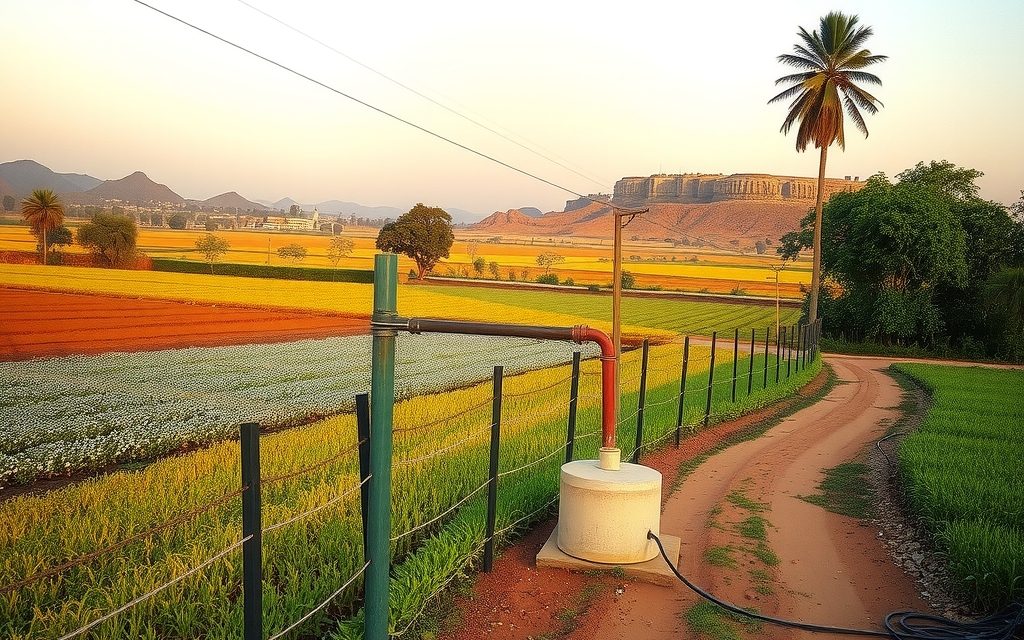
Red-soil farms, orchards and highway-side villages 8 km past the ORR Medchal exit on NH-44. Indicative per-acre prices, water realities, HMDA zoning checks and how agricultural land is registered in Medchal.
Affordable farm land where Siddipet, Karimnagar and Hanamkonda districts meet. Red chalka soils, the Gouravelli reservoir's real status, mandal guide, indicative per-acre prices and the title checks for this district-edge market.

NRIs and OCIs cannot buy or receive gifts of agricultural land, plantations or farmhouses; inheritance is the only route. What inherited land allows, why benami workarounds are dangerous, and the lawful alternatives near Hyderabad.
Deep black cotton and soybean land on the Penganga plains, about 300 km from Hyderabad on NH-44. Indicative per-acre bands by distance, and how to screen for 1/70 Scheduled Area villages and forest lines first.
Armoor is Nizamabad district's turmeric and red-jowar town on NH-44, where Gulf remittances keep farmland tightly held. Indicative per-acre bands, borewell and Godavari water facts, FEMA rules for Gulf workers and the title checks that matter.